




Abstract

Running assays is a common issue in the automation community with users demanding speed and precision. Tomtec (Hamden, Connecticut) has developed a radical departure from the traditional microplate format. Their belief is that their Microtape™ System will offer unprecedented reliability and efficiency in automation platforms. The System is designed for high throughput applications in both Drug Discovery and Genomic research programs, where conservation of precious reagents can result in cost savings. Microtape is a sprocket driven carrier tape in the 384, 10μL well volume format. It provides a highly automatable format for assay purposes. Depending on the assay, the System can complete a 384 pattern of wells within two minutes, which equates to 11,500 samples per hour. The System moves the Microtape through a binary punch. The perforation pattern provides sample identification for each 384 well group. The System contains multiple pipetting stations in order to fill the wells on the tape. A single row (16 well) pipettor is available to handle precious samples. 48μL can be aspirated, and 2μL dispensed into each well in each column.
The pipettors provided with the system are capable of delivering volumes that range from 0.5μL to 60μL, with a Cv of 2–3%. Both pipettors can access the contents of microplates that are placed in and out of the system from stacker cassettes. The source material may be contained in 384 well plates or reservoirs of any configuration. In between transfers, the Teflon coated pipettor tips can be washed in a circulated ultrasonic tip wash station. For nanoliter transfers, a pin tool is available.
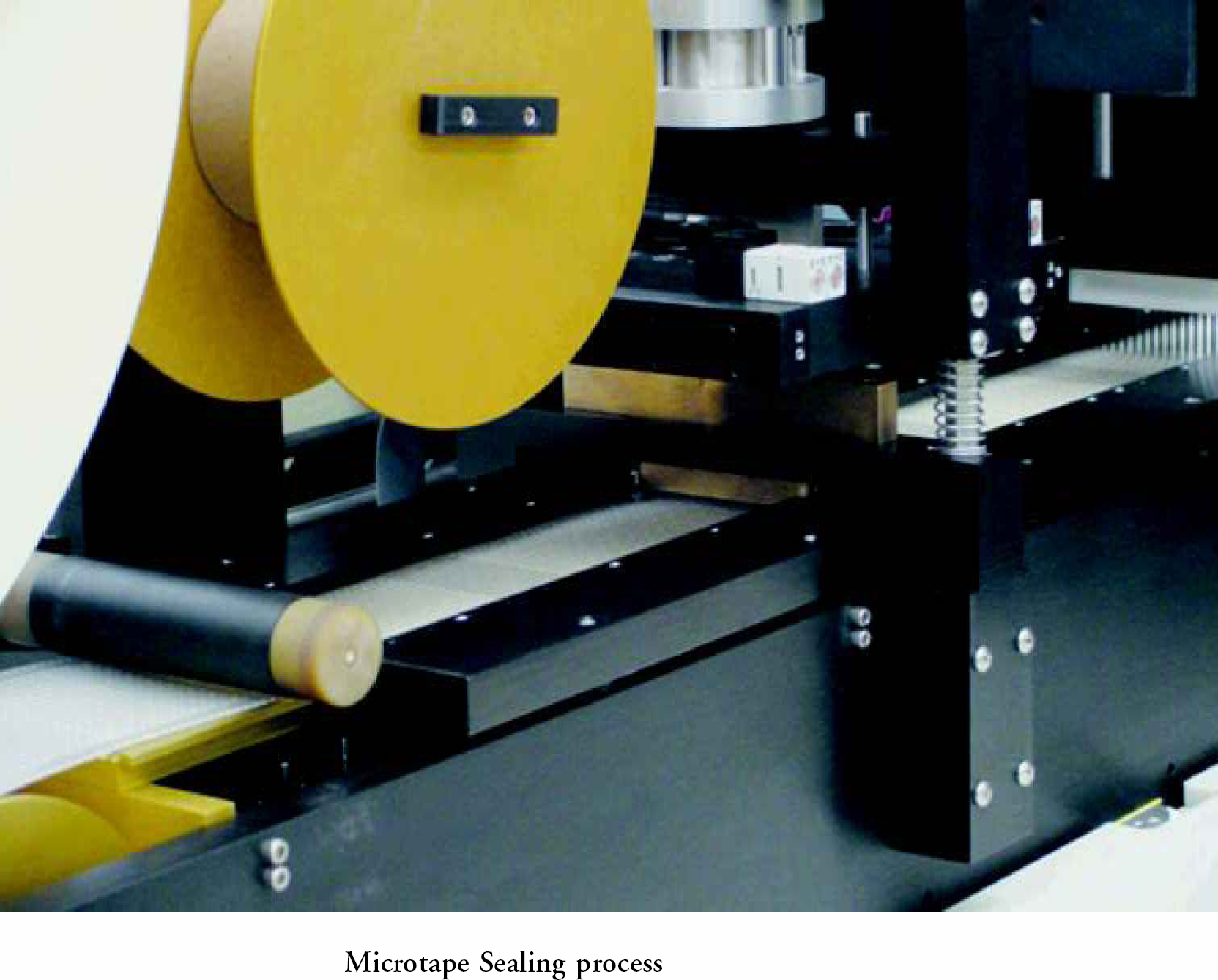
Once the wells on the Microtape are filled, the System is designed to provide a means of heat sealing each 384 well group on the Microtape. A sealing film provides a uniform seal around each well. A Peltier cooling device prevents dangerous heat transfer to the contents of the wells. The sealed Microtape is then rewound onto a 16-inch diameter roll, which holds over 260 patterns, or 100,000 samples. The System also provides a means of automatically unsealing a previously processed roll of Microtape. This permits automated access to the contents of the wells for further processing.
The prototype Microtape System will be going to Marshfield Clinic, the site of NIH's Genotyping factory, for evaluation in conjunction with a PCR application. Microtape is ideally suited for mass storage and recall of small aliquots. A 16-inch diameter by 4-inch wide roll holds 100,000 5μL sealed samples. Reformatting, storage and distribution of the compound library for High Throughput Screening are ideal uses of the Microtape System. From one freeze/thaw cycle of the library Mother plates, ten or more replicate copies can be made in 5 μL aliquots, stored frozen and distributed on demand.
Background
The story of Tomtec's growth is typical of the American business ideal: One man's vision, perseverance, and talent working out of his garage to become a significant player in a highly competitive market. There is no doubt that the ethos of Tomtec comes directly from its founder and President, Tom Astle. Mr. Astle explained to JALA his fundamental philosophy of business by saying, “You go into business to provide a service or product which the market needs but which is not available.” He went on to say that profits are secondary to this fundamental principal. He believes that if the job is done right, profits will be a natural consequence of hard work and customer satisfaction. In 1971, Tom Astle dissolved Astec and replaced it with Tomtec. Astec, started in 1967, had developed the Autotiter as a replacement for manual titrations in the serology and virology market. The original instruments were essential elements of Smith Kline's rubella vaccine program. From 1971 to about 1981, Tom Astle ran what was essentially a “one-man shop”. Developing systems in his basement and driving them in a van to trade shows.
Microtape Sealing process
Industry experience and contacts led Tomtec to create and build custom made systems for automating pharmaceutical research. These systems were primarily used for automating the analysis of soil samples. What followed was an automated agar cutting system for both Schering and Eli Lilly. Subsequently, a fully automated colony picking system was created and built for Bristol-Myers. Concurrently, Tomtec created, manufactured and automated an instrument to rehydrate dry antibiotics in microtiter plates for MicroScan. Two hundred instruments were manufactured and sold through Baxter/American Scientific Products. By the late 1980s Tomtec was selling instruments throughout North America, Europe and Asia.
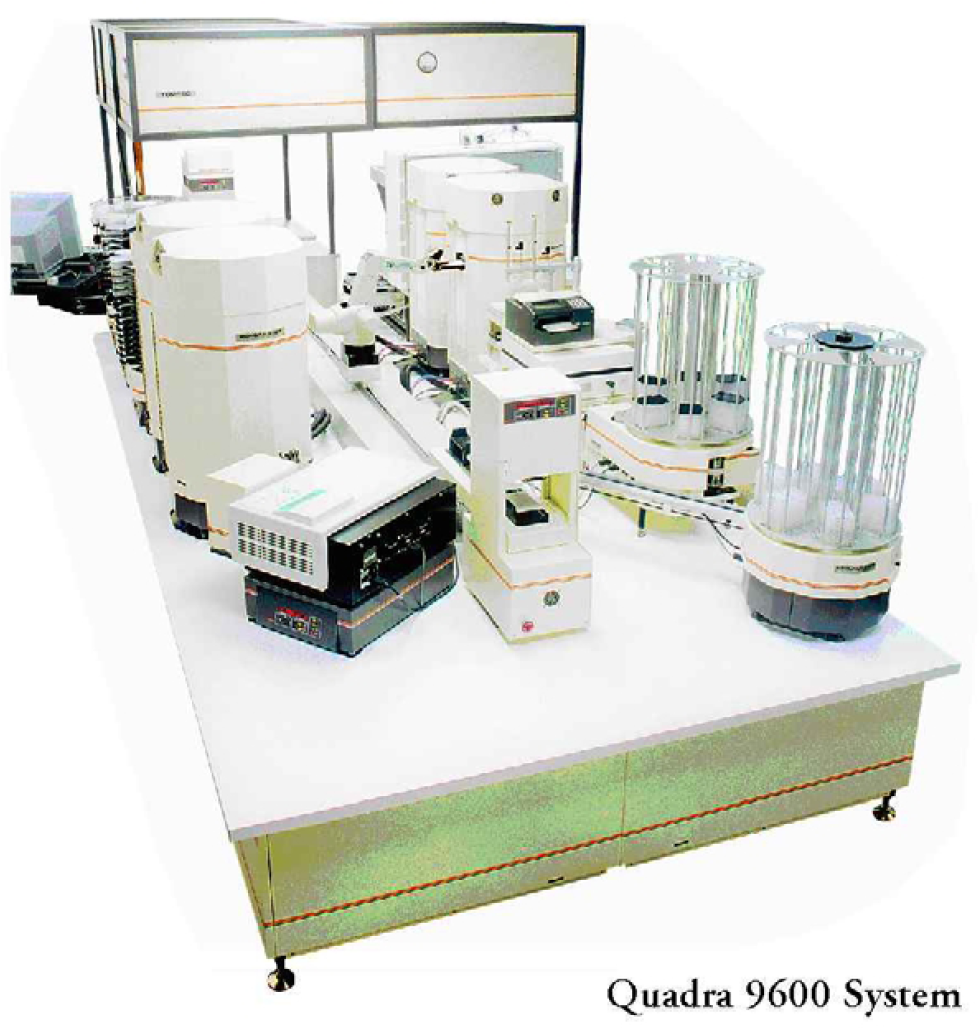
In 1988 they came out with a product which would dramatically alter their destiny, a 96-well cell harvester, the Harvester96®. Later this was followed by the Quadra96 (both explained in more detail below). Today these two instrument product lines are in widespread use throughout pharmaceutical and biotechnology research. Recognizing the need for further automation, Tomtec developed the Quadra 9600 system. This is a fully robotic 96-well assay system for running practically all of the 96-well assays in use today — receptor binding assays, enzyme immunoassays, and cell based assays. The Quadra 9600 system employs a custom array of tray hotels, incubators, harvesters, scanners, readers, and pipetting stations. The System operates hands-free by using a UNIX based computer control program.
Tom Astle describes the Quadra system as the “right product at the right time”. Critically, it provided Tomtec with the level of sales revenue to be able to undertake much greater research and development. Through this process Tomtec grew and developed a range of instrumentation, following a path that was suggested by customer demand. The 1990s were a period of rapid growth for the industry and for Tomtec. Through selective priorities, prudent financial discipline and searching for gaps in the market, Tomtec has grown enormously from Tom Astle's garage to a large facility with full in-house manufacturing. No longer a one-person operation, Tomtec now employs almost 90 people. The addition of its own sales staff in 2000, and the introduction of service contracts for clients have added to their internal strength and their ability to be creative. Being small means having to be creative, and never being a “me too” operation, Tom Astle told Conal Timoney, JALA's Managing Editor.
Financial Strength
Jim Hass, Financial Controller for Tomtec, told JALA about the enormous financial progress that Tomtec has achieved in the last 12 years and its implications for Tomtec's place in the market. In 1990 Tomtec had $400,000 in sales, a very small number of employees and little capital for re-investment. In 2001, Tomtec had over $11 Million in sales, employed almost 90 people and had the resources to undertake new product development which is essential for their future. Mr. Hass argues that all growth is a result of product development and that his role is to insure the availability of capital to achieve this. In line with their corporate philosophy, Tomtec is debt-free. Being privately owned they do not have to worry about satisfying any outsiders before embarking on a new project. Like so many of the employees interviewed by JALA, Mr. Hass stressed the personal commitment of Tom Astle. Astle's interest is in growing the company and securing its future, not amassing a fortune in personal wealth.
Despite this competitive advantage, Tomtec continues to be fairly conservative in its approach to product development. Tomtec takes customer needs and considers the potential for market viability prior to making an investment in product design and manufacture. The company decided early in its inception not to become an OEM supplier. Instead they focussed on niche markets, such as the Harvester and Quadra systems. The decision, in 2000, to replace distributors with their own sales team has further enhanced the flow of information with their customers. They are now dealing directly with the people in the laboratories who need solutions. They are getting a vastly increased level of feedback about gaps in the market and coming needs. Their sales force is equally valuable as a market assessment tool and as a sales tool.
Service contracts have also strengthened Tomtec's financial viability. They had $600,000 in service contracts in 2001, and expect to double this in 2002. They presently employ five service people and intend to raise this to six. Again this plays into the overall financial strategy: 24 hour service makes their products more competitive, having service teams makes re-sale more likely, feedback from service aids product development knowledge, and resources from service contracts provide additional funding for product development. The various aspects of Tomtec's energies all feed back to control what they manufacture. This, said Jim Hass, “is what American Industry was built on.”
Sales, Marketing and Service
Currently the largest single area of growth for Tomtec is technical service. Long known as an instrument manufacturer, it was deemed necessary to break out beyond this; not simply to increase revenue, but also to become a full-service manufacturer. Without this element Tomtec would run the risk of losing repeat sales. Just as the company believes in complete in-house manufacturing as the most reliable way of controlling quality and speed, it has also come to the conclusion that without a service division it is not going to be able to meet all of its company needs. Service agreements make their products more competitive given that many of their units run 24 hours a day. Even the best system can develop problems, either based on user error or constant use. Tomtec is now in a position to minimize downtime for its customers. As mentioned, the added benefit is that it puts Tomtec personnel right in the heart of the laboratory, and enhances the understanding of the difficulties and issues facing the lab. Without continuing to develop new products or to update adaptations of existing systems, Tomtec would be in danger of relying too heavily on a small number of products. Today, Tomtec has more new products under development than at any time in the past. It has financial freedom and it retains its strong engineering and manufacturing base.
Prior to service agreements, Tomtec, in 2000, made a major departure in strategy to get closer to its customers. This was the introduction of its own sales team. Up to that time the company had relied on distributors to move its products. Though this worked well for many years, and undoubtedly was essential for the early development of the company, it also created a buffer between the company and its existing and potential customers. With a sales force of 15 people, Tomtec is now operating directly with end-users. As with the service agreements, this helps to establish new relationships and a flow of information from clients back to the company. Not all customers' demands result in a new product, but when the pattern of requirements is established, Tomtec is in a position to develop new equipment to meet the new need. The structure of the company insures that the time from identification of a need to the development of a product is relatively short.
Often solutions can be found more simply in the form of new accessories to existing systems. It is for this reason that many Tomtec products are modular, a specific instrument may be purchased, or it may be bought as part of a package with accessories. The more information gained through sales, the more Tomtec can know which accessories are most valuable and what new ones need to be developed or adapted. “Our business is to stay close to their business,” Astle told JALA. The sales and marketing division are mandated not just to sell, but also to understand. They need to know going in the door that they have solutions to offer. It is not about a “hard sell” but about being an instrument supplier that is pro-active in responding to a rapidly developing market.
Perhaps the area of most rapid change is drug discovery. With HTS essential to the future of all pharmaceutical companies, Tomtec is confident that its products are both competitive and practical. Naturally the more expensive systems required by this market are more complex to develop, and because of cost, harder to sell. However, Tomtec is confident that the improved health care that will result from this process is something for which society will pay the necessary price. It is also a market from which they can not afford to be absent. Much of the new product development is focussed on HTS needs. As so many mergers and takeovers have already happened there is inevitably an “information-squeeze”, where only those with people on the ground can anticipate the emerging needs. For a comparatively small company, Tomtec has managed to position itself to have access to the same information as its much larger rivals.
Software and Manufacturing
The Software Division of Tomtec deals with networking, machine interfacing and systems architecture. Tomtec's Bill Harris told JALA that, as in all other operations of their business, they are extremely sensitive to the need for rapid development. Part of what makes this possible is the fact that their PC Board is ten years old and they have therefore been able to develop an extensive software library. This minimizes the adaptations that are required to develop the software to support a new or updated instrument. The PC Board took a year to develop and at this stage Tomtec has no plans to update it. Bill Harris described the idea of updating as being more due to intellectual curiosity than practicality. That said, they do frequently add sub-systems to it where necessary. As it was built to be a general-purpose source, it has the advantage of being able to support a wide range of software applications.
The key issues with all software programs developed are instrument and machine control. The most demanding projects are always system-scale projects. Unlike an instrument that just requires a set of commands to operate, these require a greater degree of flexibility. The fact that the software engineers are included in the development phase greatly eases the process. It means that as a system is being developed they are able to provide input into what is most workable and which designs are going to provide the greatest problems in terms of software control. This integrated process between software and manufacturing reduces software errors and speeds the process of development, as it can run in tandem with the overall manufacturing of a product. Despite the rapid changes in the industry in general, Harris noted that this is not true in terms of software. Tomtec's conservative approach reflects conservative industry requirements. They are aware that there will come a time for greater standardization of software. However, this is in the future and there is no indication at this stage of what form this standardization will take.
To get some insight to the manufacturing side, JALA interviewed Ron Scheyd. Having worked for Tomtec for 15 years, he has seen it grow from a few dedicated individuals to the large player it has become. What he made clear was that throughout this growth process Tomtec has remained the same type of company. It is in no way hierarchical and those involved in production have a great deal of freedom to develop the required products in the manner they see fit. As a smaller company Tomtec had already believed in doing as much of the manufacturing in-house as possible. As they have grown so has their ability to do this. Even metal bending for instrument cases and functional parts are conducted in their workshop instead of relying on outside sources. In practical terms this means that in every phase of manufacturing Tomtec is capable of producing the exact specifications required. They are also able to make in days what they might otherwise have to wait weeks to get delivered. When a concept is given to the manufacturing division it is normal for them to make up a prototype in days. This allows them to find out quickly if an idea is viable and to focus resources on the development only of those products which can work in practice. Most new ideas go from concept, to prototype, development, production and commercialization in under a year. Smaller systems can move even faster than this. This level of rapid development is achievable only because of the company structure and the in-house capability. With 50 employees (a majority of the workforce) employed in the manufacturing division, Tomtec has clearly identified the area where it wishes to remain strong: manufacturing products at a rapid pace.
Overview of Products
A look at some of the key instruments which Tomtec has to offer was undertaken to provide some insight into their capabilities.
Quadra 9600 Robotic HTS System
The Quadra 9600 System is a fully automated assay system for High Throughput Screening (HTS). This system was designed as a single track-based robotic arm with table-mounted peripherals and a self-contained reagent control system. It is designed to run the following assay types: SPA, cell-based, ELISA, receptor binding, photometric, fluorometric, luminescence, and filtration. The system can accommodate the many assay types due to the flexible control software and the variety of peripherals that can be integrated into the system. The system configuration is developed jointly by the customer and the engineering staff at Tomtec. The result is a flexible and reliable assay system to meet the automation requirements of the laboratory. The Quadra 9600 system derives its flexibility from the many peripherals and robotic accessories developed by Tomtec and other manufacturers that are integrated into a custom system. The Tomtec robotic accessories include the Quadra-Stor Hotel, Quadra-Stor Incubator, Quadra 96 Model 240, Quadra-Wash, Quadra-Seal, HEPA filter, Harvester 9600, and the Lid Handler. Some other peripherals that have been integrated onto the 9600 system include the Packard TopCount, Tecan Genesis, BMG FLUOStar, SLT Spectra, SLT Rainbow, Wallac MicroBeta, Labsystems Luminoskan, and the Titertek Multidrop.
Quadra 9600 System
Mega-Stor®
The Mega-Stor provides bulk storage of microplates. Its primary design utility is for compound library storage. With a separate chiller, it is capable of holding interior temperatures within the insulated cabinet shell of −10°C (14°F). The interior shelving is adjustable by the user. It can hold 1675 microplates, 1080 mid-sized plates, 850 deep well plates, or combinations thereof. A plate picking assembly can select any given plate in the Mega-Stor inventory, then present it at an output station. A barcode reader on the picker hand verifies that the retrieved plate is the one called for by the picking work list. The Mega-Stor has several infeed/outfeed options. The basic unit has a simple 2-station-infeed/outfeed. It is designed to serve a robotic system, whereby a given plate is called for (outfeed) and placed on one of the stations. A plate that is to be returned to the MegaStor (infeed) may be placed on the other station. The two stations provide independent operation of the Mega-Stor and the robot it is serving. The Mega-Stor may also use stacker cassettes as infeed/outfeed devices. There are two cassettes on each side, for a total of four. This is to serve those applications where a work list is to be filled for another operation. The cassettes are available in two sizes, 25 plates or 50 plates. A cassette of microplates can be placed on the Mega-Stor and be automatically put away. Barcodes are read from the individual plates, and tied to the appropriate shelf on the inventory list that is transmitted back to the main database. The reverse is also true, in that the Mega-Stor can fill an outfeed cassette from its internal inventory to match the work list requirements.
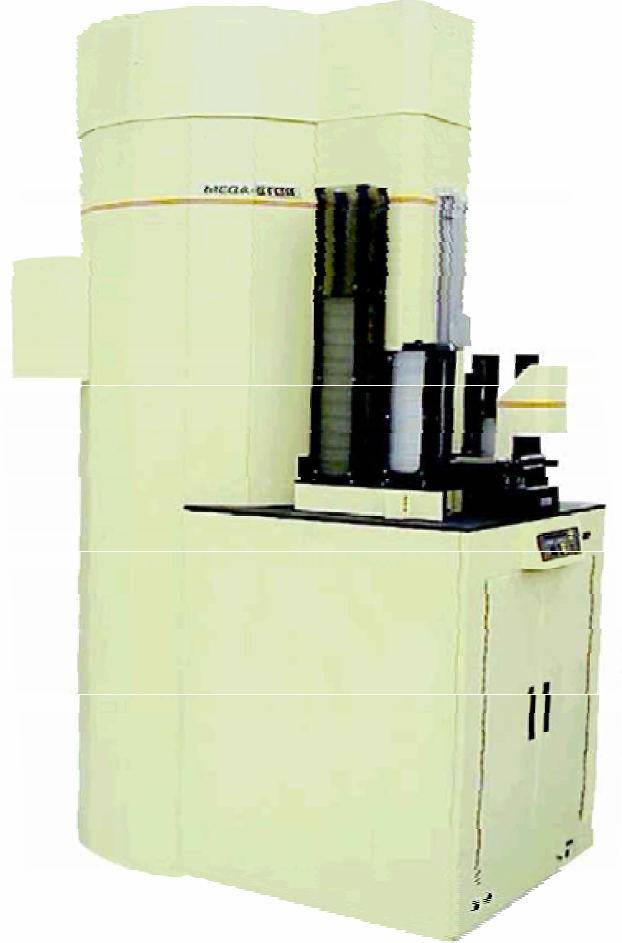
A third optional feature for the Mega-Stor is an output pipettor. This allows the Mega-Stor to fulfill the “cherry picking” function of the compound library. The Mega-Stor, if filled with 384 well plates, can hold over 600,000 discreet compounds. From this selection of compounds, individual microplates may be formatted. The cassette infeeds, described before, hold empty microplates. According to the work list presented, the microplate containing the desired compound (or compounds) is retrieved from the MegaStor. Aliquots of the desired compounds are aspirated, and then dispensed into the output microplate. The compound plate is returned to the Mega-Stor. The next plate containing the required compounds is selected. When the output plate is filled, the process is repeated for the next outfeed plate
For larger libraries, multiple Mega-Stors may be used, working in tandem. The cassette of outfeed plates moves to each Mega-Stor and is filled with compounds from that inventory. The “cherry picking” application requires that the compounds within the MegaStor be in a liquid phase, and not frozen. However, the MegaStor is essentially enclosed, and may be maintained with an inert environment such as nitrogen or argon, with only a small make up requirement. The MegaStor is designed for ease of maintenance. Its height is eight feet. Its width, however, is 34 inches. This allows the unit to be turned on its side in order to pass through a standard three foot opening. This is of particular value at the time of installation, or if it needs to be moved. All of the drive components are located in the top housing to be readily accessible. The entire front control enclosure may be disconnected and removed. The MegaStor itself is mounted on casters for ease in positioning and mobility. When in place, self-mounted floor jacks lift it off its casters for rigid mounting.
Autogizer
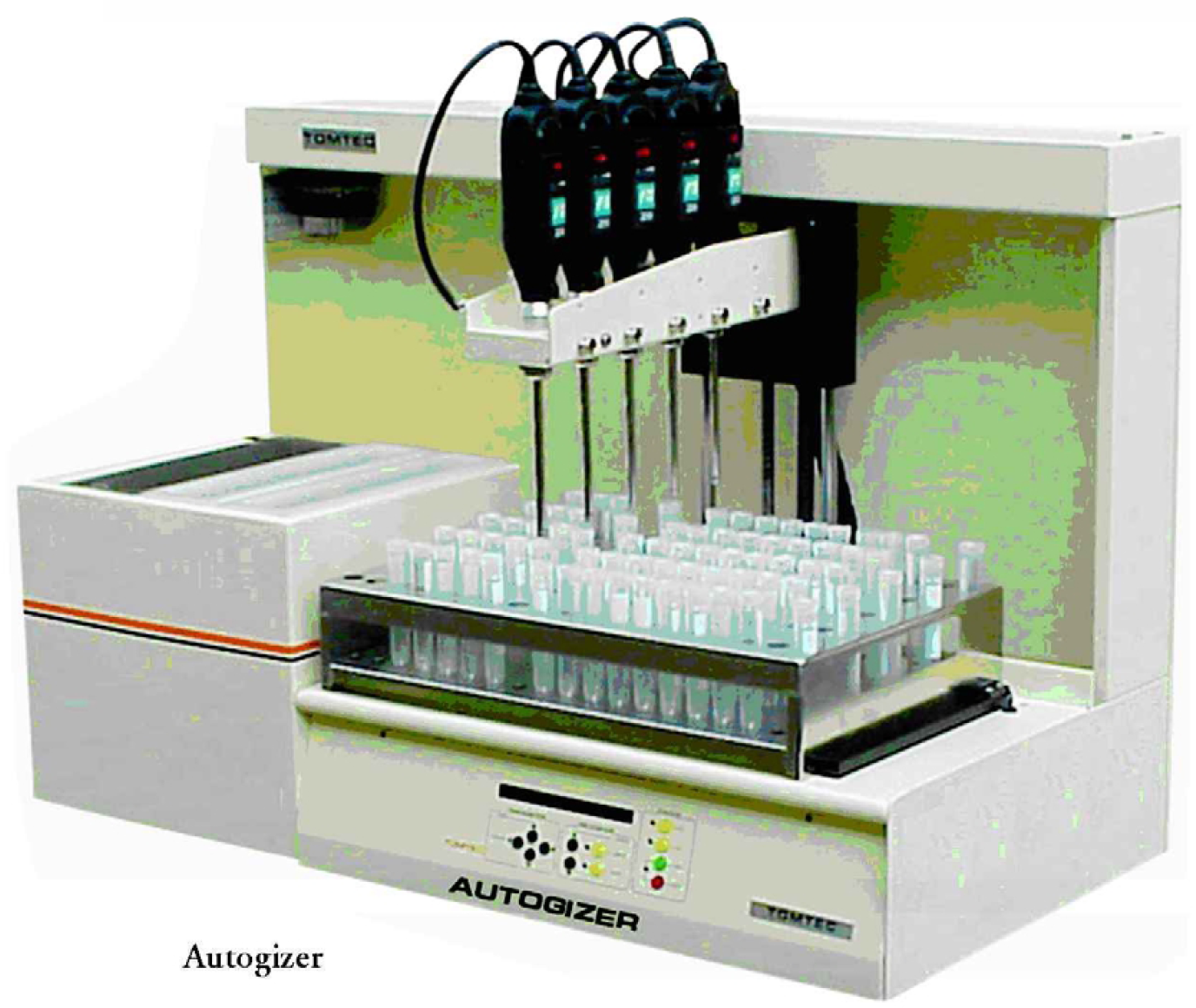
Autogizer®
The Autogizer is designed to fully automate a variety of homogenizing tasks. Model 700 is equipped with five Model 200 1/5 hp units. Model 701 is equipped with four Model 50 3/4 hp units for heavy-duty tasks. A wide range of cutter sizes is available for each model. Two racks accommodate small tasks (15mL tubes) or large tasks (50mL tubes). The racks may be partially filled (one or more) or fully filled for automated processing. The programming is by individual rows. The cutters may be oscillated up and down with the program setting speed of oscillation, upper and lower heights, time, and number of cycles in each row. The high cutter speed and versatile programming make for quick and efficient homogenizing. The cutters are cleaned automatically with three programmable wash stations. The first is an aqueous bulk wash station for use with tap water for quick, abundant washing, to clean residual material from the cutters. It may not remove all fibrous material. Fibrous material may require manual intervention. The aqueous bulk wash station may also be fed from a reservoir and a peristaltic pump. The wash time may have to be increased accordingly. The second wash station is for organic solvents such as alcohol, to remove non-aqueous residuals. The third is an ultrasonic aqueous bath to serve as the final rinse. A peristaltic pump is provided to circulate the organic and ultrasonic baths. The wash waste is separated to organic or aqueous collection. The programming controls the cutters' motion and time in each wash station. Each wash station is independently programmable. The Autogizer may also be supplied with one or two ultrasonic probes. These may be 20KHz or 40KHz depending on the application's requirements. A variety of probe sizes and configurations are available to match the functions desired.
Harvester 96 family

Harvester 96®
The Harvester 96® harvests cells simultaneously from the 96 well format of either microplates or microtubes. The difference between the three models (Mach II, III and IV) is in the filter format. Each model is designed to provide the maximum filter area spot that can be accommodated by the corresponding scintillation counter. The double “O” ring seal prevents cross talk between filter mat circles. If necessary, the user can easily remove the “O” rings and screens for cleaning or replacement. Durable 3/4” anodized aluminum plates have a roller locking device. The clamping pressure may be simply adjusted by the user. Since the automated Harvester 96 is fully programmable, the user's creativity can be the controlling factor in setting up protocols. From the front panel, the user may set up to 16 protocols to meet individual criteria. Once established, programs may be recalled or modified at any time. Programmability eliminates the variables of cell harvesting, thus enabling the user to achieve repetitive precision.
The most vital aspect of maintaining any Harvester is keeping it clean. The Harvester 96 provides for this through automatic rinse cycles. Wash tips may be easily removed for ultrasonic cleaning or replacement. The only internal moving parts are five stainless steel solenoid valves. The removable tip design of the Harvester 96 adds wash buffer to the top of each well. The well contents are aspirated directly to the filter mat which is sealed with a double “O” ring arrangement. The advanced ascending area design of the vacuum pathways assures uniform, rapid transfer from the microplate to the filter mat, eliminating dissociation. Each of the 96 wells is surrounded by an overflow vacuum ring. During the addition of wash, should a well overflow because of an air bubble, the overflow is captured, preventing loss of the adjacent wells. Aspirate extender tubes may be added to accommodate various deep well plates or microtubes. For those protocols using Trichloracetic Acid, a special stainless steel / polypropylene head is available to withstand the aggressive corrosion created by TCA.
The Future
Tomtec envisages the future as being determined in several ways. It acknowledges the need to bring more scientific know-how into the company. However it also intends to rely on the method which has served it so well to date: staying abreast of the market and of customer needs. Accepting that many of their competitors have potentially more resources, Tom Astle said, “It all comes down to people.” When it came out, the Quadra system was something needed in the market place. Through this, Tomtec was able to connect with the key people in the industry. This connection provided Tomtec with the knowledge of what needed to come next. They acknowledge that the Genomic market is a tougher one and harder to connect with. However they stress that, as always, there is a need for engineering, manufacturing and creativity, all areas where they feel they are strong. The Microtape™ is an example of how Tomtec is gearing itself to the HTS environment. They do not intend to move into the chip arena and are confident that their precision manufacturing will drive them ahead in those areas which they do intend to pursue.
Equally critical to their continued success is the nature of the operation. As virtually the entire manufacturing process is done in-house, they have the flexibility to try new methods quickly and effectively. In this way they believe that they have the edge on the competition: once they learn of a customer's need they can rapidly move on to finding a solution. The strong financial position of Tomtec, and the absence of debt, venture capitalists or stock holders, combine to make Tomtec free to select what it wants to do and act on it immediately. Though the company appreciates the size of its competitors, it feels that this can work to its advantage. It is small, flexible and capable of quicker reaction to market needs.
One misconception which many may have was quickly dispelled by visiting Tomtec: The notion that Tomtec is Tom Astle. Whilst there is no doubt that his vision, imagination and creativity built this company, it also has continued to grow through a dedicated workforce. His staff clearly admires the stable company he has built and his management style which allows them to fulfil their potential. Equally he has sought to build up a team of individuals capable of carrying the company well into the future. Those who know Tom realize the passion he brings to his company, but part of this passion is to insure its long-term stability. He believes in quality people and has therefore established a company capable of sustaining his legacy. With absolutely no interest in selling or merging his Company, Tom Astle is instead planning for the future in the same way he started it: employing good people to produce products that are needed. It may sound like a simple philosophy, but it is how this company was born, was built up and is the story of many of America's most successful corporations. We look forward to providing you with articles in future issues about Tomtec's continued progress.