




Abstract

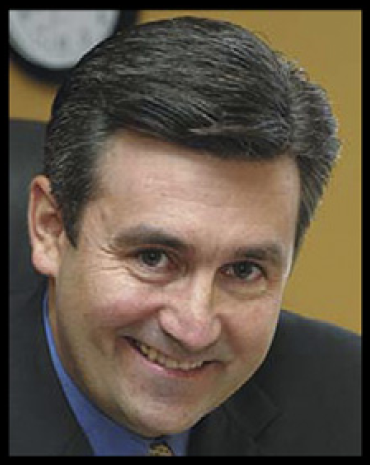
“Together, we have created a complementary continuum that we are all committed to expanding in a meaningful manner”.
It is well known that the genesis of the Association for Laboratory Automation is rooted in the field of drug discovery and development. Today, biotechnology and pharmaceutical companies continue to employ a major percentage of ALA members. In the meantime, however, others have been catching on …
ALA is attracting increasing numbers of automation technology professionals from labs in energy, forensics and security, molecular diagnostics, and food and agricultural companies. As I wrote last year at this time, “Regardless of whether scientists are developing new cures for cancer or fruit-flavored shampoos, ALA can help them”.
The food and agricultural field in particular is taking shape as an emerging stakeholder and promising contributor to ALA. A quick glance through the membership database shows that ALA now enjoys the active participation of scientists from companies such as Hershey, Monsanto, Pioneer Hi-Bred, Cargill, Archer Daniels Midland, the U.S. Department of Agriculture, Agriculture & Agri-Food Canada, Procter & Gamble, and BASF among others.
The energy and enthusiasm of these new members prompted a strategic response from the ALA Board of Directors. Throughout 2006, ALA conscientiously explored joint initiatives with senior representatives from food- and agriculture-focused organizations, including the Institute for Food Technologists, the International Association for Food Protection, and the Technical Division on Laboratory Management (a special interest membership section of the Association of Official Agricultural Chemists).
This outreach initiative has already started to bear fruit. Thanks to serious consideration and cross-promotional support, lab automation professionals in this arena have become well aware of ALA. The LabAutomation2007 education program was able to feature several excellent presentations and posters, and JALA has published several top-notch manuscripts by members of this scientific community. In addition, we are pleased to announce that ALA will present its NanoBioTechnology short course at the Institute for Food Technologist's 2007 FoodSmarts Meeting & Expo in July 2007. The session will be led by Dean Ho of Northwestern University, and Angelika Niemz of Keck Graduate Institute. In exchange, the Institute for Food Technologists is developing a short course exclusively for LabAutomation2008.
The work presented by these new ALA members demonstrates that scientists who specialize in laboratory automation share many, many more similarities than differences. Together, we have created a complementary continuum that we are all committed to expanding in a meaningful manner. I encourage ALA members to take advantage of ALA's new depth and dimension. Keep in mind the words of Bernard Baruch, “We did not all come over on the same ship, but we are all in the same boat”.
Sincerely,

Greg Dummer