




Abstract

Activotec
Activo-P11 Peptide Synthesize
According to Activotec, its new Activo-P11 Peptide Synthesizer is an easy to use and affordable instrument for synthesis of very high quality peptides. Intuitive peptide wizard software prompts users and enables quick definition of protocols (enter the peptide sequence, fill in the quantity required, define the resin to use and press run). Software-generated protocol worksheets allow even novice users to use the system productively and error free. With these protocols and onboard cleavage direct from the disposable reactor, even long peptides can be constructed with true walk away automation. Disposable reactors and amino acid containers aid easy installation, removal, and maintenance.

For more information, visit http://www.activotec.com, e-mail
ARTEL
Liquid Handler Performance Verification
As part of ARTEL's new LDQA (Liquid Delivery Quality Assurance) suite of services, its new Liquid Handler Performance Verification is intended to supply laboratories with third-party, documented assessment of the accuracy and precision of their equipment.
The new service provides performance results traceable to national standards, therefore, ensuring repeatability between procedures, between liquid handlers, and between locations—hence, efficient method transfer as well as regulatory compliance.
The performance of liquid handlers can also be checked for serial dilution dispensing and for delivery of nonaqueous reagents. All makes and models of liquid handlers can be verified, from single to 384 channel devices.

For more information, visit http://www.artel-usa.com.
Aspectrics
According to Aspectrics, its Encoded Photometric Infrared Spectroscopy (EP-IR) analyzers have achieved Military 202G Method 204D certification for successfully passing the High Frequency Vibration Resistance Test. The test was performed to determine the effect of vibration on component parts of the analyzer in a sweeping frequency range of 0.5–30 Hz. The units demonstrated no degradation in electrical or photometric performance during or after the test. In addition, the photometric performance was further tested by collecting spectra as these vibrations were applied to the analyzer. Even under the stress of such vibrations, the EP-IR analyzer retained photometric performance and still meets RMS signal-to-noise specifications greater than 50,000:1. Aspectrics' EP-IR analyzers are the only systems available on the market that have successfully achieved this certification.

For more information and a video demonstrating this experiment, visit http://www.aspectrics.com/product/process.php.
Beckman Coulter
COULTER LH 780 Hematology Systems
According to Beckman Coulter, its new COULTER LH 780 Hematology Systems are top-of-the-line analyzers that incorporate advancements to the company's proprietary VCS (volume, conductivity and scatter) technology for high sensitivity, specificity, and efficiency in WBC differential analysis. The systems deliver new functionality that increases laboratory capability and helps reduce health care costs.
The LH 780 offers new parameters including RDW-SD, which measures deviation of the width of the red cell population for applications such as anemia studies. Additional new tools enhance the study of cellular abnormalities. The LH 780 software includes new quality control features that allow broader flexibility. The new XM quality control package provides exponentially weighted moving average (EWMA) of CBC, five-part differential, NRBC, and reticulocyte parameters. XM also provides the flexibility to process up to 20 batches of two to 1000 runs. The Extended QC Rules package offers three new filters for measurement of total error, imprecision, and bias on any file.
The LH 780 can be configured to include an LH SlideMaker and LH SlideStainer, for automated slide preparation. The new LH 780 analyzers can also be incorporated into Beckman Coulter's LH 1500 automated core systems for ultra high-volume labs.

For more information, visit http://www.beckmancoulter.com.
Brinkmann Instruments
RDT Heat-On Heating Blocks
Brinkmann Instruments' new RDT Heat-On heating block range for round-bottomed flasks from 10 mL to 3 L in volume is designed to operate with all makes of leading stirring hotplates. The blocks enable safe and clean heating of one or two round-bottomed flasks.
According to Brinkmann, in addition to eliminating the mess and safety issues associated with oil baths, RDT Heat-On is quick to set-up, and heats up and cools down rapidly, resulting in significant improvements in productivity. RDT Heat-On also features a unique deep well shape proven to maximize the heating area and to avoid cracking of flasks. The RDT Heat-On range is a modular system that can be easily tailored to user needs. All RDT Heat-On blocks come coated with a special fluoropolymer coating intended to resist a wide range of chemicals, aid cleaning, improve heating, and provide durability.

For more information, visit http://www.brinkmann.com.
ESA Biosciences
Datasheet: BioStat System and Real-Time Measurement of NO
A new datasheet from ESA Biosciences describes the use and advantages that its BioStat System brings to direct realtime measurement of nitric oxide (NO) in biological systems. The BioStat, a digital signal processor-based, multimode potentiostat that uses flexible small electrodes, can measure NO concentrations at biologically relevant levels with a choice of sensors.
According to ESA Biosciences, polarographic electrochemical (amperometric) detection of NO using NO-specific electrodes is the most reliable and sensitive technique available. Furthermore, it provides the only method for direct, real-time measurement of NO activity at a target biological site.
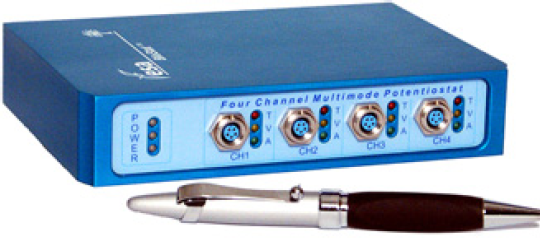
For more information, visit http://www.esainc.com, e-mail
Guava Technologies
Guava EasyCyte Plus
According to Guava Technologies, novice and experts alike will appreciate the latest addition to its range of microcapillary flow cytometry systems—the Guava EasyCyte Plus. This compact new system combines 96-well high-throughput screening with the expanded capabilities of a fourth color option. The unique, built-in 96-well sample tray feature also accommodates an additional 10 sample tubes, providing added flexibility for varying throughput needs. Easy integration with third party plate handlers makes high-throughput flow cytometry a reality.
The Guava EasyCyte Plus provides both absolute cell counts and population percentages, and runs all of Guava's turnkey assays. Guava also has implemented its ease-of-use approach in a new generation of software for the EasyCyte Plus system. With new Guava ExpressPro software, eight dot plots or histograms can be viewed per display. The software features include plot overlays, customizable axis labels and statistics, batch printing, and easy data transfer via simple clipboard commands.
For more information, visit http://www.guavatechnologies.com.
Technical Note: Assessing the Regulation of T-Cell Function by Distinct Cytokine Combinations on a Guava EasyCyte Platform
This new technical note from Guava Technologies describes an application run on the new Guava EasyCyte Plus. It can be downloaded from http://www.guavatechnologies.com/main/library/index.cfm.
INTEGRA Biosciences
DOSE IT Programmable Peristaltic Pump
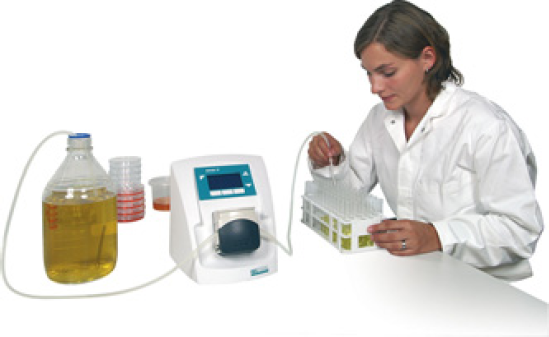
The new generation DOSE IT pump is designed to make the dispensing of culture media, buffers, and other solutions easy and efficient. An intuitive multilingual user interface, coupled with large, ergonomically-designed display and keypad, make the DOSE IT pump simple to program and operate. Twenty different dosing protocols can be saved and recalled at the press of a button. The setting of all functions and parameters is self-explanatory. A flip-top pump head is positioned for easy tube loading. A broad range of dose volumes (0.1 mL–10 L) can be dispensed with high accuracy, because DOSE IT is compatible with differently sized tubing: from thin (1 mm) tubing for dispensing small doses to wide bore (8 mm) tubing for high-throughput pumping.
The flow rate of the standard DOSE IT pump (0.6 mL/min–5 L/min) can be doubled by using a second pump head, a modification that also reduces flow pulsation. The versatility of the DOSE IT reduces the need for a laboratory to have several single-purpose pumps.
For more information, visit http://www.integra-biosciences.com, e-mail
Ion Signature Technology
Application Note: Analysis of Pesticides in Lemon Oil Extract Using Deconvolution Software
A new, free application note from Ion Signature Technology describes how a team of analysts from the Chemistry
Department at Tufts University, GERSTEL and Irish Distillers Pernod Ricard used Ion Signature Quantitative Deconvolution Software to untangle complex spectra, and determine the concentration of trace levels of compounds in a considerably shorter period of time than that required for conventional data acquisition. In one application, the time required to separate a lemon oil sample and determine the concentration of a series of pesticides, internal standards, and surrogates was reduced by approximately 75%.
Download the application note from http://ionsigtech.com/applications/applications_notes.php.
Labcyte
Echo Liquid Handler Software
Two new software products, one to set up dose-response assays and the other to facilitate cherry-picking, are now available to enhance the applications of Labcyte's Echo 550 and Echo 555 liquid handlers, which use acoustic energy to transfer nanoliter volumes of fluids, eliminating pipettes, pin tools, and nozzles.
The new Dose-Response software is for set-up of multipoint dose-response assays typical of those analyses used for IC50 and EC50 determinations. It provides features that cannot be easily achieved with traditional liquid handlers. For example, controls and standards can be scattered across an assay plate rather than restricted to particular columns or rows.
The Cherry-Picking software enables users of the Echo 550 or Echo 555 to choose specific compounds from library source plates and to transfer them to assay plates in a variety of ways including interplate and intraplate replicates, variable volume transfers and pooled transfers.
For more information, visit http://www.labcyte.com.
Micronic
New Macro Tubes and Lids
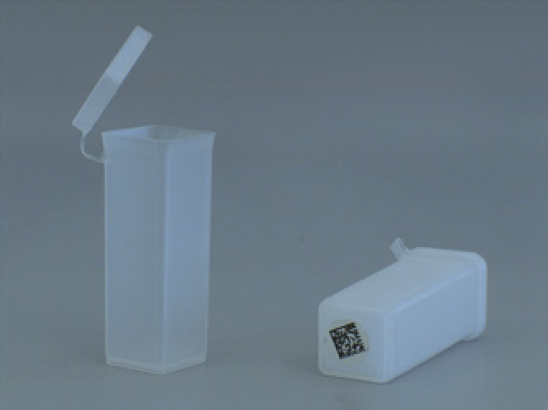
A range of Macro tubes and lids for sample volumes larger than 1 mL, which may be especially useful in agrochemical, food, veterinary, and clinical laboratories, is now available from Micronic. For convenience, these 2.5 mL and 7.5 mL Macro tubes come prefilled in standard footprint racks for compatibility with all automated sample handling systems. Typical storage applications for Macro tubes include plants and seeds, tissue samples from veterinary and food laboratories, and samples from high volume automated chemical reactions. In addition, they can provide an easily automated vessel for making dilutions above 1 mL in a 96-well system.
For more information, visit http://www.micronic.com, e-mail
Millipore Corporation
Optimized Protein Fractionation Using Ultrafiltration
Millipore has developed a protocol for efficiently compartmentalizing protein solutions using ultrafiltration in a centrifugal mode. Traditional fractionation techniques use size-exclusion chromatography. This new method confirms the advantage of speed and efficiency through a combination of Millipore's Amicon Ultra centrifugal devices and expertise.
Amicon Ultra centrifugal devices enable researchers to fractionate protein mixtures quickly and easily due to the product design. The bi-vertical housing, limits membrane polarization, whereas the hydrophilic microstructure of low-binding Ultracel ultrafiltration membrane enables efficient protein separation. This method expedites the fractionation process by minimizing process steps such as setting up columns, optimizing column flow rates, and collecting and concentrating various fractions.
For more information, visit http://www.millipore.com, or call 800.MILLIPORE or +1.781.533.6000.
GPCRProfiler Screening
Millipore now offers a service for selectivity screening, characterization of lead compounds, and screening of focused GPCR libraries. According to the company, its GPCRProfiler screening more accurately characterizes lead compounds than traditional binding methods by providing comprehensive functional data that enables pharmaceutical and biotechnology companies to accelerate their lead optimization efforts.
The GPCRProfiler package includes selectivity screening for off target effects, IC50 dose response analysis, and screening of focused libraries against single or multiple targets. Millipore says its GPCRProfiler service is the first complete functional cell-based assay platform that provides pharmacological data on hit or lead compounds. Users can determine if a compound is functioning as an agonist or antagonist from the first data report. GPCRProfiler screening leverages ChemiScreen technology, which funnels all GPCR signaling through real time calcium mobilization. Use of a common assay platform for all targets simplifies data comparison and can be correlated to historical in-house data. Millipore currently has more than 100 validated GPCR targets available for profiling and screening.

For more information, visit http://www.millipore.com, or call 800-MILLIPORE or +1.781.533.6000.
Drug Discovery Research and Sample Preparation Products Guide
Millipore's new, 40-page Multiwell Products Guide features a number of high-throughput screening and cell culture products to be used in the advancement of new therapies and
drugs along with information on a range of applications including sample preparation, biochemical assays, cell-based assays, and ADME/compound profiling. Also included are protocol illustrations, performance data, and complete product ordering information.
For more information, visit http://www.millipore.com or call 800.MILLIPORE or +1.781.533.6000.
PerkinElmer
Optima ICP Online Training
A new e-learning course is now available from PerkinElmer to help users troubleshoot and ensure proper preventive maintenance of the PerkinElmer Optima family of Inductively Coupled Plasma (ICP) instruments. The curriculum is the latest addition to PerkinElmer's more than 60 online courses designed to help advance the pace and precision of scientists' research and testing through easily accessible, high quality training, and education.
For more information, visit http://las.perkinelmer.com/Trainings/CourseSearch.htm.
Geliance Bio-Imaging Systems
The Geliance series is a new line of high-performance bio-imaging systems for fluorescence and chemiluminescence applications in academic and pharmaceutical laboratories.
According to PerkinElmer, these instruments offer top-of-the-line optical performance, with easy-to-use hardware and software to provide researchers a choice of optics and lighting options for DNA, RNA and protein chemiluminescent and fluorescent experiments. The Geliance series has many integrated features for increased productivity, including real-time image capture that enables images to be instantly ready to print or analyzed.
The new Geliance series includes the Geliance 200 Imaging System, which PerkinElmer calls an advanced resolution system for 1-D documentation and analysis. It has a standard 1.4 megapixel camera for a wide range of capabilities for fluorescent stains. The Geliance 600 Imaging System is a high-performance 1.4 megapixel, 16-bit-cooled CCD camera system for fluorescence and chemiluminescence applications. Its design allows for a choice of optics and lighting options, allowing clear images of even faint luminescence for a wide range of chemiluminescence-based applications including Western Lightning PLUS, ECL, SuperSignal, and LumiGlo.
For more information, visit http://www.perkinelmer.com/geliance.
PhotoKinesis Confocal Imaging Accessory
The new PhotoKinesis accessory is designed to enable Fluorescence Recovery After Photobleaching (FRAP) and similar techniques on PerkinElmer's UltraVIEW Live Cell Imaging systems. The accessory also introduces Track-It, on-demand, photoactivation, and photoswitching that provides greater control over experiments and increased biologically relevant data from samples.
For more information, visit http://www.perkinelmer.com.
Spotlight 400 FT-IR and 400N FT-NIR Imaging Systems
These new systems are designed to increase productivity and understanding of samples with faster data collection, more sampling and spatial resolution flexibility, and longer unattended operating time.
PerkinElmer uses linear array detector technology in the Spotlight 400 series that addresses larger sample sizes and increases captured IR spectral range. The Spotlight 400 series also is designed to collect multiple chemical pictures in a single operation. New options include a tablet autosampler, enlarged detector cooling storage, and larger sampling areas. The system can operate unattended for long periods and overnight.
The Spotlight FT-IR Imaging Systems serve a diverse range of end markets, including polymers, chemicals and materials, academic research, pharmaceutical, cosmetics, forensics, and now biomedical imaging research to study diseases at earlier stages.
For more information, visit http://www.perkinelmer.com/spotlight400.
Radleys
Heat-On Heating Blocks
Radleys has extended its Heat-On heating block range to accommodate round-bottomed flasks of up to 5 L.
For more information, visit http://www.radleys.com.
Syngene
Dyversity Detects Nanogram Quantities of Protein
For proteomic researchers who want to rapidly image 1D and 2D protein gels, nanogram quantities of protein stained with Invitrogen's Pro-Q Diamond now can be detected in seconds with Dyversity, Syngene's multi-functional imager.
Using a Dyversity system fitted with a Cy dye lighting module, dual wavelength transilluminator, UV, and Cy3 dye emission filters, Syngene's technical experts imaged 1D acrylamide gels containing 1000–0.1 ng Pro-Q Diamond stained phosphoprotein molecular weight standard, PeppermintStick (Invitrogen). The gel images were captured using two different settings: Cy3 excitation with a Cy3 emission filter and medium-wave UV excitation with a UV emission filter.

Syngene's application specialists found both imaging conditions of Dyversity produced comparable results with identical exposure times, detecting as little as 5 ng of Pro-Q Diamond stained protein in less than 3 s.
For more information, visit http://www.syngene.com.
Thermo Fisher Scientific
Technical Poster: Use of a Data Management System to Handle Data Processing, Storage, and Uploading for In Vitro ADME Data in Drug Discovery
A new technical poster from Thermo demonstrates the use of its Commercial-Off-The-Shelf (COTS) Galileo LIMS for the automation of high-throughput data processing for ADMET profiling. Galileo LIMS is an integrated informatics solution designed specifically for in vitro ADMET profiling.
The poster focuses on advantages the LIMS provides in enhancing the value of acquired data by ensuring consistency in ADME calculations and facile uploading to corporate databases for broad dissemination and impact. It discusses reasons that Pfizer selected a dedicated LIMS to address in vitro ADMET data and to broadly disseminate that information for maximum use throughout its organization. The poster is authored by researchers at Pfizer Global Research & Development, departments of Pharmacokinetics Dynamics & Metabolism and Research Informatics, as well as product developers at Thermo.
The poster is available free of charge in hard copy format via
Finntip Flex 1000
Thermo has expanded its Finntip Flex series with the new Finntip Flex 1000. This ergonomic tip is designed to work in the 100–1000 μL range for assured versatility.
As with all Finntip Flex tips, the new tips are available as standard and sterilized racked tips as well as refill kits. The addition of the advanced Finntip Flex Filter tips is intended to ensure that the Finntip Flex range is suitable for both routine use and for quality conscious laboratories demanding the highest levels of pipetting precision and accuracy.

For more information, visit http://www.thermo.com/finnpipette.
Biodiesel Application for Nicolet 380 and Nicolet 6700 FT-IR Spectrometers
When coupled with Thermo's Smart ARK Attenuated Total Reflectance (ATR) accessory, Thermo's Nicolet 380 and Nicolet 6700 Fourier Transform Infrared (FT-IR) Spectrometers are capable of conducting fast and accurate analyses of biodiesel content in fuel blends. According to Thermo, its biodiesel application by FT-IR aids regulatory compliance and enables results with the click of a mouse, and analyses can be conducted by laboratory technicians without the need for experts or additional training.
Thermo's ATR accessory includes a choice of crystals, facilitating the switch between low and high biodiesel blends. Additionally, the accessory features minimal sample preparation, easy clean up, and the ability to switch between crystals without optical realignment.

For more information, visit http://www.thermo.com/ftir, e-mail
DFS High Resolution GC/MS System
According to Thermo, its DFS High Resolution GC/MS system is capable of performing precise and reliable confirmation analyses of dioxins and furans in the low femtogram range. The system helps governmental, industrial, and commercial laboratories conducting environmental monitoring analyses comply with the new strict U.S. EPA and EU directives. These regulations call for lower detection limits for dioxins and furans in food, environmental, and biological samples to meet ever-decreasing exposure levels.
The recently introduced directives require limits of quantitation (LOQ) for dioxin confirmation to be 80% lower than the lowest reported level in the regulation. Thermo's DFS High Resolution GC/MS system with two Trace GC Ultras and a TriPlus Autosampler achieves the lowest LOQs.
For more information, visit http://www.thermo.com/ms, e-mail
BioWorks 3.3
Thermo Electron has extended its protein identification and quantitation software package with the newly designed BioWorks 3.3. Featuring unique PepQuan capabilities, BioWorks 3.3 enables automated quantitative analysis of iTRAQ, SILAC, and ICAT labeled samples, as well as label-free quantitation techniques. A new probability-based scoring algorithm delivers increased confidence in protein identification. In addition, a unified Search Results File (SRF) simplifies and accelerates the review and transfer of results by allowing all of the information to be stored in a single file.

For more information, visit http://www.accelacomm.com/jlp/tsp/35/10009993, e-mail
Viscotek
OmniSEC 4.2 Software
This latest version of Viscotek's GPC/SEC integrated software package is designed to maximize the information and efficiency of multiple detector size separation experiments.

For low-molecular weight polymer samples where dn/dc is not constant, it is now possible with OmniSEC 4.2 to create a calibration function that relates the dn/dc to the molecular weight for a given sample type. If variable dn/dc is enabled in the method, it is possible not only to see the corrected molecular weight values across the distribution, but to see the true dn/dc across the sample. OmniSEC 4.2 also includes the ability to calculate molecular weight of a protein sample without knowing dn/dc or concentration.
OmniSEC 4.2 supports most commercially available GPC detectors and provides whole system integrated software control and support for Viscotek's range of GPC/SEC systems including the popular Triple Detector Array (TDA), GPCmax and the new HT-GPC system. The new version also includes low angle light scattering (LALS) and right angle light scattering (RALS) options for calculation of molecular weight determination and automatic determination of dn/dc, dA/dc, and A2.
With enhanced data acquisition capabilities, OmniSEC 4.2 is able to import and analyze up to six channels of data simultaneously at 5 Hz for demanding copolymer multidetector analysis. OmniSEC 4.2 increases the information available from GPC/SEC experiments through enhancements to branching and calibration calculations, copolymer analysis, overlays, multiple peak detection, and data acquisition.
The new software revision provides full audit trail and further enhancements ensure 21CFR part 11 compliance. A new report design facility allows users to build reports containing data from multiple samples, and can even be run in full automation mode using a custom template in the method. OmniSEC 4.2 is available as a free upgrade to all existing users of OmniSEC 3.0 and above.
For more information, visit http://www.viscotek.com, e-mail
More News
Advion BioSystems, a subsidiary of Advion BioSciences, received orders from the U.S. Centers for Disease Control and Prevention (CDC) totaling over $1 million to provide chip-based nanoelectrospray instrumentation for the Level One state testing sites in the CDC national chemical terrorism program known as the Laboratory Resource Network. These represent the largest orders Advion has received since commercializing its technology in 2002. According to Agilent Technologies, the National Cancer Institute (NCI) purchased a full site license for a wide range of Agilent bioinformatics solutions. Under the agreement, the NCI is making the following solutions available to its intramural program researchers: Agilent GeneSpring GX for gene expression, Agilent CGH Analytics for comparative genomic hybridization (CGH) studies, Agilent Chip Analytics to analyze chromatin immunoprecipitation-on-chip data (ChIP-on-chip), and GeneSpring GT for genotyping and SNP analysis. ARTEL appointed Mary Coulombe to clinical sales manager and Joanne Romano to clinical sales representative to support ARTEL's clinical laboratory customers. Ms. Coulombe previously held the position of clinical marketing representative at ARTEL and Ms. Romano previously held technical positions supporting ARTEL's operations and calibration laboratories. Aspectrics announced a collaboration with Young Lin Instrument, a global distributor of scientific, analytical, medical, electrochemical, and process instruments. This partnership will see Young Lin Instrument become the exclusive distributor in South Korea of Aspectrics' complete range of process analyzers, software tools, and sampling accessories. In addition, Young Lin will distribute Aspectrics' products throughout China, India, Thailand, and Taiwan on a nonexclusive basis. In addition, Aspectrics appointed independent PR consultancy, The Scott Partnership, to handle its public relations. deCODE genetics voluntarily suspended its Phase III clinical trial for DG031 (veliflapon), the company's developmental compound for the prevention of heart attack, to address an unexpected formulation problem with the tablets being used in the trial. deCODE genetics appointed Jakob Sigurdsson as senior vice president, corporate development. Mr. Sigurdsson holds a B.S. degree in chemistry from the University of Iceland and an M.B.A. from the Kellogg School of Management at Northwestern University. He previously held senior positions with Rohm and Haas Company, and for the past 2 years, he served as C.E.O. and President of Alfesca. The Eskitis Institute for Cell and Molecular Therapies at Griffith University chose two comPOUND stores and a comPANION 1–2–4 remote delivery system from TTP LabTech integrated with a Velocity11 BioCel automation system to form the core of its Queensland Compound Library (QCL) in Brisbane, Australia. This is intended give the QCL a fully automated and flexible sample processing system for taking pure compounds and natural product extracts from frozen storage into high-throughput, high-content, or phenotypic screening. Evotec signed a research collaboration agreement with Daiichi Pharmaceutical of Japan for medicinal chemistry and compound profiling. Evotec initially will work on two Daiichi programs to identify lead structures for further progression into clinical trials. In other Evotec news, the Genome Research Institute (GRI) at the University of Cincinnati, and Cincinnati's Children's Hospital Medical Center announced the successful installation at the GRI of an Evotec plate::explorer with Opera High Content Screening extension. According to FEI Company, Mexico's national research petroleum institute, the Instituto Mexicano del Petroleo, opened its new center for advanced microscopy and research tomorrow with a complete suite of FEI tools for advanced nanoscale research and development, including a Titan S/TEM microscope. In addition, a Titan 80–300 S/TEM microscope was acquired by the London Centre for Nanotechnology, an interdisciplinary collaboration between Imperial College London and University College London, to provide its first world-class nanocharacterization facility. The Titan will support a range of nanotechnology research projects in medical, pharmaceutical, and materials science. The University of Ulster opened the FEI Centre for Advanced Imaging in Northern Ireland. The center provides a suite of FEI electron microscopes for all major research areas within the university's Biomedical Sciences Research Institute, and supports academic research from other faculties within the university and beyond, including research and development for the university's industrial partners within the region. Millipore opened a $50 million research and development center in Bedford, MA. More than 200 employees, customers, partners, and other guests joined the company in October to mark the milestone. Millipore and Stem Cell Sciences announced an exclusive license for Millipore to develop and market SCSs' serum free media for the growth of human embryonic stem cells (hESCs). The defined media will be the first product available in the industry that offers improved methods for growing hESCs without the need for animal serum. Pall Corporation announced plans to expand its life sciences manufacturing operations in Fajardo, Puerto Rico. The planned establishment of a Life Sciences Center of Excellence will require around $50 million in facilities, machinery, and equipment, and add more than 250 full-time jobs in Puerto Rico by the year 2010. PerkinElmer partnered with Ion Signature Technology to offer users of the PerkinElmer Clarus 600 GC/MS the option to incorporate Clarus customized Ion Signature Quantitative Deconvolution Software for fast and accurate data review and evaluation. RTS Life Science appointed Gary Walsh as its new managing director. Phil Johnson, Mr. Walsh's predecessor, retired after 17 years with the RTS Group. Mr. Walsh held the position of RTS Life Science's sales director for the last 6 years. Thermo Electron's Antaris Target blend analyzer was named by R&D Magazine and MICRO/NANO Newsletter as one of the 25 best micro- and nanotechnologies introduced into the marketplace in 2006. In other Thermo Electron news, the company established a new local customer support center for its informatics software and services in Dammam, in the Eastern province of Saudi Arabia. The new helpdesk was developed in close collaboration with the Yusuf Bin Ahmed Kanoo group, Thermo's partner in the region. The University of Applied Sciences Wiesbaden and Indiana University–Purdue University Indianapolis (IUPUI) signed an agreement of cooperation last year for Wiesbaden's Computer Science Department and IUPUI's School of Informatics to teach a joint advanced course in laboratory automation. According to IUPUI Professor Mahesh Merchant, “The major challenge will be collaborative projects with microfluidics applications with students on both sides of the ocean analyzing and implementing pieces of software that will run in a distributed environment.” According to Professor Reinhold Schäfer of Wiesbaden, “This is not only a technical challenge. We will help to guide students into the world of multicultural global cooperation. These types of courses, a few more will follow in subsequent semesters, will offer sustainable knowledge for professional careers. The multi video link plus the distributed networks of both institutions will support this work.” In Wiesbaden, this project is financially supported by the State of Hesse and Deutsche Telekom. Velocity11 relocated its European headquarters to new, larger purpose built offices in the UK.
Journal of the Association for Laboratory Automation
Welcome Doug Gurevitch!
This issue marks the official beginning of Douglas Gurevitch, P.E.'s tenure as executive editor for the Journal of the Association of Laboratory Automation (JALA). Mark F. Russo, Ph.D., served in this position from January 2003 through December 2006.
Gurevitch received an M.S. in Mechanical Engineering from the University of California, Santa Barbara in 1990. He is a registered Professional Engineer. He started his career working on medical instrument manufacture and development at New Image Industries. In 1995, he joined Sequana Therapeutics (later Axys Pharmaceuticals). As head of the Instrumentation Group, he optimized robot operations, developed custom-integrated robotic systems, instituted standard engineering practices, and investigated new technologies. In 2000, he joined Biocept as Director of Microarray Automation, automating the production of proprietary microarray technology using off-the-shelf and custom robotic solutions while managing the engineering efforts of the company. Currently, he is staff Senior Development Engineer for the Department of Bioengineering at UCSD.
Gurevitch has been an active volunteer contributor to the ALA for many years. He has presented scientific papers at several LabAutomation conferences since 1997, published scientific papers in JALA, served on the JALA Editorial Board since January 2005, served as JALA associate editor in 2006, and taught “Economic Justification of Laboratory Automation” short courses at LabAutomation since 1998. He served as program chair for LabAutomation2006 and as associate program chair for LabAutomation2005. Gurevitch also is the founding chair of the San Diego Chapter of the Laboratory Robotics Interest Group.

Call for Papers
JALA publishes six peer-reviewed issues each year, and accepts manuscripts on an ongoing basis from ALA members and nonmembers. Lab automation professionals are invited to showcase their achievements by submitting method-focused scientific papers for publication consideration. Manuscript guidelines and submission information are available at http://labautomation.org/jalainstructions.php.