




Abstract

A2 Technologies
Exoscan Hand-Held FTIR
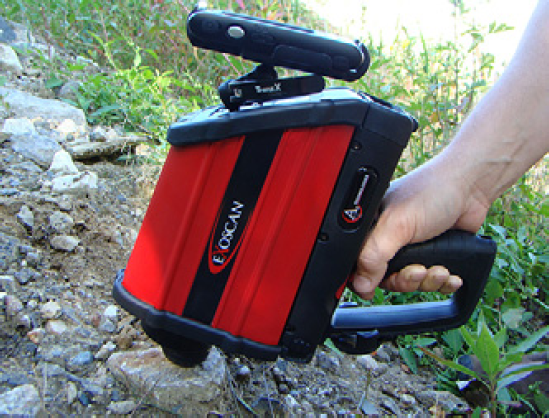
According to A2 Technologies, its Exoscan hand-held FTIR is now available with diffuse reflectance sampling interface. This new capability extends the system's range of applications. For example, in geoscience, the Exoscan system is analyzing the components of soil, sand, and rock to determine specific composition and origin. In art conservation, the noncontact capability of the diffuse reflectance interface is critical to ensure that highly valuable art is not damaged by the analysis. In the study of composites, the diffuse reflectance interface has proven highly effective in looking at highly IR absorbing carbon fiber-rich sections of cured resin-fiber matrices.
Aalborg Instruments
Digital Paddle Wheel Flow Meters
According to Aalborg Instruments, its new multiparameter PWE Enhanced Digital Paddle Wheel Flow Meters offer cost-effective solutions to medium-flow liquid applications. These units provide password-protected access to process parameters to eliminate user-tampering or resetting. Designed for measuring highly accurate temperature readings, flow rates can be displayed in 23 different volumetric or mass-flow engineering units. In addition, flow meter parameters and functions can be programmed locally via an optional keypad and LCD or remotely via an RS-232/RS-485 interface.
Simple in design with only one moving part, these units are easy to install and operate. Sapphire jewel bearings facilitate virtually friction-free impeller wheel rotations resulting in linear medium-flow metering. PWE supports various functions, including two independently programmable flow totalizers, self-diagnostic alarm, flow pulse output, and analog 0–5 Vdc or 4–20 mA output flow and temperature signals. Models constructed of polypropylene or chemically resistant polyvinylidene fluoride can be mounted either horizontally or vertically. All models come with free communication software with temperature and flow-data-logging capability. Flow metering accuracy is ±1% FS and temperature accuracy is ±0.5 °C.
More: www.aalborg.com
Agilent Automation Solutions
Technical Poster: Fully Automated Platform for High-Throughput Genomic Cytometric Screening
A new technical poster from Agilent describes a fully automated platform consisting of an IntelliCyt HyperCyt High-Throughput Flow Cytometry (HTFC) platform coupled with two Beckman Coulter Cyan flow cytometers and integrated into an Agilent BioCel 1200 sample preparation and plate-handling robotic platform. The automated system, as configured, performs a diverse set of tasks important for carrying out functional genomic screens (cell culture, transfections, infections, sample concentration, and HTFC) with excellent throughput and minimal manual manipulation.
The poster shows how a proof-of-principle functional genomics shRNAmir screen for inhibitors of transforming growth factor-β1 signaling in MPC9A7 cells identified several important regulators of this pathway. shRNAmirs targeting known signaling proteins, such as Alk5 are readily detected using the HTFC capabilities of this platform.
With the automation configuration presented in the technical poster, throughput of the HyperCyt HTFC platform is doubled compared with stand-alone operation. Data analysis software associated with the Agilent BioCel 1200 allows plate level statistics to be generated within minutes of a screening run. In addition to speed, the technology is shown to substantially reduce the amount of sample aspirated for each analysis, typically acquiring 2 μL per well with thousands to tens of thousands of cells in each sample.
More:
Pintool Heads for Liquid Handlers
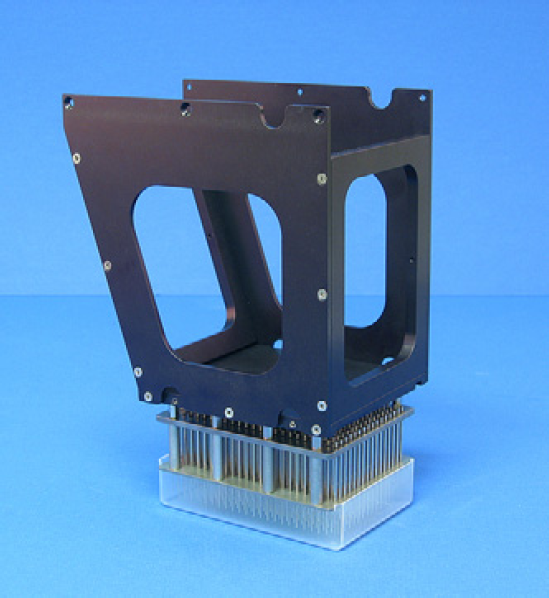
Agilent has partnered with V&P Scientific to provide custom Pintool heads for its portfolio of Agilent Automation Solutions liquid handlers. Pintool heads enable users to convert either a 96- or a 384-well pipetting system or plate handler into a Pintool workstation that will deliver from 3 nL to 5 μL using 96, 384, or 1536 pin tools. Pintool heads use the surface tension of pins instead of aspirating through tips to deliver precise nanoliter amounts for multiplexing assays.
More: www.velocity11.com
Air Science USA
Mobile EDU Ductless Fume Hood
According to Air Science, its new Mobile EDU Ductless Fume Hood is self-contained, provides all around visibility, and can be easily moved. Its ductless design allows easy installation and the base is mounted on large heavy-duty wheels for ease of transport. The height is 77.5 in., which allows it to pass through a standard door. The multilayered EDU Filter has 99.9% filtration efficiency for chemicals normally found in a typical chemistry curriculum. These units exceed OSHA, ANSI, BSI, and AFNOR Safety Standards.
More: www.air-science.com
AMS Biotechnology (Amsbio)
Comet Assay System
Amsbio has a novel complete assay system for direct detection of DNA damage in cells. According to Amsbio, the comet assay is used in cancer research, genotoxicity studies on environmental mutagens, and in screening compounds for cancer therapeutics. Based on single-cell gel electrophoresis in a controlled pH environment, the assay allows the integrity of stained nuclear DNA to be examined and measured.
The complete assay system includes CometSlides, reagents, control cells, and an electrophoresis unit that retains test cells in a uniquely configured electrophoretic field permitting consistent DNA migration patterns, which are critical for standardization of the assay. Each lot of the CometAssay control cells, reagents, and CometSlides are tested and qualified for use in the CometAssay System. In combination, the components of the system permit reproducibility and reduce variability between individual users and different laboratories.
More: www.amsbio.com/productpage.aspx?code=4250–050-ESK
Zymolyase Lytic Enzyme Mixture
According to Amsbio, its new Zymolyase is a lytic enzyme mixture that offers superior and broad-based biological activity across several genera of fungi including yeast. Purified from culture fluid of Arthrobacter luteus, Zymolyase offers strong lytic activity against living yeast cell walls to produce protoplast or spheroplast of various strains of yeast cells. In independent tests (http://www.amsbio.com/showroom/Zymolyase%20Comparison.pdf), Zymolyase has been demonstrated to be a more effective reagent for yeast cell wall degradation for protoplast formation compared with Lyticase and Glusulase.
The high activity of Zymolyase is attributed to its composition, as it is a mixture of lytic enzymes as opposed to a purified enzyme. Zymolyase contains four enzymes each of which attack a different cell wall polymer. Generally, the yeast cell wall consists of four major components, namely branched β-1,3-glucans, substituted β-1,3-glucans, glycoproteins, and mannans. Zymolyase includes enzymes that act on each of these polymers.
The principle enzyme is β-1,3-glucan laminaripentaohydrolase that fragments cell wall glucans into pentamers. The second key enzyme is β-1,3-glucanase that hydrolyzes glucans to glucose, thus further degrading the cell wall. Present in lesser amounts are protease and mannose that act on glycoproteins and mannans, respectively. The combined action of these four enzymes facilitates unmatched protoplast formation efficiency by the Zymolyase mixture.
BioFocus DPI
Biologically Targeted Libraries
Four new biologically targeted libraries from BioFocus DPI contain novel drug-like compounds that specifically target kinases and, for the first time, protein—protein interactions. According to BioFocus DPI, its new Helix Mimetic library (HM01) is based on a novel structural motif that interacts with protein helices. This library is designed specifically to inhibit protein—protein interactions, but also targets other helical recognition motifs, such as the pore region of ion channels. BioFocus DPI's three new SoftFocus kinase libraries (SFK58, SFK59, and SFK60) target either the hinge region or novel binding modes. The SFK collection has been independently determined to have the greatest population of kinase-like molecules available for screening.
More: www.biofocusdpi.com
Biohit
SafetySpace Filter Tips
Biohit's new SafetySpace Filter Tips have more space between the sample and the filter than conventional filter tips to eliminate worry about the sample touching the filter regardless of the pipetting technique or type of liquid being handled. According to Biohit, SafetySpace Filter Tips provide accurate and precise results even with foaming liquids, such as buffers and proteins. Unlike other filter tips, SafetySpace Filter Tips are also suitable for reverse pipetting and for multiple dispensing with electronic pipettes. Biohit's SafetySpace Filter Tip range covers seven different sizes from 10 μL up to 1200 μL and is designed to meet high quality and purity demands. They are considered ideal for molecular biology, microbiology, and cell culture applications, as well as radioactive work.
More: www.us.biohit.com or www.biohit.com
Caliper Life Sciences
IVIS Lumina XR In Vivo Imaging System
According to Caliper, the Lumina XR system takes Caliper's noninvasive IVIS preclinical molecular optical imaging technology further by combining optical fluorescent and bioluminescent images of biological activity with co-registered digital X-ray images, enhancing the anatomical context of the optical molecular signals. For example, with X-ray co-registration users can view a detailed image of the skeleton, or even certain soft tissues, and can use those images as reference points when using bioluminescence to more precisely locate a tumor or infection site.
All IVIS systems are optically capable of imaging the full spectrum of fluorescent and bioluminescent reporters and dyes, from green to near-infrared, with quantitative results and high-performance spectral unmixing to extract maximum information from animal models. Lumina XR can incorporate the premium animal handling features of Caliper's other IVIS imaging systems, such as a heated stage, gas anesthesia connections, and a syringe injection system for simultaneous compound administration. In addition to mice, the Lumina XR can accommodate Petri dishes or microtiter plates for in vitro imaging.
XenoLight Rediject Reagents
Rediject d-Luciferin Ultra is the latest in an expanding range of XenoLight reagents for Caliper's IVIS optical imaging systems. Rediject d-Luciferin Ultra is supplied in a ready-to-inject format, preformulated with a tracking agent to monitor injection quality and minimize data variability. Using this reagent in an IVIS imaging system, users can validate their techniques and generate more reproducible data in less time.
Cresset BioMolecular Discovery
FieldStere 1.1
According to Cresset, an enhanced version of its FieldStere package allows chemists and others to use field-based chemistry to escape the constraints imposed by molecular structure. FieldStere provides a way to find bioisosteres, including known related structures and nonobvious bioisosteres. These bioisosteres can be used to jump between chemotypes or fine-tuned to enhance potency and specificity while removing undesirable ADME and physical properties. FieldStere uses Cresset field technology, which describes chemical structures in terms of the surface properties of the whole molecule and accurately shows how a compound will interact with other molecules. FieldStere 1.1 provides new tools for picking results with the exact mix of physicochemical properties and biological activity required.
Improvements offer medicinal chemists' interactive results filtering to return the precise mix of physicochemical properties required; the ability to view similar chemotypes together using new Clustered Results view; more synthesizable fragments from a large database of drug-like molecules with optimal fragmentation rules; a Rings Only setting to search 1000s of ring systems for biologically relevant replacements for the core of a molecule; and improved control over the chemistry of connected atoms (e.g., specify that new bioisosteres should connect through a cyclic Nitrogen atom).
Cresset's database allows computational chemists the greatest range of chemotypes and can be extended with proprietary structures using its associated Database Generator. Its new database format enables deployment of large databases in central locations and limits suggestions by using protein structure data (if available) to limit the search space around your target.
More: www.cresset-bmd.com
CyBio
CyBi-SELMA Semi-Automatic Pipettor
CyBi-SELMA is a semi-automatic pipettor that, with 96 disposable tips, can fill all 96- and 384-well microplate formats in seconds. All aspirate and dispense steps are executed using CyBio technology. CyBi-SELMA is easy to use via a modern touch screen. Adjustments, such as dispense height, volume, and pipetting speed are memorized, retrievable, and changeable for regular use anytime. Automatic tip tightening avoids laborious adjustments, and preloaded tip trays guarantee rapid execution within seconds. Custom-racked tip magazines enable the omission of individual columns, allowing users more options to create dispense patterns specific to assay requirements.
More: www.cybio-ag.com
Dolomite
Mitos Resealable Chip Holder
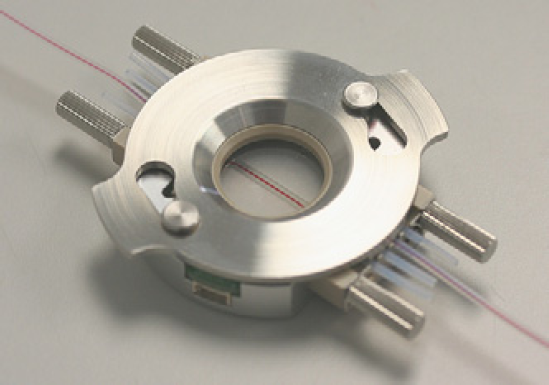
The new Mitos Resealable Chip Holder from Dolomite is designed to allow flexibility in cell culture and analysis, dielectrophoresis, impedance detection and biosensor detection. It offers eight fluidic and eight electrical connections. Microfluidic chips can be easily opened and then resealed, allowing deposition of reagents or cells onto the channel surface at different times.
The low profile Mitos Resealable Chip Holder fits easily on a microscope stage and windows at top or bottom allow a microscope objective lens to get within millimeters of the microfluidic channel for easy viewing. Mitos Resealable Chip Holders are easily taken apart for cleaning and have very good chemical resistance.
Exeter Analytical
Application Note: Analyzing Difficult to Combust Perfluorinated Compounds
Application note TM217 from Exeter Analytical describes a reliable analytical method for accurately determining the percentage carbon (C), hydrogen (H), and nitrogen (N) content of difficult-to-combust perfluorinated compounds. According to Exeter, most compounds containing fluorine can be successfully analyzed for percentage CHN content on an elemental microanalysis system under standard operating conditions. The magnesium oxide in the combustion tube reagent packings absorbs fluorine as hydrogen fluoride and releases the hydrogen. However, perfluorinated samples, which are often difficult to combust, can give incorrect low carbon and high nitrogen data. For these highly fluorinated compounds, Exeter Analytical has developed a new method based on its CE440 Elemental Analyzer. This note describes the new high temperature method and demonstrates how theoretical values of 0% nitrogen and 22.10% carbon on a sample of perfluoro-n-octanoic acid are obtained.
More:
Technical Data: Determination of CHN in Soil and Plant Samples
New technical data from Exeter Analytical demonstrates the utility of its Model 440 Microanalyser for precise determination of the percentage carbon (C), hydrogen (H), and nitrogen (N) in heterogeneous soil, plant, and insect samples.
Traditional methodologies for determining CHN content of soil, plant, and insect samples typically use macro-CHN or Kjeldahl nitrogen analysis. Although both these techniques are proven to generate useful data, both have drawbacks. Macro-CHN analyzers are relatively expensive to purchase and run compared with micro-CHN systems, and Kjehldahl requires use of highly corrosive and toxic chemicals. Using an Exeter Analytical Model 440, the Scottish Crop Research Institute (SCRI) accurately and precisely determined the CHN content of a wide range of soil, plant, and insect materials using samples sizes of typically 2–20 mg.
According to SCRI, with its plant and soil materials the excellent detector response linearity of the Model 440 has proven to be very important as composition can vary within a batch of samples. To cope with often slowly combusting samples, the Model 440 offers provision for flexible combustion times and oxygen flows. Using the combustion optimization software enables a sample to be tested under various conditions in a single run to identify optimum analytical conditions.
Because soil, plant, and insect samples often have high levels of inorganics, combustion generates large sample residues. Using a horizontal sample injection system, the Exeter Analytical Model 440 automatically removes sample residue after each analysis thereby avoiding memory effects, gas flow problems, and extending the number of samples that can be run between changing combustion tubes.
More:
Fluidigm Europe
Technical Poster: Profiling miRNAs in Stem Cells Using Microfluidics
A new technical poster entitled “Comprehensive profiling of microRNAs (miRNAs) in murine hematopoietic stem cells (HSCs) using a microfluidics approach” reports how researchers at the B.C. Cancer Agency and University of British Columbia use Fluidigm's dynamic array to provide a rapid, sensitive, and cost-effective method for miRNA profiling in rare cell populations. The sensitivity of Fluidigm's dynamic array is shown to detect heterogeneity in miRNA expression at the single cell level in purified populations.
According to Fluidigm, miRNAs have been shown to be key regulators of hematopoiesis. However, the detailed profile of miRNA expression throughout hematopoietic development has not been charted, owing primarily to challenges in obtaining highly purified samples of stem and progenitor cells as well as profiling hundreds of miRNAs from low cell numbers. To overcome these limitations, this new technical poster describes how microfluidic technologies are combined with a 288-plex real time PCR approach, allowing the detection of 288 miRNAs in small numbers (c. 3000) of cells.
The poster describes how more than 20 unique murine hematopoietic cell populations are isolated through FACS sorting, including HSCs, myeloid and lymphoid progenitor cells, and mature lineage populations. Several thousand nanoliter volume quantitative PCR reactions are performed using Fluidigm BioMark 48.48 Dynamic Arrays and miRNA-specific TaqMan probes. For each miRNA, synthetic miRNA standards are used to determine the absolute number of miRNA molecules per cell. One hundred thirty-three of the 288 miRNAs tested are detected across all cell populations.
More:
G.E. Healthcare
Biomolecular Imagers
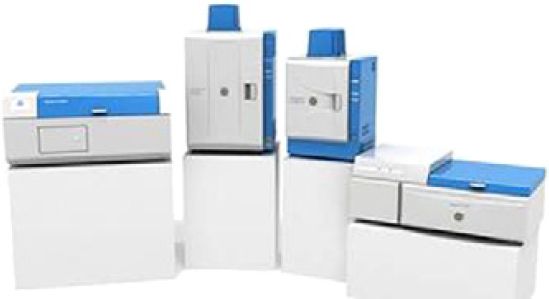
G.E. Healthcare now offers the first biomolecular imaging systems developed as part of its strategic alliance with FUJIFILM. Four new systems comprise two laser scanning and two CCD camera-based imagers, which together address a wide range of radioisotopic, fluorescent, and chemiluminescent imaging applications in the life sciences arena. In combination with Amersham ECL reagents, CyDye chemistries, and image analysis software products, G.E. Healthcare says it can provide extensive imaging solutions to life scientists to support differing levels of assay complexity and budget.
According to G.E., the versatile imagers, which are the Typhoon FLA 9000, Typhoon FLA 7000, ImageQuant LAS 4000, and the ImageQuant LAS 4000 mini, are designed to support a wide range of applications out of the box, with the flexibility to adapt to future applications. G.E.'s global service and support network provides cover for all imagers sold under the G.E. brand.
Biacore X100 2.0 and Biacore X100 Plus Package 2.0
According to G.E. Healthcare, its new Biacore X100 2.0 and Biacore X100 Plus Package 2.0 add new and enhanced functionalities to the versatile, automated real-time molecular interaction analysis system.
Single-cycle kinetics is now the preferred method for kinetic analysis with Biacore X100 2.0, which also includes specifications for detection of small molecules (as low as 100 Da), and pre-programmed assay workflows for all Biacore Capture Kits, including the recently launched Biotin CAPture Kit. Single-cycle kinetics enables kinetic analysis without the need for sensor surface regeneration, reducing time taken to develop and run an assay and allowing analyses that would otherwise not be feasible because of difficulty in finding suitable regeneration conditions.
The new Biacore X100 Plus Package 2.0 features calibration-free concentration analysis (CFCA), and software support for the special considerations required in analysis of small molecules requiring DMSO for solubility. CFCA is a novel methodology, unique to Biacore T100 and Biacore X100, for determining concentration related to specific binding activity without the need for a standard. Using CFCA can reduce error and improve accuracy in affinity and kinetics measurement.
Greiner Bio-One
Light Protection Tubes
Greiner Bio-One's range of light-resistant vessels has expanded to include light protection tubes made of pigmented polypropylene for use as reaction tubes for smaller volumes of up to 1.5 mL providing effective protection for photosensitive substances against harmful UV radiation.
More: www.greinerbioone.com
PapilloCheck
PapilloCheck from Greiner Bio-One is an in vitro diagnostic (IVD) for genotyping of human papilloma viruses. According to Greiner, because several steps are required from sampling to the final test result, the DNA extraction is of central importance as it is a decisive factor determining the quality of the subsequent PapilloCheck analysis. For this reason, the support product portfolio for PapilloCheck now includes two new DNA Extraction Kits certified as CE-IVD (IVDs) suitable for isolating human and viral DNA. These kits are for extraction of the DNA from uterine cervix smears for subsequent analysis with PapilloCheck. Depending on the sample frequency and volume, two different extraction kit processing methods can be applied, either single-column processing using centrifugation or processing eight columns applying a vacuum system. According to Greiner, the highly sensitive silica membrane technology achieves maximum levels of DNA yield and purity.
More: www.greinerbioone.com
Hamilton Company
Hamilton ARC Concept
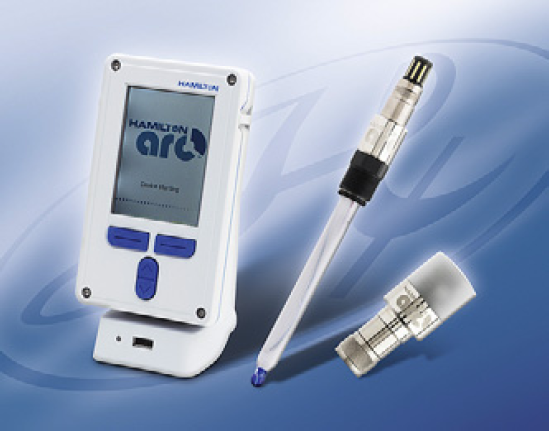
The Hamilton ARC concept is a new sensor family for process control that includes pH, dissolved oxygen, and conductivity measurements. According to Hamilton, its ARC Sensors are premium-quality sensors with a robust, direct, and standard interface to the PLC. Hamilton ARC Sensors send an analytical signal directly to an analog process control system while delivering at the same time the power of digital sensor management. The digital connection plus the on-board processor and memory built into every ARC Sensor means they can be precalibrated and configured in the laboratory. ARC Sensors are available with both standard analog (4–20 mA) and digital ModBus interfaces built-in and supported directly from the sensor itself.
More: www.hamiltoncompany.com
Harvard Apparatus
PHD 22/2000 Advanced Syringe Pump
According to Harvard Apparatus, its new PHD 22/2000 Advanced Syringe Pump offers the lowest flow rates, the highest accuracy, the smoothest flow, advanced programmability from the keypad, and ease of use. Pumping options include a simple infusion-only pump, an infusion/withdrawal pump, or a programmable pump that can store up to four programs of 10 sequences each. These pumps are available in several different configurations, and each model is available in standard force or high-force versions.
The PHD 22/2000 pump is also offered with a variety of syringe racks.
More: www.harvardapparatus.com
INTEGRA Biosciences
MEDIAJET Automated Petri Dish Filler
New features and a product range extension of the MEDIAJET automated Petri dish filler include flexibility for high-throughput filling of Petri dishes of various sizes, Petri dishes with two compartments, and test tubes of various diameters and length. Plus, an integrated shaker function provides a convenient solution for pour-plate applications.
A new special Petri dish processing mode allows generation of agar dishes with highly planar surfaces—a feature that INTEGRA believes is of particular benefit for automatic colony counting. Designed to incorporate seamlessly into installation quality/operation quality-certified environments, the new MEDIAJET provides facility, via an optional inkjet printer module, to automatically imprint Petri dishes with all the relevant data on either the side or bottom of plates to ensure complete traceability.
InVitria
Optiferrin Cell Culture Supplement
According to InVitria, Optiferrin is a new high-performance, well-defined, and animal-free recombinant transferrin for use in mammalian cell culture. It is a cell culture supplement that supports cell growth by regulating the amount of iron transported to cells and delivers optimal performance without any cell damage.
More: www.invitria.com
Zap-CHO Cell Culture Supplement
According to InVitria, its development of Zap-CHO cell culture supplement for Chinese hamster ovaries (CHO) is a significant breakthrough in mammalian cell culture systems. It is the first animal free supplement capable of replacing fetal bovine serum (FBS) without sacrificing performance and maintaining a well-defined media. Because Zap-CHO is a defined and animal component-free product, it is considered well suited for commercial, chemically defined, and serum- and animal-free cell culture media formulations.
Zap-CHO is a next generation media supplement that delivers consistent cell culture performance. Previously, only FBS could deliver equivalent performance, but safety concerns of a fetal bovine component in cell culture media forced many customers away from this component. In the last decade, customers have eliminated FBS in cell culture media only to lose cell culture performance. To regain the lost performance, many began adding hydrolyzates to the media. However, hydrolyzates introduced significant variability, leading to failed experiments and production failures.
Zap-CHO addresses these concerns and provides significant benefits in CHO cell culture, including faster cell line development and seed train expansion; animal component-free media; consistency of a defined media component; biomanufacturing optimization and improved production economics; better and more predictable performance in cell culture research and development.
More: www.zapcho.com
Jeio Tech
Laminar Flow Clean Benches
Jeio Tech's new line of laminar flow clean benches meet ISO 14644–1 Class 4 Air Cleanliness Standards; are available in three widths, 40.1 in.;, 52.8 in., and 76.4 in.; and feature vertical air flow adjustable from 274 to 914 cmh air volume. These stations have 304 stainless steel work surfaces and a polyester prefilter to extend the life of the primary high-efficiency particulate air Filter. The interior includes both fluorescent and ultraviolet lighting. Available accessories include floor stands, service fixtures, gauges, and outlets.
More: www.jeiotech.com/eng
Lab Armor
Bath Armor Beads
According to Laboratory Armor, its new Bath Armor Beads are eco-friendly and low-maintenance metallic beads that replace water in water baths, aluminum blocks in dry baths, and even ice in ice buckets. Bath Armor Beads thaw, warm, and chill samples with high thermal efficiency, while avoiding common temperature fluctuations caused by evaporation. They are self-supporting, so the racks and clips normally required to hold sample containers in position are eliminated and sample containers can actually be positioned at an angle. The beads can be used from −80 to over 350 °C.
More: www.LabArmor.com
Micronic Europe
Automatic Tube Decapper

A new Automatic Tube Decapper from Micronic Europe is considered easy to install and operate, and it automatically removes and disposes of the caps from a full 96-tube rack in less than 20 s. Operation is safe and user friendly—simply place a rack of capped tubes onto the access tray, push the start button and the Automatic Tube Decapper will in one action gently remove all the caps, increasing productivity and reducing the possibility of sample cross-contamination with an integrated cap disposal device that ensures that caps are not reused.
The Automatic Tube Decapper can be used as a standalone instrument or integrated into a fully automated environment. Compatible with most brands of coded tube racks and capping products, the new system requires just a mains power source for operation. Typical applications include storage of biological materials like DNA, cells, blood, tissue, and plant materials as well as compound library storage in drug discovery research.
More: www.micronic.com
Porvair Sciences
Technical Report: Well-To-Well Crosstalk in Luminescence Microplates
According to Porvair Sciences, the use of luminescence assays and reagents in drug discovery has increased significantly over the past decade because of a combination of ease of use, very high specificity of assays, and good sensitivity at low levels of screened compounds. Modern photometric instruments are able to accurately count very low levels of photon emissions from luminescence substrates and this has led to an increasing focus on the optical crosstalk inherent in the design of microplates and the signal-to-noise ratio that can be experimentally obtained.
A new technical report from Porvair Sciences compares two different manufacturer's solid white polystyrene shallow well microplates with Porvair Sciences Krystal 2000 black and white design that combines white individual wells with a solid black plate matrix. A luminescent assay using Firefly luciferase is used for the comparison. The experimental results demonstrate that the Krystal 2000 black and white plate offers significant benefits for the determination of low-level luciferase-based assays in screening and drug development. The combination of effective quenching by carbon black and increased reflectivity from titanium dioxide brightener yields an improved signal-to-noise ratio and better intraplate dynamic range, giving screeners the opportunity to screen for weaker hits, at lower detection levels or with reduced concentrations of reagents.
More: www.porvair-sciences.com
MiniSeal Plus

The new MiniSeal Plus semiautomatic thermal microplate sealer is considered by Porvair to be budget priced; offers enhanced comfort, safety, and unmatched repeatability in sealing plates of many different types and sizes; and is designed for laboratories needing to seal small to medium numbers (10–50) of plates each day. Unlike bigger automated sealers, the compact, easy to use, and simple to install MiniSeal Plus does not require a compressed air supply to operate. Instead, all operations are electronically controlled through the splash-proof keypad, meaning the MiniSeal Plus can be installed, up to temperature and sealing your plates within minutes of unpacking.
The MiniSeal Plus can be used with any ANSI/SBS standard footprint plate up to 48 mm high and with most currently available PCR plates. Adaptors may be required for operation with certain types of plates. Sealing can be achieved with plates formed from polystyrene, polypropylene, and the new COC/COP cyclo-olefin polymers.
More: www.porvair-sciences.com
Reagent Reservoirs
A new range of low cost, disposable polystyrene reagent reservoirs is now available from Porvair. Optional lids help prevent reagent contamination and spillage as well as enable reservoirs to be simply stacked to economize bench space. Reservoirs are available in different sizes (25–50 or 50–100 mL) and formats (8 or 12 channels). Sterile and nonsterile disposable reservoirs are supplied in packs of 100 and 200. According to Porvair, the reservoirs' unique non-nested design makes it easy to separate a single reservoir from a pile. Accurate pipetting is enhanced by a ridge on the side of each reservoir that allows users to remove drops from pipette tips.
More: www.porvair-sciences.com
PROdesign
PROcellcare Cell Feeding Station
PROcellcare is based on a 96-well plate and was initially developed by PROdesign's licensing partner, European Molecular Biology Laboratory (EMBL). PROcellcare supplies live cells (in vitro) under the microscope with biological nutrient and working solutions, thus allowing efficient and automatic dispensing and control of processes and equipment (microscope, table, and incubator). PROcellcare also can facilitate the online supervision of the cells over a long period of time during continuous operation mode (24 h/7). This instrument is considered ideal for market segments covering the fields of research and development in molecular biotechnology (live cell imaging).
Sartorius Stedim Biotech
Sartobind Phenyl Membrane Adsorber
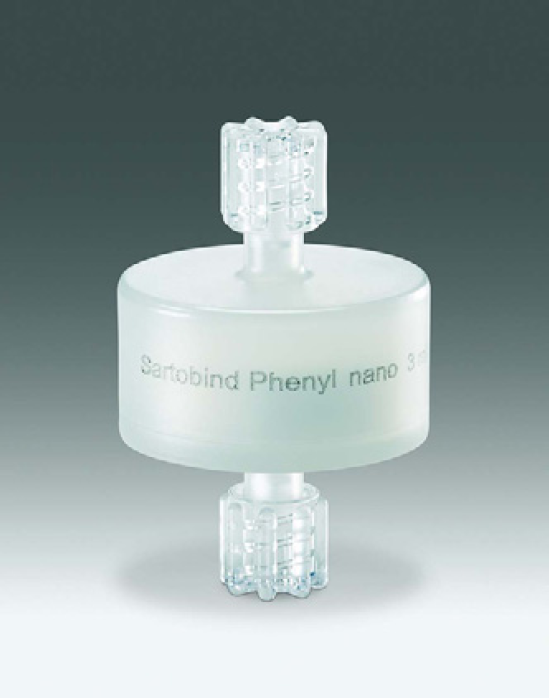
According to Sartorius Stedim Biotech, it offers the first commercially available membrane adsorber for hydrophobic interaction chromatography (HIC). Sartobind Phenyl membrane adsorber allows increased flow rates to ensure faster processes and can be used for process upgrades in purification and polishing of therapeutic proteins. Sartobind Phenyl provides the advantages of an HIC ligand adsorber, while showing the specificity and behavior of a conventional HIC matrix. The hydrophobic phenyl ligand is covalently attached to the >3-μm cellulose membrane. Target molecules bind to the membrane with similar binding capacities and at the same buffer conditions as with conventional HIC columns. However, the flow rates can be increased at least 10-fold to allow a faster process upgrade in purification and polishing of therapeutic proteins. The resolution is at least as good as that obtained with comparable phenyl columns.
With a binding capacity of 0.4 mg/cm2 (15 mg/mL), Sartobind Phenyl can be used for antibody medium scale capture. Its key application is removal of hydrophobic aggregates that pose the risk of unwanted immune system response when patients are treated with therapeutic proteins. Detergent removal and large molecule/bioparticle purification are further application options for HIC membranes.
The membrane adsorber is easy to handle, suitable for single and batch use, and scalable from the 3-mL Sartobind nano version to the Sartobind 150-mL capsule.
More: www.sartorius-stedim.com
SoluLinK
HRP-Antibody All-in-One Conjugation Kit
SoluLinK's HRP-Antibody All-in-One Conjugation Kit is the first in a series of new products and the first kit of its kind to make 100% pure conjugate probes without an HPLC. This kit uses SoluLinK's HydraLink crosslinking technology, which allows for 100% conversion of antibody to conjugate, and includes a unique, rapid purification column. According to SoluLinK, this results in a custom antibody—enzyme conjugate that is 100% free of any unconjugated starting material that may be used directly in enzyme-linked immunosorbent assay (ELISA), western blotting, and immunohistochemistry applications.
More: www.solulink.com
SP Industries
Titan Cold Trap
According to SP Industries, its Titan Trap is the first cold trap to incorporate a titanium helical coil design and Teflon-coated stainless steel chamber to provide maximum efficiency for vacuum trapping of corrosive vapors down to −100 C. The Titan refrigerated cold trap is designed to run with minimal operator attention, needs infrequent cleaning, and is available in a choice of ultracompact units with up to 8 L of surface area—Titan Traps offer capacity to trap up to 5 L of condensate in 24 h. A coated glass dome top enables users to determine when the trap should be emptied. The Titan Trap is considered ideal for protecting oil-sealed vacuum pumps, evaporators and dryers, and for applications, including gel drying and dehydration of gas streams.
More: www.spindustries.com
Symyx Technologies
Symyx Notebook 6.3
Symyx Notebook 6.3 is a major version upgrade that enhances the Symyx vision of an enterprise electronic lab notebook (ELN) to support many scientific disciplines. Previous versions of Symyx Notebook had focused on biology, analytical, and synthetic chemistry—version 6.3 adds parallel chemistry support for synthetic and medicinal chemistry.
Symyx Notebook enables researchers to manage experimental workflows, capture intellectual property (IP), and share knowledge to gain scientific insight while optimizing time and resources in the laboratory. Symyx Notebook 6.3 improves support for synthetic chemists, analytical chemists, and biologists in regulated and nonregulated environments by offering many new capabilities, including support for parallel synthesis, library enumeration, searching of enumerated reactions, and solid-phase organic synthesis.
Key features of version 6.3 include support for in-depth chemical representation combined with highly configurable library enumeration capabilities; expansion of exact and substructure searching, which permits the retrieval of fractional salts and hydrates; enablement of solid-phase organic synthesis through the implementation of loading units and calculations and new “QuickData” capabilities that speed information capture with enhanced procedure editing and standard phrase lists for procedural text.
Hosted Informatics Software
New Symyx-hosted offerings, accessible via a software-as-a-service business model, combine Symyx software with data archiving capabilities in a secure, state-of-the-art data hosting, and communications facility. Initially, Symyx Notebook is being made available as a hosted ELN service enabling medicinal chemists, synthetic chemists, and biologists to manage, explore, share, and reuse experimental information and IP. Using a hosted ELN service, R&D organizations can deploy and leverage the electronic notebook quickly and efficiently without added information technology infrastructure and resources while collaborating more effectively with partners in today's information-driven R&D environment.
The hosted informatics infrastructure provided by Symyx is supported by Switch Communications Group, which provides highly secure, mission-critical interconnectivity, and disaster-avoidance colocation services within S+S redundant, 100% guaranteed reliable, Tier 4+-designed facilities (see www.switchnap.com). The secure Switch facility where Symyx hosts the ELN service is compliant with SAS 70, Type II auditing standards and specifications supporting industry-standard disaster recovery and business continuity plans. Third-party offsite data backup, archiving, and recovery services also are provided.
Standard hosted ELN service includes all installation, configuration, software and hardware maintenance, and data backups for a fixed yearly fee.
Syrris
Atlas Six-Way Node Socket

A new six-way node socket is now available for the Syrris Atlas modular synthesis system. The socket plugs into the node port of the intelligent Atlas Base Unit and can connect up to six sensor nodes via Node Extensions to the Base Unit. This enables the measurement by various available sensor nodes of multiple parameters, such as temperature, pH and temperature, and turbidity, which can all be displayed, read and controlled directly from the Base Unit. To prevent any confusion, each of the six sensor nodes can be individually named.
All data can be quickly and easily downloaded from the Base Unit to a USB stick in .csv format. For easy graphical analysis of the log files, data can then be imported and viewed in Atlas Reporting Software. Any graph generated can be customized and exported as an image, PDF, or .csv file with this innovative, wizard style software.
More: www.syrris.com
Atlas Parallel Systems
According to Syrris its new multiposition reactor stations for up to eight jacketed reactors or round-bottomed flasks offer full, independent control and logging of all reaction parameters. Controlled from a single PC, temperature, stirrer speed, pH, dosing, heat flow, and turbidity can all be monitored simultaneously.
A selection of Atlas Parallel Systems are available, including: the Parallel Atlas Lithium that automates heating/cooling in round bottomed flasks or vials with magnetic stirrers; the Parallel Atlas Sodium for overhead stirring and temperature control; and the Parallel Atlas Potassium for jacketed reactions from 50 mL to 5 L. Plus, the Atlas Potassium system forms the basis of a number of additional systems, including those for turbidity, pH monitoring and control, calorimetry, and FTIR analysis. These flexible systems can also be separated for individual use, where they are controllable from the front panel or using a PC. The oil drain unit, vessel clamp, and quick oil connectors allow the jacketed vessels to be changed quickly and easily without any tools.
More: www.syrris.com
The Automation Partnership
Advanced Microscale BioReactor

According to The Automation Partnership (TAP), its Advanced Microscale BioReactor (ambr) technology is an advanced microscale bioreactor that mimics the physical characteristics of classical bioreactors at microscale (10–15 mL) using disposable reactor cartridges. The system enables rapid evaluation of multiple bioreactor cultures at microscale to select improved cell lines faster with significant savings on materials and labor. The system is designed in collaboration with a number of independent development partners.
The first generation ambr workstation automates the operation of 24 low-cost, disposable plastic bioreactors with a 10–15 mL working volume, providing individual closed loop control of dissolved O2 and pH and a supply of CO2, N2, and O2. The bioreactors are arranged as two sets of 12, each supplied with independent stirring and temperature control. The system automates culture set-up and inoculation; the addition of alkalis and feeds, as well as media sampling during the run for cell count and other analysis, thus reducing the number of manual processing steps and the possibility of cross-contamination. Additionally, because ambr uses many disposable components, the need for cleaning and sterilizing is significantly reduced further saving users' time.
Dynaflow HT System
According to TAP, a successful collaboration with Cellectricon and AstraZeneca has resulted in the Dynaflow HT System, fully automated high-throughput patch clamp equipment. According to TAP, because patch clamping is the gold standard for screening ion channels in drug discovery and few commercial instruments currently exist for high-throughput primary and secondary screening, the Dynaflow HT System was developed. The system addresses the limits of existing ion channel screening equipment by combining high levels of automated throughput with accurate and affordable data measurement.
Thermo Fisher Scientific
Waterbook
This new 76-page Waterbook includes a comprehensive introduction to laboratory water impurities and purification technologies, as well as a section devoted to helping identify purification products designed to support specific application needs.
More: www.thermo.com/waterbook
Downloadable Protocols for the Multiskan FC Microplate Photometer
There are now nearly 50 ready-made protocols available to cover a wide variety of applications, including a broad range of ELISA's and protein and cell viability assay kits. The protocols are free to download and include all of the measurement and calculation parameters defined in the associated assay kit instructions. Simply register online. The site also provides clear instructions on how to import the protocols into the Thermo Scientific SkanIt PC Software or the Multiskan FC internal software. All downloadable protocols can be edited by users.
Torrey Pines Scientific
HS15 Stirring Hot Plate
The new 5-position Model HS15 stirring hot plate offers individual stirring control for each vessel.
The large 12 in. (30.48 cm) square ceramic heater top has a temperature range 450 °C. The unit can heat and stir 5–800 mL beakers. Stirring range is from 100 to 1500 rpm. The unit measures 19 in. (43.2 cm) deep by 12.5 in. (31.75 cm) wide by 5.25 in. (13.4 cm) tall. It can support more than 50 pounds (22.6 kg) on the plate surface, and the chassis is designed to keep spills out of the interior of the unit. All controls are mounted well in front of the heater surface to protect against accidental burns.
Zinsser Analytic
Calli-L Powder Distribution and Weighing System for Library Compounds
According to Zinsser Analytic, its Calli-L introduces an approach to fully automate the distribution of solid library samples, controlled dissolution, and the final preparation of assay plates for biological assays. Depending on the required throughput, all three steps can be either set up on a single workbench or on two or three integrated workbench systems.
Calli-L uses new powder dispensing technology Redi2plus that reads and compares the sample barcode with that stored in the in-house database, extracts the required distribution data, decaps the library vial before solid sampling, and dispenses the resulting sample into the dissolution vial. The database is subsequently updated with the final weight of the library and dissolution vial before both are re-capped. Trials show about 60% of all library samples can be distributed with this system. Sensitive samples are processed under an argon shield.
Dissolution of the solid samples under an inert atmosphere is the next stage. Eight independent probes are used to add DMSO or other solvents simultaneously with argon, at a volume to provide a set sample concentration. Batches of 96, 192, or 384 samples are dissolved using special vortexers under an argon shield. A dissolution check decides whether any additional sample treatment is necessary, for example, sonication. When the dissolution is complete, the samples are dispensed under argon into assay-, mother- and storage plates.
Calli-L can be customized to fit dissolution needs exactly, and up to 384 samples can be processed per hour depending on instrument configuration.
More: www.zinsser-analytic.com
More News
Adept Technology appointed Rush LaSelle as its director of global sales and marketing. Mr. LaSelle joined Adept Technology from FANUC Robotics America where he served as general manager.
Advion BioSystems and Waters Corporation announced today that Advion's TriVersa NanoMate chip-based nanoelectrospray ionization system is now compatible with the full range of Waters mass spectrometry (MS) systems including the newest Xevo and SYNAPT G2 systems.
Ambry Genetics completed certification to become an Agilent Certified Service Provider on the Agilent microarray platform. The initial certification is for Comparative Genomic Hybridization, which is an application used to discover and detect genomic copy number variations within specific genomes.
BD Diagnostics—Preanalytical Systems, a unit of BD (Becton, Dickinson and Company) received U.S. Food and Drug Administration 510(k) clearance for the BD Vacutainer Rapid Serum Tube, a blood collection device designed to help acute healthcare facilities rapidly analyze blood serum for patient diagnosis.
Beckman Coulter and Propel Labs entered into a strategic alliance for flow cytometry in which Propel will support Beckman Coulter with field upgrades of MoFlo instruments to the specifications associated with the more recent XDP version.
BioFocus and DiscoveRx signed a co-marketing agreement that allows BioFocus to perform screening on behalf of BioFocus' customers using DiscoveRx PathHunter ß-Arrestin GPCR screening assay, HitHunter cAMP assays, and associated cell lines.
Dr. John Nash joined BioFocus as senior director, ADME/PK. Dr. Nash joined BioFocus from Charles River Laboratories where he was responsible for strengthening the DMPK service business. Before that, Dr. Nash was with Anserve and AstraZeneca/Syngenta in metabolism and pharmacokinetics.
bioTheranostics, a bioMerieux company, signed a two-year agreement with Lab21 to commercialize the bioTheranostics THEROS CancerTYPE ID molecular cancer classifier in the United Kingdom, Ireland, and Middle East.
Capsugel received authorization from the Agence Française de Sécurité Sanitaire des Produits de Santé (Afssaps) to produce clinical batches at its Product Development Center in Strasbourg, France. According to Capsugel, this allows the Product Development Center to better support biotech and pharmaceutical companies that require small-scale batches of encapsulated compounds for use in clinical trials.
CEM Corporation received its third (US 7,563,865) and fourth U.S. patents (US 7,582,728). The fourth covers microwave-assisted peptide synthesis. The patent contains broad claims regarding the process of using microwave energy to accelerate two key steps in performing almost all solid phase peptide synthesis, deprotection, and coupling. The third patent for microwave peptide synthesis covers the process of performing Fmoc and Boc chemistries, the two most common strategies used in peptide synthesis.
ChemSW and eMolecules announced a partnership and integration agreement. Under the terms of the agreement, ChemSW will integrate its Web-delivered CISPro Live Chemical Inventory System with a new Web services version of eMolecules' Chemical Search Engine. The eMolecules database contains details about vendor and pricing information for more than 5.5 M unique commercially-available chemical structures from most chemical suppliers, enabling users to quickly locate and order virtually any reagent or compound.
Denator AB signed an exclusive distribution agreement for its heat inactivation technology, Stabilizor T1, with Scientific & Medical Products. The agreement covers all of the United Kingdom and Ireland.
Enzo Biochem announced a co-marketing partnership between its Enzo Life Sciences subsidiary and BioTek Instruments. Aimed at research institutions as well as biotechnology and pharmaceutical companies, this reagents-instrumentation collaboration was designed to create a highly reproducible and reliable platform for live cell analysis as a cost-effective alternative to dedicated microplate imaging-based systems.
Evotec extended its current research collaboration with Ono Pharmaceutical and initiated a new discovery collaboration. Under the contract extension Evotec will provide integrated drug discovery activities, including high-throughput screening, medicinal chemistry, and in vitro pharmacology to discover novel, small molecular weight compounds active against an ion channel target selected by Ono. Ono will access Evotec's ion channel drug discovery platform and expertise and Evotec will receive research funding and milestone payments. Evotec and Ono have collaborated since 2008 identifying novel inhibitors for a protease target. Within this collaboration Evotec provides protein crystallography, medicinal chemistry, biology, and ADMET services to Ono with the aim of progressing a compound toward clinical development.
Fluidigm's Singapore biochip factory manufactured and shipped more than 250 million microscopic NanoFlex valves. The 250 million valves built into Fluidigm's integrated fluidic circuits are equivalent to the number of valves required for all the conventional plumbing—both residential and commercial—in a metropolitan region the size of the San Francisco Bay Area. Fluidigm appointed Nano Gen Teknolojileri as its exclusive distributor for the BioMark and EP1 Systems for genetic analysis in Turkey.
GATC Biotech now offers unique human genome sequencing services using enrichment technologies from Agilent along with Next-Generation sequencing systems, such as Roche GS FLX and Illumina Genome Analyzer IIx. Customers can combine any number of samples with any size of targeted region to be subsequently sequenced on any available sequencing technology.
Genevac was awarded the 2009 Gold Award for Laboratory Equipment Industrial Design by Instrument Business Outlook for its Rocket Evaporator. In addition, a Silver Award was earned by the Metrohm 862 Compact Titrosampler, and a Bronze Award was presented to HTA for its HT800L HPLC Autosampler.
Grifols broke ground on a new national testing laboratory in San Marcos, TX at a ceremony that included federal, state, and local officials. Construction of the laboratory represents the first phase of a multiphase expansion that includes additional warehousing and production facilities.
Labcyte selected Bioscreen Instruments as its exclusive distributor in India.
NiKem Research received GLP certification of its bioanalysis facilities from the Italian Ministry of Health, extending its drug discovery service capabilities to now include analysis of biological samples from all preclinical species. In particular, NiKem now can provide GLP method development by HPLC or UPLC/MS/MS; resolve analytical bottlenecks by providing GLP bioanalytical support for GLP samples sent by clients; and provide, in partnership with EU-based companies specialized in GLP animal dosing, a complete preclinical PK and Toxicokinetic GLP service with NiKem providing the GLP bioanalysis and project co-ordination.
Paraytec announced that its ActiPix D100 system is being used by the Biosystems Research Group at Sandia National Laboratories to develop a capillary electrophoresis-based monitoring system for the Explosive Destruction System (EDS) part of the U.S Chemical Demilitarization program. EDS is a transportable treatment system designed to destroy explosively configured World War I and World War II-era munitions. The EDS can be used to detonate chemical munitions safely and neutralize the associated chemical agents without venting to atmosphere. For realtime monitoring of the degradation of munitions, Sandia is building an automated microfluidic platform that extracts and processes a small sample for analysis by sensitive electrophoretic separations in a capillary. At the heart of the platform is Paraytec's ActiPix D100 UV area imaging detector. Initially chosen for its compact size, the detector has been successfully integrated into the automated monitoring system.
Richter-Helm BioLogics completed the modernization of its GMP-production facility in Hannover, Germany, making available GMP-production capacity in a scale of 300 L fermentation volume and corresponding downstream capacity for the production of recombinant proteins, plasmid DNA, and vaccines deriving from microbial fermentation.
Symyx Technologies joined SAFE-BioPharma Association, a nonprofit association that created and manages the SAFE-BioPharma digital identity and signature standard for the pharmaceutical and healthcare industries. The membership enables Symyx to implement the SAFE-BioPharma digital signature standard for records signing to safe-guard critical scientific data. The membership also enables Symyx to participate in SAFE-BioPharma working groups to further secure the electronic laboratory environment. Symyx customers can use SAFE-BioPharma digital signature within the Symyx Notebook.
Symyx Technologies' announced that Julie Page, vice-president of global customer support, is now responsible for European operations, reporting directly to Trevor Heritage, president of Symyx's software division.
Call for Papers
LabAutomation2011
Beginning in April, ALA will accept abstract proposals for LabAutomation2011 podium and poster presentations in five key education tracks: Detection and separation, high-throughput technologies, informatics, micro- and nanotechnologies, and evolving applications of laboratory automation featuring agriculture and food. One podium presenter will win $10,000 as the 2011 ALA Innovation Award winner, and up to 10 finalists will travel to Mumbai, India, to present their work at the 25th edition of the Chemtech World Expo, February 23–25, 2011.
The ALA LabAutomation2011 conference and exhibition will be held January 29—February 2, 2011, in Palm Springs, CA. For complete program information and access to the online abstract submissions system, visit www.labautomation.org.
Journal of the Association for Laboratory Automation

JALA is the only peer-reviewed, scientific journal devoted exclusively to the research, development, and application of technologies in scientific laboratories. Manuscripts are accepted on an ongoing basis from ALA members and nonmembers.
JALA manuscript abstracts are indexed by Analytical Abstracts, Chemical Abstracts CAS+, CINAHL, Compendex, EMBASE/Excerpta Medica, Google Scholar, Inspec, ProQuest CSA Tech Research Database, Scifinder, Scirus, and Scopus. Abstracts and full text articles also are available at JALA Online and Elsevier Science Direct.
Lab automation professionals are invited to showcase their achievements by submitting method-focused scientific papers for publication consideration. Manuscript guidelines and submission information are available at www.labautomation.org/journal/submissions.cfm.