




Abstract
Abstract
Current major challenge in three-dimensional (3D) printing of biological tissues is lack of proper printable biomaterials. Development of 3D printable biomaterials for safely and efficiently printing biological substitute is challenging. Most of the hydrogel-based biomaterials include photoinitiator to be crosslinked by either ultraviolet or visible light to obtain mechanically stable gel. However, use of crosslinking chemical has concerns for its potential harm to biological substances. Our study aimed to formulate and optimize a new printable biomaterial without any crosslinking chemical, still having appropriate rheological, chemical, and biological properties. We investigated the potential of a silk protein, sericin, which is known to be mechanically stable and has anti-inflammatory and angiogenic properties. The results demonstrated that a sericin-based hydrogel can be an excellent material as it is easy to print, gelling, not toxic, stable, and cost effective.
Introduction
With emerging three-dimensional (3D) printing technology in the 21st century, tissue engineering and regenerative medicine fields found a great potential of this technology. 3D printing enables printing of complicated 3D tissue scaffolds in an efficient mode.1–3 Various bioprinters are already on market for tissue construction. 4 Current challenges in 3D printing in biomedical fields, however, lie in the lack of suitable printing biomaterials. 5 The printable biomaterials should have appropriate rheological properties to print 3D structure and mechanical properties. Therefore, development of 3D printable materials is challenging for successful printing of biological substitutes.
Currently printable biomaterials are mostly hydrogels containing photoinitiator chemicals to be crosslinked by either ultraviolet (UV) or visible light to obtain mechanically stable gel.6,7 However, use of crosslinking agents has concerns for their potential harm to biological substances. 5
Also, it has been reported that many physical crosslinking methods were used to induce and maintain the 3D structure of hydrogels. As an example, silk fibroin as the protein polymer chains has been intensively studied, and used as a physical crosslinking material in intermolecular and intramolecular β-sheet structure formation through hydrophobic interaction.5–8 However, silk fibroin needs complex and costly preparation steps, such as dialysis and repeated dissolution, during the regeneration process and sonication to induce β-sheet structures.
Silk is composed of fibroin and sericin proteins. In most of the cases, sericin has been wasted by a harsh degumming process. It was reported that sericin, however, has benefits, including natural infection resistance, high UV and oxidation resistance, inhibition of UVB-induced apoptosis in human skin keratinocyte, wound healing property, wound coagulant, excellent biocompatibility, and high water retention.9–15 Due to several biological properties, sericin has been studied in biomedical and tissue engineering applications. Recently, collagen–sericin hydrogel was fabricated, and it has stable, flexible, and nonimmunogenic properties as required for dermal substitute. 16 In this study, we incorporated sericin into gelatin/glycerol hydrogel complex, and investigated if this new sericin containing hydrogel complex, named sericin gel, has adequate properties as a printable biomaterial such as rheological properties, mechanical strength, gelling property, and the capability to effectively print 3D constructs. To explore the possibility of the sericin gel being used for tissue reconstructs, we investigated biocompatibility of the sericin gel in vitro using mouse myoblast (C2C12) and fibroblasts (3T3).
Materials and Methods
Materials
Bombyx mori cocoons were purchased from Boeun, South Korea. Gelatin (Porcine skin, Type A) and glycerol were purchased from Sigma Aldrich. Dulbecco's modified Eagle's medium (DMEM) with high glucose (Cat. No. SH30243.01) was purchased from Hyclone Laboratories. Antibiotic-Antimycotic Solution 100X (Cat. No. LS 203-01) was purchased from Welgene Biotech, South Korea. Fetal bovine serum (FBS; Cat. No. 10437028) was purchased from Gibco. LIVE/DEAD Viability/Cytotoxicity Kit (Cat. No. L-3224) was purchased from Life technologies.
Extraction of silk sericin
The method to extract sericin has been reported. 17 In brief, sericin was extracted from the B. mori cocoons by treating cocoons in 120°C hot water for 30 min using an Autoclave (C-AC1; Changshin Science, South Korea). The liquor ratios were 1:10 and 1:20. After the hot water treatment, the concentrations of sericin aqueous solution were 1.25% and 2.5% (w/w).
Formulation
The sericin gel was prepared by mixing sericin aqueous solution, gelatin, and glycerol. First of all, 16% (w/v) gelatin powder (300:100 = 2:3) was dissolved in the sericin aqueous solution [1.25% and 2.5% (w/w)]. Then, 10% (v/v) glycerol was added and mixed homogeneously at 80°C for 10 min using a magnetic stirrer (MSH-20D; Daihan Scientific, South Korea). Then, the sericin gel was stored at 4°C for 1 day before use.
Rheological test
The rheological properties of the sericin gel were measured in accordance with other reported methods of rheological property measurement of sericin17,18 using a rheometer (MARS III; Thermo Fisher Scientific, Germany) with 35 mm plate and plate geometry at 35°C. The oscillation frequency sweep test was performed to measure the complex viscosity, storage modulus (G′), and loss modulus (G″) of sericin gel. The angular frequency was controlled from 0.1 to 100 rad/s, and strain was 0.01%.
3D printability
The sericin gel was 3D printed with INVIVO (ROKIT, South Korea) bioprinter. The sericin gel was loaded into a plastic syringe with a cone needle (inner diameter = 0.3 mm) at the tip. The 3D printing was performed at 40% fill density, 200% input flow, and 8 mm/s print speed. The temperatures of the dispenser and bed were 35°C and 4°C, respectively.
Mechanical properties
The mechanical properties of 3D printed sericin-gel patch were examined using a Universal Test Machine (OTT-003; Oriental TM, South Korea). The test was conducted using a 20 kgf load cell with 10 mm/min extension rate. The samples were cut into 10 × 50 mm pieces. The gauge length was 30 mm. All samples were preconditioned at 20°C and 65% (R.H.).
Water absorption
The water absorption was measured by observing the weight changes of 3D printed sericin-gel patch. The samples were printed in cylindrical shape (10 × 10 × 1 mm) and immersed in deionized water in the humidifier incubator at 37°C with 5% carbon dioxide (CO2). Water absorption was calculated by the following equation:

where W1 is the weight of the 3D printed sericin-gel patch before immersing in deionized water and W2 is the weight after immersing in deionized water. The weight was measured for calculation after removing liquid on the surface.
Morphological stability
Morphological stability of 3D printed sericin-gel patch was tested by immersing the printed sericin-gel patch in phosphate-buffered saline (PBS) at 37°C for a period of 1 week. Observation of the shape and dimensional change was made.
Cell biocompatibility test
Cell culture of C2C12 mouse myoblasts and 3T3 mouse fibroblasts
C2C12 mouse myoblasts and 3T3 mouse fibroblasts were cultured in DMEM with high glucose supplemented with 10% (v/v) FBS and 1% (v/v) antibiotic-antimycotic solution. Both cells were cultured in the humidifier incubator at 37°C with 5% CO2.
C2C12 mouse myoblasts and 3T3 fibroblasts cultured on the sericin gel
Sericin gel (300 μL) was placed into the chambers for gelation at 4°C overnight. As a control, 300 μL of Matrigel was placed into the chamber for gelation at 37°C for 30 min. Each chamber was filled with 1 mL medium. Then, 10 μL of cell suspension with total number of 5 × 10⁴ cells was suspended into each chamber. All samples were incubated in the incubator at 37°C with 5% CO2.
Cytotoxicity test by live/dead assay
Cell viability and cytotoxicity of sericin gels were tested by LIVE/DEAD Viability/Cytotoxicity Kit using Matrigel as a control. The samples were incubated with 400 μL staining solution containing 2 μL/mL calcein-acetoxymethyl ester and 4 μL/mL EthD-1 for 1 h at 37°C. Then, the staining solutions were removed, and the cells were observed by a fluorescence-inverted microscope (Olympus CK%53, Japan).
Results
Formulation
As shown in Table 1, various mixtures were prepared to find optimal formulation.
Various Mixtures of Sericin, Gelatin and Glycerol Tested for Obtaining Sericin-Gel
Rheological properties
The rheological properties of sericin gel were tested using rheometer to evaluate their fluid behavior. The results are shown in Figure 1. As shown in Figure 1A, all sericin-gel samples have shown shear-thinning behavior regardless of sericin concentration. As the shear stress was increased at the nozzle, the shear-thinning fluid extruded. The printability improved because of this property. 5 Also, the value of complex viscosity was increased by increasing sericin concentration of sericin gel.
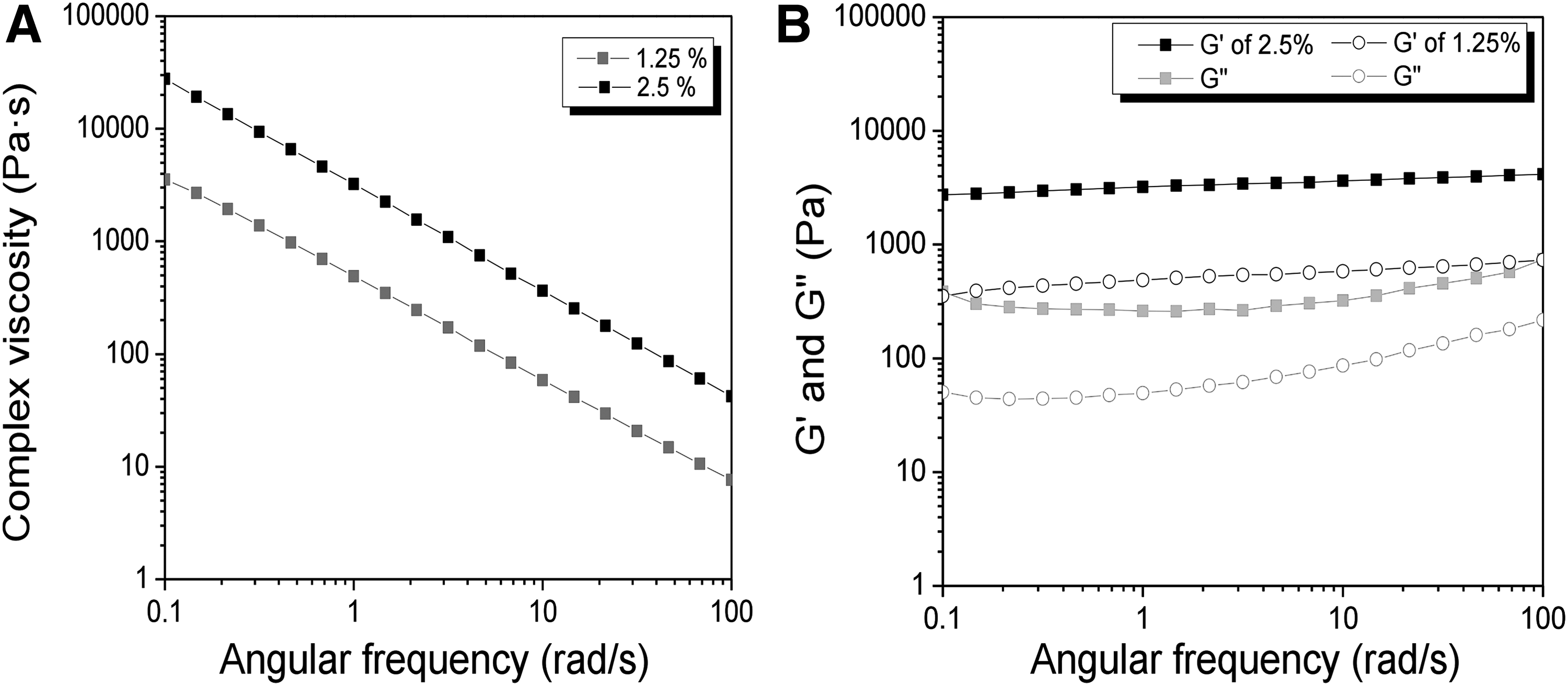
The effect of sericin concentration (1.25% and 2.5%) on the rheological properties of sericin gel;
In Figure 1B, the storage modulus (G′) and loss modulus (G″) increased with increasing sericin concentration. However, regardless of sericin concentration of sericin gel, G′ was higher than G″. It indicates that the sericin gel is more gel-like state than liquid at the measured angular frequency. 19
Printability
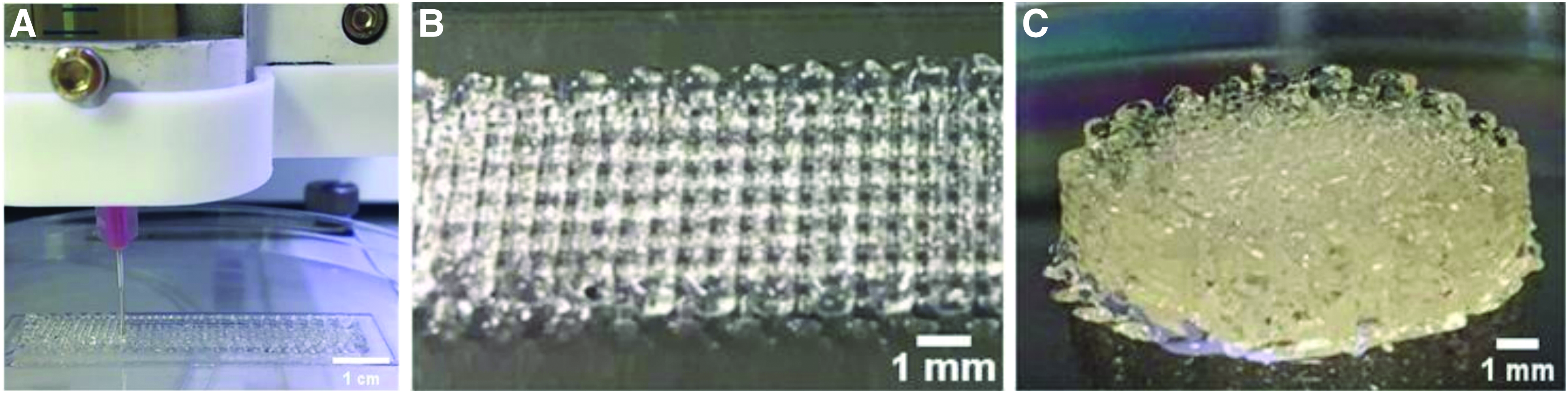
Fabricated sericin gel was printed into hydrogel patch by 3D printer, INVIVO, as shown in Figure 2A. Also, sericin-gel patches were printed with a fill density of 40%, speed of 8 mm/s, and input flow of 200% using cone needle with inner diameter of 300 μm. Dispenser and bed temperature were 35°C and 4°C, respectively. The extrusion-based technique provides relatively better structure integrity due to continuous deposition of filaments. 20 As shown in Figure 2B, the filament line was observed, and resolution was between ∼200 and 500 μm. Resolution can be controlled and fine-tuned. Also, as can be seen in Figure 2C, 3D printed structure was maintained well even if it is stacked in several layers.
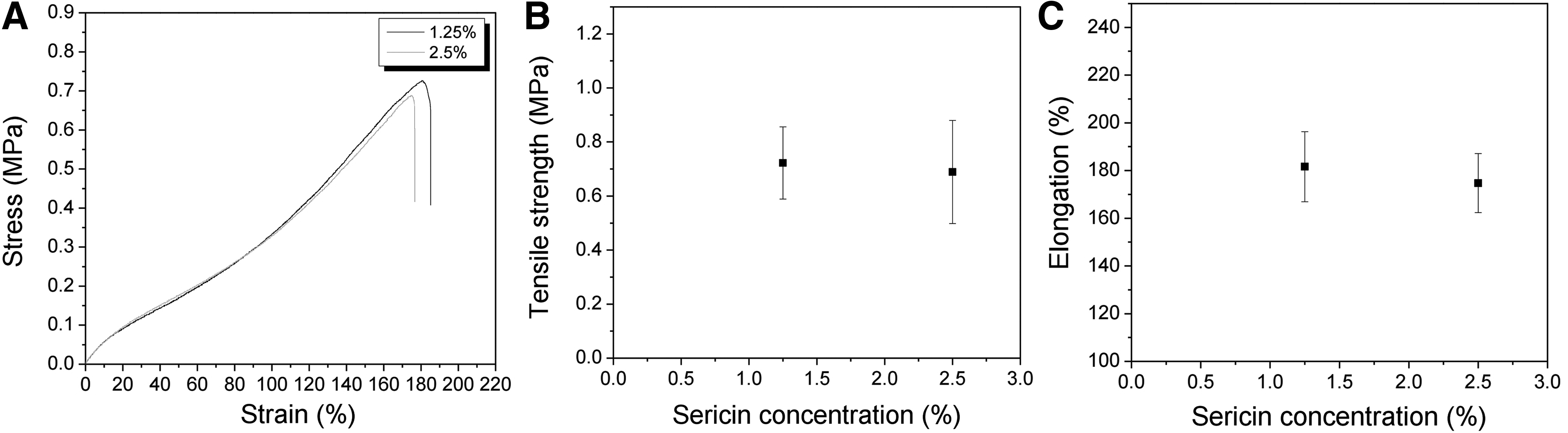
The effect of sericin concentration on the mechanical properties of 3D printed sericin-gel patch,
Mechanical properties
The mechanical properties of 3D printed sericin gel were tested using Universal Test Machine (OTT-003; Oriental TM). As shown in Figure 3A, stress-strain-curves of sericin-gel patch show similar behavior regardless of sericin concentrations. That is, the sericin concentration did not affect the tensile strength and elongation of sericin-gel patch. The elongation of sericin-gel patch demonstrated significantly high value of 180%, while the tensile strength was ∼0.7 MPa.
Water absorbency
Water absorbency was estimated to figure out the hydrophilicity of sericin-gel patch. The water absorbency was increased about twice by increasing sericin concentration, as shown in Figure 4. It indicates that sericin is hydrophilic material with hydrophilic groups such as carbonyl and amino groups.
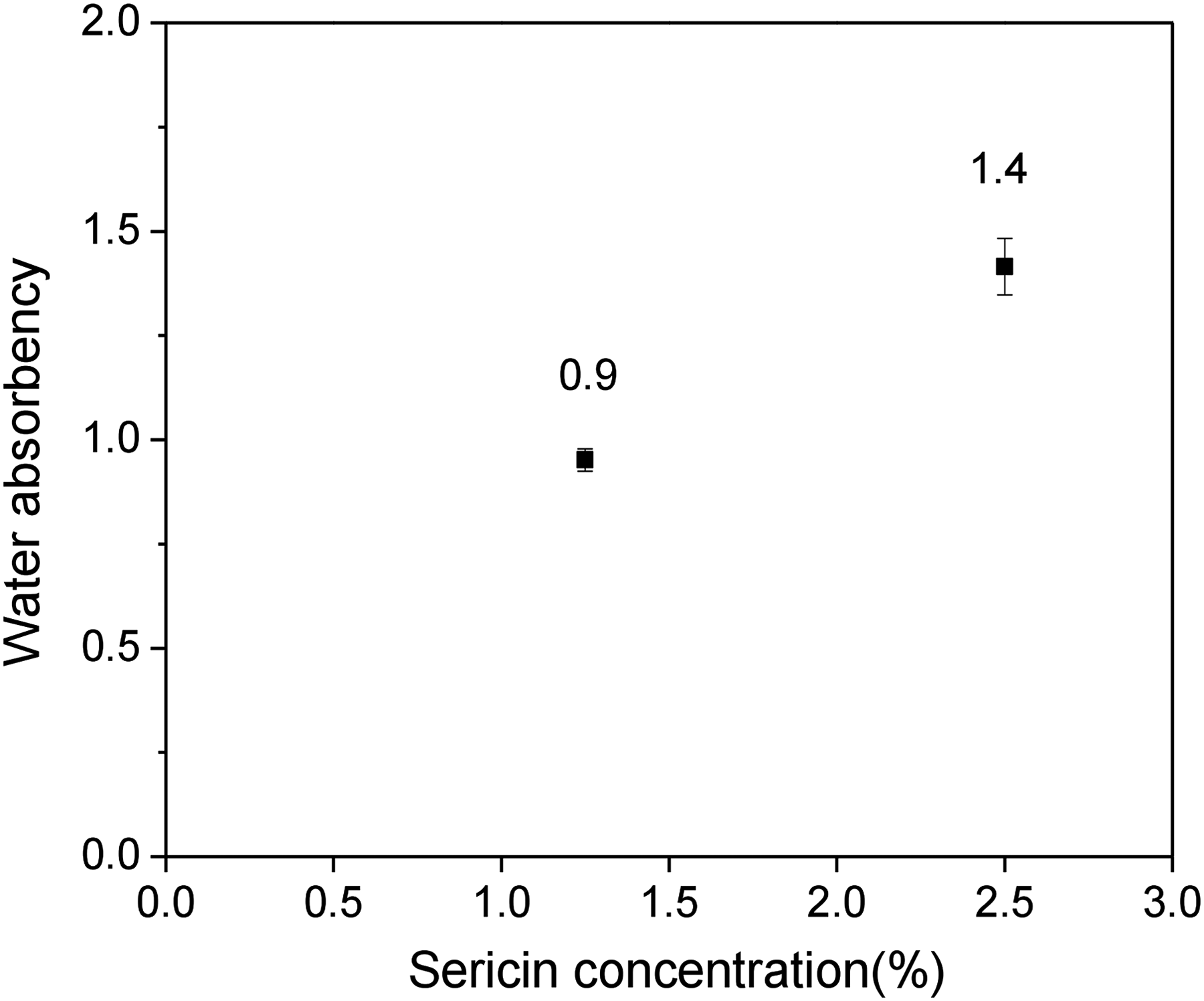
The effect of sericin concentration on the water absorbency of sericin gel (n = 3).
Morphological stability
To evaluate the morphological stability of 3D printed sericin-gel patch, it was incubated in PBS at 37°C for a week. In swollen condition, the shape and size of the sericin-gel patch were maintained with little dimensional change indicating the stability of the gel, as shown in Figure 5.
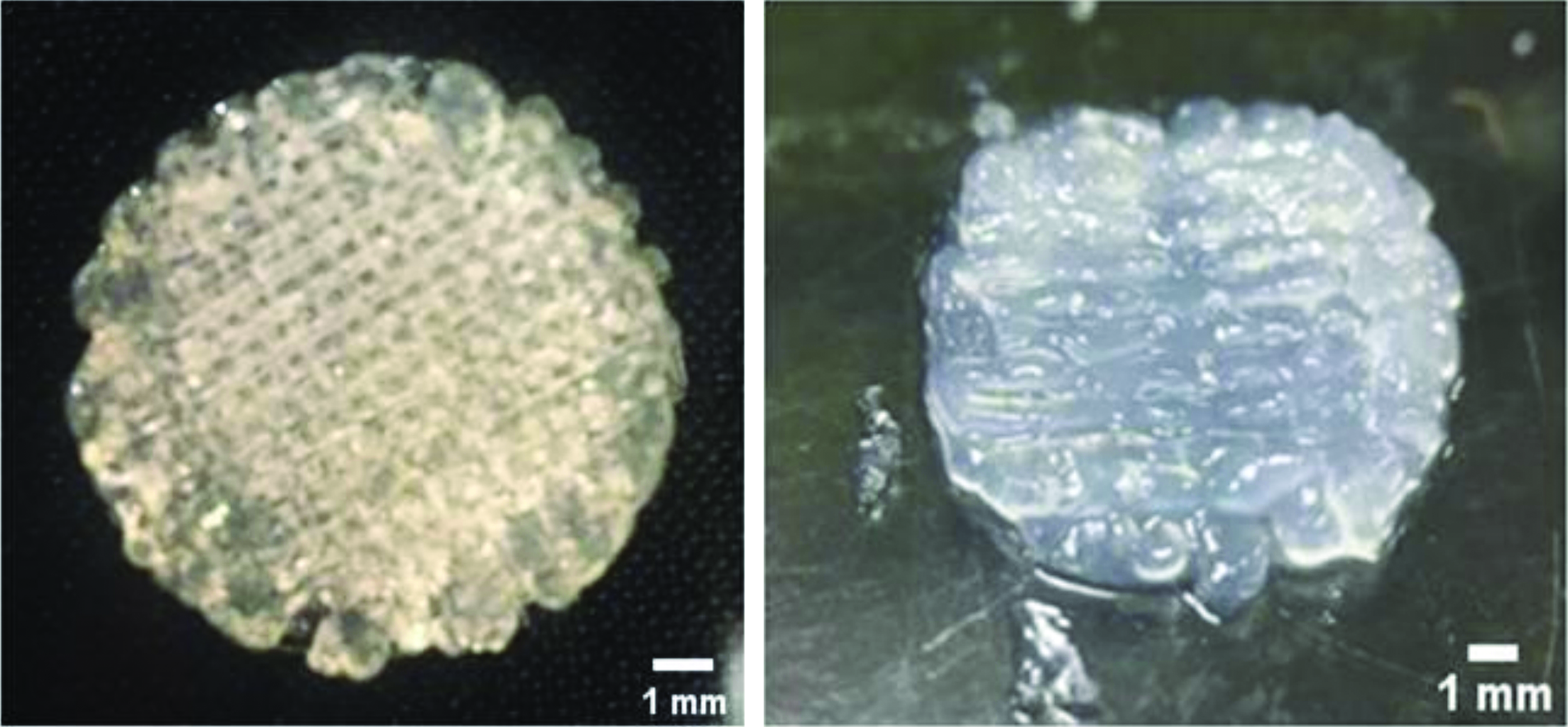
Morphological stability of 3D printed sericin-gel patch in phosphate-buffered saline (left: day 0, right: day 7). Color images are available online.
Cytotoxicity of sericin gel
Cytotoxicity of sericin gel was evaluated by Live/Dead assay. The results are shown in Figures 6 and 7. Both sericin gels of low and high concentrations demonstrated good biocompatibility with negligible dead cells. And compared with Matrigel, which is known to have various growth factors, cells on sericin gels proliferated better than those on Matrigel. The results indicate that all samples showed noncytotoxicity.
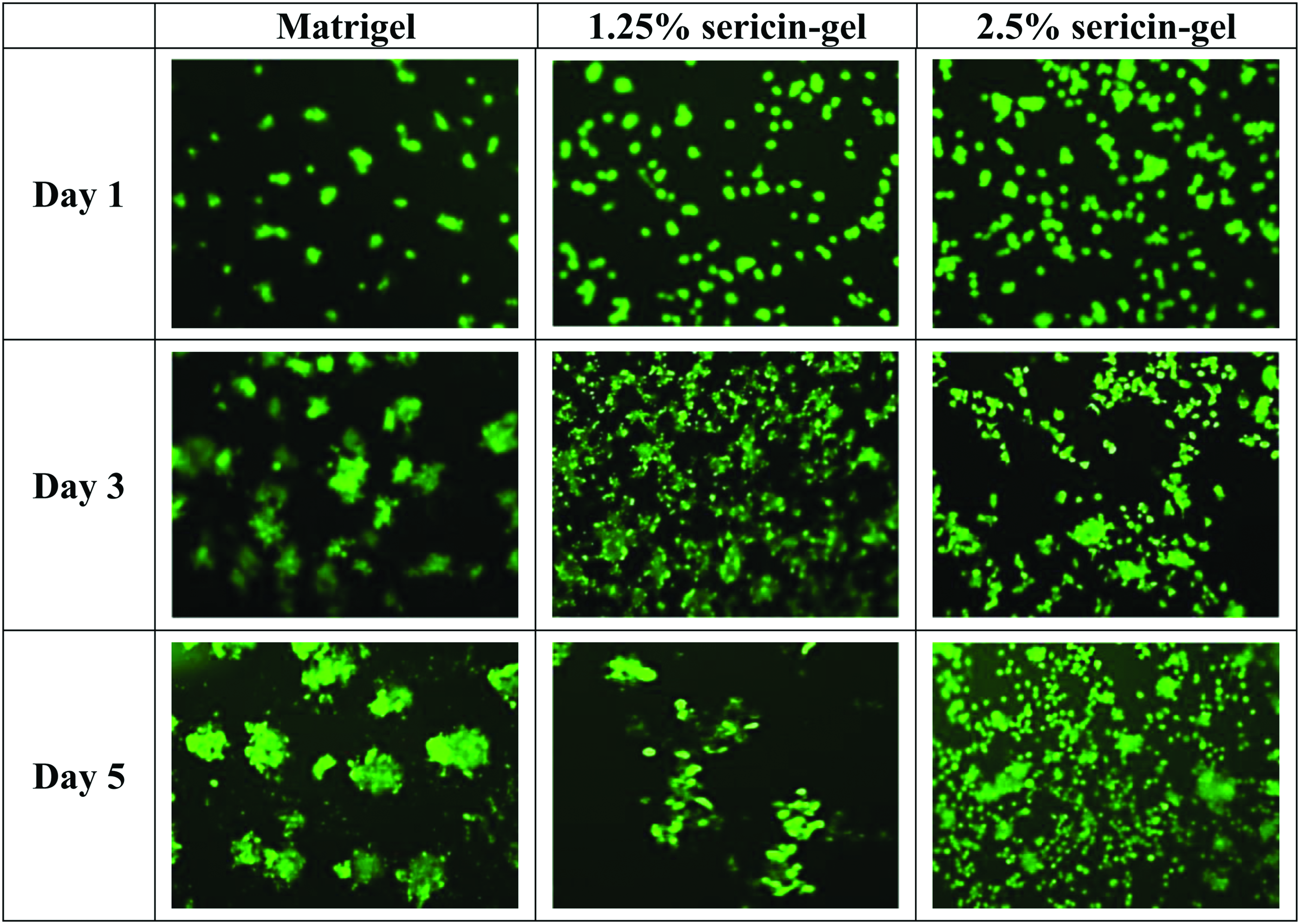
Live/Dead assay to evaluate the toxicity of sericin gels using 3T3 mouse fibroblast. Three-dimensional gelation of sericin gel (3D sericin gel) was formed in a chamber 4°C overnight. Matrigel as a control was added into the chamber and gelled at 37°C for 30 min. Ten microliters of cell suspension of 5 × 10⁴ cells were added to each chamber. All samples were incubated in the humidifier incubator at 37 with 5% CO2. CO2, carbon dioxide. Color images are available online.
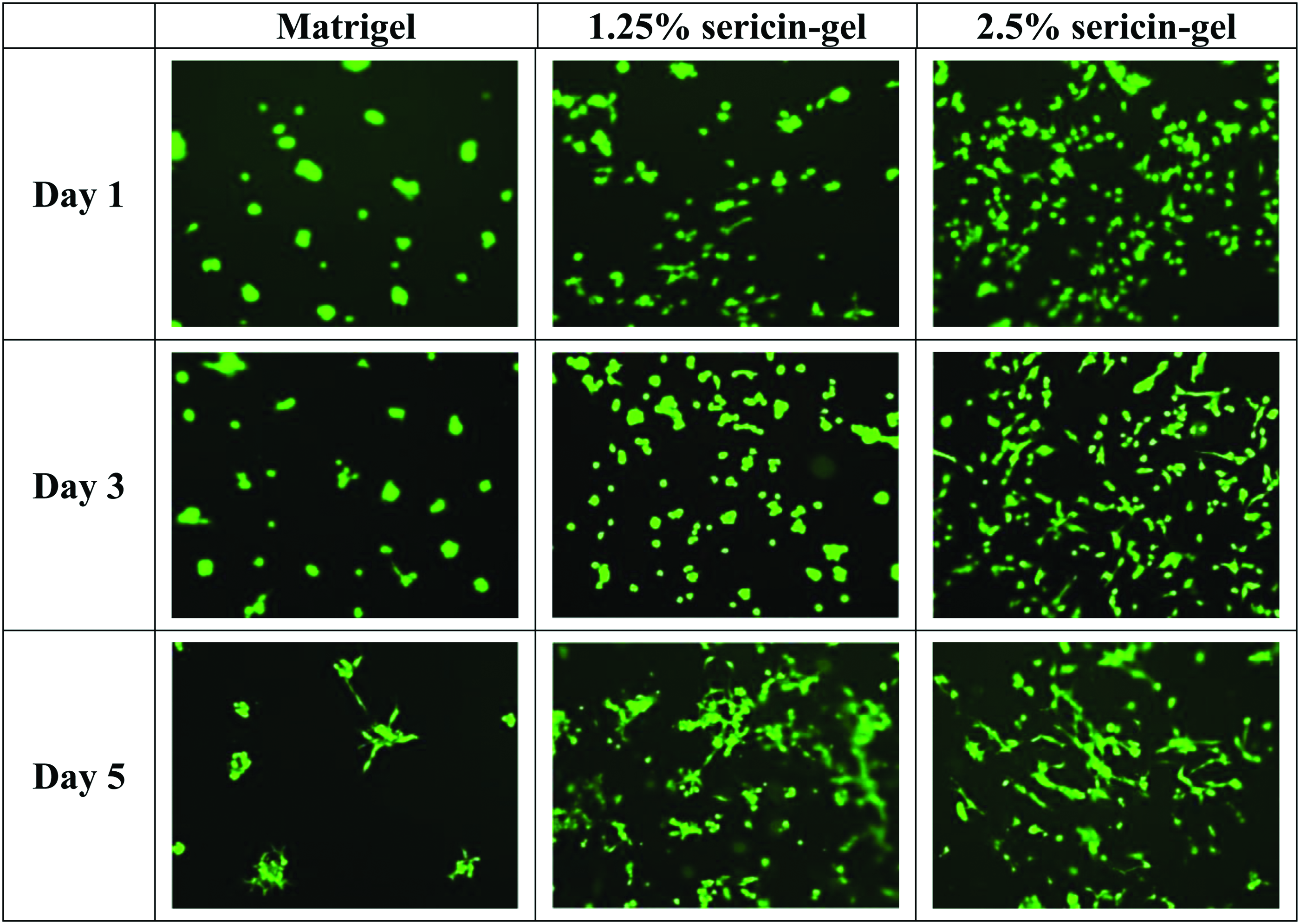
Live/Dead assay to evaluate the toxicity of sericin gels using C2C12 mouse myoblasts. Three-dimensional gelation of sericin gel (3D sericin gel) was formed in a chamber 4°C overnight. Matrigel as a control was added to the chamber and gelled at 37°C for 30 min. Ten microliters of cell suspension of 5 × 10⁴ cells were added to each chamber. All samples were incubated in the humidifier incubator at 37°C with 5%
Discussion
Ideal printable biomaterials are demanding as tissue printing fields are explored. However, development of appropriate materials having good printability and photoinitiator free is challenging. Commonly used crosslinking agents such as methanol, glutaraldehyde, 1-ethyl-3-(3-dimethylaminopropyl)carbodiimide (EDC) and N-hydroxysuccinimide (NHS), photoinitiator, and exposure to UV light would not be suitable for biocompatibility.21–23 We investigated the possibility of using silk sericin to obtain this ideal 3D printable self-gelling biomaterial. Empirical data demonstrated the safety and effectiveness of sericin-based hydrogel as printable biomaterial for biomedical applications. Silk sericin has a variety of biological advantages, and sericin aqueous solution has a characteristic of forming a gel as a structural change from a random coil to a β-sheet occurs.19,20,24 Gelatin has excellent biocompatibility, high water absorption capacity, and nonimmunogenicity and biodegradability. Gelatin is a solid at low temperatures and has poor mechanical properties. 25 Therefore, in this study sericin was mixed with gelatin to prepare a hydrogel having stability under physiological conditions. Richness of acidic amino acids in sericin and basic amino acids in gelatin can be considered for stable bonding, which provides structural integrity to the complex. 26 Another component in the complex, glycerol, acts as plasticizer that gives flexibility to sericin. 27 When compared with another example of physical crosslinking hydrogel silk fibroin, which needs complex and costly preparation steps including sonication to induce β-sheet, advantages of sericin containing hydrogel include easy isolation from silk, simple processability, low cost processing, especially compared with silk fibroin, which is a widely used printing material.8,28
For extrusion-based 3D printing, printability was improved with increasing viscosity to some extent because materials with higher viscosities facilitate gelation and maintenance of shape after deposition. However, highly concentrated bioink renders a restrictive environment for cell proliferation and migration. 29 Thus, it is important to formulate bioink having proper rheological properties, which influence not only printability but also biocompatibility and mechanical property. Data have shown the shear-thinning fluid behavior of the sericin gel, and storage modulus G′ is higher than loss modulus G″. This reveals that sericin-based hydrogel formulation has good printability and maintains gel form after printing. As sericin concentration increases, storage modulus G′ and loss modulus G″ increase.
When a biomaterial was printed with the suitable gelation condition, smooth and uniform filaments were extruded continuously, resulting in a standard grid structure with distinguishing layers. 22 During the extrusion process materials went through the temperature change from printing temperature to bed temperature. In our experiment, bed temperature was set to as low as 5°C, for the printed construct to be quickly gelled. As soon as the printing was done, the gelation had to be done quickly, so the temperature of the printing bed was lowered. As sericin gel is stable and its mechanical strength is well maintained at 4°C, 17 printed hydrogels were stored at 4°C for 1 day for complete gelation.
Hydrophilicity is one of the main factors that determines the biocompatibility of hydrogels, thus making them attractive for application in the fabrication of tissue constructs. 25
Conclusion
This study reports on a novel formulation of sericin-based 3D printing hydrogel. Ideal printable biomaterial is demanding as tissue printing fields are explored. However, development of proper materials having good printability and photoinitiator free is challenging. Commonly used crosslinking agents such as methanol, glutaraldehyde, EDC-NHS, photoinitiator, and exposure to UV light would not be suitable for biocompatibility. We investigated the possibility of using silk sericin to obtain this ideal 3D printable self-gelling hydrogel. Empirical data demonstrated the safety and effectiveness of sericin gel as a printable biomaterial for biomedical applications.
Footnotes
Acknowledgment
The authors thank Li-Wen Wong for providing technical assistance in cell culture.
Author Disclosure Statement
The authors have declared that there are no conflicts of interest.
Funding Information
This research was supported by the 2017 Medical Cluster R&D Support Project through Daegu Gyeongbuk Medical Innovation Foundation funded by the Ministry of Health & Welfare, the Republic of Korea (HI16C2505).