




Abstract
Additive manufacturing enables the production of complex structures with emerging approaches showing great promise in the food industry for design customization. Three-dimensional food printing has benefits for providing personalized health and shape fabrication for consumers. Past studies have demonstrated positive consumer perceptions for 3D food printing, but there is still a need for consumer validation of the technology through consumption and rating of fabricated 3D-printed foods. This article measures consumer response on shape, taste, and fidelity for 3D-printed food designs. Participants (N = 28) were presented with a series of designs differing in shape complexity and ingredients (marzipan and chocolate) and provided ratings using a visual analog scale (100 mm line). The results show that fabricated shapes with higher complexity were preferred by participants with 8.8 ± 0.3 ratings over lower complexity shapes with 5.5 ± 0.4 ratings. Taste preference was primarily dependent on the material selection, with chocolate material preferred by participants with 8.2 ± 0.5 ratings over marzipan material with 6.0 ± 0.5. Results demonstrated that participants preferred 3D-printed shapes that achieved high fidelity in recreating their computer-aided design (CAD) with 7.3 ± 0.3 ratings that were greater than 5.5 ± 0.5 for low-fidelity prints. These findings demonstrate first measurements of 3D food printing from a consumer perspective and provide a foundation for future studies on personalized manufacturing and nutrition.
Introduction
Advances in additive manufacturing are opening new possibilities for fabricating complex designs that were previously impossible to achieve with traditional manufacturing techniques.1–4 Additive manufacturing technology is of significant interest for 3D-printed food applications due to the wide range of possibilities for customization, precision, personalized meals, and the creation of novel food designs.5–9 Furthermore, 3D food printing can broaden available materials to consumers by using nontraditional foods while reducing food waste for improved sustainability.10–12
Three-dimensional food printing faces many of the same challenges as conventional 3D printing such as printing precision and accuracy, process productivity, and limited selection of materials. There are further difficulties associated with 3D food printing due to the complexity of mechanical and rheological properties for various food materials and how they translate to achieve fabrication accuracy and consumer approval and preferences.13–15 These considerations influence the fidelity of fabrication, which refers to how well the printed form resembles the original computer-aided design (CAD), therefore dictating the feasibility for printing varied shape designs and food materials that all influence a consumer's experience explored in this research.
Previous research investigations in 3D food printing have demonstrated positive consumer feedback concerning 3D food printing technology in general.16,17 However, consumer validation studies with fabricated 3D-printed food are still needed. Consumer studies that involve interaction with fabricated 3D-printed foods provide a more holistic understanding of the interaction between technological capabilities and its capacity to meet consumer expectations. Measuring consumer preferences and attitudes regarding the use of 3D food printing technology is also necessary because it informs the market launch of new products to better address consumer desires and expectations. 18 Consumer studies also link consumer preference and decision-making to the optimization of preferred shapes and nutrient needs for personalized manufacturing aided by computational processes.19,20 Although there is a large amount of research about printing food products with different ingredients, there is little research on consumers' responses to 3D-printed foods. 21 Primary areas of investigation that inform consumers' preference for a printed food include their preference for the designed food shape, their taste experience based on food materials, and the fabricated part fidelity achieved from the printing process (Fig. 1).
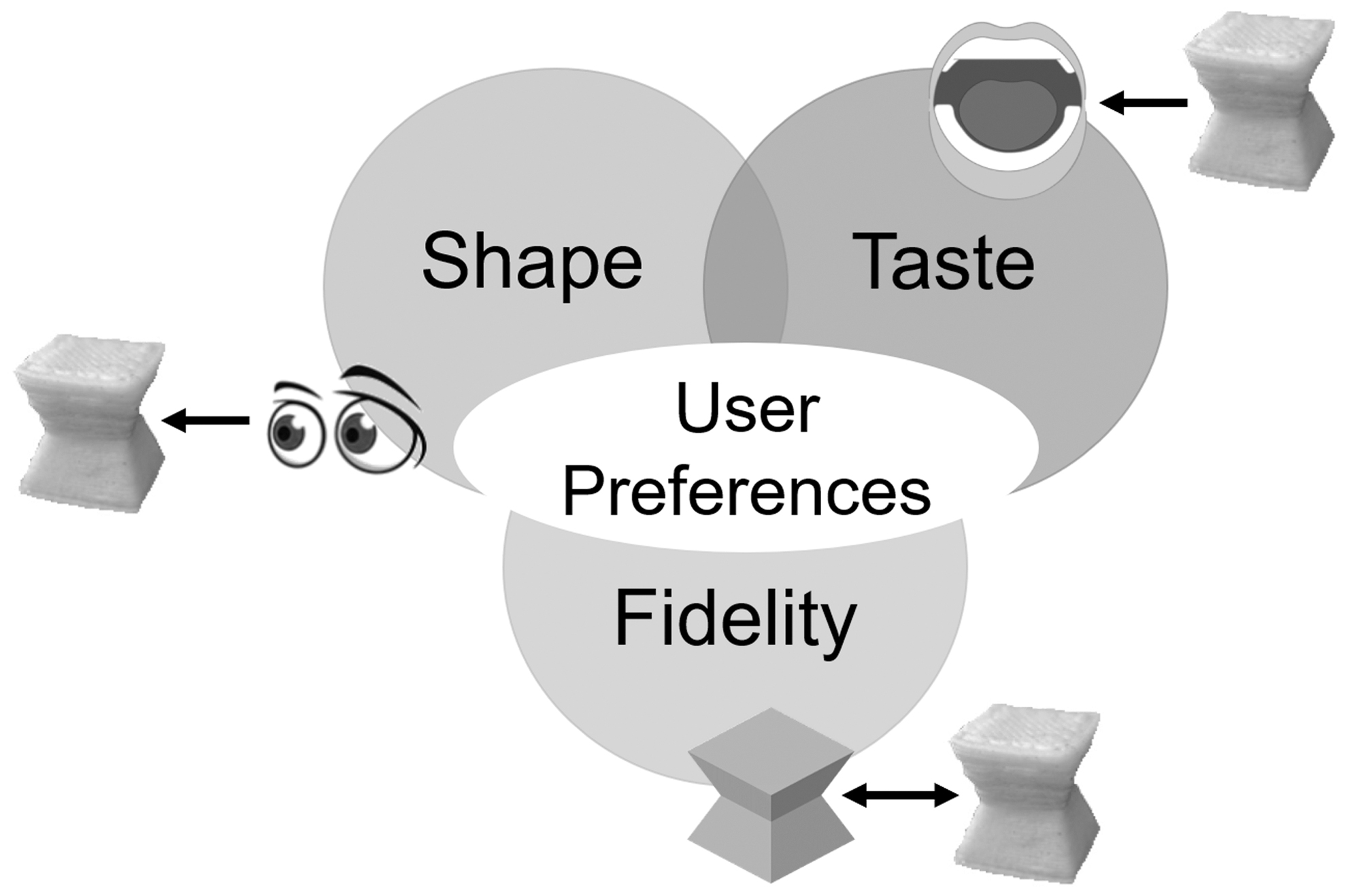
Consumer preferences for 3D-printed foods are influenced by the designed shape, food taste, and fabrication fidelity.
Recent investigations for consumer shape preferences have measured how visual attributes affect consumer associations with healthiness.22,23 These studies have shown the important role played by color, shape, sensory qualities of the food, and to what extent the food looked normal, natural, appealing, or indeed “food-like.” Another study concluded that a food's visual sensory properties are of critical importance, especially in situations where the products are sold primarily through appearance of the food itself rather than marketing on packaging. 24 Research in the symbolic meaning of shapes for taste expectations has demonstrated that the shape of a product can impact a consumer's responses to food products.25,26 These same study principles should be conducted with 3D-printed foods to validate the aesthetic purposes of 3D food printing technology by testing if complex shapes fabricated with the technology are desirable. Such tests can be conducted by altering the design complexity of shapes from 2.5D to 3D shapes, where a 2.5D object is the extrusion of a 2D profile, while a 3D object has alterations in multiple axes simultaneously. The comparison of these design complexities accounts for differences of 2.5D shapes that are producible with traditional manufacturing methods and molds, against 3D shapes that require additive manufacturing.
Food taste, texture, and mouthfeel have long since been known to affect consumer preferences based on the food material itself. Past studies have also demonstrated that depending on how the food products are described, they can be experienced as more or less tasty, filling, satiating, and rewarding and are often rated differently by individual consumers.27–29 By following the guidelines of these recent studies conducted with conventional food, researchers can better understand the impact of shape and taste on food preferences with samples manufactured by 3D printing technology.30–35 These considerations suggest the need to include multiple food materials for comparison in this study, to determine the role ingredients play in consumer perception taste, texture, and mouthfeel.
Another important consideration for 3D food printing technologies is fabrication fidelity, which is the match of the 3D-printed shape to the shape the consumer expects. Experiments of 3D food printing have demonstrated varying degrees of fidelity achieved based on the printing process, but there is a need to determine how consumers' perception of fidelity influences their preference for the printed food.13,36 Fidelity is difficult to measure and quantify, and so, consumer studies also provide empirical validation of the fidelity between the CAD image and the printed sample to validate how well the 3D printing process accurately recreates designs. Understanding consumer perception and preference of fidelity for 3D food printers also informs whether the achieved resolution and accuracy of the printers are acceptable to consumers, or whether further advances in technology are necessary to improve consumer satisfaction.
Shape, taste, and fidelity of 3D-printed foods are all dependent on material selection, in addition to printers having differing capabilities and manufacturing constraints for accurately printing designed shapes.37–39 For instance, marzipan and chocolate are two common 3D-printed food materials with differing ingredients relating to tastes and manufacturing capabilities in terms of printing features such as holes. 15 Generally, it is difficult to print holes with chocolate material due to the melting and hardening process, while marzipan material can reliably print two-dimensional holes with diameters as small as 4 mm for nozzle sizes of 1.2 mm. 15 Material selection also influences the choice for nozzle size, since a material's rheological properties influence the pressure required for extrusion.36,40–46 Further materials that have been successfully 3D printed include chocolate, 43 sugar powder, 47 meat gels, 48 cheese, 49 cookie doughs, 50 cereals, 51 fruits, and vegetables.52,53 Of these materials, foods such as desserts are commonly 3D printed since they hold their shape for a long period of time and generally have a lengthier expiration date.
These considerations have informed our study to utilize two food materials of chocolate and marzipan to investigate consumer response to 3D-printed foods of varied shape complexity. Only two materials were used throughout the article to better focus and highlight differences in shape aesthetics, while also demonstrating how ingredients and taste may influence results. The study aims to evaluate consumer response and preference for shape, taste, and fidelity of 3D-printed foods through the use of a survey and taste testing for a series of 3D-printed food designs. The first step of the study presents consumers with CAD design and printed foods to rate their shape preferences. Taste preferences were measured by having consumers eat and rate samples, in addition to providing feedback for further food preferences related to consumption, including texture and mouthfeel. The final step of the study has consumers rate the achieved fidelity of 3D-printed foods, and then determines whether consumer preferences are linked to fidelity, which is representative of the printer's manufacturing capabilities. This research significantly advances the 3D printing and additive manufacturing research by providing the first consumer studies with 3D-printed food consumption in relation to printed food design and achieved fidelity. These studies are necessary to validate the technology and inform future directions for developing advanced food printers that are better suited to the needs of their target consumer.
Methods
Equipment
Three-dimensional food printing was conducted using the Procusini 3.0 Double System from Print2Taste Germany (Fig. 2a). The printer uses a nozzle diameter of 1.2 mm, a printing speed of 5–50 mm/s, a nozzle movement speed of 5–200 mm/s, and an extrusion temperature of 20°C to 60°C. 54 The system allows for uploading custom CAD designs and printing with custom food materials (Fig. 2b).
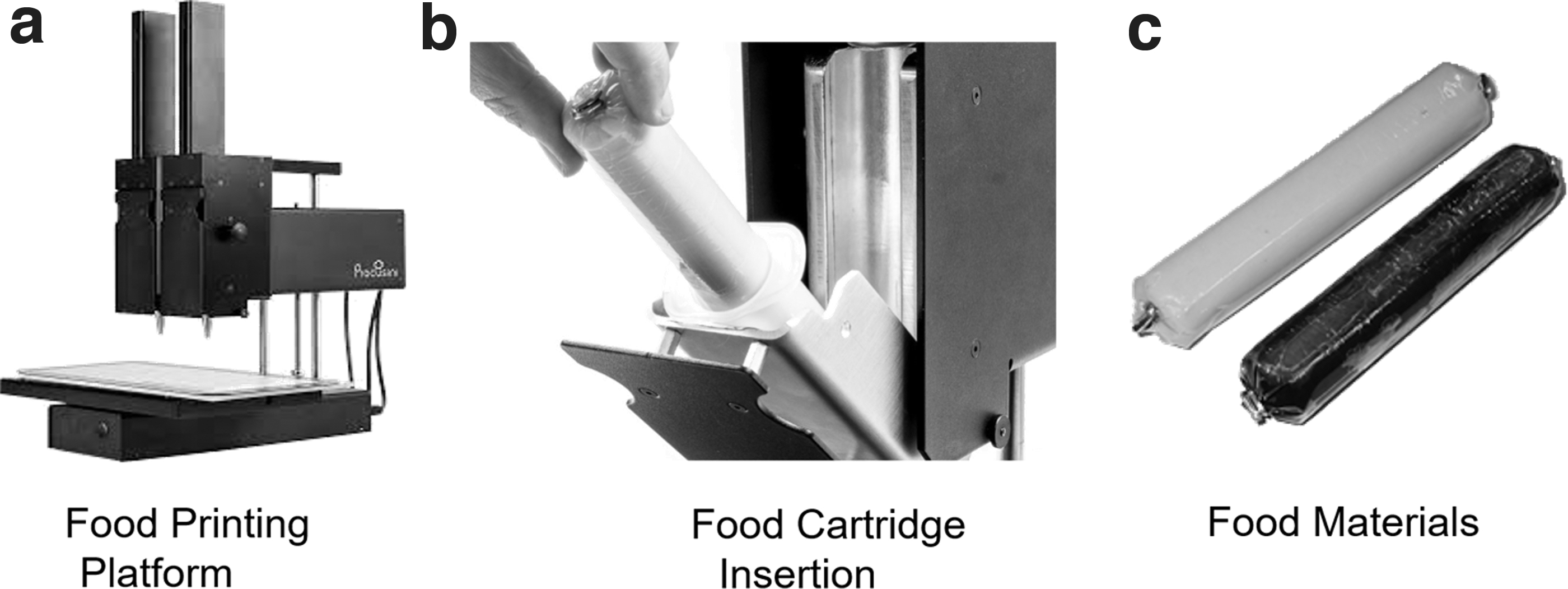
The materials used in this study include chocolate and marzipan that were purchased from the printer's manufacturer (Fig. 2c). The 3D shapes selected and used in this study are only achievable by 3D printing technology. The ingredients for each material are listed in Table 1. 54
List of Ingredients for Chocolate and Marzipan Materials
Shape generation
Shapes were generated for different food materials based on that material's design limitations. For instance, marzipan has a minimum overhang angle feature of 55°, while chocolate of 40°. 15 Thus, different CAD models for each food material were selected to fulfill the categories of 2.5D and 3D shapes for understanding the consumer preferences of design complexity. For 2.5D design complexity, the shape of a “cube” was selected (Fig. 3a) since it resembles already available chocolate in the market manufacturable with conventional technologies. The use of off-shelf chocolate bars impedes controlled comparisons for taste testing assessments. For 3D design complexity, two different subcategories were used, a simpler design (Fig. 3b) and a more complex design (Fig. 3c). These shapes were selected since they can only be manufactured with 3D printing technology.
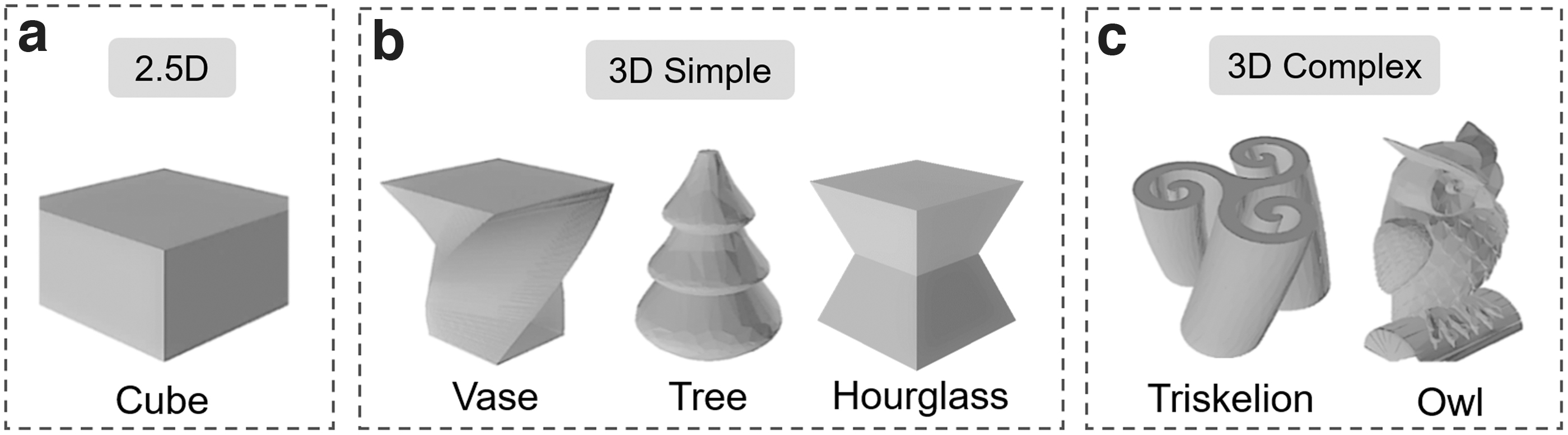
CAD models used for
For the 3D Simple designs, “vase,” “tree,” and “hourglass” shapes were selected (Fig. 3b), while for the 3D Complex designs, “triskelion” and “owl” shapes were selected (Fig. 3c). The “cube” and “hourglass” design models were created with INVENTOR Autodesk and later imported into the platform of the printer as an STL file, while the “vase,” “tree,” “triskelion,” and “owl” designs were obtained from the printer's software platform.
Consumer assessment
The consumer surveys consisted of a set of questions for measuring consumer responses for shape, taste, and fidelity of the CAD models and the 3D-printed food samples (IRB #: IRB2019-502). The questionnaire measured ratings using a visual analog scale (100 mm line), which consisted of the study participants marking a position on a 100 mm line to indicate their rating relative to two extremes. The left extreme was “Strongly Disagree,” while the right extreme was “Strongly Agree,” varying from question to question (Table 2). For instance, for the shape measurement, each CAD image and printed sample were shown and participants were asked “How much do you like this shape?” Then, participants indicated their preference by marking a line within the 100 mm line scale between the left and right extremes of “I don't like it” and “I really like it,” respectively. The response was then measured by determining the location of the participant rating on the 100 mm line and calculating a score between 0 and 10 based on the relative position of the mark to the extremes.
Consumer Assessment Questionnaire with Measurement, Participant's Action, Questions, and Scale Ratings
CAD, computer-aided design.
The study participants consisted of 28 upper level undergraduate mechanical engineering students recruited from the researchers' host institution in the United States. All participants, except for one, were males, and the participants' age ranged from 21 to 37 years. This study used two question orderings with half of the participants in each condition to avoid order bias. A research moderator provided food samples at appropriate times for consumers to answer the questions in the study (Table 1).
The participants were first asked to rate the shape preference of the CAD shapes (Fig. 3) and then of the 3D-printed sample. The participants were later asked to eat the samples, where they rated their preference of the 3D-printed samples using the same scale under the following considerations: taste, texture, and mouthfeel. Finally, participants were asked to rate the fidelity of the printed sample with respect to its CAD shape. All results from consumer ratings are reported as means, where statistical significance was determined as p ≤ 0.05 between measurements when using a Student's t-test. All plotted error bars represent the standard error of the mean.
Results
Fabricated samples
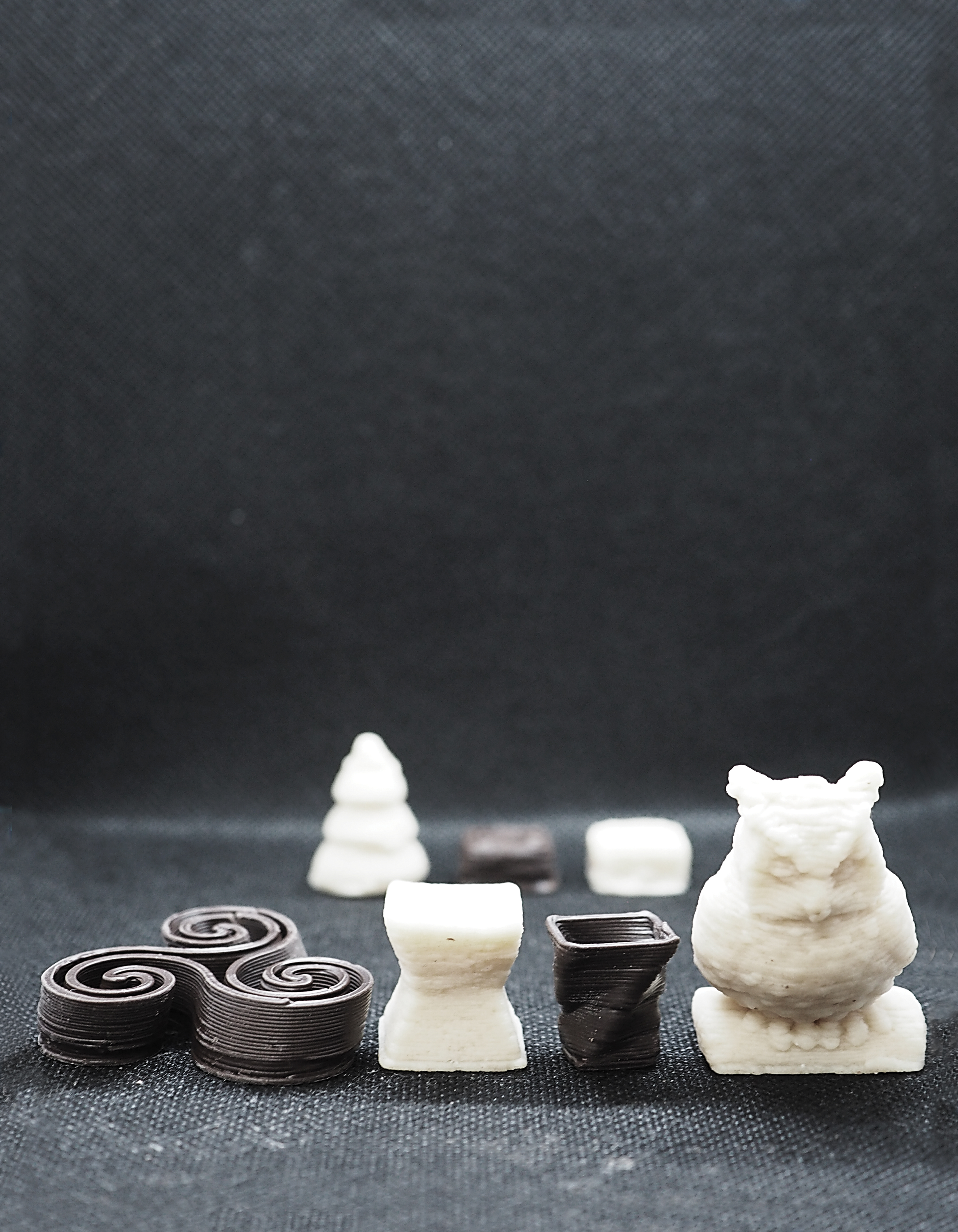
Print fabrications for all shapes and materials are shown in Figure 4 for 2.5D, 3D Simple, and 3D Complex shapes. All samples qualitatively matched their intended shape and size with dimensional accuracy consistent with previous measurements with the machine. 15 The designed dimensions were compared with the mean of the measured dimensions for the “hourglass” sample as a representative sample to demonstrate the printer's level of accuracy. The percentage error values found for the “hourglass” shape were 1%, 3%, 4%, and 7% for the measurements of angle, top length, base length, and height, respectively. Samples that had fabrication errors were discarded and not used in the study, with the exception of low-fidelity samples used for comparison with high-fidelity samples for participant assessment of fidelity.
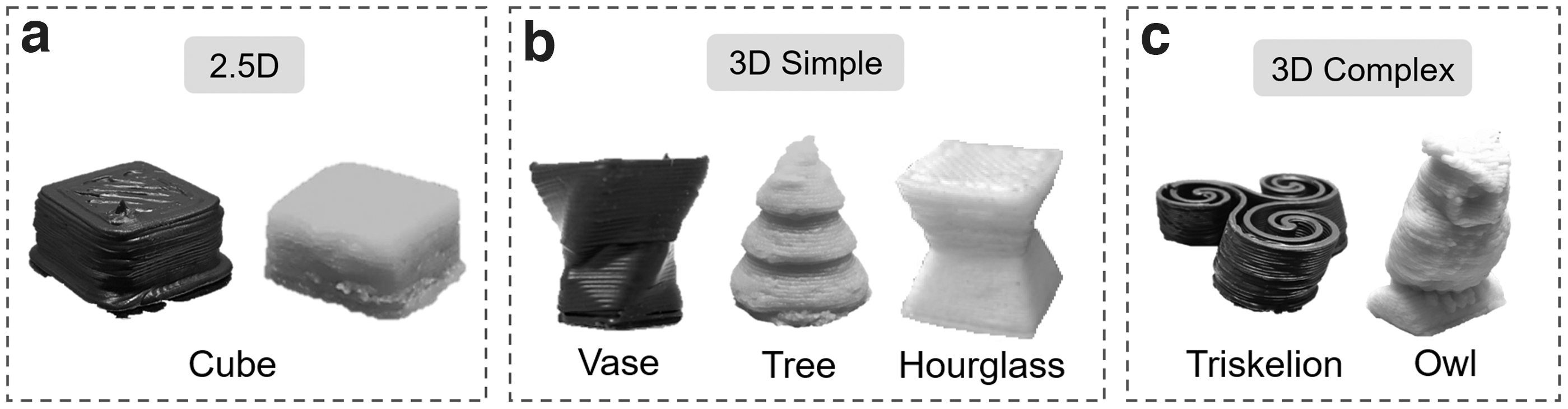
Three-dimensional-printed samples for
Shape preference
The survey conducted with human participants presented CAD and printed food products to measure consumer preference based on the shape complexity of 3D-printed foods (Fig. 5). Shapes were first shown to the participants as a CAD image (Fig. 3) and later as a printed sample (Fig. 4). There were a total of six shapes rated as follows: 2.5D “cube,” 3D Simple “vase,” “tree,” and “hourglass,” and 3D Complex “triskelion” and “owl.” Results are shown for CAD image preference in Figure 5a and printed part preference in Figure 5b with reportings of mean user ratings for each category of 2.5D, 3D Simple, and 3D Complex. The 3D samples for each subcategory, simple and complex, were aggregated since there was no significant difference in the mean between individual designs of similar complexity.
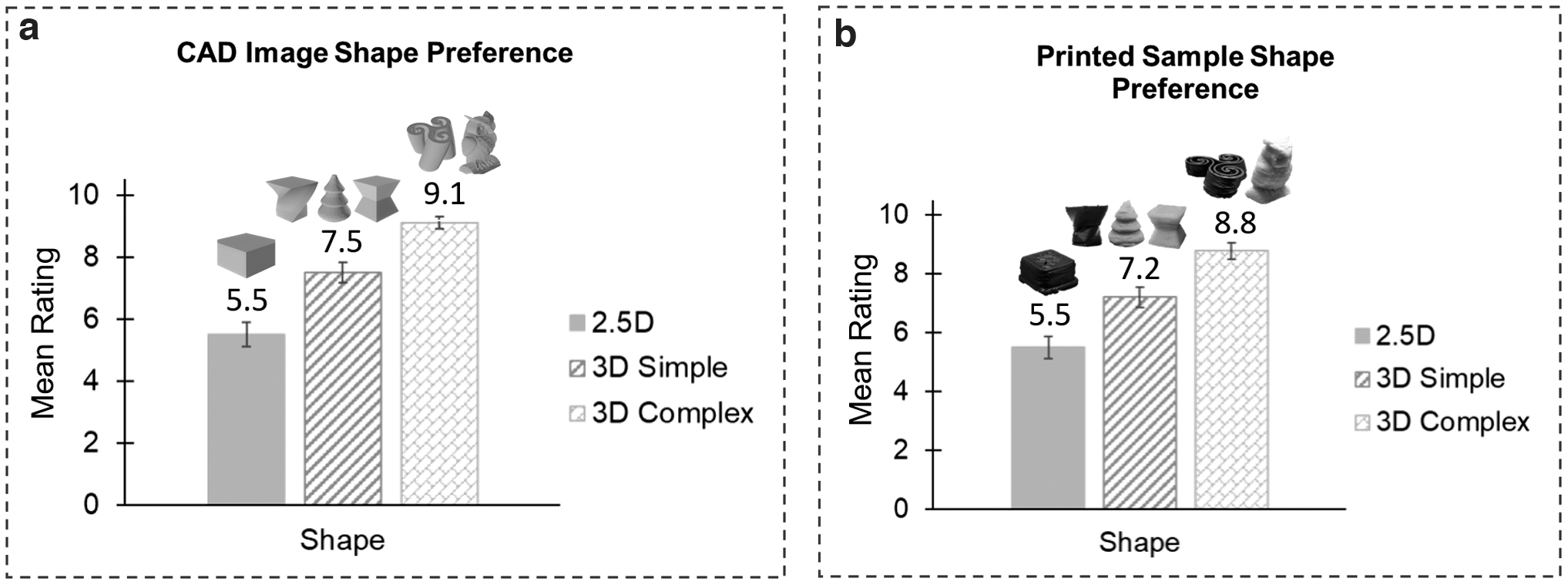
Mean shape preference ratings for
The participants rated the shape preference of the CAD image for the 2.5D, 3D Simple, and 3D Complex shapes with 5.5 ± 0.4, 7.5 ± 0.3, and 9.1 ± 0.2, respectively (Fig. 5a). Participants' ratings of the printed samples for the 2.5D, 3D Simple, and 3D Complex shapes were 5.5 ± 0.4, 7.2 ± 0.3, and 8.8 ± 0.3, respectively (Fig. 5b). These results show that there is no rating difference between the CAD and printed samples for each specific category of 2D, 3D Simple, or 3D Complex. However, shape preference for both CAD and fabricated prints increased with shape complexity. Results suggest that consumers preferred more 3D Complex shapes over 3D Simple shapes with p ≤ 0.001 for both the CAD image and the printed samples. Likewise, it can be observed that overall, consumers preferred 3D Simple shapes over 2.5D shapes with p ≤ 0.001 for both the CAD images and printed samples. These results show consumers prefer increasingly more complex shapes over simple shapes, therefore demonstrating the merits in creating more complex designs with 3D printing compared with traditional food manufacturing processes.
Taste preference
The survey conducted measured consumer response and preferences for taste, texture, and mouthfeel of 3D-printed foods that were printed and consumed (Fig. 6). The printed samples are shown in Figure 6, where a total of four samples were given to the participants: a marzipan 2.5D “cube” and 3D “tree,” and a chocolate 2.5D “cube” and 3D “vase.”
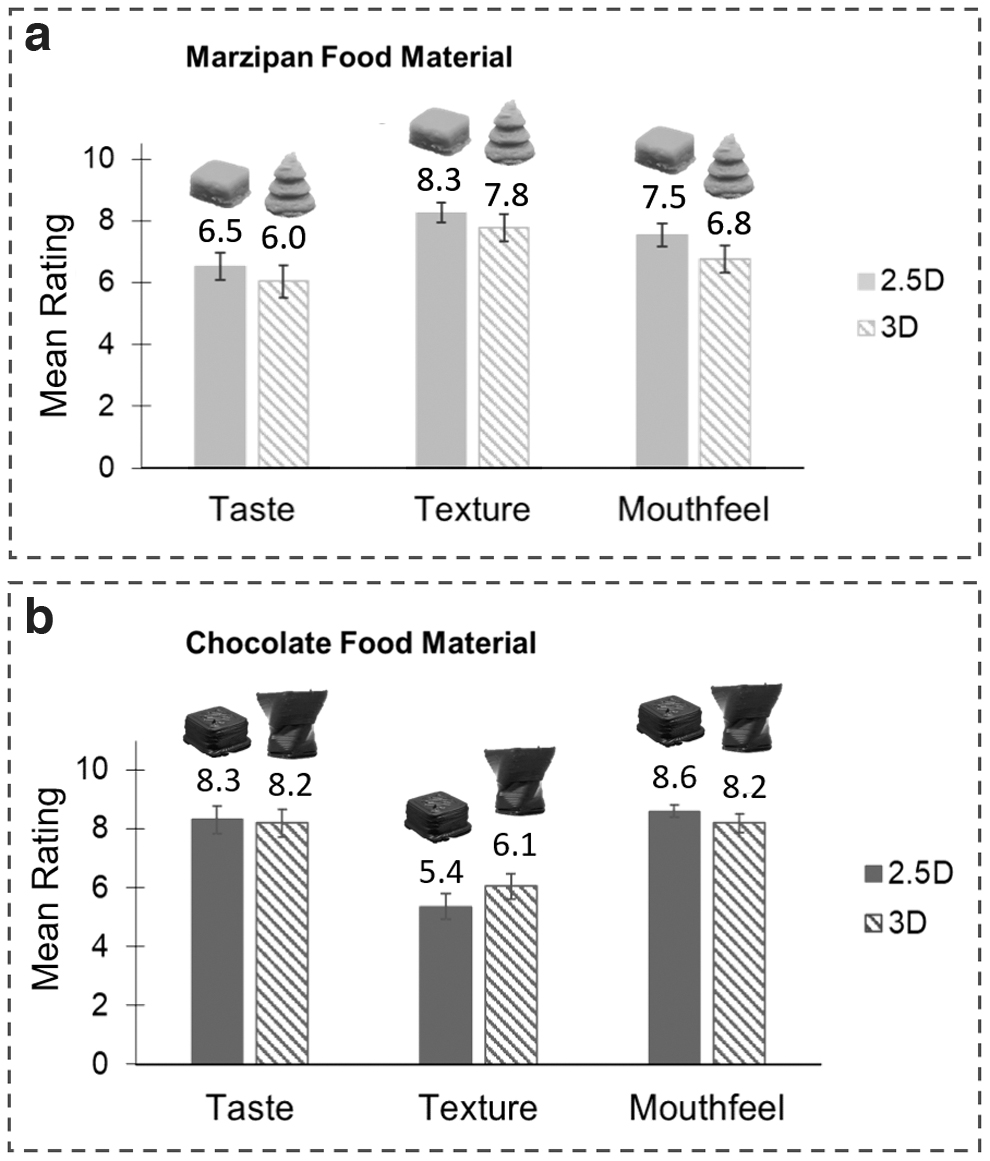
Mean taste, texture, and mouthfeel ratings for 2.5D and 3D shapes printed with
Results showed that there is no significant difference based on shape complexity for any pairwise case of taste, texture, and mouthfeel based on shape complexity for both materials. However, there are differences in comparisons of taste, texture, and mouthfeel across materials. Participants preferred the taste of chocolate over the taste of marzipan with p ≤ 0.007. The texture of marzipan was preferred over the texture of chocolate with p ≤ 0.0001. For the mouthfeel parameter, chocolate was preferred over the mouthfeel of marzipan with p ≤ 0.017. These results suggest that material choice strongly influences taste, texture, and mouthfeel preferences, while shape complexity does significantly influence these properties.
Print fidelity
Printed samples shown in Figure 7 were used for asking participants to rate part fidelity. These samples include a successful and unsuccessful print of the marzipan “hourglass” design and a successful and unsuccessful print of a “vase” shape in chocolate, where the unsuccessful prints represent samples that did not complete their printing process due to early deformation. The use of an unsuccessful print as a control/reference point validates that the participants do find the successful print as better matching the CAD and provides a relative measurement that demonstrates how much lower the participants may rate poor prints. Print fidelity was measured by asking how much the 3D-printed sample resembled its original CAD model or expected shape as perceived by the consumers by showing them an image of the CAD and the actual fabricated print simultaneously (Fig. 7a).
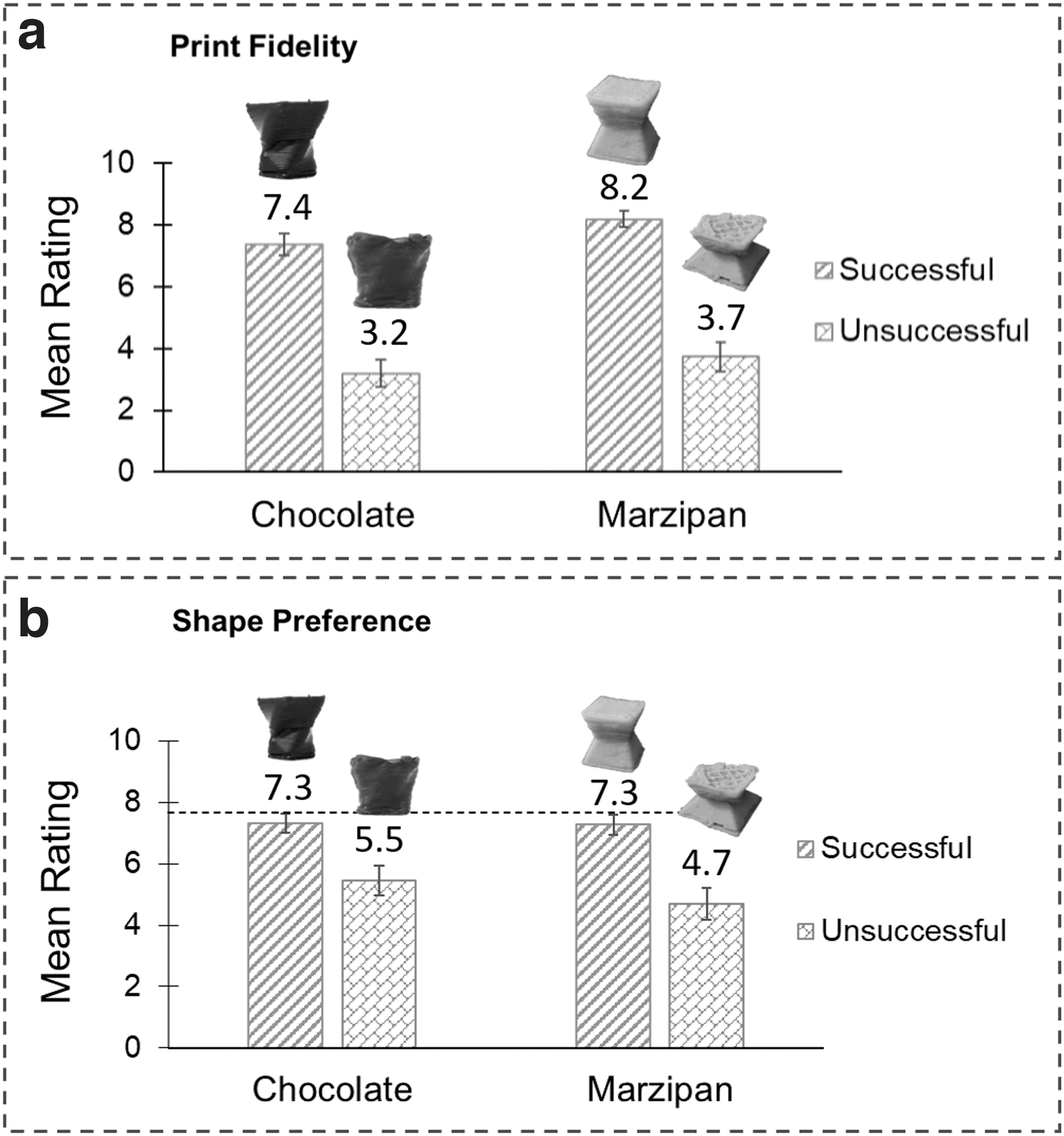
Mean ratings for
The participants rated the print fidelity between the CAD model and the successful print sample for the “hourglass” and the “vase” with 8.2 ± 0.3 and 7.4 ± 0.3 similarity rating, respectively. For the unsuccessful prints, the participants rated the fidelity of the printed sample to its CAD image for the “hourglass” and the “vase” with 3.7 ± 0.5 and 3.2 ± 0.4. The results demonstrate that the consumers rated successful prints as achieving much higher fidelity than their unsuccessful counterparts for each CAD design considered with p ≤ 0.001 for both materials.
Figure 7b shows the results obtained by asking the consumers to rate their preference for each of the successful/unsuccessful shapes to determine if fidelity plays a role in shape preferences. The value obtained for the successful 3D-printed sample was 7.3 ± 0.3 for both marzipan and chocolate, which is similar to the consumer's preference rating of the CAD model for each shape (dotted line in Fig. 7b). These results show that the participants did not have a significant difference in how much they liked the shape of the successful design in comparison with the shape of the CAD model for both materials.
The unsuccessful prints for marzipan and chocolate were rated lower by the participants, with values of 4.7 ± 0.5 and 5.5 ± 0.5, respectively. When the unsuccessful prints rating was compared with that of the successful prints, there was a significant difference of p ≤ 0.001 for marzipan and p ≤ 0.003 for chocolate demonstrating consumers prefer successful prints. These findings suggest that the participants were aware of the lack of accuracy/precision of the 3D sample with respect to its CAD image (Fig. 7a), and this poor print fidelity translated to a lower preference for these designs for both materials (Fig. 7b).
Discussion
Three-dimensional printing is being adopted in numerous industries because of the two key capabilities it offers over traditional manufacturing techniques: design complexity and customization that are also of great importance specifically to the 3D food printing industry. The success of 3D food printing is dependent on a designer's ability to fabricate innovative foods with desirable printing features of suitable fidelity that satisfy consumer expectations and preferences. Innovative shapes may lead to new marketing opportunities, supported by recent research showing an increase in the willingness of children to consume healthier and more nutritious snacks based on their presentation. 50 Improvements and success of 3D food printing require an understanding of consumer opinions and feedback concerning the technology and its fabrication capabilities. Thus, the present study measured and investigated consumer preferences for shape, taste, and fidelity of fabricated 3D-printed foods and the importance of shape complexity and material choice for consumer satisfaction.
The results from the consumer assessments demonstrated that consumers prefer more complex shapes over simpler shapes (Fig. 5). More significantly, the results showed that the participants rated the CAD images and 3D-printed samples for 2.5D and 3D shapes with similar values. These measurements indicate that there is no significant difference in shape rating when considering a virtual CAD image or an actual 3D-printed sample. Thus, future studies regarding food design could avoid the time and effort required for manufacturing food samples and assume that the rating from the consumers for CAD models will extend to printed samples. These results also validate the use of 3D food printing technology for aesthetics to provide high-value products to consumers and demonstrate consumers rate more complex shapes unique to 3D food printing with higher preference than simple shapes that may be fabricated with more traditional approaches. Due to the CAD being shown to participants before the 3D-printed food samples, there could be an inherent bias in ratings comparing CAD with food prints in Figure 5, however, relative differences when comparing ratings for shapes of CAD images with one another should not be significantly influenced, although further studies could further explore these effects.
Figure 6 results demonstrate that differences in ratings for shape complexity are not significant, while differences in taste ratings were based on the material tested. Therefore, the influence of material differences is greater than the effects of shape differences on taste testing results. Specifically, participants rated the taste of chocolate with 2.0 points more than the taste of marzipan with p ≤ 0.007, the texture of marzipan with 2.3 points more over the texture of chocolate with p ≤ 0.0001, and the mouthfeel of chocolate with 1.3 points more over the mouthfeel of marzipan with p ≤ 0.017. Changing the food's shape does not result in a change of taste, texture, and mouthfeel rating. However, users do rate shapes as more or less appealing than one another when only comparing shapes by themselves with no taste test. These results contrast with recent studies suggesting a close relationship (or cross-modal correspondence) between tastes and shape where experiments showed that taste words and shapes share a common semantic space. 55 This past study focused on associations between taste words and shapes, but not the degree of how much the food was liked and with actual consumption as carried out in the present study. These results suggest the need for further studies that can explore whether taste and shape interactions do occur in some cases where the shape of the food better reinforces the eating experience.
The participants' relative measurements for taste, texture, and mouthfeel to one another also differed based on material. Participants on average preferred the texture of marzipan over the texture of chocolate, but for taste and mouthfeel, participants preferred chocolate over marzipan. Thus, marzipan and chocolate materials could be selected or modified depending on individual preferences to better satisfy consumers when considering the unique preference trade-offs associated with any food. The study of individual preferences for food material properties is also important for supporting personalized manufacturing and nutrition, 11 where knowledge of consumer's individual preferences could enable the optimization of food at print time. These individual preferences from users could be influenced by differences in response to food ingredients that lead to differences in taste, texture, and mouthfeel ratings that vary across the population. These customized fabrications could aid in satisfying the increasing demand in the market for personalized food products, with 3D food printing additionally reducing costs attributed to mass customization and human errors. 10
Results in Figure 7 show the importance of design fidelity for consumer preference and acceptance. Figure 7a shows that they rated the print fidelity between the CAD model and the successful print sample with 8.2 ± 0.3 for marzipan and 7.4 ± 0.3 for chocolate. The results indicate that the participants were aware of the lack of perfect accuracy/precision of the 3D samples with respect to its CAD image since they did not rate the samples with a value of 10.0 that would indicate they perceive no difference in the shape of the CAD to fabricated sample. However, Figure 7b shows that the participants liked the successful prints of both materials with very close values to their CAD model, informing that perfect accuracy is not essential for consumer satisfaction with printed shape. These results demonstrate that the current manufacturing capabilities of 3D printing technology can successfully achieve high-fidelity designs that consumers rate highly for shape preference. These findings suggest that the focus for 3D food printing success may rely more on understanding consumer preferences and fully utilizing the technology to optimize foods for specific consumer and societal needs, 22 rather than enhancing print resolution. However, consumers may rate higher fidelity and complex designs with even higher scores. Future work could investigate what aspects of food are more important to a consumer to improve, and thus, more effort should be placed on understanding consumer perception and preferences of 3D-printed food rather than on optimization of printing parameters on current 3D food printers.
Some limitations in this study are the number of materials used and the number of participants surveyed. Few participants were surveyed due to the long printing time required to fabricate samples. A study that investigates a greater demographic population with different ages and lifestyles could be beneficial for further development of 3D food printing technology that adapts to different groups' needs and preferences. The results in this study focused on students recruited from a U.S. university with an age range of 21–37 years. Focusing on these demographics reduced the possibility of subpopulations forming within the study and led to more control and focus, with the caveat that other demographics may provide differing results. For instance, results could change based on the population's primary demographic based on age, sex, or cultural background, especially if participants have different preconceived beliefs 21 or food technology neophobia. 56 However, this study did provide enough participants to make statistical conclusions regarding the primary hypothesis for investigations. Studies with further demographics could explore how differences in ratings differ from the focused demographic explored in this study, such as how taste may vary across cultures or expectations of technological capabilities may differ across age groups. In addition, further use of different printers could result in different material processing and manufacturing capabilities that could lead to context-specific findings, such as higher or lower resolution prints.
Only two materials were tested since few materials have been characterized for 3D food printing, and developing new materials can require extensive testing and trial-and-error design. The materials used in this study, chocolate and marzipan, were already characterized commercially and were provided in ready-to-print capsules that make them potentially more desirable to a consumer base that prefers efficiency and easy home-integration of the technology. A replication of this study with materials considered to be “natural” or “healthy” such as potatoes, carrots, peas, and pumpkin can be beneficial for understanding the acceptance of this technology with foods that contrast with the prepackaged desserts investigated for the present study. The results obtained in this study could have been different if the materials used were perceived by participants as more “natural” or “healthy.” For a high proportion of consumers, food naturalness is of high importance, and generally, consumers' often rely on the “natural-is-better” heuristic as one reason for their lack of acceptance of novel food technologies. 56 If the foods were compared with healthier options, it could affect the ratings of users based on their biases of whether they perceive healthy foods as desirable or undesirable, which would complicate controlled comparisons to determine the influence of 3D-printed shape on results.
Further studies could define a scale for fidelity, extend the set of materials used, reveal the relationships between shape designs, measure the food material's rheological properties, and describe for which situations (manufacturing, elderly homes, special nutrition needs) and food materials (natural, processed) 3D food printing technology is potentially acceptable in society. Future studies could also parametrize shape, taste, and fidelity computationally to tailor a design for individual consumer needs. These continued areas of research could lead to new applications in the industry for personalized nutrition, new food services, and the use of nonconventional foods while providing efficiency in use and value to the consumer.
Conclusion
This study investigated the foundations of consumer assessments and the feasibility of 3D food printing technology by evaluating consumer preferences of CAD shapes and fabricated food samples. Consumer assessments were conducted to determine consumer preferences on shape, taste, and fidelity of 3D-printed food samples. The results suggest that (1) consumers prefer designs with higher shape complexity, (2) taste preference is highly dependent on material properties and is not coupled to shape complexity, (3) consumers rate the current 3D-printed foods with high fidelity to their CAD designs, and (4) higher print fidelity is linked to higher consumer satisfaction. These findings are a significant step forward in 3D food printing design and fabrication since knowledge of consumer preferences is essential for providing automated and personalized manufacturing suited for specific consumer needs and preferences. The study validates 3D food printing as a desirable technology and informs future directions in fabricating complex customized food shapes for improving consumer satisfaction.
Footnotes
Acknowledgment
An early iteration of the work was published in the ASME IDETC/CIE 2020 Conference. 15
Author Disclosure Statement
No competing financial interests exist.
Funding Information
Internally funded by Texas Tech University.