




Abstract
The development of innovative production processes and the optimization of photobioreactors play an important role in generating industrial competitive production technologies for phototrophic biofilms. With emerse photobioreactors a technology was introduced that allowed efficient surface attached cultivation of terrestrial cyanobacteria. However, the productivity of emerse photobioreactors depends on the available cultivation surface. By the implementation of biocarriers to the bioreactor volume, the cultivation surface can be increased which potentially improves productivity and thus the production of valuable compounds. To investigate the surface attached cultivation on biocarriers new photobioreactors need to be developed. Additive manufacturing (AM) offers new opportunities for the design of photobioreactors but producing the needed transparent parts can be challenging using AM techniques. In this study an emerse fixed bed photobioreactor was designed for the use of biocarriers and manufactured using different AM processes. To validate the suitability of the photobioreactor for phototrophic cultivation, the optical properties of three-dimensional (3D)-printed transparent parts and postprocessing techniques to improve luminous transmittance of the components were investigated. We found that stereolithography 3D printing can produce parts with a high luminous transmittance of over 85% and that optimal postprocessing by sanding and clear coating improved the clarity and transmittance to more than 90%. Using the design freedom of AM resulted in a bioreactor with reduced part count and improved handling. In summary, we found that modern 3D-printing technologies and materials are suitable for the manufacturing of functional photobioreactor prototypes.
Introduction
Additive manufacturing (AM), also known as three-dimensional (3D)-printing, is a steadily evolving manufacturing technique. Since the development of the first 3D printers in the 1980s by 3D Systems, Inc. (Patent No. US4575330A) and Stratasys (Patent No. US5121329A), different techniques evolved into a variety of 3D-printing processes that differ in building process, material availability, costs, and accuracy. Most famous and well established is fused filament fabrication 1 (FFF) due to its ease of use, a variety of printable polymer materials, and the affordability of simple desktop 3D-printers which are already eligible for private use. Beside FFF, selective laser sintering (SLS) and stereolithography (SLA) are also common printing techniques for polymeric parts that became recently more accessible due to new affordable 3D printers and materials. SLA printing uses photopolymers that are curable with ultraviolet radiation (UV), and depending on the material, postcuring after printing by additional exposure to UV can be necessary or recommended. If the requirements, for example, in mechanical strength or temperature stability, exceed polymers, metal parts can be manufactured by selective laser melting (SLM).
The wide availability of AM devices, the variety of printing materials, and the lowering costs contributed to the spread of AM into many different disciplines. 2 In medical engineering for example, where small quantities and highly customized parts are needed, AM has offered great potential for the manufacturing of anatomic models, implants and prothesis, 3 as well as surgical guides 4 or laboratory and surgical equipment. 5 In biotechnology AM has been used to manufacture microfluidic devices, laboratory equipment, or bioreactors and bioreactor parts. 6
Bioreactors are devices that are used to produce biotechnological organisms under controlled and optimized conditions. Photobioreactors differ from regular bioreactors by the need of a light source (artificial or natural) and the utilization of transparent materials to allow the so-called phototrophic cultivation of microorganisms that use light for oxygenic photosynthesis like microalgae and cyanobacteria. 7 Thereby, cyanobacteria are of special interest because they contain several valuable substances such as antimicrobial compounds. 8 Cyanobacteria in general and especially terrestrial cyanobacteria are expected to have a variety of unknown active substances that potentially can be used in pharmaceutical applications.9–12
To fully use this potential, improvements in the photobioreactor technology are essential. Due to limitations of terrestrial cyanobacteria in growth and the production of valuable substances when cultivated in common liquid cultivation systems,13,14 special emerse photobioreactors15–17 have been developed to mimic the natural conditions of terrestrial cyanobacteria and thereby minimize production limitations. This emerse photobioreactors use an aerosol instead of liquid medium to supply moisture and nutrients to the cyanobacterial biofilms. Condensed aerosol is collected in the photobioreactor and drained or fed back into the aerosol supply. Existing emerse photobioreactors use, for example, the surface of rods15,17 or the inner surface of multiskin sheets 16 for the surface attached cultivation of terrestrial cyanobacteria. However, only the designated surfaces are productive, while the reactor volume does not contribute to the productivity.
A concept to utilize this unproductive volume is the implementation of unstructured packings or biocarriers to add additional cultivation surface to the volume of the bioreactor. Thereby, optimized biocarriers with a high surface to volume ratio are filled into the reactor as a packed bed to provide additional surface area for the immobilization of cyanobacteria. To validate this concept, the interaction between the biocarrier surfaces and the cyanobacteria must be considered, 18 and new specialized emerse photobioreactors need to be developed.
In this study an emerse fixed bed photobioreactor was developed, designed for the use of biocarriers and manufactured using AM technologies. Using AM for the manufacturing of functional photobioreactors can be challenging, for example, due to the need of transparent parts. Often commercially available transparent extrusions like tubes or sheets have been used and combined with opaque 3D-printed parts for photobioreactor prototypes.16,19 However, AM of transparent parts is common for microfluidic devices, 6 and also small-scale transparent bioreactor parts have been produced by AM using material jetting technologies.20,21 AM of larger transparent bioreactor parts and the use of SLA have not been considered yet. Nevertheless, for high luminous transmittance regardless of the used printing technology, printed parts need extensive postprocessing. 22
Therefore, transparent photobioreactor parts were manufactured by SLA in this study, and postprocessing techniques to improve the luminous transmittance of the printed parts have been investigated. Furthermore, a laboratory-scale 3D-printed photobioreactor was developed applying the design opportunities of AM, and a fixed bed photobioreactor has been manufactured for proof of concept for the phototrophic cultivation of terrestrial cyanobacteria on biocarriers.
Material and Methods
Photobioreactor design
The emerse fixed bed photobioreactor (Fig. 1) consists of parts that were specifically designed for AM and complemented with commercially available standard parts. All bioreactor parts were designed in the computer aided design software (CAD) Siemens NX (Version 1930; Siemens PLM, Plano, TX). In the following, the individual parts are described with their allocated position number (Pos.) in Figure 1. The central component is the socket with integrated channels (Pos. 3) that has hose connectors (Pos. 16) for aerosol inlet and outlet, a hose fitting (Pos. 17) for condensate drain, a round connector (Pos. 15) for electrical connection, and integrated channels for aerosol, condensate, electrical wiring, and a temperature probe (Type DS18B20, Pos 4). A mounting adapter (Pos. 2) is connected to the socket with screws (ISO 7380-1 M4x14, Pos. 1) to allow mounting to a mounting bracket.
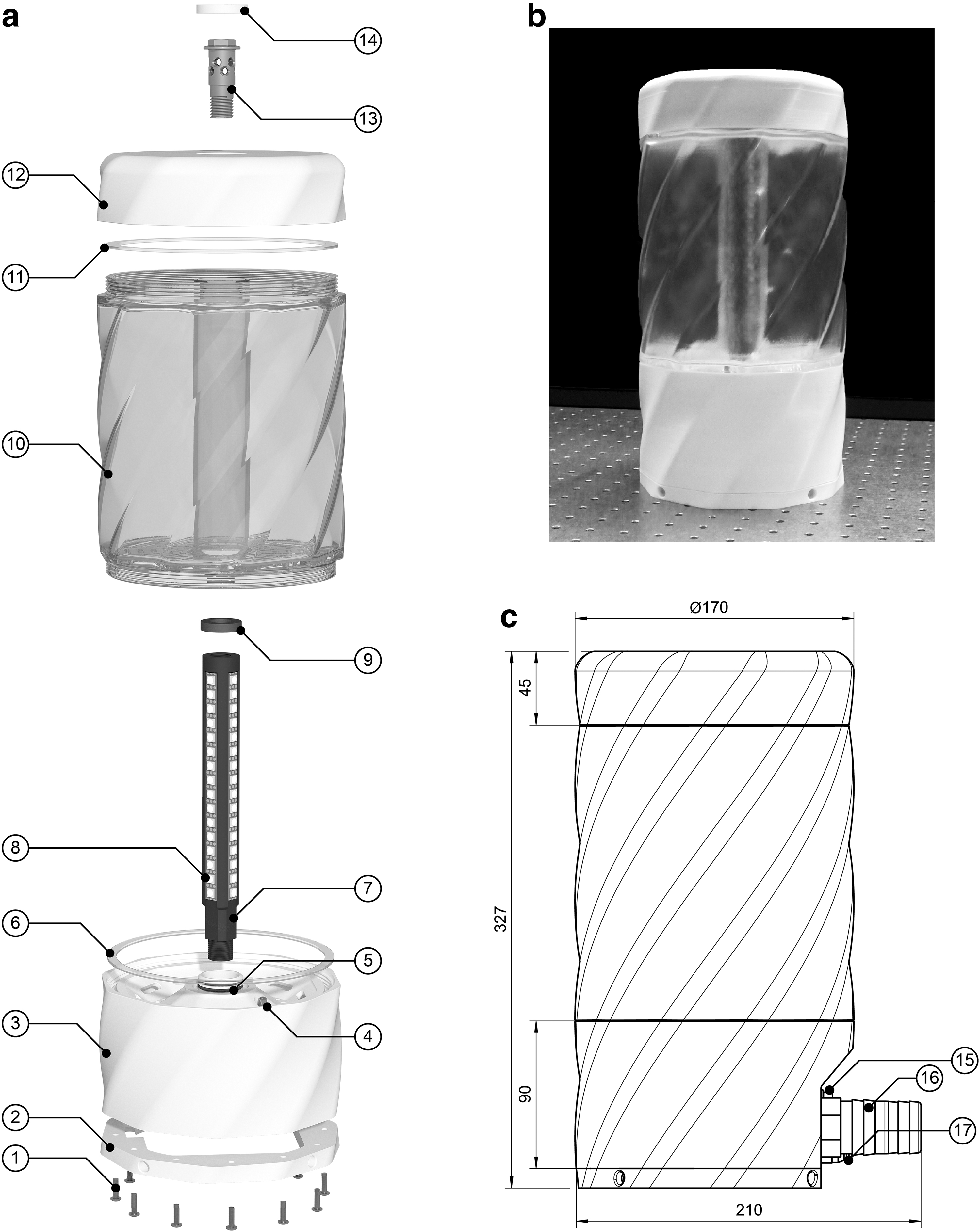
The cultivation on biocarriers takes place in the transparent cultivation vessel (Pos. 10) that offers a total cultivation volume of 3.4 L and consists of an inner and outer wall that are connected by a grate on the bottom. The cultivation vessel screws into the socket and is sealed by the inner vessel sealing (double ISO 3601 30 × 2 mm O-ring seal, Pos. 5) and the lower vessel gasket (Pos. 6). An inner tube (Pos. 7) connects to the socket and holds four addressable RGB light stripes (Type WS2812b, Pos. 8).
The lid with integrated channels (Pos. 12) screws to the cultivation vessel and has integrated channels for aerosol return and ventilation of the light stripes. The connection between lid and cultivation vessel is sealed by the upper vessel gasket (Pos. 11) and an inner vessel sealing (single ISO 3601 30 × 2 mm O-ring seal), while the inner tube is sealed to the lid by the inner tube gasket (Pos. 9). The lid is connected to the inner tube by a hollow screw (Pos. 13) that allows aerosol to flow into the inner tube and return to the aerosol outlet in the socket. The lid and hollow screw are sealed by the hollow screw sealing (single ISO 3601 18 × 2 mm O-ring seal), and the hollow screw is covered by the hollow screw cover (Pos. 14). Socket, cultivation vessel, and lid are designed in a twisted decagonal shape on the outside for esthetics and mechanical stability.
Manufacturing of bioreactor components
All components for AM were exported to polygon mesh (STL format) in CAD with a chordal tolerance of 0.02 mm and an angular tolerance of 2° before further preparation for the individual AM processes.
The mounting bracket, mounting adapter, socket, lid, and hollow screw cover were manufactured by FFF out of polylactic acid (PLA). For FFF printing, a Raise 3D Pro2 (Raise 3D, Irvine, CA) with a 0.4 mm nozzle was used to manufacture parts out of white PLA (Raise 3D Premium PLA; Raise 3D) with an extrusion temperature of 205°C and a bed temperature of 60°C. The geometry was imported into Ideamaker (Version 4.2; Raise 3D), and print settings were taken from the PLA standard preset provided by the manufacturer with modification of layer height to 0.2 mm, shells to 6, top and bottom solid fill layers to 6, and rectilinear infill to 20%. After printing, the parts were taken from the print bed, and supports were removed manually. Sharp edges and leftovers from the supports were sanded with 240 grid.
The inner tube was fabricated by SLS with a LisaPro (Sinterit, Kraków, Poland) out of nylon (PA12 smooth; Sinterit). Due to the limited print volume size, the inner tube was separated into two pieces. The geometry was imported into Sinterit Studio 2019 (Version 1.7; Sinterit) to place the parts in the print volume and set the layer height to 0.2 mm. Other parameters for the SLS printing process were defined by the slicing software and could not be changed. The printed parts were depowdered and postprocessed by blasting with glass beats (0.2–0.3 mm). The two pieces of the inner tube were joined with dual-component epoxy adhesive (UHU Plus Endfest; UHU GmbH, Bühl, Germany).
The transparent cultivation vessel was manufactured by SLA out of clear resin (Clear V4; Formlabs, Somerville, MA) with a Form 3L (Formlabs). Parts were prepared in PreForm (Version 3.18; Formlabs) with a layer height of 0.1 mm and raft supports with a touching point size of 0.55 mm. Further customization of print parameters was not possible due to constraints in the slicing software. After removal from the build platform, parts were rinsed with 99.9% isopropyl alcohol (Höfer Chemie GmbH, Kleinblittersdorf, Germany) for 10 min. Cleaned parts were set to dry for 24 h (room temperature) before manually removing the supports. The surfaces were then sanded with 800, 1200, and 2000 grid before applying three layers of automotive clear coat (Tristar glossy clear coat; MG Colors, Kitzingen, Germany).
The hollow screw was manufactured by SLM with a Renishaw AM400 (Renishaw plc, Gloucestershire, United Kingdom) out of AISI 316L stainless steel (m4p material solutions GmbH, Magdeburg, Germany) with a layer height of 0.04 mm. The software Renishaw QuantAM (Version 5.3.0.7105; Renishaw plc) was used to prepare the part, and printing parameters were set as provided by the material supplier. The part was printed on 5 mm high support structures and removed from the build platform using a band saw. The remaining supports on the part were removed with pliers, and the outer surface was finished through sanding with 120 and 400 grind and retapping the thread.
The lower and upper vessel gasket were manufactured out of 2 mm thick silicon sheets with a shore hardness of 60 A and the inner tube gasket out of foam rubber sheets with a thickness of 4 mm. The gaskets were cut out with a laser cutter (Sabko 4060; Sabko GmbH, Trierweiler, Germany). Connectors, wiring, light stripes, O-ring seals, screws, and the temperature probe were standard parts and bought commercially.
Luminous transmittance measurement and optical clarity
To characterize the optical properties of SLA printed transparent parts and identify ideal postprocessing techniques, material samples of 26 × 76 mm with thicknesses of 1, 3, and 5 mm have been investigated. The material samples were manufactured out of clear resin (Clear V4; Formlabs) in the same way as the cultivation vessel, but different postprocessing steps have been performed. The samples were either postcured by exposure to UV (405 nm, 15 min, 60°C) or not postcured. Postcured and not postcured samples were then either not further postprocessed, clear coated (three layers), or sanded (800, 1200, 2000 grid) and clear coated (three layers). For the six possible combinations, three samples have been prepared for each thickness, respectively, and light transmittance has been measured with the setup shown in Figure 2.
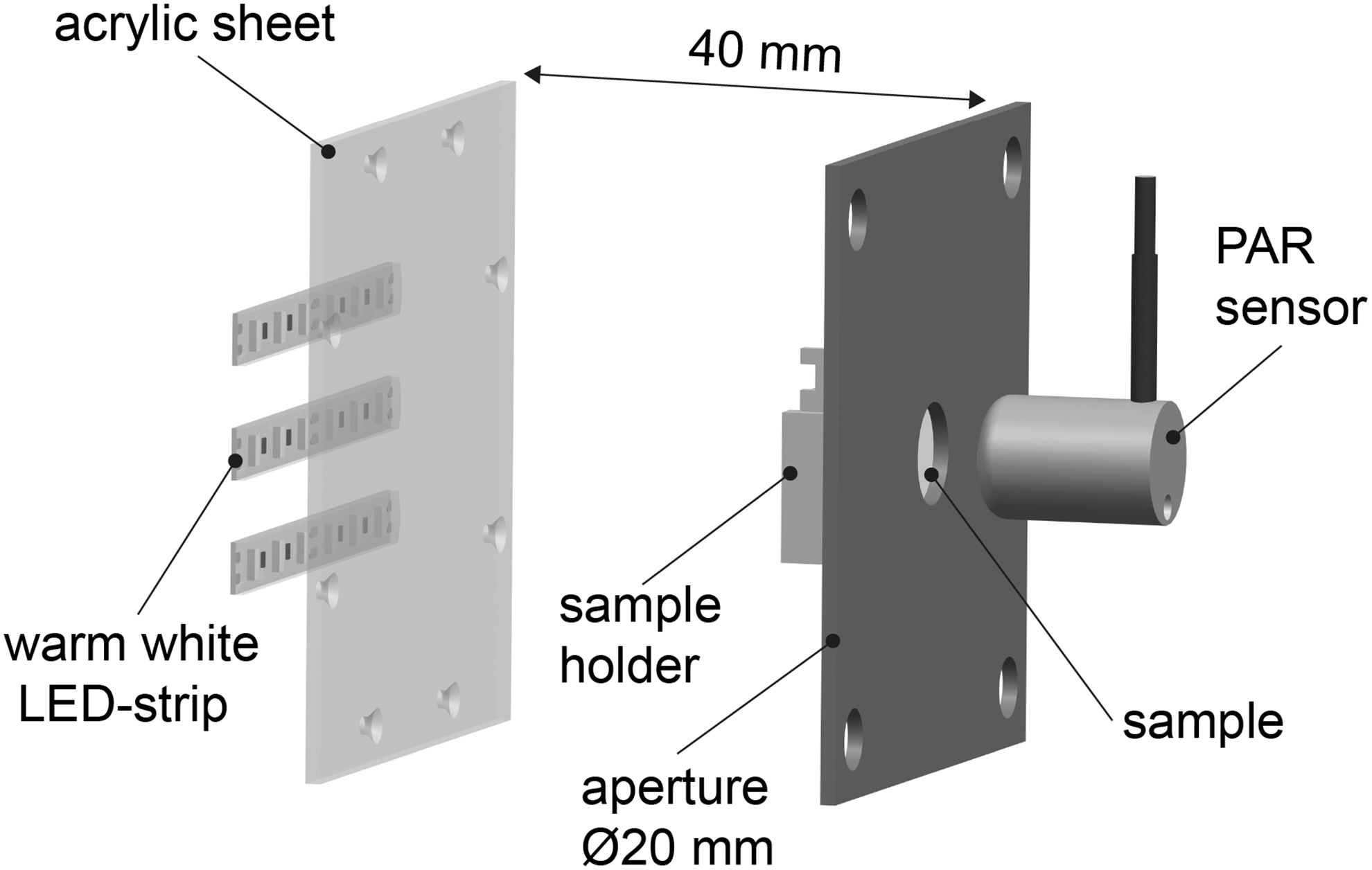
Conceptual setup for the measurement of luminous transmittance of printed rectangular samples using warm white LED and a PAR sensor. LED, light emitting diodes; PAR, photosynthetically active radiation.
Warm white light emitting diodes (LED)-stripes (SMD 5630, 3000 K) were used as the light source, and the photosynthetically active radiation (PAR) transmitting through the samples was detected with a quantum sensor (apogee SQ 520; Apogee Instruments, Logan, UT). The samples were placed in a sample holder at a fixed distance of 40 mm to the light source. An aperture with a 20 mm hole behind the samples ensured that only light transmitted through the samples reached the sensor. The measuring setup was installed in an optically opaque wooden enclosure built out of 10 mm oriented standard board to avoid interference with surrounding light. Luminous transmittance was determined as the relation between PAR with and without sample installed. Results were statistically analyzed by analysis of variance with post hoc test according to Tukey (T) for significant differences in Origin 2021 (OriginLab Corporation, Northampton, MA).
Apart from the transmittance, optical clarity of the parts was determined by the readability of the letters “3D printing” through the samples. Therefore, the samples were raised 3 mm above the letters, and their clarity was compared to each other and acrylic (Plexiglas® XT; Röhm GmbH, Darmstadt, Germany).
Results
Luminous transmittance of SLA printed parts
To develop and manufacture a cultivation vessel with the highest luminous transmittance possible, the influence of material thickness, postprocessing, and postcuring on the optical properties of SLA printed parts has been investigated. The luminous transmittance and optical clarity of SLA printed samples are shown in Figure 3. Comparison of the sharpness of text viewed through 5 mm thick samples with different postprocessing and with or without postcuring (Fig. 3a) shows that not postprocessed samples blur the letters. If not postprocessed, postcuring seems to slightly enhance the blur effect and leads to a significant decrease in luminous transmittance (T: p < 0.02). However, when postprocessed, there are no noticeable differences in clarity and no significant variation in luminous transmittance for equally postprocessed samples due to postcuring (T: p > 0.9).
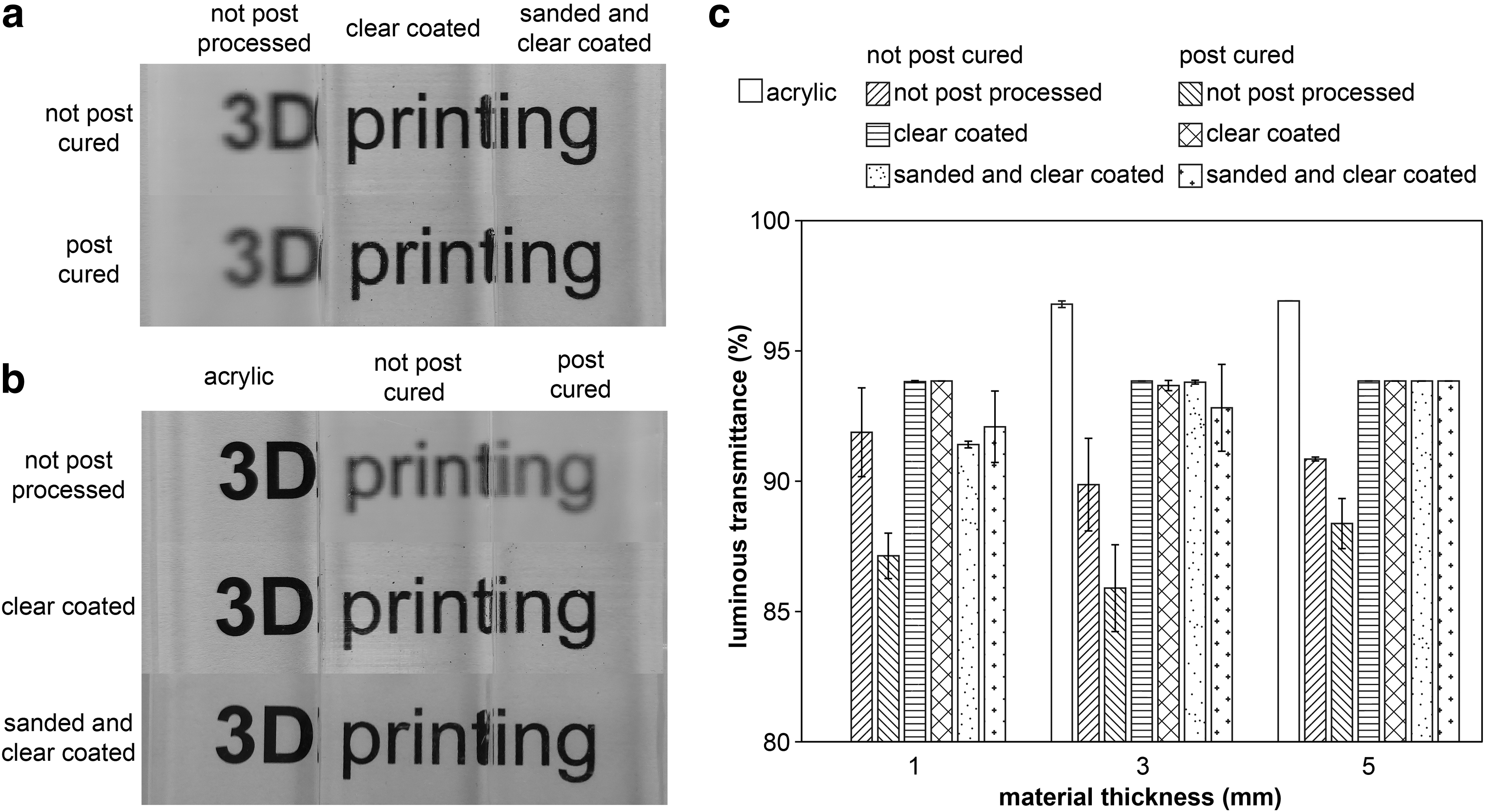
Postprocessing by clear coating only or sanding and clear coating smoothens the surface of the samples, reduces light scattering, and results in almost no blur and a clarity that is comparable to acrylic of the same thickness (Fig. 3b). When clear coated only, samples have a slightly worse optical clarity than samples that are sanded and clear coated, although the luminous transmittance reveals no significant changes for the different postprocessing techniques for material thicknesses of 3 and 5 mm (T: p > 0.3). A material thickness of 1 mm even shows a trend (T: n = 3, q = 4.38, p = 0.08) for reduced luminous transmittance if sanded and clear coated.
The material thickness in range of 1–5 mm shows no noticeable difference in optical clarity and no significant variation in luminous transmittance (T: p > 0.1), except for not postcured, sanded, and clear coated 1 mm samples that indicate a significant difference in luminous transmittance compared to equally postprocessed 3 and 5 mm samples (T: p < 0.05). The discrepancies of samples with 1 mm thickness compared to other material thicknesses could be related to an uneven sanding, as the lower stiffness of thinner samples made sanding more difficult.
The luminous transmittance of not postprocessed samples was in the range of 85.9–88.4% if postcured and 89.9–91.9% if not postcured. Clear coating or sanding and clear coating enhanced luminous transmittance and postprocessed samples regardless of postcuring were in range of 91.4–93.8%. This is close to the luminous transmittance of acrylic with 96.8%, which is known to be one of the most transparent polymers.
Design of integrated channels for process media
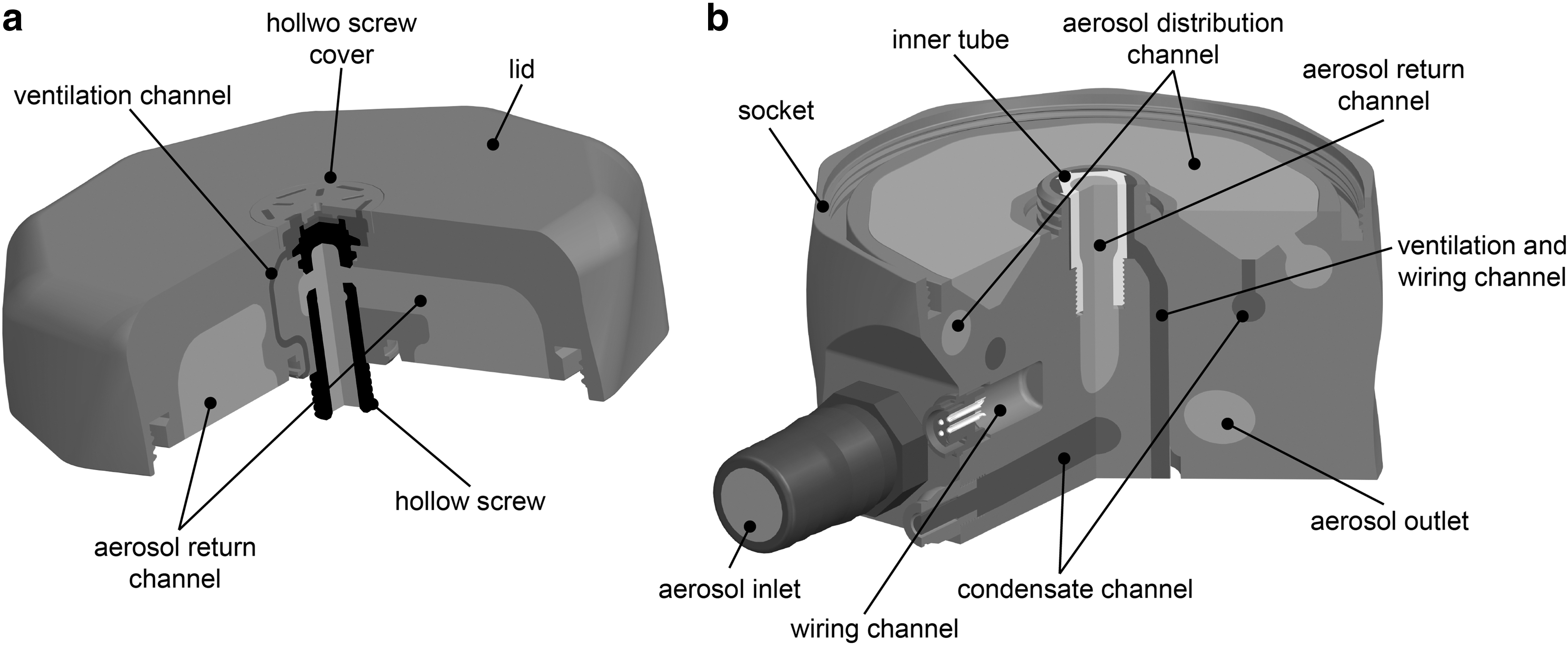
Function integration, also referred to as functionality integration or integrated design, is the inclusion of several functions in one single part that would normally be separated into multiple individual pieces. In this study the concept of function integration was used to integrate channels for process media in socket and lid of the photobioreactor. The lid (Fig. 4a) has integrated channels that direct the aerosol flow and enable return to the socket through the hollow screw and inner tube. Furthermore, the lid has ventilation channels to allow excess heat of the lighting to be exhausted. The socket (Fig. 4b) integrates channels for aerosol that direct the flow from the inlet to the cultivation vessel and ensure equal aerosol distribution. In addition, the socket has an integrated channel for aerosol return that is connected to the aerosol outlet, channels to drain condensate, and channels for electrical wiring that also function as air intake for the lighting ventilation.
Discussion
Optical properties of SLA printed bioreactor parts
Although terrestrial cyanobacteria are able to adapt to changing light conditions 23 and perform well under limited light conditions, 24 usually higher light intensities are associated with higher biomass productivity. Furthermore, the biocarriers, biofilms on their surface, 18 and the aerosol also mitigate light penetration. Hence, luminous transmittance of the cultivation vessel is important to allow sufficient light supply for the phototrophic biofilms. The observed blur effect of SLA printed samples is caused by light scattering on the rough surfaces that result from the manufacturing process. Postcuring of SLA printed parts is reported to increase surface roughness, 25 which could be the reason for the enhanced blur effect and reduced luminous transmittance of not postprocessed samples due to postcuring. In addition, postcured material samples developed a yellowish tint due to reaction of the photoinitiators in the resin to UV, 26 which could also contribute to the reduced luminous transmittance.
The observed luminous transmittance of over 85% is remarkable for off the printer parts with no additional postprocessing and especially compared to other AM processes. For example, FFF printed parts out of transparent filament usually have <20% luminous transmittance 27 without postprocessing. The alteration of luminous transmittance due to postcuring seems to depend on the used material and 3D printer because for a similar SLA printer and material combination also increased transmittance due to UV treatment was reported. 22
In summary, the 3D printer and material selected in this study are capable for manufacturing parts with high luminous transmittance for the application in photobioreactors, and the luminous transmittance and optical clarity can be further improved by postprocessing. Due to the observed increase in transmittance, postprocessing of parts is recommended. The differences between clear coating only and sanding before clear coating were rather small and clear coating only should be sufficient in most applications, unless the highest optical clarity and smoothest surfaces are needed and justify the additional effort of sanding.
Function integrated bioreactor parts
Function integration is part of several design guides, including specialized guides for sustainable design for AM. 28 Function integration decreases the number of parts in assemblies and can thereby lower assembly time and costs. 28 Function integration usually increases part complexity, which leads to increased manufacturing costs in conventional, subtractive manufacturing and hinders the wide use in industrial design. However, manufacturing costs are not directly associated with part complexity in AM, 28 which makes use of integrated design in AM more beneficial.
Function integration combined with AM allowed new design opportunities for the bioreactor development, for example, the inclusion of complex distribution channels directly in the bioreactor parts. Due to integrated design, it was possible to place all connectors at the socket, thus allowing easy removal of the cultivation vessel and lid to simplify filling and emptying of the bioreactor and improve the overall accessibility. Furthermore, due to the reduced part count fewer connectors and sealings were necessary, 29 which lowered the risk of leakages especially considering the manufacturing accuracy of AM that can cause improper sealings.
For the development of bioreactor prototypes, AM offers several advantages like new design opportunities, 30 low tooling costs, and a short design to prototype time, which are especially beneficial for the development of a small number of bioreactor prototypes.
Material and printing process selection for bioreactor parts
The selection of the material and printing processes for the 3D-printed bioreactor parts depended on the requirements for the individual components and material constraints by the used 3D printers.
Sterilizability was a major requirement for all photobioreactor parts. Steam sterilization, also known as autoclaving, is one of the most common sterilization processes, but due to the use of hot water steam and pressure specific material properties, for example, a high temperature stability is required. These increased material requirements make steam sterilization of standard FFF printing materials such as PLA difficult, and issues like deformaton31–33 or a reduction of mechanical stability32,33 are widely reported. For many common 3D-printing processes, there are advanced materials available with a high temperature stability like nylon or polycarbonate for FFF printing or high temperature resins for SLA. Usually, these materials are more difficult to print or require special printing equipment, for example, due to high extrusion temperatures and consequently can be associated with increased costs. Furthermore, even enhanced printing materials with sufficient temperature stability like nylon can develop issues during autoclaving such as a reduction in mechanical strength due to the absorption of moisture. 34
Although the variety of available printing materials makes it possible to additively manufacture bioreactors and individual parts that meet the requirements for steam sterilization, the lighting, wires, and electrical connectors used for the bioreactor in this study are not suitable for autoclaving. Hence, due to the permanent mounting of these components, the bioreactor in total is not autoclavable. Therefore, the materials for the bioreactor parts were selected based on a UV-sterilization process. The major disadvantage of UV sterilization compared to autoclaving is that only areas reached by the UV can be sterilized, and thus, integrated geometry such as the internal channels is difficult to sterilize with this technique. However, UV sterilization was chosen because of the low mechanical requirements that allowed the use of cost-efficient standard materials for the bioreactor prototype. Nevertheless, further investigation is necessary to confirm the suitability of the UV sterilization.
Besides the sterilizability, the main requirement for the cultivation vessel was the transparency. To ensure appropriate light supply for the phototrophic cultivation, SLA printing was chosen to manufacture the cultivation vessel. SLA offers isotropic material properties and a variety of available transparent materials that with additional postprocessing, as shown before, result in high luminous transmittance parts.
In contrast, the socket and lid of the bioreactor required an opaque material to hinder microbial growth in the internal channels by light limitation. To reduce the weight and material costs for these parts, the FFF process and a low infill percentage were chosen. An opaque PLA was selected for the FFF process with the prospects to change the material, for example, to acrylonitrile-styrene-acrylate copolymer (ASA), if a better UV stability is needed for the sterilization process. Although there are reports that describe FFF printed parts to not be water tight,31,35 the initial testing of our printed bioreactor parts showed no leakages in the FFF parts. However, an increased wall line, bottom layer, and top layer count were used in the manufacturing to minimize the risk of print imperfections that could cause leaks. Furthermore, the process parameters were evaluated in every design alteration, and the slicing was checked for inconsistencies such as single extruded walls.
The inner tube was produced out of nylon in a SLS process. Due to the direct mounting of the light stripes to the inner tube and the heat generated by the lighting, a material that retains shape and mechanical stability when exposed to moderate heat was required. Nylon was chosen because of its enhanced temperature stability and UV sterilizability. 36
In the initial design of the bioreactor (not shown in the study), the hollow screw was intended to generate the initial tension required for the sealing of the cultivation vessel and, considering the limited space for the hollow screw, required a high tensile strength that exceeded standard FFF and SLS printing materials. Hence, stainless steel was used to manufacture the hollow screw using SLM printing for the initial prototype. Due to design changes, the tension for the sealings is no longer generated by the hollow screw in the final photobioreactor design, and a polymeric material for the hollow screw may be sufficient.
Limitations of manufacturing transparent bioreactor parts using SLA
The observed luminous transmittance only applies for the used material (Clear V4; Formlabs). Other materials, especially with advanced mechanical properties such as HighTemp (Formlabs), are reported to have less transparency. 37 Furthermore, the biocompatibility of the used material was not accessed in this study. As the biocompatibility highly depends on the material composition, 38 postprocessing, and postcuring, 39 further investigation is necessary. In addition, the long-term use of 3D-printed transparent bioreactor parts needs to be investigated for changes that could influence the operation of the bioreactor such as material degradation and changes in mechanical properties or coloration.
Conclusions
The manufacturing of transparent photobioreactor parts is possible using SLA printing technologies and sufficient postprocessing. The new design opportunities offered by AM allow unconventional and integrated designs. The emerse fixed bed photobioreactor introduced in this study was specifically designed for AM, and all major components were manufactured using different AM processes. The variety of available printing technologies and materials offers great potential for the development of innovative bioreactors and even allows to produce highly specialized functional photobioreactors using AM technologies.
Footnotes
Authors' Contributions
K.S.: Conceptualization; investigation; visualization; writing—original draft; writing—review and editing. A.H.: Investigation; writing—original draft; writing—review and editing. R.U.: Conceptualization; writing—review and editing; resources; supervision. M.W.: Conceptualization; writing—review and editing; resources; supervision.
Author Disclosure Statement
The authors have no conflicts of interest to declare that are relevant to the content of this article.
Funding Information
This study was founded by the Ministry of Science and Health of Rhineland-Palatinate (iProcess: Intelligent process development from modeling to product and ProdPro-AI-AM: Strengthening production processes at Small and Medium Enterprises using Artificial Intelligence in AM, HAW-Corona-KI) and the European Regional Development Fund (Interreg Grand Region, ComPrintMetal3D: Application-related comparison of different metal 3D printing processes).