




Abstract
In recent years, the application of 3D printing technology in the energetic materials field has proved its ability to innovate traditional charging methods and fabricate complex structures to improve combustion/detonation performance. The melt extrusion technology is the most promising way to fabricate complex structures and multiple components of melt-cast explosives. In this study, a paraffine-based composite was used to substitute melt-cast explosives, and a Design of Experiments approach based on central composite design was adopted to investigate the influence of layer thickness, percent infill, extrusion temperature, and printing velocity on the roughness of printed samples. The results showed that layer thickness and printing velocity could significantly influence the roughness of printed specimens, and no obvious voids or cracks inside the specimens can be detected in computed tomography. In addition, a composite-shaped grain was successfully fabricated via the EAM-D-1 printer, which proved the feasibility of 3D printing melt-cast explosives with complex structures. This work will greatly help to achieve 3D printing melt-cast explosives with complex structures and higher accuracy.
Introduction
Additive manufacturing (AM), also known as 3D printing, is a digital manufacturing technology; the 3D objects can be fabricated layer-by-layer from computer-aided design models and allow the production of customized parts without relying on traditional molding or machining.1–3 Therefore, 3D printing technology could be used to develop products with high quality, low cost, and short production time within the limits of safety and environmental regulations. 4
Generally, 3D printing can be divided into three subtypes according to the raw materials used: solid, liquid, and powder-based. The solid-based AM is further classified into laminated object manufacturing, fused deposition modeling (FDM), wire and arc additive manufacturing, and electron beam free form fabrication. Powder-based
The liquid-based methods mostly include material jetting and vat-based printing, such as stereolithography (SLA) and digital light processing (DLP). 5 Thus, 3D printing has become a suitable manufacturing technique in rapid prototyping and various engineering fields, such as mechanical engineering, civil engineering, aerospace, electronics, biomedical, and the energetic field. 6
Previous research has investigated the application of 3D printing technology to the energetic materials (EMs) field and demonstrated its feasibility, and the results indicated that the advantages of 3D printing EMs had attracted great interest, mainly reflected in the ability to accurately manufacture complex structures, customizable architectures, high flexibility, high safety, and low cost.7,8 In addition, 3D printing has been proven to be an efficient method for promoting the development of microelectromechanical systems. 9
Currently, in the EM field, researchers mainly applied inkjet printing, 10 direct ink writing, 11 FDM, 12 SLA, 13 DLP, 14 and SLS 15 to fabricate propellants, 16 explosives, 17 and nano-thermite 18 with desired geometry and performance. Among these methods, the nature of the melt extrusion process offers many advantages, such as the ability to create complex geometries that are difficult to create using traditional manufacturing methods, the reduction of assembly steps and cost, and the elimination of dies and molds enables the most promising AM technology to prepare EMs.
In the 3D printing process of melt cast explosives, high-energy particles are often mixed with thermoplastics to prepare filament, which can be extruded from a heated nozzle and then solidified at ambient temperatures, such as Al/poly (vinylidene fluoride)-based composites.19,20 Moreover, melt-cast explosives can also be prepared using melt extrusion technology due to their low melting point and adjustable viscosity.21–24
Previous studies have proved the feasibility of melt extrusion preparation of trinitrotoluene (TNT). 25 Then, Xiao et al. successfully printed TNT/1,3,5,7-Tetranitro-1,3,5,7-tetrazoctane (HMX) based melt-cast explosives with the density of 1.65 g·cm−3, the detonation velocity of 7143 m·s−1, and the compressive strength of 5.56 MPa. 26 Zong et al. simulated the influence of viscosity, pressure, temperature, nozzle diameter, and particles on the fluid flow of molten explosives inside the 3D printer nozzle.
They prepared ring-structured TNT/HMX-based melt-cast explosive grain, which provided guidelines for melt extrusion technology to fabricate melt-cast explosives, and they proved that 3D printing was more suitable than the conventional melt-casting method to prepare explosives with high viscosity and special-shaped structures. 27
Nevertheless, despite the many advantages of melt extrusion technology, many challenges still affect the final performance of products. One major barrier is the part quality and mechanical properties variation due to inadequate dimensional tolerance, defects, surface roughness, and residual stress. 28 Generally, the Design of Experiments (DoE) was considered the most promising way to optimize and improve the surface quality and dimensional accuracy of printed products by controlling the input parameters. 29
In this work, a paraffin-based composite was selected as the melt-cast explosive substitute due to its thermal performance and rheological behavior, and the influence of printing parameters on the surface roughness of printed specimens was determined through statistically designed experiments. This work was expected to provide basic data to select suitable parameters for 3D printing melt-cast explosives with higher quality and efficiency.
Experimental
Materials and characterization
The EAM-D-1 dual-nozzle printer was developed by the National Special Superfine Powder Engineering Research Center of China. Paraffin wax and calcium carbonate (CaCO3) were purchased from Sinopharm Chemical Reagent Co., Ltd., and the nano Al powder was provided by Shanxi Jiangyang Chemical Co., Ltd. The morphology and particle distribution of superfine CaCO3 particles and Al powder is shown in Supplementary Figure S1.
Hot glue sticks were purchased from Shenzhen Xinwei Electronic Material Co. Ltd. Paraffine wax (melting point 62–64°C) was purchased from Sinopharm Chemical Reagent Co., Ltd. Scanning electron microscopy (SEM; TESCAN MIRA3) was used to investigate the morphology of the samples. Surface roughness was analyzed using a surface roughness tester (TR200, Shanghai Kaiyan Tech Detection Device Co., Ltd.). The micrometer was used to measure the width of the extruded filament (DL9325). Internal defects were detected using industrial computed tomography (CT, 4 MeV).
The selection of melt-cast explosive substitutes
In melt extrusion technology, the temperature is very important to the printing process. The Differential Scanning Calorimetry (DSC) method was used to explore the thermal performance of TNT/HMX-based melt-cast explosives, a sharp endothermic peak appeared at about 80°C that corresponded to the melting point of TNT (Supplementary Fig. S2). Hence, the nozzle temperature between 85°C and 95°C can ensure the successful extrusion of TNT/HMX-based melt-cast explosives.
The paraffin wax was selected due to its fixed melting point, as shown in Supplementary Figure S4. Moreover, the rheological properties of explosives are also crucial to the printing process; suitable rheological properties of explosives can not only facilitate the extrusion process but also maintain the shape after the explosive is extruded. The shear rate-viscosity curve of TNT/HMX-based melt-cast explosives is shown in Supplementary Figure S3.
It can be seen that the viscosity of the molten TNT/HMX melt-cast explosives suddenly declined when the shear rate was below 40 s−1. This shear-thinning rheology ensures that the explosive suspensions can be extruded successfully from the nozzle. Therefore, the paraffin wax and CaCO3 particles were selected to simulate the TNT and HMX particles in the melt-cast explosives, respectively.
However, the high density of CaCO3 particles tended to settle in the molten paraffin and the hot melt glue was selected to prevent the settlement of CaCO3 particles in the molten paraffin due to its high melt viscosity. Thus, the paraffin wax/hot glue/CaCO3 substitute system was developed to simulate the rheological properties of TNT/HMX-based melt-cast explosives due to their pseudoplastic behavior, as shown in Supplementary Figure S5.
Specimens preparation
The EAM-D-1 dual-nozzle printer was used to fabricate a bath of cylinders with the size of Φ 20 × 20 mm. The schematic of 3D printing is shown in Figure 1. The model was created using SolidWorks 2020 and saved as a .stl file format (Fig. 1a), which can be identified by Ultimaker Cura 4.11.0 software, and then the .gcode file (Fig. 1b) was transferred to the printer to obtain desired products (Figs. 1c and d).

The picture of the EAM-D-1 3D printer is shown in Supplementary Figure S6, and only nozzle-A was used in the printing process due to the single component of products. The printing process is shown in Supplementary Figure S7. Moreover, the surface roughness of printed cylinders was measured by using the TR200 surface roughness tester, five different positions on the side of the cylinder were selected for testing along the Z axis (Supplementary Fig. S8), and the average value was taken as the test result for further analysis.
In addition, a dual nozzle printing experiment was carried out to fabricate a complex structure. The substitute formulation in melt mixing kettle-B was composed of paraffine wax, hot glue, superfine CaCO3, and Al powder. Detailed information about the substitute formulations is shown in Table 1.
Detailed Information on the Substitute Formulations
Design of experiment
The surface roughness of the printed samples was tested by the roughness tester, each sample was tested five times, and the average value was used for analysis. The central composite design (CCD) based response surface methodology was used to quantify the influence of printing parameters on the roughness of specimens. This statistical approach can investigate different parameters' individual and interaction effects on responses with a small number of experiments and at a low computational cost. 30
According to the previous studies and the experimental results, the parameters of printing velocity, extrusion temperature, layer thickness, and percent infill were selected, and the center values were selected as the average of the lowest and higher values. The distance of each axial point from the center value was taken as 2 (α = 2). The levels of these parameters are shown in Table 2. Moreover, the Design Expert 13.0 software was used to develop the experimental scheme and parameters, as shown in Table 3.
Parameter Level for Central Composite Design
Actual Input Factors for the 3D Printing and Responses
Besides, the detailed surface roughness results are shown in Supplementary Table S1. The CCD and analysis of variance (ANOVA) analysis were applied to reveal the quadratic responses (Y) between different factors (X) by using the following Equation (1):
where K is the number of parameters; a0, a, aii, and aij are the parameter-depending constants with ɛ a random error; Xi, Xi 2 , and Xi Xj are the first order, second order, and the interaction terms for the process parameters, respectively. 30
Results and Discussion
The influence of layer thickness and nozzle diameter on the extruded filaments
To investigate the influence of nozzle diameter and layer thickness on the morphology of extruded filaments, the printer nozzle with a diameter of 0.4, 0.6, 1.2, 1.6, and 2.4 mm was selected, and 20%, 40%, 60%, 80%, 100%, and 120% of nozzle diameter were selected as the variation of layer thickness. The samples were extruded onto a printing platform in a single pass.
When the printing nozzle returned to “zero point,” it means that the nozzle contacted the central of the printing platform. Then, the imported .gcode file can control the printing path and adjust the layer height. At the end of the printing, the middle part of the printed single pass was used for testing. When d = 0.6 mm, the SEM of extruded filaments at different layer thicknesses is shown in Figure 2.

SEM of the line width of extruded filament varied with layer thickness (percentage of nozzle diameter) at a fixed nozzle diameter,
It can be seen from Figure 2 that the line width of extruded filaments decreased with increasing layer thickness. In Figure 2a, the height of the filament in the middle position was lower than the sides because the distance between the nozzle and the printing platform is far less than the diameter of the nozzle, and the slurry was squeezed to both sides by the tip of the printer nozzle. The height of extruded filament was determined at the side position due to the limitation of the micrometer.
It can be observed from Figure 2a–c that the edge of all the filaments was serrated, which was caused by the solidification of the slurry. In summary, the width of filaments reduced with increasing layer thickness, whereas the height of filaments increased accordingly.
When d = 0.6 mm, the influence of layer thickness on the height of extruded filament is shown in Figure 3. It can be seen from Figure 3 that the height of the filament varied accordingly with the increase in layer thickness. However, when the thickness was higher than 80% of the nozzle diameter, the height of extruded filament increased slightly and was close to the nozzle diameter. Therefore, when the layer thickness is between 20% and 80% of the nozzle diameter, the shape of the extruded filament can be controlled by changing the layer thickness linearly.

The height of extruded filaments with a different layer thicknesses (d = 0.6 mm).
The relationship between layer thickness and the height of extruded filament was fitted as shown in Equation (2). In addition, the influence of layer thickness on the width of extruded filament is shown in Figure 4. The width of extruded filament decreased obviously when the layer thickness was between 20% and 60% of nozzle diameter, the fitted relationship between filament width and layer thickness as shown in Equation (3). In addition, the width and height variation of extruded filament was also shown in Supplementary Tables S2 and S3, respectively.

The width of extruded filaments with different layer thicknesses (d = 0.6 mm).
ANOVA analyzes the influence of printing parameters on surface roughness
The substitutes for melt-cast explosives were melted and mixed evenly in the melt-mixing kettle. The gear pump was applied to control the extrusion of molten explosives precisely and stable. Then, the melts were extruded from the nozzle and deposited on the platform or top of previously printed layers. 6 Figure 5a–i shows the SEM of partial specimens that correspond to the run numbers 1, 2, 8, 10, 11, 12, 15, 19, and 21, respectively. It can be seen from Figure 5 that all the specimens were fabricated layer-by-layer, and there are some bunches and squeezes that can be observed on the surface of partial specimens.

SEM of the side surface of partially printed samples,
In addition, it seems that Figure 5a, c, e, f, and g possess promising surface morphology with a fixed layer height and clear boundaries. Compared with Figure 5f, Figure 5g has a lower extrusion temperature that resulted in lower surface roughness. The layer height of sample Figure 5d is 0.1 mm higher than Figure 5i and the surface topography was much coarse, which indicated that the layer thickness can largely affect the roughness of the printed specimens.
Thus, the specimens can maintain a good shape surface at a lower printing thickness and speed, and the surface roughness increases with increasing layer thickness and printing velocity. More importantly, it is worth noting that some samples have spirals on the surface, as shown in Figure 5d and i, which were caused by the mismatching between the extrusion output and printing velocity.
Similarly, the previous study 31 indicated that if the deposition speed is not appropriately synchronized with the extruded materials' flow rate, it may create various issues related to part fabrication. Thus, the printing velocity should be appropriately synchronized with the deposition speed to obtain the filament with an evenly and stable shape. Figure 6 presents the CT of the selected samples from the top and side views. No obvious voids or cracks can be observed in Figure 6, which proves the advantage of 3D printing melt-cast explosives.
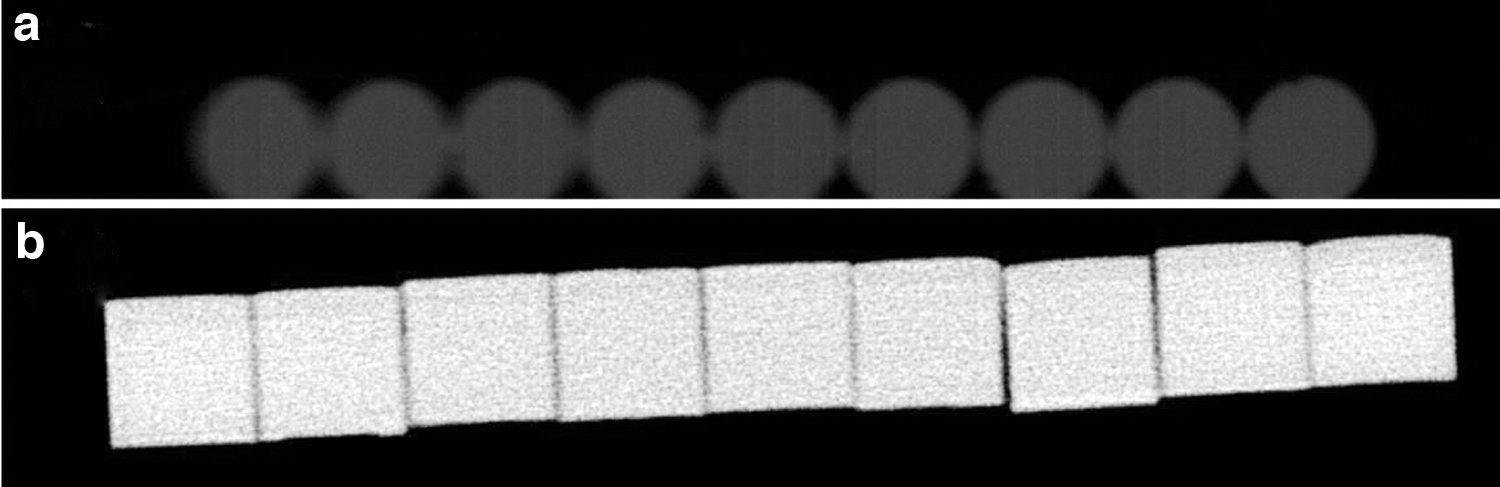
Computed tomography of
Effect of a single parameter on the roughness of printed specimens
In this section, the ANOVA was used to explore further the influence of printing parameters on surface roughness. The analysis of the variance of the regression model for roughness is as follows:
where Y is the surface roughness, X1 is the layer thickness, X2 is the percent infill, X3 is the printing velocity, and X4 is the extrusion temperature. Moreover, the influence of a single parameter on the surface roughness a shown in Figure 7, and an in-depth discussion about the effect of the parameters on the surface roughness of printed melt-cast explosive substitute grains is provided next.
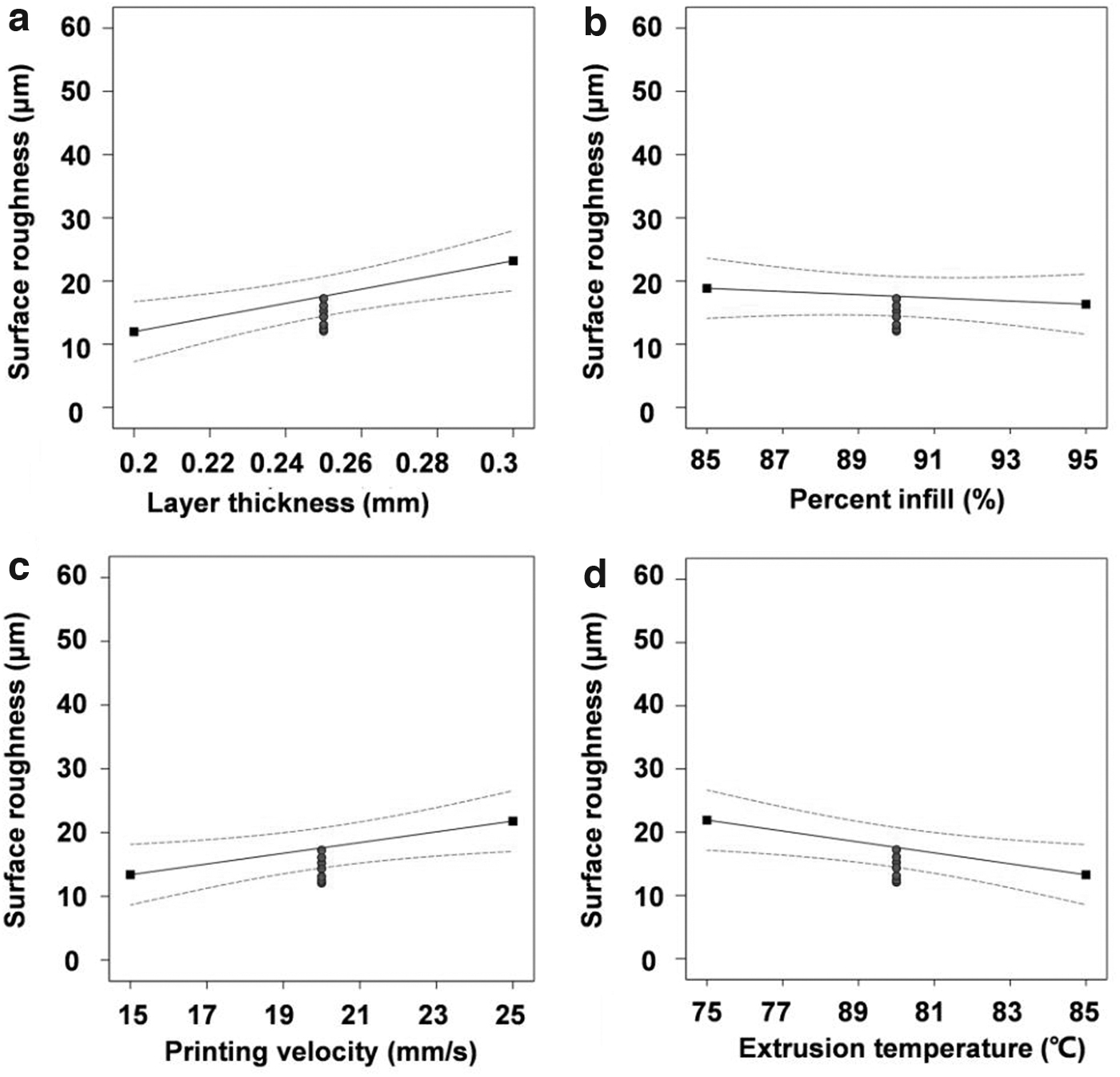
Influence of single parameter on the surface roughness,
Layer thickness, also known as layer height, is the thickness of the layer printed by the nozzle. Generally speaking, the layer thickness is lower than the diameter of the nozzle tip (usually one-half), and a smaller layer height can increase the accuracy of specimens. 32 As shown in Figure 7a, the surface roughness increased with increased layer height.
Thus, the surface roughness of the specimens can be adjusted by using the layer thickness, but a smaller layer thickness often results in a long production cycle. Hence, the balance between accuracy and time needed to be found. Figure 7b shows the relationship between surface roughness and percent infill. Percent infill (or infill ratio, infill percentage, fill density) represents the percentage of filament material in the desired geometry, which can be used to control the density of products. 33
From Figure 7b, it can be observed that surface roughness remains unchanged with the increase in percent infill, which indicates that the percent infill only can affect the internal structure of products but does not influence the surface roughness. In addition, the p-value of a single percent infill parameter in Supplementary Table S4 higher than 0.05 proved that percent infill has a limited influence on the surface roughness of specimens.
The printing velocity represents the speed of the nozzle traveling relative to the print platform. In this 3D printer, the nozzle was fixed, and the printing platform was moved along the printing path. Figure 7c shows that the surface roughness is directly proportional to the printing velocity. In General, the lower the printing velocity, the longer the production time and the better the accuracy of the prints.
The higher the printing speed, the faster parts are produced. As is known to all, melt-cast explosives were sensitive to temperature, and higher temperatures can significantly reduce the viscosity of molten explosives. In addition, the extrusion temperature in the printing process can control the rheological properties of melt-cast explosives and affect the solidification rate of the extruded explosives on the printing platform.
Figure 7d shows that the surface roughness reduced with increasing temperature. At high extrusion temperatures, the viscosity of molten explosives can be extruded easily from the nozzle and spread around, the deposited molten explosives need more time to solidify, and the roughness decreases with the increase in temperature eventually.
Effect of parameters interactions on the roughness of printed specimens
The 3D surface plots for the interactions between parameters is shown in Figure 8. Figure 8a presents the interactions between layer thickness and percent infill on the surface roughness. It can be seen from Figure 8a and c that large layer height values significantly influence the roughness of specimens more than the percent infill and extrusion temperature. Similarly, Figure 8d and f show that the importance of printing velocity values on roughness was higher than the percent infill and extrusion temperature. Thus, the printing velocity and layer thickness were the most important parameters for surface roughness in the manufacturing process of printed parts.
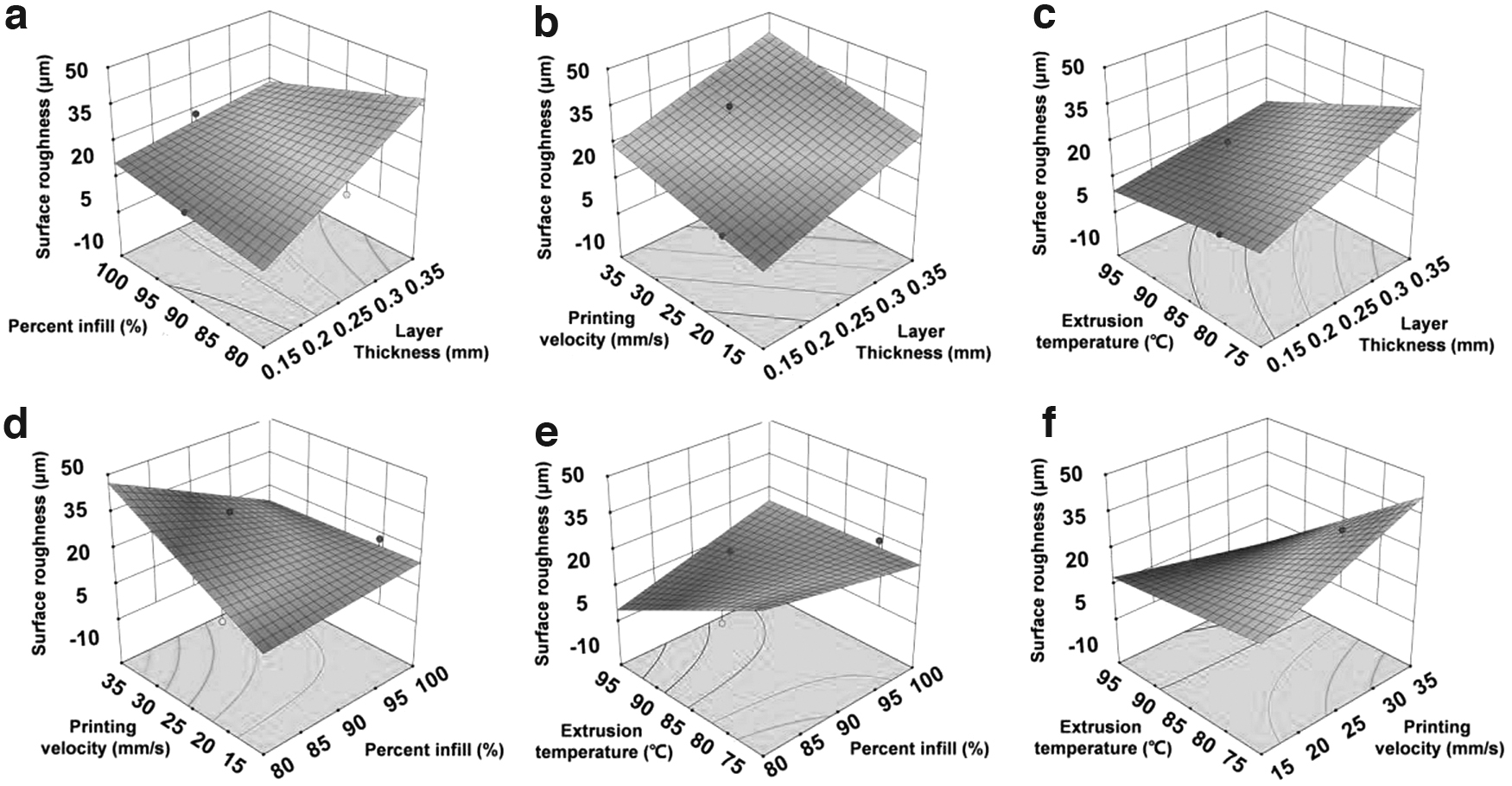
3D surface plots for the interactions between
More importantly, several studies have investigated the optimization of the processing parameters of AM processes to increase the surface smoothness and the interaction between the input parameters, 34 as listed in Table 4. It can be seen in Table 4 that genetic algorithm, heuristic optimizations, and DoE methods were the most commonly used methods to optimize the surface roughness of printed samples.
Optimization of Surface Roughness Affecting Parameters of Different 3D Printing Technology
FDM, fused deposition modeling; FFF, fused filament fabrication; MFFF, metal fused filament fabrication; PLA, polylactide; PSO-BFO, particle swarm optimization and bacterial foraging optimization; PVA/CB, polyvinyl alcohol/carbon black; RSM, response surface methodology.
Layer thickness, extrusion temperature, and printing velocity were the most adopted input parameters in the melt extrusion technique. In addition, the previous results also indicated that the effect of layer thickness is found to be more prominent for all the selected responses.35,36
As the layer thickness increased, the roughness of the surface increases too, which indicated that there is good conformity between this research and previous studies. In short, the printed fabricated specimens with a smooth surface can be obtained with a proper combination of lower layer thickness, low print speed, high print temperature, and high outer shell speed. 37
Fabrication of complex structure by dual-nozzle 3D printer
At present, the shaped charge as one of the most common damage modes has been widely used to penetrate multiple targets, such as cement and steel. When the detonation initiates, the shaped charge liner (SCL) is crushed to form a high-speed jet as the main damage unit to destroy the targets. The SCL material and structure of the shaped charge can significantly affect the penetration performance.
The tip velocity of a metal jet under explosive drive can be up to 6 × 10⁸ km·s−1, which provided a deep penetration depth of 8–10 times charge diameter and enhanced structural damage to concrete and steel targets. 47 However, melt casting or pressure casting was the mainly used charge method, which no longer meets the requirement for higher penetration performance and its development. 48 With the help of 3D printing technology, researchers can fabricate shaped charges with complex structures, shorten the preparation cycle, and save time. Hence, we developed a composite-shaped charge, as shown in Figure 9a.

More importantly, the designed model was successfully fabricated using the EAM-D-1 3D printer, as shown in Figure 9b. From Figure 9b, the yellow part consisted of CaCO3, paraffine wax, hot glue, and the yellow dye. The gray part consisted of CaCO3, paraffine wax, hot glue, and Al powder. In addition, this successful experiment was expected to provide guidelines for 3D printing special-shaped structure melt-cast explosives and innovate the charge method. In addition, the distribution of CaCO3 particles and nano-Al powder in the printed samples was investigated by SEM, and the results show that CaCO3 and Al particles were evenly distributed in paraffin/hot glue without agglomeration, as shown in Figure 10.

Distribution of
Fabrication of TNT/HMX melt-cast explosive grains
Based on the substitute experiment, a series of TNT/HMX-based melt-cast explosive grains were successfully fabricated, and the solid contents were between 40% to 50%, as shown in Figure 11. Figure 11 presented the 3D printing process of TNT/HMX-based melt-cast explosives. Left to right, the superfine HMX particles were prepared with the particle size of d50 = 8.737 μm. Then, the TNT/HMX-based melt-cast explosives were extruded from the nozzle to form a stable and evenly filament; in this case, the printing process can be precisely controlled.
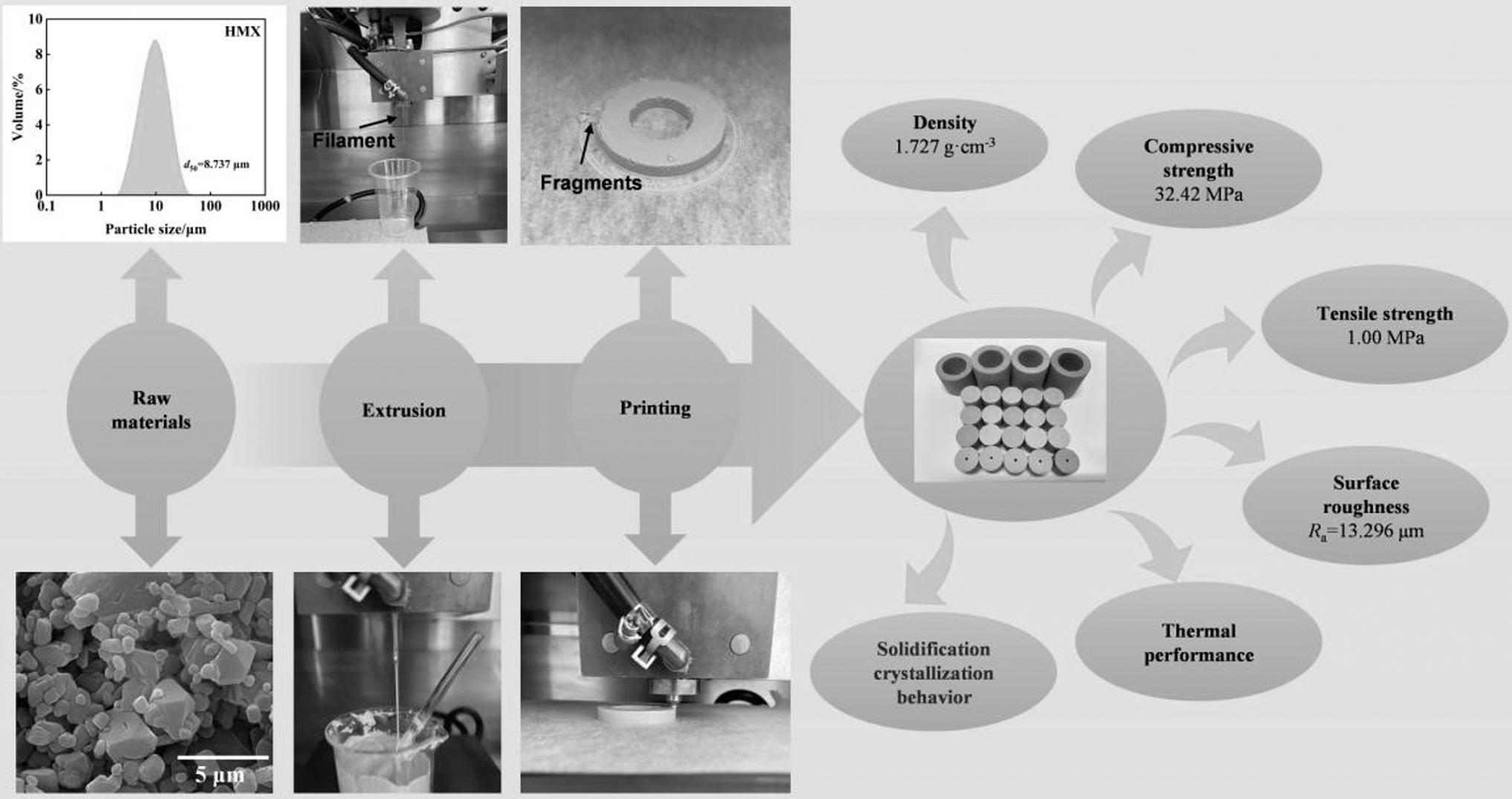
The 3D printing process of TNT/HMX-based melt-cast explosives.
In the printing process, when the height of some positions is higher than the layer thickness due to the uneven extrusion of explosive, the nozzle will destroy the structure of the sample and form some fragments when it runs to the position again due to the brittleness of the melt-cast explosive. Finally, a series of TNT/HMX-based melt-cast explosive grains were successfully fabricated, demonstrating the feasibility of melt extrusion technology in innovating the conventional charge method. In the end, the mechanical properties of printed explosive grains were tested, and the results indicated that printed grains have higher density and mechanical performance than casted ones.
In addition, the DSC-Thermal Gravimetric Analyzer results indicated that TNT and HMX are only mixed mechanically, and the compatibility between them is good. 49 In the process of printing melt-cast explosives, the melting and solidification of melt-cast explosives were involved, and it is important to carry out research to reveal the forming mechanism of this process in the next step. Moreover, it was noticed that the rheological properties of the molten explosive had an important influence during the printing process.
By trial and error, it was found that the fluidity of the slurry was very poor when the solid content was more than 50%, and it was difficult to extrude from the nozzle. Thus, future research must explore the formulation of melt-cast explosives with high solid content and low viscosity. In summary, melt extrusion technology has been successfully adopted to fabricate melt-cast explosive grains in this work, which can provide a reference for further research.
Conclusions
This study developed a substitute for melt-cast explosives that were mainly composed of CaCO3 particles, paraffine wax, and hot glue. The influence of nozzle diameter and layer thickness on the width and height of extruded filament was investigated. More importantly, the design of experiments based on the CCD approach was used for defining the experiments and developing quadratic statistical models between four process parameters (layer thickness, printing velocity, percent infill, and extrusion temperature) for surface roughness.
The results show that layer thickness and printing velocity can significantly affect the roughness of specimens. The CT results indicated no voids and cracks in the grains. More importantly, the composite-shaped charge grain was successfully fabricated using the dual nozzle printer successfully. This work promoted the application of 3D printing technology to fabricate complex melt-cast explosive grains.
Footnotes
Authors' Contributions
All authors contributed to this work. H.-z.Z. experimented and wrote the main part of the manuscript. P.Z. and J.-x.Y. provided the raw materials. G.-z.H. and S.-w.W. analyzed the results and assisted in the printing experiments. G.-p.Z. and H.R. also wrote parts of the manuscript. L.X. and W.J. participated in the coordination of the study and reviewed the manuscript. All authors read and approved the final manuscript.
Author Disclosure Statement
No competing financial interests exist.
Funding Information
This work was supported by the National Natural Science Foundation of China (No. 12102194, No. 21805139, and No. 51706105), the China Postdoctoral Science Foundation (No. 2020M673527, No. 2021M690134, and No. 2021M691580), the Natural Science Foundation of Jiangsu Province (BK20200471 and BK20210353), and the Fundamental Research Funds for the Central Universities (No. 30920041106).

References
Supplementary Material
Please find the following supplemental material available below.
For Open Access articles published under a Creative Commons License, all supplemental material carries the same license as the article it is associated with.
For non-Open Access articles published, all supplemental material carries a non-exclusive license, and permission requests for re-use of supplemental material or any part of supplemental material shall be sent directly to the copyright owner as specified in the copyright notice associated with the article.
