




Abstract
Objective:
To describe recruitment and enrollment experiences of 2 low back pain (LBP) randomized controlled trials (RCTs).
Design:
Descriptive report.
Setting:
Chiropractic research center in the midwest United States that is not a fee-for-service clinic.
Participants:
Both trials enrolled participants with subacute or chronic LBP without neurologic signs who had not received spinal manipulative care during the previous month. For study 1 we screened 1940 potential participants to enroll 192 participants (89 women and 103 men), mean age 40.0 ± 9.4 years (range, 21–54 years). For study 2 we screened 1849 potential participants to enroll 240 participants (105 women and 135 men) at least 55 years old (mean, 63.1 ± 6.7 years).
Interventions:
Study 1 randomly assigned participants to 2 weeks of 2 different chiropractic techniques or a wait list control group. Study 2 randomly assigned participants to 6 weeks of 2 different chiropractic techniques or medical care consisting of 3 provider visits for medications.
Outcome measures:
Recruitment source costs and yield, and baseline characteristics of enrolled versus nonparticipants were recorded.
Results:
We conducted 3789 telephone screens for both trials to enroll 432 (11%) participants, at a cost in excess of $156,000 for recruitment efforts. The cost per call for all callers averaged $41, ranging from $4 to $300 based on recruitment method; for enrolled participants, the cost per call was $361, ranging from $33 to $750. Direct mail efforts accounted for 62% of all callers, 57% for enrolled participants, and had the second lowest cost per call for recruitment efforts.
Conclusions:
It is important that complementary and alternative medicine (CAM) research can be successfully conducted at CAM institutions. However, the costs associated with recruitment efforts for studies conducted at CAM institutions may be higher than expected and many self-identified participants are users of the CAM therapy. Therefore, strategies for efficient recruitment methods and targeting nonusers of CAM therapies should be developed early for CAM trials.
Introduction
There is little information available about successful methods of recruitment for trials conducted at complementary and alternative medicine (CAM) institutions. A common recruitment challenge faced at many CAM college clinics is the need to be sensitive to perceived competition with clinical faculty and interns for patients. Free-standing college research clinics that are not fee-for-service clinics present additional challenges, as most government funding sources do not allow budgets for patient care costs and limit budgets for recruitment. Consequently, the cost of conducting RCTs can become appreciable at CAM facilities.
Clinical trials in CAM settings come with their own unique set of challenges. Examples in chiropractic include the need to educate potential participants about chiropractic to alleviate mistrust and disbelief, 4 especially in minority groups. 9,12 Although at least 11% of the population of the United States seeks care from chiropractors annually, representing approximately 190,000,000 patient visits, 13 and although a national survey found that 20% of those reporting back or neck pain sought chiropractic care, 14 education about chiropractic remains necessary for recruiting participants to any RCTs, including those for low back pain (LBP).
The purpose of this report is to add to the literature regarding clinical trial recruitment at a CAM institution by describing the recruitment experiences for the simultaneous conduct of 2 LBP trials in a research center that is affiliated with a chiropractic college, but is not a fee-for-service clinic. At the outset, we planned to enroll 10 patients per month in each trial, estimating we could reach our targeted enrollment of 200 patients for study 1 in 18 months and 240 patients for study 2 in 24 months.
Materials and Methods
Overview
In late 2003, we received federal funding for 2 clinical trials to study patients with LBP. The studies were designed to enroll 440 patients from the Quad Cities metropolitan area with subacute or chronic LBP, defined as duration of pain of at least 4 weeks and a Quebec Task Force Classification 1, 2, or 3. 15
Both studies had intervention arms that included 2 chiropractic techniques, high-velocity low amplitude spinal manipulation (HVLA-SM) and low-velocity variable amplitude spinal manipulation (LVVA-SM). Chiropractors will recognize the HVLA-SM as a typical side-lying diversified lumbar spine “adjustment” or maneuver, or the side posture, push move. This technique is the single most utilized procedure in chiropractic practice for the lumbar spine. 16 Chiropractors will recognize the LVVA-SM as the flexion-distraction technique or Cox technique. 17
Study 1 was designed as a prospective, randomized, controlled trial to evaluate various baseline assessments in explaining a clinically important effect regarding pain-related disability following a 2-week course of spinal manipulation for eligible participants aged 21 to 54 years. Participants were randomly assigned to one of three groups: HVLA-SM, LVVA-SM, or a 2-week wait list; participants enrolled in the SM groups were scheduled for 2 visits per week. The primary endpoint at 2 weeks was pain-related disability, measured with the 24-item Roland-Morris Disability Questionnaire (RMDQ). 18,19 Results of clinical outcomes will be reported elsewhere.
Study 2 was designed as a prospective, randomized, 3-arm parallel clinical trial of 240 participants, 55 years and older, to compare the efficacy of 2 types of chiropractic spinal manipulation, HVLA and LVVA, and medical care. Participants in both chiropractic groups were scheduled for a maximum of 12 visits, not to exceed 3 times per week for the first 2 weeks, 2 times per week for the third and fourth weeks, and once per week during weeks 5 and 6. Participants assigned to the medical care arm of the study were scheduled to meet with the medical provider at least 3 times, during weeks 1, 3, and 6. Additional visits were allowed as necessary and appropriate. Participants in all 3 groups also received 30 minutes of home exercise instruction at week 3. The primary endpoint was at 6 weeks with additional follow-up at 3 and 6 months. Pain-related disability was measured with the 24-item RMDQ. Results of clinical outcomes and follow-up will be reported elsewhere.
The institutional review board at Palmer College of Chiropractic approved both study protocols and informed consent documents. Each study participant gave verbal consent before completing the telephone screen for eligibility and written informed consent before the baseline evaluation and treatment allocation. Participants were not compensated for their participation in the trials. However, they were not charged for any study-related screening or treatment procedures and those in Study 1 who successfully completed the active care phase were offered an additional 6 weeks of care as needed, regardless of treatment assignment.
Study population and site
The source populations were approximately 152,000 adults aged 21 to 54 years (Study 1) and approximately 70,000 adults 55 years and older (Study 2) in the Quad Cities Area (QCA) of Iowa and Illinois. To ensure our findings were representative of the QCA, we planned to enroll at least 4% Hispanic/Latino and 2% non-white race participants.
The research clinic is located in a freestanding facility adjacent to the Palmer College of Chiropractic main campus buildings in Davenport, Iowa. It is not part of the chiropractic college teaching clinics and is not a fee-for-service clinic. The facility includes a completely renovated research clinic of 2700 square feet, outfitted with 2 interview rooms, 2 examination rooms, 4 treatment rooms, an x-ray suite, offices, waiting room, and a record storage room. The clinic can handle an estimated 100 to 150 patient visits per week at full staff capacity.
Recruitment methods
Three campuses of the Palmer College of Chiropractic use the College's central public relations department for all advertising and promotion to ensure that any representation of Palmer College meets overall college guidelines. The public relations department made contact with publishing sources, advertising media, printing companies, and direct mail vendors. They worked with research personnel to design print material and write and produce radio and television ads. They also advised researchers about promotion schedules. Advertising efforts were coordinated through the recruitment coordinator and a single contact in the public relations department. Communication between departments consisted of face-to-face meetings, email, and phone calls.
Sources of advertising
Newspaper, radio, television, community magazines, flyers, direct mail postcards, health fairs, community-based focus groups, and word of mouth were sources of advertising and promotion. Newspaper press releases were distributed in the QCA, but none were published. Attempts were made to recruit through public service announcements (PSA) on radio and television, but the ongoing nature of the studies prevented classification as a PSA, which was defined as a specific event on a specific day.
Color advertisements of various sizes appeared in metropolitan newspapers and local interest magazines. Publication schedules ranged from daily to quarterly. Four local newspapers ran a total of 144 ads throughout the course of the trials. The ads were placed 2–3 times a week in sections of the paper thought to attract the attention of the targeted populations, such as the obituary section and the entertainment/events section, during the first months of the trials. A weekly publication that focused on local entertainment targeted younger participants through a total of 46 ads. One online advertisement was placed for 2 months on a QCA web site; respondents were instructed to call the research center. Specialty community publications targeted older adults and were available free of charge at various businesses and health care provider offices. Six ads were placed in each of 2 monthly magazines targeting older adults.
Radio ads were placed on stations featuring varied music formats. Eighteen weeks of 30-second radio spots were placed on 6 local radio stations: 3 country stations, 1 hard rock station, and 2 easy-listening stations. Air time was scheduled in 2–3 week blocks for repetition. Six months into recruitment for both trials, television ads were shown on a local cable station for 2 months.
Community-based efforts included focus groups, participation in local health fairs, and word-of-mouth. An 81/2″ × 11″ 2-color flyer was displayed at local businesses (laundromats, libraries, grocery stores, and local restaurants), provided at community health fairs, and was available in the research clinic. Two focus groups served to identify barriers to minority participation in chiropractic research studies, helped develop a contact list of minority community leaders, and informed group participants of current research studies. 9
Direct mail efforts began after less than expected enrollment at 8 months. A 4″ × 6″ multicolor, trifold postcard with attached response card was designed for each study. Two mailing lists purchased from a local vendor were based on age and zip codes of people residing in the Quad Cities and surrounding communities and included approximately 50,000 household names and addresses for both age groups: adults 21 to 55 years and adults older than 55 years. The overlap in age for 54–55 years between the vendor lists and our study eligibility requirements was acceptable because of the simultaneous recruitment for both studies. Solicitation for the studies included alternating mailings based on study age requirements and varying zip codes in a 25-mile radius from the research clinic. Direct mailings included all households on the 2 vendor lists from March 2005 to September 2006. For Study 1, we repeated mailings twice to zip codes in the 5 major Quad Cities (Davenport, Bettendorf, Moline, Rock Island, and East Moline) to recruit adults 21–54 years old. For Study 2, we repeated mailings 3 times for older adults in most zip codes and a fourth mailing to zip codes in the 5 major Quad Cities. Specific communities were targeted based on ethnic and racial demographics. After 2 mailings, the postcard targeting the 55+ group was redesigned with new colors and an easier-to-read format to attract the attention of repeat recipients. The message on the outside of the postcard was changed from advertising free care to appealing to the participant's altruistic motivations.
Data management
Database systems for conducting the RCTs simultaneously and scheduling participants in concurrent studies were developed in 2004. A web-based data collection report was created to display the advertising source data captured at the telephone screen, by study. When direct mail efforts were launched, a callback list was generated and maintained in a spreadsheet from all returned response cards; phone call attempts and eligibility information were updated daily.
Results
Screening and enrollment
The 2 trials were launched simultaneously in July 2004. The number and flow of participants from screening though enrollment for both studies are displayed in Figures 1 and 2. A total of 3789 telephone screens were conducted for both trials and 432 participants were enrolled. Study 1 was closed to enrollment in April 2006, 4 months later than planned, and Study 2 closed enrollment in September 2006, 2 months later than planned.

Flow diagram of participant screening and enrollment for Study 1, ages 21–54 years.
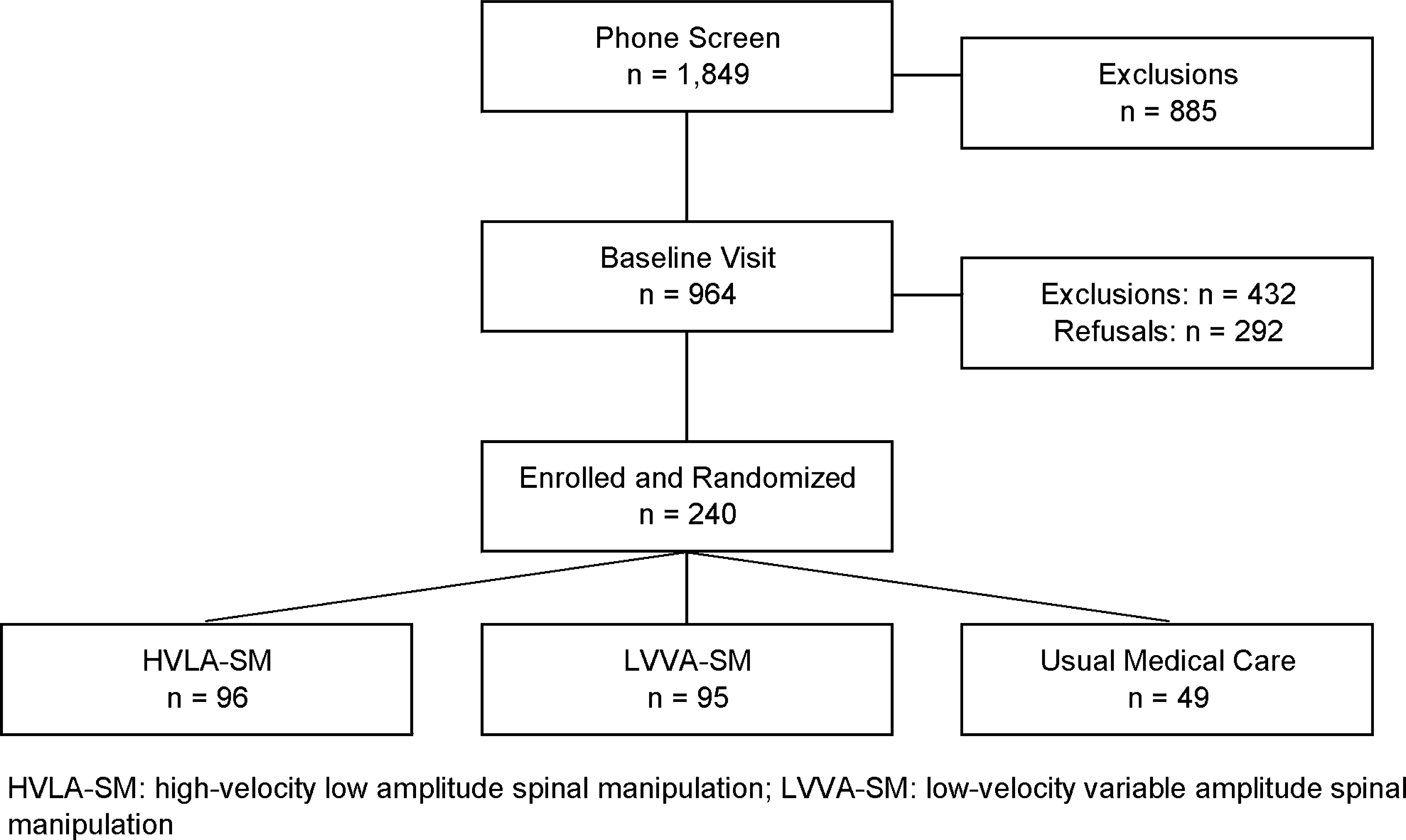
Flow diagram of participant screening and enrollment for Study 2, ages 55 and older.
Recruitment costs
Table 1 shows the advertising source reported by respondents at the initial telephone screening, by study, and the cost by advertising source for all callers and for patients who enrolled in the trials. Because the trials were conducted simultaneously and because various recruitment methods were used during overlapping time periods and across age groups, we were unable to calculate study-specific advertising costs or efficiency rates.
NA, not applicable. Total percentages do not add up to 100 percent due to rounding.
Eight months after launching the trials, only 66 and 43 patients were enrolled in Study 1 and Study 2, respectively, at a cost of more than $50,000. Direct mail efforts were launched in Spring 2005, making a huge impact on recruitment and enrollment efforts. Enrollment of 192 participants for Study 1 took 22 months on a plan of 18 months (Fig. 3). Enrollment of 240 participants for Study 2 took 26 months on a plan of 24 months (Fig. 4).
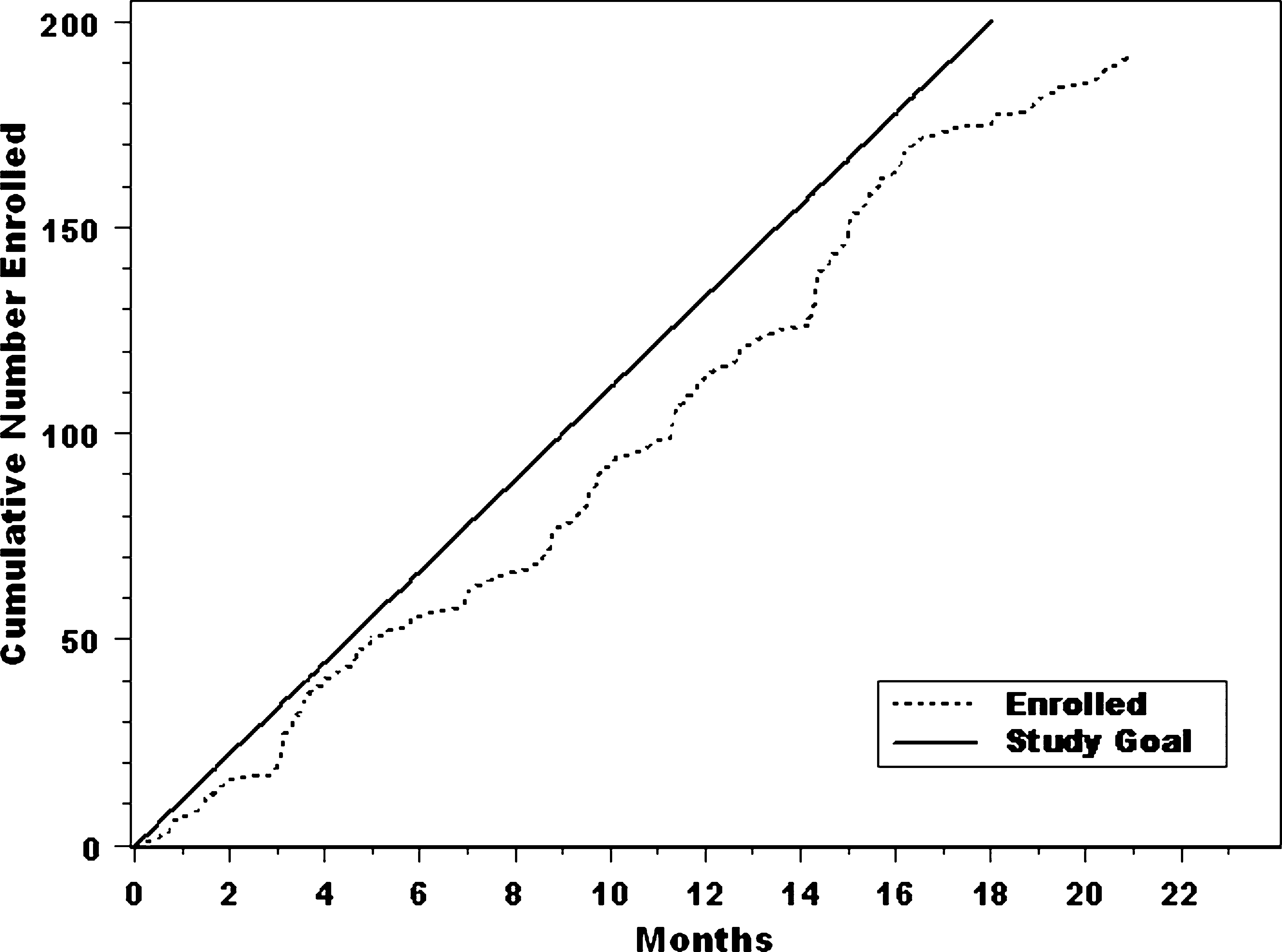
Accrual plot to enroll 192 participants ages 21–54 years for Study 1.
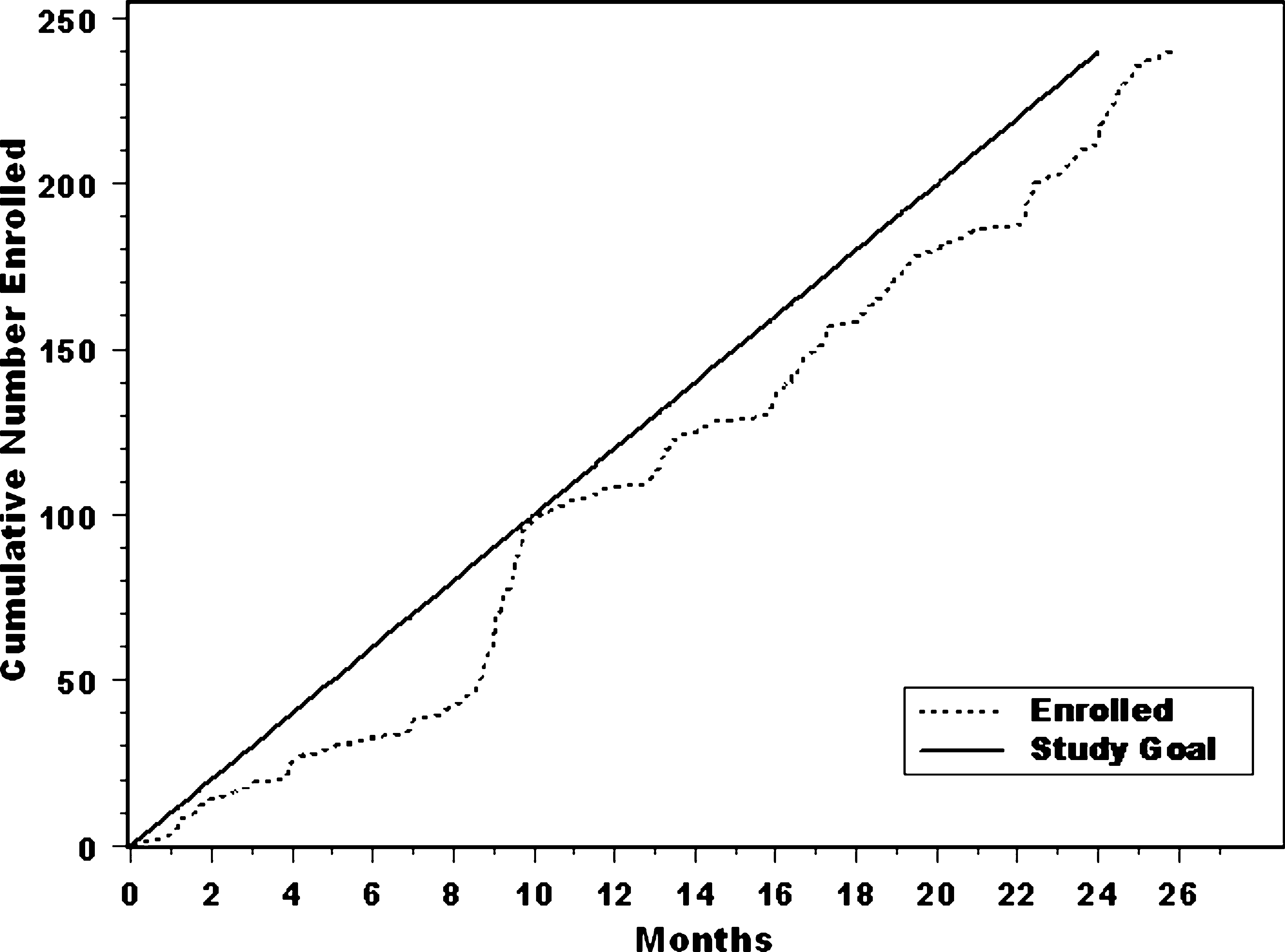
Accrual plot to enroll 240 participants ages 55 and older for Study 2.
More than $156,000 were spent for recruitment efforts to enroll 432 participants into both trials. Gross estimates for the cost per call and cost per enrolled participant were calculated by dividing each advertising source dollar spent by the number of all callers or the number of enrolled participants. The cost per call for all callers averaged $41, ranging from $4 to $300 based on recruitment method. For enrolled participants the average cost per call was $361, ranging from $33 to $750. The lowest cost per call was word-of-mouth. This included the print cost of flyers available in the clinic reception area, but only accounted for 3% of all callers and participants. Direct mail efforts accounted for 62% of all callers, 57% of enrolled participants, and had the next lowest cost per call for recruitment efforts.
Study 1
During the 22-month recruitment period, we screened a total of 1940 participants, 21–54 years old, for Study 1. Eight hundred eighty-one (45.4%) screened participants were excluded at the initial telephone screen and 867 were excluded at the baseline visit (Tables 2, 3). More than half of all callers at the telephone screen were excluded for having had spinal manipulative therapy within the past month, duration of pain less than a month, or no current LBP. At the Study 1 baseline visit, participants needed a Roland-Morris Disability score of at least 6 out of 24; 20% of participants failed to meet this criterion. Of the 35 participants who provided reasons for refusal at baseline visit 1, the most common reasons given were: too busy, intolerance of the frequency of visits, wanted treatment to commence right away, and wanted full-spine chiropractic care.
BDI-II Beck Depression Inventory, Second Edition; LBP, low back pain; RMDQ, Roland-Morris Disability Questionnaire; SMT, spinal manipulative therapy.
Study 2
During the 26 month recruitment period, we screened a total of 1849 patients for Study 2, of whom 885 were excluded at the initial telephone screen and 724 were excluded at the baseline visit. Fifty-six percent of all callers at the telephone screen were excluded for having spinal manipulative therapy within the past month, no current LBP, or duration of pain less than a month. Thirty percent of participants were excluded at the baseline visit when diagnosed with comorbidities, a diagnosis that included radicular pain or spinal stenosis, or a combination of criteria that were a contraindication to spinal manipulation. Of the 129 participants who provided reasons for refusal at baseline visit 1, the most common reason cited was unwilling to be enrolled in medical care; less often cited reasons included interest in full-spine chiropractic care and unwillingness to forgo other types of physical therapy and chiropractic care for 6 weeks.
Baseline distributions of sociodemographic, health status, and LBP characteristics for participants and nonparticipants are provided in Tables 4 and 5. We screened and enrolled more males than females in both studies. The mean ages for participants and nonparticipants in both studies were similar. More than 75% of enrolled patients in both studies reported LBP for at least 6 months. Approximately 80% of all participants screened reported previous episodes of LBP, previous treatment for LBP, and past use of chiropractic.
GED, general education diploma; NA, not applicable.
LBP, low back pain; FABQ, Fear-Avoidance Beliefs Questionnaire.
Discussion
We are not aware of other CAM institutions which have published reports related to the simultaneous conduct of LBP trials targeting unique age groups. There have been a few reports related to community-based recruitment efforts by chiropractic colleges that described similar recruitment challenges. 4 –6,12 Comparable to other published trials conducted at chiropractic college clinics of patients with LBP, 20,21 headache, 22 dysmennorhea, 5,23 or chronic pelvic pain, 4,6 we enrolled approximately 10% and 13% of participants screened for studies 1 and 2, respectively.
Before beginning these trials, we conducted an 8-week pilot study. 24 One pilot study objective was to assess the feasibility and effectiveness of a media-based recruitment strategy. Six weeks of newspaper and radio ads yielded 135 telephone screens. Sixty-two (62) participants were screened at the baseline evaluation and 29 (22%) participants were enrolled in the pilot, 17 for Study 1 and 12 for Study 2. Based on these data, we anticipated our media-based recruitment plan would be sufficient to meet enrollment goals for both studies.
Once we launched the trials, our community-based efforts were not successful recruitment methods, although we believe increased time and effort networking with local businesses and physicians in the QCA will ultimately serve us well. Focus groups with African American and Hispanic community leaders were valuable, and based on recommendations from African American focus group participants, the flyer was redesigned to eliminate the phrase “federally-funded.” 9 Many of the focus group recommendations included recruiting participants via email and online screening, and recruitment by African American and Hispanic research personnel. For the trials reported here, we did not have the resources to follow up with these recommendations.
Enrollment of 192 participants for Study 1 took 22 months on a plan of 18 months. Enrollment of 240 participants for Study 2 took 26 months on a plan of 24 months. Although we had a target enrollment of 200 for Study 1, this trial was not an efficacy study. The targeted sample size was estimated for modeling purposes, unlike Study 2, in which the targeted sample size was powered for groupwise comparisons; therefore, we felt closing Study 1 at 192 participants did not jeopardize the results.
More than 80% of participants and nonparticipants for both studies reported previous chiropractic care and 40% (Study 1) and 50% (Study 2) of all callers were excluded because they had received spinal manipulative therapy within the past month. In addition, participants screened at our clinic were often disappointed when they realized that not all of the treatment arms would necessarily receive chiropractic care. For Study 2, more than half of participants who were eligible at the baseline visit refused to participate because they did not want the chance of receiving medical care; it is unknown how many others who failed to return to the clinic per protocol would have cited this reason.
The costs associated with recruitment efforts for CAM therapies in general, and chiropractic manipulation in particular, are large and often require substantial resources from general college funds. In our studies, actual costs were more than twice the budgeted amounts: $75,000 was budgeted for recruitment efforts for both trials combined and more than $156,000 was needed to complete both trials. Direct mail efforts cost more than $80,000 but provided the best yield and lowest cost per enrolled participant in both trials: 46% and 67% of enrolled patients in Study 1 and 2, respectively, were recruited via direct mail. Direct mail, newspaper, and radio advertisements costing almost $152,000 resulted in 91% (Study 1) and 98% (Study 2) of enrolled patients. Staff effort dedicated to managing recruitment efforts, including daily management of direct mail responses, was approximately 0.5 full-time equivalents (FTEs) over the course of 2 years.
There were some unexpected sociodemographic differences for participants screened for both trials. Census data for 21- to 54-year-old adults in the QCA report 52% females and 48% males, however we screened and enrolled more males than females for Study 1. Similarly, for adults at least 55 years old in Study 2, we screened and enrolled more males than females, compared with census data in the QCA at 56% females and 44% males. These data suggest that males in the QCA suffer from subacute and chronic LBP to a greater extent than women, although we do not have an explanation for these results. We were able, however, to recruit more participants of minority races than planned, perhaps due to some of the efforts described in this report and elsewhere. 9
Not surprisingly, 20% of nonparticipants in Study 2 were older than 75 compared with 6% of enrolled participants; most of the 75 and older group were excluded because of comorbid conditions, which is supported by 22.4% of nonparticipants who graded their general health status as fair or poor compared with 8.5% of participants. We found that a higher proportion of older adults have health insurance coverage and similar proportions of adults have coverage that includes chiropractic services. Depression scores were higher for participants 21–54 years old, although there was quite a bit of variability in these data.
Lessons learned and future directions
For the 2 studies reported here, examining a common pool of participants with subacute or chronic LBP, there were clear delineations for each study based on age. Our research center is now engaged in implementing multiple externally and internally funded clinical research projects, some of which are designed to attract participants with the same or similar conditions and overlapping age groups. Based on the lessons learned during recruitment and enrollment in these 2 trials, we further enhanced our data management tools to track recruitment and enrollment efforts in real time. We have also built a centralized participant database to interface with and assist investigators to conduct multiple studies simultaneously. Finally, we are in the planning stages of designing a database with a user-friendly web interface to collect study-specific information for staff FTEs who assist with recruitment efforts. This database will also support 3 different entities (the College Public Relations Department, Business Office, and Grants Administrator), all with unique tracking mechanisms for tasks and FTEs, thereby generating consistent communications and recording of study-specific recruitment efforts. This will allow us to monitor the effectiveness of recruitment efforts and calculate more precise estimates of costs. 25,26
Conclusions
It is important that CAM research be successfully conducted at CAM institutions. However, the costs associated with recruitment efforts for studies conducted at CAM institutions may be higher than expected in conventional medical research settings. Research investigators in CAM settings need to take this into account when designing RCTs. For CAM trials primarily using community-based recruitment methods, many self-identified participants are users of the CAM therapy; this is another important consideration and strategies for targeting nonusers should be developed early. Although pilot studies remain useful, they may not provide an accurate indication of successful recruitment methods.
Footnotes
Acknowledgments
The authors thank Ram Gudavalli, Ph.D., and Ed Owens, M.S., D.C., for their active involvement and cooperation collecting blinded outcomes assessments and supervising the blinded outcomes assessors for both of these trials. Special thanks also to Ying Cao, M.S., for his contributions in preparing monthly recruitment reports; the clinicians and study coordinators for their contributions to patient enrollment and treatment; all of the biomechanics personnel who collected blinded outcomes assessments; and Jessica Myers, D.C., for conducting blinded patient follow-up for  .
.
This work was supported in part by grants from the National Institutes of Health National Center for Complementary and Alternative Medicine [NCCAM (1U19AT002003)] (Study 1) and the Bureau of Health Professions Health Resources and Services Administration [6 R18 HP01423-01] (). The work was conducted in a facility constructed with support from Research Facilities Improvement Program Grant Number C06 RR15433-01 from the National Center for Research Resources, National Institutes of Health. Its contents are solely the responsibility of the authors and do not necessarily represent the official views of the funding agencies.