




Abstract
Background:
The leaves of the shrub Vernonia amygdalina Del (Compositae) are widely used in Africa to treat malaria. It is widely available, accessible, and affordable in many remote areas that do not have ready access to modern medicines.
Intervention:
This study examined the efficacy and safety of an infusion of fresh V. amygdalina leaves for the treatment of uncomplicated malaria in patients aged 12 years and over.
Outcome measures:
The primary outcome measure was an adequate clinical response. The secondary outcome measure was incidence of adverse events, assumed to be side-effects of the medicine.
Results:
The remedy was associated with an adequate clinical response (ACR) at day 14 in 67% of cases. However, complete parasite clearance occurred in only 32% of those with ACR, and of these, recrudescence occurred in 71%. There was no evidence of significant side-effects or toxicity from the medication. There was a trend toward a reduction in hemoglobin between day 0 and day 28, although this did not reach statistical significance.
Conclusions:
Further studies are needed to determine whether the efficacy can be improved by increasing the dose, changing the preparation, or adding other antimalarial plants.
Introduction
Medicinal plants have been used in almost all cultures and communities for thousands of years. Up to 75% of patients in malaria endemic countries use medicinal plants not only because of issues of accessibility, affordability, and availability of Western drugs, but also because of perceived efficacy. 3 Vernonia amygdalina Del. (Compositae) is a shrub found throughout Africa (Fig. 1), and is commonly used as a medicinal plant both by humans and some animals: zoologists conclude that chimpanzees also use this plant as a medicine. 4,5 The leaves, roots, and the whole plant are used to treat malaria. 6
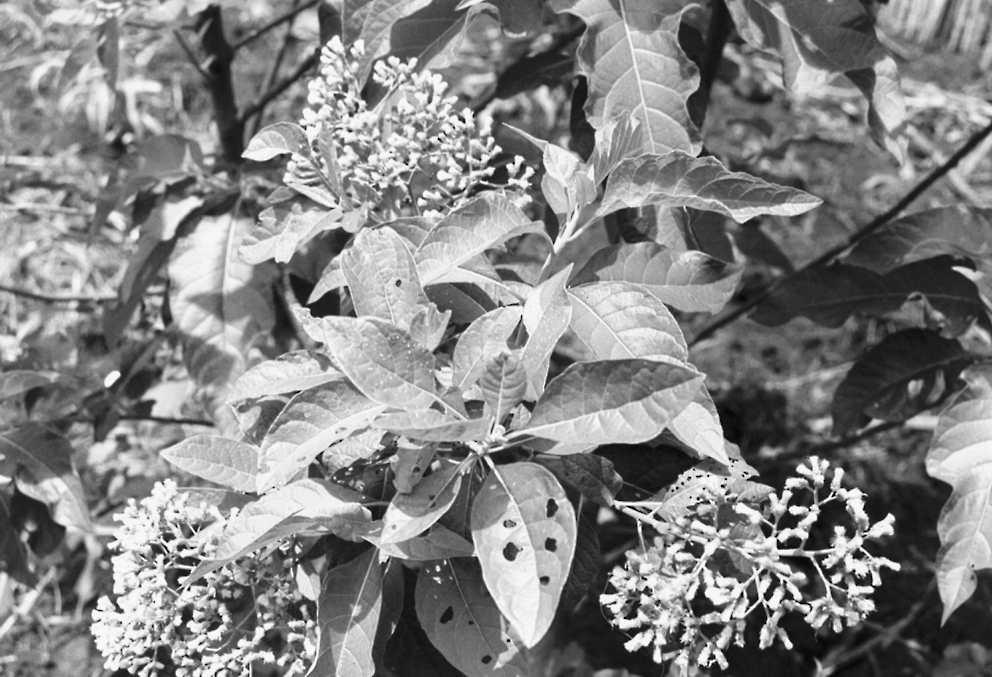
Leaves and flowers of Vernonia amygdalina Del (Compositae). (Photo © S. Challand).
A survey in Uganda of 492 health workers, mothers, and people with acquired immune deficiency syndrome revealed that 84% said they had used the tree V. amygdalina as a medicinal plant. 7 In another ethnobotanical survey in eastern Uganda, it was by far the most widely quoted plant for the treatment of malaria. 8 It is also used as a treatment for fever and malaria in other parts of Uganda, 9 –11 Kenya, 12 Angola, 13 Democratic Republic of Congo, 14 Burundi, 15 Rwanda, 16 Ghana, 17 Nigeria, 18 Ethiopia, 19 and Zimbabwe. 20 Anecdotally, evidence is available to support its effectiveness. In Ghana, 15% of respondents knew about its use for malaria, and rated it as very effective. 17 Although its use is widespread not only for malaria but also for schistosomiasis and for intestinal worms, no clinical studies have been published to date. 21
V. amygdalina leaves are also consumed in small quantities as a vegetable, used for making tea, and also as an alternative to hops in making millet beer. 22,23 The leaves did not cause any toxicity when fed to rats as part of their diet (to make up to 75% of their food) over a period of 65 days. 24 A study of subchronic toxicity in rats (500–2000 mg/kg/day orally for 14 days) found no clinical signs of toxicity, but there was a reduction in red blood cell count and an increase in bilirubin. 25 The LD50 was established to be 560 ± 1.21 mg/kg intraperitoneally in mice and 3.32 ± 0.15 g/kg by mouth in rats. V. amygdalina extracts have varying levels of antimalarial activity in vitro (Table 1), according to many factors such as the extraction method, the site and time of collection of the plant, and the strain of Plasmodium falciparum used. The most effective was a petroleum ether extract, 26 whereas an aqueous decoction as used traditionally was less effective. 6 In Sao Tome and Principe, local traditional healers recognize two distinct chemotypes of the plant with different levels of activity. 27
IC50, inhibitory concentration 50%; CQ-R, chloroquine; DRC, Democratic Republic of Congo.
V. amygdalina extracts also have antimalarial activity in vivo (Tables 2 and 3). Experiments in Table 2 all gave the extracts immediately after inoculating the mice with parasites. In these conditions, even a relatively low dose (125 mg/kg) of an aqueous extract given orally resulted in 62.7% suppression of parasites. 28 In established infections, when the plant extract was given 3 days after inoculation (Table 3), the aqueous extracts were only effective if injected intraperitoneally, 25 not if given orally. 28
The extract was started on the day of inoculation and continued for 4 days.
CQ, chloroquine; i-p, intraperitoneal; po, per os; s-c, subcutaneous; S, sensitive to chloroquine; R, resistant to chloroquine; NS, not specified.
CQ, chloroquine; i-p, intraperitoneal; po, per os; s-c, subcutaneous, S, sensitive to chloroquine; R, resistant to CQ; NS, not specified.
V. amygdalina contains steroid glucosides (vernoniosides A1-A4, and B1-B3), which give the plant its bitter taste. 4,29 The most active of these against P. falciparum is vernonioside B1 (IC50 46.1 μg/mL), 30 whose concentration in the leaves increases threefold in the leaves during the rainy season. 31 V. amygdalina also contains several sesquiterpene lactones, chemically related to artemisinin: vernodalin, vernolide, hydroxyvernolide, and vernodalol (Table 4). These are more active than the vernoniosides in vitro against P. falciparum, but less so than chloroquine. However, these compounds have a stronger effect in combination than in isolation, since the most active extract is more powerful than the most active compound isolated. However, vernodalin is also toxic to mice at a dose of 5 mg intramuscularly. 31
IC50, inhibitory concentration 50%.
One study in Tanzania found vernodalin in greater concentrations than the other sesquiterpene lactones, 30 and more in the leaves than in other parts of the plant, but its concentration decreased slightly in the rainy season. 31 A study in South Africa found that the main constituents of the leaves (in an ethanol extract) were vernolide and vernodalol, which also have antibacterial and antifungal properties. 32
Methods
Study site
The study was carried out in three primary health care centers in Kasese District in western Uganda from April to September 2004. One of these, St. Paul's Health Centre, had integrated the use of local medicinal plants with orthodox Western medicines. This is an area of endemic malaria transmission with year-round transmission and seasonal peaks from May to August (D.D.H.S. Kasese, Uganda, 2001, personal communication). It is at an altitude of 1000 m but is less than 20 miles from the summits of the Ruwenzori mountains. At higher altitudes, the intensity of malaria transmission decreases. The study was supported by the local authorities and approved by the ethical committee of the Uganda National Council for Science and Technology.
Patients
Inclusion criteria were P. falciparum malaria with parasitemia >1000 per μL, axillary temperature ≥37.5°C or history of fever in the last 48 hours, absence of signs of severe malaria or of other pyrexial illnesses, age >12 years, not pregnant, no treatment for malaria in the previous 2 weeks, ability to return for follow-up, and informed consent of patient or parent/guardian.
Intervention
V. amygdalina was grown at St. Paul's Health Centre and harvested daily. The medicinal infusion was made using a standardized procedure of 25 g of fresh, chopped leaves steeped in 1 L of boiled water for 15 minutes. The patients were given 1 L of freshly made infusion daily to be taken as 250 mL, 4 times daily for 7 days. This equates to a daily dose of 0.5 g/kg for a patient weighing 50 kg. This was based on information from the literature, 6 local traditional healers, Anamed (Action for Natural Medicine), and one of the authors (M.W.). They were given additional drugs (paracetamol, ibuprofen, folic acid) if required. Patients who were judged as early or late treatment failures were given standard first-line antimalarials (chloroquine and sulfadoxine-pyrimethamine) or in some cases standard second-line treatment (quinine).
Clinical and laboratory methods
The study was a prospective cohort study using a protocol based on the “Guidelines for Clinical Studies on Traditional Herbal Antimalarials” of the Research Initiative for Traditional Antimalarial Methods, 33 which is itself based on the World Health Organization protocol for assessing the efficacy of antimalarial drugs. 34 Follow-up was for 28 days or until an endpoint was reached. On days 0, 2, 3, 7, 14, and 28, patients completed a clinical symptoms questionnaire and an adverse reactions questionnaire; axillary temperature was measured using a digital thermometer, and thick and thin blood films were taken by fingerprick, stained with Field's stain, and examined by electric light microscopy. Microscopy of each blood film was performed independently by two experienced microscopists, and the geometric mean was taken of the two readings (using Microsoft Excel; Microsoft Corp., Redmond, WA). If the readings differed by greater than a factor of two, a third and if necessary a fourth microscopist read the slides. The geometric mean (GM) was calculated for the two closest figures.
On days 0 and 7, blood was taken for a full blood count (hemoglobin measured using Sahlis method, white blood cells and platelets counted using a Neubauer chamber), renal function tests, and liver function tests (both performed on a WPA Spectrophotometer, Biochrom Ltd., Cambridge, UK). A 12-lead ECG was recorded using an Astrom Comp 12-lead ECG machine, with a paper speed of 25 mm/sec. The QT interval was corrected using Fridericia's formula (QTc = QT/3√RR). These were repeated on day 14 if any abnormality was found and again on 28 if it persisted.
Outcome measures
The primary outcome measure was an adequate clinical response (ACR), defined as the absence of parasitemia on day 14 irrespective of axillary temperature or axillary temperature <37.5°C irrespective of the presence of parasitemia, without having previously met the criteria for treatment failure. 34
Early treatment failure was defined as development of danger signs on day 1, 2, or 3 in the presence of parasitemia; axillary temperature ≥37.5°C on day 2 with parasitemia greater than day 0 count; or axillary temp ≥37.5°C on day 3 with parasitemia. Late treatment failure was defined as development of any danger signs or signs of severe malaria in the presence of parasitemia on any day from day 4 to day 14, without previously meeting any of the criteria of early treatment failure; or axillary temperature ≥37.5°C with parasitemia on any day from day 4 to day 14, without previously meeting any of the criteria of early treatment failure. 34,33
Patients who met the criteria for treatment failure were given standard antimalarials (as above), and any further blood tests were not included in analysis for this study.
The secondary outcome measure was incidence of adverse events, assumed to be side-effects of the medicine.
Results
Forty-one (41) patients were enrolled: 22 males and 19 females aged 13–60 (mean 28.7 years) and residents in Kasese. All were therefore assumed to be semi-immune to malaria. Of these, 8 were subsequently excluded (6—initial parasitemia insufficient; 2—started standard treatment on day 0–2). No patients were lost to follow up, so 33 patients were included in the final analysis.
Clinical outcome
The clinical results are summarized in Table 5. Sixty-seven percent (67%) of patients had an ACR at day 14, and none of the patients with treatment failure developed severe malaria. Two (2) patients were withdrawn from the study because of worsening anemia at days 9 and 10, although they had not met the strict definitions of “treatment failure.” Table 6 shows the mean temperature of patients.
Parasitological outcome
Table 6 and Figure 2 show the number of patients whose parasite count was analyzed on each day (patients were excluded from this analysis after being given a standard treatment), and the number of these whose thick film was negative for malaria parasites. Complete parasite clearance occurred in 32% (7 of 22 patients) at day 14. Of these, recrudescence occurred in 71% (5 patients) by day 28, but a further 2 patients cleared their parasites by day 28. Table 6 and Figure 3 show the geometric mean parasite counts for patients with a positive blood film on each day of follow-up.

Number of patients taking Vernonia amygdalina exclusively, with blood films positive and negative for malaria parasites.

Geometric mean parasitaemia in patients with positive blood films taking Vernonia amygdalina exclusively.
By day 14, the parasite count had fallen by >75% in 82% of patients who had an ACR. In 2 of these patients, the parasitemia was >1000 per μL at day 14. Fourteen percent (14%) (3 of 22) of those who had an ACR at day 14 presented with symptomatic malaria requiring treatment on (1 patient) or before day 28 (2 patients). At day 28, 3/20 had a parasitemia >1000/μL.
Adverse events
New symptoms (adverse events) reported by more than 1 patient after starting the trial are recorded in Table 7. In addition, 8 patients reported minor miscellaneous side-effects. These were elicited by asking patients about a checklist of symptoms. Forty (40) patients completed at least 24 hours of the treatment. Twenty-six (26) of 40 (65%) reported at least one adverse event. There were no severe adverse events. No patient requested to withdraw from the study because of assumed side-effects. The most common adverse events were nocturia, insomnia, and cough. Some reported events may have causes other than the medicinal infusion. V. amygdalina is generally reported to have an unpleasant taste, and drinking 250 mL at night may be the cause of the nocturia. No patient reporting irregular heartbeat or chest pain was found to have significant ECG changes.
The mean results for hematology, renal function tests, and liver function tests for days 0, 7, 14, and 28 for patients who only received V. amygdalina are shown in Table 8. The reliability of some test results, especially white blood cell count, platelets, and liver function in the early stages of the study is questionable due to technical difficulties. Twenty-five (25) patients had paired ECGs done. These showed no significant change before and after the medication.
Figures in [] indicate the number of patients analyzed.
Hb, hemoglobin; WBC, white blood cells; AST, aspartate aminotransferase; ALT, alanine aminotransferase; ALP, alkaline phosphatase.
There were no clinically significant changes, except the reduction in hemoglobin between days 0 and 28. The mean hemoglobin at day 0 was only just inside the quoted normal range. In the 15 patients who had hemoglobin measured both at day 0 and at day 28, the mean value fell by 1.3 g/dL over this time (from 10.5 to 9.2 g/dL), although this did not reach statistical significance (p = 0.10, paired t test). Two (2) patients were withdrawn at days 9 and 10 because their hemoglobin had fallen from 9 to 7.4, and from 8.6 to 7.6, respectively.
Discussion
The decoction of V. amygdalina tested in this study seems to be a safe and moderately clinically effective treatment for malaria in adult semi-immune patients. However, recrudescence and anemia are problems associated with its use. No severe adverse events were reported.
The apparent trend toward a fall in hemoglobin may have several explanations. Hemoglobin (Hb) measurement was only repeated at days 14 and 28 in those who had an abnormality at day 7 (N = 15), so patients with normal hemoglobin were not retested. Persisting parasitemia in the majority of patients is the most likely cause of anaemia. Oboh 35 showed that V. amygdalina leaf infusion causes hemolysis in vitro, especially of erythrocytes from sickle-cell patients (Hb-SS) or carriers (Hb-AS). It causes less hemolysis in normal (Hb-AA) erythrocytes. It is thought that the hemolysis was principally caused by saponins, which are poorly absorbed in vivo. However, rats treated with comparable doses (0.5 g/kg orally) did show a reduction in red blood cell count and increase in bilirubin, suggesting that some saponins may be absorbed and cause hemolysis. 25
Since the dosage was 4 times a day for 7 days and most patients were outpatients, it was not possible to observe all the medicine being taken. However, each patient was given a full explanation of the importance of taking the medicine correctly and was questioned daily about compliance. Of the 9 patients reported as treatment failures, 3 admitted missing or vomiting some of the medicine. This may have reduced its effectiveness.
This traditional medicine is not as efficacious as quinine or artemisinin derivatives. 36 However, V. amygdalina may have a role to play in the management of uncomplicated malaria in the semi-immune rural population as it is often available, accessible, affordable, and culturally appropriate when standard pharmaceuticals are not. The Ugandan Ministry of Health has replaced chloroquine/sulphadoxine-pyrimethamine (CQ/S-P) with Co-artem (Novartis International AG, Basel, Switzerland) (artemether–lumefantrine) as the first-line drug for malaria at all health facilities. 37,38 This drug is up to 60 times more expensive than CQ/S-P, and is not universally available, so V. amygdalina could be used when no other treatments are available. 2
It may be possible to improve the efficacy by changes in dosage or combination with other traditional antimalarials. A dose-escalation study could be carried out to see whether there would be any benefit from increasing the dose (for example, increasing the weight of leaves per liter of water to 40 g/L, which is reported elsewhere 5 ), as no serious toxic effects were observed in this study. The infusion of V. amygdalina could be continued at a reduced dose (for example, once or twice a day) after day 7, until day 14 or 28, or even indefinitely as a prophylactic, in an attempt to prevent recrudescence. The efficacy of different preparations (such as a decoction, an infusion, and a cold maceration of the leaves, dried or fresh) could be compared in vitro. Future research could also attempt to quantify the concentration of active ingredients in different preparations. Thus, it may be possible to identify one or more constituents that could be used as “biomarkers” correlated with efficacy, and which could be used for quality control. It is likely that these would include vernodalin, vernodalol, vernolide, and vernonioside B1. It would be interesting to determine which of the potential active compounds may be present in traditional aqueous decoctions. Sesquiterpene lactones such as vernodalin are more soluble in ethyl acetate than water. 30 So it is unlikely that these would be extracted efficiently into an aqueous decoction. However, small concentrations may still be extracted and contribute to the activity, as is the case with herbal preparations of A. annua, which contain some artemisinin. 41 A study in Uganda found that the main constituents of an aqueous extract are tannins, saponins, phenols, flavonoids, steroids, and alkaloids. 25 A preparation of two to three fresh crushed leaves (10–15 g fresh weight) in 300–400 mL cold water was found to contain 3.3–5.0 mg of vernonioside B1. 5 There may also be synergies between different constituents, which have not yet been studied.
Traditional healers could be interviewed about any toxic effects they had observed, in which preparations, and at what doses. They could also be questioned about other plants that they use in combination with V. amygdalina to make it more effective. Several such combinations are already reported in ethnobotanical studies 9,39 Some such combinations could also be tested in vitro, as well as combinations with other known antimalarial herbs, such as Artemisia annua. One study has even shown that V. amygdalina aqueous extracts given together with chloroquine can help to overcome chloroquine resistance in a mouse model. 28
Once the optimal preparation, dose, and combination have been chosen, a large randomized controlled clinical trial of this well-characterized and standardized preparation could be conducted. It could be compared with the standard first-line antimalarial (Co-artem) for the treatment of presumed uncomplicated malaria in adults, using cost-effectiveness as an outcome measure.
Conclusions
V. amygdalina appears to be a moderately clinically effective and nontoxic treatment for malaria in adult semi-immune patients. Further work is necessary to establish the optimum dosage regimen, possibly in combination with other antimalarial plants.
Footnotes
Acknowledgment
SC conceived the study, carried out the field work in Uganda, and drafted the manuscript. MW provided advice on study design, technical guidance, checked the results and parasite counts, and reviewed and redrafted the manuscript. Both authors read and approved the final manuscript.
We thank the staff of St. Paul's Health Centre, Kasese Town Council Health Centre, and Rukoki Health Centre for assistance in patient recruitment and clinical and laboratory follow-up. We also thank the staff of Kagando Hospital laboratory for performing the renal function and liver function tests.
Disclosure Statement
No competing financial interests exist.