




Abstract
Objective:
The aim of this research is to demonstrate the possibilities of a new device and propose the method of noninvasive evaluation of the integral physiologic state of biologic objects.
Design:
This study was a series of experiments with an elaborated device carried out on different living systems, including plants, animals, and people.
Setting:
Experiments were performed in the Laboratory of Integrative Biology at Orbeli Institute of Physiology of National Academy of Science of the Republic of Armenia.
Methods:
The working principle of the device is based on a change of the amplitude of light reflected from the sensor when a biologic object is placed some distance from the device. The obtained signals were monitored and analyzed by computer. Comparative studies were performed by standard electrophysiologic methods.
Participants:
The experiments were performed mainly on laboratory rats, but some research was done with people.
Results:
Various biologic objects exert different influence on the device; also, signals from the photodetector are changed depending on the functional state of the studied object subjected to the physical or medical influence. The device does not respond to inanimate objects at room temperature.
Conclusions:
The existence of a remote influence of biologic objects on surrounding objects is discovered by means of a novel elaborated device complex. The device can be used for objective distant evaluation of a functional state of biologic objects. Particularly, it can be employed for distant registration of signals from acupuncture points and zones.
Introduction
This article presents some research results obtained by means of this device, indicating the prospects of its application in resolving of various questions of orthodox therapy and diagnosis, as well as CAM.
Materials and Methods
The BIOSCOPE (Fig. 1) is a very simple device and consists of a light source (L), a photodetector (F), and the sensor—the glass plate (1)—the outer side of which is covered by an opaque material (2) (e.g. black paper) (Fig. 1). The radiation source, a glass plate, and a photodetector are enclosed in the metallic case (3).
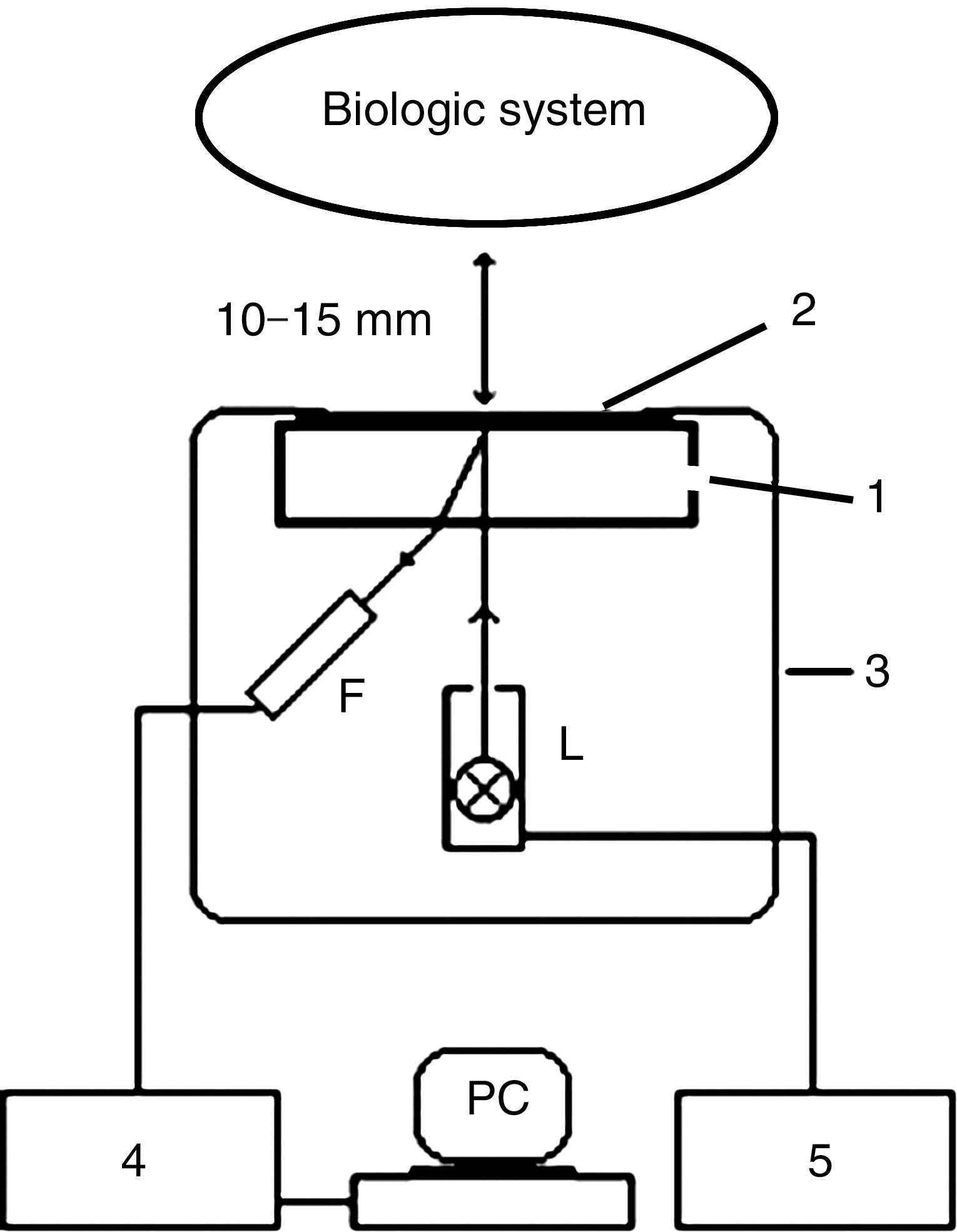
Design of device complex BIOSCOPE. 1, glass plate of the thickness of 1–2 mm; 2, covering material (a dense black paper, thin opaque plastic); 3, metal case; L, light source (incandescent lamp or laser); F, photodetector (photo diode); 4, amplifier; 5, power unit; PC, personal computer: registration system.
The light emitted by laser or incandescent lamp is reflected and scattered from the glass plate and opaque material, and goes back to a photodetector. It should be mentioned that no light emerges from the device case and enters into it. Photodetector signals are amplified (up to about 500 times) and, after analogue-digital transformation, reach the computer. The power supply provides stable operation of the lamp or laser. Initial signal levels of a photodetector are 50 mV. The percentage deviation of the BIOSCOPE's readings from this level is estimated. Calculations have shown that the deviation of amplitude of a registered signal from initial level already on 0.1% is statistically reliable at significance value of p < 0.001. The analysis of the registered signals is carried out with the software packages OriginPro and LabView. Work on technical modernization of the equipment complex has resulted in a portable device that operates by simple connection to the computer through a USB port.
The strip filtration of the registered signals with frequencies from 0.1 to 100 rpm is performed while the estimation of spectral power of BIOSCOPE signals is conducted by fast Fourier transformation method.
The character of changes in BIOSCOPE readings was evaluated when biologic objects (fruits, plants, laboratory rats, persons) were approached on a distance of 10–15 mm from the device sensor. In check experiments with animals, the registration was performed after the animals were anesthetized with urethane (1.3 g/kg intraperitoneally). Figure 2 shows the actual BIOSCOPE device with a studied white rat.
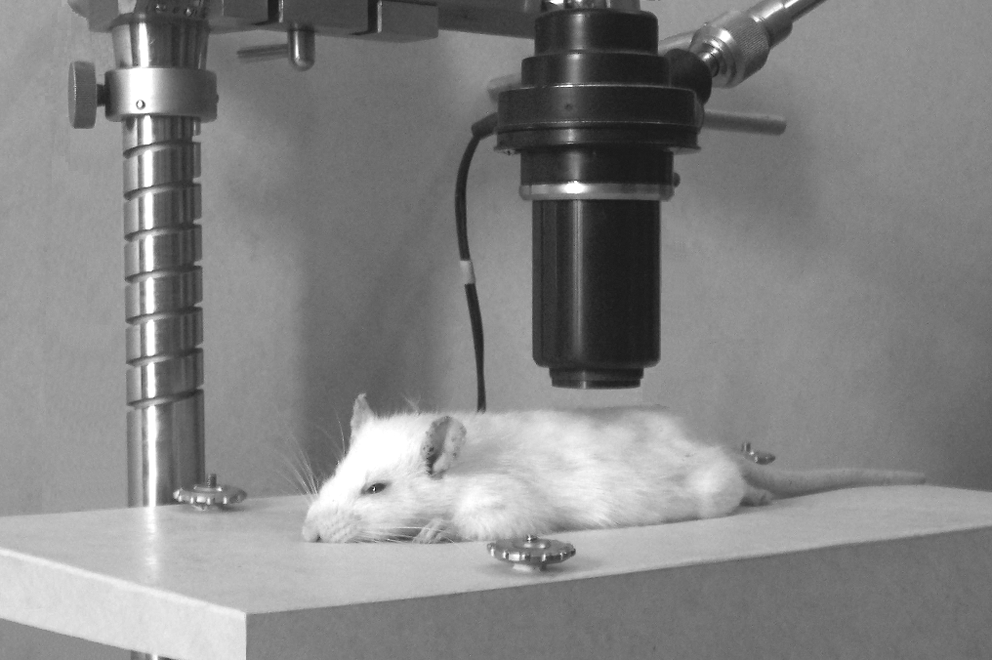
Anesthetized rat under BIOSCOPE.
In other series of experiments, the animals were exposed before anesthesia to 2 or 15 hours of immobilization, or within 10 days a gentamicin injection (100 mg/kg) was carried out. In experiments on humans, arsenic containing a homeopathic preparation was used. All experiments were performed in a separate laboratory at a distance of 10 m from the experimenter, in order to diminish distant influence of the experimenter (as a living object) on the BIOSCOPE readings and the state of biologic system being studied.
Experiments were carried out in accordance with the regulations of the Yerevan State Medical University on Ethics in the Care and Use of Laboratory Animals, which are based on the National Research Council Guide. Moreover, noninvasive experiments performed by the BIOSCOPE cause minimal stress or pain in the animals.
Results
When there is a noncoherent light source (incandescent lamp), the BIOSCOPE signal presents almost a smooth line (Fig. 3[1]). Figure 3(2) shows signals obtained from different objects located in the vicinity of the device.

BIOSCOPE's signals from different objects when there is a noncoherent light source.
One can see from this figure that the presence of biologic objects near the BIOSCOPE deflects the signals above the background line. In contrast, nonliving objects at environmental temperature do not influence the value of the registered signal, whereas the heated inanimate objects cause deflection in the opposite direction. The magnitude of the effect differs for various biologic objects. In the case of the human palm, the increase of the reflected light intensity can amount to about 1%–2% of the absolute value of control level of the registered signal. After removal of a biologic object from the BIOSCOPE's sensor, the amplitude of the registered signal returns to the control level. If the distance between the biologic object and sensor is raised, the time during which the effect appears is increased. A set of control experiments was carried out to verify that the measured signals are not caused by known physical fields. We have found the following results: Heating of nonliving objects causes a slight decrease of intensity of the reflected light (Fig. 3E). Therefore, the observed biologic influence registered by the device cannot be due to heat radiation. Electromagnetic fields that are typically generated by biologic system have extremely low intensities and do not have characteristics and magnitudes that could lead to the observed phenomena. Along with this, direct inspection showed that strong artificial electromagnetic fields in the vicinity of BIOSCOPE do not influence its readings. Owing to mechanical isolation of the BIOSCOPE, the possibility of chemical interactions, as a potential cause of the observed response of the detector to biologic systems, has been experimentally eliminated (Fig. 4).
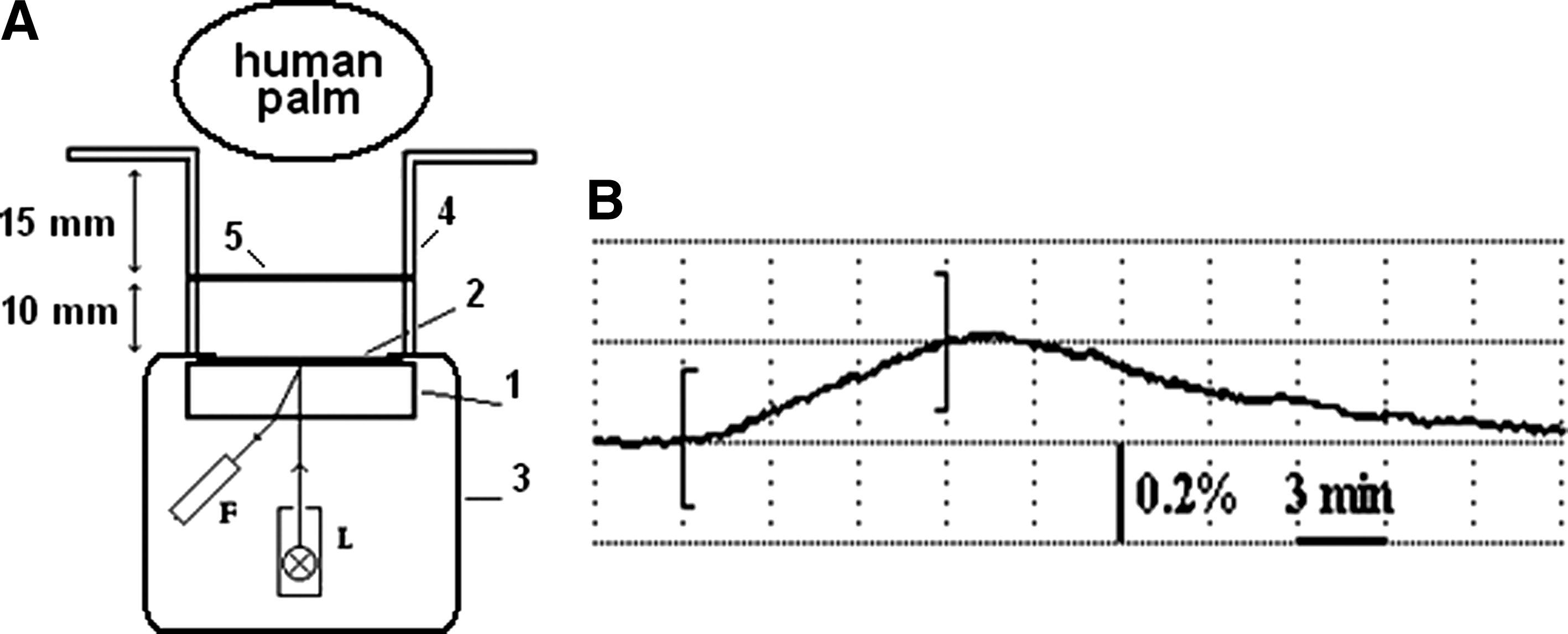
Distant influence of the human palm on BIOSCOPE signals at the mechanical isolation of the sensor from an environment.
The observed effects were always reliable and replicable. The results demonstrate the ability of biologic systems to exert distant influence, even through an aluminum wafer (though the kind of material does not play a role), on optical characteristics of the reflecting surface of the BIOSCOPE sensor.
When the laser (coherent light) was used inside the BIOSCOPE instead of an incandescent lamp (noncoherent light), the device sensitivity was greatly increased, and the form of the signal was changed. In the absence of a studied object being near the BIOSCOPE, the background signals present irregular oscillations with a frequency less than 0.1 Hz (Fig. 5A). It was observed that the presence of an experimenter near the system influences the registered signal of the BIOSCOPE and can distort measurement results (Fig. 5B, C). That is why the experiments were performed in a remote room.

Effect of experimenter on the BIOSCOPE signal.
It has been also discovered that approaching of biologic objects to the BIOSCOPE's sensor leads to the formation of characteristic oscillations (up to 10–15 Hz). The amplitude of these oscillations can reach 7%–10% from the absolute value of an initial signal of the photodetector (Fig. 6A, B). After removal of the living system from the BIOSCOPE, the oscillation frequency decreases, and after 3–5 minutes signals return to the initial low-frequency and irregular form.

Frequency signals of BIOSCOPE device (with laser source) for various biologic systems.
It has been shown that signals of BIOSCOPE were changed when some person nearby mentally concentrated on the studied animals or healed patients. 8 Furthermore, it has been discovered in the laser version of the BIOSCOPE that persons can exert an effect on the BIOSCOPE sensor during mental concentration on the device even when the distance between operator and sensor was 10 m and they were isolated by two concrete walls (Fig. 7). The act of influence continued for 2 minutes, but the signal began to change after 10 minutes and continued about 30 minutes with a further return to the background level.
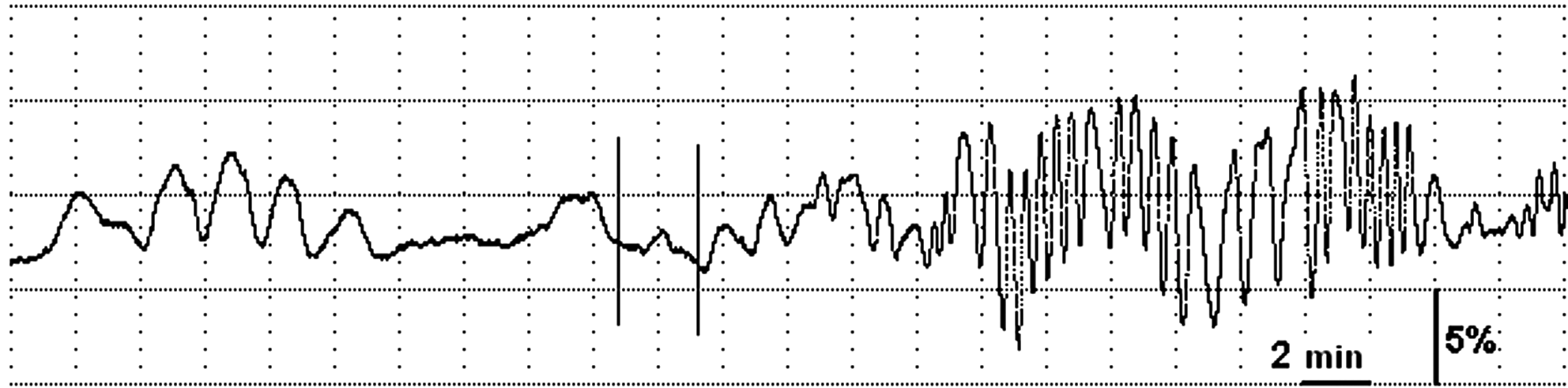
Mental influence on BIOSCOPE's readings. Operator and BIOSCOPE are in different rooms (spaced 10 m apart and separated by two concrete walls). The time interval between vertical lines denotes time of mental concentration. The initial level of photodectector's signals is 50 mV. The distance between the biologic system and the sensor is 1 cm. The width of the square in the figure is 2 minutes and height corresponds to 5% deviation.
An interesting phenomenon was found in trials when, after being in close proximity to biologic objects for a few minutes, some inanimate materials (e.g., paper, wood, glass), which at first did not cause any effect, temporarily acquired the properties of living systems (i.e., the possibility to change the intensity of the reflected light from the sensor). Figure 8 illustrates the results of the effect of temporary “biologization” of nonliving objects.
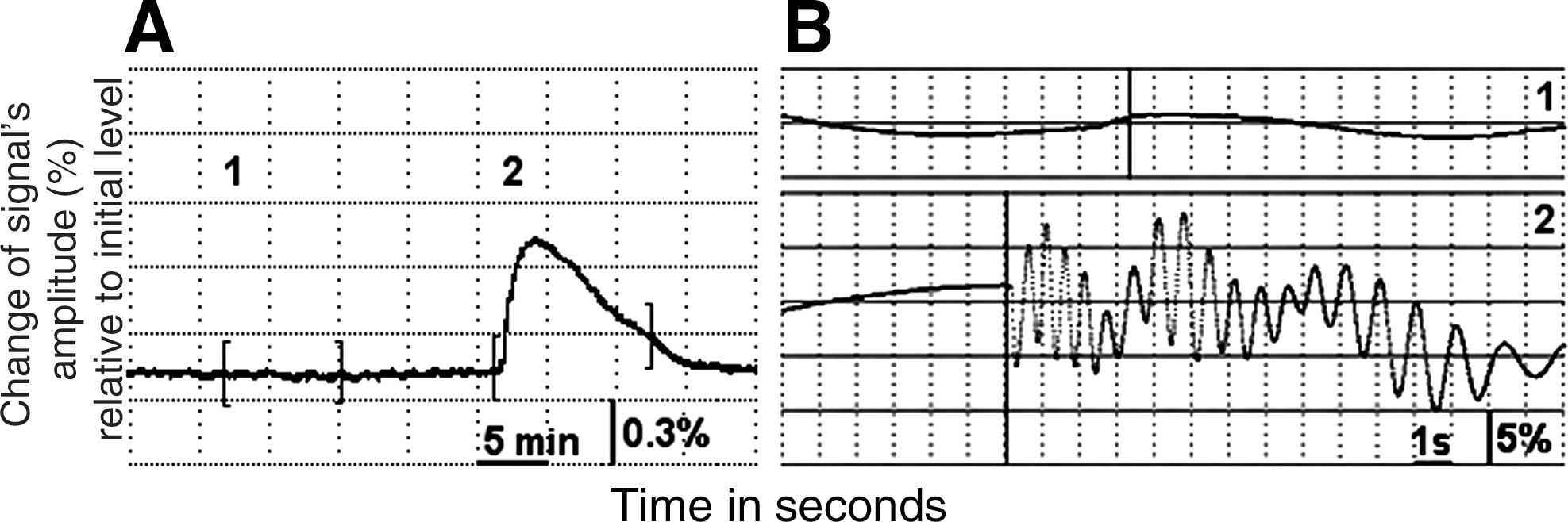
Effect of temporary “biologization” of nonliving objects.
In Figure 8, the numeral 1 represents the zero influence of a piece of paper (the inanimate material). The numeral 2 demonstrates the device readings of the exact same piece of paper, after it has been held for 2 minutes between a human's palms without contact. It is clear from Figure 8 that the character of the change of intensity of reflected light is the same as in the case of biologic objects. After close interaction between the biologic object (including plants or animal) and a nonliving object, certain changes occur in the properties of the nonliving object. The nonliving object became “biologized” in such a manner that it can be registered by the device. This effect entirely vanishes after 15–30 minutes but it can be renewed by repetition of described procedure. Moreover, the effect of double “biologization” has been discovered, when the first paper sheet, which already has been “biologized,” was placed on the second paper sheet. In the result, the second sheet becomes “biologized” as was the first sheet.
As is shown in Figures 3 and 6, the BIOSCOPE's signals differ depending on the type of biologic objects. Furthermore, the character of registered signals has varied when the physiologic state of the investigated object changed. For example, the signals of fresh plants were more intensive in comparison with signals of the same plant measured the next day (aging effect), or mechanical squeezing of a pad of the anesthetized rat led to the sharp increase in frequency of BIOSCOPE signals from the back of the rat (Fig. 9).

The response of signals of BIOSCOPE to a mechanical stimulation of back extremity of the anesthetized rat. 1, before mechanical stimulation; 2, stimulation time interval; 3, after stimulation termination. Initial level of signals of a photodetector is 50 mV. BIOSCOPE sensor is located at a distance of 2 cm from the back of the rat.
In a series of experiments, the rats were subjected to the action of some preparations. Under normal conditions, the oscillation frequency of device signals from anesthetized rats did not exceed 1–2 oscillations per minute (Fig. 10A). If animals were exposed to 2 or 15 hours of immobilization before anesthesia, an essential change in character of registered signals (Fig. 10B–D) was observed in comparison with the control ones. The oscillation frequency increased in 10 times in the first case (Fig. 10B, 2 hours immobilization), and in the second case (Fig. 10C, 15 hours immobilization) it fell both by frequency and amplitude. Ten (10)-day introduction of gentamicin also led to a considerable (in comparison with the norm) reduction of amplitude and frequency of oscillations; however, in spectral distribution of registered signals there was prevalence of frequencies on the order of 0.25 oscillations per minute (Fig. 10D).
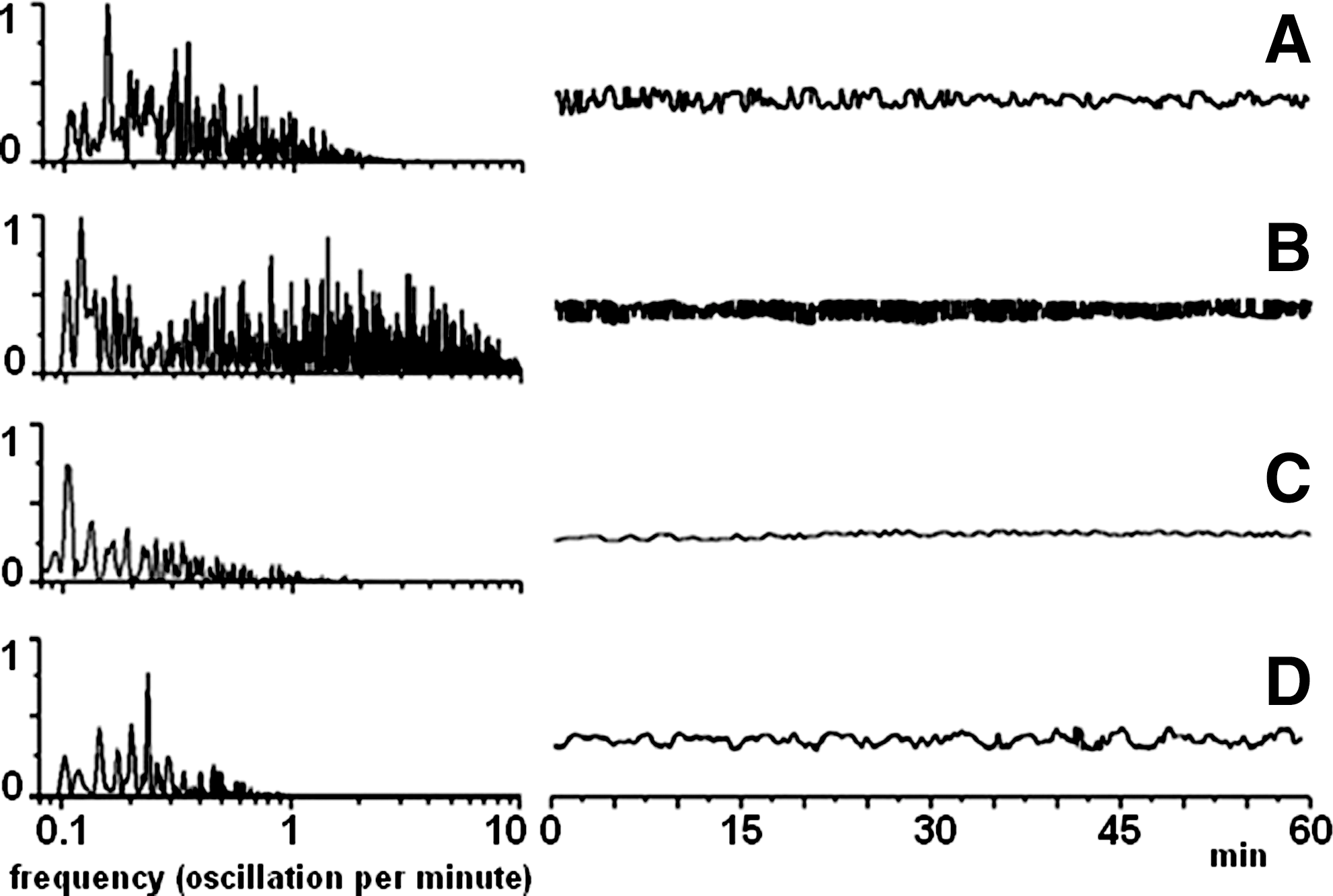
Influence of immobilization stress and of some pharmacological preparations on signals of BIOSCOPE device for the anesthetized rats.
In experiments with humans it has been shown that the character of registered signals of the BIOSCOPE located near the external and internal sides of the palm sharply differ (Fig. 11). This fact can be attributed to features of distribution of known acupuncture zones on a palm.
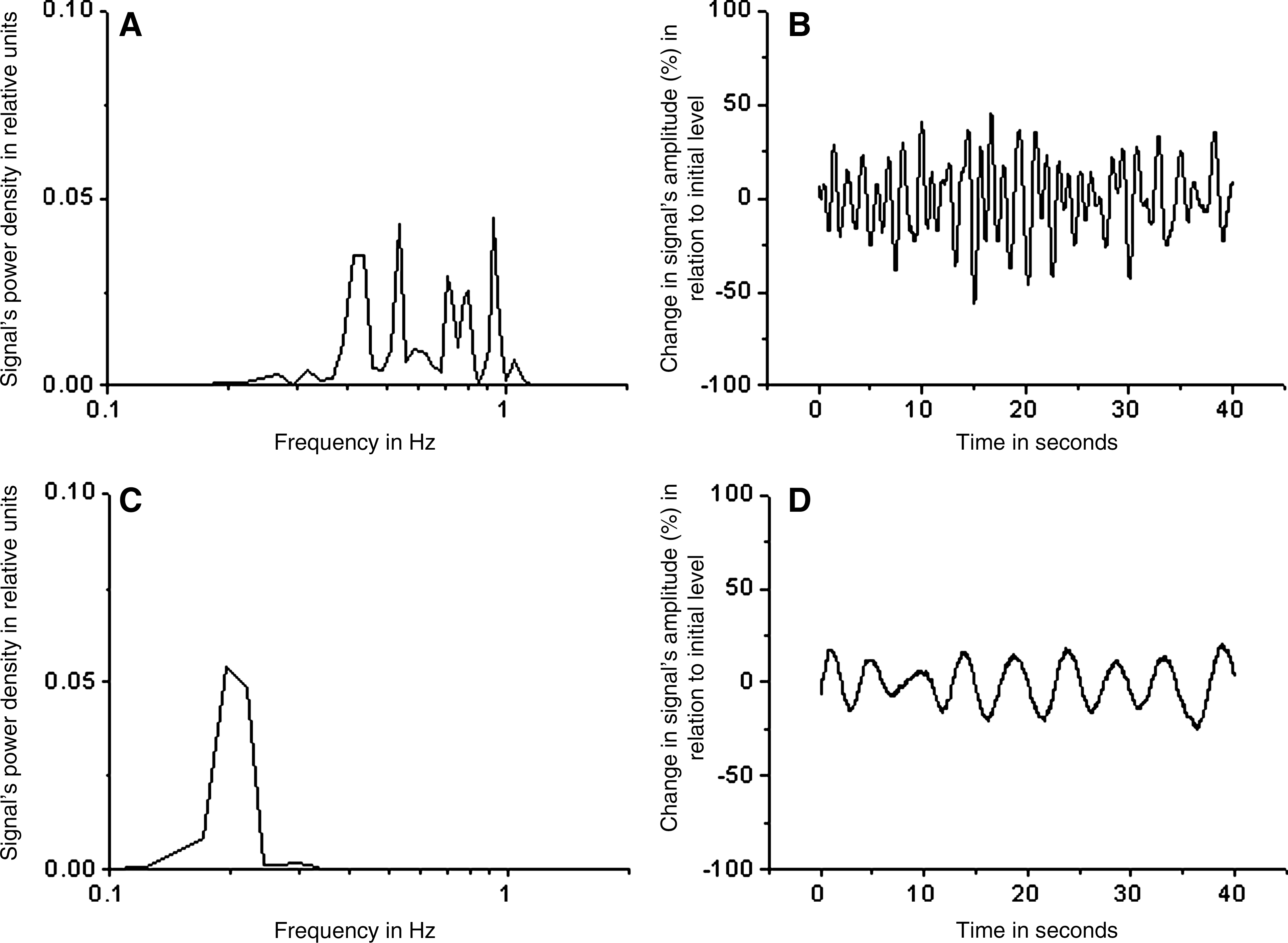
Registered signals of BIOSCOPE device located near the inside and external side of palm.
At the same time it is shown that the device's signals from a person's palm sharply vary, if the homeopathic preparation (Arsenicum album 30C) is placed on a palm of their other hand (Fig. 12).
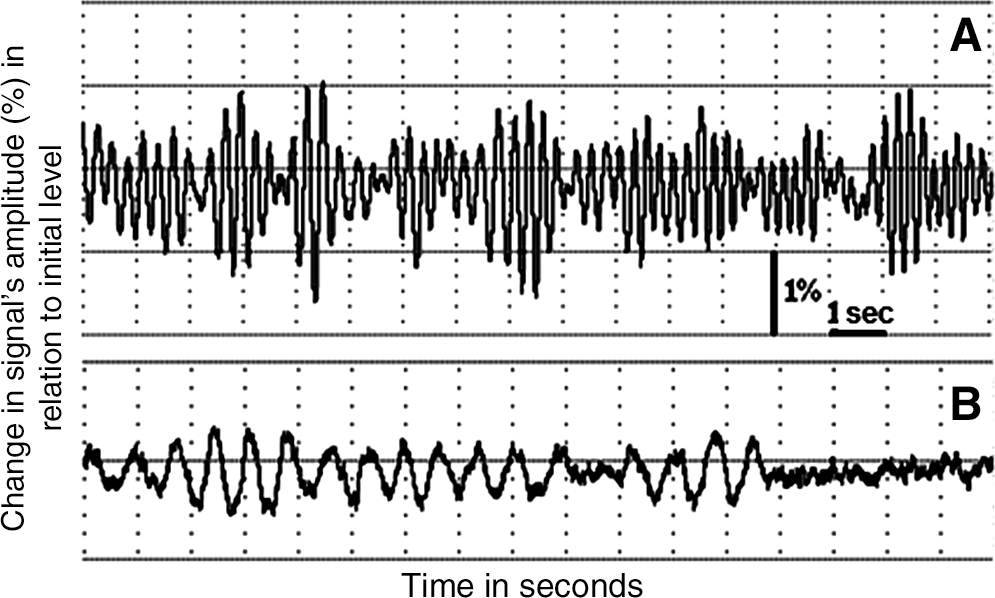
Influence of a homeopathic preparation on signals of BIOSCOPE device located in the region of a person's palm.
Discussion
In recent years, numerous attempts were made in different scientific centers to obtain comprehensive and unequivocal experimental evidence for the existence of distant interactions between biologic systems and surrounding objects that cannot be explained in the framework of existing scientific paradigms.
Such interactions include distant communications between biologic objects, 8 distant influence of humans on physical 9 –12 and living 11,12 objects, unique possibilities of the human brain, 13 bird navigation, 14 vital activity, 15,16 unusual interactions between cells in organisms, 17 etc.
Some investigators have reported on the creation of devices that register signals of unknown nature from biologic objects. The work of these devices was based on different physical principles, and various systems were used as sensors: double electric layer, semiconductor chips, thermal sensors, optical systems, piezocrystals, etc. However, the results obtained by means of these devices were not always robust and repeatable. There are many articles surveying some of these studies performed in Russia, for example, reports. 18,19 Analogous investigations were carried out in China. 20
There are various theoretical models and hypotheses explaining observed results. For example, Tiller 12 has discovered that when very qualified humans act from a deep meditative state on the simple electronic device with the specific intention in mind, this device exerts distant influence on inanimate and animate materials and altering their properties, such as water acidity, thermodynamic activity of enzymes and adenosine triphosphate, and larval development time. He supposed that such a device activated by human consciousness can raise the normal electromagnetic (EM) gauge symmetry state of the space U(1) to a higher level state SU(2), changing physical and chemical properties of bodies in such a space. Our findings, which demonstrate the alteration of BIOSCOPE signals in the presence of an experimenter (Fig. 5B,C), or during mental concentration on the device (Fig. 7) as well as the existence of a double “biologization” effect, are in good agreement with Tiller's observations. However, our experiments show that not only human consciousness affects the BIOSCOPE readings, but also the unconscious plants and animals exert a similar influence.
Smith, 21 in his review concerning unusual effects in water and living systems as well as mechanisms of homeopathy and acupuncture, has described his experiments with copying bioinformation (in the form of frequencies) from homeopathic potency or from an acupuncture point into water and vice versa. Smith 21 consider that water and living systems have macroscopic coherent properties caused by entanglement between separated systems. He has discovered that chakras and meridians had characteristic endogenous frequencies (10−4 Hz–1011 Hz). In particular, he has shown that mentally concentrating on healing moves the endogenous frequency of the pericardium meridian at Pe9 from its 0.25 Hz close to a healing 7.8 Hz. It would be interesting to compare frequencies measured by Smith with those obtained by means of the BIOSCOPE.
Surprising nonlocal chemical, thermal, and gravitational effects in simple physical systems were discovered by Hu and Wu, 22 who have suggested that they originate due to macroscopic quantum effects determined by quantum entanglement between nuclear and/or electron spins in treated materials. In this connection it should be mentioned that our research 23 also shows that some physical–chemical processes such as salt dissolution, ice melting, and rotation of a motor occurring in proximity of the BIOSCOPE can change its readings. We have interpreted these phenomena by using the concept of Bohm's quantum potential.
In our experiments the measured value is the intensity of scattered visible light inside the BIOSCOPE. Detailed studies have shown that the integral intensity of scattered light remains invariant in the presence of biologic system at the sensor of the BIOSCOPE; however, the angular distribution inside the BIOSCOPE's casing is changed. It is well known from the optics 24 that such redistribution of light can be attributed by its propagation through some optically active phase medium. Such a medium cannot be directly traced or photographed, but it always leads to the changing of phase of passed light. One would propose that such an optically active medium is formed in the path of the light inside the BIOSCOPE when a biologic object is approached to the device's sensor. Therefore, it seems likely that this medium primordially and substantively surrounds any biologic system.
We have attempted to reveal the nature of this medium on the basis of a physical concept proposed by one of the authors of this paper (Sargsyan RS. New aspects of functioning of biologic systems. Doctoral thesis, Yerevan, 2008). For this purpose, Bohm's approach 25 to quantum mechanics was used. According to this approach, the Schrödinger equation for any system of interacting particles can be written in the form containing the term Q (quantum potential). The calculations have shown that consecutive consideration of the existence of quantum potential for macroscopic systems leads to the conclusion that a system's wave function does not disappear behind the region of a macroscopic system. The wave function manifested itself as a peculiar quantum halo and represents the mentioned optically active phase medium that surrounds a biologic system. In addition, it has been revealed that a quantum halo is characterized only by integrative indicators of the whole state of a system. The last circumstance points to the fact that BIOSCOPE signals characterized the changes in the physiologic state of a biologic system.
The wave function of living systems is more expressed than it is for inanimate matter; therefore, one can assume that wave function imposes a quantum halo on surrounding objects, thus altering their physical state. Based on this mechanism, one can interpret the results of experiments with “biologization” (Fig. 8) and working principal of the BIOSCOPE.
The BIOSCOPE allows detecting of differences among various kinds of biologic objects (plants, animals, human), which become apparent by the characteristic signal's amplitude and its frequency spectrum. As has been demonstrated, such influences as stress, and injection of some drugs into laboratory animals lead to the lowering of their activity and is accompanied by decrease of amplitude and frequency of signals. For example, the spectrum and oscillations of signal of an anesthetized rat are reduced to the level typical for the fruits (Sargsyan RS. New aspects of functioning of biologic systems. Doctoral thesis, Yerevan, 2008). Comparison of results obtained by measurements with the BIOSCOPE and standard electrophysiologic trials shows that in some cases, the interpretation of signals that reveal the physiologic state of the rat is rather similar (Sargsyan RS. New aspects of functioning of biologic systems. Doctoral thesis, Yerevan, 2008). In some cases, however, conclusions about the functional state of animals obtained by means of the BIOSCOPE show more physiologic adequacy than the usual electrophysiologic methods. In particular, this concerns experiments with long immobilization stress. According to the standard electrophysiologic feature of the formation of immobilization stress, after 15 hours of rat immobilization, a tendency of return to the norm of neuron activity of the amygdala is observed, whereas the BIOSCOPE readings show that the level of physiologic activity of the rat sharply sinks. The last conclusion is more likely, because after long immobilization stress the animals often die.
All these findings specify the possibility of practical use of the BIOSCOPE device for a contactless estimation of a functional state of living systems. For example, the device could be used for online control of the healing process of patients subjected to different physiotherapeutic or medical treatment. This can be made by the device, which can be designed as an integrated body-worn sensor suit to provide real-time health analysis of patients. It is also advantageous when the BIOSCOPE can be placed in such a secret manner near the patient so that he does not will know about this. Such a method of controlling of patient state can provide more objective information owing to elimination of the subjective factor. The other area of BIOSCOPE application may be the psychophysiologic training of pilots, policemen, dispatchers, sportsmen (i.e., people who are often under stress). It is also interesting to consider its use as a lie detector.
A special field of use for the BIOSCOPE is reflexotherapy. Our preliminary results have shown that BIOSCOPE allows contactless finding and identifying of acupuncture points and zones on various regions of human body. This opens possibility to recognize correlations between the location of these points obtained by our device correlates with the data gained by usual methods. 1,2 Comparison of the character and frequency spectrum of the registered signals of the BIOSCOPE device with the results of measurements that are based on an estimation of electric resistance of corresponding acupuncture points can lead to the creation of a new method of noninvasive diagnostics of the various diseases, based on correlation between changes of electroconductive properties of biologically active points located on the skin and a functional state of corresponding organs of patients. It should be noted that simultaneously with contactless registration by BIOSCOPE, one can measure the electric resistance of acupuncture points by means of standard technique, which will allow performing parallel evaluation by independent methods. BIOSCOPE may also be useful for estimation of efficiency of therapeutic correction of a physiologic state of patients, particularly before, during, and after acupuncture points' treatment.
Conclusions
The results of performed research have led us to the conclusion that the origin of unusual distant signals from biologic systems detected by the BIOSCOPE cannot be explained by known physical channels of interactions, and unequivocally prove the existence of a phenomenon of special remote influences of biologic systems on surrounding objects. The last circumstance leads to the necessity of revision of the standard paradigm about vital activity of living systems and can become a starting point for creation of more deep conceptions that will allow integrating the existing approaches of orthodox and alternative medicine for revealing of peculiarities of organism functioning.
Owing to its unique sensitivity to the small changes in functional state of living systems, the BIOSCOPE can be used for detecting and analyzing of various processes occurring in biologic systems. It can be applied as a new complementary biomedical tool for contactless diagnosis and real-time monitoring of a patient's state during treatment.
Future investigations will be devoted to the accumulation of experimental results performed on a large number of patients. This will be done by distributing our devices among different hospitals and scientific institutes involved in biologic and medical investigations. The work on modification of device design to create miniaturized and multichannel systems with improved software is in progress.
It is also planned to continue theoretical and experimental research for more profound understanding of the mechanism and nature of obtained unusual phenomena.
Footnotes
Acknowledgments
This work has been performed in the Orbeli Institute of Physiology of National Academy of Science of Republic of Armenia by the Institute Scientific Plan. The work has been performed without any grant or other financial support.
Disclosure Statement
No competing financial interests exist.