




Abstract

Dear Editor:
Pterygium is a fibrovascular lesion involving the ocular surface and is characterized by proliferation, inflammatory infiltration, fibrosis, angiogenesis, and extracellular matrix breakdown (Fig. 1). 1 The mechanism of pterygium formation remains incompletely understood. 2 Ultraviolet radiation possibly induces ocular surface changes, and in particular, affects stem cells in the corneoscleral limbus. Such changes may be further exacerbated by other environmental factors, such as infection with human papillomavirus or oxidative stress. At the molecular level, alterations in the expression of tumor suppressor genes such as p53, induction of matrix metalloproteinase (MMP), and alterations in the expression of various growth factors are observed. 3 Several treatment modalities, primarily including surgical interventions, for pterygium are available. Because bare sclera excision is associated with a high recurrence rate, pterygium excision is often combined with conjunctival autograft transplantation or mitomycin C therapy, β radiation therapy, or other adjunctive therapies to reduce the recurrence rates. At present, however, there is no consensus regarding the ideal treatment for patients with this disease. 4
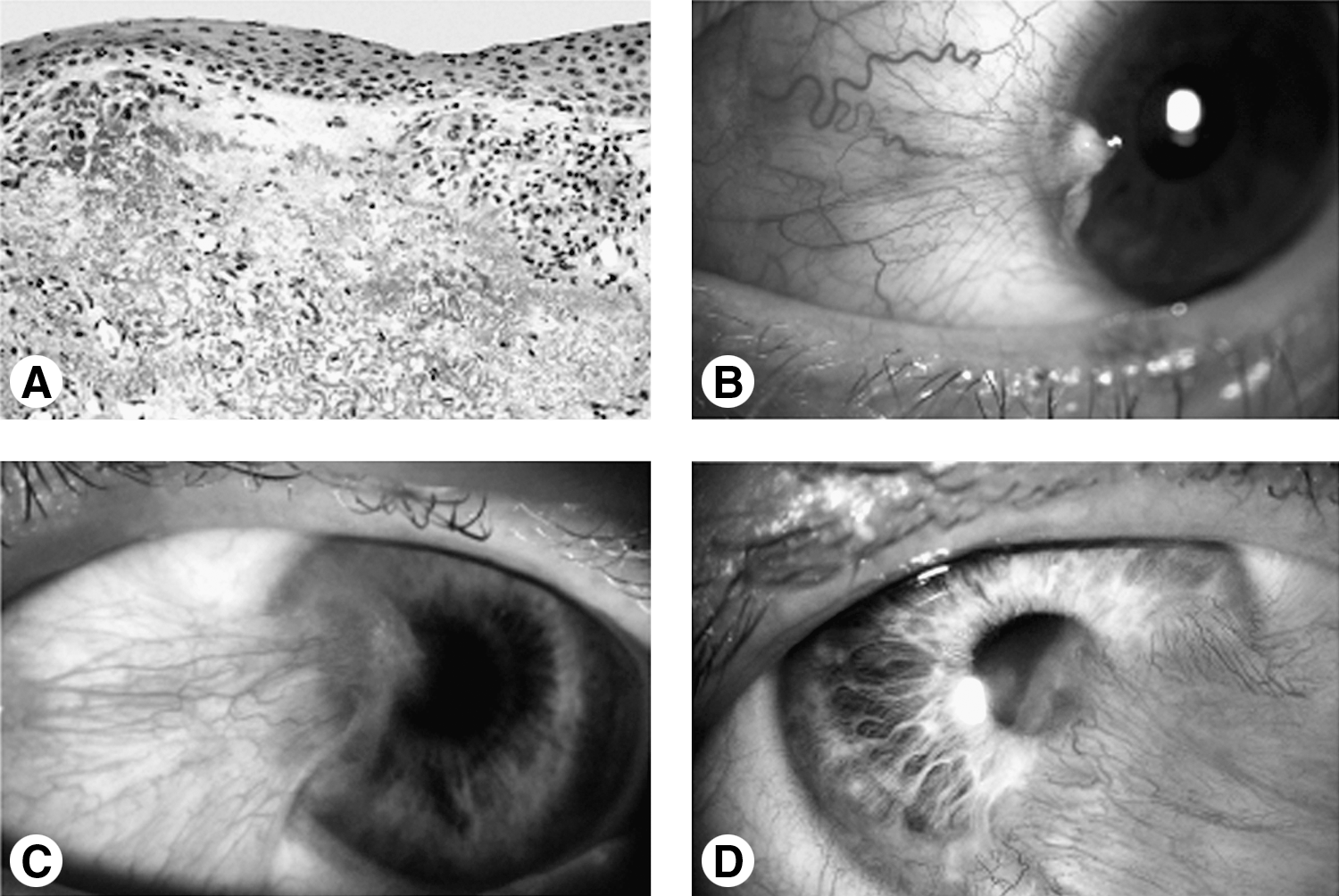
Pterygium as a fibrovascular lesion involving the ocular surface.
On the other hand, it was shown that transforming growth factor-β (TGF-β) was involved in the regulation of many physiologic and pathophysiologic processes. 5 The presence of activated fibroblasts in pterygium tissue is possibly attributable to the actions of TGF-β, given the overexpression of this growth factor in pterygium tissue as compared to that in normal conjunctiva, as previously reported. 6 This would be a good opportunity to introduce new modalities, especially dietary factors that alter the identified genes, and expression of inflammatory and growth factors effective on pterygium formation.
Taurine, a sulphur-containing amino acid that has been found to be naturally present in seafood and meat, may play an important role in several essential biologic processes such as development of the central nervous system and retina, membrane stabilization, and immunity. 7 However, data from several studies demonstrate that taurine may have a role in immunologic functions, but human data are quite limited. 8 In addition, taurine remarkably influences polymorphonuclear cell apoptosis, 9 and several in vitro models of oxidant-induced damage have been studied using taurine as a protection against inflammation. 10
Raiha et al. were the first to report that formula-fed, appropriate for age, preterm infants were unable to retain taurine concentrations in plasma and urine equivalent to those of comparable preterm infants fed human milk. Additional findings provided further support for the hypothesis that a dietary source of taurine is essential during the neonatal period. 11 Taurine was added to most infant formulas by the early to mid-1980s 12 since it is essential for taurocholic acid. During the early months of life, this is the primary emulsifier secreted by the gallbladder and used for lipid emulsification.
Several studies have reported the antifibrinolytic activity of taurine. This amino acid may be effective in inhibiting fibrosis by reducing the tissue levels of TGF-β. 13 Recently, it has been shown that taurine derivates may differentially inhibit MMP overexpression. 14 Because of the antifibrinolytic activity of taurine as well as its involvement in the inhibition of TGF-β and MMP expression, we conclude that taurine may serve as a novel protective agent against pterygium. Our hypothesis could be justified with the conducting of clinical trials on this subject.
Footnotes
Disclosure Statement
No competing financial interests exist.