




Abstract
Objectives:
The purpose of this study is to explore how osteopathy treatments influence certain measurable aspects of the human biofield; namely, various calculated parameters of finger corona discharge patterns produced by high-voltage electrophotography.
Methods:
The Gas Discharge Visualization camera was used to assess subjects before and after osteopathy treatment. Thirty-three (33) apparently healthy adults (20–56 years old) took part in the study. The patterns of light emitted from the subjects' fingertips were digitally recorded and computer analyzed. Parameters including normalized area, brightness, and right- and left-hand integrals were calculated and statistically compared.
Results:
Most of the recipients of these osteopathic treatments experienced increase in fingertip florescence area and average intensity, reduction in stress levels, and improved blood pressure measurements. With all of these parameters simultaneously improving, the patients received a good benefit from these sessions.
Conclusions:
Virtually all subjects were in a good mood after treatment. Many of them had pain and muscle tension that disappeared. These changes were reflected in all parameters analyzed, in both psychosomatic and somatic states. Thus, osteopathic manipulations as administered in these two studies provide good, lasting relaxation. This study also provides the interesting observation that daily relaxation practices done by Dr. Paoletti enable him to work hard without additional stress.
Introduction
For these studies, the interest and focus was on the ability of osteopathic treatment to improve the level of relaxation. Through lower stress levels, the human body is better able to maintain homeostasis in all systems. Lymphatic flow improves, so toxins and wastes are more easily released. When the muscular system relaxes, so does the sympathetic nervous system, relieving tendencies toward overactive adrenal glands and high blood pressure so prevalent in modern stressed societies. 4,5 The study was designed to find out whether volunteers were indeed more relaxed after all experiencing the same osteopathic procedure.
Osteopathic methods, while often criticized, receive such criticism because there is only limited evidence of the positive or lasting effects of such methods. In providing this study, the authors' group endeavors to contribute to this growing area of interest in defining the effects of this and other complementary medicine. In randomized controlled trials with osteopathy and other outpatient procedures, groups receiving treatment are experiencing recovery and improvement rates that are superior to those in control groups. 6,7 Fortunately, there is growing support for research in these areas.
Electro-photon imaging/gaseous discharge visualization technique
Electrodiagnostic techniques such as electroencephalograms and electrocardiograms are widely used in medical practices worldwide. 8 A promising method already utilized in 62 countries to great success is bioelectrography, based on the Kirlian effect. This effect occurs when an object is placed on a glass plate and stimulated with current; a visible glow occurs, which is the gas discharge. With electro-photon imaging through gaseous discharge visualization (EPI/GDV) bioelectrography cameras, the Kirlian effect is quantifiable and reproducible for scientific research purposes. Images captured (BEO-grams) of all 10 fingers on each human subject provide detailed information on the person's psychosomatic and physiologic state. 9 The EPI/GDV camera systems and their accompanying software are currently the most effective and reliable instruments in the field of bioelectrography. 10,11,12,13 EPI/GDV applications in other areas are being developed as well. 14,15,16,17,18,19
Through investigating the fluorescent fingertip images, which dynamically change with emotional and health states, one can identify areas of congestion or health in the whole system. Each generated fingertip photograph is analyzed by sector division, according to acupuncture meridians. Dr. Peter Mandel, in Germany, 20 and Dr. Reinhold Voll, over many decades, have developed this intricate and well-defined method of seeing into the entire body through the fingertips. EPI/GDV technique researchers created a diagnostic table based on years of their own clinical field-testing, the sector basis of which differs slightly from that of Dr. Mandel. 21
The parameters of the image generated from photographing the finger surface under electrical stimulation creates a neurovascular reaction of the skin, influenced by the nervous-humoral status of all organs and systems. Due to this, the images captured on the EPI/GDV register an ever-changing range of states. 22 In addition, most healthy people's EPI/GDV readings vary only 8%–10% over many years of measurements, indicating a high level of precision in this technique. A specialized software complex registers these readings into parameters that elucidate the person's state of well-being at that time. 23
Materials and Methods
The volunteers for the studies came from the athletic soccer and wrestling teams, as well as citizens of St. Petersburg, Russia. In the June study, there were 7 women and 9 men, totaling 16 participants. In September, more than 75% of the volunteers were male, totaling 17 participants. All 33 study participants ranged from 20 to 56 years old, and some had prior experience of osteopathic treatments. Healthy participants were chosen because this is a study to demonstrate the efficacy of preventive medicine methods; in short, the study's purpose was to provide support for techniques that may keep individuals healthy.
Dr. Serge Paoletti performed the osteopathic treatments on the whole body. He worked on every patient using methods developed in the European School of Osteopathy. This school in the United Kingdom is globally recognized as a leading institution for this type of education.
For this study, the EPI/GDV-gram image area, average intensity, and activation coefficient were statistically compared. EPI/GDV-gram readings were done on each patient before, after, and 30 minutes after each osteopathic manipulation. Researchers also gathered readings on Dr. Serge Paoletti, OD, at the beginning of the day and after he saw each patient. EPI/GDV-grams are taken in two ways: without, and with, a thin sheet of plastic, or filter. This filter provides insight into specifically the parasympathetic system, or the physical functional state of the person at that time. Without the filter, the sweat and sebaceous secretions inform on the individual's sympathetic nervous system and psychosomatic state. In this study, both readings were taken each time, as the comparison and differences between the two give more intricate information on the person's state of health on all levels. Overall, the readings isolating the sympathetic systems change more rapidly. The area without filter increasing in most people shows a beneficial shift in autonomic activity as the system relaxes. The activation coefficient is a quantitative assessment of the person's stress level, based on sympathetic/parasympathetic balance evaluation.
9
The EPI/GDV Camera Pro instrument (available from the KTI Company [
In addition to the EPI/GDV technique for measuring stress levels in these studies, blood pressure, pulse rate, and interference electromyograms (EMGs) were also measured. For all of the tests, volunteers waited in a relaxing environment and received clear, simple instructions. Blood pressure readings are consistently used to evaluate the effectiveness of medicines and stress reduction methods. 24
Each examinee underwent an interference EMG recording to assess their bioelectrical muscle activity levels. Before and after osteopathic manipulating, participants got measurements on their muscle rhomboideus major and muscle trapezius of the back. These recordings both were done at quiescence and at the moment of maximum isometric stress performance.
Results
The following two sets of images are typical examples of how the individuals' fluorescent glows improved significantly due to the osteopathic manipulations (Fig. 1). These images are rendered in the Energy Field EPI/GDV software. The program creates a mathematical model of distribution of parameters around the body, by processing the fingertip sectors into a new image. 9
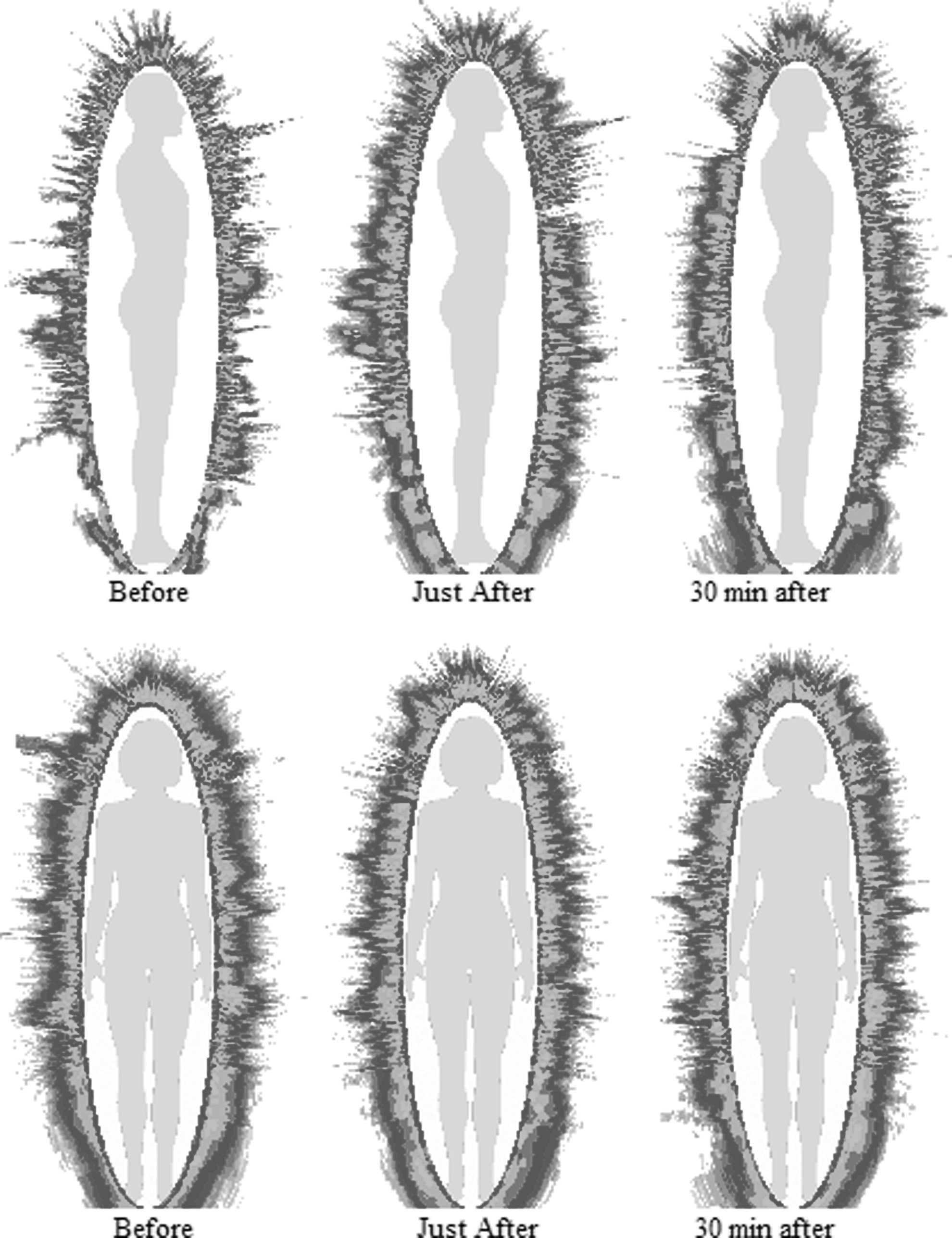
Examples of how the individuals' fluorescent glows improved significantly due to the osteopathic manipulations.
Immediately after the procedure, 70% of the subjects had a statistically significant positive psychosomatic response due to the increase calculated in the program EPI/GDV Scientific Laboratory (area and average intensity parameters). Parameters of the physiologic state improved for most subjects, although for a few patients these parameters significantly decreased. Approximately 81% of patients showed a positive response to the somatic state after the session and after 30 minutes of the calculated parameters. Analyses were done in GDV Scientific Laboratory program and Microsoft Excel, with analysis of variance modeling.
The diagram in Figure 2 shows that 18 of the 33 patients experienced a statistically significant improvement. The improvements were shown for people with a high difference of muscle tension between left and right body sides. These data correlate with the data of the EMG tests. This chart shows the area parameter of the psychosomatic condition of the patients after their osteopathic treatments. When the radial area of the fluorescent image expands, this is supportive to overall health for the individual. Deficient area levels are an indication of fatigue, stress, anxiety, or altered states of consciousness.
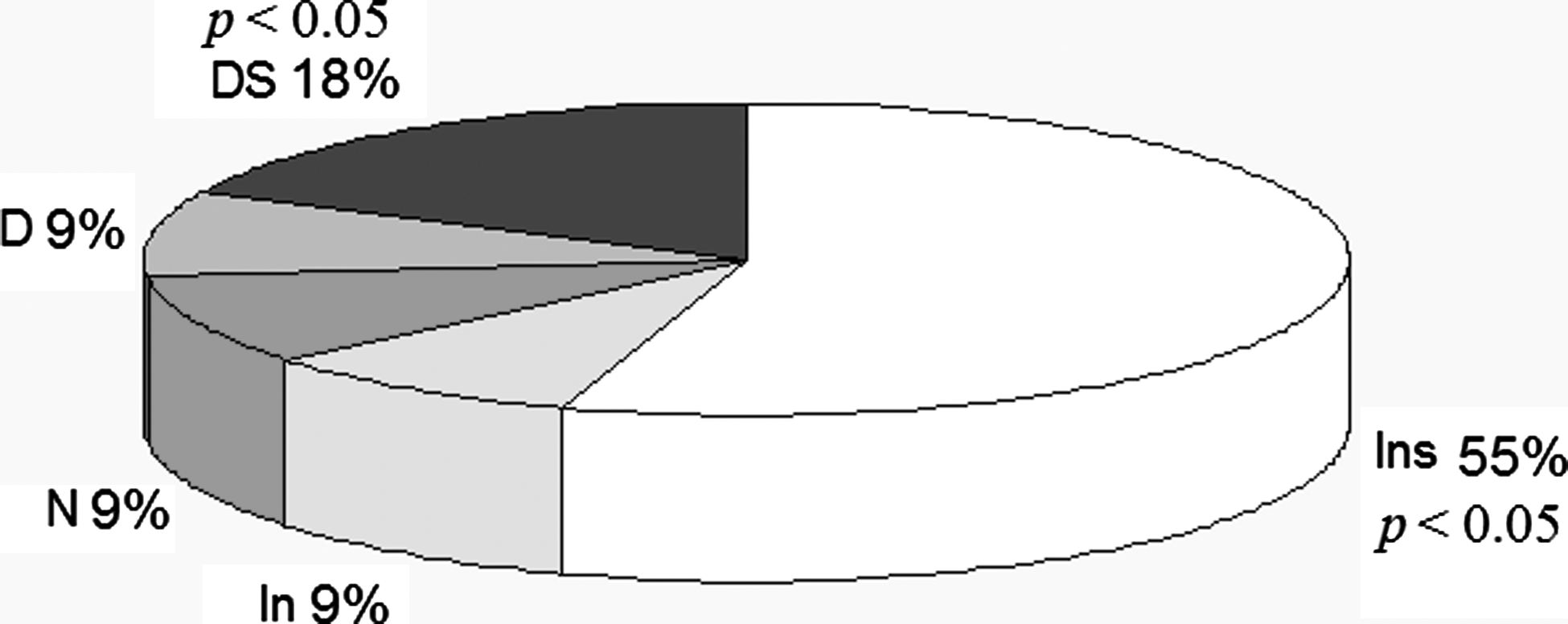
Area measured without filter after treatment. INS, a statistically significant increase in the parameters (p<0.05); Ins, parameters increase; N, neutral value; D, parameters decrease; DS, a statistically significant decrease of the parameters (p<0.05).
An important factor among the calculated data is the coefficient of activation (stress indicator), obtained from the EPI/GDV Diagram program. This parameter has proved very stable and accurate with EPI/GDV studies in the last 15 years.
The activation coefficient is measured from 0 to 10: • 0–2: totally calm, relaxed people that may be due to several factors: deep meditation, full of inner peace, the influence of psychedelics, a deep sleep in a quiet phase, chronic depression. • 2–4: normal quiescent state. • 4–6: the excited state characteristic of active work, excitement, intense activity. • 6–8: at least four possible situations: Increased nervousness, accumulated over long periods of time stress, emotional stress, autonomic dysfunction. People with a special type of mentality that can quickly switch from a state of extreme excitement, nervousness, in the quiescent state. The state of overtraining, fatigue, risk of injury. • 8–10: a very high level of stress, the peak of excitement.
Stress levels for most of the subjects decreased after the therapy, while for some these levels remained within normal limits (Fig. 3). From the initial capture to after treatment, the total stress reduction after the osteopathic session ranged from 6% to 83%. This shows great relaxation of the subjects during and after the session. Those who were stressed came into a normal range, and people who were already at normal stress levels stayed there. The treatment had a positive effect on the psychosomatic and emotional state of both well-tested athletes and ordinary people. The responses to the massage also endured, with results of the survey right after the session and again after 30 minutes being consistent.
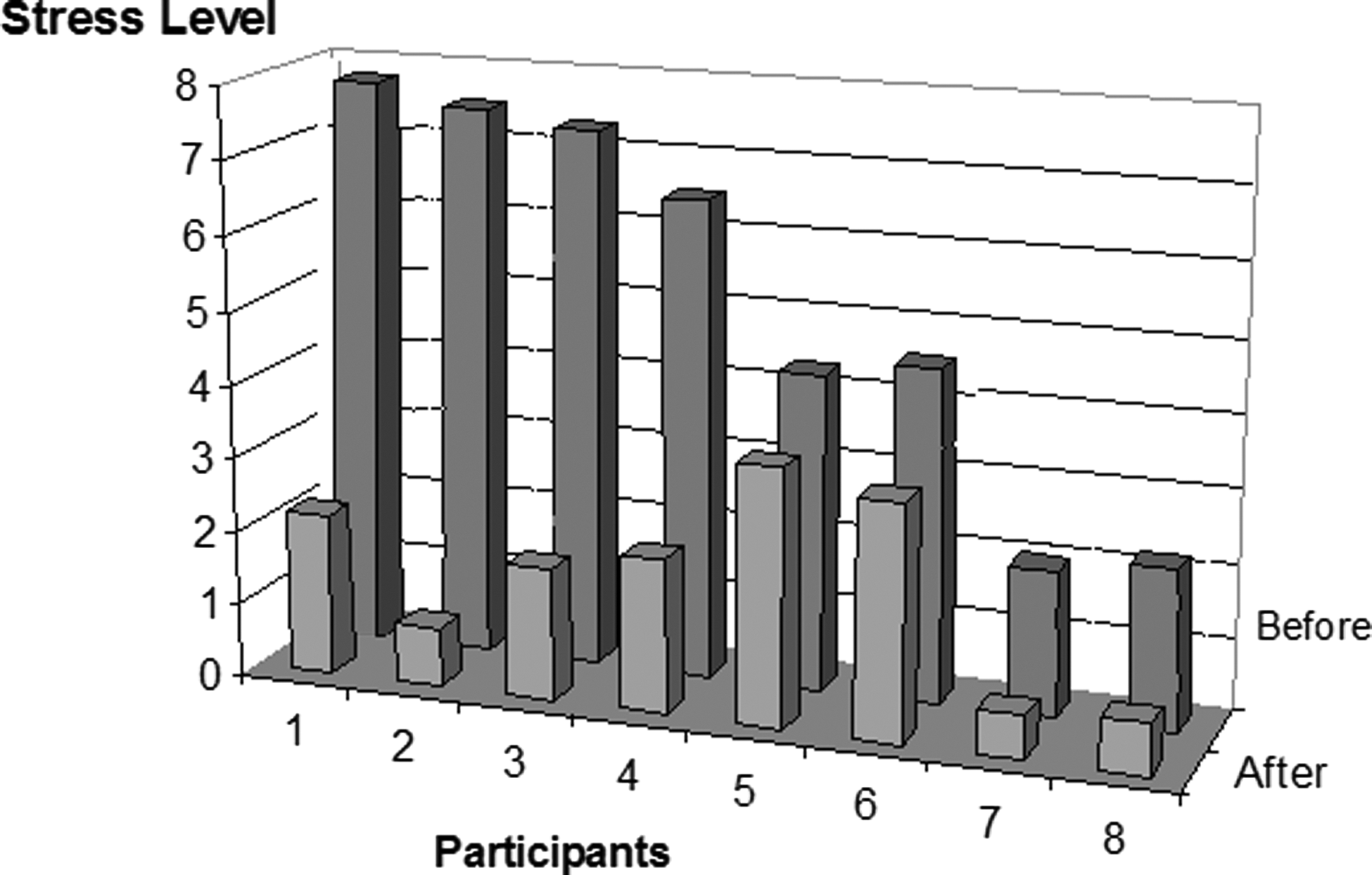
Change in activation coefficient before and after massage.
The blood pressure measurements that were done aligned with the EPI/GDV results. As is seen from the represented data for participants (Fig. 4), for 20 of the 33 participants, both blood pressure and pulse decreased after the second test. The initial average systolic blood pressure was (122±14) and diastolic was (74±10). After the osteopath's manipulations it came to normal states for each individual. The average systolic blood pressure became (117±12) and diastolic came to (73±8). The pulse also decreased, from (74±10) to (71±10) bit rates per minute. These consistent decreases are an indication of the positive effects of osteopathy to people. This same trend was shown in both studies, done in June and September.

Systolic and diastolic blood pressure and pulse before and after treatment for all participants of the study.
Analyzing the interference EMG and tour-amplitude results of the examinees, improvements were found in the muscular system on a predominant majority of the participants. An imbalance between the right and left sides of the neck (a large rhomboid muscle) and back (a trapezius muscle) was detected with 85% of different age examinees at quiescence (pronation) before the osteopath's manipulation. More tension was found overall on the left side.
In the muscle tone state after the manipulation, common tendencies of changes were identified, regardless of age. Mean peak amplitude and midrange frequencies level out when compared to some individual changes, which are significantly more appreciable. The osteopathic effects on the muscles follow this general trend: with relatively high muscle tone before manipulations, muscle tone reduction takes place; conversely, with low initial muscle tone, there is an observable increase after the osteopathic manipulations. As a result, muscle tone of the right and left sides reach a normal state. Asymmetry liquidation in muscle tone leads to normalization of back muscular system tone. Eliminated adversities in the spine entailed muscle tone normalization.
The back trapezius muscle research indicates a sharp imbalance on the right and left sides at quiescence before the manipulation. After osteopathic activity, muscle tone normalization of the right and left sides takes place. Individual results stand out more than the results looked at as a group. The reduction of muscle tone takes place not only at quiescence but also when the isometric tension occurs. These tone normalization patterns are evidenced by the results of the interference myography.
The data from the myography tests is represented in Table 1. The table shows the average difference between left and right sides of the body before and after the treatment.
Data were gathered on the 10 fingers of the osteopathic doctor, Serge Paoletti, before and after each patient's session. For Dr. Paoletti's readings, the measurements of his stress level on each of the 4 days are most informative (Fig. 5). As is seen from the following data, in the middle of the day session the level of stress decreased, and toward the end of the day it began to increase, all the while remaining in the normal, and concentrated attention, ranges. It is essential for those in the health care field to nurture themselves as they care for others. Dr. Paoletti does energetic exercises daily, and it is reflected in his capacity to maintain a steady activation coefficient. Dr. Paoletti's EPI/GDV activation coefficient fluctuations with different patients refer directly to his changing blood pressure and pulse rate.

The gaseous discharge visualization stress parameter measurements of Dr. Paoletti fluctuate with different patients, and correlate to the blood pressure and pulse rates. These trends continued for all 4 days of the study. P, pressure.
Discussion
Implications for EPI/GDV research
When the skin has direct contact with the glass surface of the electrophotonic impulse analyzer, the quality and consistency of the image depends on the activity of the eccrine sweat glands. These glands produce ionic sweat fluid (e.g., water, sodium chloride, urea, lactic acid, saccharides, potassium, calcium, magnesium, and iron) that is associated with the activity of the sympathetic nervous system and determines the character of the discharge created around the fingertip. The amount of sweat produced is directly related to the level of fractality in the captured image. A fractal image contains gaps that may cause some fingertip sectors to be completely absent, providing little if any information on the status of the physiologic system or organ to which that sector corresponds. Specially designed, thin, plastic film applied to the glass surface of the electrophotonic impulse analyzer prevents the participant's skin from making direct contact with the glass surface. In this case, the image quality depends on the concentration of conductive substances, mainly sodium chloride, present in skin. Comparison of an electrophotonic image of a finger taken with and without plastic film allows calculation of parameters, having a high correlation with the level of stress of the recipient. 11
Comparison of psychodiagnostic data with EPI/GDV parameters 12 demonstrated correlations between indexes of volunteer attention, logic memory, and speed of thinking with EPI/GDV parameters of both thumbs. In accordance with modern knowledge, different parts of the cerebrum provide certain cognitive functions and are functionally interconnected. These identified parts are also connected with somatotopic cerebral presentations on the hands, the largest areas being presented on the thumbs. 9 It may be assumed that these interconnections between cerebral bioelectric processes and the fingertip skin sensors are cyclical, affecting nearby areas of the brain responsible for cognitive functions, in turn affecting the parameters of stimulated emission gathered from the distal part of the same sensor: the fingertip skin. Further investigation of these correlations from the point of view of modern science is necessary for explanation of this mechanism.
The visualization of electrophotonic emission levels is indicative of the physiologic activity of the systems and organs corresponding to the fingertip sectors. 11,20,25,26 The response of the sympathetic nervous system can reflect deficiencies existing in the human body, and these deficiencies can be caused by environmental factors. 27,28,29 Likewise, the response of the parasympathetic nervous system can reflect the status of the physiologic system or organ of the body as indicated by the EPI/GDV readings obtained from the corresponding fingertip sectors. 30,31 Any observed anomalies can be attributed to an imbalance in specific zones influenced by environmental factors as well as by different treatments. 32
Impact of osteopathy
Most of the recipients of these osteopathic treatments experienced increases in fingertip fluorescence area and average intensity, reduction in stress levels, and improved blood pressure measurements. With all of these parameters simultaneously improving, the patients received a good benefit from these sessions. Especially interesting are the stress level indications measured by the EPI/GDV.
Overall, the recipients had decreases in their activation coefficient levels. These results were seen on both the psychosomatic and physiologic level, or without and with filter readings. In addition, the levels stayed stable, as shown by the readings done 30 minutes later. Such data can be interpreted as especially meaningful, when even the sympathetic system parameters hold in a relaxed pattern for a length of time. The sympathetic parameters usually fluctuate more quickly. 24
Review of the muscular system state of individuals ranging from 20 to 56 years old indicates a positive influence on the skeletal system state and on the muscular system condition, respectively. The hypothesis of this research was confirmed: After osteopathic manipulations muscle tone comes to a normal state (if it is high, it reduces, and if it is low, it increases). The imbalance liquidation promotes the normalization of all body functions, particularly the body's capacity to self-regulate. This has a positive influence on quality of life, normalizes body functions, and contributes to the normalization of organism adaptive functions to environmental conditions.
Dr. Serge Paoletti saw 8 patients in each of the 8 days, and managed to maintain a stable stress level. He does daily exercises to support his body's natural homeostatic capacities. This is demonstrated by the fact that while his activation coefficient fluctuates, it does so within the range of focused activity, normal levels, to relaxed. Observe that the lower, relaxed levels appear halfway through the day, when he got his one break, for lunch. These numbers show that a doctor does give a significant output of energy to the patients; therefore, it is essential for doctors to learn how to care for themselves.
Conclusions
It should be noted that virtually all subjects were in a good mood after treatment. Many of them had pain and muscle tension that disappeared. These changes were reflected in all parameters analyzed, in both psychosomatic and somatic states. Thus, osteopathic manipulations as administered in these two studies provide good, lasting relaxation. This study also provides the interesting observation that relaxation practices, as done by Dr. Paoletti, on a daily basis, enable him to work hard without additional stress. Further work should involve more participants in different health states in order to augment the current findings with the bioelectrographic approach.
Footnotes
Disclosure Statement
All authors disclose any commercial associations that might create a conflict of interest in connection with submitted articles. No financial conflicts exist.