




Abstract
Citrullus colocynthis Schrad. is an annual plant that grows in the south, center, and east areas of Iran. It is recognized by different pharmacologic activities in traditional Iranian medicine (TIM) (i.e., purgative, anti-inflammatory, antidiabetic, analgesic, hair growth–promoting, abortifacient, and antiepileptic. Some of these activities were confirmed in modern phytotherapy. Adverse events such as colic, diarrhea, hematochezia, nephrosis, and vomiting and narrow therapeutic index cause herbalists to use this plant cautiously. If some points about this plant in TIM are considered, it may be possible to produce more tolerable preparations from this plant. In this article, all aspects of this plant in TIM are reviewed; also, the medicinal properties declared for this plant in TIM are compared with those showed in modern phytotherapy. In addition, opinions of TIM and modern phytotherapy about safety and acceptable dosage of this plant are discussed.
Introduction
Botanical Characteristics
C. colocynthis is an annual plant resembling the common watermelon. The stems are herbaceous and beset with rough hairs; the leaves stand alternately on long petioles. They are triangular, manycleft, variously sinuated, obtuse, hairy, a fine green on the upper surface, and rough and pale underneath. Its flowers are yellow, appearing singly at axils of leaves; its fruit is globular, the size of an orange, yellow and smooth, which when ripe contains within it a hard coriaceous rind, and a white spongy pulp enclosing many ovate compressed white or brownish seeds (Fig. 1). 8 The fruit is very bitter. In TIM it is believed that if there is only one fruit on the plant, this fruit is very poisonous and it should not be used because it is extremely toxic. 4,6
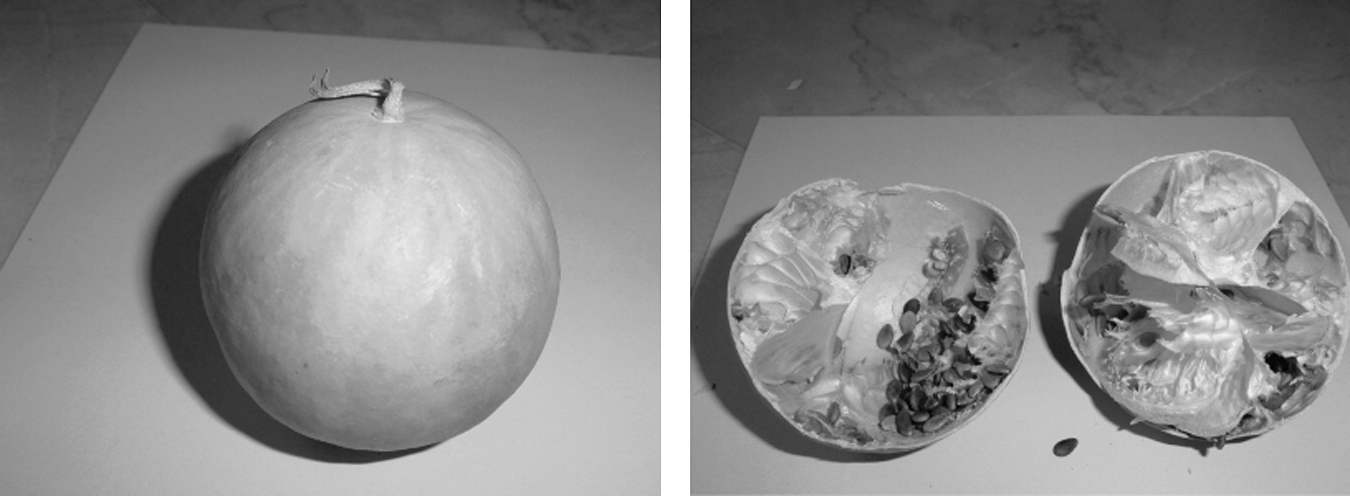
Dried fruit of Citrullus colocynthis.
Constituents
The pulp contains a bitter compound called colocynthin, a resin called colocynthein, colocynthetin, pectin, and gum. The seed contains fixed oil and albuminoids. 9
Temperament
The principles of TIM are based on quadratic elements. These four elements are air, fire, water, and soil and each one has their specific quality: air is hot and moist, fire is hot and dry, water is cold and moist, and soil is cold and dry. Followers of this doctrine believe that the entire world is made from quadratic elements and the differences and diversities between objects are attributed to different ratios of these four elements used in their structures. Thus, every object in the world has a specific quality based on dominant element(s) in its structure. This specific quality has been known as temperament (Midzaj). 10,11 Belief about temperament has existed not only in TIM but also in many other traditional medical theories, including Unani (Greek), Arabic, Roman, Indian, European, and Chinese traditional medicines. 12 Plants also are not an exception to this rule and have their own temperaments. In a recent study, it has been shown that there is a significant relationship between the temperament of plants and their major chemical constituents. 13 Based on this theory, C. colocynthis is called to have a hot and dry nature. 4,14
Medicinal Parts
The main medicinal part of the plant is the fruit pulp, and it is better to remove this pulp from the fruit when it is administered, because after the pulp is taken out of the fruit its potency is decreased over time 4 and lost after 2 years. 7,15 When it remains in the fruit, the pulp keeps its potency for about 4 years. 4,7,15 Other medicinal parts of plant are the seed, leaf, and root. 15
Pharmacologic Activities
Information from TIM
Pulp has been known to be a potent phlegmatic purgative. 4,15 This means that it can expel phlegmatic humor from organs, vessels, and pores of the body and discharge it by defecation. 7 It is useful for arthritis by expelling phlegmatic humor from joints. 6 Even if it is rubbed on a painful knee, the pain is relieved. 2 It is beneficial for sciatica and gout. 4,6 When used in an enema is useful for colic, sciatica, backache, and paralysis. 7,15 The oil of C. colocynthis made by boiling its pulp with sesame or olive oil is externally used for ear pains, tinnitus, toothache, and hair loss. 6,7,15 Ingestion of about 3.5 g of this oil is phlegmatic purgative and vermifuge. 7,15 The seed of C. colocynthis is purgative and emetic. The leaf of C. colocynthis is melancholic purgative and used for melancholia and epilepsy. 4,15 External use of its leaf is useful for inflammation and bleeding. 6,15 The root is a potent antidote for scorpion and snail bites. 14 The most popular traditional use of C. colocynthis seeds and fruits in Iran is as an antidiabetic medication. Most of herbal medicine sellers in Iran know C. colocynthis as a useful medication for diabetes. Another medicinal use of this plant declared by herbal medicine sellers is for fever. For this purpose, feet are washed by decoction of its fruit.
Information from modern phytotherapy
It has been shown that aqueous extracts of different parts of C. colocynthis including seeds, fruit, root, and stem have analgesic and anti-inflammatory activities in mice and rats without inducing acute toxicity. The most potent activity was observed from extract of immature fruits followed by seeds. 16 Topical use of fruit extract has been shown promising hair growth–promoting activity in androgen-induced alopecia of mice. The treatment was also successful in bringing a greater number of hair follicles into the anagenic phase than the standard finasteride. 17
In a study, the differential effects of diets enriched with C. colocynthis oil (extracted from seeds), sunflower oil, or olive oil were evaluated on the pancreatic β-cell mass in streptozotocin (STZ)–induced diabetes in rats. After 2 months, hyperglycemia and insulin resistance were significantly less pronounced in the rats fed a C. colocynthis oil-enriched diet compared with other rat groups. Pancreatic β-cell mass remained lower in the STZ-induced diabetic rats fed with olive oil- and sunflower oil-enriched diets compared with the C. colocynthis group. 18 It has been shown that different C. colocynthis seed extracts have an insulinotropic effect and significantly stimulated insulin secretion, which could at least partly explain their antidiabetic activities. 19 Results of a study done on Wistar rats showed that the extract of C. colocynthis fruit dose-dependently reduced the blood glucose level in STZ-induced diabetic rats but did not have significant effect on normal blood glucose. 20
A 2-month randomized, double-blind, placebo-controlled clinical trial was conducted in 50 patients with type 2 diabetes in Iran. Two (2) groups of 25 each under standard antidiabetic therapy received 100 mg C. colocynthis fruit capsules or placebos 3 times a day for 2 months, respectively. The results showed a significant decrease in HbA1c and fasting blood glucose levels in C. colocynthis–treated patients. Other serological parameters levels including total cholesterol, low-density lipoprotein, high-density lipoprotein, triglycerides, aspartate transaminase, alanine transaminase, alkaline phosphatase, urea, and creatinine levels in both of the groups did not change significantly. No notable gastrointestinal side-effect was observed in either group. 21
Although the mentioned study rejects the hypolipidemic effect of C. colocynthis, two studies have demonstrated beneficial effects of it in this case. After 4-month administration of ethanolic extract of C. colocynthis pulp to hyperlipidemic rabbits, the increased cholesterol levels were brought to normal. Similarly, phospholipids and triglycerides levels also were observed to be reduced. 22 Another study on nondiabetic hyperlipidemic patients showed that a daily intake of 300 mg/day of powdered seeds of C. colocynthis for 6 weeks can lower the triglyceride and cholesterol concentration significantly. 23 It has been demonstrated in a recent study that different parts of C. colocynthis possess antibacterial (against Escherichia coli, Pseudomonas aeruginosa, Staphylococcus aureus, and Enterococcus faecalis) and antifungal (against some Candida species) properties. 24 The fruit of C. colocynthis has shown antioxidant and free-radical scavenging capacity. 25,26 C. colocynthis extract in concentrations higher than 10 μg/mL was shown to inhibit lipid peroxidation and reactive oxygen species production. 27 Cucurbitacin glucosides extracted from C. colocynthis leaves have shown growth-inhibitory activity on human breast cancer cells. 28 In addition, whole extract from C. colocynthis has a dose-dependent cytotoxicity effect on human larynx carcinoma. 29
Dosage
The acceptable dosage of C. colocynthis fruit in TIM is from 0.6 to 1.75 g per day. 15 In modern phytotherapy, 0.1–0.4 g/day is allowed to be administered. The acceptable dosage for other parts of the plant is 120–300 mg up to 600 mg/day of seed and 0.2 to 0.4 g/day of root powder. 30 The difference between TIM and modern phytotherapy in acceptable dosage may be due to administering fruit with its correctives such as Arabic gum, gum tragacanth, and myrrh gum in TIM. These correctives reduce adverse events of fruit and allow the administration of larger doses. Its substitutes, if it is not available, are equal weight of Ricinus communis L. seed and a third of its weight in Peganum harmala L. seed. 7
Adverse Events, Precautions, and Contraindications
C. colocynthis is harmful for patients with a hot nature. The most important characteristics of people with a hot nature are feeling hot more than normal in a hot condition, getting warm easily in a cold condition, warm fingertips in a normal condition, preferring cold drinks, not easily standing hunger, having enough energy, suffering from eye aches and headaches, having a sudden hot feeling in a normal condition, and having blood hypertension. 12 C. colocynthis causes headache, abdominal cramps, and nausea in very cold weather and dysentery and inflammation in very hot weather. 15 Therefore, it should not be administered during summer and winter. 7 Toxic dosage of C. colocynthis reported in modern phytotherapy is 600–1000 mg and may cause colic, diarrhea, hematochezia, nephrosis, and vomiting. Lethal doses (≥2 g) may cause convulsions, paralysis, and possibly death caused by circulatory collapse. 30 In 1989, three examples of toxic acute colitis were reported, which occurred after ingestion of C. colocynthis. The prominent clinical features were dysenteric diarrhea, colonoscopic changes including congestion and hyperemia of the mucosa with abundant exudates, but no ulceration or pseudopolyp formation. These pathologic features disappeared within 14 days in all three cases. 31 Herbal medicine sellers also are aware of adverse events of C. colocynthis and do not prescribe this medication for more than 2 months. The most reported adverse events by these sellers are diarrhea, inaction of intestine, and liver impairment. In a recent study, C. colocynthis extract was found to be free of hepatotoxic effects in concentrations up to 100 μg/mL incubation mixture from liver slices. 27 However, another study on rat liver showed that alcoholic extract of C. colocynthis in concentration above 100 mg/kg can have toxic effects on liver cells, which may induce hepatocyte necrosis and liver fibrosis. 32 The daily use of 0.25 g of C. colocynthis fruit/kg for 42 days was not fatal to sheep and caused slight diarrhea, catarrhal enteritis, centrilobular hepatocellular fatty change, and degeneration of the renal tubular cells. 33 In case of poisoning, stomach evacuation is recommended followed by administration of tincture of opium, followed by stimulating and mucilaginous beverages. 30
For preventing adverse events, it is recommended in TIM to administer equal weights of starch, Arabic gum, myrrh gum, or gum tragacanth. 4,7 In addition, it should be ground carefully until it is completely powdered, because if there is any unground particle present, it can cause inflammation of the gastrointestinal tract. 6 It is also harmful for slender people, and it should be administered with fruit juice for these people. 15
C. colocynthis is abortifacient; thus, it is contraindicated during pregnancy. 15 A recent study has indicated that 12 weeks exposure of female rats to C. colocynthis causes adverse effects on the reproductive system and fertility. 34 Reversible antifertility effects of ethanolic extract of C. Colocynthis fruit was demonstrated in male albino rats. 35
Conclusions
C. colocynthis has different pharmacologic activities. Some of pharmacologic properties declared for this plant in TIM are confirmed by different studies done in modern phytotherapy. Among these properties, antidiabetic activity of the fruit and seed of this plant is very popular in TIM, and although some in vivo and clinical trials in modern phytotherapy confirm this activity, there are not any approved products from this herb in Iran. Moreover, some herbal sellers administer it illegally especially for diabetes. Considering the points recommended in TIM such as using C. colocynthis with correctives and grinding well, it may be possible to produce a more safe and tolerable product from this plant. The other pharmacologic properties of C. colocynthis mentioned in TIM and confirmed by modern research include analgesic, anti-inflammatory, abortifacient, purgative, and hair growth–promoting activities. Two (2) clinical trials were found for this plant; one confirmed antidiabetic properties of 100 mg fruit 3 times a day for 2 months in patients with type 2 diabetes, 21 and another confirmed hypolipidemic activity of 300 mg per day of seed for 6 weeks in patients with hyperlipidemia. 23 No serious adverse events were reported from these two studies.
The toxic range in modern phytotherapy (600–1000 mg) has overlap with therapeutic dosage in TIM (600–1750 mg). This overlap as discussed above may be due to using the fruit of C. colocynthis with its correctives in TIM. Moreover, TIM is a holistic therapeutic system, and the nature of the patient is considered before treatment. With regard to TIM, the most adverse events of this plant are seen in people with a hot nature, and it is preferred not to administer this plant in them, whereas in modern medicine the nature of patients is not considered for treatment. It is emphasized again that it is contraindicated during pregnancy because it is abortifacient.
Diseases that have been mentioned for treatment with C. colocynthis in TIM but that have not evaluated in modern phytotherapy until now include sciatica, paralysis, asthma, chronic cough, tinnitus, epilepsy, elephantiasis, and scorpion and snail bites. Since serious adverse events have been reported from this plant, it is not recommended that it be used before doing further studies on its possible adverse events, in order to assess more precisely the risk–benefit ratio of this plant and to judge conclusively about its clinical use. Considering points in TIM such as use with correctives and taking into account the nature of patients may be useful in reducing adverse events of C. colocynthis.
Footnotes
Disclosure Statement
No financial conflicts exist.