




Abstract
Objectives:
This study investigated the perceived influence of yoga on body perception and psychosocial aspects of life for patients with chronic neck pain.
Design:
This qualitative study was conducted using semistandardized interviews.
Setting:
The interventions and interviews took place in a referral center's research department.
Subjects:
Eighteen (18) patients with chronic nonspecific neck pain were recruited from a larger randomized controlled trial of yoga for chronic neck pain.
Interventions:
Participants attended 90 minutes of Iyengar yoga once a week for 9 weeks.
Outcome measures:
Participants completed a drawing of their neck and shoulder regions to reflect their subjective body perceptions before and after their yoga program. Semistandardized interviews were used to explore their body perception, emotional status, everyday life and coping skills, as well as any perceived changes in these dimensions postparticipation. An interdisciplinary group analyzed the study data using content analysis techniques.
Results:
Participants reported change on five dimensions of human experience: physical, cognitive, emotional, behavioral, and social. Physically, most participants cited renewed body awareness, both during their yoga practice and in their daily lives. Such change was echoed in their postparticipation body drawings. Cognitively, participants reported increased perceived control over their health. Emotionally, they noted greater acceptance of their pain and life burdens. Behaviorally, they described enhanced use of active coping strategies. Finally, socially, they reported renewed participation in an active life.
Conclusions:
Participants linked yoga to change on all dimensions of human experience, attributing reduced pain levels, increased coping ability, better pain acceptance and increased control to it. Body awareness appeared a key mechanism in these changes.
Introduction
Yoga is a commonly used complementary treatment for neck and back pain, 4 with an estimated 3 million American adults using it explicitly to treat such pain. 5 Deriving from ancient Indian philosophy, yoga comprises lifestyle advice, spiritual practice, and physical postures. 6 It is thought to create physical, emotional, and spiritual balance, with the infinite goal of uniting body, mind, and spirit. 7 In North America and Europe, yoga is most often associated with physical postures (asanas), breathing techniques (pranayama), and meditation (dyana). 6
Yoga has proven effectiveness in randomized controlled trials on musculoskeletal disorders including osteoarthritis, 8 carpal tunnel syndrome, 9 and low back pain. 10 –15 A recent clinical trial demonstrated the effectiveness of Iyengar yoga for chronic neck pain. 16 In this trial, yoga proved more effective than a home-based stretching program in reducing pain intensity and functional disability. It also improved cervical proprioceptive acuity (i.e., patients' ability to accurately perceive the positions of their head in space). As yoga focuses on increasing awareness of muscle tone and joint position, 17 it is also thought to help in recognizing and changing habitual patterns of posture and muscle tension in daily life. 18 It has been hypothesized that this increased body awareness in daily life might be a mechanism by which yoga helps to relieve neck pain. 18
Randomized controlled trials are most suitable for investigating effectiveness of yoga interventions. On the other hand, complex experiences during yoga practice, such as subtle changes in body awareness, 19 but also psychosocial correlates of chronic pain conditions, such as fear of activities and subsequent social withdrawal, 20 might be better addressed with qualitative approaches. 21 –23 Qualitative research strives to explore participants' complex subjective experiences during the intervention and how she or he gives meaning to these experiences. 22 Since complementary therapies, such as yoga, are often complex in nature themselves, qualitative methods have been proposed to investigate the perceived mechanisms and the process of complementary treatments. 21,22
Therefore, the current qualitative study aimed to investigate the perceived influence of yoga on body awareness and psychosocial aspects of life for patients with chronic neck pain.
Methods
This qualitative study was embedded in a randomized controlled trial of yoga for patients with chronic nonspecific neck pain. 16 The study protocol was approved by the institutional ethics committee of the University Duisburg-Essen Medical Institutions (Approval No.: 10-4358) prior to participant recruitment. All participants gave written informed consent.
Participants
All participants who participated in the yoga arm of the aforementioned randomized controlled trial 16 were invited to take part in this qualitative study. Prior to inclusion, participants were assessed by a study physician to ensure that their neck pain was muscular in origin and not due to other, more serious, causes (e.g., disc protrusion or neoplasm).
Yoga program
Participants participated in weekly 90-minute yoga classes for 9 weeks. Classes were based on the teachings of yoga master B.K.S. Iyengar. 7 The program was designed specifically for people who have chronic neck pain and who were without previous experience of yoga. Classes were led by a certified Iyengar yoga instructor and physiotherapist, assisted by a graduate psychologist.
The yoga program consisted of standing, sitting, and supine postures, starting with simple postures and moving to more complex ones 7 (Table 1). Props, including belts, blocks, and blankets, were used to improve safety and alignment. Participants were asked to focus on their posture, joint positions, and muscle tension in each yoga pose. No formal breathing techniques were used, but participants were instructed to align their breathing with their movements. Each class ended with the “corpse” pose, a 15-minute guided relaxation. Participants were asked to calm their thoughts and focus their attention on their body and body perception during relaxation.
Besides yoga classes, participants were asked to practice yoga at home each day.
Data assessment
Body drawings
Before and after the yoga program, participants were guided to focus on perceiving their necks and upper backs, using guided imagery. They were then given line drawings of the posterior lower and upper back, with the area from the shoulders to the neck left blank 3 (Fig. 1). Participants were asked to fill in the missing lines to reflect the perceived outlines of their own bodies at that moment. They were also encouraged to indicate on their drawings any other perception or pain felt, in color as appropriate.
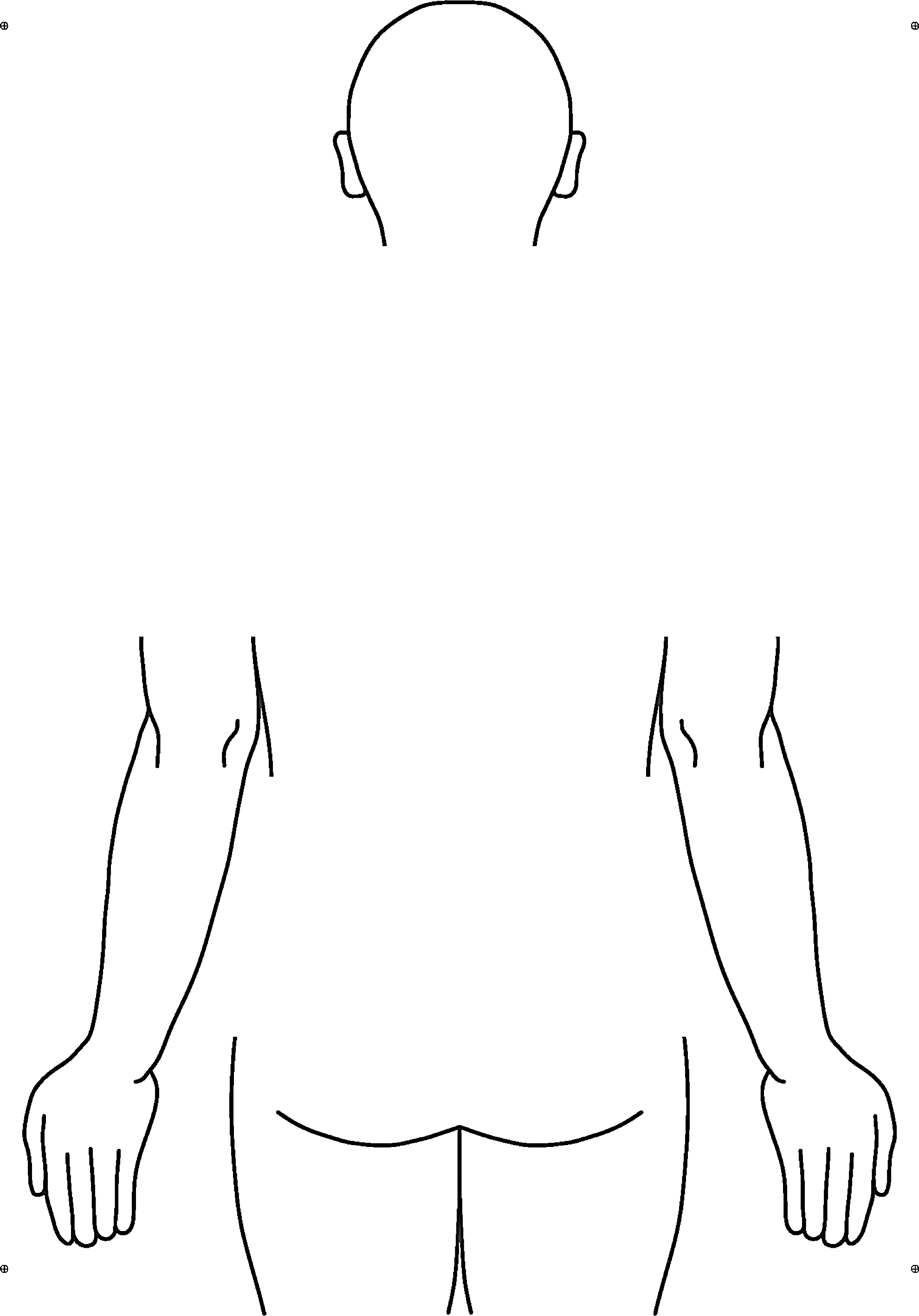
Incomplete body drawing.
Semistructured interviews
Participants were interviewed after completing their second body drawings at the end of the 9-week program. Interviewers were neither involved in planning nor conducting of the yoga intervention. Participants were initially asked to share the meanings of their before and after body drawings with interviewers and then to compare and contrast these drawings. Subsequent interviews queried participants' body perceptions before and after the yoga program and any perceived influences on these perceptions. Participants were also interviewed about their emotional status, everyday life, and preferred coping strategies before and after the yoga program. Main questions are presented in Table 2. Further open-ended questions on each topic were possible.
These interviews, which lasted about 30 minutes, were conducted in private at the study center. They were audio-recorded, professionally transcribed verbatim, anonymized, and translated into English for publication purposes.
The participants' quotations were assigned a number that consisted of a ‘P’ (for participant), the participant's randomization number, and the line numbers of the quotation within each transcript (e.g. P1/1-2 for Participant 1, Lines 1-2).
Data analysis
An interdisciplinary group of scientists and practitioners from psychology, medicine, pain therapy, nursing, and cultural science analyzed the interview data using content analysis techniques. 24 Interviews were coded using Atlas.ti software (Version 6.2; Atlas.ti Scientific Software Development GmbH, Berlin, Germany), with their content being paraphrased, reduced, and summarized. Five (5) broad categories were developed from the inductive analysis of the first six interviews. These categories, which reflected five dimensions of human experience (physical, cognitive, emotional, behavioral, and social), were then applied to the remaining interviews. Results of this analysis process were discussed in this group. Disagreements were discussed until consensus was achieved. Participants' body drawings were not independently analyzed, but were presented to the participants generating them, at interview, for their interpretation.
Results
Study sample
Fifteen (15) women and 3 men aged 19–59 years were interviewed. None had ever practiced yoga before. Participants' sociodemographic and pain characteristics are shown in Table 3. 25 Adherence to yoga practice is shown in Table 4.
Participants rated their neck pain intensity on a 100-mm visual analog scale (VAS) before and after the yoga program. Categories for pain intensity given according to Jensen et al. 25 : mild pain, <45 mm VAS; moderate pain, 45–74 mm VAS; severe pain, 75–100 mm VAS.
Participants noted home practice in a diary.
Perceived changes
Physical dimension
Participants saw focusing their attention on their bodies and perceptions during yoga as an important part of the yoga program. They cited intensified perceptions of their bodies' sensations and renewed awareness of their bodies' parts and functions during yoga. One (1) participant said: “I was feeling muscles or areas of my body, of which I didn't even know that I had muscles there.” (P40/188–191) She described taking “a different approach to my body, because I realized how it all works.” (P40/321–323) Participants saw this intensity of inner participation and attention differentiating yoga from conventional exercise. In daily life, they reported a more balanced and natural body perception (Fig. 2).
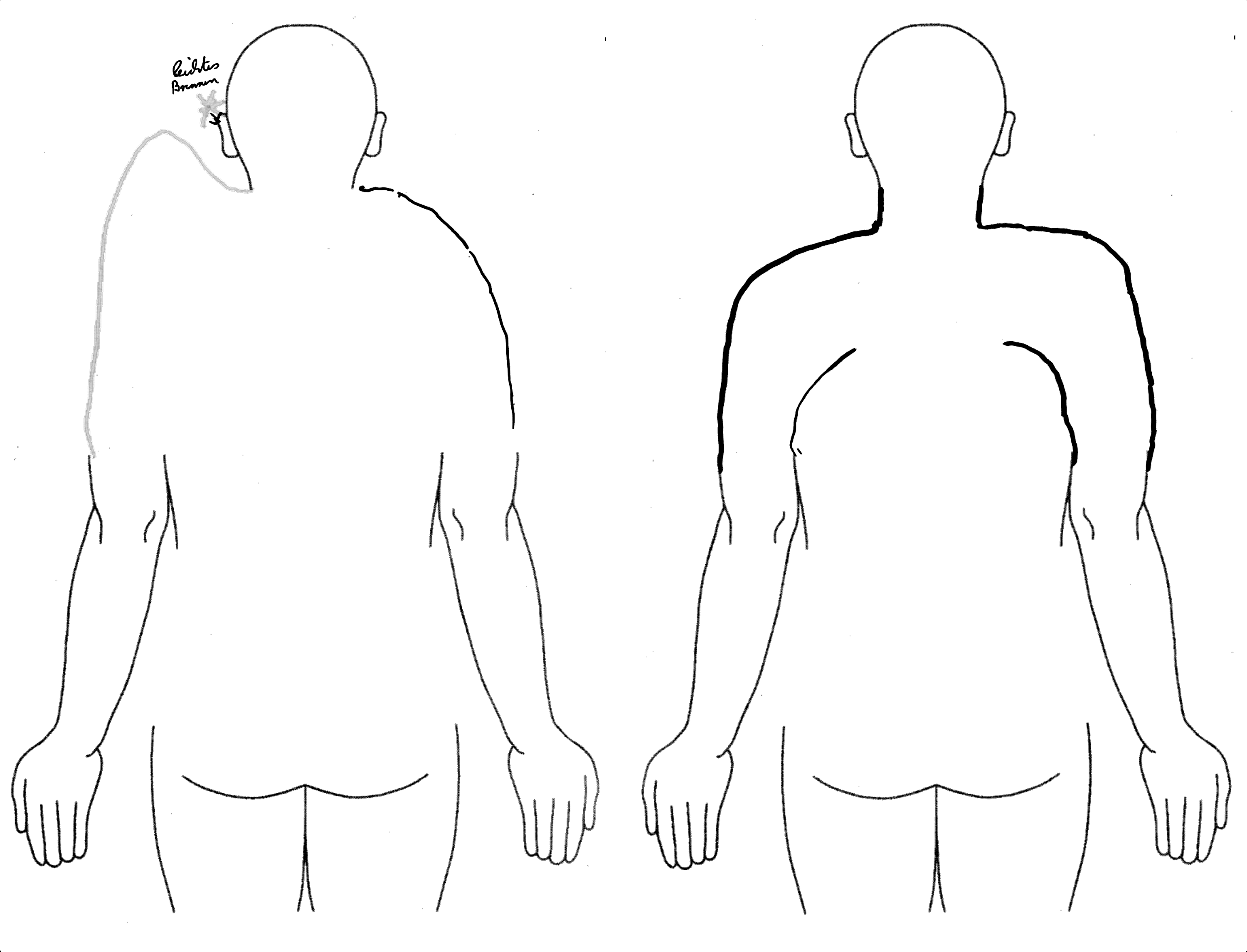
One participant's drawings.
Cognitive dimension
Participants reported that focusing their attention on the yoga poses enabled them to calm their minds and to block out extraneous cognitions while doing yoga. They thus experienced yoga not only as physical exercise, but also as a form of meditation. One participant saw it as “letting go…that is, while doing yoga, you really forget about anything else because you're so busy…to stand right or to stand well. Not really to do the pose properly, but to make yourself feel good. There's no space left for anything else. I believe that this is a reason, for me, why yoga is good for me.” (P45/329–334)
Participants also cited more perceived control over their general well-being in daily life, noting that their newfound body awareness helped them to see how their behaviors and well-being were linked. This gave them a renewed sense of control over their bodies and health, freeing them from feeling controlled by their pain, as before. “Yes, I'm more aware about the association between my own actions and the way I feel…awareness, that you can change a lot yourself […] and that you can achieve something this way. That you can…strengthen your body.” (P09/173–181)
Many participants said that they had avoided physical activity before their yoga program, fearing pain and re-injury. Participants' experience of being able to influence their well-being through such activity, however, led many to reinterpret it cognitively. “By doing yoga I have to say, for the first time in a while I felt able to do sports. I‘ve lost a lot of fear of making a wrong move.” (P48/68–71)
Emotional dimension
Participants also experienced emotional distance from burdensome situations during yoga. This led to a sense of deep relaxation and, for some, a different way of seeing their emotions. As one participant said “During [yoga] practice, I really listen into myself…I realized two or three times that, while I was doing that, I'm now – I don't know – totally angry because of something completely different, but I wasn't aware of that before […] I discovered a different emotional starting point by concentrating on myself for a time and blocking out anything else.” (P40/349–360)
Body awareness seems to be an important precondition for relaxation during yoga. One participant described how his lack of body awareness had hindered relaxation: “I don't have such a connection to my body, that I, yes…can perceive my body, that I keep my shoulders down and things. That's an effort for me.” (P36/233–235) He described that in everyday life “I don't see any…any big differences or emotional changes.” (P36/165–166)
Other participants reported using their newfound relaxation skills in their everyday lives, noting that they had become more even-tempered about their pain and more accepting of it and their disability. Participants spoke less negatively about their necks and seemed better able to accept this body part and their pain. “It's OK, [my neck] is a part of me, even if it hurts a bit once in a while…But I'm not a robot, you see. And…yes…it's OK just the way it is.” (P40/150–152)
Participants also saw themselves becoming generally more relaxed and less irritable over time, as well as more able to accept and cope with life's burdens. “I am more in balance. And that doesn't just mean [that my body is more balanced] but also this equanimity. That I not always go through the roof […] and then calm down again and I am normal again, but, you know, that my mood swings are generally less intense.” (P40/278–283)
Behavioral dimension
Before the yoga program, participants tended to ignore their pain due to its seeming inescapability. They generally used endurance strategies to cope or, when pain became unbearable, sought help from others such as health professionals. Study participants saw yoga as an active self-help strategy, using yoga poses in stressful situations to relieve or even prevent pain. As one participant said, “I notice, when the pain increases that, from the yoga classes, I know for example that this half forward bend, that is now like a painkiller for me. That's so brilliant! I just stand against a wall and try to do the half forward bend three, four, five times in a row, and that helps me dramatically.” (P48/75–81) Some participants said that they had reduced their reliance on pain medication, and other passive treatments, through such behaviors. Yoga was also used as a stress management strategy. “[I felt] very tense…and very stressed, at a normal level though. That's life, but I have…the feeling now, that with yoga I've found a good way to cope with this and to come to rest.” (P40/112–115).
However, if participants were unaware of their body, yoga was not perceived suitable for pain or stress relief. The aforementioned participant with low body awareness stated: “For me, yoga is no such form [of exercise], I have a strong motivation to continue.” (P36/230–231)
Other participants' new body awareness also enabled them to actively monitor and control their posture in daily life, further relieving their pain. As one participant said, “It doesn't take much. ‘OK, keep your shoulders down’. That's not…that's not yoga, but during the day, if I'm in the tram or in the car, or wherever I sit or stand, I can remember that. And it helps.” (P49/274–278) Such changes also influenced participants' views of their personal capabilities; enhancing their perceived ability to identify and respect their physical and mental limits.
Social dimension
Many participants initially saw themselves as disabled by their pain, describing how they had limited their daily activities for physical or emotional reasons, and had increasingly withdrawn from activity and/or society for fear of worsening their pain. Yoga allowed participants to re-engage with their preferred activities and to lead more self-determined lives by relieving their pain and disability. One (1) participant (a student) described the social benefits of yoga as “That I could participate in training regularly, and didn't miss lessons at school because of the pain, that I could do school sports normally. That I'm not disabled in my daily routines any more, in school, but also out of school. That I could meet my friends, or go to the cinema without having pain.” (P35/125–131) Participants saw that yoga helped not only despite, but because it involved physical activity, actively countering their fears. As one participant said, “I'm no longer so anxious in some situations or in some activities.” (P51/71–72)
Participants saw themselves as more efficient in their work and social lives. “I did my work before [yoga] too, but…it was really, really difficult for me. And…now I've found a new ease at work. I enjoyed work then and now, but it's different…now it's not so tense anymore, because it's easier when you don't feel pain anymore.” (P51/118–124) Participants saw their work and social lives as enriched, and enjoyed them more, as they felt less tired and less in pain.
Discussion
Study participants reported experiences on physical, cognitive, emotional, behavioral and social dimensions. They described an active inner involvement during yoga practice, as well as renewed body awareness, a perceived internal locus of control, the cognitive reappraisal of physical activity and an increased acceptance of pain and disability.
Inner involvement
A distinct feature of Iyengar yoga is the awareness of muscle tension, joint position, and breathing patterns during practice. 17 In the current study, participants experienced an intensified self-perception, seeing this as a precondition for relaxation during yoga practice. Yoga originally developed as a spiritual practice, with meditative involvement as an integral part. 7,26 The importance of this active inner involvement in yoga practice has also been scientifically demonstrated, since it has been linked to increased life satisfaction and mindfulness and lower symptom burden. 27 Such links suggest that inner involvement during yoga practice may be an important factor in mental stabilization and emotional regulation; to practitioners' benefit. 27
Renewed body awareness
Patients with neck pain often sense their necks and/or shoulder regions solely through pain. 3 Pain distorts individuals' body perception by demanding attention, blocking their awareness of nonpainful body parts. 28 This is even measurable on the cortical level, where the painful body part becomes overrepresented, 29 influencing perception of form and position of the body in space. 30 In this study, participants reported increased body awareness during yoga and in their everyday activities. Yoga gave participants a new approach to their bodies, a mindful awareness of their actions and perceptions. Enhancing body awareness has been seen as a common ground of mind/body–medicine. 19 A mindful, nonjudgmental, experience of bodily perceptions is thought to enhance connections between the body and the mind, and to promote the acceptance of body symptoms. 19,31 Yoga, but not conventional exercise, has been shown to increase individuals' awareness and responsiveness to bodily cues, 32 with such awareness being seen as an important factor in neck pain relief due to yoga. 18 Regular practice is thought to increase yoga practitioners' awareness of bodily cues, helping them to recognize and change habitual patterns of posture and muscle tension. 18 In the current study, increased body awareness helped participants to influence their body posture and muscle tension actively and thereby to reduce and at times prevent their pain.
Internal locus of health control
Through their active control of their body posture and tension, and experience of being able to relieve and prevent their pain, participants in this study experienced a new sense of control over their well-being. An internal locus of health control 33 has been shown to promote individuals' use of internal, active, coping strategies such as active strategies for lifestyle change. An external locus of health control instead is linked to using external coping strategies such as consulting health professionals. 34 Although many patients with chronic pain use external coping strategies, such strategies result in lower life satisfaction. 34,35
Cognitive reappraisal
Negative appraisals of pain and its consequences such as pain catastrophizing lead individuals to avoid daily activities, worsening their pain rather than relieving it 20 : physical inactivity causes muscular atrophy, 36 and social withdrawal increases mood disturbances such as depression and distress, known to be neck pain risk factors. 37 Graded exposure to movement and activity is one way to overcome this “fear-avoidance-pain” circle. 38 Experiencing activity as pain-relieving rather than pain-inducing challenges negative appraisals, so that social activities are seen positively once again. Current study participants' experiences (i.e., that yoga helped them to overcome their fear of moving and resulting social withdrawal) exactly echo these findings.
Acceptance
Pain acceptance, striving to maintain psychosocial function regardless of pain, is linked to reduced pain, disability, inactivity, and depression. 39 Such acceptance has been seen as one mechanism for yoga's pain-relieving actions. Yoga aims to enhance participants' compassionate understanding of their health, enabling a nonjudgmental perception of pain without avoidance or social withdrawal. 40 Pain acceptance can also change patients' perspectives: Current study participants saw yoga as positive, even if it did not make them pain free.
Limitations
This study used a convenience sample. While female participants appeared to be a sufficiently heterogeneous group, especially regarding age and pain characteristics, this was not true for the few males who took part. The study's findings and conclusions may be more limited for the male, than the female participants, as a result. Other limitations are that results only reflect experiences during and immediately after the yoga program and no long-term experiences and that results might apply only for patients with muscular neck pain but not for patients with other sources of pain.
Conclusions
Yoga was seen as a multidimensional intervention linked to change in all dimensions of human experience. Body awareness seems to be a key mechanism in these changes.
Further qualitative research should focus on exploring perceived differences between yoga and other exercise or between different yoga styles. Quantitative studies might assess changes in, for example, body awareness or fear-avoidance using standardized instruments or even changes in cortical representations after yoga practice using imaging techniques.
Footnotes
Acknowledgments
The authors thank Kai Scheffer, PT, certified Iyengar yoga teacher, for assistance in designing the yoga protocol and teaching yoga classes; Sonja Jaruszowic and Annette Tengelmann for assistance in participant recruitment; and the participants of the colloquium in qualitative research of the Gerhard Kienle Chair, University Witten-Herdecke, Germany, for assistance in data analysis. This study was supported by a research grant from the Karl and Veronica Carstens Foundation, Essen, Germany.
Disclosure Statement
No competing financial interests exist.