




Abstract
Background:
Hypertension, a chronic medical condition of increased blood pressure, is a serious public health problem. Environmental and genetic risk factors are known to predispose to hypertension. The present study was designed to investigate the association of glutathione S-transferase (GST) gene polymorphism with oxidative stress in hypertensive patients and the possible beneficial effect of yoga on them.
Materials and methods:
Sixty (60) hypertensive individuals, between 30 and 60 years of age, were divided into two groups of 30 each. The yoga group was subjected to 50–60 minutes of yogic practices daily for 42 days, while the control group included the remaining 30 age- and sex-matched hypertensive individuals. GST gene polymorphism was analyzed using multiple allele specific polymerase chain reaction, and oxidative stress parameters were assessed biochemically.
Results:
Assessment of blood pressure showed a statistically significant though modest reduction (p<0.05) in the yoga group as compared to the control group. Malondialdehyde was observed to be significantly low (p<0.05), while antioxidant capacity in the form of GST showed an increasing trend and ferric-reducing ability of plasma was significantly increased (p<0.05) in the subjects who practiced yoga.
Conclusions:
In conclusion, yoga has been found to decrease blood pressure as well as the levels of oxidative stress in patients with hypertension.
Introduction
Oxidative stress refers to a serious imbalance between oxidant production and antioxidant defense. The generation of reactive oxygen species (ROS) beyond the detoxifying capacity of the body results in oxidative damage to macromolecules such as lipids, protein, and DNA. 5 Glutathione S-transferases (GSTs), GSTM1 and GSTT1 are enzymes that provide protection against electrophiles and products of oxidative stress. 6 The corresponding genes are known to be polymorphic in the Indian population. 7
The polymorphism in GSTT1 and GSTM1 gene loci is caused by a deletion which results in the absence of enzyme activity, especially in individuals with null genotypes and influences an individual's susceptibility to ROS-induced damage and resultant diseases. 8 The increased levels of oxidative stress and decreased bioavailability of antioxidants have been demonstrated in both experimental and human hypertension. 3,9
Previous studies have shown that the allelic variant type of an individual, with reference to GST gene polymorphism, can influence an individual's inherent oxidative stress fighting potential, along with determining her/his susceptibility to disease states, such as hypertension. 10
Recent studies from the authors' laboratory have reported higher levels of oxidative stress in individuals with GSTM1/T1 null allele in patients with preterm labor, 11 and GSTM1 null has been found to be associated with prostate cancer. 12
Yoga is known for its beneficial effects on physiological and psychologic functions. 13,14 Numerous studies have suggested that yoga can decrease oxidative stress. 15 –17 In spite of the important role of oxidative stress in the pathogenesis of hypertension, the available data are not conclusive and few studies have analyzed the association of hypertension with GST genes, whose products are significant players in the antioxidant defense system.
It is therefore endeavored to investigate the correlation between the GST genotype of an individual and oxidative stress in patients with hypertension. Furthermore, the role of yoga (which is known to decrease oxidative stress) has been studied for possible beneficial effects in patients with hypertension with a particular genotype with reference to polymorphism of GST gene.
Materials and Methods
Patients (n=86) in the age group of 30–60 years, newly diagnosed (duration of disease ≤5 years) with hypertension (stage 1, stage 2) as per the guidelines of the Seventh Report of the Joint National Committee on Prevention, Detection, Evaluation, and Treatment of High Blood Pressure (JNC 7) were selected from the outpatient department of GTB Hospital. 2 The patients were divided into two groups: a yoga group and a control group based on their willingness to do yoga. The yoga group initially consisted of 39 patients and the control group consisted of 47 patients. Of the 39 patients in the yoga group, 30 patients were selected after excluding the dropouts and noncompliant patients. Of the 47 patients in the control group, 5 patients dropped out from the study and from the remaining, 30 were selected to match the yoga group for age, sex, and antihypertensive medication.
The assessment of the physiological and biochemical parameters of the patients with hypertension was conducted in the Departments of Physiology, Biochemistry and Medicine, UCMS & GTB Hospital, Delhi.
All subjects underwent complete physical and clinical assessment. Laboratory tests were done using standard kits before and after 42 days of yoga practice. The recorded parameters were compared, statistically analyzed, and then conclusions were drawn. The subjects confirmed their participation by signing an informed consent form. The institutional ethics committee for human research approved this study. Patients having taken any antioxidant medication within the past 30 days or having a history of stroke, renal disease, peripheral arterial disease, myocardial infarction, hypertensive cardiomyopathy, hypertensive retinopathy, hypertensive nephropathy, or hypertensive encephalopathy were excluded from the study.
Venous blood (4 mL) was collected from each subject and equally divided into two vials: a plain vial and an EDTA-containing vial. Serum was separated from the blood in the plain vial and stored at −20°C until further analysis of oxidative stress parameters. Blood in the EDTA-coated vial was stored at 4°C and used for extraction of genomic DNA. Isolated genomic DNA was stored at −20°C until further analysis.
The patients in the yoga group (n=30) were put through yogic regimens in addition to the conventional therapy for hypertension. The control group (n=30) continued only on conventional therapy for hypertension. Patients in the yoga group performed yogic asanas and pranayama (breathing exercises) for 50–60 minutes per day for 42 days. These patients came to the cardiopulmonary laboratory, Department of Physiology, UCMS & GTB Hospital along with their spouses and/or relatives daily for 5 days a week for the first 21 days, where they underwent training in various yogic lifestyle techniques including pranayama, asanas, and relaxation under the supervision and guidance of a yoga expert. They were informed about the yoga philosophy, along with advice on the recommended dietary changes in the form of consumption of a diet rich in fruits, vegetables, and low-fat dairy products with a reduced content of saturated and total fat and dietary sodium reduction. Pranayama included seven breathing exercises: Bhastrika 2 minutes, Kapalbhati 10 minutes, Anulom-Vilom 10 minutes, Bhramari 11–15 times, Udgit-Omkar Uchcharan 11–15 times. Yogic postures included Tada asana 3 times, Paschimotan asana 3 times, Manduk asana 3 times, Padmasana 1–2 minutes, Surya namaskar once. Relaxation: Shav asana 10 minutes. Subsequently, they carried out yoga practice for an average of 50–60 minutes daily at home for the next 21 days. The subjects continued their normal routine work during the rest of the day.
The subjects came to cardiopulmonary laboratory every 7 days for evaluation and compliance. The patients in the yoga group were asked to maintain a home practice log, which was reviewed on their weekly visit to the cardiopulmonary laboratory. Only those subjects who practiced the yoga regimen 50–60 minutes daily were included in the study population; the rest have been excluded from the study. The patients in the control group were advised to continue their normal routine work during the day along with the suggested dietary modifications.
Genomic analysis
Genomic DNA for genotyping was isolated from whole blood by using a commercially available HiMedia Hipura blood genomic DNA isolation kit (HiMedia Laboratories, Mumbai, India) as per manufacturer's protocol. Multiplex polymerase chain reaction (PCR) was performed for GSTM1 and GSTT1 genes. Briefly, 50 mg of genomic DNA was amplified in a 25-μL multiplex reaction mixture containing 30 pmol of the GSTM1 and GSTT1 primers in a medium consisting of 1.5 mmol/L MgCl2, 200 μmol dNTPs, 2.5 μL 10×PCR buffer (10×500 mmol/L KCl, 100 mmol/L Tris–HCl, pH 9.0), and 1 U TaqDNA polymerase (Promega, Madison, WI). Primers used are shown in Table 1. The PCR protocol included an initial melting temperature of 94°C (5 minutes) followed by 35 cycles of amplification (2 minutes at 94°C, 1 minute at 59°C, and extension for 1 minute at 72°C). A final 10-minute extension step (72°C) terminated the process. The final PCR products from co-amplification of GSTM1 (215 bp), GSTT1 (480 bp), and CYP1A1 (312 bp, internal control) were visualized after electrophoresis in ethidium bromide–stained 2% agarose gel. The absence of amplifiable GSTM1 and GSTT1 (in the presence of CYP1A1 PCR product) indicates a GSTM1−/GSTT1− (null) genotype (Figs. 1 and 2).
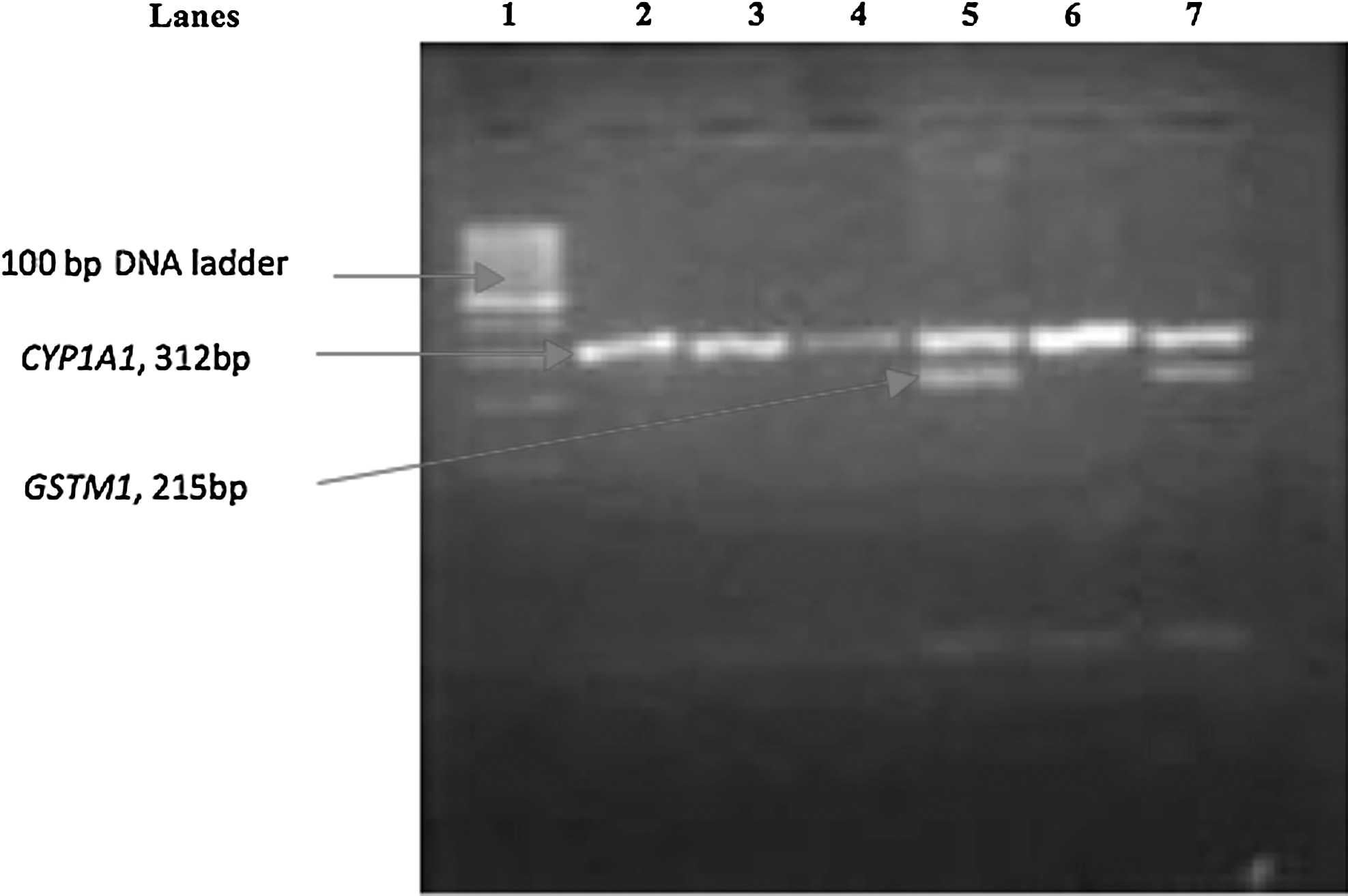
Agarose gel electrophoresis showing products of polymerase chain reaction for GSTM1 gene with CYP1A1 internal control.
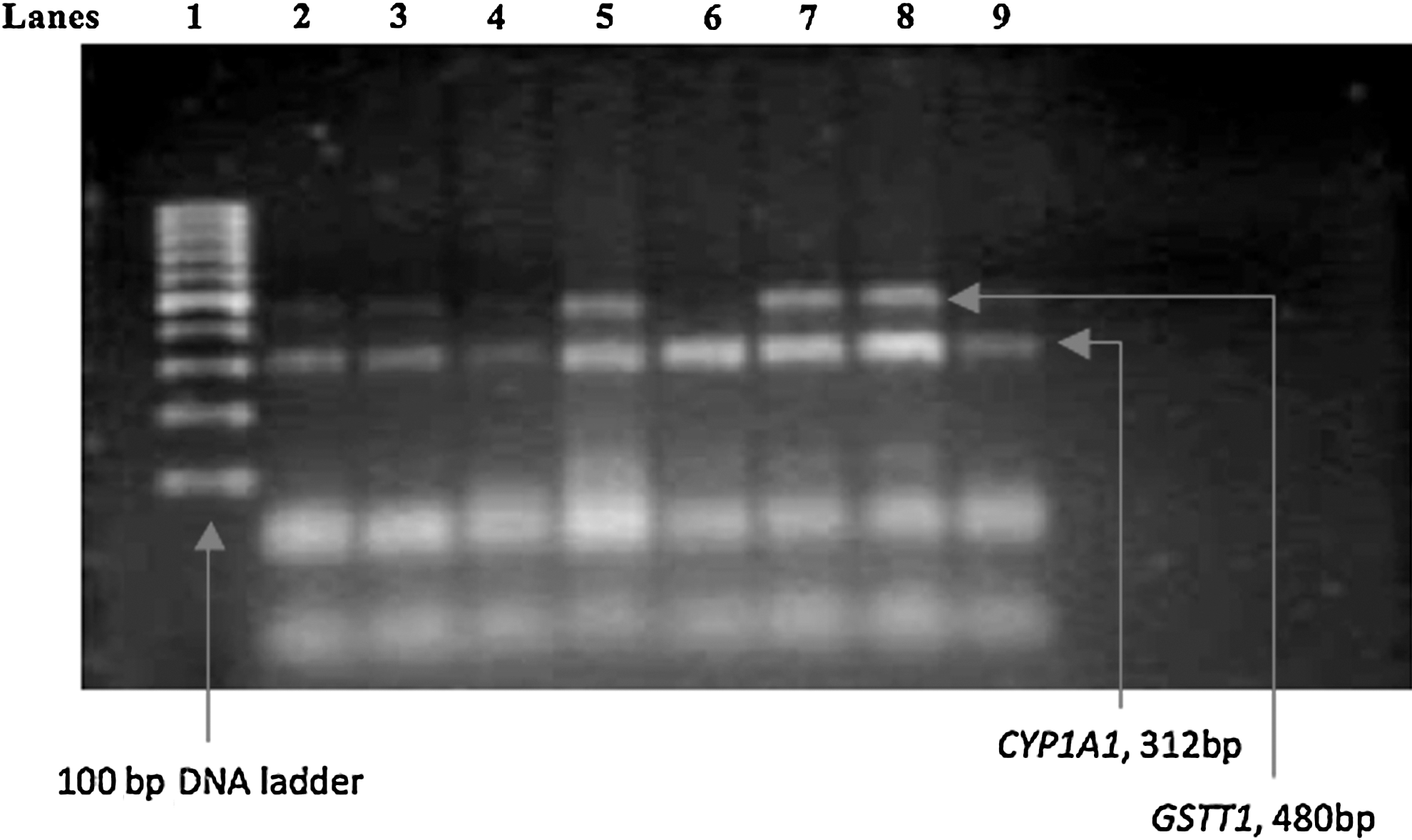
Agarose gel electrophoresis showing products of polymerase chain reaction for GSTT1 gene with CYP1A1 internal control.
Estimation of oxidative stress parameters
Lipid peroxidation
The lipid peroxide levels in plasma of maternal blood were measured using a thiobarbituric acid reactive substances assay, which monitors malondialdehyde (MDA) production based on the method of Satoh et al. 18 The MDA–TBA adduct formation was measured spectrophotometrically at 532 nm. The concentration of MDA was expressed as nmol/mL.
Ferric-reducing ability of plasma
Ferric-reducing ability of plasma (FRAP) was determined by measuring the ability of plasma to reduce Fe3+ to Fe2+ by the method of Benzie et al. 19 The complex between Fe2+ and 2,4, 6-tri(2-pyridyl)-1,3,5-triazine gives a blue color with absorbance at 593 nm. Concentration of FRAP was expressed in μmol/L plasma.
Glutathione S-transferase activity
GST activity in plasma was determined according to the method described by Habig et al. using 1-chloro-2, 4-dinitrobenzene (CDNB) as substrate. 20 The formation of adduct of GSH-CDNB (2, 4, dinitro phenyl glutathione) was monitored by estimating its increase at 340 nm by using a spectrophotometer. The specific activity was expressed as “nm CDNB-GSH conjugate formed”/min/mg of protein. Protein concentration was estimated by the method of Lowry et al. 21
Statistical Analysis
The data were analyzed using the two-tailed paired t-test with p<0.05 taken as significant. Results have been expressed as mean±standard deviation.
Results
Table 2 shows a comparison of the physical and biochemical profile of the patients in the yoga group and the control group. The possible effects of baseline physical and biochemical parameters were reduced through the matching process.
Values are mean±standard deviation (SD).
p-value<0.05.
BMI, body–mass index; BSA, body surface area; SBP, systolic blood pressure; DBP, diastolic blood pressure; GST, glutathione S-transferase; MDA, malondialdehyde; FRAP, ferric-reducing ability of plasma.
Figures 3 and 4 show a strong positive correlation of body–mass index (BMI) and body surface area (BSA) with oxidative stress marker MDA in hypertensive patients, indicating that high BMI and BSA are associated with increase in MDA levels. Figures 5 and 6 also show a weak negative correlation of GST and FRAP with MDA.
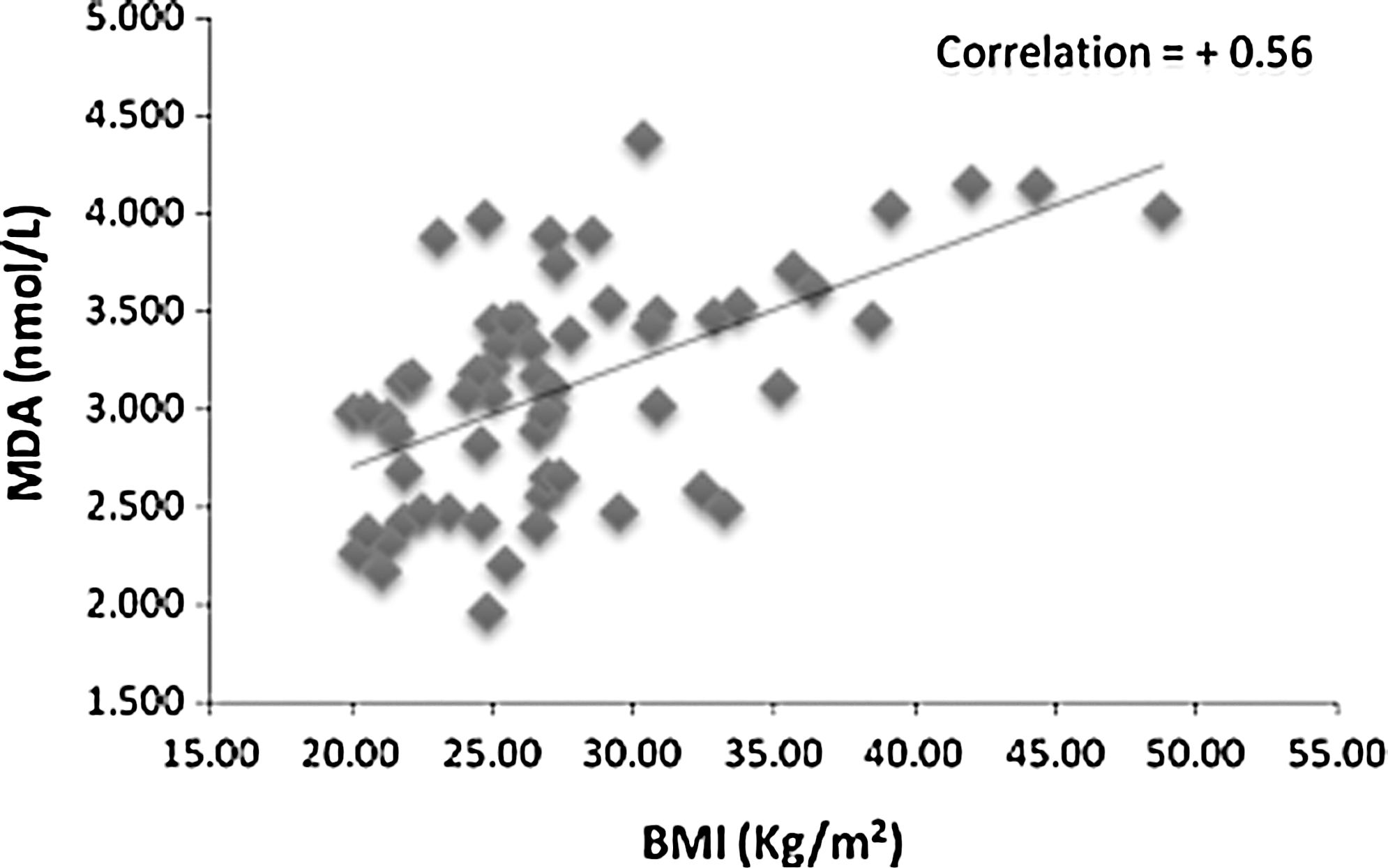
Individuals with high values for body–mass index (BMI) were seen to have higher levels of malondialdehyde (MDA).
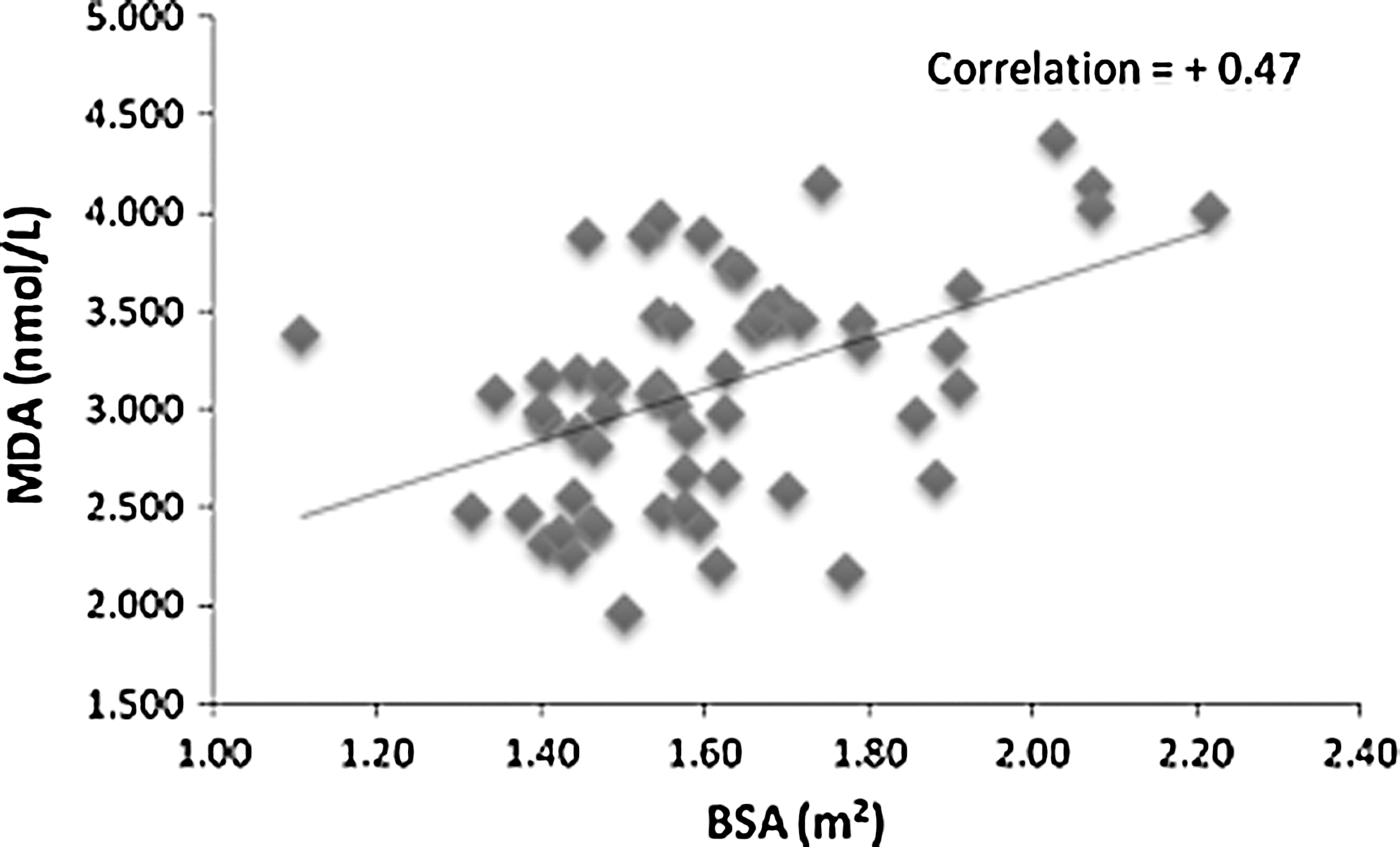
Individuals with high values for body surface area (BSA) were seen to have higher levels of malondialdehyde (MDA).

Individuals with high levels of malondialdehyde (MDA) were seen to have low levels of antioxidant enzyme glutathione S-transferase (GST). 2, 4, dinitro phenyl glutathione (CDNB-GSH).

Levels of ferric-reducing ability of plasma (FRAP) (a measure of antioxidant power) were lower in individuals with high levels of malondialdehyde (MDA).
Table 3 shows that subjects with GSTM1−/GSTT1+, GSTM1+/GSTT1−, GSTM1−/GSTT1− have higher MDA (p<0.05), and lower GST and FRAP as compared to GSTM1+/GSTT1+ genotype, but the values did not attain statistical significance.
p-value<0.05.
GST, glutathione S-transferase; SD, standard deviation; MDA, malondialdehyde; FRAP, ferric-reducing ability of plasma.
Table 4 shows that the weight, BMI, and BSA reduced significantly following yogic practices in comparison to the control group. The SBP and DBP reduced more in the yoga group than in the control group. Also, the MDA level dropped, and FRAP increased significantly while GST levels showed an increasing trend following yoga, though it was not statistically significant.
p-Value<0.05.
SD, standard deviation; BMI, body–mass index; BSA, body surface area; SBP, systolic blood pressure; DBP, diastolic blood pressure; GST, glutathione S-transferase; MDA, malondialdehyde; FRAP, ferric-reducing ability of plasma.
Following 42 days of yogic training, the anthropometric parameters showed a significant reduction in the body weight with a significant decrease in BMI, in the yoga group. Assessment of oxidative stress markers showed a noticeable reduction in MDA, a marker of lipid peroxidation, and improvement in FRAP and GST, the markers of antioxidant status. Genomic analysis showed the presence of higher oxidative stress levels in patients with GST M1/T1 null genotype evidenced by higher level of MDA, and GST and FRAP showed a trend towards a lower level that did not reach statistical significance.
A strong positive correlation of BMI and BSA with oxidative stress marker MDA was seen in patients with hypertension, indicating that a high BMI and BSA are associated with increase in MDA levels. A weak negative correlation for GST and FRAP with MDA was observed, suggesting that low levels of antioxidants GST and FRAP, are associated with higher levels of oxidative stress.
Genetic polymorphism in GSTM1 and GSTT1 genes was investigated, and four possible genetic combinations and their genotypic distribution were observed. In Figures 1 and 2 the presence of DNA bands at 215 bp and 480 bp corresponds to an individual with at least one intact GSTM1 and GSTT1 allele, respectively. The absence of either of these bands (null genotype) corresponds to individuals who are homozygous for the null allele. From Table 3, it is seen that subjects with GSTM1−/GSTT1+, GSTM1+/GSTT1−, GSTM1−/GSTT1− had significantly higher MDA (p<0.05) compared to GSTM1+/GSTT1+ genotype. GST and FRAP showed a decreasing trend in patients with null genotype, though it was not statistically significant.
Discussion
This study has been motivated by growing evidence indicating that familial or intergenerational factors influence the risk of hypertension. This influence may be due to shared environmental factors or genetic factors, or both. The aim of this study was to investigate the beneficial effect of yoga in hypertension by assessment of antioxidant status and oxidative stress markers with respect to the polymorphism of GST gene. The yoga group showed a significant reduction in the weight as seen by the change in BMI. This is in agreement with other studies, which have reported a decline in the body weight following yogic practice. 22,23 The yoga group also showed a statistically significant but modest reduction in systolic blood pressure (3.5%) in comparison with the control group, which showed a reduction of 1.3%. A reduction of 6.5% was seen in diastolic blood pressure in subjects practicing yoga, as against a 2.7% decrease in the control group, with a confidence level of 93.9%. This finding is in accordance with previous studies by various authors, who have observed similar changes in blood pressure; Hoffman et al. 24 have shown that the relaxation response can decrease both systolic and diastolic blood pressure by decreasing the sympathetic nervous system responsiveness. Cowen et al. 25 have also reported a decrease in diastolic blood pressure following yoga practice for 6 weeks.
The level of MDA was decreased by 21% in the yoga group, while it decreased by only 5.6% in the control group. The level of FRAP increased by 45% in the yoga group, which is significantly higher than control group, which showed an increase of 2.4%. Thus, the results show an increase in the antioxidant ability in the subjects practicing yoga. Similar observations have been reported previously. 15,26,27
The activity of GST increased by 12.5% after 42 days of intervention in the yoga group, while there was a negligible increase in the enzyme activity in the control group. This may indicate an improvement in the oxidative stress-fighting potential as a result of yoga. Since GST is a potent antioxidant and detoxifies various ROS, any increase in GST values will certainly lead to decrease in oxidative stress.
GST is a multifunctional protein involved in the reduction of organic peroxides and hence capable of removing the biologically active products of lipid peroxidation. Therefore, a decrease in the level of GST leads to higher levels of peroxyl free radical, resulting in increased lipid peroxidation and cell damage. Polymorphic large deletions causing inactivation of the two oxidative stress genes, GSTM1 and GSTT1, have been implicated as being responsible for increased oxidative stress. 28,29 Recent studies have indicated the role of genetic susceptibility and gene–environment interactions in hypertension. 30 –32 Hence, GSTM1 and GSTT1 gene polymorphism has been investigated in subjects with hypertension, and it was found that the frequency of GSTM1 and GSTT1 null alleles was 45% and 28.3%, respectively. The frequency of GSTM1 and GSTT1 double deletion was observed to be 13.3%. Table 3 show higher levels of MDA and lower levels of FRAP and GST in GSTM1+/GSTT1−, GSTM1−/GSTT1+ and GSTM1−/GSTT1− compared to GSTM1+/GSTT1+. Present findings corroborate those of other studies, where it has been shown that individuals with either or both GSTM1and GSTT1 gene deletion have higher oxidative stress. 28,29
It was also found that the mean MDA level was significantly higher for patients with hypertension with GSTM1 or GSTT1 deletion, along with lower levels of GST and FRAP, suggesting a decreased oxidative-stress fighting potential. One possible explanation is that the antioxidant activity of GST enzyme is responsible for part of the genetic predisposition to developing hypertension.
As per the findings of Oniki et al., 31 the risk of hypertension was significantly increased in the GSTA1 allele carriers who also had the GSTM1 null genotype or both the GSTM1 and GSTT1 null genotypes. Similarly, Capoluongo et al. 32 observed that GSTM1-null variants were significantly associated with hypertension in elderly subjects. Furthermore, Saadat and Dadbine-Pour 33 have reported an influence of GSTM1 polymorphism on systolic blood pressure in normotensive individuals. Tew et al. 34 have described in their study a higher frequency of GSTM1 and GSTT1 null genotypes (especially T1 nulls) among patients with systemic sclerosis as well as hypertension and pulmonary involvement.
On comparing the yoga and control groups, an overall improvement in oxidative stress-fighting potential with a decrease in level of oxidative stress marker MDA, and an increase in the antioxidant capacity in the form of FRAP and GST is seen in the yoga group. The control group showed the opposite change.
The beneficial effect of yoga in patients with hypertension is possibly a result of the influence of yoga on the autonomic nervous system. Increased sympathetic activity is strongly related to cardiac oxidative stress through the formation of ROS, not only by catecholamine oxidation but also by stimulating their generation through activation of NADPH oxidase. This catecholamine-induced ROS production participates in cardiomyocyte hypertrophy and contributes to hypertension. 35 In addition, norepinephrine induces proinflammatory cytokines in the cardiomyocytes. 36 Sympathetic dominance is a state in which increased amounts of energy are burned and increased numbers of free radicals are produced as a byproduct with increased inflammation and disease progress. Yoga reduces sympathetic activity and/or increases parasympathetic tone, thereby reducing generation of free radicals and inflammation. Yoga is also known to induce a mild oxidative stress that stimulates the expression of certain antioxidant enzymes. This is mediated by the activation of redox-sensitive signaling pathways. 37 For example, gene expression of antioxidants is enhanced after yoga along with an elevation of the transcription factor nuclear factor kappa beta (NF-κβ). 38,39 The improved antioxidant status due to yogic regimens may point to an adaptive response to oxidative stress, reflecting a decrease in free-radical production and/or increased antioxidant enzyme biosynthesis. 40
There are a few limitations of this study that are important to note. First, there were a relatively small number of subjects who participated and this limited the statistical power of the study. As seen in Table 5, there were fewer subjects in each genotypic group, limiting the interpretation of response of different genotypes to yoga. Also, in this study, randomization could not be done since the patients were coming at irregular intervals and not all of them were willing to do yoga for the prescribed duration. This limits the impact of the study, although an effort has been made to eliminate the confounding factors, by matching control group to yoga group.
GST, glutathione S-transferase.
Conclusions
In conclusion, yoga has been found to decrease blood pressure 25 as well as levels of oxidative stress in patients with hypertension. The new therapeutic approaches in the treatment of hypertension are aimed at reducing the generation of ROS and methods for increasing antioxidant capacity. Yoga can also be considered an alternative or additive therapeutic intervention in subjects with specific genetic polymorphism of the GST gene, along with pharmaceuticals for achieving this goal. Further studies with large sample sizes to identify the role of specific oxidative stress-related gene polymorphism, their gene expression profiles in hypertension, and involvement of other environmental factors are clearly needed.
Footnotes
Disclosure Statement
No competing financial interests exist.