




Abstract
Background:
A stringlike pulse is highly related to hypertension, and many classification approaches have been proposed in which the differentiation pulse wave (dPW) can effectively classify the stringlike pulse indicating hypertension. Unfortunately, the dPW method cannot distinguish the spring stringlike pulse from the stringlike pulse so labeled by physicians in clinics.
Design:
By using a Bi-Sensing Pulse Diagnosis Instrument (BSPDI), this study proposed a novel Plain Pulse Wave (PPW) to classify a stringlike pulse based on an array of pulse signals, mimicking a Traditional Chinese Medicine physician's finger-reading skill.
Results:
In comparison to PPWs at different pulse taking positions, phase delay Δθand correlation coefficient r can be elucidated as the quantification parameters of stringlike pulse. As a result, the recognition rates of a hypertensive stringlike pulse, spring stringlike pulse, and non–stringlike pulse are 100%, 100%, 77% for PPW and 70%, 0%, 59% for dPW, respectively.
Conclusions:
Integrating dPW and PPW can unify the classification of stringlike pulse including hypertensive stringlike pulse and spring stringlike pulse. Hence, the proposed novel method, PPW, enhances quantification of stringlike pulse.
Introduction
The clinical significance of arterial pressure waveforms has been remarked upon since ancient times. Traditional Chinese Medicine Pulse Diagnosis (TCMPD) has especially stood out among these techniques. 3,13 Traditional Chinese Medicine (TCM) physicians use three fingertips to diagnose a patient's health status. Most TCMPD touches focus on the arterial circulation system. 14 –16 Little effort has been spent by researchers on the exploration of the mystery of TCMPD based on TCM theories, and modern researchers are even less clinically experienced in TCM. 17 –20 The main issue is how to interpret the sensations felt by the physicians' fingertips in terms of wrist arterial pulse waveforms. This study is intended to propose a novel method to transform the wrist arterial waveforms into a readable quantification of the fingertip sensation of physicians by mimicking their finger reading skill. 21 –25
The designed pulse-taking platform comprises one displacement detection system, which mimics or duplicates the pulse-taking displacement of physicians, 22 –25 and one pressure-detection system, which obtains information from the wrist arterial pulse waveforms to the greatest possible extent by duplicating a physician's pulse-taking skill. 21 The consistent pulse conditions acquired from a physician's fingertip sensations will thus be feasible to display. This research, based on the authors' prior experimental results, intends to propose quantifiable methods by which to quantify traditional TCM pulse conditions, such as the stringlike pulse.
Recent research has revealed that the stringlike pulse is highly related to hypertension, 26 and its pulse-taking method is based on pressing with one finger. According to these results, the differentiation pulse wave (dPW) has significant characteristics by which to classify the hypertensive stringlike pulse. However, following the basic theory of TCMPD, the stringlike pulse also exists in the spring season for healthy patients, and is called the spring stringlike pulse. Unfortunately, the dPW method cannot distinguish the spring stringlike pulse from the stringlike pulse so labeled by physicians in clinics. The goal of this proposal is to tentatively propose a novel method, which, based on a three-dimensional pulse map (3DPM), can improve the quantification of the stringlike pulse. The pulse taking procedure for the proposed method is based on simultaneous palpation (SP) with an integrated pulse-taking platform. 21 –23,27,28
The stringlike pulse and non–stringlike pulse are classified by plain pulse wave (PPW) and dPW. For the PPW, the matched rate in comparison to the physicians' fingertip sensation is 100% in a hypertensive stringlike pulse, 100% in a spring stringlike pulse, and 77% in a non–stringlike pulse.
Methods
Subjects
There are two kinds of stringlike pulse: the spring stringlike pulse and hypertensive stringlike pulse. According to a basic theory of TCM, the spring stringlike pulse is not an illness index but just reflects the body adjustment for weather changes in the spring season. To obtain the spring stringlike pulse, the acquisition time was set in the spring season (i.e., from about March to May). Participants were adopted as hypertensive stringlike pulse candidates, once the participants were diagnosed by physicians as having hypertension. Spring stringlike pulses (healthy participants) were selected from the R.O.C. Air Force Academy; while hypertensive stringlike pulses (hypertensive participants) were selected from National Cheng Kung University Hospital. Hence, the participant inclusion criteria were the following: 1. Health and pulse condition belongs to the stringlike pulse; 2. Hypertension and pulse condition belongs to the stringlike pulse; 3. Health or hypertension but pulse condition belongs to non–stringlike pulse. The procedures for the experiment were approved by the R.O.C. Air Force Academy and National Cheng Kung University. The approved number was 0970006465. Volunteer participants were recruited through questionnaires from the R.O.C. Air Force Academy and National Cheng Kung University. Finally, the participants included 8 healthy students screening from 50 students in the R.O.C. Air Force Academy, and five hypertension patients. Mean age of participants was 32.5±18.8 (standard deviation) years (range 18–64 years).
Bi-sensing pulse-taking instrument
Pulse-taking depth and finger-reading sensations are mimicked by a proposed pulse-taking platform, the Bi-Sensing Pulse Diagnosis Instrument (BSPDI) shown in Figure 1. 21 –25 It comprises three parts: a displacement detection system, a pulse detection system, and a motorized automatic driving system.
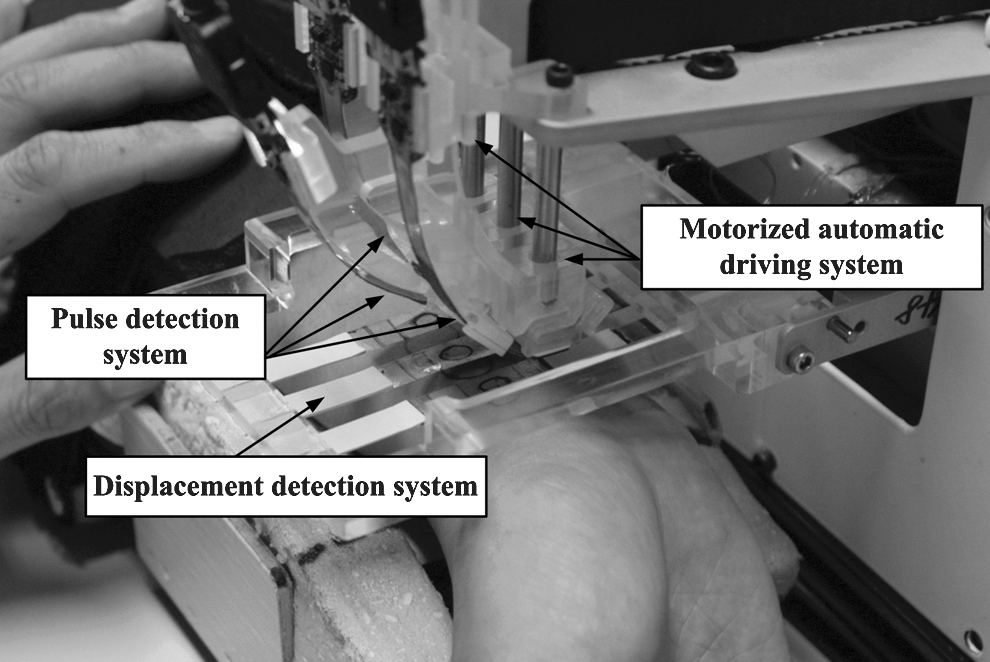
Bi-Sensing Pulse Diagnosis Instrument, which can reconstruct the pulse-taking method of physicians, such as pulse-taking depth and finger-reading sensation.
In this report, the pulse-taking procedure adopts SP to obtain wrist artery signals. The pressure of physicians contributes to variations in the strain gauge of the displacement detection system in order to mimic their pulse-taking skill. Three (3) displacements, Fu (superficial), Zhong (middle), and Chen (deep), represent different pulse-taking depths based on the TPNI definition (Three Positions Nine Indicators defined in TCM). The robotic fingers are moved by the motorized automatic driving system on the basis of the recorded displacements to duplicate a TCM physician's pulse-taking skill. The pulse detection system then detects the pulse waveforms as the robotic fingers arrive at the recorded TPNI displacements. Twelve (12) sensing elements in one pulse-taking position, such as Cun, Guan, or Chi, are embodied in the pulse-detection system. Cun, Guan, and Chi are three sections over the radial artery for pulse diagnosis by a TCM physician: the Guan is just central to the radial styloid at the wrist where the tip of the physician's middle finger is placed, the Cun is next to it on the distal side where the tip of the physician's index finger is located, and the Chi is on the proximal side where the tip of the physician's ring finger is placed. The physicians' pulse-taking sensations can then be quantitatively represented as an array of pulse waveforms in a 3DPM format. Therefore, the surface of the pulse conditions can be measured and constructed in a mathematical way.
Experimental protocol
TCM has accumulated abundant clinical experience over a period of thousands of years. The principles involved have been qualitative in nature and have not been well quantified. This research is intended to reconstruct the diagnostic environment of TCMPD, which includes the reconstruction of the pulse-taking method and the representation of physicians' observations in a quantitative way.
All of the participants were asked to refrain from exercising or eating and to rest for at least 2 hours prior to their pulse being taken. Figure 2 shows the experimental protocol with five steps. In step 1, the participants were asked to sit on an adjustable chair. Physicians checked all participants to confirm pulse conditions such as a stringlike pulse or a non–stringlike pulse. In step 2, the physician marked the Cun, Guan, and Chi positions of a participant to show where to place displacement sensors of the displacement detection system. Then the participant's wrist was put under displacement sensors, and a physician pushed his/her three fingertips on top of the displacement sensors to touch the Cun, Guan, and Chi positions of the participant. The displacement detection system obtained the participant's pulse-taking depths at Fu, Zhong, and Chen, while the physician checked and recorded the participant's individual pulse conditions. In step 3, the participant's wrist pulses at the obtained pulse-taking depths (Fu, Zhong, and Chen) were measured by the pulse-detection system of BSPDI. The participant changed the other hand to sample wrist pulse and repeat step 2 to step 3. In step 4, a wavelet algorithm, Daubechies wavelets, was used to remove the baseline wander. A moving average filter was adopted to smooth the sampled signals. In step 5, a 3DPM was formed from 12 pulse signals measured by 12 sensors in an array. Nine 3DPMs were obtained at nine TPNI positions. 3DPM can be formulated as below:
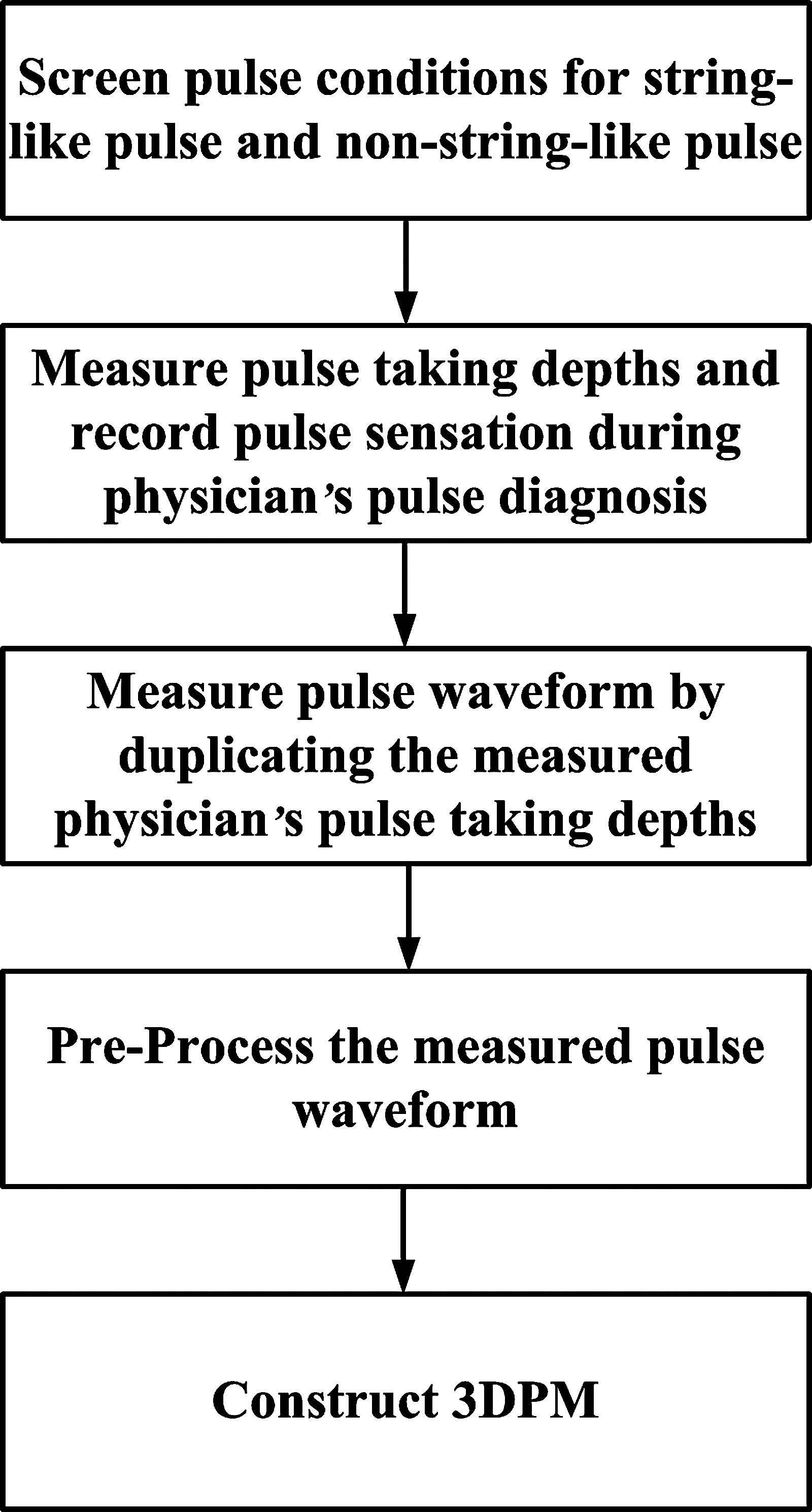
Experiment protocol for the quantification of pulse diagnosis. 3DPM, three-dimensional pulse map.
where 3DPM represents the physicians' finger-reading sensations in terms of an array of sensors; j, the pulse-taking position, such as Cun (j=1), Guan (j=2), or Chi (j=3); k, the pulse-taking depth, such as Fu (k=1), Zhong (k=2), or Chen (k=3); m=1, 2, 3, index of sensing elements perpendicular to the wrist artery; n=1, 2, 3, 4, the index of sensing elements parallel to the wrist arteries; t, the sampling time; and V, the pressure measurements in terms of potentials.
To get V, each acquisition took about 20 seconds, and the sample rate was 100 Hz. An ActiveX 3D graph control is used to obtain the intensity graph of pulse conditions. Twelve (12)-channel signals are fed into the ActiveX 3D graph control in LabVIEW, and then the intensity graph is displayed in Figure 3. Figure 3 shows 3DPM taken at Guan position (j=2) and Fu displacement (k=1). Figure 3A demonstrates 12 pulse signals in the array of sensors, while Figure 3B presents 3DPM at a sampling instant in Figure 3A. The highest amplitude is located at the lower and left corner of 3DPM, which represents a strong beat feeling at the bottom and right corner of the fingertip.
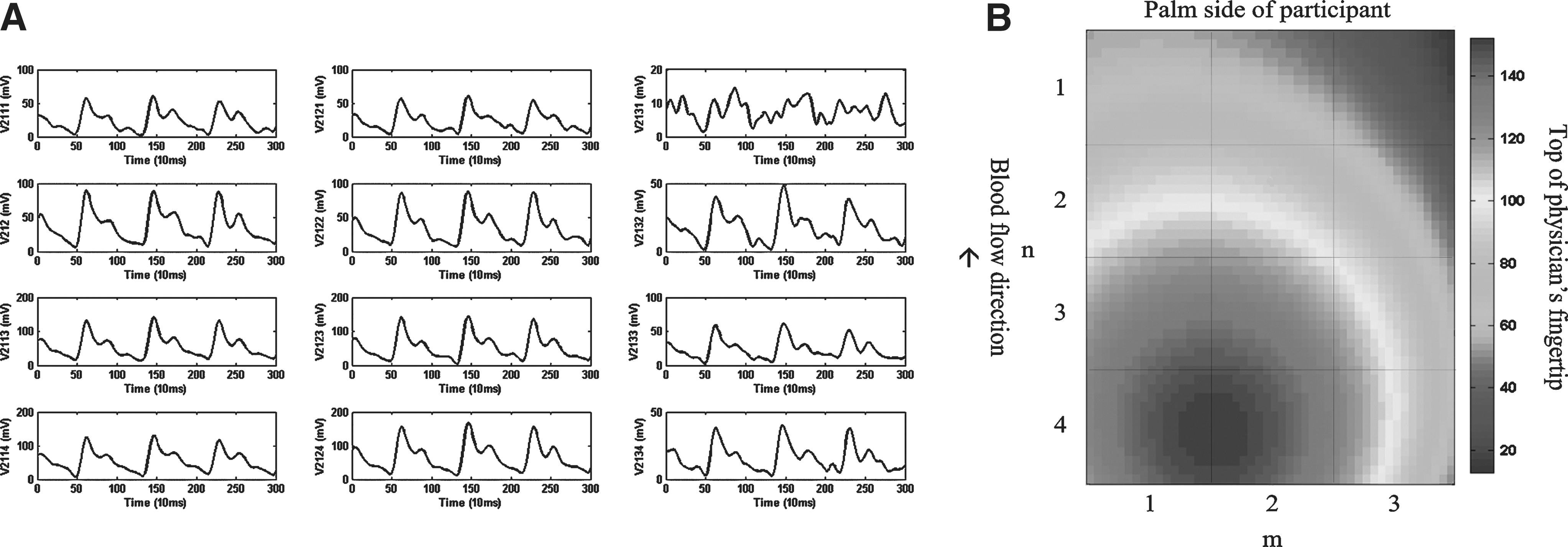
An example of a 3DPM (3D pulse map) at j=2 (Guan); k=1 (Fu); m=1, 2, 3, index of sensing elements perpendicular to wrist artery; n=1, 2, 3, 4, index of sensing elements parallel to wrist artery.
Definition of hypertensive stringlike pulse by dPW
Although TCM physicians have accumulated a great deal of experience with pulse diagnosis over a period of thousands of years, their diagnostic sensations could not necessarily have resulted in the same conclusions due to different levels of pulse-taking skill and subjective personal impressions. Scientists have put great effort into the quantification of pulse conditions instead of into physician's finger-reading sensations to avoid ambiguity and misunderstanding. The stringlike pulse is now one of the pulse conditions that has been well studied in the literature due to the fact that it is easy to determine and because physicians are in agreement as to outcome. According to the World Health Organization, if a pulse sensation feels straight, long and taut, like a musical string to the touch, it is called a stringlike pulse. 27
Research results have revealed that the wrist artery pulse waveform of patients with hypertension has significant characteristics that are related to the stringlike pulse 26 in which Va1 and Va2 are key parameters for classification of hypertensive stringlike pulse. The tidal wave increases earlier than other pulse waveforms due to the stiffness of the wrist artery and the presence of a high valley in valley “Va2 ” of the differentiation pulse wave (called dPW), as shown in Figure 4. In this proposal, such a wrist artery pulse waveform is called a hypertensive stringlike pulse.
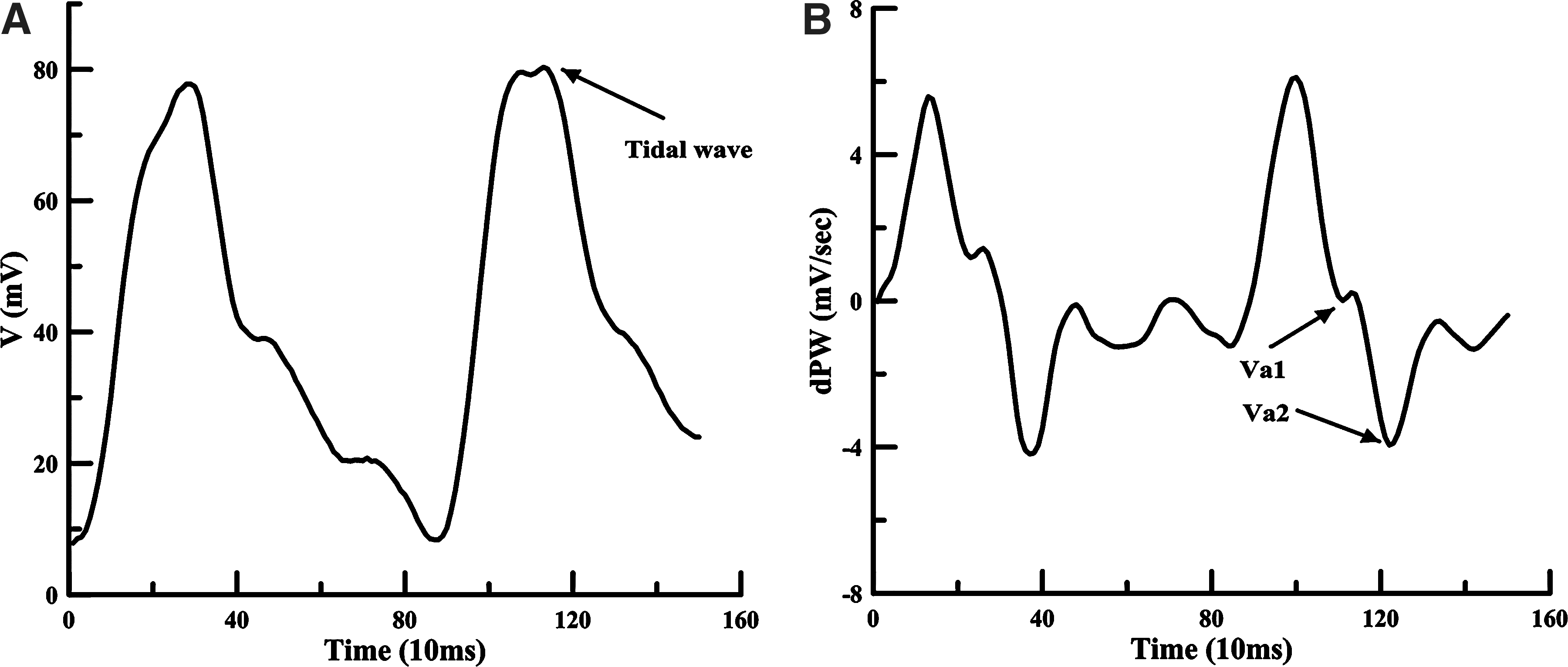
Definition of the stringlike pulse by PPW
PPW elucidated from 3DPM is defined below:
where PPW is simply equal to the average of 12 pulse signals in a 3DPM.
PPW is proposed based on the clinic experiences of stringlike pulse by TCM physicians: synchronous pulse beating at least two fingertips. PPW could represent the average beating feeling of the fingertip of a TCM physician. In Figure 5, two PPWs at Cun and Guan positions are shown, in which while “T” is the beating period, “r” is the correlation coefficient, and Δt is the time difference. The r parameter is defined as below:
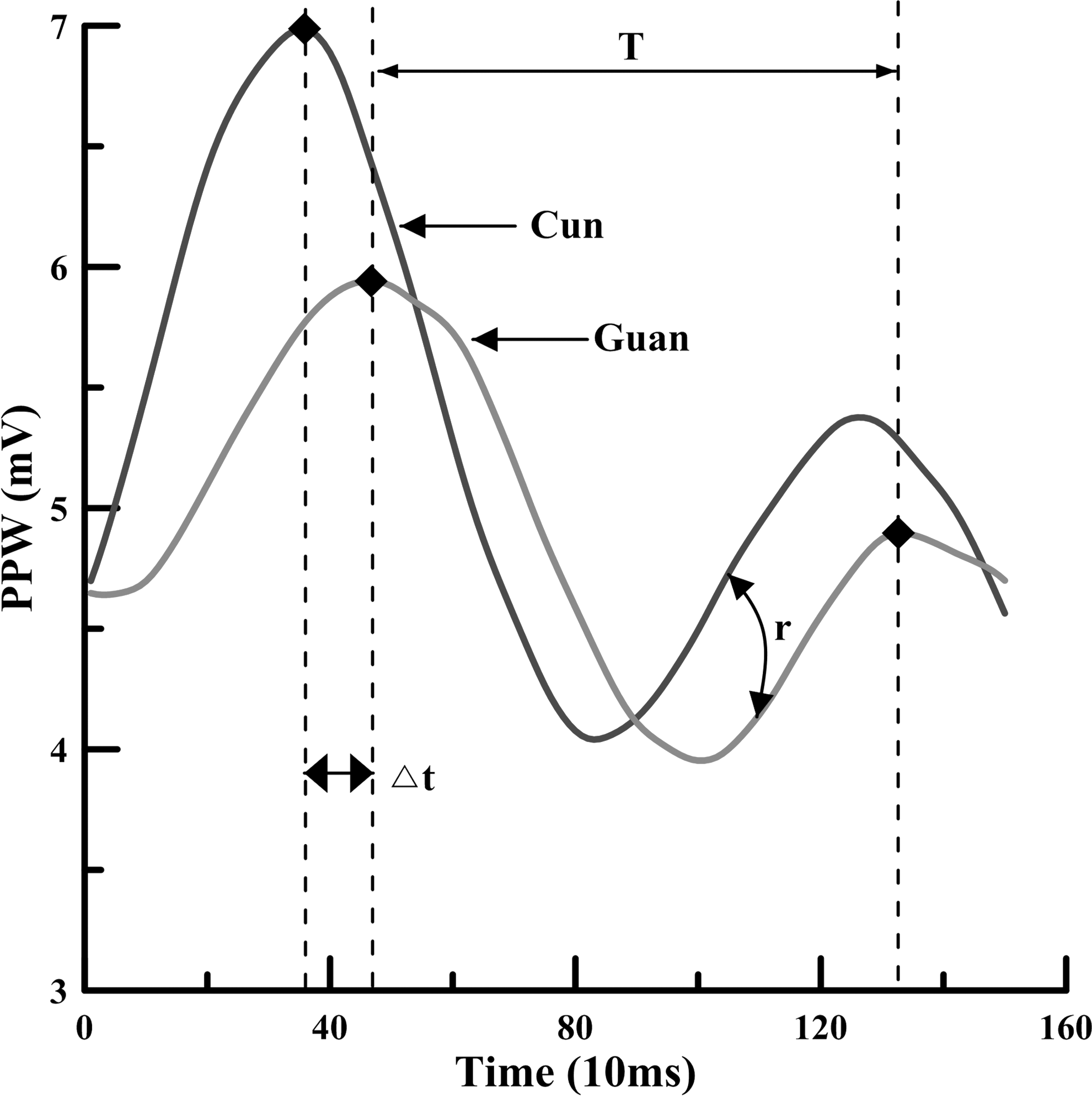
r, Δt, and T at two plain pulse wave (PPWs).
where either X or Y is PPW at Cun, Guan, or Chi.
Δt can be obtained by measuring the time difference of two PPWs' peak, i.e.,
where Δt[p, q, k] represents the time difference between two PPWs at p (j=p) and q (j=q) pulse-taking positions at the same k pulse-taking depth.
Time difference Δt can be transformed into phase angleΔθ
Statistical method
The aim of this research is to propose a novel approach to enhance the classified method of stringlike pulse. To acquire a statistical analysis, the SPSS 17.0 program was used. An independent sample t-test and analysis of variance were carried out to check the feasibility of quantification of the stringlike pulse.
Results
Two (2) kinds of stringlike pulses are listed in Huangdi's Internal Classic: one is the pulse characteristic of illness; the other is seasonal normal pulse of spring. Figures 6A, 7A, and 8A demonstrate the general hypertensive stringlike pulse, spring stringlike pulse, and non–stringlike pulse separately. The corresponding dPW and PPW are shown in B and C of Figures 6, 7, and 8 separately. Clearly, dPW cannot classify normal pulse beating in a stringlike format in spring in Figure 7B, where |Va2 | is quite small. Phase angle Δθ is quite large at non–stringlike pulse in Figure 8C, while Δθ is relatively small at stringlike pulse in Figures 6C and 7C.
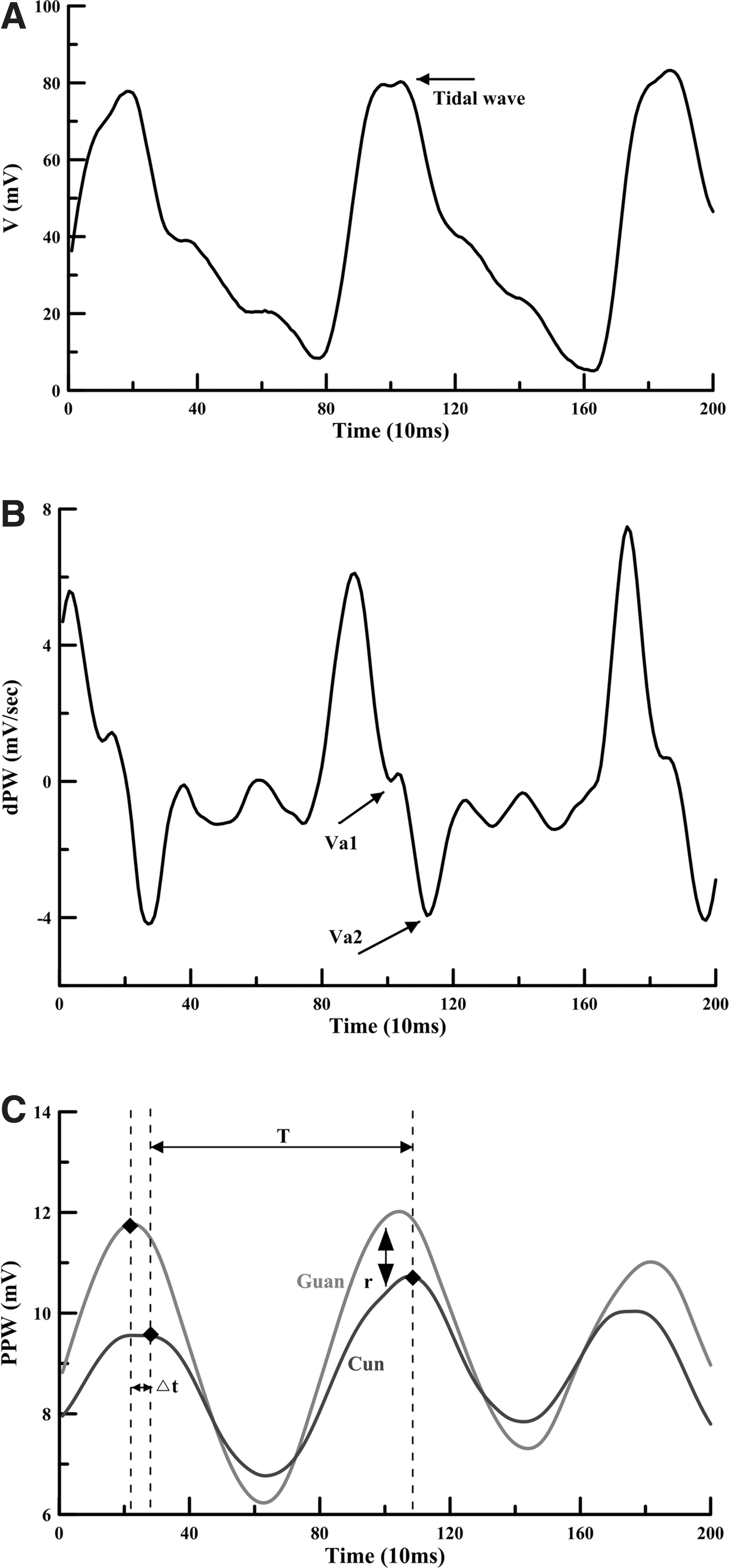
An example of a hypertensive stringlike pulse.
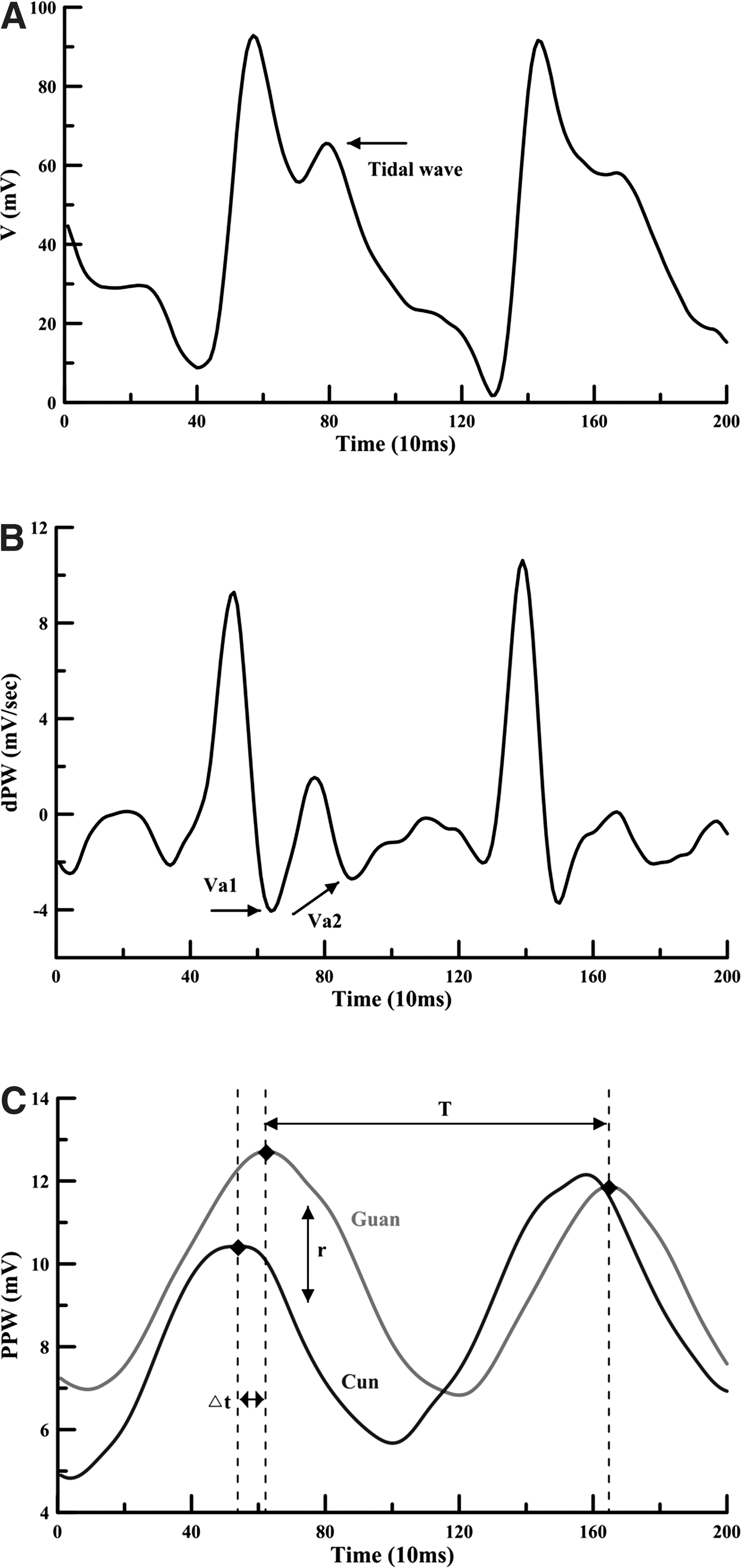
An example of a spring stringlike pulse.
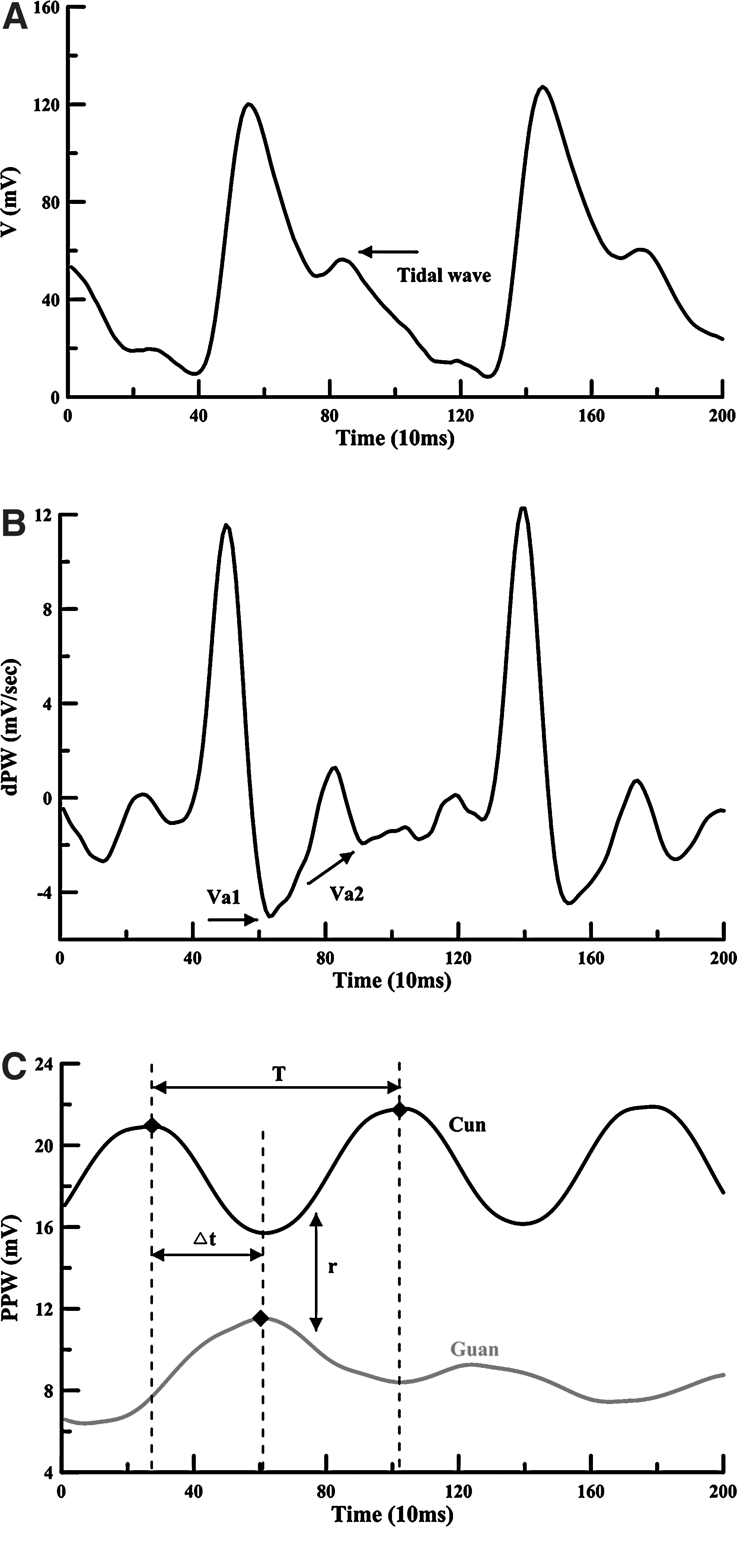
An example of a non–stringlike pulse.
Table 1 summarizes the statistical measurement results by dPW (Va1 and Va2 ) and PPW (r and Δθ) for stringlike pulse (hypertensive and spring) and non–stringlike pulse. In spring stringlike pulse, |Va2 | is insignificantly larger than |Va1 |, so dPW fails to classify spring stringlike pulse. However, dPW significantly recognizes hypertensive stringlike pulse in comparison to spring stringlike pulse and non–stringlike pulse. r and Δθ of PPW significantly classifies between stringlike pulse (including hypertension and spring) and non–stringlike pulse.
Discussion
This article is intended to provide a novel approach by which to explore subjective pulse conditions based on traditional TPNI pulse-taking methodology. The stringlike pulse is easily found in patients with hypertension and during the spring season. The hypertensive stringlike pulse shows its tidal wave approaching the percussion wave due to the fact that systolic pressure augments mostly in elderly patients. 3 In contrast, “The spring stringlike pulse normally appears in healthy persons in spring,” is described in Huangdi's Internal Classic. Apparently, these two kinds of stringlike pulses have very different waveforms, as shown in Figures 6A and 7A. In Figure 9, p-value is applied among hypertensive stringlike pulse, spring stringlike pulse, and non–stringlike pulse for significance judgment. The Va2 of dPW is significant with regard to distinguishing a hypertensive stringlike pulse from the spring stringlike pulse and the non–stringlike pulse, but insignificant between spring stringlike pulse and non–stringlike pulse, as depicted in Table 1 and Figure 9A. To classify stringlike pulse by PPW with synchronous beating characteristic, the higher r and lower Δθ yield better synchronicity of the stringlike pulse. In Figures 9(b) and 9(c), r and Δθ are significant to classify stringlike pulse including hypertensive and spring from non–stringlike pulse, but insignificant to recognize between hypertensive and spring stringlike pulse. Apparently, PPW is able to recognize stringlike pulse but PPW needs dPW to help to distinguish between hypertensive and spring stringlike pulse. In summary, r and Δθ of PPW are used to distinguish a stringlike pulse (hypertensive or spring stringlike pulse) from a non–stringlike pulse, while Va2 of dPW is adopted to differentiate between a hypertensive stringlike pulse and a spring stringlike pulse.
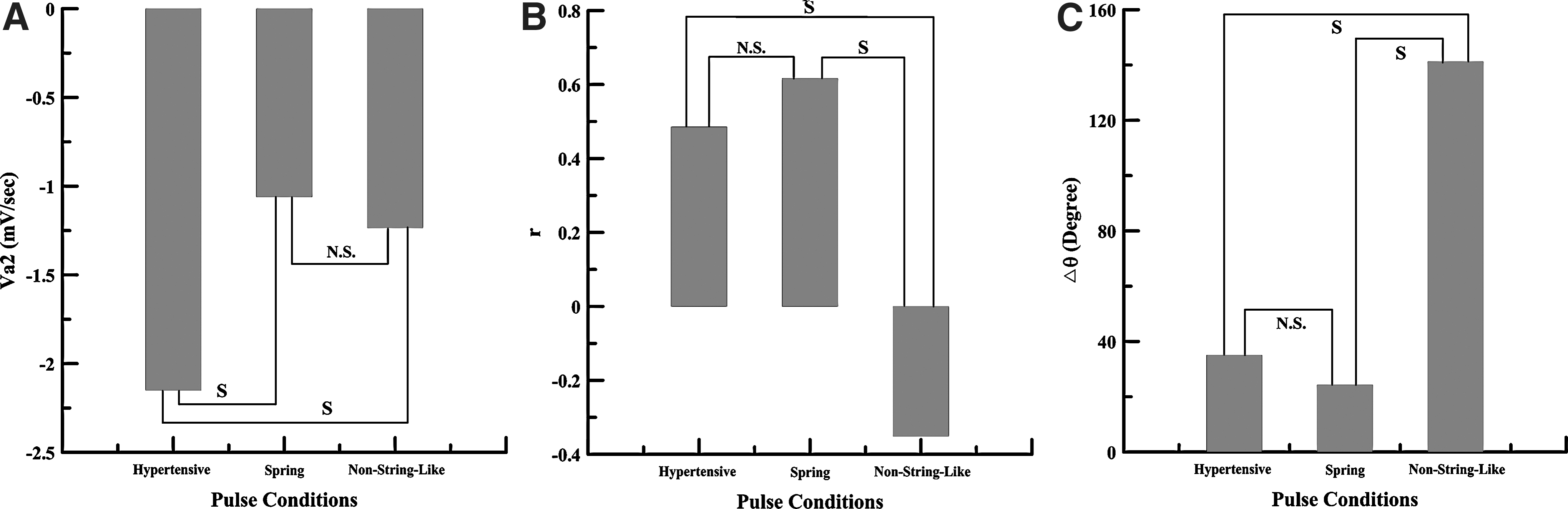
Bar-plot for significance analysis among hypertensive, spring, and non–stringlike pulses. (S, significance as p<0.05; N.S., no significance as p>0.05).
To calculate the recognition rate of dPW and PPW in comparison to the physicians' fingertip sensations, a stringlike pulse is calculated by setting r>0.1 and Δθ<90° for PPW and |Va2 |>|Va1 | for dPW. Table 2 summarizes the recognition rates of PPW and dPW. The PPW recognition rate is 100% for the hypertensive stringlike pulse, 100% for the spring stringlike pulse, and 77% for the non–stringlike pulse. dPW can classify the hypertensive stringlike pulse at a 70% recognition rate but be unable to recognize the spring stringlike pulse. The recognition rate of the non–stringlike pulse is 59% for dPW, lower than the 77% for the PPW.
dPW, differentiation pulse wave; PPW, plain pulse wave.
As a result, PPW provides a better recognition rate of stringlike pulse than dPW, as shown in Table 2. However, dPW effectively separates hypertensive stringlike pulse from spring stringlike pulse as shown in Table 1 and Figure 9. In conclusion, PPW does effectively enhance the recognition of stringlike pulse from non–stringlike pulse in addition to dPW.
Conclusions
The aim of this proposal is to enhance a quantification approach to the stringlike pulse by using reconstruction of the pulse-taking environment. The reconstruction includes two aspects: one is to mimic the pulse-taking depth of the physicians; the other is to mimic their fingertips sensations. Only with the implementation of these two conditions will the mysteries of TCMPD be accessed. Hence, this research proposes a bi-sensing pulse diagnosis instrument with an array sensor to be applied to discover ways to quantify the stringlike pulse. The Va2 , r, and Δθ are found to classify the stringlike pulse. The characteristics of the stringlike pulse are significant, with higher r and lower Δθ, not vice versa. The application of a 3DPM to analyze the pulse conditions provides a novel and feasible approach for the quantification of stringlike pulse. The authors believe that by utilizing this method, more will be known about the human body and the abundant assets of TCM will be comprehended and applied.
Footnotes
Acknowledgments
This work is supported by the National Science Council of Taiwan under grant number NSC-99−2221-E006-109. The authors would like to thank PPS Company for acquisition software and the R.O.C. Air Force Academy for providing test subjects.
Disclosure Statement
The authors declare that they have no competing interests.