




Abstract
Objectives:
The study objective was to determine whether Reiki practice increases the electromagnetic field strength from the heart and hands of Reiki practitioners.
Rationale:
This study repeated experiments performed 20 years ago that detected exceptionally high-strength electromagnetic fields (100 nT) from the hands of several energy healers. The equipment used was far more sensitive than in the original studies.
Design:
Using a Magnes 2500 WH SQUID, the electromagnetic field from the hands and heart of each of 3 Reiki masters was measured when they were (1) not practicing Reiki, (2) sending Reiki to a distant person, and (3) sending Reiki to a person in the room. Similar measurements were made on 4 Reiki-naïve volunteers before and after they received a Reiki training/attunement enabling them to self-administer Reiki.
Setting/location:
The study setting was the Scripps Institute, San Diego, CA.
Outcome measures:
Magnetic field intensity of hands and heart recorded over 5-minute sessions with corresponding frequency spectra.
Results:
For all subjects, under all conditions, sensors closest to the heart and the hands produced spikes of 2 pT corresponding to the heartbeat. Recordings from 2 Masters and 1 volunteer showed a low-intensity sine wave oscillation of 0.25–0.3 Hz (intensity 0.1–0.5 pT) whether or not they were practicing Reiki. This oscillation probably reflected respiratory sinus arrhythmia, judged by comparison with recent previous studies. These signals were not detected in the original studies. In the current study, no electromagnetic field intensities greater than 3 pT were observed in any of the recordings.
Conclusions:
Practicing Reiki does not appear to routinely produce high-intensity electromagnetic fields from the heart or hands. Alternatively, it is possible that energy healing is stimulated by tuning into an external environmental radiation, such as the Schumann resonance, which was blocked in the present study by the strong magnetic shielding surrounding the SQUID.
Introduction
One hypothesis to explain energy healing was presented by Zimmerman. 2 He proposed that the regular pulsing of the Earth's magnetic field at a frequency of 7.8 Hz (Schumann frequency) entrains the brain waves of an experienced healer when they are in a state of quiet relaxation while at the same time focusing their attention on the task of healing another being. He also hypothesized that the healer consciously or subconsciously adjusts their respiration rate to an exact subharmonic of the Schumann frequency to facilitate synchronization of their brain waves and their body biofield with the Schumann frequency. It is not clear exactly what Zimmerman 2 means by “body biofield.” The person being healed then allows their brain waves to become synchronized with the healer's biofield. When this synchronization occurs, effective healing energies from the healer's hands are emitted, which then influence the biochemistry and cellular physiology of the patient being healed. This last step is based on the idea that organic macromolecules respond to very weak levels of infrared and microwave radiation by changing their conformation, thus influencing enzyme kinetics. In fact it is well known that molecules absorb specific frequencies of radiation that are characteristic of their structure, and this is the basis of infrared spectroscopy. 3 There is also evidence that application of extremely low-frequency (ELF) frequencies can promote healing. 4 For example, a frequency of 7 Hz can promote bone growth and 10 Hz, ligament healing. In addition, weak, ELF electromagnetic fields have been shown to activate certain cell membrane enzymes 5 and specifically alter DNA transcription. 6
To test his theory, Zimmerman used a superconducting quantum interference device (SQUID) to measure the electromagnetic fields produced by the hands of Therapeutic Touch practitioners as they each healed a person in a room with magnetic shielding that was described as “moderately good.” 2 Magnetic shielding is essential to prevent the detection of confounding external electromagnetic sources that would interfere with the data collected from the experimental subjects. Four (4) of 7 healers showed discernible changes in the amplitude and/or frequency of their biomagnetic fields as they attempted to heal the other person. However, no information was provided about the specifications of the SQUID or the magnetic shielding. In addition, the results consisted of just one figure showing the variation in amplitude and frequency of the biofield from the hand of 1 practitioner before and during healing. Although no scales of amplitude or time are provided in the figure, it is cited in the literature as a main piece of evidence to support electromagnetic fields emanating from the hands of energy healers. 7
In another study, Seto et al. 8 used a gradiometer to measure electromagnetic fields from the palms of 37 subjects who claimed to emit external Qi. More information on Qi and its relationship to electromagnetic frequencies is provided by Smith. 9 Magnetic gradiometers are pairs of magnetometers with their sensors separated by a fixed distance. The reading of one is subtracted from the other in order to measure the difference between the sensed magnetic fields and so determine the field gradients caused by the magnetic anomaly of interest. This design was chosen to minimize external background noise and to detect the field from the human body, since this signal was produced between the two coils.
The gradiometer, despite its sensitivity of less than 100 pT, could not measure the electromagnetic signal from the heart. On the other hand, magnetic fields of 200–400 nT (an amplitude that is 1000 times greater than that of the cardiac biofield measured in humans) in a frequency range of 4–10 Hz were detected, but only in 3 of the subjects. In 1 subject, the authors attempted concomitant measurement of the corresponding bioelectric current in the hand using electroencephalogram electrodes attached to the tip of one finger and the base of the palm. According to basic electromagnetism, magnetic fields are created when current flows; thus, if a magnetic field were to be produced by the hand, a bioelectric current should also be detected in the hand. However, Seto et al. 8 could not detect a current in the hand, suggesting that the electromagnetic field was not really emanating from the subject but was from an external source.
Four (4) years later, Seto and some of his colleagues repeated the experiment on two Qi Gong practitioners, one who showed a positive response in the original study, and one additional practitioner. 10 As before, very intense electromagnetic fields (2–3 mGauss) were detected from both subjects as they performed Qi Gong. This time, a digital measurement device was also used to detect the field from 1 of the subjects as they responded to an acupuncture point of a recipient. Strangely, the digital device (designed to detect electromagnetic waves that leak from television sets) detected a field of 8–15 mGauss, compared to a field of 1 mGauss detected by the gradiometer under the same circumstances. There was no evidence that the digital device had been calibrated. In addition, errors were made in the article in the conversion of Gauss to Tesla, casting some doubt on the vigilance of the investigators.
The purpose of this study was to repeat the experiments of Zimmerman, 2 Seto et al., 8 and Hisamitsu et al., 10 using modern equipment and up-to-date magnetic shielding to determine whether Reiki practitioners produce measurable electromagnetic fields from their hands when healing. The instrument also detected the field from the heart, and so these measurements were included in the study. In this study, as in the articles describing previous measurements, 2,8,10 the authors consider electromagnetism in terms of a “gauge theory” in which only electric and magnetic fields can produce observable effects, and thus electromagnetic potentials are ignored.
Materials and Methods
Subjects
Participants included 3 Reiki Masters and 4 people unfamiliar with energy healing who all gave consent to participate in the study, approved by the Institutional Review Board for the Protection of Human Subjects of the University of Arizona. The Reiki Masters had all trained under the International School of Reiki Training and had more than 10 years experience. For International Center for Reiki Training practitioners, the most important part of a Reiki practice is the quality and strength of their intention. Practitioners are equally familiar with noncontact, or “hands off” Reiki as they are with “hands on” Reiki. During the experiment, the participants removed any jewelry they were wearing.
Setting
Experiments were performed at The Scripps Research Institute, Molecular and Integrative Neurosciences Department, La Jolla, CA.
Equipment
The type of SQUID used to measure the human biofields was a 148-channel whole head Magnes 2500 Biomagnetometer (4D NeuroImaging Technologies, Inc., San Diego, CA). Each of the 148 sensors was 2 cm in diameter and the average spacing between sensors was 2.9 cm. The Magnes system includes a sophisticated noise-cancellation package utilizing 14 reference detector coils. The signals from these reference coils are applied to the data, both online and offline, in such a way as to remove magnetic and vibrational noise while preserving signals from the subject. The result is a dramatic reduction in the environmental noise contribution (to less than 10 fT/rtHz) at all frequencies down to 0.5 Hz. The SQUID was housed in a Vacuumschmelze Model AK3b magnetically shielded room. The structure consisted of two mu-metal layers for magnetic shielding and one aluminum layer for electrical shielding. This combination of materials delivers optimum protection from magnetic noise. A high shielding factor (60–100 dB attenuation) is an essential prerequisite for the measurement of biomagnetic fields because the ambient magnetic noise in the frequency range of interest (0.1–1000 Hz) is often as high as several nT. 11 The effectiveness of the magnetic shielding of the SQUID at the Scripps Research Institute as a function of frequency is shown in Figure 1. The attenuation at 10 Hz is 60 dB, increasing to 80 dB at a frequency of 1000 Hz.
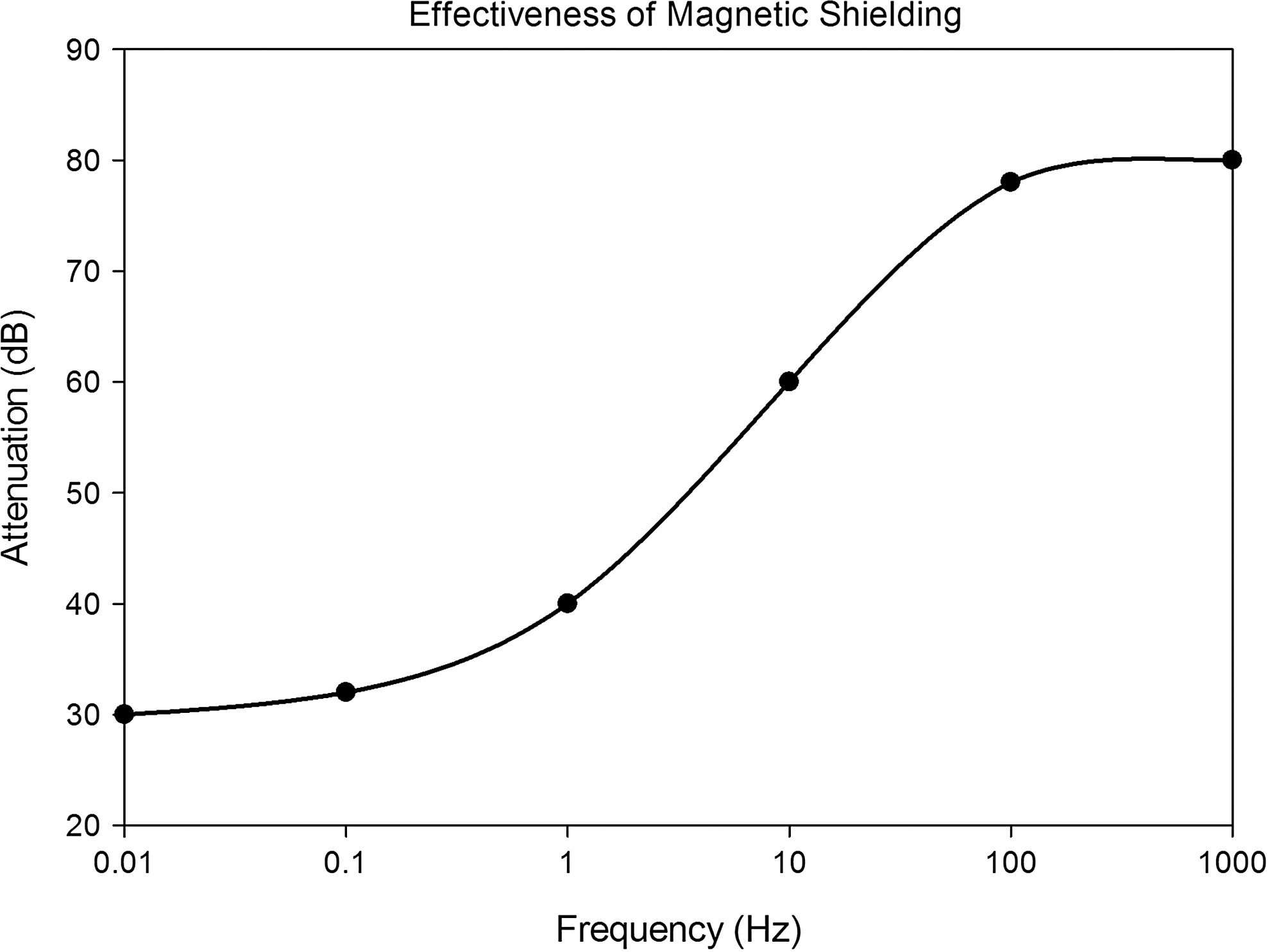
Effectiveness of magnetic shielding of room containing the superconducting quantum interference device (SQUID) as a function of frequency.
Experimental protocol
The 3 Reiki Masters were seated in turn in the magnetically shielded room containing the SQUID. Each subject was instructed to place their palms over the part of the SQUID that housed the sensors while measurements were taken under the following conditions, each for 5 minutes: (1) baseline, (2) sending Reiki to a distant person, (3) baseline, and (4) sending nonphysical contact Reiki to another participant in the same room. A photograph showing how a person's hands rested on the instrument is shown in Figure 2. Measurements were then made on the 4 Reiki-naïve volunteers in turn as they sat with the sensor for 5 minutes each (baseline). Next, the volunteers were given Level 1 Reiki training/attunement by one of the Reiki Masters to enable them to practice Reiki. The Reiki training/attunement and subsequent practice took about 60 minutes. The measurement was then repeated on each of the 4 volunteers as they practiced Reiki on themselves for 5 minutes while placing their palms over the part of the SQUID that housed the sensors. Three (3) 5-minute recordings were made of background noise when no one was in the room.
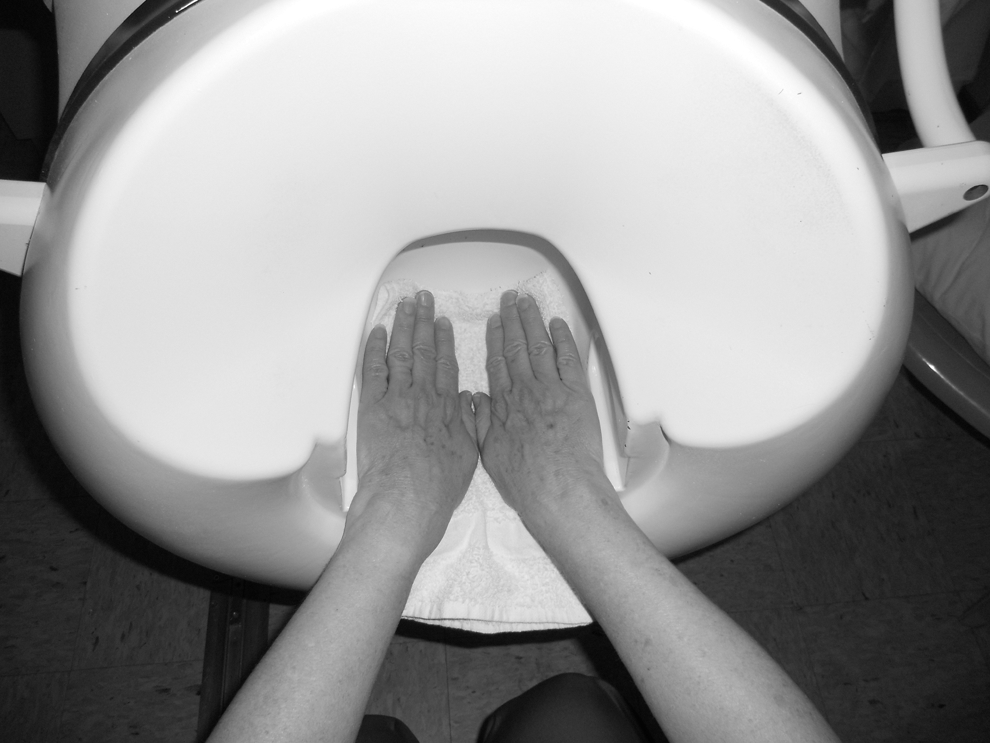
Photograph showing how a person's hands were placed over the part of the superconducting quantum interference device (SQUID) that housed the sensors.
Data acquisition and analysis
Signal acquisition was conducted at a sampling rate of 680 samples/second with a band-pass filter of 0.1–100 Hz. Data postprocessing for the offline analysis included digitization and a filtering of 1–30 Hz. Due to the large amount of data collected, instead of considering all the recorded channels, a choice of channels was used, selected according to their proximity to the subject's heart and hands, respectively. The sensor layout display of the SQUID is shown in Figure 3. The left side of the image is the person's right side, and vice versa, while the lower half of the display is where the person's hands are resting. Channels 139–143 were selected for “heart” data (each channel outlined with a small oval) and channels 120–123 for “hand” data (group of channels outlined by large oval).
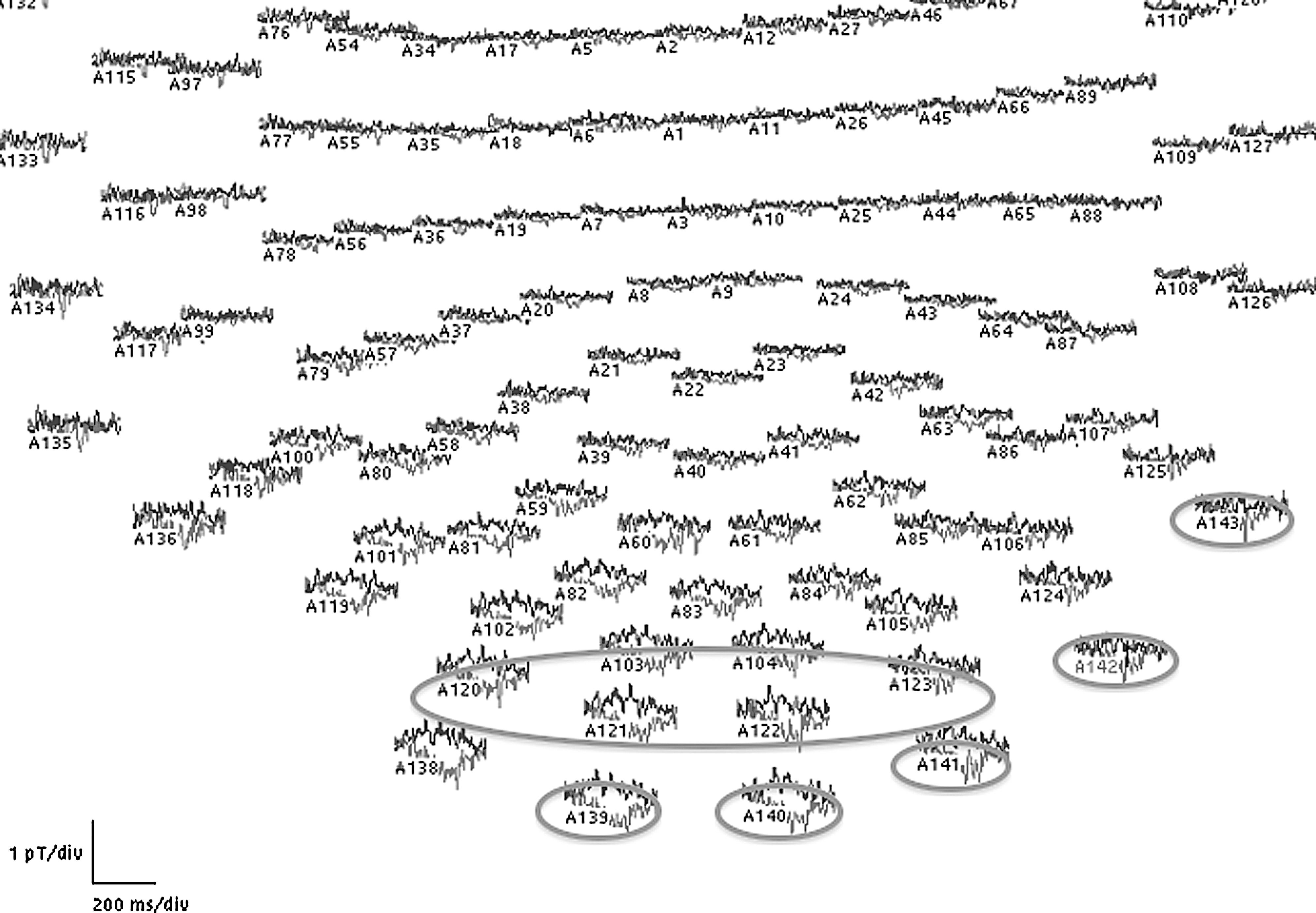
Sensor layout display of superconducting quantum interference device (SQUID). Left side of image is person's right side and right side of image is person's left side. Lower half of display is where person's hands are resting. Large oval surrounds sensors acquiring data from hands; small ovals show sensors acquiring data from heart. Horizontal scale: 200 mHz/cm, vertical scale: 5 pT/Hz/cm.
Offline data analysis was completed using the software, MatLab. A computer program was written to transfer the raw data from the Magnes system to a format compatible with MatLab. Magnetic field intensity was manually assessed as a function of time in 10-second segments for all 5-minute sessions to determine the presence of any high amplitude oscillations or of periodic patterns above background noise such as would result from heartbeats or respiratory sinus arrhythmia. The frequency spectrum of each session, averaged over all 148 channels, was also examined in conjunction with the time plots to check for consistency.
Results
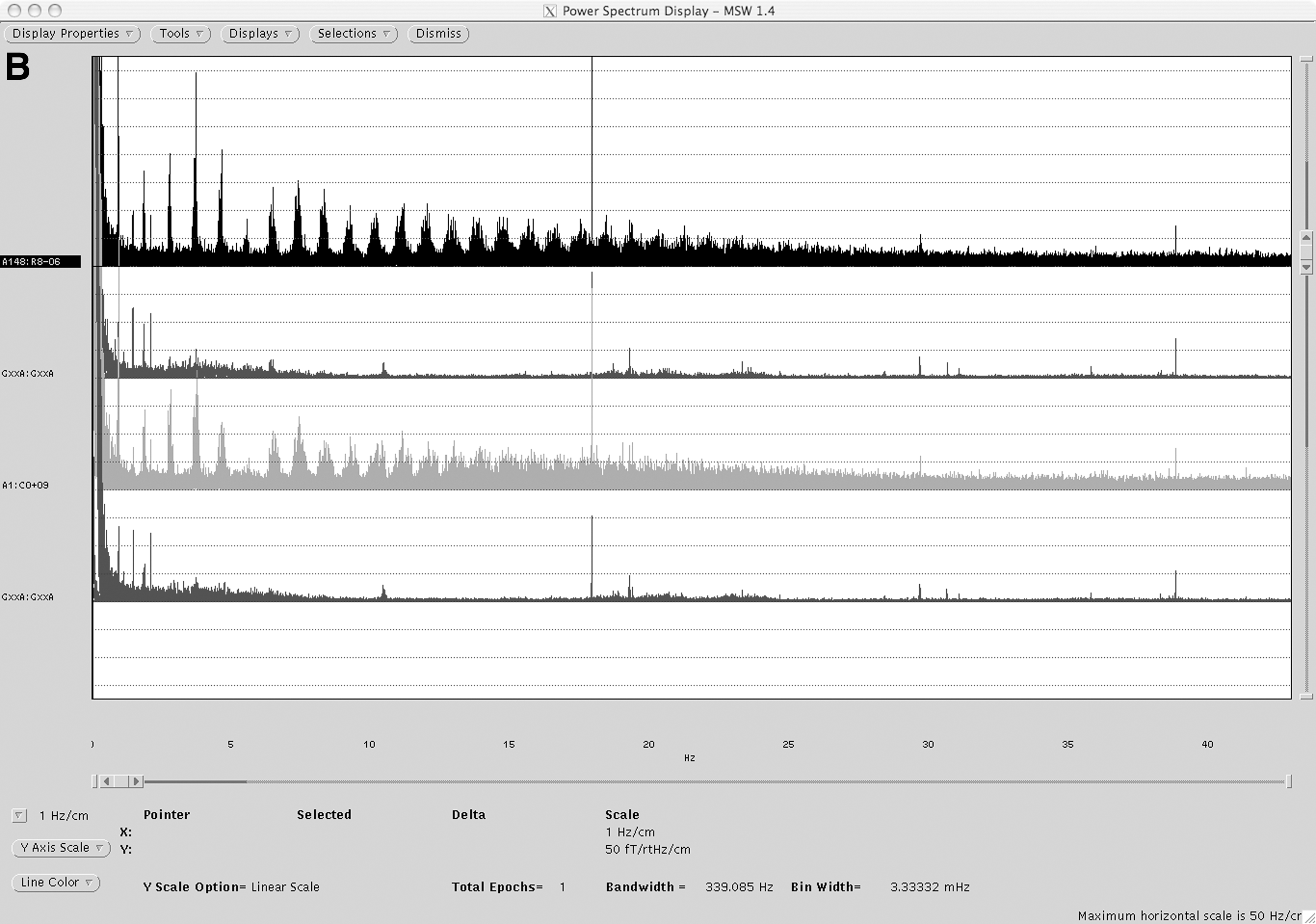
An example of a baseline measure of the electromagnetic biofield of one of the Reiki-naïve volunteers from sensors near the heart is shown in Figure 4A. The downward spikes of about 2 pT every second reflect the electromagnetic manifestation of the RR pulse of the electrocardiogram. These spikes were seen for all subjects under all conditions. Figure 4B shows corresponding data from the same sensors without anyone sitting at the SQUID or in the room. This recording reflects the ambient electromagnetic noise. Note the absence of the heartbeat spikes. An example of a baseline measure of the electromagnetic biofield of one of the Reiki Masters from sensors near the heart is shown in Figure 5A. Once again, the heartbeat spikes are clearly visible. A frequency spectrum of this same baseline plot, from 1 to 40 Hz, is shown in Figure 5B (plot row 1). The vertical axis is the power spectral density, related to the power stored in the signal over a certain frequency range. In Figure 5B, the plot in row 3 shows the frequency spectrum from the same Reiki Master when another person is sitting in the same room but the Reiki Master is not consciously sending them Reiki. No obvious differences are visible between the two spectra. In both cases, the frequency peaks represent the cardiac signal (about 1 Hz) and its harmonics. Data from the reference channels are shown in Figure 5B, plot rows 2 and 4. Even with a high degree of shielding and noise cancellation, some ambient noise exists at frequencies below 1 Hz.


Similar electromagnetic fields were measured from the sensors nearest the hands of each person, compared to sensors nearest the heart. An example of the signals from the sensors nearest the hands of a Reiki Master as they send Reiki to a person in the room is shown in Figure 6A. The downward spikes reflecting the RR pulse of the electrocardiogram can be seen, but it is not clear whether these sensors are still detecting the signal directly from the heart, or whether the hands are replicating the signal, possibly by transmission of the cardiac signal through the perineural sheaths to the hands. The corresponding frequency spectrum (Fig. 6B, plot row 1) shows the cardiac signal and harmonics. In this figure, the plot in row 3 shows the frequency spectrum from the same Master when they are sending Reiki to a distant person. No obvious differences are visible between the two spectra.
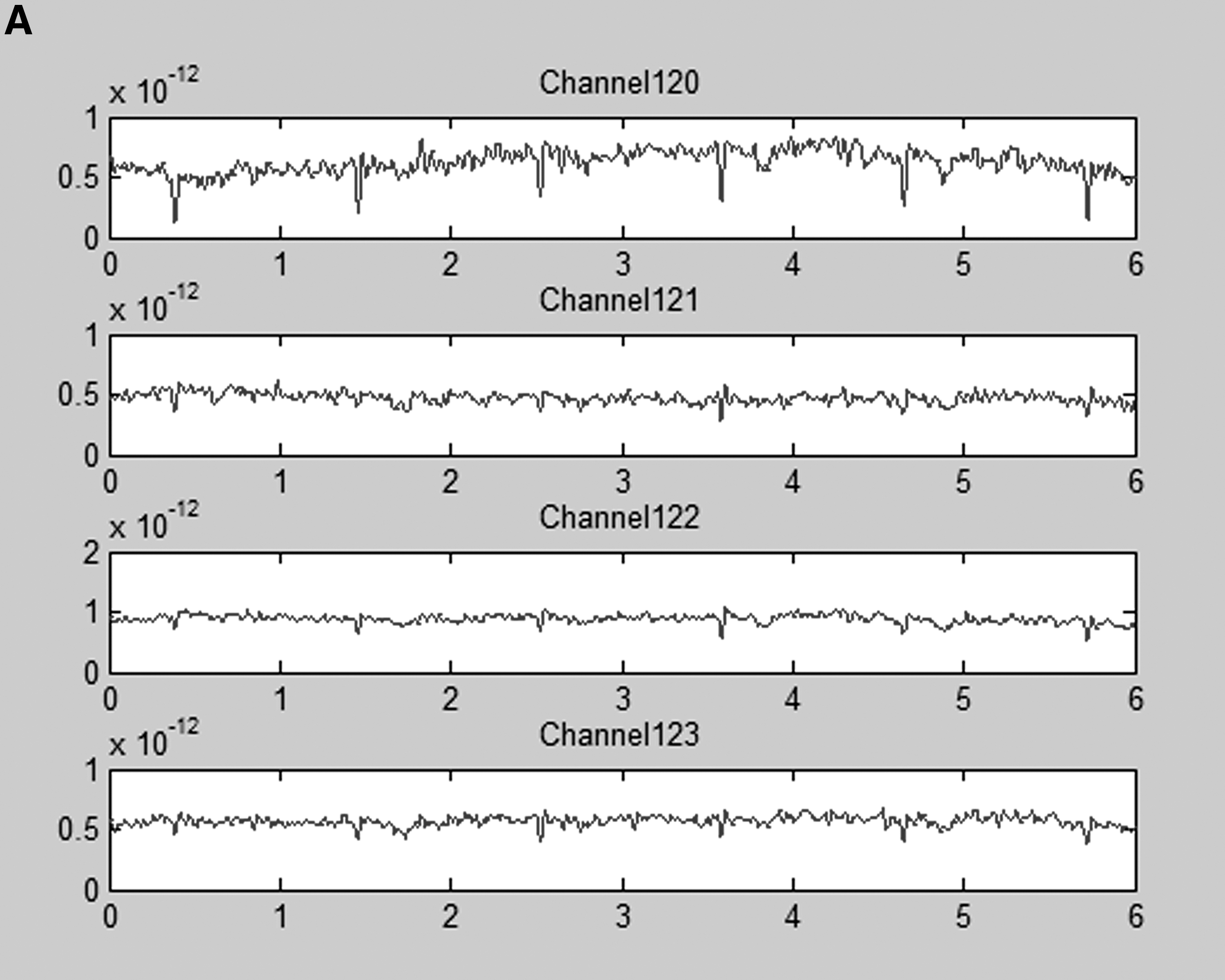
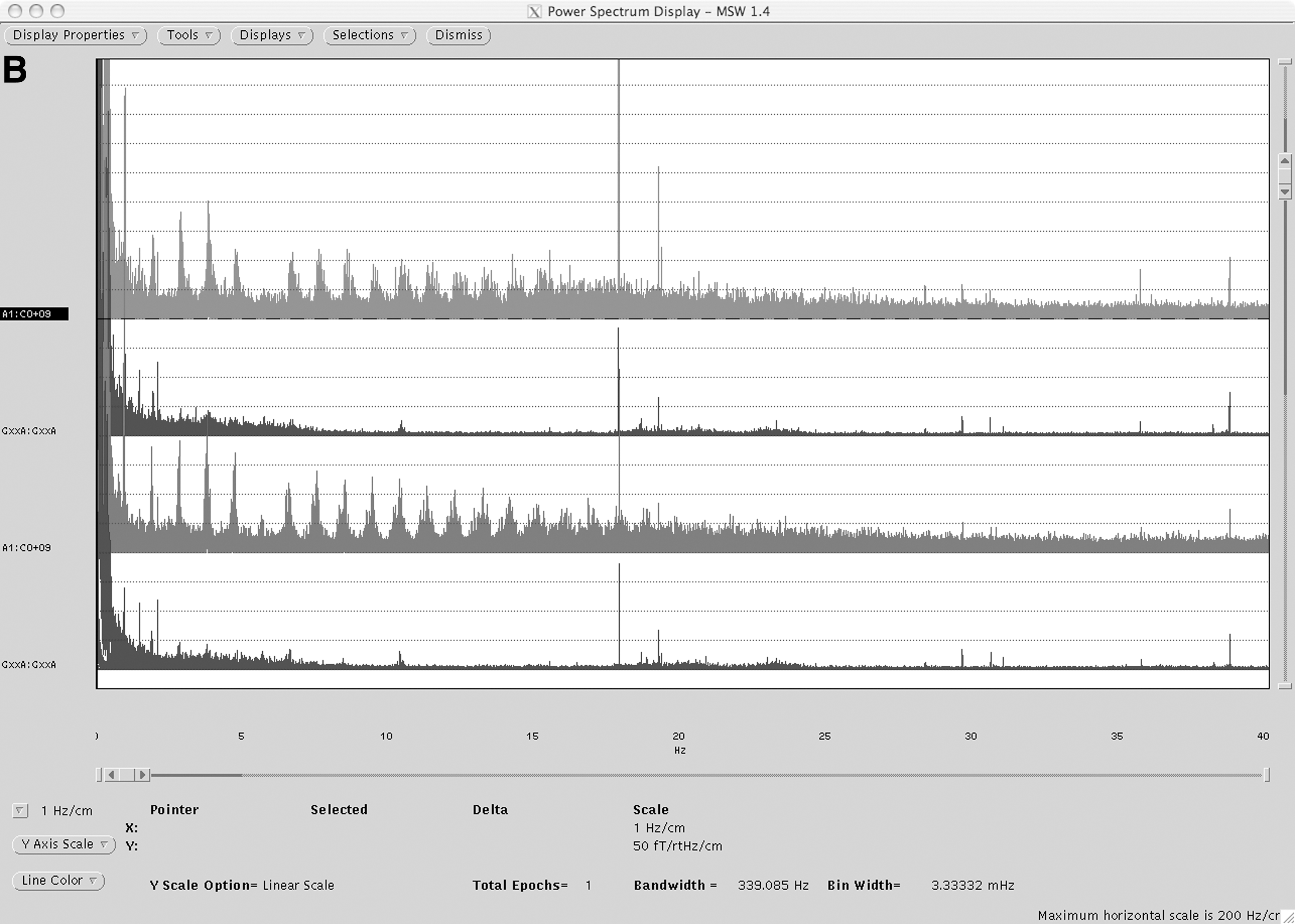
Analysis of all the data from the preselected channels from all subjects under all conditions did not show any time segments of electromagnetic fields with intensity greater than 3 pT. Thus, using an instrument sensitive enough to detect the electromagnetic field produced by a single heartbeat and magnetic shielding that was adequate down to frequencies of 1 Hz, the present study was not able to reproduce the results of Zimmerman, 2 Seto et al., 8 and Hisamitsu et al. 10
Recordings from 2 Masters and 1 volunteer showed a low-intensity sine wave oscillation of 0.25–0.3 Hz (intensity 0.1–0.5 pT) whether or not they were practicing Reiki. Figure 7 shows this pattern in the electromagnetic biofield baseline of a Reiki Master recorded from channels nearest heart (A) and hands (B). Figure 8 shows a similar pattern in another Reiki Master, recorded from sensors nearest the hands, as they send Reiki to another person in the room. Since 0.5 pT is equivalent to one magnetic flux quantum per 40 cm2, or about 7-cm diameter, this defines the measurement area as roughly the size of the palm of the hand or a region over the heart, which must be functioning as a coherent entity. The oscillations in Figures 6 and 7 must therefore be at the quantum level. A physiologic interpretation of this finding will be addressed in the Discussion.

Reiki Master electromagnetic field intensity baseline measure over 60 seconds from channels nearest heart

Electromagnetic field intensity of Reiki Master over 60 seconds from channels nearest hands as they send Reiki to another person in room. Vertical axis: electromagnetic field intensity in Tesla. Horizontal axis: time in seconds (10 seconds per division).
Discussion
This study has shown that using a highly sensitive detector of ELF electromagnetic fields in a room extremely well shielded from external sources of electromagnetic radiation, the authors were not able to detect the exceptionally high intensity bioelectromagnetic fields from energy healers as reported two decades ago by Zimmerman, 2 Seto et al., 8 and by Hisamitsu et al. 10 There is no question that the instrument was sensitive enough to detect signals of the intensity purported to have been measured by the previous investigators. For example, the equipment could easily record the hundred thousand–fold smaller changes in electromagnetic field produced by heartbeats. In addition, an even lower intensity sine wave electromagnetic oscillation was detected from some of the experimental subjects. This response was probably caused by respiratory sinus arrhythmia, as judged by the frequency of oscillation (equivalent to 15–18 breaths/minute) and comparison with results from previous studies. 12,13 Respiratory sinus arrhythmia (RSA) is a normal variation in heart rate, synchronous, or coherent, with breathing that is mediated by parasympathetic input to the heart. Wakai et al. 12 demonstrated that RSA-like oscillations in fetal heart rate are often accompanied by synchronous modulation of fetal cardiac electromagnetic field signal amplitude, implying strongly that both are the result of fetal breathing movements.
At first sight it appears from this study that Reiki practitioners do not produce high-intensity electromagnetic fields from their hands when they are sending Reiki to themselves or others. It could be argued that since only 3 Reiki Masters and 4 newly trained novices were tested, this claim is specious; after all, Seto et al. 8 only recorded the high-intensity fields in 3 of 37 subjects. However, if as Zimmerman 2 and Oschman 7 hypothesize, energy healing is a modality that succeeds as a result of electromagnetic healing energies from the healer's hands being emitted and influencing the biochemistry and cellular physiology of the patient being healed, one would expect that more than 10% of healers would be able to produce a measurable field.
Another possibility is that Reiki is different from other forms of energy healing. High-intensity electromagnetic fields were previously observed in Therapeutic Touch healers 2 and in healers from a range of traditions involving emission of external Qi, 8 but not specifically in Reiki practitioners. However, it is unlikely that Reiki is a unique form of energy that works through a totally different mechanism from other forms of energy healing.
Another interpretation of the data arises from Zimmerman's hypothesis that healers first need to tune in to an external environmental radiation, such as the Schumann resonance (7.8 Hz), before high-intensity radiation is produced from the hands. Humans produce a weak 7.8-Hz electromagnetic signal, known as alpha waves, from the brain. Zimmerman proposed that this signal may resonate with the stronger 7.8-Hz oscillator signal produced by Schumann radiation, resulting in a much stronger electromagnetic signal from the human that could travel from the brain through the body and to the hands via the perineural system. Due to the high degree of magnetic shielding of the room containing the SQUID, such external radiation would probably be blocked and would not be accessible to the Reiki practitioners in the room. This could explain the lack of detection of high-intensity fields from the hands of the subjects in this experiment, and may also explain why only a few subjects in the previous studies showed an effect in moderately shielded rooms.
The phenomenon of tuning into an environmental electromagnetic frequency to stimulate production of high energy has been demonstrated experimentally. For example, resonance frequency tunable energy harvesting devices are now being developed for the powering of wireless sensors. 14 These devices use a piezoelectric cantilever beam with a natural vibration frequency that can be altered by a magnetic force so it can tune in to an external excitation frequency that may be changing over time, to enable a continuous electrical power output sufficient to drive the wireless sensor.
Extending this mechanism to Reiki practitioners, according to Zimmerman's theory, the tuning process would be mediated by the brain waves when they are in one of their “free-run” periods and are susceptible to entrainment by external fields. 7 Further experiments are required to test whether high-intensity fields can be detected from the hands of Reiki practitioners when they are in a location that is open to natural environmental radiation frequencies but remote from confounding artificially generated electromagnetic signals.
Conclusions
Recordings of electromagnetic fields from the hands and hearts of Reiki practitioners during healing sessions, obtained from a modern SQUID housed in a room adequately shielded from ambient magnetic noise, did not reveal any high-intensity electromagnetic fields from their palms, as has been previously reported. The generation of such phenomena may be impeded by the presence of magnetic shielding, implying that Reiki practitioners need to be accessible to environmental electromagnetic frequencies in order to stimulate the flow of Reiki energy.
Footnotes
Acknowledgments
We thank Dr. Jose Criado, who allowed us to use the SQUID, and Lacey Kurelowech who operated the SQUID and acquired the raw data, both from the Division of Neurology, Scripps Clinic. We also thank Dr. Timothy Secomb, Department of Physiology, University of Arizona, who wrote a program to transfer the raw SQUID data to a format compatible with MatLab. We are grateful to the Center for Reiki Research for partial funding of this study. Finally, we thank Dr. Richard Hammerschlag, Emeritus Dean of Research, Oregon College of Oriental Medicine, for editing the article.
Disclosure Statement
None of the authors have any competing financial interests.