




Abstract

Introduction
The Kole and the Rai tribes are two extremely small indigenous communities of Bangladesh. Very little is known about the two tribes, and nothing is known to be reported about their traditional medicinal practices. A recent ethnographic survey 2 has located remnants of the Kole tribe to be present in several small isolated villages of Rajshahi and Nawabganj districts of Bangladesh. Their surviving population is around 1500. They possibly belong to the Austric race of people and may have originated from Africa in the distant past. They claim to be the first tribe to settle in the Bengal region. Their society is patriarchal. Every Kole village has a Headman (Morol), who arbitrates village disputes with the help of the village elders. Marriage is mediated through a middleman (Ghotok), and following marriage, the wife goes to live with the husband's extended family, which may consist of the husband's parents and siblings. Their economic status is very poor, with most men working in the fields of the mainstream Bengali-speaking population as agricultural laborers. During food shortages (which is common), the women go to the forests to collect edible plants and the men engage themselves in hunting. Families may own a few poultry, which they raise for selling at village markets to gather some much-needed cash. Women also weave mats from the leaves of date palms, which they sell to get some extra income. Houses are built of earth with thatched roofs. They mostly follow the Hindu religion and emphasize the worship of deities such as Bhagavati, Kali, and Durga; some have, in recent years, converted to Christianity. Since the Koles prefer to stay apart from the mainstream Bengali-speaking population, they lack access to civic amenities and rely on their own traditional medicinal practitioners for treatment of various ailments. Rice is their main diet, which is supplemented with pulses, vegetables, snails, and turtles. Many wild plants are dried and powdered and eaten throughout the year.
The Rai tribe is located primarily in several villages in the Godagari area of Rajshahi district in Bangladesh; some of their villages are in close proximity to Kole villages. They are presumed to have originated from the Dumka Hills and Murshidabad region in India. Their present number is unknown, but cannot be more than 800 persons. They believe in a supreme deity, Dharmeshwar, who they believe to reside in the sun. Every village has a village council (Panchayet) comprising of a Headman (Morol), one elder, one churedar (who delivers news to village people), and 2 other members. Their language belongs to the Indo-Aryan group of languages, but in recent years, like the Kole tribe, they can speak Bengali. They have three clans, namely, the Rai Khatriya, Singh Bhuiyan, and Mota Bhuiyan, with the present study being conducted among the Rai Khatriyas. The Rai Khatriyas have three totems, Nag, Shankha, and Kocchop. Their main occupation is serving as agricultural laborers to the mainstream population, and their economic status is very poor. Houses are built of earth with tin roofs. The major diet is rice supplemented with what can be gathered or hunted from the wild, such as hares, mongooses, birds, turtles, snails, and fishes. They have their own traditional medicines, which are dispensed by a practitioner called Ojha. Their traditional medicinal practices consist of administering medicinal plants, incantations, and magic.
The traditional medicinal practices of the Koles and the Rais have so far not been documented. The authors had been conducting ethnomedicinal surveys among various large and small tribes of Bangladesh for the last few years. 3 –8 In the authors' surveys, emphasis has been laid on two aspects: smaller tribes, whose very existence is threatened to being engulfed within the mainstream culture, and uncommon modes of treatment among the tribal practitioners. Since the Kole and the Rai tribes have only a few members left within their respective tribal communities, and their traditional medicinal knowledge is on the verge of disappearing, the objective of the present study was to conduct an ethnomedicinal survey among the traditional practitioners of both tribes. The survey work was facilitated by the habitat of the two tribes in adjacent or nearby villages to each other.
The present survey was conducted during 2011. The Kole community was located in three adjacent villages of Bilboiltha (Nawabganj district), and Babudaing, and Saghram Para (Rajshahi district). The Rai community was located in the two villages of Ai Hai Rahi and Amnura in Rajshahi district. The two tribes lived in close proximity to each other, but their villages were separate from the villages of the mainstream Bengali-speaking population. Each village had one tribal practitioner; thus, 3 practitioners were interviewed from the Kole and 2 practitioners from the Rai tribe (Fig. 1). Informed consent was obtained from the Headman of each village and the practitioners to publish both pictures and information on traditional medicinal practices provided by them, and information was given freely. Actual interviews were conducted in Bengali with the help of a semistructured questionnaire and the guided field-walk method of Martin 9 and Maundu. 10 In this method, the practitioners took the interviewers on guided field-walks through areas from where they collected their plants, pointed out the plants, and described their uses. At their request, the Kole and the Rai practitioners were separately interviewed in two groups. The collected plant specimens were identified by Mr. Manjur-Ul-Kadir Mia, ex-Curator and Principal Scientific Officer of the Bangladesh National Herbarium. Voucher specimens were deposited at the Medicinal Plant Collection Wing of the University of Development Alternative.

A Rai traditional medicinal practitioner.
The Kole practitioners used a total of 23 plants distributed into 19 families for treatment of both human and cattle ailments. The Euphorbiaceae family provided the highest number of three plants. The results are shown in Table 1. Treatment of disease was in general simple, with usually one plant being used for treatment of a single disease. However, seeds of Piper nigrum were used in combination with other plants in five different formulations. The ailments treated including abscesses, chest pain due to colds and coughs, gout, pain in the spinal cord, and severe headache due to fever in humans, and badla disease in cattle. When inquired about the use of the seeds of P. nigrum, the Kole practitioners mentioned that the seeds had multiple uses in treatment, namely, their individual therapeutic efficiency, as well as their supposed synergistic effect when used in combination with other plants. In one instance of treatment for hydrocele, roots of Tinospora cordifolia were macerated with spices like clove and cardamom, put in a small sack, and tied to the scrotum. Some instances of addition of other ingredients along with plant material was use of flattened rice with roots of Euphorbia hirta for treatment of lack of milk in nursing mothers, and addition of crystalline sugar (mishri) with leaves of Abroma augusta or roots of Asparagus racemosus for treatment of physical weakness. It is not improbable in the latter two cases that crystalline sugar really acted as the main energy producer, the addition of plants being merely to serve a placebo effect. However, mishri is wide considered in folk medicines of Bangladesh to have strong therapeutic properties, in addition to make a plant part or juice more palatable during oral administration.
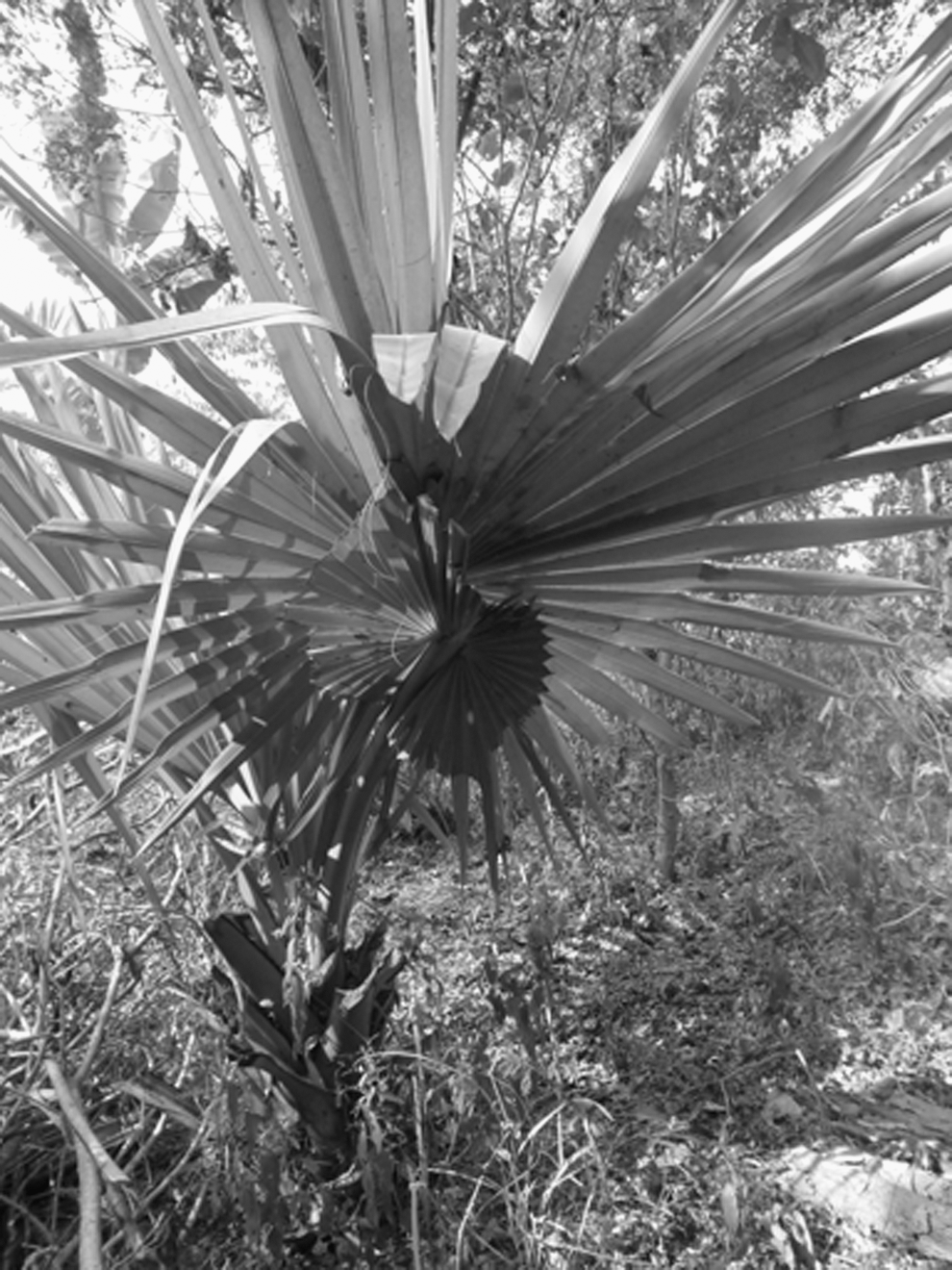
Borassus flabellifer.
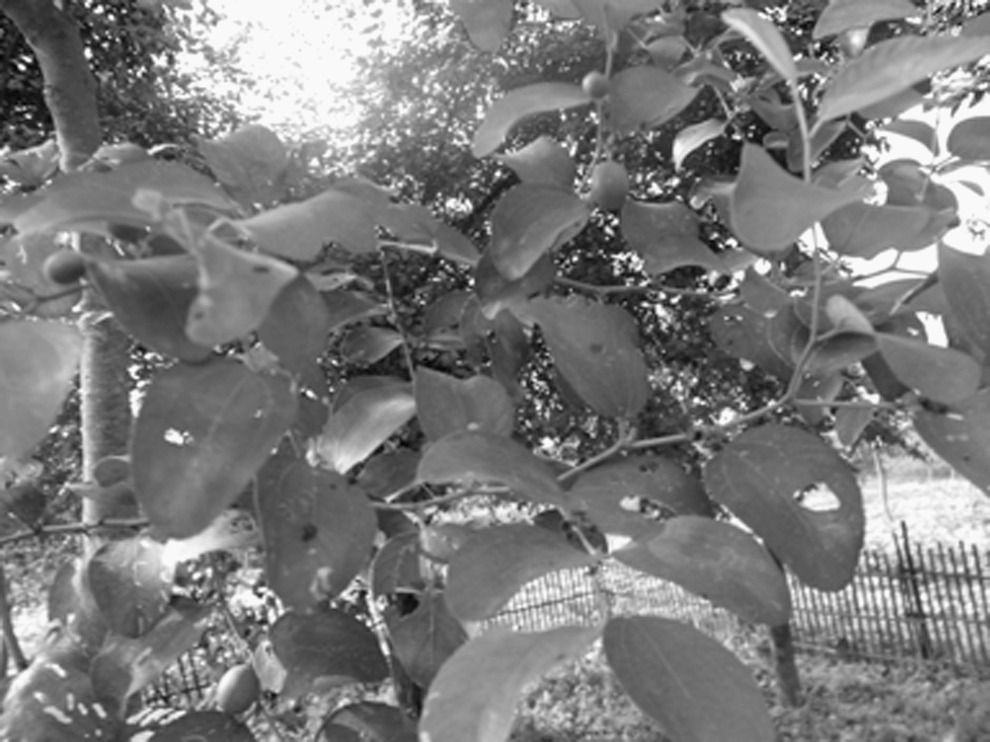
Ziziphus oenoplia.
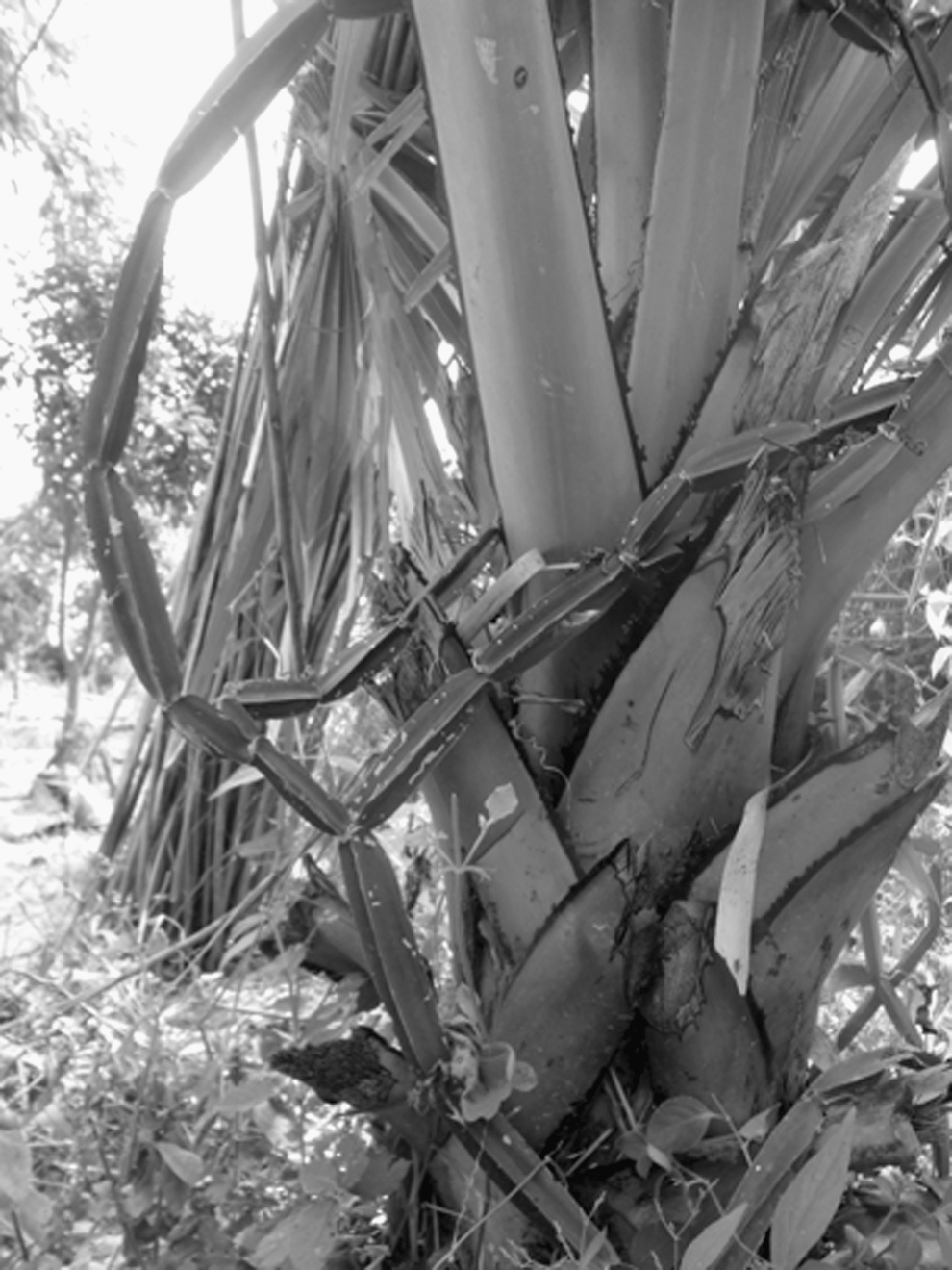
Cissus quadrangularis.
The Kole medicinal practitioners were interviewed as a group at their request, so the plants obtained reflect the total group's opinion.
The 2 practitioners of the Rai tribe used a total of 25 plants distributed into 17 families for treatment of various ailments. The Fabaceae and the Solanaceae families contributed four plants each. The results are shown in Table 2. Unlike the Kole practitioners, the Rai practitioners occasionally used a combination of plants for treatment. For instance, the fruits of Lycopersicon esculentum (tomato) were used along with rhizomes of Curcuma longa (turmeric) for treatment of kalaazar (meaning black fever in Bengali, a term that has been historically indicative of kala azar; the Bengali lexicon also has the term “kala azar”; the term kalaazar may be a combination of the two terms kala and azar by the Rai healers and is used by the Rais to mean recurrent fever accompanied with weakness, abdominal discomfort, and weight loss; see Table 2). Kalaazar is possibly indicative of visceral leishmaniasis; the symptoms of visceral leishmaniasis are very similar to kalaazar symptoms as described by the Rais. Visceral leishmaniasis is very much prevalent in Bangladesh. 11 Interestingly, the formulation was applied both topically and orally; visceral leishmaniasis is often accompanied by dermal leishmaniasis 11 ; as such, the remedy, when applied orally, can provide some relief of kala azar–induced weakness and weight loss (because of the nutritional value of tomatoes), while topical administration can be a remedy for dermal leishmaniasis (due to the presence of turmeric, which is widely used in Bangladesh for treatment of skin infections and for improving skin texture). It would indeed be interesting to study scientifically whether eating tomatoes can be of beneficial effect during visceral leishmaniasis, and topical administration of turmeric with or without tomatoes can provide beneficial effects during dermal leishmaniasis. Unlike the Kole practitioners, the Rai practitioners used the seeds of P. nigrum only in two formulations, where the seeds were used in combination with roots of Solanum virginianum for treatment of chicken pox in humans, or the seeds were used in combination with roots of Physalis micrantha for treatment of gastrointestinal disorders in cattle. The Rai practitioners used the plant Pteridium aquilinum for treatment of any type of cancer. Lacking any diagnostic procedure for cancer, it was observed that any disease not within their knowledge was being referred to as cancer, the term being obviously picked up from mainstream sources.
The Rai medicinal practitioners were interviewed as a group at their request, so the plants obtained reflect the total group's opinion.
The medicinal plants mentioned by the Kole and Rai healers were few. It is possible that the practitioners gave only their simple remedies; it is also possible that because of the dwindling of the tribal population, more complicated medicinal knowledge has been lost. Also, some of the plants mentioned by the Kole and Rai healers were also food items (e.g., fruits of L. esculentum [tomato] and Musa sapientum [banana]). Since any disease is exacerbated by malnutrition, it is possible that these types of consumable and nutritive items served the purpose of providing nutrition and help the patient on the way to recovery, besides providing possible therapeutic benefits.
The Koles and the Rais live within the same general area in adjacent villages. In fact, out of the combined five villages, four villages are within the same police station of Godagari in Rajshahi district. The vegetation is the same in all five villages. Yet, with the exception of P. nigrum, not a single medicinal plant used by the Koles is used by the Rais. Even when the same or similar ailment was treated, the practitioners from the two tribes used different plant species for treatment. For instance, while the plants A. augusta or A. racemosus were used by the Koles for treatment of physical weakness, the Rais used Solanum violaceum. In general, the Rai practitioners treated more complicated diseases than the Koles, including diseases such as kalaazar, cancer, paralysis, tuberculosis, diabetes, and diabetic gangrene. The differences in the selection of medicinal plants as well as diseases are possibly a reflection of the diverse origins of the two communities. The different origins may have led to differential accumulation of traditional knowledge in the first place, a knowledge that has been transmitted through generations of practice. Since the Koles are believed to have originated from Africa, they may have started experimenting with a whole new set of plants after settling in their present habitat, leading to development of treatment for mostly common diseases. On the other hand, the Rais have come to their present place from the neighboring district of Murshidabad in India. As such, they are more accustomed to local flora and since their habitat has not changed much, have more experience in the treatment of complex diseases. India has a number of traditional medicinal systems such as Ayurveda, Unani, and Siddha, which date back thousands of years ago, and since those medicinal systems are cognizant of complex diseases, it is possible that the Rais may have picked up some of the plants from those traditional medicinal systems. For instance, ulcerations and erosions in the skin and mucous membranes, as happens during kala azar, are treated with haridra in the Ayurvedic system, haridra being another name for C. longa. The same plant is used by the Rais along with Lycopersicon esculentum for treatment of kalaazar. Similarly, Oroxylum indicum is used in Ayurveda for treatment of pain 12 ; the Rai practitioners also use the plant for treatment of whole-body pain.
The use of several plants used by Kole and Rai tribal practitioners has been validated by modern research. To cite just one example of plants from each tribe, there are extensive scientific reports on the healing effects of Cissus quadrangularis (a plant used by Kole practitioners for treatment of bone fractures) in bone fracture repair. 13 –15 The Rai tribal practitioners use the plant Achyranthes aspera for treatment of diabetes. Hypoglycemic effect has been observed in normal and alloxan-diabetic rabbits following administration of the powdered whole plant. 16 The validations of the tribal medicinal practices once again highlight the point that much still can be learned from them, and modern science can benefit from performing research on the medicinal plants used by the tribal practitioners instead of dismissing them as mere quackery. Among the plants used by the two tribes, plants such as Euphorbia hirta, E. neriifolia, and Aristolochia indica merit further scientific research for their ability (tribal claim), respectively, to increase milk in nursing mothers, and as treatment for tuberculosis and snake bites. Tuberculosis, or lack of enough milk in nursing mothers are common in rural Bangladesh and also difficult to treat because of absence of modern hospitals, scarcity of allopathic doctors, and malnutrition, which is present in substantial segments of the rural people. As such, a simple plant remedy, if it works, can provide relief to vast segments of the rural poor because of its ready availability at an affordable cost.
It is to be noted that aristolochic acid produced by Aristolochia family plants have been implicated in urothelial cancer. 17 However, snake bites are fairly common in Bangladesh rural areas, particularly during the rainy season, when snakes enter rural homes to take shelter from water. As snake antivenom is difficult to obtain in rural areas, the plant, despite its tendency to produce urothelial cancer, may still prove to provide relief in snake-bitten fatal cases, particularly when antivenom is absent. Also to be noted is that only small amounts of roots of A. indica are taken during snake bites followed by soaking in water. The water soaking could lead to possible leaching out of aristolochic acid, making the rest of the root fairly safe to chew. It is to be pointed out that thus far there has been no scientific evidence showing that snake bite–induced deaths can be prevented with roots or any part of this plant. As such, initial laboratory tests need to be performed first to determine whether the remedy as prescribed by the healers (i.e., soaking roots in water first before orally taking the roots) can get rid of any toxic/carcinogenic substances as well as act as an antivenom.
Footnotes
Acknowledgments
Internal funding was provided by the University of Development Alternative.
Disclosure Statement
No financial conflicts of interest exist.