




Abstract

Acorus calamus

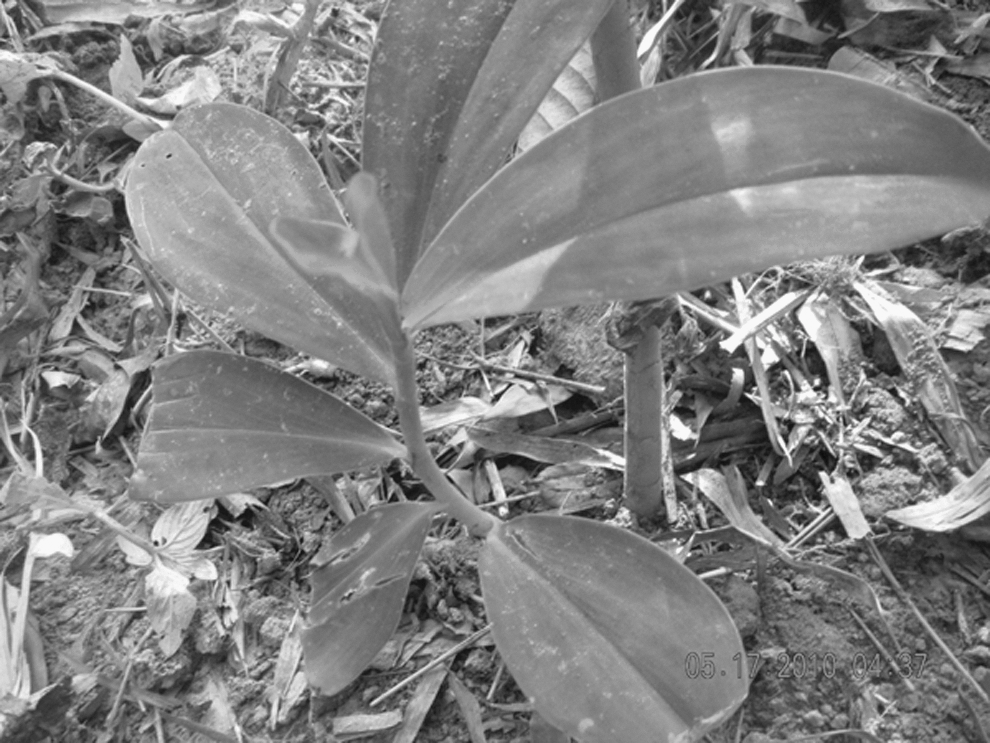
Costus speciosus
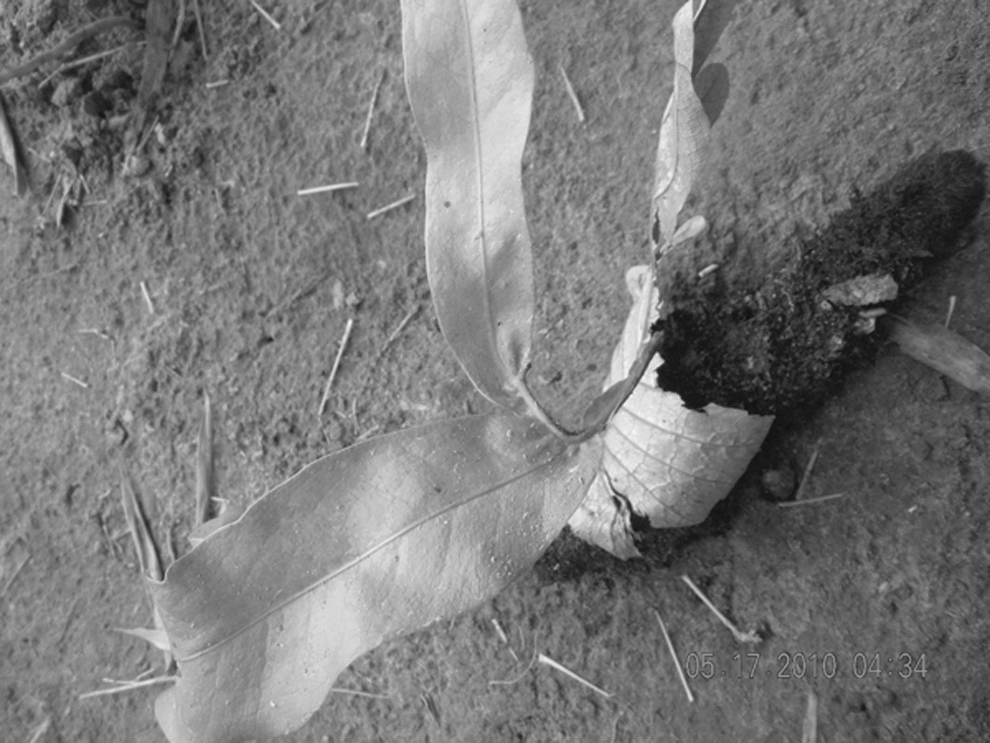
Drynaria quercifolia
T
The Kuch tribe claims to have come to their present land from the Cooch Behar region of present-day India, from which they derived their tribal name. According to their claims, they are the descendants of Raja Nar Narayan of Cooch Behar. Anthropologists believe that they belong to the Mongoloid race of people. They have their own language but no alphabets; the language belongs to the Indo-Chinese group of languages.
The Kuch, although they owned vast tracts of land in the past, are landless at present. They work as agricultural laborers in lands belonging to the mainstream Bengali-speaking population. As a consequence, their economic status is extremely poor. The men work in the fields and women supplement their family income by making various items from bamboo and selling them in the local village markets. Their main diet consists of rice consumed with dried fish and vegetables. Meat is primarily obtained from hunting rabbits, boars, and porcupines from forest areas. Fermented rice wine forms a major part of their diet and religious festivals. A favorite food is khaji or kanthamuri, which consists of steamed dried fish in combination with powdered rice and vegetables.
Even at the turn of this century, Bangladesh was considered to have about a dozen tribes: the Chakma, Marma, Murong, Hajong, Garo, Tripura, Oraon, Bawm, Mro, Santal, Khasia, and Manipuri. A good deal of ethnographic research since then has identified numerous tribes in Bangladesh, which are small in number and are on the verge of extinction or assimilation with the mainstream population. Present estimates by anthropologists put the number of smaller tribes as certainly over 100 and possibly nearing 200. Very little is known about these indigenous communities, although many of them possibly existed in the region even before the coming of the Aryans some 3500 years ago. A major neglected part of tribal research is documentation of their traditional medicinal practices, which exist in practically each of these different tribes. This is unfortunate because the tribal medicinal practitioners, through centuries of acquaintance with the local flora and accumulation and passing of knowledge through successive generations, have extensive knowledge of the medicinal properties of plants found in their habitat. Several major modern medicinal discoveries, such as aspirin, atropine, ephedrine, digoxin, morphine, quinine, reserpine, and tubocurarine, have occurred through close observations and documentation of the indigenous medicinal practices in various countries. 2,3
The authors have been conducting ethnomedicinal surveys among the various tribes of Bangladesh for the last few years in an effort to document as much of their indigenous medicinal practices before they disappear altogether under the onslaught of globalization and tribal assimilation within the mainstream population. The indigenous medicinal practices of some of these tribes, such as the Chakma, Santal, Bede, Tripura, Hodi, Pahan, Teli, Garo, and the Sardar communities, have been published. 4 –11 The objective of the present study was to document the Kuch tribal medicinal formulations of tribal medicinal practitioners (TMPs) within a Kuch community located in the Sherpur district of Bangladesh (Fig. 1).

A Kuch practitioner preparing one of his formulations.
The present study was conducted in 2010. After extensive searches, a Kuch community was located in the village of Kholchandapur in the Sherpur district, Bangladesh. The community of approximately 500 people had two TMPs: Surendra Kuch and Sri Satish Chandra Kuch. Informed consent was initially obtained from both TMPs and the Mondol to use the practitioners' names and any information provided to be disseminated nationally and internationally. The Kuch community was very cooperative and did not object to the survey, except that both TMPs wanted to be interviewed together. In fact, it was a general lament of the community people that their age-old practices are disappearing and nobody seems to be interested in preserving the community traditions and rituals, including their traditional medicinal practices. Interviews were conducted in Bengali, which was the language of the interviewers and was spoken and understood by the Kuch.
Interviews were conducted with the help of a semi-structured questionnaire and the guided field-walk method of Martin 12 and Maundu. 13 With this method, the practitioners took the interviewers through guided walks through areas where they collected their medicinal plants, showed the plants, and described their uses. Plant specimens were photographed, collected, dried, and brought back to Dhaka for identification by Manjur-Ul-Kadir Mia, ex-curator and principal scientific officer of the Bangladesh National Herbarium. Voucher specimens were deposited with the Medicinal Plant Collection Wing of the University of Development Alternative.
The Kuch TMPs were observed to use 49 plants distributed into 34 families in their various preparations. The Zingiberaceae family contributed 4 plants, followed by the Cucurbitaceae, Fabaceae, Poaceae, and Solanaceae families, with 3 plants each. Whole plant, leaves, tubers, roots, rhizomes, stems, barks, fruits, and seed oil formed the constituents of various formulations. Besides plants, metallic ingredients (discussed later), insects (see Costus speciosus, Table 1) and fish (see Physalis angulata, Table 1) also formed constituents of some formulations. The results are shown in Table 1.
Wood of Acacia catechu (Fabaceae) is boiled in water and the resultant brew is evaporated to dryness through boiling or under the sun to make akra khoyer and pakri khoyer; note that akra khoyer and pakri khoyer differ only in their extent of hardness.
Formulations could be simple or highly complex. With one formulation, for example, malaria was simply treated with roots of Rauwolfia serpentina. However, with another formulation, depending on the persistency of malarial fever, Tinospora crispa whole plant was used first, followed by leaves of Borreria articularis. If the latter was used, the leaves of Scoparia dulcis (which has a sweet taste) was advised to be chewed to get rid of the bitter taste of B. articularis. For treatment of debility, a combination of multiple plants, namely Curculigo orchioides, Melothria heterophylla, Ophioglossum vulgatum, and Hemarthria protensa was used in the formulation.
Some of the ailments treated, particularly the treatment methods, were rather esoteric in nature. For instance, if an infant was stuck during childbirth, root of Achyranthes aspera was hung, after uttering of the pregnant woman's name, from the woman's hair on her head in the front of her face in one breath. The TMPs claimed that this treatment expedited the infant's delivery in such a way that if the root is not removed immediately following delivery, the intestines of the woman will come out. Another case involved someone claiming to be subjugated by black magic through the burial of the affected person's belongings (hair, nails, or some personal items used) under the soil. According to the TMPs, if the root of Blumea oxydonta is put in a bowl and the bowl is held by a person belonging to the zodiac sign of Libra followed by the uttering of incantations, anything buried under the soil would automatically come out. Because the original burial place of the affected person's belonging, and whether anything was in reality buried or not, was unknown and whether anything did actually come out could not be ascertained, it appeared to the interviewers that this process possibly created a placebo effect to soothe the mind of the person, who believed himself or herself to be subjugated by black magic. On further questioning, it also appeared that a person thinking he or she was under the influence of black magic invariably had some sort of enmity with another person, leading to the belief that the other person was trying to cause harm through this black magic process. In another such esoteric treatment, couples having differences were united or differences were reconciled by bringing together two leaves of the plant Desmodium motorium close together, such that the leaves started to cling to each other. The interviewers did notice that the leaves (actually leaflets) rotated on their axes and jerked up and down under the influence of sunshine, which suggested the effect of trying to cling together. This could be another instance of a placebo effect taking place.
Many ingredients used by the Kuch TMPs in their formulations were not prepared by the TMPs themselves but were bought from traditional medicinal ingredient shops (locally known as banya shops) located in the village markets of the adjoining mainstream Bengali-speaking population. These substances included sindira (see Acorus calamus, Table 1), ras sindoor (see Acorus calamus, Costus speciosus and Zingiber zerumbet, Table 1), pakri khoyer (see Combretum grandiflorum and Kaempferia rotunda, Table 1), sindik (see Costus speciosus and Zingiber zerumbet, Table 1), makaradhvaja (see Costus speciosus, Table 1), akra khoyer (see Acacia catechu, Table 1), and rosh shindip (see Kaempferia rotunda, Table 1) (see Table 2 for more details). Pakri khoyer and akra khoyer are the wood of Acacia catechu boiled in water, with the resultant brew evaporated through boiling or drying under the sun; these two substances differ only in their extent of hardness. Because of the hardness of these two khoyers, the Kuchs regard them as metals. Notably, the Bengali-speaking mainstream population, as well as some tribes (such as the Khasi tribe of Bangladesh), is habituated to the chewing of betel leaves along with betel nut, lime, and khoyer (khoyer is a Bengali word and is used as a liquid suspension when chewing betel leaves). The Kuchs also regard sindik (rock salt) as a metal because of its hardness.
It appeared that some of the Kuch formulations included ingredients containing mercury, particularly in its sulfide form. These ingredients included sindira (red sulfide of mercury), ras sindoor (in which mercury has been converted to its sulfide form; the mercury-based Indian traditional drug ras sindoor is administered for various ailments, such as syphilis, genital disorders, and rejuvenation, in Ayurveda), and makaradhvaja (which also contains mercury sulfide along with silver and sulfide of silver). Use of metallic herbal preparations (bhasma or calcination) in which bhasma is prepared through a process termed bhasmikarana (mixing metal with sulfur and herbal preparations and then controlled intermittent heating so that metal is converted to its sulfide form) is something unique to Ayurveda. Converting a metal to its sulfide form or calcination of a metal is regarded in Ayurveda as removing toxic properties of the metal, especially mercury. Neither the Kuch leaders nor the patients reported any instances of toxicity induced by the heavy metals in several of the formulations.
Ras sindoor is a well-known Ayurvedic preparation prescribed for certain diseases, such as syphilis and genital disorders, and also for rejuvenation purposes. 14 The Kuch TMPs used it in formulations to treat stomach pain; passing of dense, whitish, sticky substance or sperm before or after urination (purulent penile discharge, more symptomatic of gonorrhea or other sexually transmitted infection); and paralysis of the hands or legs. Makaradhvaja is also a well-known Ayurvedic preparation and is used as a stimulant and vitalizer; 15 the Kuch TMPs use it for purulent penile discharge (possibly gonorrhea or other sexually transmitted diseases), which may weaken the body, thus demonstrating a similarity with classic Ayurvedic use. The use of these ingredients suggests that the Kuch TMPs may have picked up the knowledge from Ayurveda; this is also borne out by the fact that the Kuch TMPs did not themselves know how to prepare these ingredients but bought them from banya shops. Because the Kuchs came originally from Cooch Behar in India and settled in Bangladesh (both of which countries have a strong Ayurvedic presence), there must have been a time when some Kuch TMP picked up this Ayurvedic use of ras sindoor and makaradhvaja and started using them in Kuch traditional medicine.
Table 1 compares the Kuch healers' use of medicinal plants versus their Ayurvedic and other traditional medicinal uses in India (such as Unani and Siddha). Of the 49 plants used by the Kuch healers, Indian traditional medicinal uses were found for 35 species. Of these 35 species, similarity between use by Kuch healers and Indian traditional medicinal uses could be found for 12 plant species: Justicia adhatoda, Acorus calamus, Costus speciosus, Mimosa pudica, Litsea glutinosa, Stephania glabra, Piper longum, Drynaria quercifolia, S. dulcis, Centella asiatica, Cissus quadrangularis, and Curcuma caesia.
The presence and use of heavy metals in Ayurvedic preparations, and in the present study in several Kuch formulations, raise some concerns about heavy metal toxicity. This issue has been hotly debated for the last few years. Proponents claim that calcination or conversion to the sulfide form removes the toxicity of heavy metals, while opponents have shown instances of heavy metal toxic effects after use of preparations containing heavy metal. It has been claimed that arogyavardhini vati (a polyherbal Ayurvedic preparation containing mercury) showed no toxic effects in Wistar rats when given even up to 10 times the normal human dose. 16 In bhasmas, it has been claimed that the metals remain chelated to organic ligands from medicinal herbs and so harmful effects are eliminated. 17 On the other hand, heavy metal toxicities and concern about such toxicities have also been expressed for Ayurvedic preparations. 18,19 Clearly, more thorough and long-term scientific studies need to be carried out with metallo-herbal preparations, particularly the use of bhasmas.
The medicinal plants of the Kuch tribe show strong potential for further scientific studies because some of their formulations are used to treat malaria (which is increasingly becoming drug-resistant) and diabetes (for which modern allopathic medicine has symptomatic treatments but no total cure). However, diabetes is a chronic disease for which the Kuch formulation may not prove effective as a total cure but may merely prove efficacious in treating symptoms such as hyperglycemia; in addition, the formulation may be more efficacious in increasing insulin secretion or glucose utilization than many currently used allopathic drugs. There are no available reports on Coccinia trilobata (used by the Kuch for treatment of diabetes) regarding antidiabetic or antihyperglycemic activity of the plant or plant parts; this makes the plant potentially more interesting for further scientific studies. However, another plant, S. glabra, the roots of which were coadministered with roots of C. trilobata by the Kuch healers for treatment of diabetes, reportedly contains 11-hydroxypalmatine, which demonstrated hypoglycemic activity in alloxan-induced diabetic mice. 20 It is also interesting that the Kuch healers administered a combination of the roots of C. trilobata and S. glabra for 30 days only. During only this time, eating of molasses was forbidden. The Kuch healers claimed that within this 30-day period, diabetes would be “cured.” This needs to be scientifically determined.
The Kuch treated malaria with Rauwolfia serpentina as well as Tinospora crispa. The latter is used as an antimalarial agent in French Guiana traditional remedies; 21 however, use of this plant in malarial prophylaxis may be related to toxic hepatitis. 22 The Garo tribe of Bangladesh use a paste of root of R. serpentina with black pepper seeds to treat malaria. 23 However, no scientific studies have evaluated the antimalarial effects of this plant. Moreover, the plant is known to contain the hypotensive substance reserpine, which may be problematic in use of this plant as an antimalarial remedy. Nevertheless, because the malaria parasite has become resistant to several antimalarial drugs, it is worthwhile investigating these two plants for isolation of antimalarial components without resultant adverse effects.
The plants used for treatment of purulent penile discharge (possibly gonorrhea or other sexually transmitted diseases) by the Kuch healers also deserve further scientific studies because available drugs against gonorrhea in particular are becoming or have become drug-resistant. The healers used four plants to treat this ailment or symptoms: C. speciosus, D. quercifolia, Trichosanthes cordata, and S. dulcis. Of the four plants, extract of D. quercifolia has been reported to inhibit Neisseria gonorrhoeae clinical isolates. 24 It would be interesting to conduct further studies on these plants toward isolation of components active against particularly drug-resistant strains of N. gonorrhoeae.
It is significant that this report appears to be the first one to document that an indigenous community of Bangladesh was using Ayurvedic ingredients containing heavy metals in their medicinal plant formulations. Also noteworthy is that the Kuch leaders themselves did not prepare Ayurvedic ingredients but rather bought them from local banya shops; this suggests that the healers did not possess knowledge on the preparation or formulation of the ingredients. The use of a combination of certain Ayurvedic ingredients (containing heavy metals) with medicinal plants is to some extent novel (considering that it was done by indigenous community healers and not Ayurvedic practitioners) and worth exploring scientifically for their actual efficacies as well as possible toxicities.
Footnotes
Disclosure Statement
No competing financial interests exist.