




Abstract
Background:
The Driver Resonator is a registered electro-medical device used by a number of medical health professionals. The device was developed for the elimination and/or reduction of pathogens by means of electrical impulses to the human body. There is currently no evidence available to determine the direct effect of the frequencies of the Driver Resonator on specific pathogens.
Methodology:
A growth curve was constructed to determine three different growth phases of Candida albicans. Using data obtained from the growth curve, C. albicans cells were harvested during the selected growth phases and treated with the Driver Resonator at a frequency of 385 kHz. The cells were treated for 10 minutes at time intervals of 0, 2, and 4 hours, and samples were taken after each treatment to determine the number of viable cells. To investigate the effect that nutrients might have on the cells' ability to recover after treatment, the Driver Resonator treatment was applied to cells suspended in nutrient broth as well as cells suspended in phosphate-buffered saline.
Results:
The Driver Resonator had no significant effect on C. albicans cell viability and recovery in the absence or presence of nutrients when the cells were in the mid-exponential, late-exponential, and stationary phases of growth.
Conclusion:
These results support further testing of the starting cell concentration and the effect this might have on the efficiency of Driver Resonator. It should be remembered that the human body is a complex system. The electrodes of the Driver Resonator were specifically adapted for this study by the manufacturer to test the effect of the equipment on the C. albicans and not the human body. The laboratory results may not accurately reflect the results that might occur when the prescribed frequency is applied to the human body as the Driver Resonator is intended to do.
Introduction
C
C. albicans infections are usually treated with antifungal agents such as nystatin, amphotericin B, and fluconazole. 3 According to Molero et al., however, most of the drugs used in the treatment of C. albicans infections are toxic, and some C. albicans infections are becoming drug resistant. 2 The authors note that there is a need for selective antifungal agents or alternative treatment methods. 2
Vibrational medicine views living beings as more than just an arrangement of fats, proteins, and nucleic acids. According to its concepts, there is a conscious life force that animates all living beings. 4 This suggests that the vital force functions intelligently and forms the basis of all substances, including animals, plants, and minerals. In vibrational medicine, the cause of disease is seen as a result of an imbalance of this vital force. 5 Rojavin and Ziskin suggest that, since some biomolecules and structural elements of cells have their own theoretically calculated resonant frequency, vibrational effects on specific pathogens may occur as a result of a type of resonance interaction. 6 Clark believes that an organism cannot transmit its frequency if the resonating frequency of that organism is determined and applied to the organism. 7 Boehm provided methods for readily and efficiently determining frequencies that can be used therapeutically for the debilitation of specific types of genomic materials, including DNA and/or RNA, genes, and gene sections. 8 The methods can be used in a variety of circumstances related to various human and animal diseases and conditions. 8
The Driver Resonator is an electro-medical device, manufactured in South Africa for stress relief, enhanced energy, pathogen removal, bone growth stimulation, increased sense of well-being, pain management, relaxation of muscle spasms, increased local blood and lymph circulation. According to the developer and manufacturer, pathogens can be destroyed by pulsing the body, for a specified period of time per frequency, with predetermined frequencies that resonate with specific pathogens. In theory, the mechanism is similar to the shattering of a crystal glass by a soprano singer whose voice frequency reaches the resonant frequency of the glass. 9 Clark argues that if the specific resonant frequency of a pathogen's cell is pulsed through an organism for a certain amount of time, the cell membrane, which can only hold that vibration for a short period, will burst or “shatter.” 7 Without the cell membrane, the pathogen cannot survive. According to the manufacturer, the Driver Resonator can destroy Histoplasma, Cornybacterium, Influenza, Streptococcus mitis, Salmonella, Clostridium, Coxsackie, Chlamydia trachomatis, and C. albicans.
Although testimonials and other anecdotal evidence are available from the manufacturer's website, there is currently no controlled laboratory research on the effect of the prescribed frequency of 385 kHz on C. albicans. The aim of this study was to investigate the effect of the Driver Resonator frequency (385 kHz) on C. albicans cell viability and recovery in the presence and absence of nutrients.
Materials and Methods
Construction of the C. albicans growth curve
The strain of C. albicans used in this study was a clinical isolate maintained in the Department of Medical Microbiology at the University of Johannesburg. The strain was cultured on sabouraud dextrose agar (Oxoid™; Thermo Fisher Scientic, Inc.) and incubated under aerobic conditions at 35°C for 24 h.
A typical growth curve for C. albicans was then constructed, using optical density (OD) readings (495 nm) obtained with a spectrophotometer and used as indicator of cell number. Briefly, C. albicans was plated onto sabouraud dextrose agar plates and incubated overnight at 35°C to obtain a fresh culture. A preinoculum was prepared by inoculating an Erlyn Meyer flask containing 100 ml nutrient broth (Oxoid™; Thermo Fisher Scientific, Inc.) with a loop full of the overnight culture. The C. albicans was then grown overnight at 35°C with mild agitation (200 rpm). From this second overnight culture, 10 ml were inoculated into 3 Erlyn Meyer flasks, each containing 90 ml nutrient broth, and the flasks were incubated at 35°C with mild agitation (200 rpm). One milliliter samples were removed from each flask every 30 min and used to measure the OD495 readings of the C. albicans cell suspension. An Erlyn Meyer flask containing only nutrient media was included in all the experiments and used as a blank for the spectrophotometer as well as a quality control to monitor the media for contamination. Sterile techniques were used throughout all experiments, and the experiment was done in triplicate and repeated twice. A graph of the OD495 readings was plotted against the corresponding time intervals (Fig. 1). The ranges for the mid-exponential, late exponential, and stationary phases were determined (see Fig. 1), after which the OD495 values of ∼0.7 for the mid-exponential, ∼1.0 for the late exponential phase, and ∼1.2 for the stationary phase were chosen as the points during which cells would be harvested for the treatment experiments.
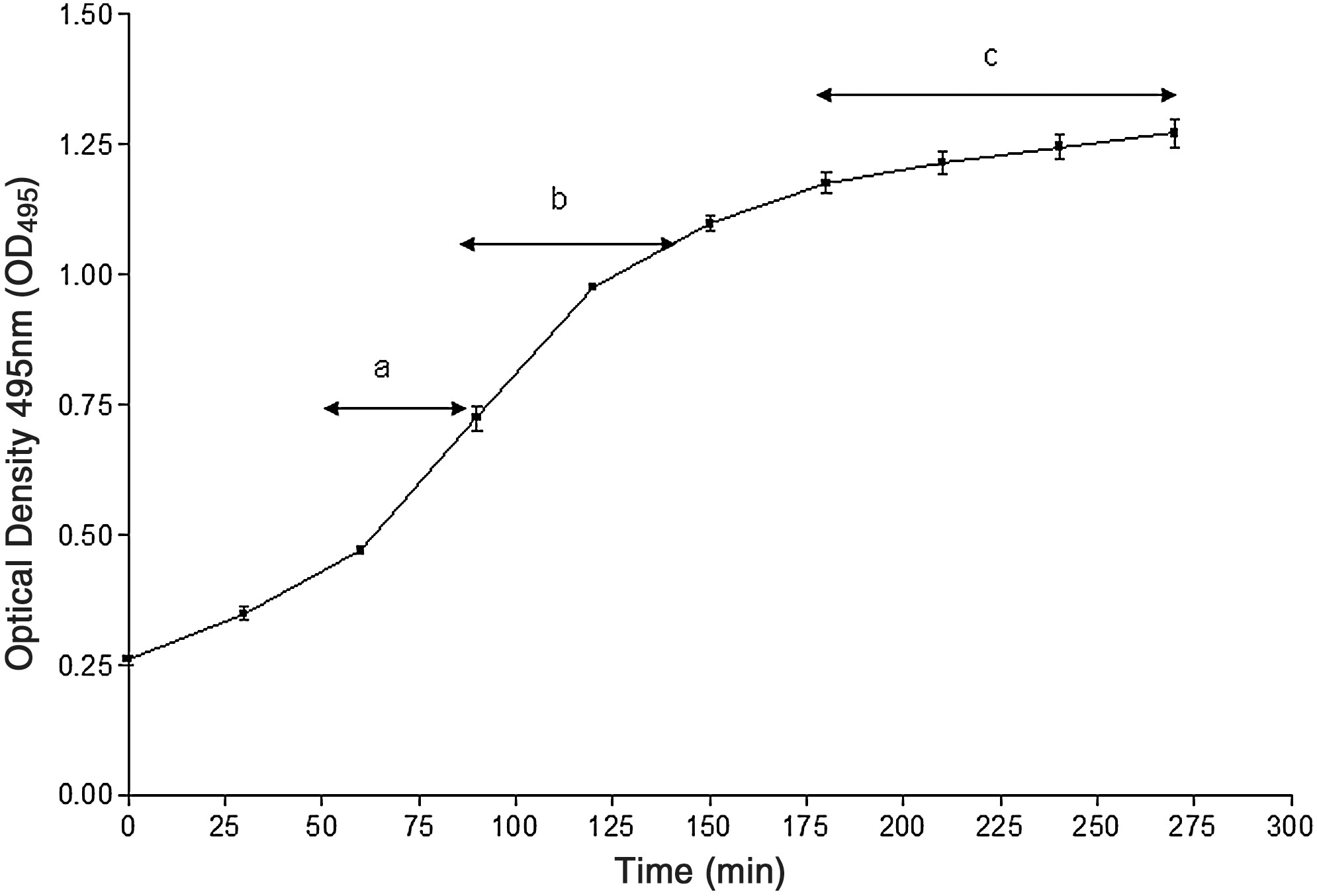
Standard growth curve for C. albicans.
Adaptation of the Driver Resonator
The Driver Resonator uses handholds and footplates to place the patient into an electronic circuit and then expose the patient to preprogrammed frequencies. The predetermined frequencies are pulsed through as biphasic direct current offset pulses. To accommodate the requirements of the experimental procedure, the manufacturer adapted the Driver Resonator. The experimental set-up and the modifications made to the Driver Resonator can be seen in Figure 2.
As shown in Figure 2, metal electrodes (F), which were connected to the Driver Resonator (A) by electrical leads, were manufactured for each test tube containing C. albicans. Electrical wires (C) were connected in series to the electrodes in the test tubes to simulate the current sent through the handholds. The test tubes were housed in a coiled container, also connected to the Driver Resonator, to simulate the footplates and thus complete the biphasic current offset pulses usually administered through the handholds and footplates. Yellow and red test tube holders were used to distinguish between test tubes that would receive treatment and test tubes that would not.
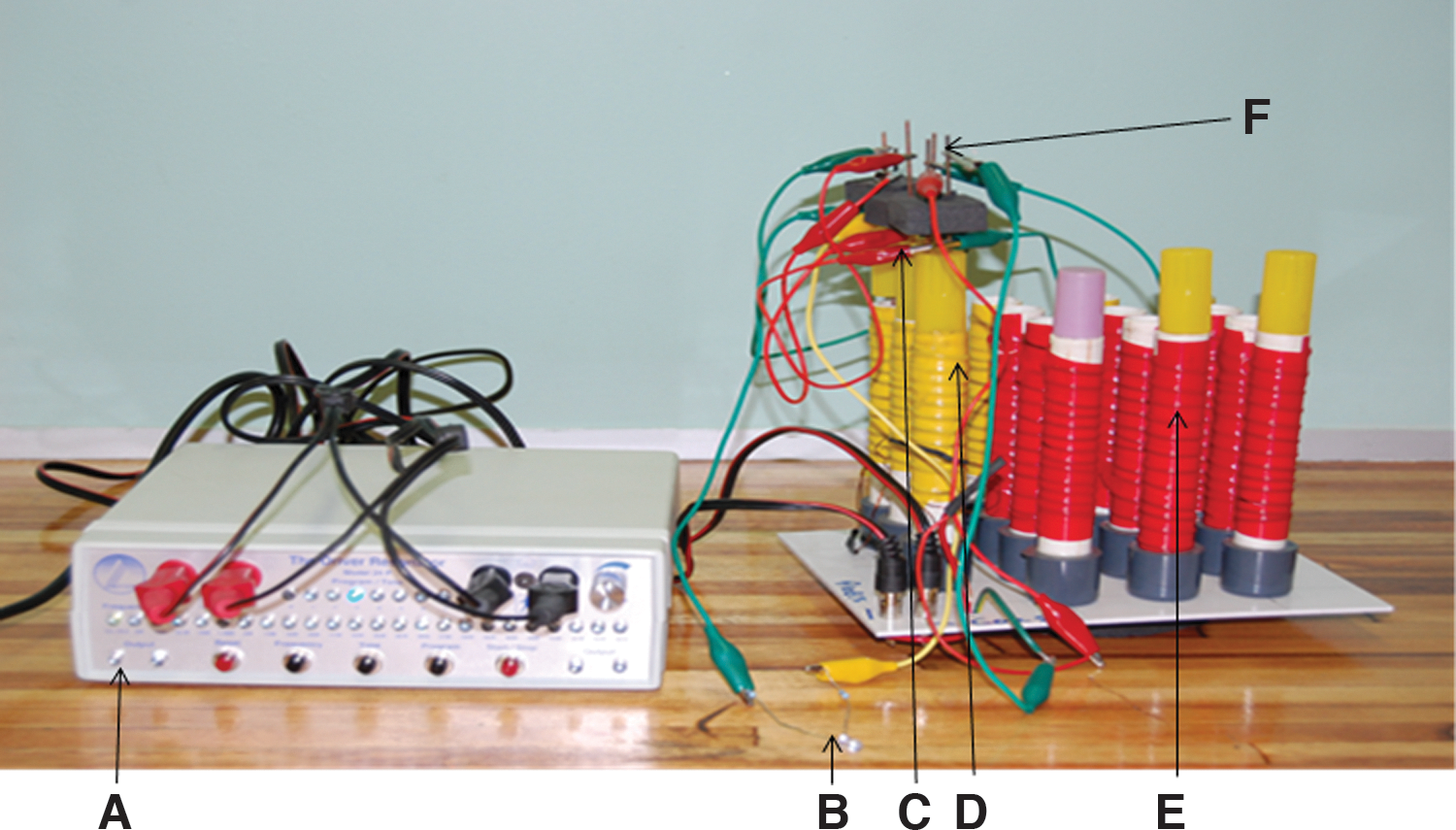
The Driver Resonator experimental setup. The Driver Resonator
The red holders (E) contained all the electrodes and wiring but were not connected to the Driver Resonator. This was done to confirm that the presence of the electrodes would not have an effect on the viability and recovery of the C. albicans cells. Treatment control tubes (untreated samples) were housed in these holders. The yellow holders (D) were connected to the Driver Resonator to mimic the treatment usually given to human subjects. A LED light (B) was used to ensure that a current was present at all times during the treatment period.
Application of the Driver Resonator
To test the effect of the Driver Resonator on C. albicans cells in phosphate-buffered saline, C. albicans was plated onto sabouraud dextrose agar plates and incubated overnight at 35°C to obtain a fresh culture. A preinoculum was prepared by inoculating an Erlyn Meyer flask containing 100 ml nutrient broth with a loop full of the overnight culture. The preinoculum was grown overnight at 35°C with mild agitation (200 rpm). From the overnight culture, 10 ml were inoculated into 3 Erlyn Meyer flasks, containing 90 ml nutrient broth. These flasks were incubated at 35°C with mild agitation. Cells were harvested in the mid-exponential (OD495=0.7), late-exponential (OD495=1.0) and stationary (OD495=1.2) phases of growth. This was done by removing 10 ml of the cell suspension and collecting the cell pellet by centrifugation at 13,000 rpm for 10 min. The cells were suspended in 10 ml phosphate-buffered saline (pH 7.4) and washed two more times. The C. albicans cell suspensions were then treated with the Driver Resonator with the prescribed frequency of 385 kHz for a 10-minute period at 0, 2, and 4 hours. After each treatment, the sample was mixed thoroughly and a 200 μl sample was taken. Tenfold serial dilutions were made in the phosphate-buffered saline (pH 7.4), and 100 μl were plated onto sabouraud dextrose agar plates. The plates were incubated overnight at 35°C, and the colonies counted after 24 hours and 48 hours to determine the number of viable cells. Between treatments, the cell suspensions were incubated at 35°C. The experiment was done in triplicate and included a negative control (clean buffer) and a treatment control (untreated cells).
The same experimental procedure was followed when measuring the effect of the Driver Resonator on C. albicans in nutrient broth. For this procedure, however, the cells were not washed and suspended in phosphate-buffered saline prior to treatment but kept in the nutrient broth they were grown in.
Results
The effect of the Driver Resonator on C. albicans cells in phosphate-buffered saline
Our study examined the effect of the Driver Resonator's prescribed treatment frequency of 385 kHtz on C. albicans during the three selected phases of growth (mid-exponential, late exponential, and stationary), when there were no nutrients available for the recovery and growth of the cells. Since the cells might use nutrients to facilitate cell repair due to injury caused by the Driver Resonator, the first experiments were performed in the absence of nutrients. To be sure that no nutrients were available, the cells were washed and suspended in phosphate-buffered saline for these experiments. Using the adapted Driver Resonator, the cell suspensions were treated according to the recommendations provided with the Driver Resonator, that is, each suspension received 3 treatments for a period of 10 min each time. In between treatments, at intervals of 2 h, cells were incubated at 35°C to mimic the normal growth of C. albicans in the human body. As this is the temperature needed for optimal growth of the cells in vitro, it should have made it possible for the cells to activate repair mechanisms.
The results obtained from these experiments are shown in Figure 3A–C. It can be clearly seen that there is no significant difference between treated and untreated groups in the number of cells recovered after each treatment. The only exception is for the C. albicans cells in the mid-exponential phase (Fig. 3A) where a reduction in the number of viable C. albicans cells is seen after the third treatment. The same trend is not observed for the untreated cells. It should be taken into consideration that a high number of C. albicans cells were used for the experiments to accommodate the required usable optical density readings and to ensure that usable microbiological data would be obtained if the treatment was too effective. It could be hypothesized that the reduction in viable cells at the end of the experiment would be more pronounced if a lower cell concentration were used or if more treatments were performed. The initial experimental design, however, called for only 3 treatments of 10 minutes each to simulate normal treatment with the Driver Resonator.
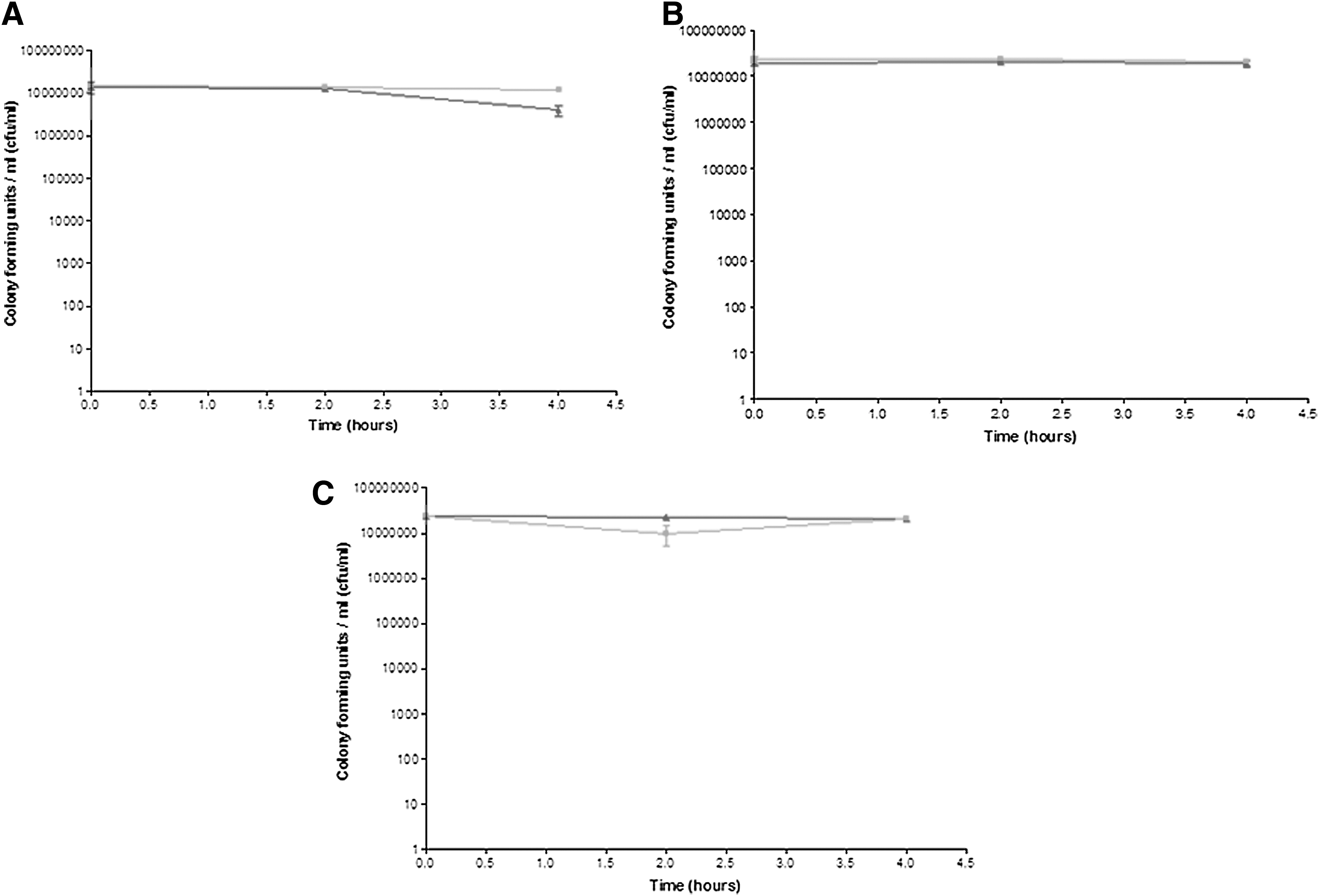
The effect of the Driver Resonator on C. albicans cell viability in the absence of nutrients for untreated cells (grey line) and treated cells (black line) in the
From the graphs shown in Figure 3B–C, it can be deduced that the Driver Resonator had no effect on C. albicans cell viability and recovery in the absence of nutrients when cells were in the late-exponential and stationary phases of growth.
The effect of the Driver Resonator frequency treatment on C. albicans cell viability and recovery in the presence of nutrients
This experiment was performed to examine the effect of the Driver Resonator prescribed treatment on C. albicans during different phases of growth when nutrients were available for cell recovery and growth. For this experiment, the C. albicans cells were not washed and suspended in phosphate-buffered saline but kept in the nutrient media used for growing the cells.
The results obtained from these experiments can be seen in Figure 4A–C. It is clear from the graphs that there is no significant difference between the control group and treated group. The only exception is seen in Figure 4C where the C. albicans cells are in the stationary phase. In this graph, there is a slight increase in the number of viable cells in the control group during the experiments. It should be noted, however, that there seems to be a slight decrease in the number of viable C. albicans cells in the mid-exponential phase during treatment, suggesting that the vibrational treatment might work. The variability in the results, especially for the last point, is too large to make a concrete statement regarding the efficacy of the treatment. As noted earlier, perhaps if fewer cells were used as starting material, and there were more treatment cycles, the effect on the survival of the cells might change.
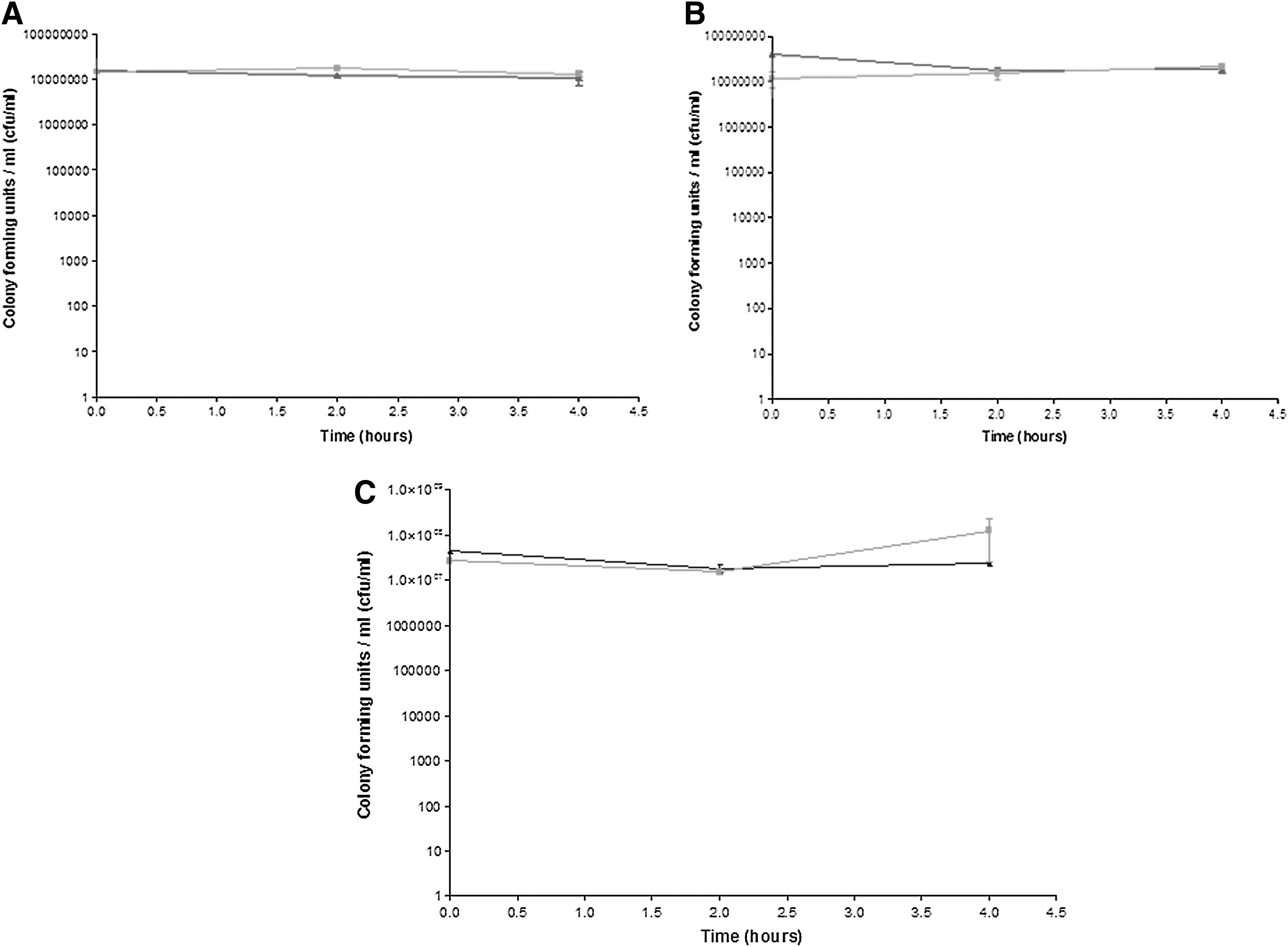
The effect of the Driver Resonator on C. albicans cell viability in the presence of nutrients for untreated cells (grey line) and treated cells (black line) in the
Discussion
This study tested the efficacy of the Driver Resonator frequency treatment on the cell viability and recovery of C. albicans using the frequency of 385 kHz, which Clark 7 has given as the specific oscillating frequency of C. albicans. Because, as it becomes established in the human body, C. albicans goes through different phases of growth that are characterised by differences in metabolic activities, it was important to investigate whether a particular phase of growth could have an influence on the effect of the treatment. 9 Since we used recommendations made by the manufacturer of the Driver Resonator and Clark, it was expected that no viable C. albicans cells would be left at the end of the treatment. 7 However, this was not the case. It was only when cells in the mid-exponential phase were treated in the absence of nutrients that a reduction in viable cells was observed. Further investigations into the starting cell concentration and the effect it could have on the efficiency of vibrational treatment are needed. It should also be kept in mind that C. albicans is a dimorphic fungus with two forms of reproduction and that it is the filamentous hyphae that are most commonly observed in human infection. 2 The influence of morphology was not tested as part of this study and needs further investigation. It is possible that Clark's frequency recommendation was based on the treatment of the filamentous morphology of C. albicans and not the budding morphology utilized in this study.
Lastly it should be remembered that the human body is a complex system. The electrodes of the Driver Resonator were specifically adapted by the manufacturer to test the effect of the equipment on the C. albicans cells and not to mimic the human body. Consequently, the laboratory results may not accurately reflect the results that could occur when the prescribed frequency is applied to the human body. Because the exact conditions in the human body during infection with C. albicans cannot be mimicked in the laboratory, human studies are essential to examine the effectiveness of vibrational treatment in infected individuals.
Conclusions
Three consecutive treatments of C. albicans cells with the Driver Resonator at a frequency of 385 kHertz at 0, 2, and 4 hours for 3 different phases (mid-exponential, late-exponential, and stationary) of growth did not have a visible effect on reducing cell viability and recovery in the presence or absence of nutrients. This finding is contrary to Clark's 7 deduction that a specific resonant frequency pulsed through the pathogen's cells for a certain amount of time will result in the cells bursting or “shattering” since the cells can only hold that vibration for a short period of time.
Although the results indicate no significant effect on C. albicans by the Driver Resonator, a conclusion regarding the clinical application of the device in vivo cannot be conclusively drawn, as the reported anecdotal evidence of effective treatment with the device could be as a result of (1) stimulating the body's immune system to react to the invading organism; (2) possible targeting by the Driver Resonator of weakened cells, and only defective/weak cells become infected by C. albicans, (3) reproduction and infection through filamentous hyphae of C. albicans rather than budding.
More studies based on the application of the Driver Resonator are needed to determine its efficacy on the human body if there is no clear direct effect on the pathogens.
Footnotes
Disclosure Statement
The research was done for academic purposes and none of the authors have competing financial interest with the work presented.