




Abstract
Background:
Cupping, a classic Chinese medicine treatment, is a technique that applies suction cups over soft tissue. Cupping is gaining popularity in physical medicine because of the simplicity in application, minimal adverse effects, and reduction in pain and muscle tenderness. These factors also make it a cost-effective intervention. For this study, cupping was used to treat low back pain (LBP).
Objective:
To evaluate the effectiveness of Chinese cupping in acutely reducing pain, decreasing tenderness to palpation, and improving range of motion for patients with subacute or chronic LBP.
Patients/Setting:
Twenty-one patients who reported back pain for at least 8 weeks volunteered at a multidisciplinary holistic outpatient clinic.
Intervention:
After completion of a medical screening questionnaire and collection of baseline data, 4 glass cups were applied and pressurized over the lower erector spinae muscles.
Outcome Measurements:
Baseline data included demographic characteristics and the Oswestry Disability Questionnaire score. Pre- and postintervention data included perceived pain on a visual analog scale (VAS), lumbar spine range of motion, straight-leg raise test (SLR), and pain-pressure threshold (PPT) assessed with a digital force gauge. The data were analyzed by using a Wilcoxon signed-rank test and Spearman rho correlations.
Results:
Of the 17 patients who completed the study, there were significant post-treatment improvements in VAS scores (p=0.0001), SLR motion on the left (p=0.043), and lumbar flexion range of motion (p=0.016) and improvements in PPT at all 4 investigated points (p<0.007). Significant relationships were identified between the improvement in low back flexion with the improvement in PPT at bilateral lumbar paraspinal muscles at the L4 levels and at the left L2 level.
Conclusions:
Chinese cupping may be a low-risk, therapeutic treatment for the prompt reduction of symptoms associated with subacute and chronic low back pain. Cupping may allow patients to progress to functional movement training in a timely manner by promptly reducing pain and muscle tenderness and improving range of motion.
Introduction
L
Recently, practitioners and researchers have been advocating for a multidisciplinary approach to treating LBP. 3 One multidisciplinary treatment technique that may be beneficial for immediate pain relief with low back rehabilitation programs is cupping. This classic Chinese medicine treatment is a technique that applies suction cups over soft tissue. A jar or cup is attached to the skin surface to cause local congestion though negative pressure. This negative pressure is created by removing oxygen from the cup by using a mechanical hand pump or a flame (creating a vacuum inside the cup) and quickly applying the cup to the body. This therapy is used as an auxiliary method of acupuncture and is now used in physical therapy and massage practices. According to Chinese medical theory, cupping promotes the free flow of qi and blood (qi is referred to as the vital life source, and blood is a component of qi that flows together in the body) in the meridians, dispelling chronic pain and swelling. Cupping can be used to treat low back, shoulder, and leg pain; gastrointestinal disorders; and lung conditions, including cough and asthma. 5 –9 For this study, cupping was used to treat patients with lumbar pain.
Cupping is gaining popularity in mainstream medical practices because of the immediate symptom improvement noted and the simplicity of administering the treatments. 6 A recent systematic review on cupping combined with other East Asian medicine treatments or medication showed significant benefits over single interventions. 10 Another study found that cupping may be beneficial for patients with LBP when integrated into a multidisciplinary approach. 11
By incorporating Traditional Chinese Medicine techniques into low back rehabilitation, practitioners can quickly modulate pain and improve range of motion (ROM) to progress toward earlier functional movement training. Patients who return to prior levels of activity sooner will ultimately reduce the use of healthcare resources. Resource reduction may include number of physical therapy visits, MD visits, surgeries, and medication use. Typical physical rehabilitation modalities, including heat, cryotherapy, ultrasound, and electrical stimulation, are helpful; however, not all patients respond optimally to these modalities, and some of these modalities may be contraindicated in the patient's condition. 12
The goal of this study was to evaluate the effectiveness of Chinese cupping in acute reduction of pain, decreased tenderness to soft tissue palpation, and improved ROM for patients with subacute or chronic LBP.
Materials and Methods
Twenty-one patients with subacute or chronic mechanical LBP lasting 2 months to 13 years were recruited for this pilot study. Patients with neurologic signs, recent history of low back surgery, or acute pain were excluded. Ages ranged from 30 to 56 years. Each patient completed an informed consent form, medical questionnaire, and Oswestry Disability Questionnaire. 1 Patients' ROMs and pain-pressure thresholds (PPTs) were then documented (Table 1).
A single examiner using an inclinometer measured ROM. With use of the 11th thoracic vertebrae as a landmark, patients' lumbar flexion, extension, and lateral flexion were documented. Patients flexed by leaning forward in a cephalo-caudal manner, starting with cervical flexion and forward-rolling of the shoulders, keeping the pelvis stable. They were cued to extend by standing up tall, then leaning back as far as possible, keeping the pelvis stable. Finally, lateral flexion measurements were achieved by having patients stand tall and then slide the ipsilateral hand down the lateral leg. To measure straight-leg raise (SLR) motion, patients were positioned supine, with their opposite leg flexed, their foot flat on table, and the test leg straight with the ankle in the neutral position. The inclinometer was aligned with the inferior pole of the patella on the tested leg, and SLR motions ranges were recorded. Throughout all ranges, patients were instructed to go as far as possible and stop at the onset of pain, symptom exacerbation, discomfort, or compensation. 13
Following ROM measurements, PPTs were measured by a single examiner using the Wagner Force Ten™ FDX Compact Digital Force Gauge (pressure algometer) (Wagner Instruments, Greenwich, Connecticut). Pressure algometers are an accepted instrument for measuring tenderness to touch and demonstrate good validity. 14,15 Measurements were taken with patients prone on the table with the head rested on a pillow. Patients' erector spinae muscle bellies were palpated bilaterally at lumbar vertebrae level 2 and 4, and PPTs were measured at these four points. Patients were instructed to cue the examiner at the onset of pain. The algometer was applied starting at left then right L4 levels, followed by left then right L2 levels. Pressure was applied at increments of 5 N/cm2, and thresholds were documented.
For the intervention, patients underwent cupping treatment in the prone position. By using four sterilized 6.67-cm DongBang cups (DongBang Acupuncture, Kyunggi-do, Korea) labeled to standardized measurements (applied at the same levels as PPT measurements) and a hand pump (Fig. 1), suction was applied until 1.6 cm of skin was elevated within each cup. This skin elevation measurement was chosen to standardize the procedure. In previous trials, this amount of suction consistently achieved the suction effect without patient discomfort. Once all four cups were in place, the treatment lasted for 10 minutes. 8 The cups were then removed, and the same examiner repeated the objective measurements. Many patients had residual markings after treatment due to engorged blood vessels; unlike bruises, these commonly seen marks are not sensitive to touch, and they fade in 1–10 days (Fig. 2). In line with Traditional Chinese Medicine treatment procedures, heat was applied to the patients' low back for no longer than 5 minutes. Patients were told not to expose their back to cold or wind for at least 24 hours in order to prevent any adverse effects, including localized tightness and cramping. 5,6,8
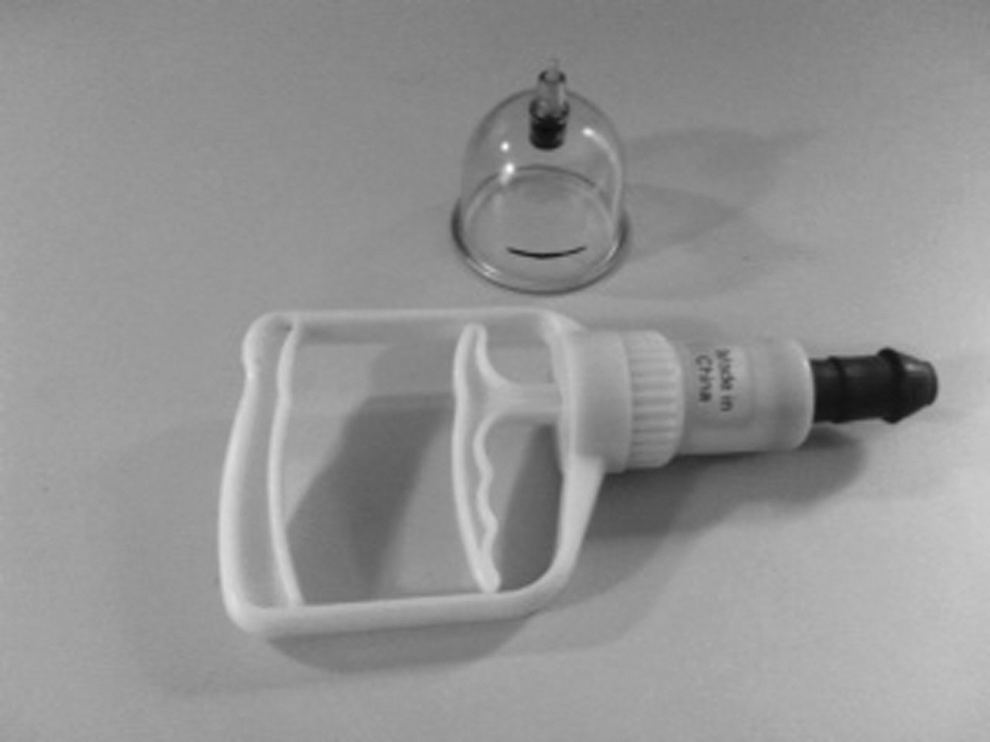
Hand pump and glass cup labeled with 1.6-cm depth measurement from cup rim.

Residual markings commonly seen after a cupping treatment.
The data were analyzed using SPSS software, version 15 (SPSS, Inc., Chicago, Illinois). Analysis included descriptive statistics, Wilcoxon signed-rank test, and correlation of the percentage change of measurements before and after the intervention using the Spearman rho.
Results
Of the 21 participants, 17 completed the study (8 men and 9 women). The age range for those who completed the study was 30 to 56 years. Three patients withdrew because of time constraints, and one patient withdrew because of adverse reactions. The demographic characteristics of the participants, including age range, average body mass index, average Oswestry Disability Questionnaire scores, and length of pain, are listed in Table 2. Data obtained before and after the intervention were compared by using the Wilcox signed-rank test to analyze non-normally distributed repeated measurements. Of the 17 patients who completed the study, the following significantly changed after Chinese cupping: VAS scores (p<0.0001), SLR ROM on the left (p=0.043), increased lumbar flexion ROM (p=0.016), and PPTs at all 4 points (p<0.007) (Fig. 3). The Spearman rho correlations were analyzed to determine the relationships between the percentage change in the participants' ROM, PPT, pain scores, and reported scores on the disability scale. A strong relationship was seen between the higher levels of disability reported on the Oswestry Disability Questionnaire and the improvements in low back flexion after cupping (p=0.008). In addition, there was a significant relationship between the improvement in low back flexion and the increase in PPT at bilateral lumbar paraspinal muscles at the L4 levels and at the left L2 level (Table 3).
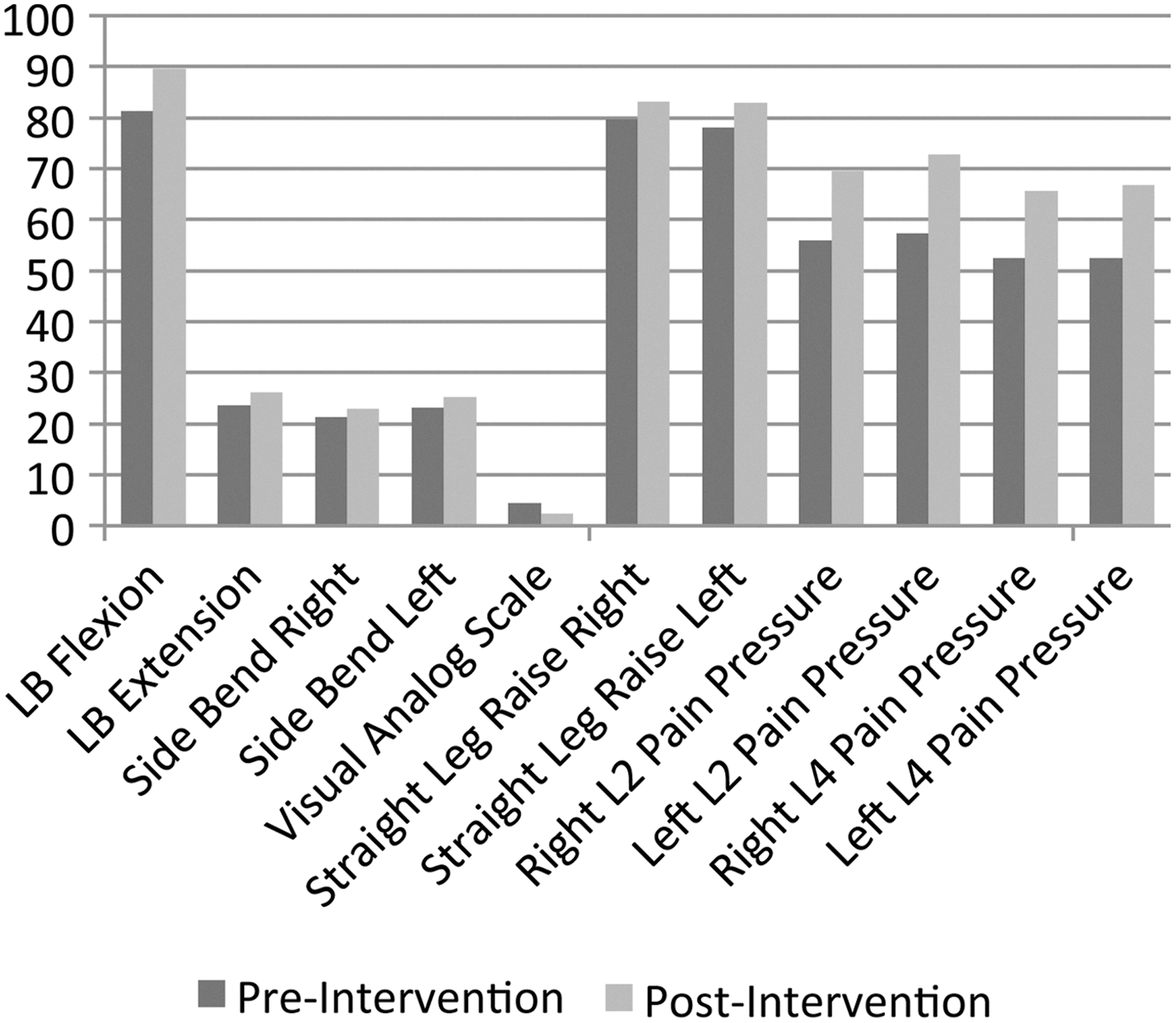
Changes in outcome measurements before and after cupping intervention. LB, low back.
SD, standard deviation.
LB, low back; PPT, pain-pressure threshold.
Discussion
The results of this pilot study support our hypothesis that Chinese cupping may be beneficial in treating patients with subacute LBP. Patients demonstrated a statistically significant decrease in perceived pain, as demonstrated by the VAS score and by increased tolerance to pressure before they experienced pain. In addition to the overall decrease in pain, ROM increased significantly, specifically lumbar flexion and left SLR. Finally, the results show a correlation between decreased tenderness to touch (measured by increased tolerance to PPT) compared with an increase in lumbar flexion. These results may be due to decreased muscle tension subsequent to the suction cups' effects of promoting circulation to maximize healing through metabolic changes. The decrease in pain levels and increased ROM (flexion and left SLR) of the patients in this study are similar to the effects of thermal therapy on muscle tissue. 6,8,12 Immediate vasodilation leads to increased blood flow, which facilitates healing as well as enabling the elongation and increased motion of taut muscles.
One patient sustained an adverse reaction to the cupping treatment. After cupping, the patient attempted to rise from the table and experienced an increase in localized central low back pain that prevented her from standing straight up. Postintervention measurements were not collected, and the patient was treated by a physical therapist. The patient had no residual symptoms. The increase in pain may be attributed to the fact that the cupping led to relaxation of the paraspinal muscles. These muscles may have been guarding and, upon relaxation, allowed an underlying spinal instability to present itself. 16 The patient's lack of stability may have also led to complications when she transferred from the treatment table to standing after the treatment.
The significant correlation among all 4 PPT sites demonstrates consistent improvements in all areas. This draws a parallel to the hypothesis that cupping enhances the circulation of the area surrounding the cup placement as well as pain modulation locally and improving motion in the adjacent joint. Cupping has a direct tensile effect on the tissue under the cup, assisting in dilation of the capillaries. 6,8 The increased circulation loosens the muscle tissue, resulting in decreased tenderness to palpation. 17 To improve consistency, methods developed to measure the amount of negative pressure in the cup may improve uniformity between providers.
Cupping may be beneficial in low back rehabilitation programs. Cupping modulates pain and may contribute to reduced muscle guarding of superficial muscles and activation of inhibited postural muscles, which is the foundation for normal functional movement. 6,8,17
These findings support the concept that Chinese cupping may be used as an economical (timely and cost-effective) noninvasive therapeutic technique for low back rehabilitation by promptly addressing symptom management to promote functional based training.
Conclusion
This is one of the first studies to evaluate the effects of integrating Chinese cupping with physical rehabilitation–based outcome measures for patients with subacute or chronic LBP. The trends in data suggest that Chinese cupping could be a beneficial therapeutic technique to integrate with low back rehabilitation for acute pain reduction to promote function. Large sample sizes may improve the results. Randomized controlled studies are suggested to provide evidence to support combining Chinese cupping and physical rehabilitation. Validating cupping as an evidence-based therapeutic technique will expand treatment options and promote a cost-effective integrative approach to treating patients with LBP.
Footnotes
Acknowledgments
This study was supported by Northeastern University Provost undergraduate research grant. The Northeastern University internal review board approved the protocol for this study.
Author Disclosure Statement
No competing financial interests exist.