




Abstract

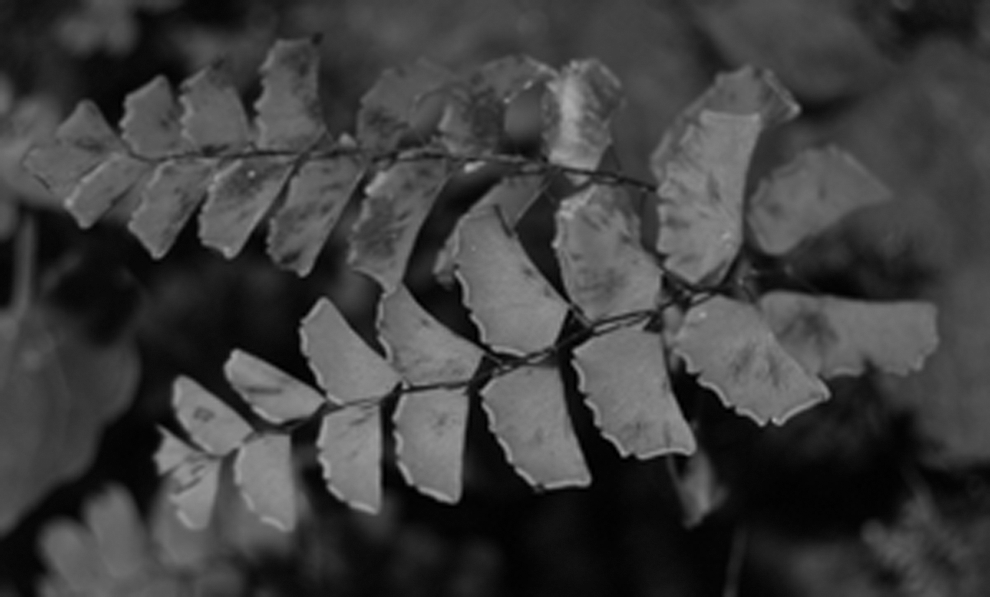
Adiantum lunulatum.
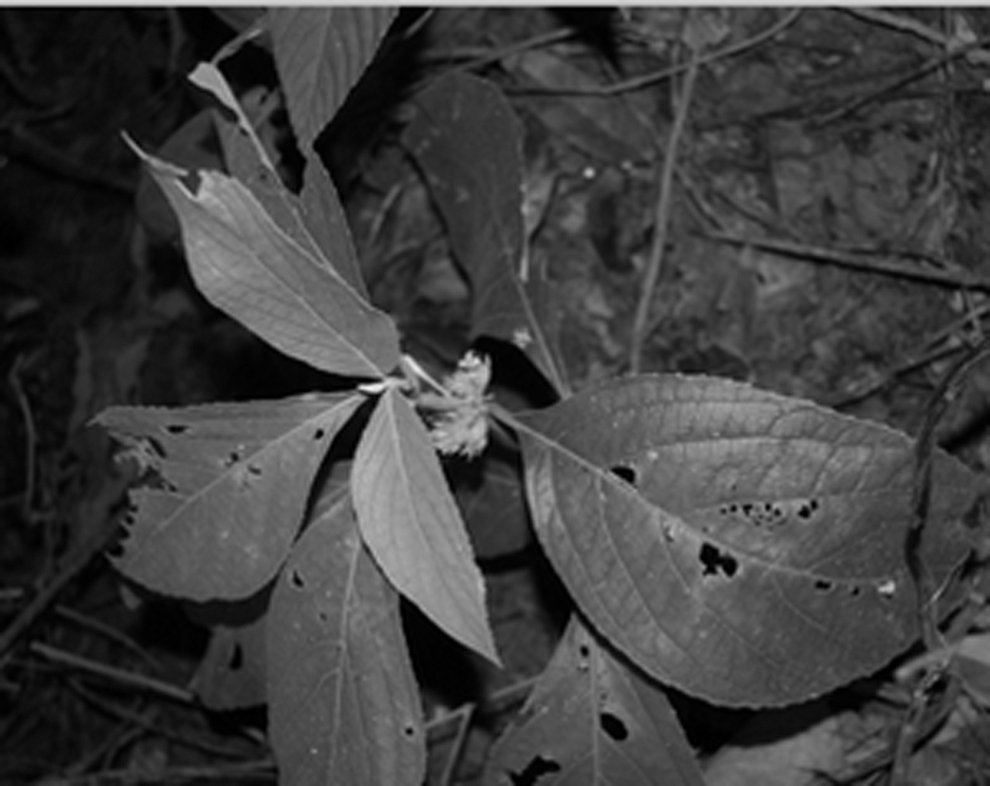
Saraca indica.

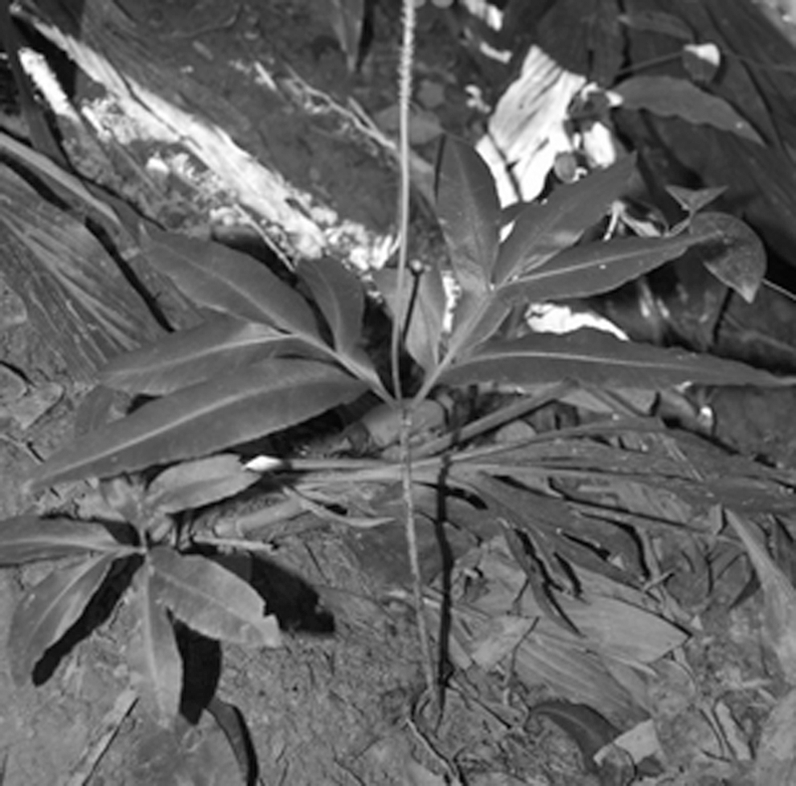
Gomphostemma crinitum.
Lygodium flexuosum.
Introduction
I
The Chittagong Hill Tracts are a hilly and forested region in the southwestern part of Bangladesh and are regarded as both a floral and a tribal hotspot, because of the diversity of plant species and the large number of tribes who dwell there. The region comprises several districts including the Bandarban district. This district is inhabited by several tribes such as the Marmas, Chakmas, Tripuras, Tongchongyas, Murongs, Bawms, Khyangs, Pangkhuas, and Khumis. The district is also to a large extent forested and thousands of floral species can be found in the forests. Of late, large sections of the forests have been taken over by various groups, who have cleared large areas of its original vegetation, and have, instead, introduced rubber, tea, or tobacco plantations. The result has been a loss of tribal habitat, and with that, a rapid disappearance of ethnomedicinal plants and tribal medicinal practices.
It is thus of utmost importance to document the ethnomedicinal wisdom of the various tribes inhabiting the area, before such knowledge disappears in its entirety. Toward that objective, we had been conducting ethnomedicinal surveys among various large and small tribes of Bangladesh over the last few years. 4 –11 The Bawm tribe is a small tribe who inhabits particularly the Rowangchhari Upazila (subdistrict) in Bandarban district. According to a population census conducted in 2002, the various ethnic groups residing in this Upazila are the Marmas (62.3% of the total population of 22,629), followed by the Tripuras (6%), Tongchongyas (5%), Murongs (4%), Bawms (4%), Chakmas (4%), Khyangs (3%), Pangkhuas (1%), and Khumis (1%). A large Bawm community resides in Painkhwangpara village of Rowangchhari Upazila. The objective of the present study was to conduct an ethnomedicinal survey among the traditional healers of the Bawm community in this village.
The Bawms are considered by anthropologists to belong to the Kuki-Chin clan of the Mongoloid group. 12 The word Bawm, according to the tribe, means to merge, tie, or unite. They are also known as Bonjo, Bonjogi, and Bounjus. The tribe is basically animist in their religious practices, although in recent years, members have started converting to Christianity. They have their own languages, but can also understand and speak the Bengali language. Besides Rowangchhari Upazila in the Bandarban district, scattered populations of the Bawm tribe can also be observed in Rangamati and Khagrachari districts in the Chittagong Hill Tracts region. Rowangchhari Upazila is one of the seven Upazilas and is the smallest Upazila in Bandarban district. The Upazila occupies 442.89 km2, of which 77.66% is still forested. The Upazila is located between 22o03′ and 22o20′ north latitudes, and between 92o14′ and 92o30′ east longitudes.
The present survey was carried out over a period approximating 2 years between 2011 and 2012. Periodic visits were made to the Bawm village, initially to get acquainted with the tribal people including the Headman and the tribal healers, and building up a close rapport with the tribe, and later to collect information on the medicinal plants and practices of the Bawm healers. During these visits, informed consent was obtained from the Headman, tribal healers, and tribal people to disseminate any obtained information (including names and photographs of persons and plants) in both national and international publications. The large number of visits also enabled the authors not only to gather maximum information on the medicinal plants and practices from the healers, but also to gather complete plant specimens (note that all plants do not flower, fruit, or seed at the same period of the year, and so these plant parts need to be collected at different times of the year to enable accurate identification). The largest Bawm community (within the whole country) healers were interviewed in the present survey. They resided in 1 village, namely, Painkhwangpara. Other Bawm community members can be found, but they are scattered in groups of 3–7 households in some other places of the Chittagong Hill Tracts region. These small communities do not have their own traditional healers. The Bawm community of Painkhwangpara village had 15 healers (2 of them shown in Fig. 1), which attested to the fact that the community, in general, still relied on their healers for their medical needs, which was also borne out during our conversations with the community people. The names of the healers were Bamlum Biru, Baukhu Bawm, Brammoi, Laalkomlin, Laltha Bawm, Laramkel Bawm, Maunchung Bawm, Mawl Men, Pachen Bawm, Roden Bawm, Shoanlian Bawm, Teu Tu, Tinson Bawm, Ulaldin Bawm, and Vandir Bawm. Of the 15 healers, 13 were males and 2 were females.
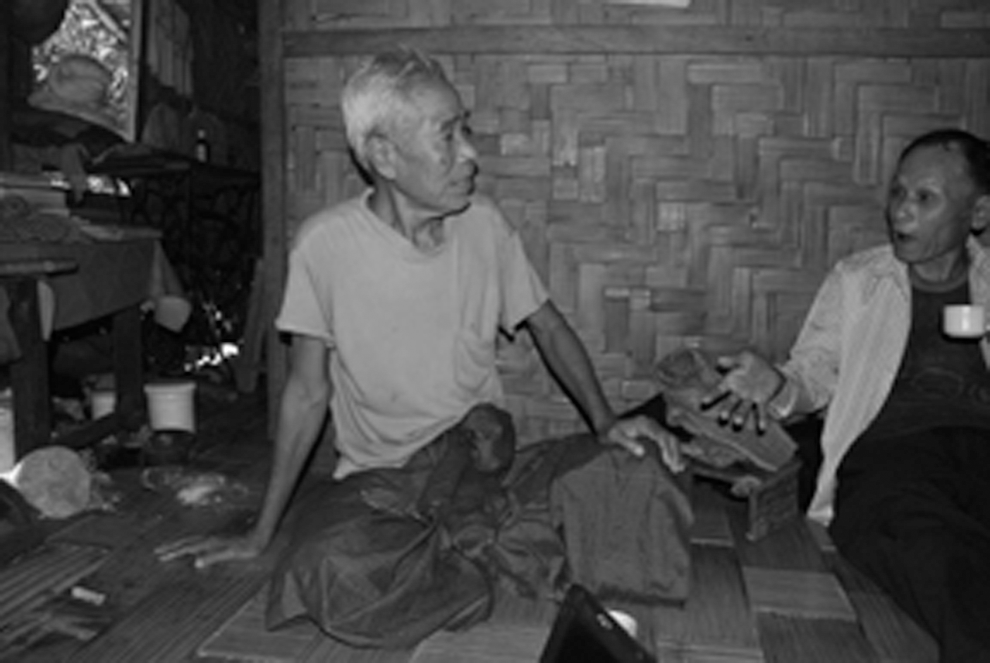
Two Bawm traditional healers in discussion.
Actual interviews were conducted with the help of a semistructured questionnaire and the guided field-walk method of Martin 13 and Maundu. 14 Briefly, in this method, the healers took the interviewers on guided field-walks through forests from which they usually collected their plants, showed the plants, and described their uses. Plant specimens were photographed, collected, dried, and brought back for identification by Mr. Manjur-Ul-Kadir Mia, ex-Curator and Principal Scientific Officer of the Bangladesh National Herbarium at Dhaka. Voucher specimens were deposited with the Medicinal Plant Collection Wing of the University of Development Alternative. At their request, interviews with the healers took place in a collective manner (i.e., the healers combining to form a sort of “Medical Board” on 1 side and the interviewers on the other). However, on field-walks, not all healers went together; rather, 1–3 healers at any given time took the interviewers for such guided field-walks. Help was also obtained from an allopathic doctor (name withheld on request), who practiced about 10 miles from the Bawm village, to identify the various ailments (in allopathic terms) as described by the healers to be treated by them.
The Bawm healers were observed to use 73 plants for treatment of various ailments. These plants were distributed to 48 families. Two other plant parts were used in combination with the plant, Gomphostemma crinitum (see Serial Number 43, Table 1), namely, Brassica napus and Musa sapientum. If these 2 plants are added, the total number of plants is 75, being distributed to 50 families. However, these 2 plants have not been given individual Serial Numbers in the Table. One plant, belonging to the Vitis genera (Vitaceae family), was not possible to identify. The results are shown in Table 1. From the number of plants used for treatment of any given ailment (or set of symptoms), it appeared that pain is the most common problem treated by the healers, followed by gastrointestinal disorders. Twenty plants were used for the treatment of pain (arising from various causes), while 17 plants were used for treatment of various gastrointestinal disorders such as flatulence, diarrhea, dysentery, acidity, or stomach pain. Eleven plants were used for treatment of various skin problems, 6 plants were used as astringent, and 5 plants were used to treat helmintic infections. Astringent is generally known to be a chemical compound that tends to shrink or constrict body tissues; the tribal healers considered plants that are astringent as good for several purposes such as getting rid of excessive water accumulation in the body, diarrhea, excessive sweating, and slowing or stopping bleeding.
The plants used by the Bawm healers were all collected from the forests. Although in other parts of Bangladesh, plants such as Cocos nucifera, Basella alba, Ananas comosus, Carica papaya, Cajanus cajan, Azadirachta indica, Psidium guajava, Ziziphus mauritiana, Litchi chinensis, and Aegle marmelos are cultivated or grown for their edible fruits, leaves, or for their medicinal properties (e.g., A. indica), the Bawms did not practice any systematic cultivation of even these plants and collected the necessary plants or plant parts from where they grew naturally in the forests.
Some of the plants used by the Bawm healers deserve special mention. For instance, Calotropis gigantea leaves and Smilax macrophylla leaves and roots were used to treat rheumatism and joint pains. The anti-inflammatory effect of stem barks of the first plant has been reported, along with protective effect of latex of the plant against Freund's Complete Adjuvant induced monoarthritis. 15,16 As such, it would be of interest to scientifically study the leaves of this plant as to their effectiveness in relieving pain arising from rheumatism. S. macrophylla is used in traditional medicines of India for treatment of rheumatism. 17 Rheumatism and joint pains are debilitating diseases afflicting millions of people worldwide; an effective yet cheap alternate source to get relief from such debilitating pain can benefit all human beings. The root juice of C. nucifera was used by the Bawm healers for treatment of gonorrhea and syphilis; with the emergence of various antibiotic-resistant gonorrhea and syphilis strains of microorganisms, such a simple treatment, if proven scientifically, can be of real benefit to patients afflicted with these sexually transmitted diseases.
There are no reported instances of the use of Nymphaea nouchali for treatment of diabetes; the Bawm healers advised cooking and eating the stems of this plant as treatment for diabetes. Diabetes is another disease that is fast reaching endemic proportions in many countries of the world, because of changes in people's food habits and lifestyle. At the same time, N. nouchali is an aquatic plant, which grows in abundance in various large and small water bodies of Bangladesh and India. If in scientific studies this plant really proves its worth in lowering high blood sugar levels as is observed during diabetes, and further reduces diabetes-induced complications such as nephropathy and retinopathy, it can prove to be an effective alternate source to insulin injections and other costly antidiabetic drugs. Mussaenda corymbosa, a plant used by the Bawm healers for treatment of malaria, has also been reported to be used by the Murong tribe of Bandarban district for malaria treatment. 18 Since malaria is endemic in the Chittagong Hill Tracts region, and since this plant was observed to be used by 2 tribes of the region to treat malaria, it is worth investigating the plant scientifically for its antimalarial properties.
The Bawm healers treated diseases according to visible symptoms of the disease (such as yellow coloration of eyes, body, and urine in jaundice) or from the symptoms (e.g., pain) as mentioned by the patients. They did not use or know any modern clinical diagnostic procedures. For instance, diabetes was diagnosed following tasting the urine (sweet taste) and when the patient complained of frequent thirsts and urination. Tumors were external swellings without any known cause such as sprain or injury. The healers believed that all diseases were caused by opo-devatas (i.e., evil gods or goddesses), and every such god or goddess had a specific plant or plants for appeasement or cooling down their irritation. Nevertheless, as discussed briefly above, plants used by the healers have been found to have scientific validation in their uses. This not only applies to Calotropis procera, but also to other plants as well. To give just 2 instances, Alstonia scholaris, used by the Bawm healers for treatment of typhoid fever, is known for its antipyretic effects. 19 The flowers of Spilanthes calva (used by the Bawm healers for treatment of toothache) have been shown to have analgesic activity. 20
Taken together, the medicinal plants used by the Bawm healers not only document a hitherto unpublished account of the traditional medicinal practices of this tribe, but also suggest that scientific studies should be carried out on the Bawm medicinal plants with the objective of discovering better and novel drugs.
Footnotes
Acknowledgment
Internal funding was provided by the University of Development Alternative.
Author Disclosure Statement
No financial conflicts exist.