




Abstract
Objectives:
A recent study showed that cupping had therapeutic effects in rats with myocardial infarction and cardiac arrhythmias. The current studyaimed to investigate the possible useful effects of cupping therapy on cardiac rhythm in terms of heart rate variability (HRV).
Materials and methods:
Forty healthy participants were included. Classic wet cupping therapy was applied on five points of the back. Recording electrocardiography (to determine HRV) was applied 1 hour before and 1 hour after cupping therapy.
Results:
All HRV parameters increased after cupping therapy compared with before cupping therapy in healthy persons.
Conclusions:
These results indicate for the first time in humans that cupping might be cardioprotective. In this study, cupping therapy restored sympathovagal imbalances by stimulating the peripheral nervous system.
Introduction
C
Cupping therapy, in both wet and dry forms, is still used today in many cultures. Cupping is thought to remove noxious materials from skin microcirculation and interstitial compartment. 3
Both dry and wet cupping have been claimed to drain excess fluids and toxins, loosen adhesions and lift connective tissue, bring blood flow to skin and muscles, and stimulate the peripheral nervous system. 1 In addition, cupping is said to reduce pain and high blood pressure, as well as modulate neurohormones and the immune system. 2 Cupping therapy is also used to improve subcutaneous blood flow and to stimulate the autonomic nervous system. 2 Cupping is often used as a symptomatic treatment for a wide range of conditions seen in clinical practice, such as pain, hypertension, and stroke rehabilitation. 1
Clinical studies have shown that wet cupping has some modulatory effects on the immune system. The stimulation of acute pain fibers by puncture of skin in wet cupping therapy causes release of β-endorphin and adrenocortical hormone into the circulation. These hormones might help block inflammation in arthritis. Cupping therapy has some beneficial effects on the immune system via the central nervous system pathway, including release of β-endorphin and activation of the opioid system. 4 Ngai and Jones 5 investigated skin impedance and heart rate variability (HRV) changes in response to transcutaneous electrical nervous stimulation over an acupoint, similar to the approach used with cupping therapy. Skin impedance at all acupoints decreased and HRV increased after transcutaneous electrical nervous stimulation. 5
A recent animal study 6 investigated the effects of wet cupping on hemodynamic variables, cardiac arrhythmias, and infarct size after myocardial ischemic reperfusion injury in male rats. Its results show that cupping did not change baseline heart rate or mean arterial blood pressure. Ischemic reperfusion injury caused an infarct size of 50%±5%, whereas dry cupping and single and repeated wet cupping significantly reduced infarct size to 28%±3%, 35%±3%, and 22%±2% of the area at risk, respectively. The rate of ischemia-induced arrhythmias was significantly modified by wet cupping.
There are complex interactions between the sympathetic and parasympathetic nervous system inputs to the sinus node. The concept of “sympathovagal balance” reflects the autonomic state resulting from the sympathetic and parasympathetic influences. Heart rate variability parameters are indexes of sympathovagal balance or imbalance.
Temporal fluctuations in cardiac cycles are mainly determined by the activity of sympathetic and parasympathetic systems innervating the heart. HRV is defined as fluctuations of the sinus rhythm that are affected by internal and external factors of the body. 7 Furthermore, these fluctuations in heart rate can be determined by ECG as a straightforward and noninvasive technique that analyzes the interaction between sympathetic and parasympathetic nervous systems and provides information about the autonomic nervous system.
During the past 30 years, an increasing number of studies have related the imbalance of the autonomic nervous system (as assessed by HRV) to several pathophysiologic conditions, particularly in the setting of cardiovascular disease. Sudden death, coronary artery disease, heart failure, and cardiovascular risk factors (smoking, diabetes, hyperlipidemia, and hypertension) are the best-known clinical circumstances that can affect or be affected by the autonomic nervous system. Analyses of HRV variables have been proposed as a component of the clinical evaluation for patient risk stratification because of it's the independent prognostic information these variables provide. Yet the wide use of HRV in clinical practice remains to be established.
An increase in HRV parameters shows good cardiac health, but a decrease in HRV indicates poor cardiac health. In light of these reports, especially because of a decrease in the rate of ischemia-induced arrhythmias by wet cupping, 6 it can be speculated that cupping therapy can result in increased HRV parameters in humans. Therefore, the current study investigated HRV parameters before and after wet cupping therapy in a healthy population.
Materials and Methods
Participants
Forty healthy people (26 women and 14 men; mean age±standard deviation, 30.32±5.39 years) participated in this study. Exclusion criteria were health problems, such as psychiatric, respiratory, metabolic, cardiac, or autonomic nervous system diseases, that might change the heart rate. The Ethical Committee of the Faculty of Medicine of the University of TurgutOzal approved this study.
Cupping therapy
All cupping procedures were applied by physicians certificated by the British Cupping Society and Natural Health Institute. For the cupping therapy, sterile disposable cups 5 cm in diameter were used. Five points of the posterior neck, bilateral perispinal areas of the neck, and thoracic spine were selected for treatment. These points are classic wet cupping points chosen for all cupping therapies (Figs. 1 and 2). Application areas were cleaned with antiseptic solutions. Cups were placed on these points, and negative pressure was applied by a cupping pump on the middle level. The cups were removed after 2 to 3 minutes. Then, the skin within the cupping sites was punctured to a 2-mm depth by using a 26-gauge disposable lancet. Then, pumping with vacuum was applied three times and 3 to 5 mL of blood was drained per cupping site. This method was suggested by the British Cupping Society and Natural Health Institutes in their certification courses. Application sites were covered with sterile pads.
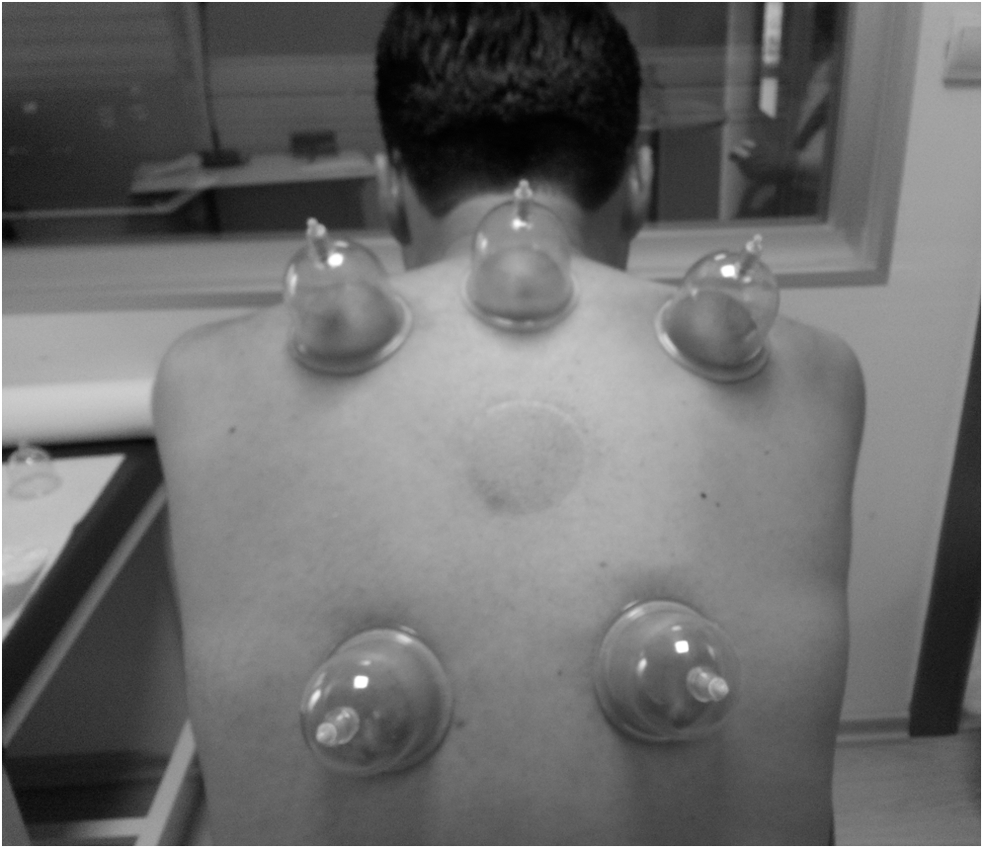
Vacuum application before wet cupping.
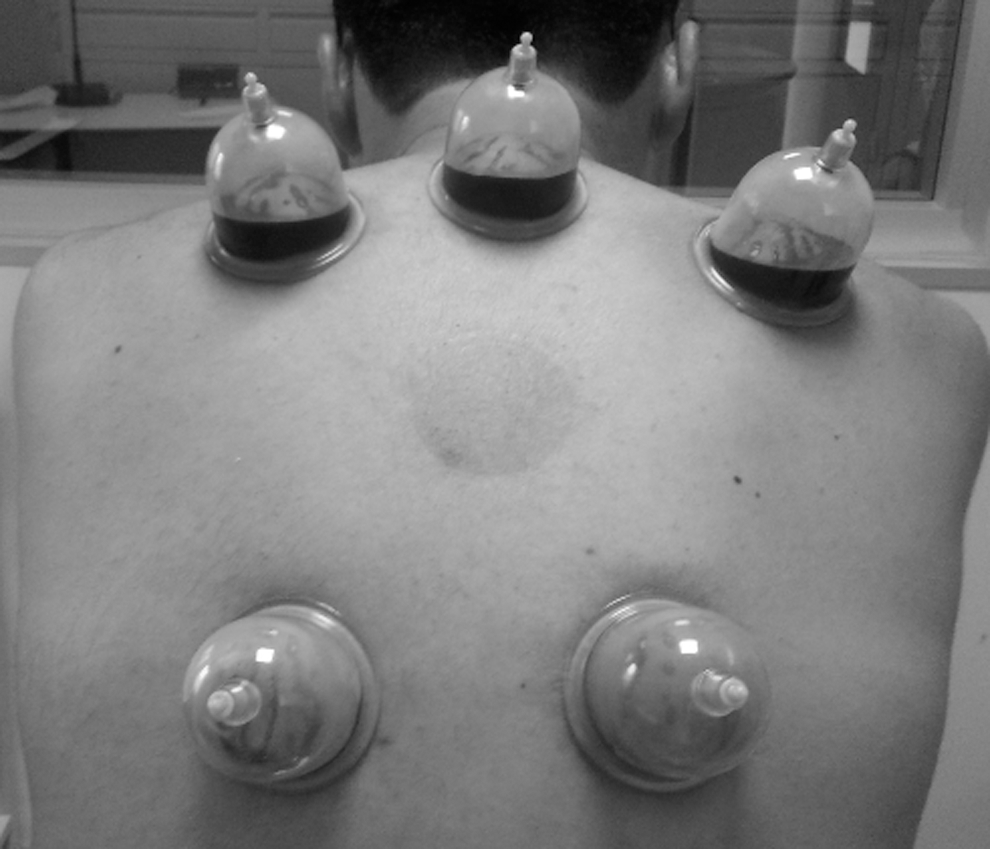
A view after wet cupping.
Recording electrocardiography (HRV)
Recording electrocardiography (ECG) was applied 1 hour before and 1 hour after cupping therapy. Participants rested for 10 minutes without recording ECG in order to stabilize autonomic parameters. ECG was performed by using PowerLab 26T (AD Instruments, Bella Vista, Australia), a device used for multimodal monitoring of bio-signals. According to the standard Einthoven triangle, three self-adhesive ECG electrodes were applied to the right wrist and right and left legs, respectively. The digital signals were then transferred to a laptop computer and analyzed by using LabChart® software (MLS310/7 HRV Module; AD Instruments). A full continuous ECG recording could be viewed and saved for later analysis, and software-based filters were used to exclude movement artifacts and ectopic beats before HRV analyses (Fig. 3).
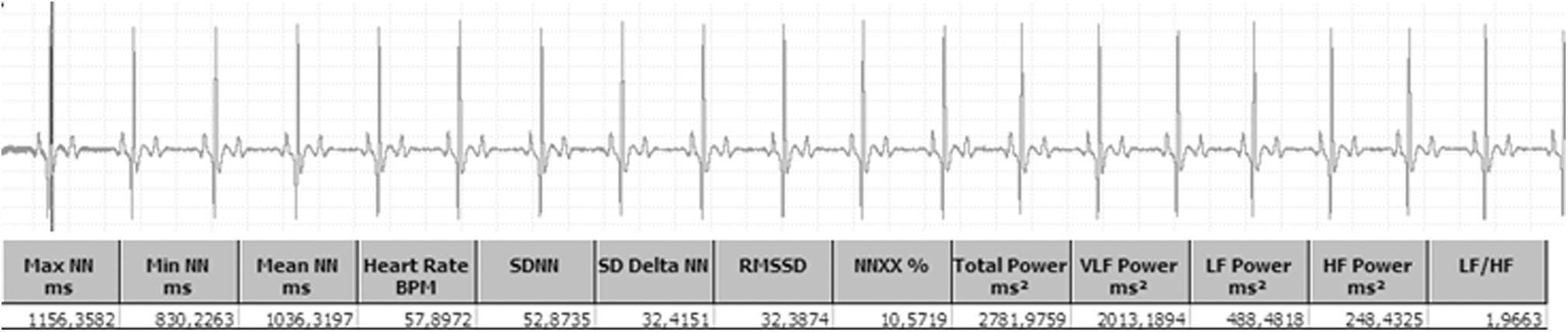
Electrocardiography record and heart rate variability parameters.
Results
In dry cupping therapy, application consists only of creating a small area of low air pressure next to the skin. Wet cupping therapy involves both dry cupping and medicinal bleeding applications.
HRV is the physiologic event of variation in the time interval between heart beats. HRV consists of different parameters, such as SDNN and SDANN. It is measured by the variation in the beat-to-beat interval on ECG. Other terms used for HRV are “cycle length variability” and “RR variability.” R is a point corresponding to the peak of the QRS complex of the ECG wave, and RR is the interval between successive Rs. As HRV parameters increase, cardiac health is good, but a decrease in HRV shows negativity in cardiac rhythm.
In the present study, maximal NN or RR intervals (maxi NN) (ms), the mean of all NN intervals (mean NN) (ms), the number of pulse in minutes (pulse rate) (1/min), the standard deviation of the NN intervals (SDNN) (ms), and the standard deviation of the averages of NN intervals in all 5-minute segments of the entire recording (SDANN) (ms), the square root of the mean of the sum of the squares of differences between adjacent NN intervals (RMSSD) (ms) and the percentage of difference between adjacent NN intervals that are greater than 50 ms (pNN50) (%), power in low-frequency range (0.04–0.15 Hz) (LF) (ms 2 ) and power in high-frequency range (0.15–0.4 Hz) (HF) (ms 2 ) were increased after cupping therapy compared with before cupping therapy (maxi NN: t=3.45, p=0.001; mean NN: t=3.47, p=0.001; pulse rate: t=2.87, p=0.006; SDNN: t=2.39, p=0.02; SDANN: t=4.56, p=0.00; RMSSD: t=4.55, p=0.00; pNN50: t=3.77, p=0.001; LF: t=2.95, p=0.005; HF: t=2.06, p=0.04) (Table 1). It can be stated that many HRV parameters were increased after cupping therapy compared with before cupping therapy. Other HRV parameters (minimal NN intervals [ms], the variance of all NN intervals [≤0.4 Hz; total power; ms 2 ], power in the very-low-frequency range [0.003–0.04 Hz; VLF; ms2] and LF/HF rate) were also increased, but these differences were not statistically significant.
HF, high frequency; HRV, heart rate variability; LF, low frequency; pNN50, percentage of difference between adjacent NN intervals that are greater than 50 ms; RM SSD, square root of the mean of the sum of the squares of differences between adjacent NN intervals; SD, standard deviation; SDANN, standard deviation of the averages of NN intervals in all 5-minute segments of the entire recording; SDNN, standard deviation of the NN intervals; VLF, very low frequency.
Discussion
In the present study, all HRV parameters increased after cupping therapy compared with before cupping therapy in healthy persons. These results indicate for the first time in humans that cupping might be cardioprotective. These results were consistent with those of a recent study performed in rats by Shekarforoush et al. 6 Those authors reported that cupping was beneficial in terms of cardiac effects on myocardial infarction and cardiac arrhythmias.
Reduced HRV has been shown to be a predictor of mortality after myocardial infarction. 8,9 Some other clinical conditions may also be associated with the lower HRV, including congestive heart failure, diabetic neuropathy, depression, sudden infant death syndrome risk, and poor survival in premature babies.
Cupping therapy can relieve a variety of diseases or clinical conditions as a result of the comprehensive effects of multiple types of stimulation exerted onto the regional acupoint areas. Among the stimuli, the negative pressure from cupping is one of the main factors inducing therapeutic effects. The possible underlying mechanism of therapeutic effects of the negative pressure from cupping may be associated with the releasing of β-endorphin and adrenocortical hormone into the circulation, the central nervous system effects by the stimulation of superficial end depth tactile and pain receptors. It can be stated that cupping therapy restored sympathovagal imbalances by stimulating the peripheral nervous system. The literature clearly shows that acupuncture has therapeutic effects for individuals with hypertension, myocardial ischemia, and certain arrhythmias. 10 Tham et al. showed that cupping may be capable of stimulating individual acupuncture points. 11
Similar to this study in cupping therapy, a separate study investigated skin impedance and HRV changes in response to transcutaneous electrical nervous stimulation over an acupoint. Skin impedance at all acupoints decreased and HRV increased after transcutaneous electrical nervous stimulation. 5
Generally, cupping-induced negative pressure can dilate local blood vessels to improve microcirculation, promote capillary endothelial cell repair, and accelerate granulation and angiogenesis in the regional tissues, normalizing the patients' functional state at last. 12 In addition, cupping therapy removes different stresses and exhaustion from the human body that cause the sympathovagal imbalances. In addition, it can be suggested that cupping therapy restores homeostasis disturbances by stimulating acupuncture points or sites or by using another mechanism mentioned above.
As a consequence, wet cupping therapy is a noninvasive harmless therapeutic application that can be confidently used to restore sympathovagali mbalances in cardiac rhythm. Therefore, it may be useful for preventing cardiac arrhythmias and as a complement to medical treatment.
Footnotes
Author Disclosure Statement
No competing financial interests exist.