




Abstract

Introduction
M
Dr. Zéphirin Dakuyo was the first pharmacist to be posted in Banfora Hospital in Southwest Burkina Faso, in 1983. At the time, chloroquine was the first-line treatment for malaria, but it has since been abandoned because of high levels of drug resistance. 4 He soon received feedback from patients that they did not like the adverse effects of chloroquine, such as pruritus. They preferred to treat themselves with herbal medicines, in particular the roots of N'Dribala (Cochlospermum planchonii) (Fig. 1). However, they did not have time to collect this medicinal plant themselves, so Dr. Dakuyo, with support from the hospital staff, started to harvest and package it for the patients. The medicine was sold at the hospital to patients with malaria and was also provided to community health workers to supply to patients.

Cochlospermum planchonii. The shape of the leaves is characteristic. The related species, C. tinctorium, has similar flowers, but these appear on the ground before the development of any leaves. Photo © Merlin Willcox. Color images available online at
Cochlospermum planchonii
This low shrubby plant is a common weed of cultivation in West Africa, from Senegal eastward to Chad. 5 The foliage dies in the dry season, with the rhizome remaining dormant underground, and the foliage and flowers appear again during the rainy season.
A decoction of the rhizome of C. planchonii Hook. f. ex Planch.(Bixaceae) is traditionally used to treat fevers and malaria in Burkina Faso, 6 Ivory Coast, 7 Niger, 8 and Nigeria. 9 In Burkina Faso, the leaves are also used for malaria. 10 A decoction of the rhizome is extensively used to treat and prevent jaundice in Northern Nigeria, where people drink large amounts of the tea. 11
This plant and the closely related C. tinctorium have been extensively tested for their antimalarial activity in vitro (Table 1). Of all the plant parts tested from these two plants, the roots of C. planchonii were most effective. 12 It appears that the root contains several different fractions with antimalarial activity, the most active being the hexane fraction, 12 but the principal active compounds of this fraction have not been identified. Ellagic acid, a principal constituent of the water fraction, 13 is present in other antimalarial plants, and three independent studies found antimalarial activity in vitro and in vivo. 14 –16 The essential oils of C. planchonii also have some antibacterial activity in vitro. 17
IC50 , 50% inhibitory concentration.
Many experiments have tested whether C. planchonii is safe. A fraction of a water extract from the roots contains a cytochrome p450 inhibitor, which was identified as zinc formate. This protected rats against liver damage by CCl4. 11 This implies that the herb would interact with drugs that the cytochrome p450 system metabolizes, by increasing their serum levels. An acute toxicity test of an extract from maceration in methanol, administered orally to 30 mice, showed no mortality at doses up to 1000 mg/kg. 18 In subacute toxicity tests, the water extract of the rhizome was administered orally to 30 albino rats at a dose of 50 mg/kg per day for 1, 3, 5, 10, and 15 days. 19 This was associated with a reduced activity of liver alkaline phosphatase and slightly reduced creatinine, albumin, and bilirubin levels. This finding suggests an impairment of liver function and an enhancement of excretion from the kidney. A second similar study also showed inflammation of the liver, kidneys, and intestines with daily doses of 50–250 mg/kg per day over 7 days. 20 It is difficult to compare these doses with the doses used by humans because the extracts were prepared differently (maceration of 500 g of rhizome in 1 L of cold water for 24 hours) from the traditional way (approximately 10–20 g of rhizome per L, boiled for 5 minutes), but the experimental doses were probably much higher than the normal human doses. There were no signs of serious toxicity, but in human studies it would be prudent to monitor liver function test results.
N'Dribala was evaluated in the clinical treatment of uncomplicated malaria in Banfora Hospital, Burkina Faso, in 1995–1997. 6 Fifty grams of dried root powder was boiled in 1500 mL water for 10 minutes, and patients were given 200 mL three times daily for 5 days. Forty-six patients receiving N'Dribala were compared with 21 patients receiving chloroquine (which at the time was the standard treatment, with 12% of patients experiencing clinical resistance). Both treatments resulted in statistically similar parasite clearance rates at day 5 (52% and 57%, respectively), although more patients receiving N'Dribala remained febrile at day 5. The herbal medicine was well tolerated, and both groups reported only minor adverse effects. The adverse events more common in the N'Dribala group were arthralgia, myalgia, and loss of appetite. In 2005, N'Dribala was officially licensed by the Ministry of Health in Burkina Faso to be sold as an antimalarial phytomedicine.
The Birth of SAYE
Hepatitis is also common in Burkina Faso, and no treatment had been available locally. C. planchonii is traditionally used to treat jaundice, and, on the basis of research in India, Dr Dakuyo decided to combine this with Phyllanthus amarus, which had been shown to be effective against hepatitis, as well as Cassia alata, which was also used for treating jaundice, malaria, and constipation. He called this mixture SAYE, which literally means “jaundice” in the local Dioula language (Fig. 2). SAYE is manufactured by mixing the three dried and coarsely chopped ingredients in the proportions given in Table 2. It is sold in a box of 175 g of the chopped, dried plant parts. Patients are instructed to mix 3 tablespoons of the dried plant material in two glasses of water, boil the mixture for 5 minutes, filter it, and drink it. Adults should drink one large glass three times a day, and children age 7 years and older are advised to drink half a glass three times a day for 5 days. After a short time, Dr. Dakuyo received feedback from patients that SAYE was even more effective than N'Dribala for treating malaria, and patients started buying it for this condition. In 1986, Dr. Dakuyo also developed capsules of powdered SAYE because he found that many patients did not have time to boil the herbs every day. The recommended dose is three capsules, three times a day. SAYE tea was officially licenced as an antimalarial phytomedicine in Burkina Faso in 2005.
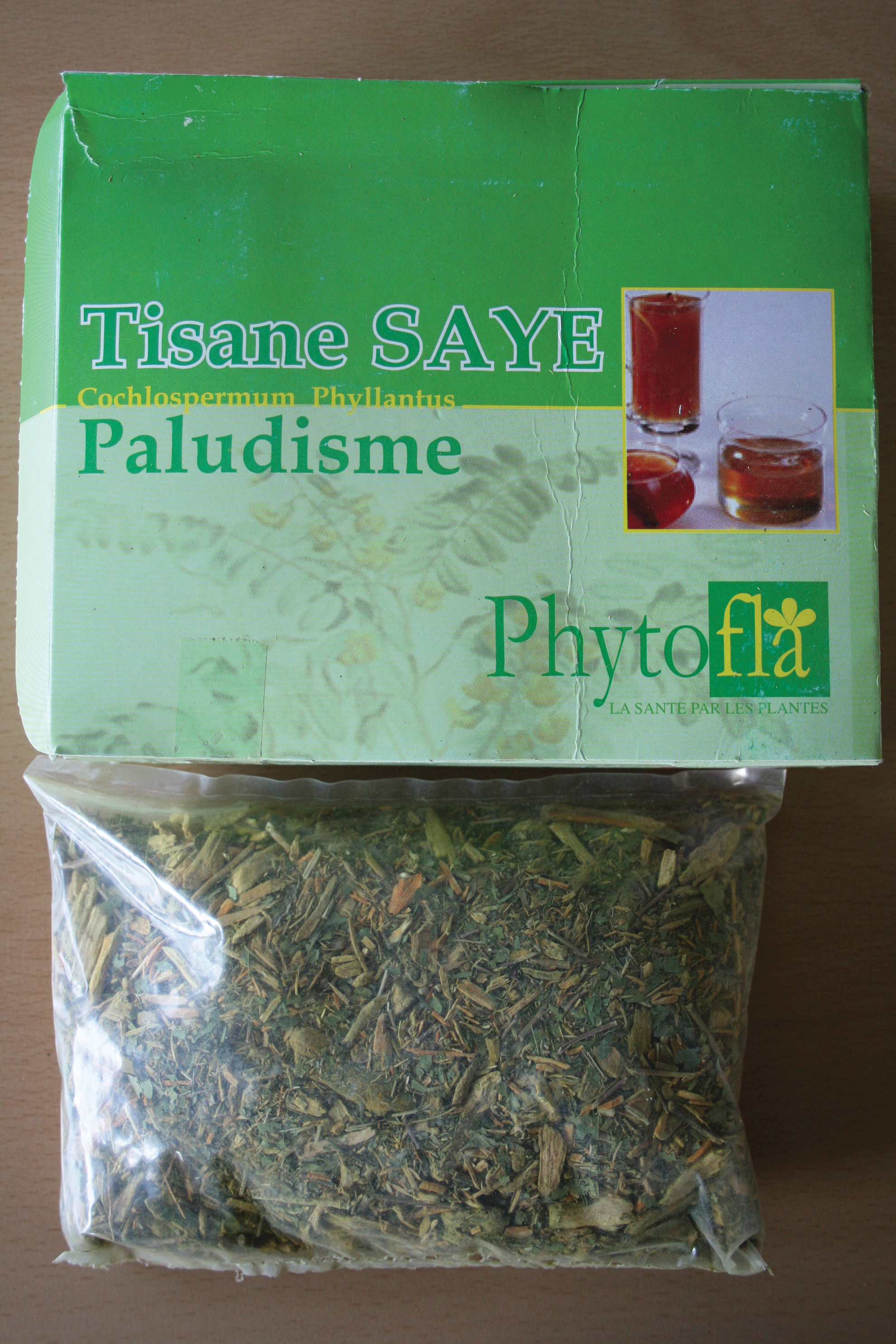
SAYE on sale in a pharmacy in Burkina Faso. Photo © Merlin Willcox. Color images available online at
Phyllanthus amarus
This common pantropical herb is used widely to treat many medical problems throughout Asia, West Africa, Latin America, and even the United States. 21 It has a long history of use in both Ayurveda 21 and Traditional Chinese Medicine. There has been much confusion in the literature between P. amarus and several similar related species, all known by the same common names in India and previously called “P. niruri complex.” 22 –24 Careful botanical and genetic analysis has shown that 76% of such market samples in India consist of P. amarus, 21 whereas P. niruri is a U.S. species that does not occur at all in India. 21,25 P. amarus (Fig. 3) is the most common species in Burkina Faso. In Latin America it is known as quebra-pedra or chanca piedra (“stonebreaker”) because it is used to treat kidney and urinary stones. In India it most often used for the treatment of jaundice. 21

Phyllanthus amarus. Note the characteristic small flowers under the horizontal stalks. Photo © Merlin Willcox. Color images available online at
A decoction of the whole plant or the roots is used traditionally to treat malaria and fevers by the Taurepang and Wapixana Indians in Brazil; 26 by people in Cuba, Suriname, and French Guiana; 26 and in several parts of India. 27,28 The plant is also a treatment for malaria in West African countries such as Burkina Faso, Nigeria, 29,30 Benin, 31 and Ghana. 32 It is prepared as a decoction by boiling 50 g of plant in 1 L of water. The patient drinks a cupful of this three times daily after meals until recovery. Children take half of the dose. The decoction may cause dizziness. 33 In Nigeria, a decoction of the leaves is taken four times daily for 5 days as a treatment for malaria. 34 In a survey in Nigeria, 122 households cited this remedy, and its “performance index” was the highest possible (3/3) (i.e., it is used very selectively for the treatment of malaria in this part of Nigeria). 34
In India, South America, and Africa, many cultures use taste and smell to classify plants for use as both food and medicine. P. amarus is very bitter, and bitter herbal medicines are recommended for the treatment of fever in Ayurvedic medicine 35 and in other traditional medical systems, such as those of Amazonian Indians. 36 Its widespread use for malaria suggests that P. amarus is widely perceived to be safe and effective for this indication.
In vitro antimalarial activity
Several studies have shown significant activity against Plasmodium falciparum in vitro (Table 3), although all used solvents other than water. One study found that the water extract did not inhibit growth of P. falciparum at a concentration of 6 μg/mL, 37 but the researchers did not calculate the 50% inhibitory concentration (IC50) . P. amarus contains many phytochemicals, including alkaloids and flavonoids such as rutin and kaempferin, 21 but they have not all been tested for their antimalarial activity.
In vivo antimalarial activity
The antimalarial activity of this plant has also been tested in vivo against the mouse parasites Plasmodium yoelii 38 and Plasmodium berghei 39 (Tables 4 and 5; both parasites obtained from the Nigerian Institute of Medical Research). The aqueous extract, 200 mg/kg orally, had about the same effect as pure chloroquine, 5 mg/kg (which led to 51% inhibition of parasites in the same experimental model). When the plant was given intraperitoneally, the effect was greater than that of chloroquine, 5 mg/kg. 39
One observational study of children attending herbalists in Nigeria for the treatment of malaria found that P. amarus was a constituent of the two most efficacious remedies, although it was mixed with several other plants. 29 This is the only published clinical study of P. amarus being used to treat malaria.
Many clinical trials have tested the effect of P. amarus on chronic viral hepatitis B. Phyllanthus species (which include P. amarus because of the afore-mentioned confusion about botanical nomenclature) and several Cochrane reviews have addressed this indication. 40 The largest review included 16 randomized controlled trials (with a total of 1326 patients) of Phyllanthus species extracts for the treatment of chronic viral hepatitis B. 40 Regarding safety, the reviewers conclude that they “could not demonstrate any significant effects of Phyllanthus on adverse events, but there was a paucity of data on the adverse events outcome; thus, the authors were not able to say whether Phyllanthus may be harmful.” Four of the studies included in this review did specifically use P. amarus rather than other related species. Overall, 134 patients were treated with P. amarus (dried, powdered plant, given at a dose of at least 200 mg three times daily for 30 days). The follow-up included clinical questioning and blood tests in three of the studies (total of 124 patients). All the studies concurred that there were no serious adverse effects and no significant changes in hematologic or biochemical measures.
Cassia alata
As might be expected from its close relationship to Senna, the leaves of C. alata (Fig. 4) are widely used to treat constipation (in the form of a decoction) in India, Indonesia, Sierra Leone, Ghana, Senegal, and Tanzania. 41,42 A randomized controlled trial in Thailand showed that the leaf tea is safe and effective as a laxative. 43 The plant contains six anthraquinones, 44 which are responsible for its laxative effect. This remedy is also used in Senegal and Ghana to treat intestinal worms and in Uganda and Benin for stomach pains. 41 Another very common use is topical application for the treatment of fungal skin diseases, such as ringworm and pityriasis. 45,46
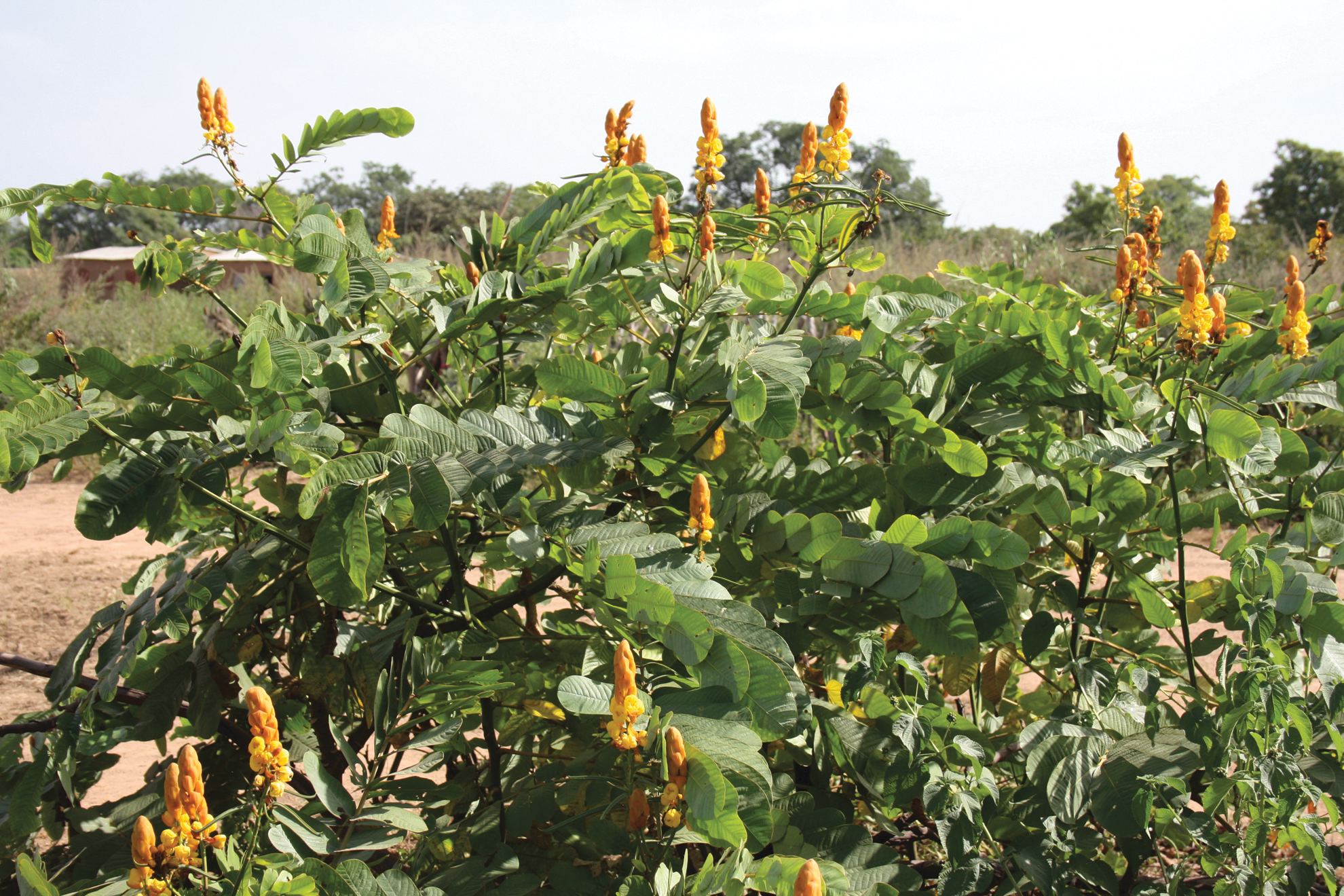
Cassia alata. The appearance of the flowers has earned it the common name of “candle bush.” Photo © Merlin Willcox. Color images available online at
It has also been used in several countries to treat malaria. Patients in West Africa believe that the laxative effect is helpful when they have malaria. In Mali, bathing with and drinking an infusion of the leaves are done to treat malaria. 47 Traditional healers commonly sell leaves and fruits as a treatment for malaria, but they acknowledge that this treatment causes diarrhea as an adverse effect. 48 In Ivory Coast, the leaf is also commonly recommended by traditional healers as a treatment for malaria. 49 In Congo, the leaves are macerated in water and filtered to treat fevers; this is also recognized to be a purgative. 50 In Brazil, the root is used to treat fevers. 51 In Nicaragua, the fruits and leaves are used to treat fevers, as a decoction, juice, or a topical poultice or bath, 52 and in Guatemala a decoction of the leaves is used to treat malaria. 53
Although this plant is used for treating malaria, it has not been extensively tested for antimalarial activity. The few studies identified in the literature suggest that ethanol and methanol extracts are not very active in vitro (Table 6), but no in vivo tests have been identified. However, several isolated compounds do have significant antimalarial activity. C. alata contains three quinones with significant antimalarial activity (IC50 <1 μg/mL against P. falciparum in vitro). 54 The leaves also contain four terpenes, all of which have significant antimalarial activity, with an IC50 of 0.23–0.94 μg/mL. 55 They also bind to hemin in a manner similar to that of artemisinin. 55
Pharmacologic Evaluation of SAYE
The antiplasmodial effect of the SAYE aqueous decoction, prepared as per the packaging instructions, has been tested in vitro against P. falciparum and in vivo against P. berghei in mice. The efficacy in vitro was weak, with an IC50 of 80 μg/mL. However, the suppression of parasitemia in mice was 74% after a daily dose of 250 mg/kg, given orally for 4 days, which is a reasonable level of activity. The median effective dose in mice during a 4-day suppressive test was 112 mg/kg. 56
Prophylactic efficacy has also been tested in two groups of six mice given 100 mg/kg twice a day for 9 days. On day 2 the mice were exposed to mosquitoes infected with P. berghei. On day 7 after inoculation, parasitemia in the treated mice was 7.5% compared with 15.2% in controls. 57 This equates to a 52% reduction in parasitemia. No adverse effects were reported.
Both C. planchonii and P. amarus have traditionally been used for the treatment of jaundice, and P. amarus has been evaluated for its effect on viral hepatitis. It would be interesting to know whether these plants are active against the hepatic stages of Plasmodium parasites, but no studies have evaluated this.
Acute toxicity was tested in mice. The 50% lethal dose (of the decoction given intraperitoneally) was 1660.55 mg/kg. 58 Subacute toxicity was tested in five groups of four mice, which were treated once daily starting from day 0 to day 3 with SAYE decoction, prepared according to the instructions on the packaging. The groups received 50, 100, 150, 200, and 250 mg/kg per day. The main outcome measure was parasite suppression, but no major adverse effects were observed. 56
The Phytofla company (see next section) has organized a pharmacovigilance system: Its sales representatives collect information on adverse effects from the pharmacies, prescribers, and users and report on them monthly. The only observed adverse effects are nausea and dizziness.
SAYE probably interacts with medicines that are metabolized by the cytochrome P450 system because two of the component plants (C. planchonii 11 and P. amarus 59 ) contain cytochrome P450 inhibitors. In the case of C. planchonii, this has been identified as zinc formate, which is found in a water extract of the roots. 11 An alcoholic extract of P. amarus was found to inhibited cytochrome P450 enzymes CYP1A1, CYP1A2, and CYP2B1/2 at low doses (IC50 ranges from 4.18 to 7.73 μg/mL). 59 Both of these herbs could therefore slow the clearance of drugs that are metabolized by the cytochrome P450 system, and so increase their serum levels. Patients receiving such drugs should therefore be advised to avoid taking SAYE.
Challenges of Scaling Up Production
Since 1984, the demand for N'Dribala and SAYE has gradually increased. The products became so popular that in 1991 another producer started to produce a fake version of N'Dribala that was made with a different, cheap plant with artificial yellow coloring. This was being sold on the streets of the capital of Burkina Faso, Ouagadougou. The packaging at that time was easy to copy because it consisted of a plastic wrapper with a typewritten label. To prevent this fake medicine, Dr. Dakuyo developed a printed wrapper that was more difficult to copy (Fig. 1). Since then there have been no more problems with fake versions of these herbal medicines. However, obtaining the printed packaging has been a challenge because it must be imported from Ivory Coast or Ghana, and irregular transport can sometimes lead to shortages.
In 1993, Dr. Dakuyo left the hospital to start his own pharmacy; he also set up a small factory for producing the herbal medicine. As demand increased and he began producing other herbal products, the size of the factory gradually increased. In 2001 it was registered as a company, Phytofla. In 2005, SAYE and N'Dribala both received an official license from the Ministry of Health for the treatment of uncomplicated malaria. Annual sales now stand at 60,000 boxes of SAYE and 25,000 boxes of N'Dribala. Although Artemisinin-based Combination Therapies (ACTs) are widely available in Burkina Faso, they are expensive and are believed to have some adverse effects. Therefore, many adult patients still prefer to use SAYE, sometimes in combination with a modern medicine and sometimes alone.
To meet this demand, Phytofla has set up a cooperative of medicinal plant producers (Coopérative des Producteurs de Plantes Médicinales, or CPPM). They have been trained in growing, identifying, harvesting, drying, and storing of medicinal plants. The cooperative now has 250 members but only 10 cultivate plants; the rest are still harvesting from the wild. C. alata is now cultivated, but C. planchonii and P. amarus are still wild harvested. P. amarus is still abundant, but C. planchonii is becoming less common. Although the producers were trained to harvest only half of the roots of each plant every year, many producers do not respect this advice and uproot the whole plant. Therefore there are plans to start cultivating the plant.
The dried plant material is delivered to Phytofla, where it is processed. This was initially done by hand, but now the milling and mixing are done by locally made machines. For example, a cement mixer has been adapted for making a homogeneous mixture of the medicinal plants (Fig. 5).
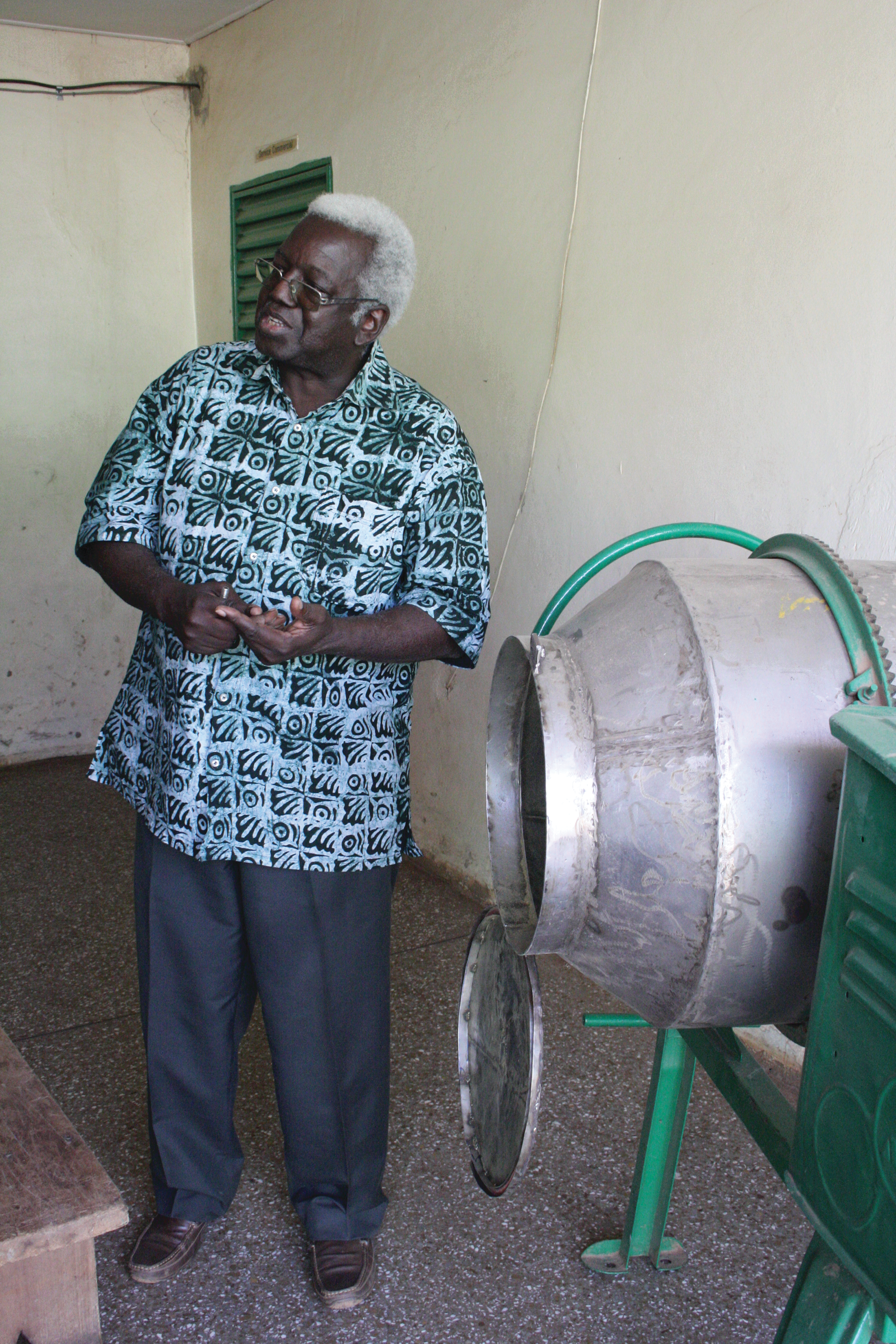
Dr. Zéphirin Dakuyo demonstrates the machine he has adapted from a cement mixer for producing a homogenous mixture of the medicinal plants in SAYE. Photo © Merlin Willcox. Color images available online at
Challenges for the Future
As cultivation is developed, it is important to create methods for standardization and quality control of SAYE and to check that the cultivated plant contains the same compounds as the wild plant. Phytochemical screening reveals the presence of terpenoids, flavonoids, anthraquinones, tannins, and traces of alkaloids. 58 A high-performance liquid chromatography profile shows that the principle compounds are those of C. planchonii, plus kaempferol from C. alata (Fig. 6). 60 Quality control will be done according to the high-performance liquid chromatography profile, concentrating on cochloxanthine and dihydrocochloxanthine, both of which are specific to Cochlospermum species, although the ratio between them varies. Both of these compounds have an antimalarial activity of 1 μg/mL in vitro (Benoit-Vical F. Personal data). An active collaboration has been developed between Phytofla, the University of Ouagadougou, and the University of Veterinary Medicine, Vienna, where quality control tests are now being developed.

HPLC profile of SAYE and of Cochlospermum planchonii. DCM, dichloromethane; EtOAC, ethyl acetate; HPLC-DAD, high pressure liquid chromatography-diode array detector. Color images available online at
Although SAYE is licensed and widely sold in Burkina Faso for the treatment of malaria, it has never been evaluated in a randomized, controlled clinical trial. It would also be useful to assess whether the currently recommended preparations and dosages are suboptimal, optimal, or excessive. The Ministry of Research of Burkina Faso has recently agreed to fund a clinical trial of SAYE versus ACT in uncomplicated malaria in adult patients, to be conducted by the Institute of Research in Health Sciences. This will provide more evidence on the clinical safety and effectiveness of SAYE in the treatment of malaria.
Footnotes
Acknowledgments
Work on quality control was funded by the Austrian Partnership Program in Higher Education and Research for Development (APPEAR) as part of the Austrian Development Cooperation (ADC), through the APPEAR project-75, MEAMP (Malaria and Medicinal Plants). The time used by E.W. and M.W. to review the literature was funded by the European Union Research Directorate through the MUTHI project, FP7 grant agreement no. 266005. The forthcoming clinical trial of SAYE is funded by the National Fund for Research and Innovation for Development (FONRID), Ouagadougou, Burkina Faso.
Author Disclosure Statement
Dr. Dakuyo is the founder and director general of Phytofla, the company that produces and sells SAYE. The other authors have no competing financial interests.