




Abstract
Background:
Chronic musculoskeletal pain is highly prevalent worldwide.
Primary study objective:
The aim of this study was to evaluate the efficacy of Helical® microcoils, a new, noninvasive treatment for chronic musculoskeletal pain.
Design:
This was a prospective, observational study.
Setting:
The study was conducted at the main author's private clinic, in São Paulo, Brazil.
Participants:
We evaluated 20 physicians, from 2 different hospitals, who suffered from chronic musculoskeletal pain and volunteered to participate in the study.
Intervention:
The Helical® microcoils were applied to the skin over the affected areas. Before and after the intervention, the physician-patients completed questionnaires and a visual analog scale.
Primary outcome measures:
We quantified postintervention improvement or worsening of pain and muscle tension.
Results:
Significant improvements in pain and muscle tension were observed in 95% of the physician-patients evaluated. The only side effect reported was mild pruritus at the application site, which occurred in 5 of the 20 cases.
Conclusion:
The use of Helical microcoils was found to be safe and efficacious in relieving muscle tension and pain.
Introduction
A
Of the various types of chronic pain, musculoskeletal pain is estimated to affect approximately 85% of the population at some point in their lives. 4 Among individuals with such pain, one of the most common presentations is myofascial pain syndrome, which mainly affects the head, neck, shoulders, hips, and lower back. 4
Various treatments have been used for the relief of muscle tension and pain, including pharmacological and nonpharmacological measures, either alone or in combination. 5 Among the former, the most widely used are nonsteroidal anti-inflammatory drugs, analgesics, muscle relaxants, and in locus injections of substances such as anesthetics, botulinum toxin, and saline solution. Although efficacious and fast-acting, pharmacological treatments often have side effects (some severe) when used for prolonged periods. Nonpharmacological treatments (so-called complementary or alternative treatments) are generally considered safer because they have minimal adverse effects, such treatments including acupuncture, the application of heat or cold, relaxation techniques, the practice of certain sports, massage, and the use of mechanical devices.
A new device, in the form of a small silicone wafer containing carbon microcoils (CMCs), was recently introduced (Helical®; Miyasaka Rubber Co., Chino, Nagano, Japan). It has been registered with the Japanese Ministry of Health, Labour and Welfare as a mechanical device to minimize chronic muscle tension and pain (Registration No. 20BX10004000001). It is classified as a health product for home use and can be purchased without a prescription (in Japan). The CMC wafer is totally inert and contains no drugs of any kind. A circular piece of adhesive tape is used in order to secure the wafer to the skin over the affected area (Fig. 1). Composed of nanotubes with a double-helix structure, CMCs are excellent electromagnetic wave absorbers. 6,7 As such, when applied to the skin over muscles that are tense or sore, it is supposed that they absorb the electromagnetic waves generated by the muscles, balancing the neurological modulation and muscle relaxation activities of the biological circuit.
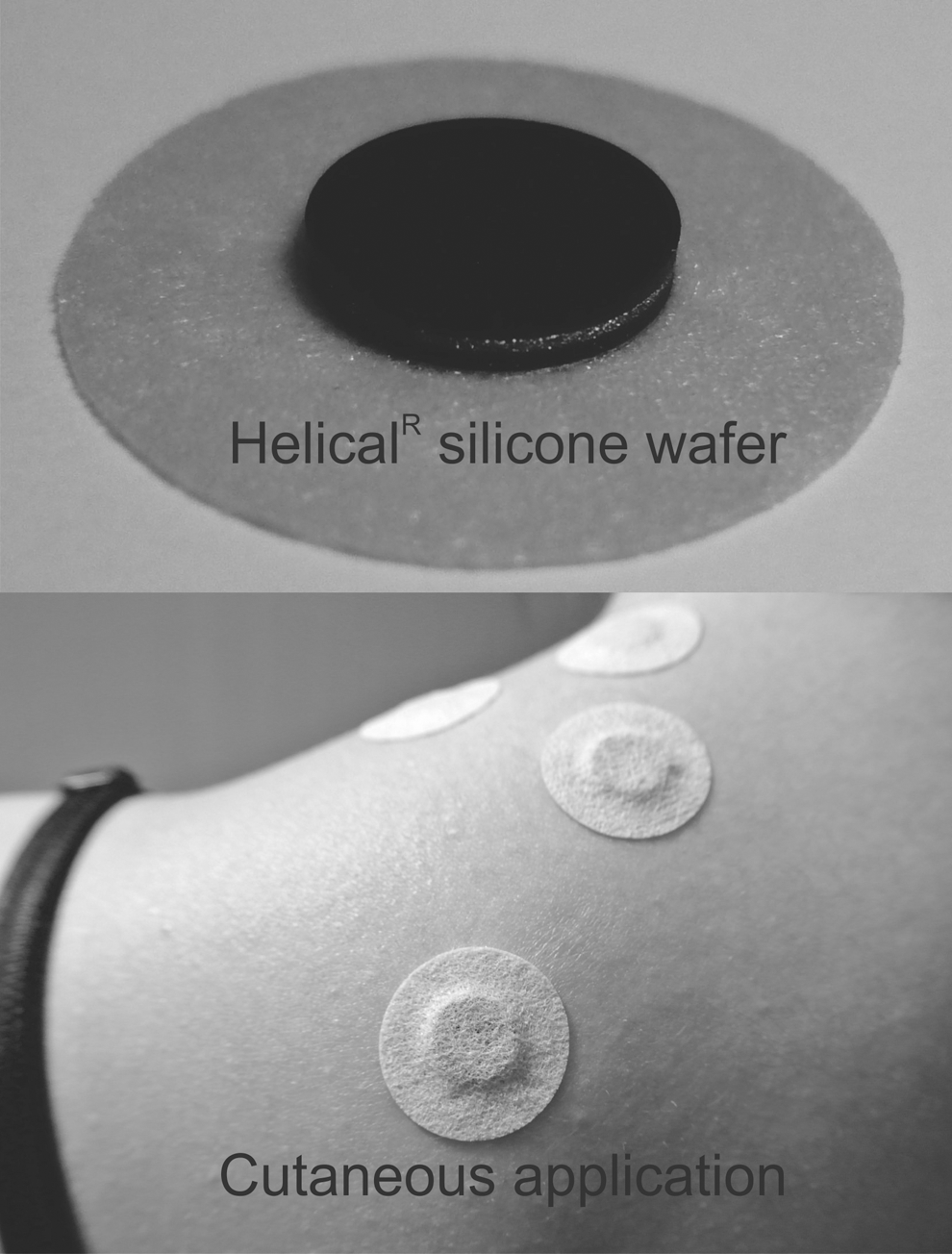
Helical® silicone wafer containing carbon microcoils, and cutaneous application.
The aim of this unprecedented, observational study was to evaluate the efficacy of this new therapeutic approach as a treatment for chronic musculoskeletal pain. To that end, we prospectively evaluated a series of cases in which the CMC wafer was used by volunteers.
Patients and Methods
We evaluated the cases of 20 physician-patient volunteers, in our midst, recruited from two separate hospitals. Only those complaining of chronic muscle pain were included. We excluded those with complaints of joint pain or neurological pain, as well as those with pain related to infectious diseases or trauma.
All of the physician-patients were instructed to apply the CMC wafers to the skin over the site(s) at which the tension or pain was greatest (trigger points and tender nodules), as determined by self-palpation. They were instructed to apply two to three wafers around each site, spaced 3–5 cm apart.
The physician-patients were asked to complete a preapplication questionnaire, designed to collect the following information: gender, age, and medical specialty; area affected by tension and pain, indicated on representations of the human form in the prone and supine positions; level of tension and muscle pain, indicated on a visual analog scale from 0 (no symptoms) to 10 (the worst possible symptoms); time since the onset of symptoms; pain diagnosis (self-reported); use of complementary or alternative treatments; and use of pharmacological treatments.
After three weeks of initial treatment with the CMC wafers, the physician-patients were asked to complete a postapplication questionnaire, designed to collect the following information regarding the treatment: degree of efficacy in relieving tension and pain, each indicated on a visual analog scale from 0 (no effect) to 10 (complete relief of symptoms); level of post-CMC wafer usage muscle tension and pain, each indicated on a visual analog scale from 0 (no symptoms) to 10 (the worst possible symptoms); time elapsed from application to the perception of improvement; occurrence and types of side effects; suspension or reduction in the use of other complementary or alternative treatments; and suspension or reduction in the use of pharmacological treatment.
Data are presented as ranges, with means and standard deviations. We used the nonparametric Wilcoxon test to compare data from the pre- and postapplication questionnaires. Values of p<0.05 were considered statistically significant.
Results
The study sample was composed of 13 men and 7 women. Age ranged from 30 to 63 years (mean, 44.2±7.3 years). The sample comprised 11 otolaryngologists, 3 pediatricians, 2 anesthesiologists, 2 head and neck surgeons, 1 rheumatologist, and 1 gastrointestinal surgeon. Data regarding pain sites and symptoms are presented in Table 1.
The time since symptom onset ranged from 3 to 96 months (mean, 26.8±15.6 months). Diagnoses or symptoms reported by the physician-patients are presented in Table 2.
The self-reported degree of efficacy of the CMC wafer in relieving muscle tension ranged from 0 (in one case) to 10 (in several cases), with a mean of 7.9±2.4, as did the self-reported degree of efficacy of the CMC wafer in relieving muscle pain, with a mean of 8.3±2.3. Figures 2 and 3 show the self-reported level of muscle pain and muscle tension, respectively, before and after the application of the CMC wafers. Figures 4 and 5 show box plots of the pre- and postapplication level of muscle pain and muscle tension, respectively.
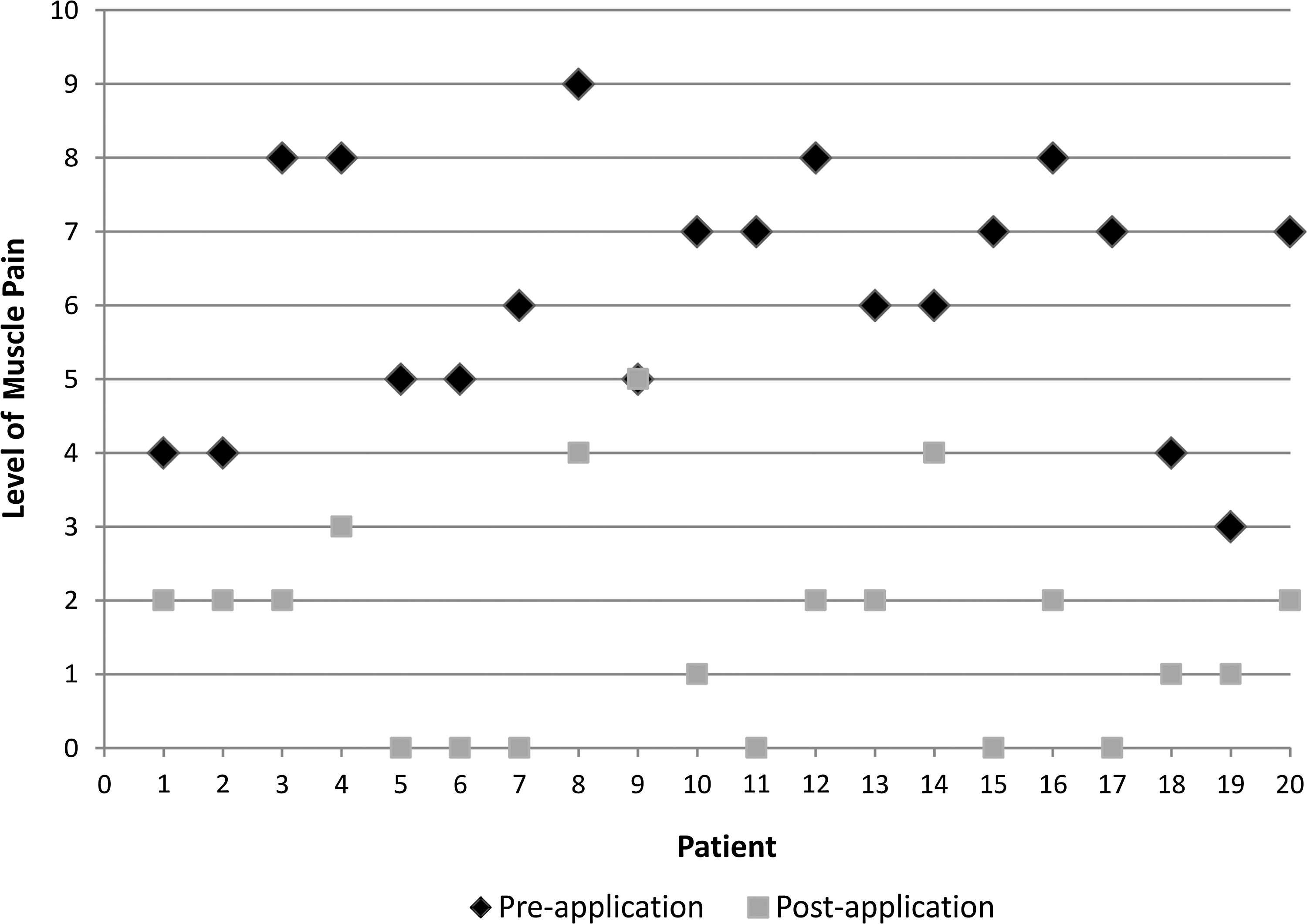
Self-reported level of muscle pain before and after the application of silicone wafers containing carbon microcoils in the physician-patients evaluated.
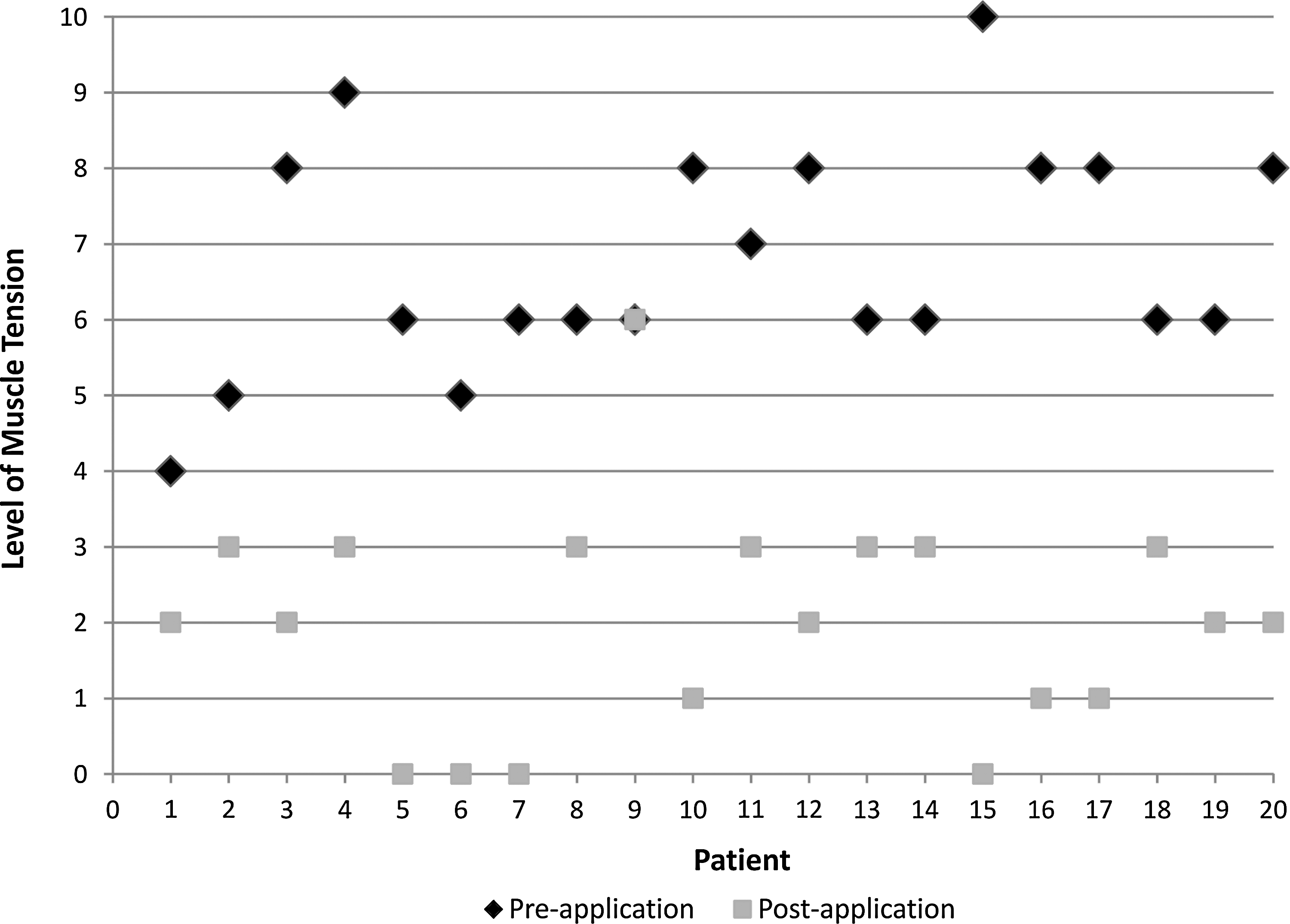
Self-reported level of muscle tension before and after the application of silicone wafers containing carbon microcoils in the physician-patients evaluated.
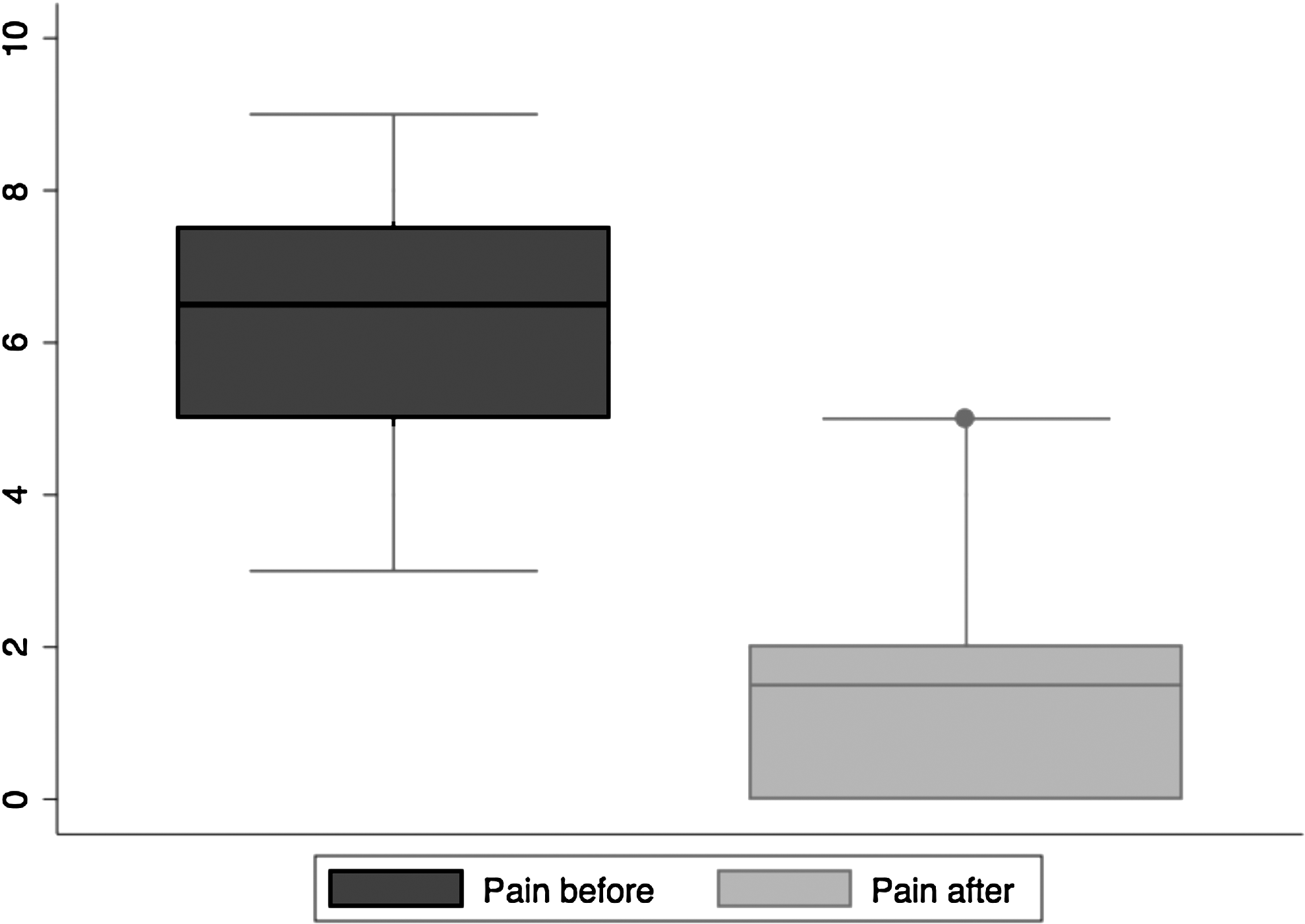
Box plot of self-reported level of muscle pain before and after the application of silicone wafers containing carbon microcoils in the physician-patients evaluated.

Box plot of self-reported level of muscle tension before and after the application of silicone wafers containing carbon microcoils in the physician-patients evaluated.
We observed a significant difference between the pre- and postapplication time points, in terms of the self-reported level of muscle pain and muscle tension (p= 0.0001 for both). In our study sample, the only physician-patient who showed no improvement reported that local itching prompted the removal of the CMC wafers after only the second day of use. Among the 19 physician-patients who reported improvement of symptoms, the minimum time required to perceive the effects of the treatment ranged from 10 min to 20 days (Table 3). Ten of those patients experienced symptom improvement within the first 24 h. Five presented mild itching at the application site, a symptom that appeared between the second and fifth day of treatment and regressed completely just hours after the removal of the CMC wafers.
Regarding the therapeutic measures adopted by physician-patients, five reported that they had not previously used any type of treatment for their muscle tension or pain. Of the 15 who reported using some type of treatment, 8 reported having used complementary or alternative treatments only, 3 reported having used drugs only, and 4 reported having used both methods. Of the seven who had used drugs to treat their muscle tension or pain, five reported that they had reduced their use of such drugs substantially after the application of the CMC wafers and two reported having stopped using such drugs completely. Of the 12 physician-patients who had used complementary or alternative treatments, 10 reported that the use of the CMC wafers had reduced the frequency of their need to rely on such treatments.
Discussion
In the city of São Paulo, the prevalence of chronic pain among adults is nearly 30%. 3 If we extrapolated this to Brazil as a whole, using data from the 2010 census, which showed the total adult population to be nearly 120 million people, we can deduce that there are approximately 40 million adults in the country who suffer from some type of chronic pain.
Worldwide, the two main types of chronic pain are myofascial and musculoskeletal. According to estimates made by Giamberardino et al., 4 approximately 85% of the population is affected by myofascial pain at some point in their lives.
There are many therapeutic methods aimed at treating chronic musculoskeletal or myofascial pain. 4 Such methods include stretching techniques and muscle relaxation; local compression and dry needling of the trigger points; local injection of anesthetics or botulinum toxin; acupuncture and its variations; therapeutic ultrasound; and the use of medications such as nonsteroidal anti-inflammatory drugs, muscle relaxants, and analgesics. However, such methods rarely achieve a definitive cure, leading the patient to migrate from one treatment to another while “living” with the pain, which is often severe. Because it contains no medications, is widely available, and is easy to use, the Helical CMC wafer seems to represent a convenient alternative for the symptomatic relief of chronic muscle pain.
In this study, the use of CMC wafers produced positive results in 95% of the cases. This result seems surprising, given that the wafer CMC does not release any substance or produce any measurable physical quantities such as heat or electrical current. According to the works of Motojima et al. 6 and Chen and Motojima, 7 the CMC contained in the silicone wafer, because it is produced by nanoscale structuring of carbon atoms into the form of a double helix, presents a special property: a high capacity for the absorption of electromagnetic waves. It is believed that, when the CMC wafer is in contact with the skin over the affected muscle region, this electromagnetic wave absorption capacity restores the balance of the biological circuit that coordinates muscle activity, improving circulation, oxygenation, and tissue homeostasis. The Helical CMC wafers can be applied simply by adhering them to the adhesive tape and positioning them over the most painful points within the affected region (trigger points or acupoints).
Because the Helical CMC wafer is still a new product in Brazil, we chose to conduct this initial observational study on the efficacy of it, using a series of cases involving volunteer physician-patients, all of whom worked in areas that are essentially allopathic. All of the physician-patients were on the staff of the University of São Paulo School of Medicine Hospital das Clínicas or the Albert Einstein Hospital, both in the city of São Paulo and both with a strong academic-scientific tradition, where evidence-based medicine is the norm. Such professionals are generally more skeptical than is the lay population in relation to methods of complementary or alternative medicine, as well as being well acquainted with the possibility of a placebo effect and therefore probably more “immune” to that type of bias. In addition, it is assumed that physicians are better able to provide accurate information about any ailment from which they suffer; to judge the severity of its signs, symptoms, and variations; and to provide accurate reports of the results and side effects of a given treatment. Therefore, this study, although based on a single series of cases, restricted to a small number of patients, uncontrolled, nonrandomized, and susceptible to multiple biases, appears to have produced quite reliable results, given that the data were collected from physician-patients rather than from a group of ordinary patients.
Any new treatment that involves new technology should be evaluated in terms of its safety, efficacy, and side effects. According to safety tests performed and reported in the official documentation provided by the manufacturer, CMC wafers show no dermal toxicity, do not affect the sensitivity of the skin, are minimally irritating to the eyes, and are not mutagenic. As for side effects, studies conducted by the manufacturer showed that mild pruritus and dermatitis occur at the application site in 3.3% and 8.1% of cases, respectively. In our study, 5 of the 20 evaluated physician-patients reported mild pruritus at the application site. That symptom regressed after the removal of the CMC wafers.
Chronic muscle tension and pain constitute a serious health problem, significantly impairing the quality of life of individuals who suffer from them. Although the medications typically prescribed to treat such symptoms can bring almost instant relief, their prolonged use can have serious side effects. Consequently, many individuals suffering from chronic muscle tension or pain seek alternative or complementary methods, such as exercise techniques, massage, and oriental medicine. However, those methods do not always produce satisfactory results and often require long-term treatment, dedication, and discipline on the part of the patient, who occasionally require the aid of a professional, such as an acupuncturist, physical therapist, or personal trainer. It is not uncommon for such difficulties to lead to treatment noncompliance. Within this context, the Helical CMC wafer, which was efficacious in 95% of the cases evaluated here, seems to be quite effective as a complementary treatment modality for patients with muscle tension or pain, having the added advantages of being easy to use and producing only mild side effects. These initial findings are quite encouraging and should prompt additional controlled studies in order to determine the magnitude of the applicability and efficacy of this product, especially in relation to its use in acupuncture to stimulate acupoints, and therapeutic indication for various other conditions, such as vertigo caused by muscle tension, muscle fatigue, acute muscle injury, and muscle cramps.
Conclusions
In this observational study based on a series of cases in physician-patients, the use of the Helical wafer proved highly efficacious in relieving muscle tension and pain. The only side effect observed was mild pruritus at the application site, which occurred in 25% of the cases.
Footnotes
Author Disclosure Statement
No competing financial interests exist.