




Abstract
Objectives:
Traditional Chinese Medicine (TCM) applied in the clinic as a complementary and alternative therapy has helped improve immunity and reduce side effects and symptomatic treatment in patients with HIV/AIDS. However, the mechanisms of TCM syndromes are not clear. Transcriptomics enables the study of such TCM syndromes.
Design:
This study compared the messenger RNA (mRNA) expressions of healthy persons and patients with HIV/AIDS who had two common TCM syndromes, qi-yin deficiency and dampness-heat retention, to find the difference in HIV/AIDS with TCM syndromes.
Results:
Comparison with healthy persons identified 113 mRNAs—41 enhanced and 72 decreased—in the qi-yin deficiency group. Additionally, 76 mRNAs were found in the dampness-heat retention group: 14 increased and 62 decreased. Functional genetic analysis of the mRNAs indicated that two TCM syndromes were correlated with cell apoptosis, immunoinflammatory responses, and lymphocyte activation. Differentially expressed mRNAs in the qi-yin deficiency group were obviously associated with cellular activity, communication, protein localization, cellular ion homeostasis, and regulation of cell motion, whereas mRNAs in the dampness-heat retention group were associated with sequence-specific DNA binding, cellular response to stress, and hemopoietic or lymphoid organ development.
Conclusions:
These results suggest that the formation of different TCM syndromes in patients with HIV/AIDS were founded on biological transcriptomics, which reveal mechanisms of the formation of these syndromes in HIV/AIDS. Differentially expressed mRNAs in two TCM syndrome groups tended to normalize after TCM intervention, which indicates that TCM might remit symptoms by changing genetic expression.
Introduction
P
The study of TCM syndromes in terms of transcriptomics is conducive to research on the molecular mechanisms of TCM syndromes and personalized treatment. 13 –16 Transcriptomics explores genetic transcription and regulation in cells at the overall level of RNA expression and variability. 17,18 The interactions of differentially expressed genes might present different symptoms in patients, which corresponds to a characteristic of TCM: that is, TCM syndromes manifest timeliness and spatial awareness of a disease at a certain stage of development.
At present, some investigators have studied TCM syndromes in terms of transcriptomics. 19,20 Transcriptomics in patients with HIV/AIDS has also been studied. 21,22 However, gene expression profiles in HIV/AIDS with TCM syndromes has thus far not been explored. In addition, epidemiologic results have shown that the qi-yin deficiency syndrome 23 –25 and dampness-heat retention 26,27 were the most common TCM syndromes in patients with HIV/AIDS in China.. Therefore, the present study selected patients with these two TCM syndromes with the objective of studying expression profiles and exploring the inherent foundation of HIV/AIDS in TCM patients at the molecular level.
Materials and Methods
General information
Forty-nine volunteers were included in this study. Among them, 29 patients with HIV/AIDS were from the Henan province of China: 12 with qi-yin deficiency syndrome and 17 with dampness-heat retention. Twenty healthy persons from the same region and same ethnic group were included as a control group to ensure that the age, sex, eating habits, and lifestyle of the control group were similar to those of the observation group. Baseline demographic characteristics, such as age and sex, did not significantly differ between groups (Tables 1 and 2).
Chi-square = 0.356; p = 0.551.
Means are expressed with standard deviation. t = 0.382; p = 0.703.
The study was approved by the “Prevention and Treatment of Serious Infectious Diseases Such as AIDS and Viral Hepatitis Prevention” project management office of China. Each participant provided informed consent.
During the study, 5 mL of fasting anticoagulated blood was drawn from all participants in the morning; of this sample, 2 ml was used for transcriptomic research, and the other 3 mL was used for viral load and immune indices detection. This latter analysis provided a reference for basic conditions of the disease in participants included for transcriptomics research.
Inclusion criteria
Patients with HIV/AIDS included in the present study were aged 18–60 years and met the diagnostic criteria of AIDS as described in the Diagnostic Guide of AIDS recommended by the Ministry of Health, China, in 2008.
Criteria for TCM syndrome differentiation
TCM syndromes were differentiated in two steps. First, two professors made the initial diagnosis. Second, commonly used diagnostic scales for TCM syndromes in HIV/AIDS were used as diagnostic criteria. A TCM syndrome was diagnosed when the total points were greater than or equal to 20. The diagnostic scales were chosen according to the Science and Technology Prize of the China Association of TCM in 2012 (Epidemiologic Study and Diagnostic Scales of TCM Syndrome with HIV/AIDS) and the National Natural Science Foundation of China (Distribution Rule of TCM Syndromes in HIV/AIDS and Building and Verification of Syndrome Criteria, no. 90409004). These were considered for their diagnostic scales for qi-yin deficiency syndrome and dampness-heat retention syndrome as the diagnostic criteria
28
(Supplementary Tables S1 and S2; supplementary materials are available online at
Exclusion criteria
The following were excluded from the study: (1) patients with AIDS in the middle or advanced stage of disease, with severe opportunistic infections; (2) patients with obnubilation, dementia, or other psychiatric/psychological disorders; (3) patients with severe organ disease or immunodeficiency disease that was induced by non-AIDS infections; and (4) patients who failed to provide informed consent for whatever reason.
Medicines and methods for intervention
Patients with HIV/AIDS who had corresponding TCM syndromes received an intervention with TCM granules (produced by Shenzhen San-Jiu Modern TCM Co., Ltd., in December 2010). The qi-yin deficiency group was treated with Shengmai decoction, 29 which consisted of 5 g of Renshen (Panax ginseng), 15 g of Maidong (Ophiopogon japonicus), and 10 g of Wuweizi (Schisandra chinensis). The dampness-heat retention group received Sanren decoction, 30 consisting 15 g of Xingren (Amygdalus communis vas), 20 g of Yiyiren (Semen coicis), 10 g of Baikou (cardamom), 12 g of Jiangbanxia (ginger processed Pinellia ternata [Thunb.] Breit.), 10 g of Huashi (talcum), 15 g of Baizhu (Atractylodes macrocephala Koidz), 15 g of Houpu (Mangnolia officinalis Rehd. et Wils), 6 g of Tongcao (Tetrapanax papyriferus), and 10 g of Danzhuye (Herba Lophatheri). Directions and dosage were provided to the patients and included one bag to be taken twice daily, with 200 mL of warm water added so that participants could drink the contents. The course of treatment lasted 3 months, repeated twice (two courses total). Blood samples were obtained before and after treatment.
Expression profile of the AFFX Human Genome U133 Plus 2.0 chips
Total RNA extraction reagent was applied to extract total RNA from fasting blood samples from the three groups. Appropriate RNA was detected by using a nucleic acid quantitative analyzer and agarose gel electrophoresis to visualize the bands. Expression profile of total RNA was tested by AFFX Human Genome U133 Plus 2.0 chips.
Data analysis
The differential signal points were analyzed and screened with the BRB-Array Tools 4.2 software program. With the GENE SET program, an expression-comparing tool that was included in the software, differential genes between groups were tested. BRB-ArrayTools, version 4.2, was used in cluster analysis on differentially expressed signals in the healthy and the disease groups. The information pathways of differentially expressed messenger RNAs (mRNAs) were analyzed online by using DAVID tools (
Results
Differential mRNAs in two syndrome groups
Differential signals were screened to determine their corresponding differential mRNAs according to the following criteria: (1) p < 0.001; (2) false discovery rate, p < 0.05; and (3) ratio of 0.5 or less and ratio greater than 2. Results showed that of the 113 differentially expressed mRNAs were found in the qi-yin deficiency group compared with the healthy group: 41 were upregulated (Supplementary Table S3) and 72 were downregulated (Supplementary Table S4). In addition, 76 differentially expressed mRNAs, 14 upregulated (Supplementary Table S5) and 62 downregulated (Supplementary Table S6) in the dampness-heat retention group, compared with the healthy group. With the exception of the shared differentially expressed mRNAs, 47 mRNAs were specific to the qi-yin deficiency group and 10 were specific to the dampness-heat retention group (Fig. 1).

Different messenger RNAs (mRNAs) of the two syndromes (qi-yin deficiency and dampness-heat retention).
Values expressed with a plus/minus sign are the mean ± standard deviation. SPSS 21.0 statistical software program was used to analyze relevant immune indices in different TCM syndromes. One-way analysis of variance was applied to analyze and compare the intergroup differences. To compare the differences in immune indices between groups, the least-squares difference method was selected for equal variances; the Dunnett T3 test was used for unequal variances. The results showed that when compared with values in the control group, the absolute value of CD4+ T cells in both disease groups was reduced significantly, while the frequency of CD8+CD38+ T cells increased significantly (p < 0.05–0.01). Further, compared with the control group, the qi-yin deficiency group had a significant decrease in absolute values of CD4+ and CD8+ T cells (p < 0.05–0.01), while the dampness-heat retention group had a significant increase in CD8 T cells and reduced frequency of CD4+CD45RA+ and CD4+CD28+ dual-positive T cells (p < 0.05–0.01). There were no significant difference seen between groups in CD8+CD28+ and CD4+CD45RO+ T cells, CD4+CD95+, and CD4+CD25+ T cells or the CD3−CD16+ 56+ T cells (p > 0.05).
p < 0.01 compared with healthy controls.
p < 0.05 compared with healthy controls.
Prediction and classification of differentially expressed mRNAs
To verify the specificity of differentially expressed mRNAs in both syndrome groups, all differentially expressed genes in each group were predicted and classified according to the significance level of p < 0.05. In addition, fold-change of 1.5 or greater and seven genes, including RPS26, MS4A1, and XIST (Table 4), were screened. Differentially expressed mRNAs in both TCM syndrome groups could be distinguished, and the specific biological basis of the TCM syndromes could be verified.
Differentially expressed genes in either group were predicted and classified according to the significance level of p < 0.05, fold change ≥ 1.5. The accuracy of compound covariate predictor was 86%; accuracy of diagonal linear discriminant analysis was 93%; accuracy of three nearest neighbors was 79%; accuracy of nearest centroid was 93%, accuracy of the support vector machines was 93%; and accuracy of the Bayesian compound covariate predictor was 96%.
Functional annotation clustering of differentially expressed mRNAs
The biological function of differentially expressed mRNAs in both TCM syndrome groups was analyzed by functional annotation clustering in DAVID tools. Some differentially expressed genes were correlated with apoptosis, response to material, immune response, chemotaxis, and lymphocyte activation (Supplementary Tables S7–S10). However, differential syndromes had different enrichment scores in the same annotation cluster.
Differentially expressed genes specific to both syndromes had differential functions. Functions specific to upregulated mRNAs in qi-yin deficiency syndrome were related to positive regulation of cell communication, induction of apoptosis, and other features (Fig. 2a). Downregulated mRNAs were obviously related to negative regulation of cellular activity and communication, regulation of protein localization, cellular ion homeostasis, and other features (Fig. 2b). Functions specific to the dampness-heat retention syndrome included the following: Upregulated mRNAs were correlated with regulation of transcription and cell composition (Fig. 2c), and downregulated mRNAs were involved in negative regulation of apoptosis, mRNA processing, sequence-specific DNA binding, cellular response to stress, hemopoietic or lymphoid organ development, and other features (Fig. 2d).
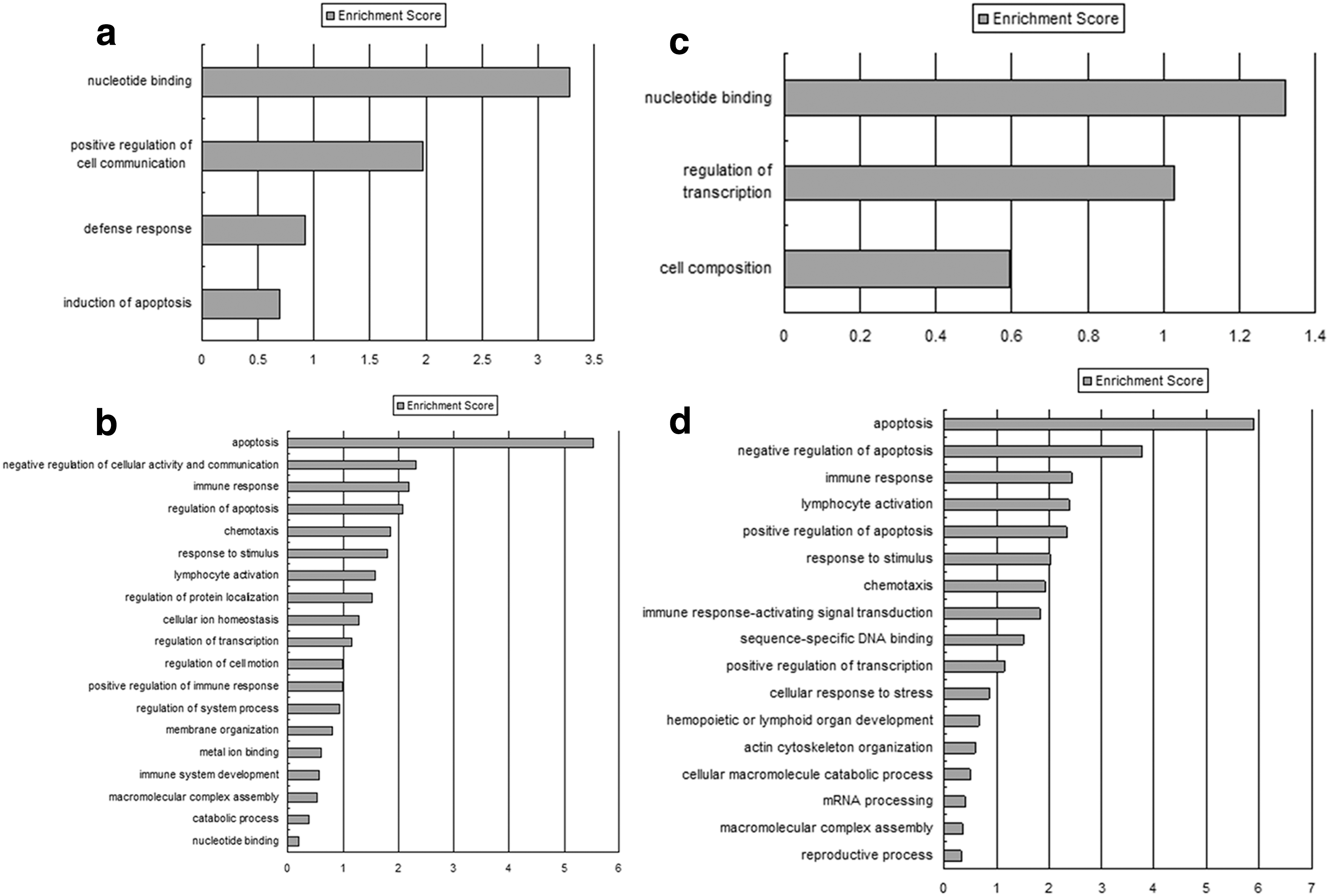
Upregulated and downregulated mRNAs in both differential syndromes were analyzed by using DAVID tools. After the results of the functional annotation clustering were obtained, a bar chart was drawn with the enrichment score (y-axis) and function (x-axis). Differentially expressed genes that were relevant to the function with a greater enrichment score had a greater role in disease progression and syndrome formation in HIV. Functional annotation of upregulated and downregulated mRNAs in qi-yin deficiency syndrome was showed, respectively, in
Pathways of differentially expressed mRNAs
To further grasp the mechanism of differentially expressed genes in TCM syndromes, DAVID tools were applied to analyze the pathways of these genes. Both syndromes had common pathways and specific pathways (Tables 5 and 6; Fig. 3a and 3b).

Pathways of differentially expressed mRNAs in qi-yin deficiency syndrome
Signal pathways of differential genes in both syndromes were analyzed with DAVID tools (
KEGG, Kyoto Encyclopedia of Genes and Genomes; NOD, nucleotide oligomerization domain; MAPK, mitogen-activated protein kinase; NFκB, nuclear factor κB; TNFR2, tumor necrosis factor receptor 2; DR, death receptor; IL-2, interleukin-2.
Signal pathways of differential genes in both syndromes were analyzed with DAVID tools (
Cluster analysis
Differentially expressed signals of the healthy group and both of the syndrome groups were analyzed with BRB-Array Tools, version 4.2. According to the cluster analysis of the genetic expression levels, both the healthy group and the disease groups can be distinguished in color, which indicated that the healthy group and the disease groups had different genetic expression profiles. Both syndrome groups could also be partly differentiated, which showed that there were both similar the specific differentially expressed mRNAs seen between different syndromes (Fig. 4).
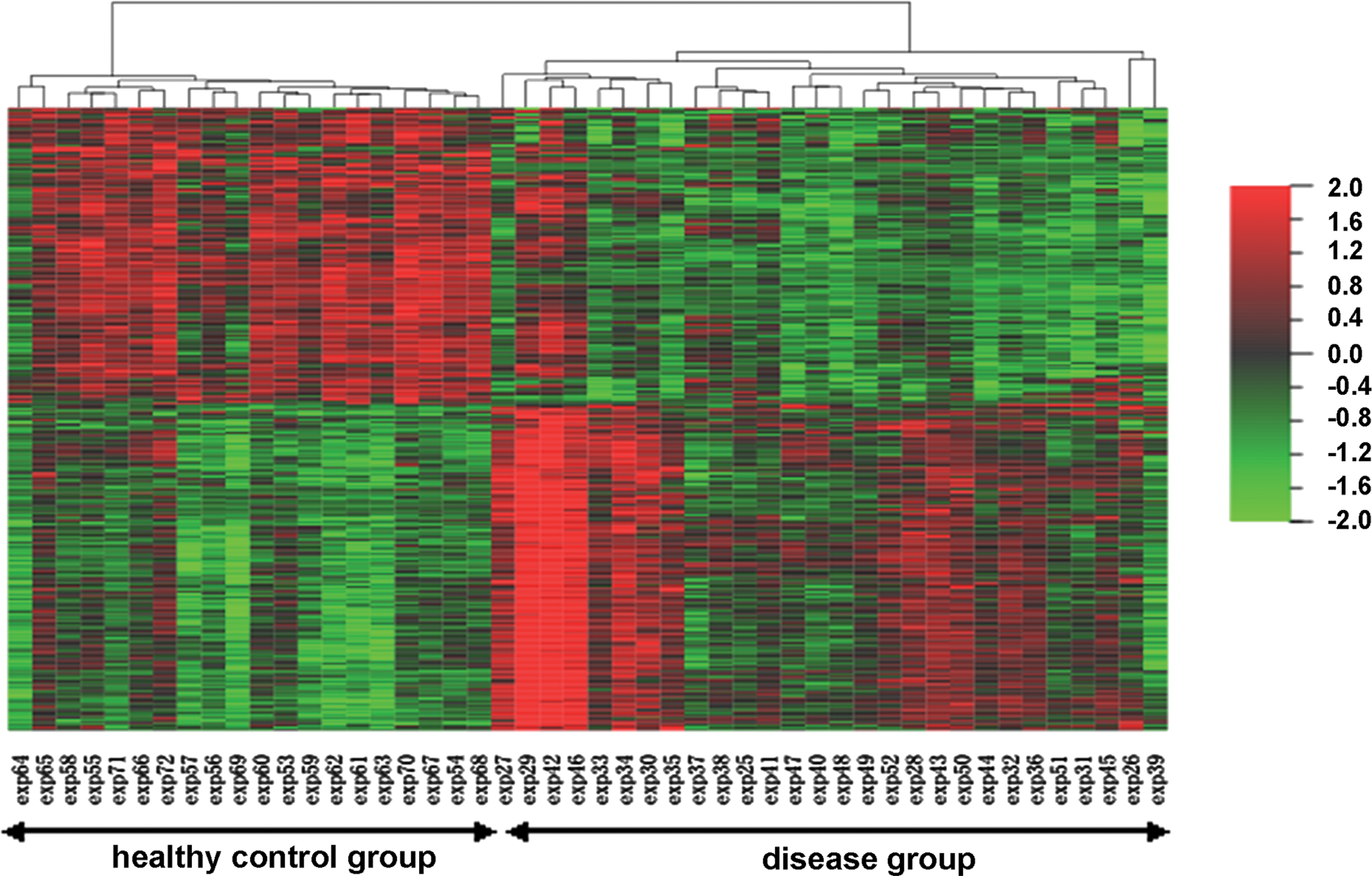
With the BRB-Array Tools version 4.2 software, differentially expressed signals of the healthy control group and the syndrome groups were analyzed. Upregulated genes are shown in red and downregulated genes are displayed in green. From the image, it can be appreciated that the genetic expression in the healthy group and the disease groups was clearly different according to the color map. Partial differences in genetic expression for both syndrome groups could also be manifested in the cluster analysis image. Color images available online at
Interaction between differentially expressed genes
Differentially expressed mRNAs of both syndromes were input into STRING in order to intuitively study the correlation between them. The required confidence (score) was 0.70, and the interactors shown yielded a value that was no greater than 5. Differentially expressed mRNAs, which were closely related to each other, were found in the qi-yin deficiency syndrome group, making up a relationship chart with 56 nodal points and a side-length of 112 (Fig. 5a). According to the same standards, 32 differentially expressed mRNAs, which were closely related to each other, were found in the dampness-heat retention syndrome group, forming a relationship chart with 32 nodal points and a side-length of 54 (Fig. 5b).
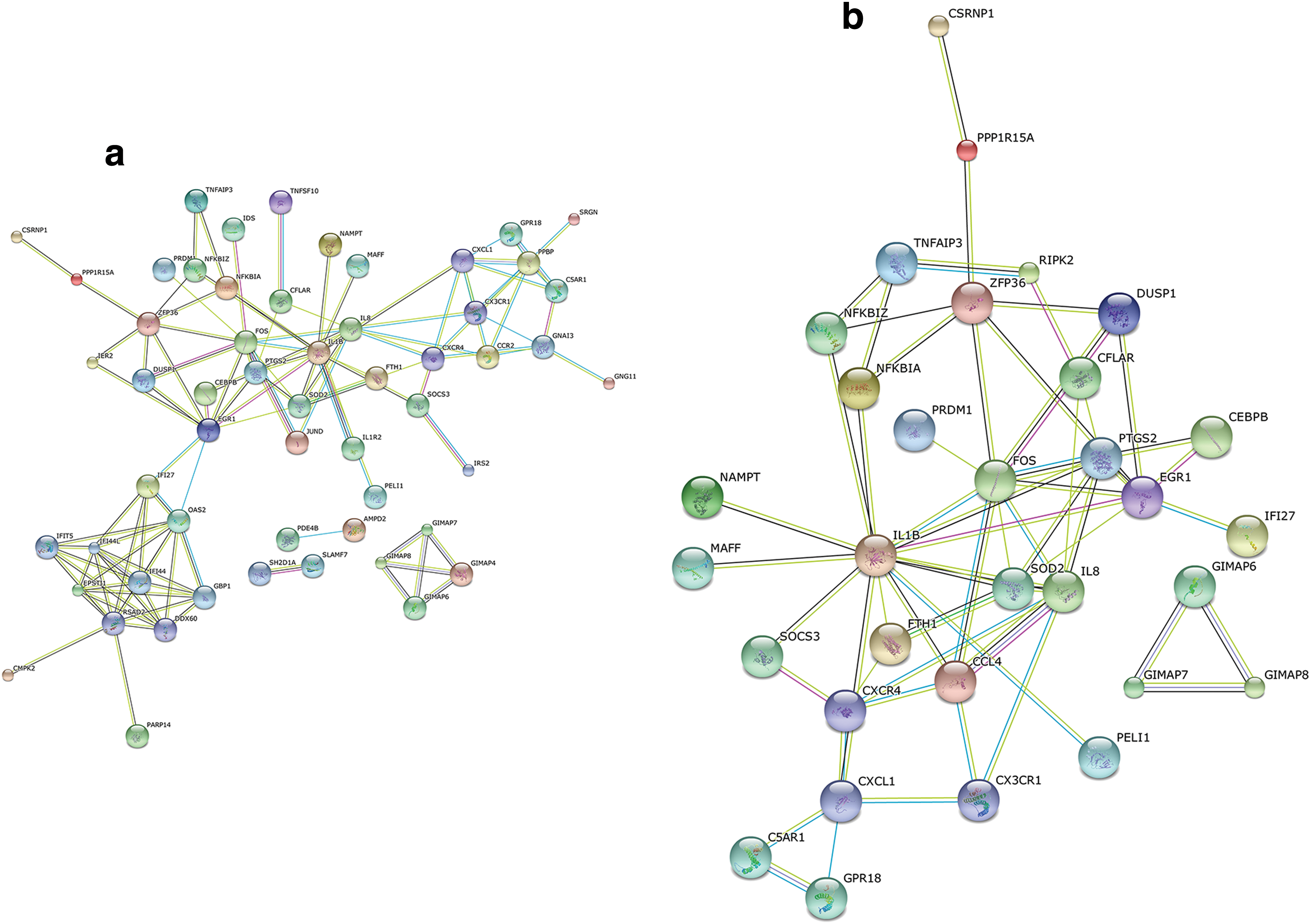
Differential mRNAs of both syndromes were loaded into STRING. Required confidence (score) was 0.70, and interactors shown were no greater than 5. Differentially expressed mRNAs, which were closely related to each other, 56 mRNAs were found in the qi-yin deficiency syndrome
Changes in mRNA expression in both syndromes after TCM treatment
To further grasp the roles of differential genes in TCM treatment, two TCM interventions were applied to treat patients with HIV/AIDS and the corresponding syndromes. Clinical symptoms total scores were reduced after treatment in two pattern groups (p < 0.05; Table 7), and immunologic indexes changed after treatment (p < 0.05; Table 8). These results can objectively prove the reliability of the TCM curative effect.
Values expressed with a plus/minus sign are means ± standard deviation.
TCM, Traditional Chinese Medicine.
The differences in the immune indices before and after TCM treatment were analyzed and compared. After receipt of medicine, CD8+CD28+ T cells and CD4+CD95+ T cells increased significantly in both syndrome groups (p < 0.05–0.01). The absolute value of CD8+ T cells increased significantly in the qi-yin deficiency syndrome group (p < 0.05) and the CD8+CD38+ T cells were reduced sharply in the dampness-heat retention syndrome group (p < 0.01). There were no significant changes in other indices (p > 0.05).
p < 0.05 for comparison of before and after TCM treatment.
p < 0.01 for comparison of before and after TCM treatment.
Comparison of genetic expression in the healthy control group before and after treatment showed that 18 mRNAs in patients with HIV/AIDS normalized; this involved 15 pathways that were mainly related to cellular apoptosis and inflammation (Tables 9 and 10). Moreover, 35 mRNAs in the qi-yin deficiency group normalized and involved eight pathways (Tables 11 and 12). In addition, 25 mRNAs in the dampness-heat retention syndrome that involved 17 pathways normalized (Tables 13 and 14). Through the prognosis of genes, the material basis of transcriptomic analysis in the qi-yin deficiency syndrome and the dampness-heat retention syndrome could be initially verified.
HIV/AIDS patients with both syndromes were considered as disease groups. The genetic expression profiles seen before and after drug intervention were compared. After intervention, the degree of expression of 18 differentially expressed genes progressed toward the healthy control group. Through analysis of signaling pathways, 15 pathways, such as cellular apoptosis and inflammation, were related to normalized genes. When p < 0.05, there were 14 signaling pathways related to normalized genes.
VEGF, vascular endothelial growth factor.
Gene expression in HIV/AIDS patients with the qi-yin deficiency syndrome before and after intervention was compared. After intervention, 35 differentially expressed genes that involved eight signaling pathways progressed toward the healthy control group (p < 0.05). Compared with the results seen in the dampness-heat retention group, both syndromes had both similar and different pathways, and normalized genes that were present in both syndromes were not all the same.
Gene expression in HIV/AIDS patients with the dampness-heat retention syndrome before and after intervention was compared. After intervention, 25 differentially expressed genes that involved 16 signaling pathways progressed toward the healthy control group (p < 0.05). Compared with the results seen in the qi-yin deficiency syndrome group, both syndromes had both similar and different pathways, and normalized genes that were present in both syndromes were not all the same.
After the intervention, the normalized genes in both syndrome groups were obtained and separately applied into hierarchical clustering analysis with the genes in the patient groups and the healthy control group. Results showed that compared with the expression before treatment, the expression of genes in both syndrome groups after treatment was close to that shown for the healthy control group. In addition, even some genes in the qi-yin deficiency syndrome were misclassified into the healthy control group after treatment (Fig. 6a and 6b).
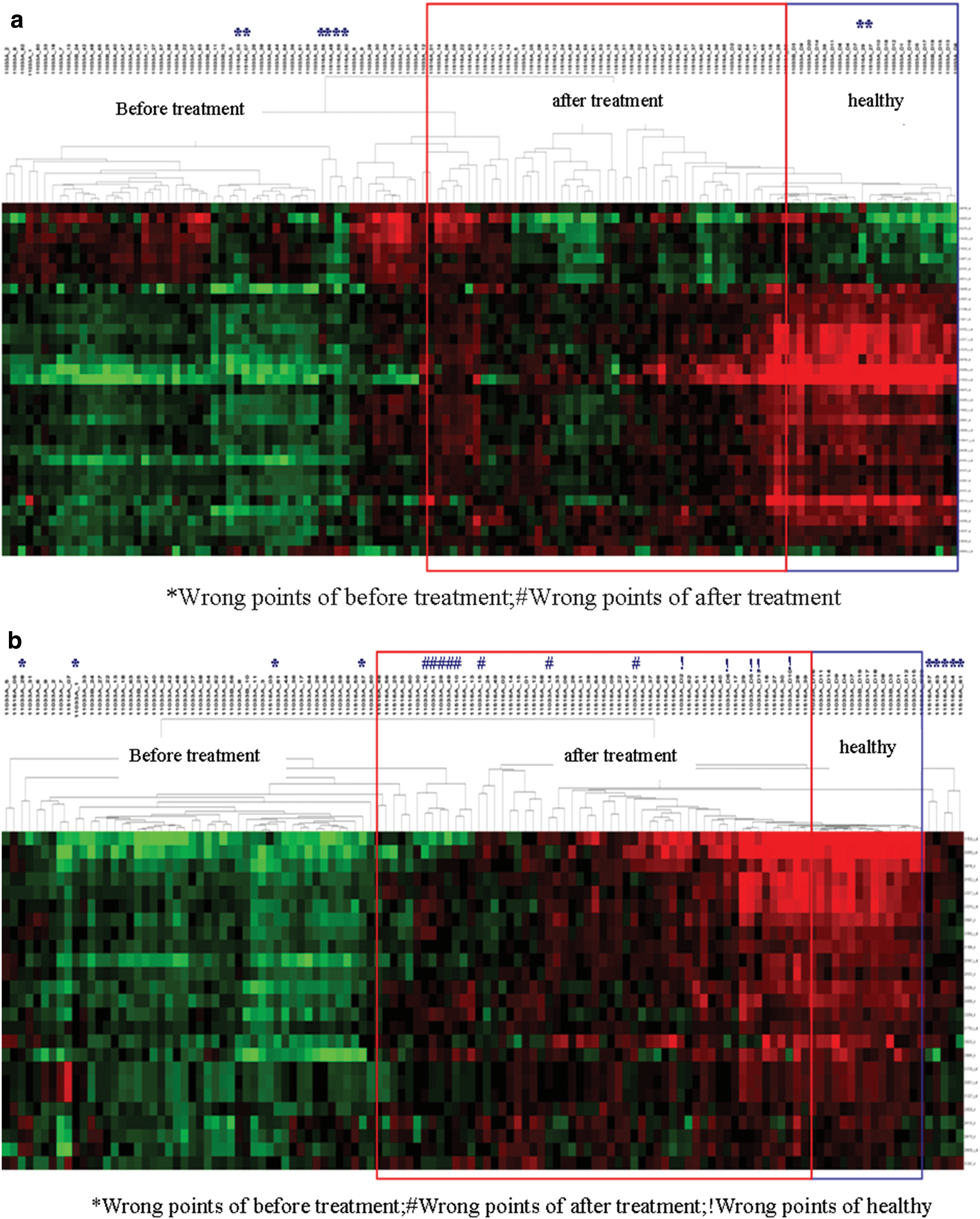
With BRB-Array Tools version 4.2, mRNAs in both syndromes before and after treatment and in the healthy group were analyzed by hierarchical clustering. Red represents the increase in genetic expression levels, while green represents a decrease in expression. In the qi-yin deficiency syndrome
Discussion
TCM syndrome is an overall manifestation of a disease at a certain stage of development. It may have some correlation with differentially expressed mRNAs in the body. Transcriptomics applies chip technology to explore relevant genetic expression profiles of differential syndromes in different individuals and provides new ideas to help explain the essence of TCM syndromes in a microscopic view.
In the present study, there were shared and specific differentially expressed mRNAs in the healthy control group and both syndrome groups. Shared mRNAs may be related to the progression of HIV/AIDS, while specific genes may play a significant role in the formation of TCM syndromes in HIV/AIDS. Massive abnormal apoptosis of T cells plays a critical role in HIV infection and immunopathogenesis of AIDS. HIV evasion and induction of lymphocyte apoptosis are the main reasons for the induction of AIDS progression. 31 –33
In the present study, differentially expressed mRNAs were found in two TCM syndrome groups; BCL2A1, IL1B, TNFAIP3, PTGS2, and NFKBIA were related to cellular apoptosis and regulation of apoptosis. Nuclear factor-κB (NF-κB) participates in the proliferation and apoptosis of lymphocytes, 34,35 while BCL2A1 is a target gene in the inflammatory response that is induced by transcribed NF-κB and plays an important role in activation and survival of lymphocytes. 36,37 Family members of BCL can help B cells in patients with HIV/AIDS evade elimination by Fas-mediated cell death. 38,39 In addition, NFKBIA (NF-κB inhibitor α) encodes a protein that blocks NF-κB. 40 After TCM intervention, BCL2A1, NFKBIA, and PTGS2 tended to normalize. Different expression of these genes plays a certain role in apoptosis of immune cells in patients with HIV/AIDS. 41 Prognosis after intervention initially verified that therapeutics might be effective in situations where altered gene expression is evident.
As the research on the relationships of HIV infection with chemokines and immune response has deepened, some chemokine receptors have been shown to be related to HIV-1 infection. 42 –45 When infected with HIV, chemotactic factors such as CXCR4 and CCR5 can cause apoptosis upon interacting with the envelope glycoprotein gp120 of HIV-1, permitting entry of the virus into viable T lymphocytes. 46 In the present study, differentially expressed genes relevant to chemokine and immune response pathways, such as IL1B, IL8, and NFKBIA, were detected. Secreted by many kinds of cells in the inflammatory response, interleukin (IL)-8 can induce inflammatory responses of chemokines and participate in neutrophil activation. 47,48 The content of IL-8 and tumor necrosis factor-α increased when mononuclear cells of healthy individuals were infected with HIV in the early stages of disease. 48 The IL-1 family can regulate the inflammatory response, while polymorphisms in the IL-1B family were significantly associated with HIV-1 infection. 50
In the present study, unlike in the early stages of monocyte infection, downregulated expression of IL-8 and IL-1B were related to dysfunction of immune cells caused by long-term infection with HIV. In addition, NFKBIA is the regulatory hub for genetic transcription related to many immune-mediated inflammatory processes through the NF-κB pathway. 51,52 After treatment, IL8, IL1B, and NFKBIA became normalized, indicating that therapeutics can influence the expression of these genes.
AIDS is a chronic immune deficiency disorder, and qi-yin deficiency syndrome is one of the common deficiency syndromes in AIDS. Different TCM syndromes have different pathologies, and differentially expressed genes in both syndromes have their own specificities.
Through comparison of differentially expressed mRNA in both syndromes, the enrichment score of apoptosis for mRNA downregulated in the qi-yin deficiency syndrome group was lower than the score in the dampness-heat retention syndrome group. In addition, the mRNA that was involved in apoptosis and upregulated in the qi-yin deficiency syndrome group was found through functional annotation clustering. CCR2, CD274, and TNFSF10 were expressed differentially in the qi-yin deficiency syndrome group but showed no obvious changes in the dampness-heat retention syndrome group.
It was believed that polymorphism of CCR2 was related to host immunity, sensitivity to HIV-1 infection, and progression of disease. 53 The interactions between CD274 (B7 H1) and programmed cell death factor 1 can inhibit immune responses of T cells by inhibiting the proliferation of T cells and the generation of cell factor. 54,55 The enrichment score for negative regulation of cellular activity and communication downregulated in the qi-yin deficiency syndrome group was greater than that in the dampness-heat retention syndrome group. The pathway of the differentially expressed mRNAs in the two different syndromes showed that differential expression related to chemokines and cellular factors was more obvious in the qi-yin deficiency group.
The results of immune functional analyses showed that compared with the dampness-heat retention group and healthy control group, the absolute value of CD4+ and CD8+ T cells was smaller in the qi-yin deficiency group. This finding indicated that patients with HIV/AIDS and qi-yin deficiency had more severe immune damage. According to other studies in the field, inflammation and genetic polymorphism of cellular factors were related to fatigue in adults with HIV/AIDS. 56 The pathological mechanism still requires further study and remains largely unresolved.
The dampness-heat retention syndrome is one of the commonly seen excess syndromes in AIDS. Some scholars found that the activity of cellular factors, apoptosis and proliferation regulation had changed in patients with hepatitis and those with gastritis who had dampness-heat retention. 57,58 Downregulated genes that were related to cell composition, cell apoptosis, and lymphocyte activation and upregulated genes that were related to cell composition were detected in the dampness-heat retention group. These genes may be associated with dampness-heat retention symptoms, such as diarrhea and bitter and sticky mouth. It was found that 36%–56% of hospitalized patients with AIDS had hyponatremia and 16%–24% of patients had hyperkalemia. 59 In the dampness-heat retention patients, upregulated genes were involved in potassium ion transport
By classification and prediction of differentially expressed genes in both syndrome groups, seven mRNAs were screened. The findings showed that these seven mRNAs may be the biological basis of both syndromes; this result was significant in the context of the differentiation of TCM syndromes in terms of genetic expression. The interaction diagram of differentially expressed mRNAs of both syndromes showed that these differentially expressed mRNAs were related to each other, forming a complex informational network. The correlations of differential mRNAs also differed between both syndromes, which indicated that these genes played an important role in patients with AIDS presenting with different syndromes.
Conclusions
Through testing the expression profiles of total RNA in the peripheral blood of patients with HIV/AIDS who had qi-yin deficiency and dampness-heat retention, the present study predicted in an exploratory way that an inherent biological basis might have been responsible for the TCM syndromes in these patients. Further, the functions of differentially expressed mRNAs and their pathways might also be related to the formation of two common syndromes in patients with HIV/AIDS, which provides a useful reference point for further research on the inherent complexities of TCM syndromes in AIDS.
Footnotes
Acknowledgments
The authors thank all the patients and healthy donors. This work was supported by the National Science and Technology Major Project of China (2009ZX10005-021, 2012ZX10005001-005) from the Ministry of Science and Technology of People's Republic of China, National Natural Science Foundation of China (81403342) and sponsored by Program for Science & Technology Innovation Talents in Universities of Henan Province (16HASTIT031). They also thank Zhao Wang, professor in the College of Life Science, Tsinghua University, for guidance and cooperation.
Author Disclosure Statement
No competing financial interests exist.
References
Supplementary Material
Please find the following supplemental material available below.
For Open Access articles published under a Creative Commons License, all supplemental material carries the same license as the article it is associated with.
For non-Open Access articles published, all supplemental material carries a non-exclusive license, and permission requests for re-use of supplemental material or any part of supplemental material shall be sent directly to the copyright owner as specified in the copyright notice associated with the article.
