




Abstract
Objective:
A majority of menstruating women experience some degree of regular recurrences of diverse symptoms—commonly known as premenstrual syndrome (PMS)—during the days before menstruation. Given the multifactorial etiology of PMS, no single treatment is universally recognized as effective, and many women turn to alternative modalities, including aromatherapy. The present study investigated therapeutic effects on premenstrual symptoms using fragrance from yuzu, a Japanese citrus fruit (Citrus junos Sieb. ex Tanaka), and aromatherapy, from the perspective of autonomic nervous system function.
Subjects:
Seventeen women in their 20s with subjective premenstrual symptoms.
Design:
A single-blind randomized crossover study.
Settings/Location:
This study was performed at a laboratory in a university in Osaka, Japan. Subjects were examined on two separate occasions in the luteal phase.
Outcome measures:
Using two aromatic stimulation sources (yuzu and lavender used as the control), this experiment measured heart rate variability (HRV) reflecting autonomic nerve activity and the Profile of Mood States (POMS) as a psychologic index before and after aromatic stimulation.
Results:
A scant 10-min inhalation of the yuzu scent significantly decreased heart rate and increased high-frequency power of HRV, reflecting parasympathetic nerve activity, in the luteal phase. Additionally, POMS tests demonstrated that inhalation of the yuzu essential oil significantly decreased three negative subscales: tension–anxiety, anger–hostility, and fatigue—common premenstrual symptoms, together with a total mood disturbance as a global measure of affective state, as long as 35 min after the aroma stimulation. These premenstrual psychoneurophysiologic effects of yuzu fragrance did not differ from those of the effects of lavender.
Conclusions:
The present study indicated that short-term inhalation of yuzu fragrance could alleviate premenstrual emotional symptoms, which, at least in part, is attributable to the improvement of parasympathetic nervous system activity. This study further implies that yuzu fragrance aromatherapy might serve as an anti-PMS modality, given its comparable psychoneurophysiologic effects to those of lavender, a representative relaxing scent.
Introduction
W
A majority of women, in addition, experience at least some degree of a regular recurrence of protean psychosomatic and behavioral symptoms, commonly known as premenstrual syndrome (PMS), during the days before menstruation. 1 Symptoms and discomfort levels of PMS vary from woman to woman. Even when the severity of symptoms does not reach the diagnostic criteria of severe PMS or premenstrual dysphoric disorder (PMDD), a debilitating condition that interferes with social, academic, or work performance, many women search for a more comfortable premenstrual phase with fewer or milder symptoms or even a nonsymptomatic premenstrual phase. 1 –3 Since the etiology of PMS is multifactorial, no single treatment is universally recognized as effective, and many women often turn to safe and efficacious approaches for their healthcare. 2,3
Aromatherapy—a branch of complementary and alternative medicine (CAM)—is a holistic healing process for the mind, body, and spirit using essential oils derived from plants, with ancient roots and a history of supporting women's health throughout the life cycle. 4,5
Lavender (Lavandula angustifolia), a representative of the relaxing essential oils, enjoys popularity and wide use in the clinical fields of psychosomatic obstetrics and gynecology. Therapeutic treatments with lavender oil relieve labor and postcesarean pain, 4,6 reduce stress, anxiety, and depression in the postpartum period 7 as well as during pregnancy, 8 alleviate dysmenorrhea, 9 premenstrual symptom complex, 4,10 and climacteric symptoms, 11 and improve quality of sleep in midlife women with insomnia. 12 Lavender is a safe herb and no toxicity has been reported. 4,13,14 As with the use of any essential oil, however, the potential exists for skin irritation or other allergic reactions, especially when applied topically. 4,13
Yuzu (Citrus junos Sieb. ex Tanaka), a yellow-golden colored citrus fruit resembling a small orange or tangerine, was brought from central China to Japan more than 1000 years ago. Yuzu has traditionally been used to promote mind and body health in Japan. Taking a hot yuzu bath, for instance, is a winter solstice custom and purportedly has health benefits to improve blood circulation, prevent colds, and treat arthritis and rheumatism. 15 As in the practice of aromatherapy, inhaling the yuzu aroma while experiencing a long, relaxing soak also relieves stress and offers a feeling of well-being. 15 The pale yellow essential oil extracted from yuzu rind emits an exquisite citrus aroma reminiscent of a scent somewhere between mandarin and grapefruit with subtle overtones of bergamot and lime, while producing a very appealing, almost floral note. 16,17
Because of its distinctive delightful citrus fragrance, aromatic and/or cosmetic products derived from yuzu are now commercially available as a healthcare modality. Recent women's health research reveals that aromatherapy with yuzu fragrance significantly ameliorated maternal anxiety states. 18 From the neurophysiologic point of view, a scant 10-min inhalation of yuzu aroma decreased salivary chromogranin A, reflecting sympathetic nervous system activity, 16 and increased high-frequency (HF) power of heart rate variability (HRV), serving as an index of parasympathetic nerve activity, 17 among eumenorrheic women, while it alleviated negative emotional stress.
Although the cause or causes of premenstrual discomfort remain elusive, 1,19 studies investigating autonomic function during the menstrual cycle revealed that decreased luteal parasympathetic nervous system activity is one potential etiology. 20 –22 Taking these findings into consideration, the authors find it plausible that aromatherapy with yuzu fragrance could bring therapeutic effects and ameliorate undefined psychoemotional conditions most reproductive-age women experience premenstrually.
Accordingly, the present study used a single-blind randomized crossover design to measure the effects of commercially available yuzu essential oil on mood states and autonomic nervous system activity, which plays a critical part in the integrity of mind and body interaction, 23 in the luteal phase of eumenorrheic women.
Research on aromachology has shown that fragrance from lavender essential oil contributes to parasympathetic stimulatory effects and subjective relaxation. 10,12,24 A 2013 women's health study using HRV power spectral analysis, among other findings, demonstrated that aromatherapy with lavender essential oil significantly decreased premenstrual negative psychoemotional symptoms while HF power of HRV significantly increased. 10 By comparing the aromatic efficacy of yuzu with that of lavender, the authors further scrutinized to what extent inhalation of yuzu fragrance could deliver therapeutic effects to women and discussed whether the aromatherapy using yuzu essential oil could serve as an additional modality to alleviate premenstrual discomforts.
Materials and Methods
Subjects
Twenty-two women in their 20s volunteered to participate in a single-blind randomized crossover study. The women, all college students, responded to a campus advertisement. The study protocol was approved in advance by the Institutional Review Board of Shitennoji University and was performed in accordance with the Declaration of Helsinki of the World Medical Association. All subjects received an explanation of the nature and purpose of the study: to investigate soothing effects of plant fragrance on emotional symptoms and autonomic nervous system activity during the premenstrual phase. The authors did not, however, inform subjects of which fragrance would be used for the experiments. Before receiving any data about the experiments, all subjects provided written informed consent to participate in the study.
The subjects underwent medical examinations and interviews and completed a standardized health questionnaire regarding medical history, medications, current health condition, regularity of menstrual cycle, premenstrual discomfort, and lifestyle. While referring to subjects' self-reported regular menstrual cycles, the authors determined the cycle phase during the experiments by the onset of menstruation, together with oral temperature (MC-172L; Omron, Kyoto, Japan) and the concentrations of ovarian hormones, estrone (E1), and pregnanediol-3-glucuronide (PdG), in a urine sample, taken early in the morning, during the follicular (the fifth to the eleventh day from the first day of menstruation) and luteal phases (within 7 days before the next menstruation). Both E1 and PdG were indexed to creatinine (Cr) excretion. 20,21,25
To determine the severity of the premenstrual discomfort, the authors asked subjects to record a symptom diary based on the Menstrual Distress Questionnaire (MDQ) 26 for two menstrual cycles, following the practice in previous studies. 10,20,21 Briefly, the MDQ consists of 46 symptoms in eight categories: pain, concentration, behavioral change, autonomic reactions, water retention, negative affect, arousal, and control. The subjects rated their experience of all 46 symptoms on the MDQ on a six-point scale ranging from no experience of the symptom to so extremely severe as to cause disruption of daily activities. The total score could, therefore, range from a minimum of 46 points to a maximum of 276 points.
None of the subjects had been clinically diagnosed with diabetes mellitus, hypertension, hyperlipidemia, or cardiovascular or any other endocrine or systemic disorders that could affect the autonomic nervous system. The subjects were nonobese and nonsmokers. Before starting the study, none of the women reported taking oral contraceptives to control the menstrual cycle or any other medications influencing the autonomic nervous system.
Referring to human-subject research on olfactory stimulation from aroma, 10,16,17,27 this study performed the olfactory function test on all subjects to assure that none had anosmia. Briefly, subjects were given two sets of three bottles—two held distilled water; the third contained essential oils (yuzu or lavender)—and were asked to choose the one that differed from the other two. To be eligible for the study, subjects had to choose the correct response in both trials.
All subjects were asked not to consume any food or beverages containing alcohol or caffeine after 21:00 of the day preceding the experiment. The subjects were also instructed to abstain from alcohol use and excessive physical activity for 24 h before testing. 10,17,20
Experimental procedure
This experiment used two kinds of aroma stimulation: yuzu (Citrus junos Sieb. ex Tanaka, Lot No. 20; TREE OF LIFE Co., Ltd. Tokyo, Japan) and lavender (Lavandula angustifolia, Lot No. BLAH10; Kensoigakusha Co., Tokyo, Japan) as control. Table 1 shows the major components of the yuzu and lavender essential oil used in this study.
The values in bold type indicate common constituents between yuzu and lavender essential oil.
Subjects were examined on two separate occasions (yuzu and lavender trials) in the luteal phase in the same menstrual cycle. The order of testing was randomized. All measurements were taken between 11:00 and 15:00 and were performed in a temperature-controlled (25°C), quiet, comfortable room with a minimization of arousal stimuli. Height and body weight of each subject were measured to calculate body–mass index (BMI) as body weight divided by height squared. Subjects then rested for at least 10 min before the start of the experiment.
As to the olfactory stimulation with fragrance, according to previous research on aromatherapy with floral and citrus fruit essential oils, 10,16,17 the authors pipetted 10 μL of yuzu or lavender essential oil onto a small cotton pad designed for a diffuser (Aroma breeze NOVA T; ALTA Corporation, Nagoya, Japan). Airflow from the diffuser was set at 1.3 m per min and placed near the subject's nostrils using the diffuser's 30-cm-long circular cylinder fitted with a perforated funnel (diameter 5 cm).
Before measurements were taken, the subjects were instructed to relax quietly and comfortably for at least 10 min in a seated position while equipped with electrocardiograph (ECG) electrodes. They then filled out the Profile of Mood States (POMS) explained in detail below. The ECG was recorded 5 min before inhalation of the scent. Each subject then inhaled the scent for 10 min. Immediately following the aroma stimulation, each subject rated six items of (the scent's intensity, pleasantness, familiarity, refreshed feeling, and calmness and her likes and dislikes) by using a visual analogue scale (VAS) with a 10-cm horizontal line. 16,17,27 The authors again measured the ECG for 5 min at 0, 10, 20, and 30 min after inhalation. During ECG recording, all subjects breathed in synchrony to a metronome at 15 beats per min to ensure that the respiratory-linked variations in heart rate did not overlap with low-frequency heart rate fluctuations (below 0.15 Hz) from other sources. 10,17,20,21 After the ECG was recorded, the subjects repeated the POMS test. The ECG signals were later analyzed by means of HRV power spectral analysis, as described below, to evaluate autonomic nervous system activity during aroma trials.
Autonomic nervous system activity
The HRV power spectral analysis decomposes the series of sequential R-R intervals into a sum of sinusoidal functions of different amplitudes and frequencies by the Fourier transform algorithm. The technique of the analysis for the present investigation has been applied to noninvasively measure autonomic nervous system activity in various human research fields, including gynecology, 21,28 psychiatry, 29 and CAM. 10,17 These former studies described the procedure of the analysis in great detail. Spectral powers were calculated for the following respective frequency bands: low-frequency (LF) power (0.03–0.15 Hz), an indicator of both sympathetic and parasympathetic nervous system activity; and HF power (0.15–0.5 Hz), which solely reflects parasympathetic nerve activity.
Basal heart rates and autonomic nervous system activities differ from individual to individual. Thus, the mean values for heart rates before inhalation of scent were set as the baseline values; the mean values for autonomic nervous system activity before inhalation were standardized to 100%. The rate of change after the inhalation was compared between aroma and control trials. 10,17,24
Assessment of emotional symptoms
The authors administered the Japanese version of the POMS test (Kaneko Shobo Co., Tokyo, Japan), a globally standardized, self-administered, 65-item questionnaire (including seven dummy items) to assess premenstrual mood states before and after inhalation of the yuzu and lavender aromas. Each item was rated on a five-point Likert-type scale of 0 to 4, ranging from “not at all” to “extremely.” They added these raw scores to generate six subscales of emotional state: tension–anxiety, depression–dejection, anger–hostility, vigor, fatigue, and confusion. These added raw scores were then converted into T-scores according to the POMS manual. 30 Consistent with previous investigations, including aroma research, 10,16,17,25 they also calculated a total mood disturbance (TMD) score as a global measure of affective state, with higher scores indicating more mood disturbance, by adding the T-scores on the six subscales, with vigor negatively weighted.
It should be noted that five negative POMS variables—tension–anxiety, depression–dejection, anger–hostility, fatigue, and confusion—reflect the cluster of premenstrual psychoemotional symptoms. In addition, those variables significantly and positively correlated in the luteal phase. 25
Statistical analyses
The effects of aroma and time and their interaction (aroma × time) were evaluated using two-way analysis of variance with repeated measures to investigate the influence of inhalation of the yuzu and lavender aromas on HRV spectral power and emotional mood states measured by the POMS test. As for acute psychologic effects, the authors performed paired t test to compare the values of VAS between yuzu and lavender trials right after the aroma inhalation. Paired t tests were also performed to compare baseline scores of the POMS test before the aroma inhalation period between yuzu and lavender trials. Values are reported as means ± standard errors. p Values <0.05 were considered statistically significant. All statistical analyses were performed using a commercial software package (IBM SPSS Statistics Version 22).
Results
Clinical characteristics of subjects
Figure 1 represents the flow diagram of participants from recruitment through completion in the present study. Although 22 participants were eligible for the study at the time of the recruitment, the authors excluded two because no urine sample or oral temperature was taken early in the morning. In addition, one participant with an extended menstrual duration was not included in the present study. Thus, they randomized 19 participants into two groups: 10 were allocated to the first group taking the yuzu trial followed by the lavender trial. The remaining nine subjects in the second group took the two trials in reverse order. As the diagram shows, however, two subjects did not complete two trials: one who had the yuzu trial first was excluded due to having taken prescribed medication before the lavender trial. The other could not manage her schedule to participate in the yuzu trial after completing the lavender trial. Seventeen participants, therefore, completed two trials and their data were analyzed to investigate the soothing effect of yuzu fragrance to compare it with that of lavender fragrance.
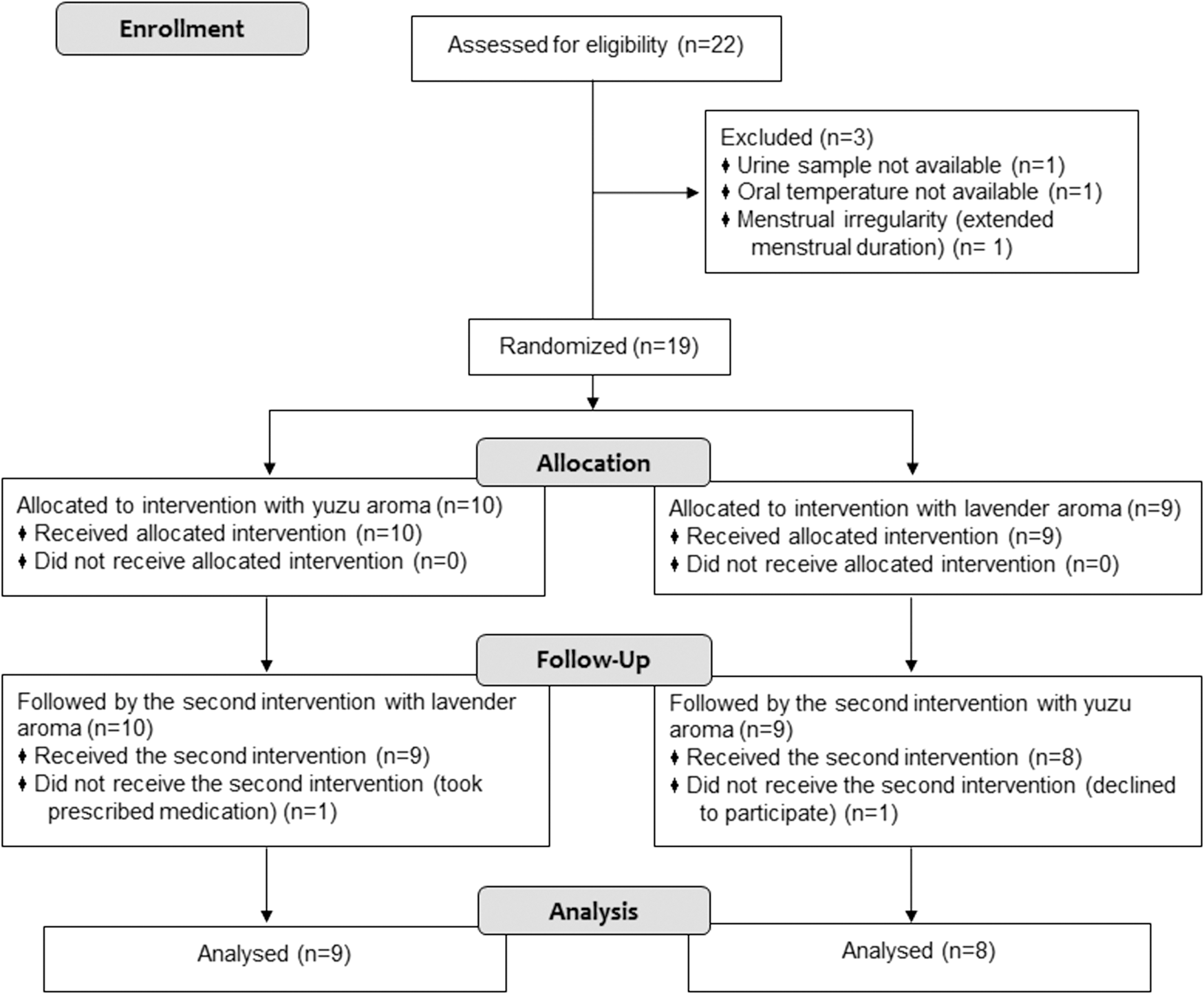
Flow diagram of participants from recruitment through completion.
Mean values of physical features of 17 subjects were as follows: age 20.6 ± 0.2 years, height 160.0 ± 1.4 cm, weight 52.3 ± 1.2 kg, and BMI 20.4 ± 0.4 kg/m2. Length of menstrual cycle and duration of menstrual flow of subjects during the study were 30.2 ± 1.2 and 6.6 ± 0.4 days, respectively. The yuzu and lavender experiments took place on 27.1 ± 0.9th day and 27.6 ± 1.3th day in the luteal phase from the first day of menstruation, respectively. The interval between the two trials was 2.4 ± 0.5 days.
To confirm regular ovulatory menstrual cycles among subjects, the authors measured their oral temperatures and urinary ovarian hormone concentrations in the luteal phase and again in the follicular phase, after menstruation. The basal body temperature in the luteal phase significantly increased from that of the follicular phase (36.61°C ± 0.05°C vs. 36.26°C ± 0.05°C, p < 0.001). They also found significant luteal increase in urinary ovarian hormones compared to the follicular phase (E1: 17.1 ± 2.3 ng/mL vs. 8.7 ± 1.9 ng/mL Cr, p < 0.001; PdG: 1.60 ± 0.25 μg/mL vs. 0.28 ± 0.05 μg/mL Cr, p < 0.001).
As to premenstrual discomfort, responses of participants to the health questionnaire indicated that all women had subjective psychophysiologic complaints in the luteal phase. The luteal MDQ score averaged 89.2 ± 4.4, ranging from 66 to 125 among the subjects. Quantifying the severity of premenstrual symptoms remains a matter of debate; however, previous studies used the percentage change calculated by subtracting the follicular from the luteal score and then dividing it by the follicular score and multiplying by 100. For instance, the U.S. National Institute of Mental Health suggested a 30% increase in the severity of prospectively measured symptoms from the follicular phase to the luteal phase to diagnose PMS and PMDD. 1 Other clinicians consider a 50%–75% increase in the severity of symptoms from a baseline score during the follicular phase to the luteal phase as a prerequisite for diagnosing PMDD and instituting psychopharmacologic treatment.
In the present study, the authors found that the average value of the increase in the MDQ scores from the follicular to the luteal phase in the menstrual cycle, including the experimental periods with yuzu and lavender trials, was 8.5% ± 2.5%. None of the women reported that premenstrual symptoms markedly interfered with work, school, usual activities, or relationships with others. Taking the PMS and PMDD diagnostic guidelines into consideration, 1,19 no subjects in the present study suffered from severe PMS or PMDD, but the subjects' symptoms did fall within the sphere of premenstrual molimina (subclinical levels of premenstrual symptomatology), signaling impending normal menstruation, which a majority of reproductive-age women experience.
Comparisons of acute psychologic effects between yuzu and lavender trials
Table 2 shows acute psychologic effects evaluated with VAS immediately following the 10-min aroma stimulation with yuzu and lavender essential oil. The scores of “likes and dislikes” and “familiarity” ranged significantly higher in the yuzu trial than in the lavender trial. The values of three items—intensity, pleasantness, and calmness—did not differ between the two aroma trials. The value of “refreshed feeling” was greater in the yuzu trial than in the lavender trial, but the difference revealed borderline significance.
The values are given as mean ± standard error.
Statistical significance, p < 0.05.
Autonomic nervous system activity after aroma inhalation
Figure 2 shows the time course of the changes of heart rates before (baseline) and after (0–35 min) the 10-min inhalation of yuzu and lavender aromas. Heart rates significantly decreased after the aroma stimulations in both yuzu and lavender trials (time effect: F[4, 64] = 18.88, p < 0.001). As the figure represents, the authors found no aroma effect (aroma effect: F[1, 16] = 0.032, p = 0.859) or the interaction of aroma and time (aroma × time effect: F[4, 64] = 0.589, p = 0.672) on the decrease of heart rates.
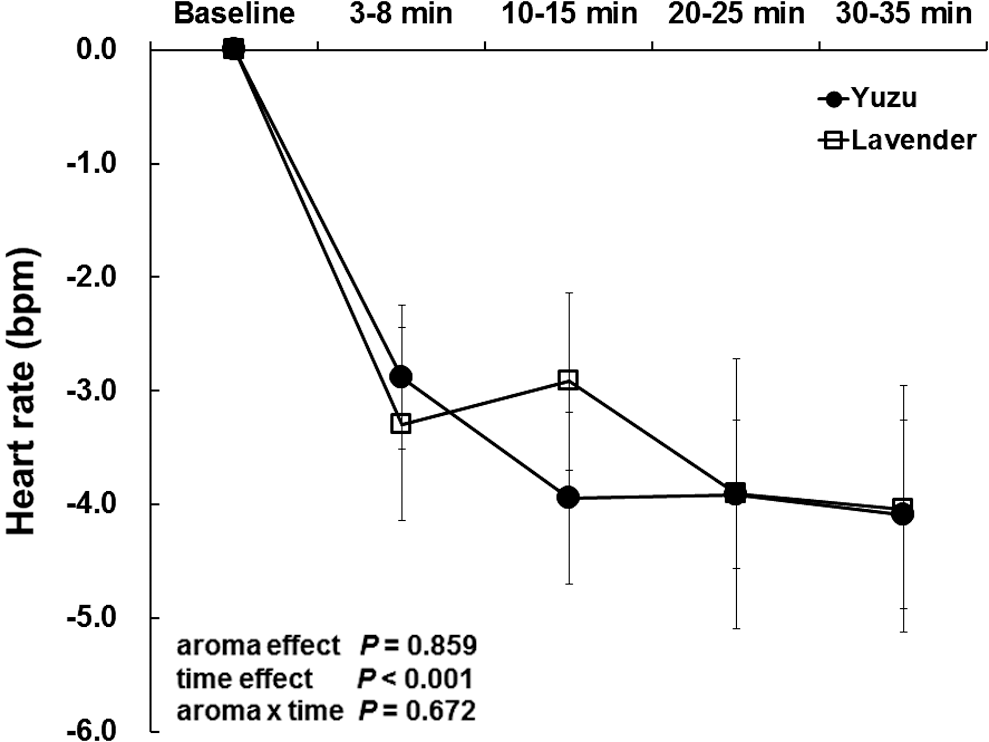
Changes of heart rates before (baseline) and after (0–35 min) the 10-min inhalation of yuzu and lavender fragrance in the luteal phase.
As for the autonomic nervous system activity, they observed a significant increase in the HF power for 35 min after the inhalation of yuzu and lavender aromas (time effect: F[4, 64] = 9.102, p < 0.001) (Fig. 3). As with the changes of heart rates, the increase in HF power after aroma inhalation did not differ between the yuzu and lavender trials (aroma effect: F[1, 16] = 0.042, p = 0.841; aroma × time effect: F[4, 64] = 0.762, p = 0.554).
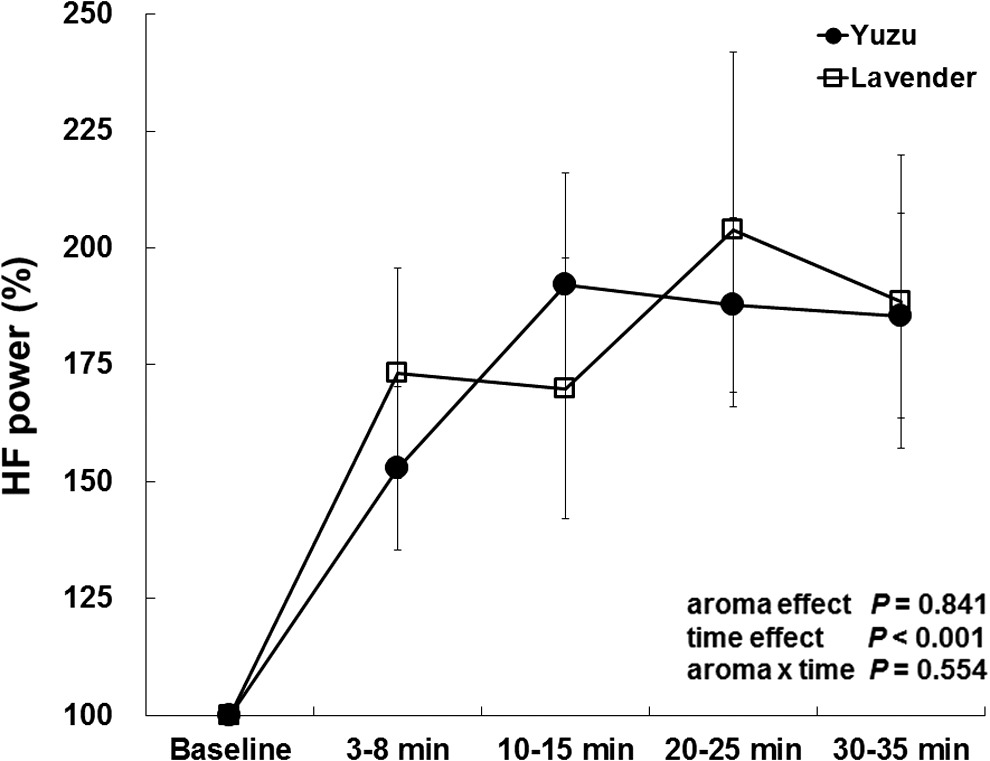
Rate of increase of HF power before (baseline) and after (0–35 min) the 10-min inhalation of yuzu and lavender fragrance in the luteal phase. HF, high frequency.
The HRV power spectral analysis used in the present study serves as a valuable noninvasive device to evaluate autonomic function, but the authors should mention that the device cannot single out sympathetic nervous system activity. Some studies have referred to the LF to HF ratio (LF/HF) as an alternative index of sympathetic nervous function. 12 As suggested previously, 17,31 however, no statistically significant time effects were detected in LF/HF in either of the two trials of the present study (F[4, 64] = 1.592, p = 0.187). In addition, they found neither aroma effect (F[1, 16] = 0.172, p = 0.684) nor interaction of aroma and time (F[4, 64] = 0.210, p = 0.932) on the ratio between the two trials.
Premenstrual emotional symptoms after aroma inhalation
Table 3 represents the POMS subscores before and 35 min after the 10-min olfactory stimulation with yuzu and lavender fragrances. The authors found no significant difference in the baseline values of POMS subscores or TMD scores between the yuzu and lavender trials. Five negative symptoms all decreased 35 min after the inhalation of both yuzu and lavender fragrances. Among them, the decrease of three subscores—tension–anxiety, anger–hostility, and fatigue—was statistically significant in both trials. The statistical procedure, however, demonstrated no significant aroma effects or interaction of aroma and time on the six subscales of POMS test.
The values are given as mean ± standard error.
Statistical significance, p < 0.05.
ANOVA, analysis of variance.
As Figure 4 depicts, the TMD scores significantly decreased 35 min after the 10-min aroma inhalation both in the yuzu and lavender trials (time effect: F[1, 16] = 5.366, p = 0.034). It should be mentioned that as with the POMS subscores, the baseline values of TMD scores did not differ between the two aroma trials. The rate of decrease of the TMD scores was slightly greater in the lavender trial (−11.2 ± 7.1) than in the yuzu trial (−9.3 ± 3.4). However, the statistical analysis revealed no significant aroma effect (aroma effect: F[1, 16] = 0.83, p = 0.376) or interaction of aroma and time (aroma × time effect: F[1, 16] = 0.079, p = 0.783) on the TMD scores.

Total mood disturbance scores of the Profile of Mood States test performed before and 35 min after the 10-min inhalation of yuzu and lavender fragrance. *Statistical significance, p < 0.05.
Discussion
The present study investigated the soothing effects of olfactory stimulation by yuzu fragrance on luteal autonomic nervous system activity in conjunction with psychoemotional symptoms a majority of reproductive-age women experience premenstrually. The study also compared the aromatic efficacy of yuzu to ameliorate premenstrual symptoms with that of lavender used as a control. It should be mentioned that lavender essential oil has a widely applied sedating or relaxing scent and research has repeatedly ascribed health benefits to its aroma. 4 –9,11 –14 According to a women's health study by Matsumoto et al., 10 in addition, lavender fragrance could serve as an anti-PMS modality.
The main findings reveal that a scant 10-min inhalation of the yuzu scent significantly decreased heart rate and increased HF power of HRV, reflecting parasympathetic nervous system activity, in the luteal phase. POMS tests, in addition, demonstrated that inhalation of the yuzu essential oil significantly decreased three negative POMS subscales: tension–anxiety, anger–hostility, and fatigue—common premenstrual symptoms, together with TMD, a global measure of affective state, as long as 35 min after the aroma stimulation. These premenstrual psychoneurophysiologic effects of yuzu fragrance were comparable to those of lavender fragrance.
Researchers continue to propose theoretical models to explore the somewhat elusive etiopathogenesis of premenstrual conditions. Autonomic nervous system plays a crucial role in orchestrating human homeostasis and in reflecting mind–body interaction. 23 Instability, or even a slight disharmony of the autonomic nervous system, could therefore induce broadly ranged psychophysiologic phenomena, such as premenstrual symptomatology.
Studies with HRV power spectral analysis have demonstrated notable differences in autonomic regulation between premenstrual symptomatic and asymptomatic women: HF power significantly decreased in the symptomatic luteal phase when compared with the nonsymptomatic follicular phase in women with PMS. 1,20 –22 As to women with PMDD, heart rate fluctuations together with HF power showed a marked reduction regardless of the stage of the menstrual cycle when compared to controls and women with PMS. 21 These findings indicate that decreased parasympathetic nervous system activity in the luteal phase could be a possible etiologic factor for premenstrual symptomatology.
Although a paucity of research has investigated therapeutic efficacies on premenstrual disorders from the perspective of the autonomic nervous system, one study demonstrated that aromatherapy with lavender fragrance alleviated premenstrual symptoms while significantly increasing parasympathetic nerve activity in the luteal phase. 10
Based on a literature survey using the PubMed database, as of March 1, 2017, the authors found 38 articles when using the keyword “yuzu” for the search. According to medical studies performed on animals, yuzu exhibits preventive effects on cognitive dysfunction 32 and possesses cardioprotective, 33 antidiabetic, 34 anti-inflammatory, 35 and anticarcinogenic 36 properties.
Only three articles, however, addressed human-subject studies to evaluate the soothing effects of yuzu aroma. 16 –18 An investigation by Ueki et al. 18 conducted in a pediatric clinic demonstrated that aromatherapy with yuzu fragrance significantly lowered the anxiety of mothers of sick children as the children underwent infusions.
From the psychophysiologic point of view, Matsumoto et al. 16 showed that, compared to a control trial with water, a 10-min inhalation of yuzu scent significantly decreased salivary chromogranin A—an endocrinologic stress marker reflecting sympathetic nervous system activity—among healthy women in the follicular phase. In addition, the POMS test subscores of tension–anxiety and anger–hostility, as well as TMD, significantly decreased after the olfactory stimulation by the yuzu aroma. The research group further investigated the effects of yuzu by using HRV power spectral analysis and revealed that, regardless of the menstrual cycle, heart rate significantly decreased and HF power markedly increased after the inhalation of yuzu fragrance, compared to inhalation of water. 17 Aromatherapy with yuzu essential oil also ameliorated negative mood symptoms, including tension–anxiety and fatigue, both in the follicular and luteal phases.
As for the olfactory network, inhaled air carries volatile odorant molecules to the roof of the nose, where delicate cilia protrude from the receptor cells into the nose itself. When the molecules lock on to these hairs, an electrochemical message is transmitted via the olfactory bulb and olfactory tract to the primary olfactory regions in the brain. Most of these regions are projected to the brain's higher cortex, including the hypothalamus, the center for autonomic homeostatic control; the hippocampus, which handles conscious thought processes; and the limbic system, which creates emotional feelings. 14
According to an epidemiologic survey of 7427 Australian women, PMS sufferers were more likely to use aromatherapy oils than women rarely or never having PMS, although the study did not reveal which essential oil was most frequently used or effective. 3 At the time of writing, the authors cannot fully demystify the detailed mechanism of yuzu's efficacy. Considering the present findings together with the former three human studies on yuzu fragrance, 16 –18 however, the significant increase in HF power after the inhalation of yuzu suggests that yuzu interacts, at least in part, with the autonomic nervous system to increase parasympathetic nerve activity, which consequently alleviates the cluster of negative psychoemotional symptoms in the premenstrual phase. This study further implies that yuzu fragrance could serve to alleviate PMS, since a comparable psychoneurophysiologic trend was detected in the yuzu trial compared to the lavender trial, the latter herb possessing a known representative relaxing scent.
In terms of major chemical components composing yuzu essential oil, limonene contributes to sympathetic stimulatory effects and subjective alertness. 37,38 In fact, both animal and human studies clarified that inhaling the fragrance of grapefruit (Citrus paradisi), in which limonene accounts for ∼95% of the entire volatile components, increased sympathetic nervous system activity. 37 –39
Intriguingly, other citrus fruits consisting of less limonene have the opposite effect of grapefruit on autonomic function. Referring to Lehrner et al., 40 female patients had a lower level of anxiety, a more positive mood, and a higher level of calm in a dental office waiting room when exposed to ambient fragrance from orange (Citrus sinensis), made up of limonene (88.1%), myrcene (3.77%), and α-pinene (1.19%). A study with 41 healthy females conducted by Watanabe et al. 31 used bergamot essential oil (Citrus bergamia), consisting of limonene (45.45%), linalyl acetate (23.10%), γ-terpinene (8.05%), β-pinene (7.25%), linalool (6.50%), and α-pinene (1.35%), and revealed that short-term inhalation of the fragrance significantly increased HF power of HRV. The study further demonstrated that salivary cortisol levels together with negative emotions, including anxiety, significantly decreased after inhalation of bergamot fragrance.
As with other citrus fruits, limonene was a major component (78.02%) of the yuzu essential oil presently used. As Table 1 shows, yuzu shares several common components with lavender. For instance, γ-terpinene, the second major component of yuzu, promotes dopamine release, resulting in stress reduction. 41 Linalool, a key odorant of lavender, has been found to inhibit glutamate binding, which may have sedative effects. 14 A 2014 behavioral science study shows that β-caryophyllene could ameliorate emotional symptoms such as depression and anxiety. 42 A major phytoncide, α-pinene, also has calming effects on autonomic stress response to novel environments. 43
Taken together, a combination of limonene with these volatile components in yuzu essential oil might augment parasympathetic nervous system activity to suppress negative psychoemotional changes occurring premenstrually. Verifying any pharmacologic roles as well as psychoneurophysiologic functions of yuzu essential oil will require further multidisciplinary investigation and scrutiny.
As Table 2 demonstrates, participants in the present study showed higher scores on preference for yuzu fragrance. The positive psychologic evaluation, thus, might be at least partly attributable to favorable outcomes obtained from the yuzu trial to alleviate premenstrual symptoms. As to familiarity with yuzu fragrance, 11 out of 17 subjects responded greater than 8 on the VAS. Intriguingly, HF power apparently increased after the yuzu aroma stimulation among six subjects who indicated less than 7 on the VAS of familiarity; the increase did not significantly differ when compared to the remaining 11 subjects. Given the study's small sampling size, the authors should exercise caution when interpreting the results. This preliminary finding, however, indicates that, regardless of familiarity, yuzu fragrance might exert pharmacophysiologic effects toward alleviating premenstrual negative emotional stress via the autonomic nervous system. A future study with women having different degrees of preference for yuzu will allow us to further scrutinize how and to what extent the familiarity of the fragrance influences the soothing effects of yuzu essential oil.
The American College of Obstetricians and Gynecologists has recommended nonpharmacotherapy as a first-line treatment option for less severe premenstrual symptomatology. 44 Cognitive-behavioral therapy (CBT)—a type of psychotherapy that focuses on modifying problematic thoughts, emotions, and behaviors—has been widely applied to PMS/PMDD management. 45 A study conducted by Panahi and Faramarzi has shown, in addition, that mindfulness-based CBT also significantly improved depression, anxiety, and symptoms of PMS. 46 Mindfulness results in improvement in autonomic and central nervous system regulation, emotional and behavioral self-awareness and regulation, self-compassion, and resilience. 47 An investigation in the field of clinical gynecology demonstrated, for instance, that mindfulness meditation improves parasympathetic functions in pregnant women. 48
As demonstrated in the present study, olfactory stimulation with yuzu fragrance could have a beneficial effect on the psychophysiologic process to alleviate subclinical premenstrual symptomatology. To support these findings and strengthen the validity, the authors could design a future study with a randomized controlled trial to measure psychoneurophysiologic parameters during aromatherapy with yuzu fragrance and another reliable nonpharmacotherapy, such as mindfulness-based interventions, among women with different degrees of premenstrual symptoms. Comparing therapeutic efficacies between these self-help modalities could also provide a clearer assessment of sensorial and breathing effects on alleviating premenstrual symptomatology.
The following limitations of the present study deserve mention. First, in the previous studies on aromatherapy, 10,16,17 the authors used two kinds of aromas, lavender or yuzu, and water as a control. To avoid placebo effects, they did not inform subjects of which fragrance they would use for the experiments in these studies. The authors mentioned neither the concentration of the fragrance nor the use of water as a control trial. The possibility exists, however, that the participants might have noticed the difference when they inhaled the water without scent. Despite this disadvantage, the 2013 research on PMS 10 and another study on aromachology 24 revealed that fragrance from lavender essential oil (in comparison with water as a control) alleviated negative emotional symptoms, and was accompanied by a significant increase in HF power of HRV, reflecting parasympathetic nerve activity.
These findings 10,24 together with substantial evidence on the efficacy of lavender fragrance 4 –9,11 –14 could lead us to investigate the aromatic efficacy of yuzu essential oil while comparing it to that of lavender as a control. In addition, a study using experimental conditions with at least three olfactory stimuli—unscented water, yuzu scent, and lavender scent as a representative parasympathetic stimulant, could offer improved means to understanding the net psychologic and pharmacologic effects of yuzu fragrance. Furthermore, it would be of interest to compare the efficacy of yuzu fragrance with that of other kinds of scents considered both pleasant and unpleasant by participants. Significant psychophysiologic improvements after smelling yuzu fragrance compared with the other four conditions could support the present study and strengthen the results on therapeutic effects of yuzu essential oils on premenstrual symptomatology.
Second, many women in search of a more comfortable luteal phase with fewer or milder symptoms or even a symptom-free luteal phase seek self-therapeutic modalities, including aromatherapy, despite the fact that their symptoms fall into the category of premenstrual molimina, which does not reach the level of PMS or PMDD. 1 –3 The present study, to the best of knowledge, is the first to reveal the potential therapeutic effects of aromatherapy using yuzu essential oil in alleviating undefined symptoms appearing premenstrually. As mentioned above, the luteal autonomic nervous system activity significantly differs between premenstrual symptomatic and asymptomatic women. 1,20 –22 Since this study employed a relatively small sample size, therefore, the authors should conduct future studies with a larger sampling of women with different degrees of symptoms—from premenstrual molimina to PMDD together with premenstrual exacerbation, to further explore the therapeutic efficacy of yuzu fragrance on the premenstrual symptom complex.
Finally, from a global point of view, they should also examine cultural and ethnic differences and their influence on the efficacy of the yuzu fragrance in alleviating the undefined symptom complex appearing so commonly premenstrually.
Conclusions
In conclusion, the present study, using HRV power spectral analysis, investigated the efficacy of aromatherapy with yuzu fragrance as a potential therapeutic modality of premenstrual symptoms from the perspective of autonomic nervous system activity. Although the underlying mechanisms of the aromatic effects of yuzu remain unclear, this study indicated that short-term inhalation of yuzu fragrance could alleviate premenstrual emotional symptoms and could, at least in part, contribute to the improvement of parasympathetic nervous system activity. The study further implies that yuzu essential oil could serve as a therapeutic fragrance for relieving PMS due to its comparable psychoneurophysiologic effects to those of lavender, a representative relaxing scent.
Footnotes
Acknowledgments
The authors express their appreciation to all the volunteers for their dedicated participation in this study. This work was funded by the Japan Society for the Promotion of Science, Grant-in-Aid for Scientific Research (C) 21500669 and 26350877.
Author Disclosure Statement
The authors declare that the present study was conducted in the absence of any commercial or financial relationships that could be constructed as a potential conflict of interest.