




Abstract
Objectives:
The aim of the study was to develop a whole medical system healthcare program as an alternative for group-oriented guidelines and as a basis for future studies on safety and (cost) effects. Mild to moderately severe depressive disorders were chosen as an illustrative example.
Design:
Literature surveys, monodisciplinary expert interviews, and multidisciplinary panel discussions were employed to describe the whole medical system, its important elements, and the way the important elements are integrated in daily practice.
Results:
The treatment of depressive disorders consists of four separate treatment phases in which 10 specific treatment goals are identified. Different disciplines may contribute to each goal. This gives an opportunity for the individualization of care. Within each discipline multiple options per goal are identified which leads to additional possibilities to individualize care.
Conclusions:
Individualized healthcare for patients with mild to moderately severe depressive disorders can be described in terms of treatment goals and treatment options to allow for personalization. The program may serve as the basis for future measurement of quality, cost effectiveness, and safety of provided care.
Introduction
W
Within AM conceptualization, health and disease are understood as the result of (im)perfect balance(s) between physical, physiological, psychosocial, and/or spiritual forces or dimensions. 4 AM treatment is most often a complex and individualized treatment approach aiming at stimulating the self-healing forces of the body, soul, and mind resulting in the restoration and balancing of these dimensions. AM integrates conventional medicine with diagnostic and therapeutic knowledge and methods derived from anthroposophic–humanistic knowledge.
AM comprises medicines derived from minerals, plants, and animals; specific nursing techniques, such as external embrocation; rhythmical massage/physiotherapy; art therapy in which painting, clay modeling, drawing, recitation, and music are employed; (rhythmical) movement therapies such as eurythmy (an active exercise therapy involving cognitive, emotional, and volitional elements); and biographical counseling and psychotherapy. 5 These therapies interfere at different organizational levels of men as shown in Table 1.
The different anthroposophic therapies (left column) have their specific possibilities in anthroposophic healthcare with respect to the four organizational levels/dimensions (fourfoldedness) in men.
Anthroposophic GPs act as principal general practitioners as they work together (like a spider in a web) with several disciplines within anthroposophic healthcare centers. The GPs prescribe conventional pharmaceutical interventions in severe cases and otherwise design treatment plans taking advantage of the strengths of the different anthroposophic medications and disciplines. If relevant, treatment options are explained to and discussed with patients and decisions are jointly made. 4
During therapy, patients and therapists report to the GP about progress and or problems met. This gives the GP the opportunity to adapt the therapeutic process, with or without additional consultation of one or more of the therapists.
Quality control
In conventional medicine, regularly updated complaint-specific, group-oriented standards, guidelines, and healthcare programs are supporting clinical practice. The current quality of care policy in The Netherlands emphasizes evidence-based practice. 6 For AM, this means that diagnostic and treatment protocols must be developed and tested in such a way that the complex and individualizing nature of AM as a WMS remains intact. The five-phase approach for WMSs research as developed by Fønnebø et al. 7 provides the research framework to develop and test WMSs. The five phases are: description of both the WMS and its most important elements (phase I), evaluation of the safety (phase II), and effects (phase III) of the WMS, evaluation of the effects of the individual elements (phase IV), and description of the therapeutic mechanism (phase V). In this article, the first phase of the approach is applied to the healthcare of depressive disorders.
Depressive disorders
The choice for depressive disorders is based on several arguments. AM diagnostics and treatment of depressive disorders are representative for the complex, highly individualized, and multidisciplinary nature of AM. 8,9 In the diagnostic process of depressive disorders, several signs and symptoms are taken into account. Not only the balance in the fourfoldedness, but also constitution, temperament, the quality of several organs (Table 2), 10 and other aspects are evaluated. The result is a highly individualized diagnosis of the nature of depression.
Malfunction of the main four organs (left column) leads to different symptoms (right column) as indicated. 10
GPs, active in anthroposophic healthcare centers, indicate that AM is highly effective in treating depressive disorders. In addition, Hamre et al. provide evidence for the effect of AM treatment of depressive disorders. 11
Patients increasingly question pharmaceutical treatment, including the use of antidepressants. 12 The AM healthcare program (AHCP) may prove to be a useful and safe alternative.
Finally, the prevalence of depressive disorders in the general population is high, 13 so the impact of the AHCP may be large.
Research question
The aim of the study was to develop an AHCP for mild to moderately severe depressive disorders, which leaves the WMS approach intact. Hence the research question was: what are, according to AM clinical experts and the scientific literature, the most important elements of an AHCP and how are they organized as a whole in AM diagnostics and treatment of mild to moderately severe depressive disorders?
Methods
To gain insight into the important elements and the organization of AM treatment of mild to moderately severe depressive disorders, mono- and multidisciplinary interviews and literature searches were conducted.
Selection of experts for expert interviews and monodisciplinary panel discussions
In a survey, AM professionals were asked to indicate whether they were “not,” “moderately,” or “highly experienced” in treating patients with depressive disorders (unpublished data). Per discipline three respondents claiming to be “highly experienced” were requested to participate in the study. When this number was not met, experienced professionals (as judged by peers and based on the number of patients treated) were directly addressed (Table 3).
The interviews are presented in chronological order (from top to bottom). The respondents are represented by numbers (and the number of columns reflects the number of respondents contributing). Respondents were considered experts by either self (transparent boxes) or peer (gray or shaded boxes) judgment. Respondents working at the anthroposophic healthcare center, Prinsen Bolwerk, Haarlem, are presented in underlined font.
GP, general practitioners.
The monodisciplinary panels consisted of the above experts organized by discipline. In some instances, more or other experts (identified by peers) participated in the panel discussions (Table 3).
Selection of the multidisciplinary expert group
Various anthroposophic healthcare centers near Leiden, The Netherlands, were asked whether they were willing to cooperate in the description of an AHCP for depressive disorders. Condition to be eligible for participation was a relatively large number of different anthroposophically based therapies (Table 1).
Note that some (but not all) members of the multidisciplinary expert group participated in monodisciplinary expert groups as well.
Expert interviews and monodisciplinary panel discussions
All expert interviews and panel discussions (including the multidisciplinary panel discussions) were led by the same researcher. GPs and some therapists were interviewed individually and panel discussions were organized afterward. Some expert groups were questioned in panel discussions only (Table 3).
The prime focus of the expert interviews and the initial panel discussions was to identify the important therapeutic elements within each discipline. Semistructured interviews were held. Questions about specific causes of depressive symptoms and the design of the diagnostic and therapeutic phases were raised.
Information from individual respondents or panels was summarized and structured using the following labels, per treatment goal mentioned: rationale, position in treatment plan/WMS, discipline-specific interventions, discipline-specific contraindications, professional attitude, evaluation, and or observation criteria to monitor progress and client-specific factors interfering with treatment. Draft overviews were prepared.
The aim of the (final) panel discussions was to check correctness and saturation of information of the above draft overviews. The panel reviewed the overviews until consensus was reached.
Multidisciplinary panel discussions
A total of four panel discussions were organized with the multidisciplinary expert group Prinsen Bolwerk, Haarlem, The Netherlands. Unstructured interviews were held and led to the description of the theoretic background of the multiple factors known to contribute to the development of depressive disorders. In addition, the diagnostic and therapeutic procedures of each of the different disciplines were discussed. Finally, the integrated way in which all disciplines contribute to the whole treatment process was discussed.
To facilitate the description of the WMS, comparable treatment goals (from different disciplines) were clustered. Wording of the clustered treatment goals was discussed before entering discussions about their order. The question “what factors dictate the choice?” in case multiple disciplines are aiming for the same goal was also addressed.
Literature surveys
All respondents contributing to the AHCP were asked to provide literature supporting their professional experience. All references were retrieved and studied to identify the important (and effective) therapeutic elements.
Additionally, literature surveys were performed in 2010. These focused on the identification of important therapeutic elements and their efficacy. Search terms were: “depression” OR “depressive” AND “anthroposophic” AND/OR “art” AND/OR “music” OR “eurhythmic” OR “physiotherap*” OR “psychotherap*.” Database (Picarta, Google Scholar, Pubmed, EBSCO host, including PsycInfo), and web searches (Google,
Testing of face validity
The face validity of the AHCP was tested by presenting the healthcare program to the complete staff of multiple anthroposophic healthcare centers in The Netherlands. The basic questions that were raised were: “do you understand the AHCP; is the overview of important elements complete and do you recognize the integration of elements into a WMS in practice?”
Results
The therapeutic phases and disciplines contributing to the AHCP
The first phase in describing a WMS 7 consists of describing the system (the theoretical background, the real-life situation and the most important elements). The theoretical background of AM in general and for depressive disorders specifically is well described. 4,9,10,14,15 Hence, emphasis was given to the identification of the important elements of the WMS for depressive disorders.
At the start of the research project it was not evident at what level important elements had to be identified. It was considered to use phases in the therapeutic process. GPs identify the diagnostic phase, the recovery phase, the truly therapeutic phase, and the resocialization phase in care. However, the four phases do not allow for therapeutic choices to be made in daily practice and were therefore discarded as the potential important elements.
The different disciplines, each with their specific diagnostic and therapeutic methods, were also considered as the important elements. Many disciplines, such as GP, 16 –19 external therapy (compresses, medicinal bath treatments), anthroposophic physical therapy (rhythmic massages), dietary therapy, 20 –22 anthroposophic art therapy (both visual arts 11,23 –27 and music 28,29 ), eurythmy therapy, 11,30 and psychological treatment and biographical counseling (expert panel discussions) contribute to the treatment of depressive disorders. The therapeutic scope of all disciplines is broad and, therefore, considered not useful as an important element of the WMS. It was decided to look for therapeutic elements within each discipline.
The important therapeutic elements
Interviews were used to look for therapeutic goals within each discipline. It was not possible to gather the information directly as several, if not all, respondents objected to provide general treatment information. It was argued that patients with depressive disorders differ with respect to comorbidity, related biographical events, preference for specific forms of therapy, and different ways of describing their individual disturbed balances. This issue was addressed by pointing out that treatment of different patients (represented by circles in Fig. 1) overlaps and that the interest was to explicit the overlapping parts of care. Furthermore, it was acknowledged that the AHCP should be adjusted to individual patients (along the aforementioned dimensions) in daily use. This explanation was highly appreciated by respondents and supported a fruitful exchange of information afterward.
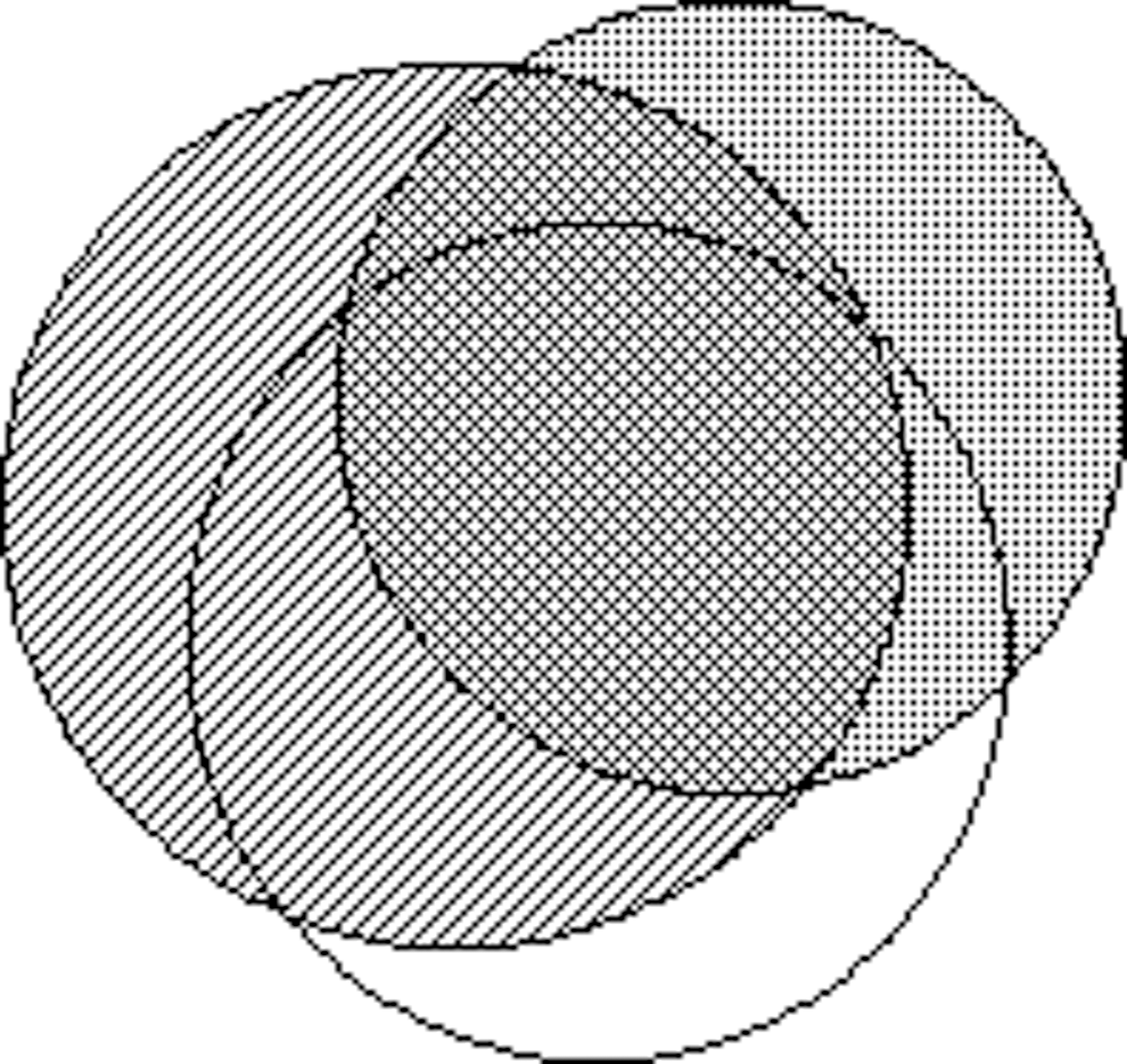
A hypothetical model describing care to different patients with depressive disorders. The circles represent care to individual patients differing with respect to comorbidity, biographical events, and several other diagnostic features that are used in anthroposophy.
Depressive-specific treatment information was collected and labeled. Treatment goals were used to structure information and treatment modules were prepared per treatment goal and as per discipline (data not shown). Twenty-seven treatment modules were described.
GPs recognized all goals except “enhancement of vitality” claimed by art therapists (both music and visual art). As the anthroposophic GP principally decides what therapy is prescribed, these modules were discarded, resulting in a final set of 25 important therapeutic elements.
The diagnostic process
GPs follow the national guideline for diagnosing depressive disorders. 31 On top of that and like all other disciplines contributing to the AHCP, additional diagnostic information is gathered to specify anthroposophic treatment. These processes are not specific for depressive disorders and were therefore not included in the AHCP.
The therapeutic phases
The multidisciplinary expert group clustered the 25 important elements. Ten clusters of specific treatment goals were obtained. General phrasing of the treatment goals was looked for. In the process, deep insight in the contribution of each discipline to the whole, complex intervention for depressive disorders was gained. Consensus about the phrasing was reached (Table 4).
The different treatment goals resulted from monodisciplinary expert interviews. These interviews also resulted in detailed descriptions of all suitable professional interventions, except in the cases indicated by *. The phrasing of the treatment goals and phrasing is the result of multidisciplinary panel discussions.
Having agreed upon the phrasing, the question arose how these elements fit together into an integrated (WMS) healthcare program. First, “boundaries” between different disciplines were discussed, as these boundaries are vague sometimes. Anthroposophic nurses for instance may act as social workers, tend to give dietary advice, and provide a listening ear. In fact, GPs sometimes prefer certain therapists to others because of extra-professional skills. The explicit choice between advice (that may be given by any anthroposophically inspired therapist) and therapy (that may be given by specific anthroposophically trained therapists only) was recommended.
Second, the order of the treatment goals was discussed. Treatment goals were clustered with the help of GPs as the principal designers of treatment processes. The 10 treatment goals were assigned to four different phases of treatment (Table 4). The four phases correspond to the four different dimensions (“bodies”) identified in anthroposophy involved in healing: the physical (anatomical) dimension (or body); the etheric body involved in processes like regeneration (during the night), recovery (from sickness), and reproduction; the astral body (mental dimension) involved in instinctive behaviors, such as thirst, famine, and sex, as well as social behavior and the “I” involved in consciously directing and shaping one's personal life (the individual/spiritual dimension). 4
Reflections on the developed WMS
The described four phases correspond to some extent with the recovery phase, the truly therapeutic phase, and the resocialization phase mentioned above. The recovery phase is represented by Phase I and II (Table 4). The truly therapeutic and resocialization phases overlap with but are not identical to the phases III and IV (Table 4).
A point that was made by the expert group, and which is not represented in Table 4, is that certain patients undergoing external therapy with phase II type of treatment goals are not benefiting from treatment as expected. In these instances, a few psychological consultations are generally necessary. The aim of these consultations is to acknowledge the importance of certain factors, such as life events, in the development of a depressive disorder. Once this is done, patients usually benefit from external therapy. Processing of the underlying psychological issues is postponed until treatment progresses into treatment phase III and/or IV.
The third aspect that was discussed was the rationale to choose between the different therapeutic disciplines per treatment goal. Some arguments were mentioned: availability, conditions of insurance (which may differ per patient and as per healthcare center in The Netherlands) and patient's preferences. Personal characteristics of therapists may play a role as well. Discipline-specific factors were not identified.
The final aspect that was discussed was the existence of the so-called treatment paths, 32 combinations of therapeutic elements that are more often used than others (for instance in relation to certain types of depressive disorders). The multidisciplinary team was not able to identify specific treatment paths, but acknowledged that it is likely that certain combinations of therapeutic elements exist.
The AHCP for depression was presented to several healthcare centers in The Netherlands other than the Prinsen Bolwerk. The professional AM therapeutic teams in Utrecht, Leiden (ATL), Nijmegen, and Tilburg agreed with the content of the AHCP. Face validity was satisfactory and no amendments were made.
Use of the WMS in clinical practice
Table 4 is meant to describe the whole, integrated system of therapeutic elements (with specific therapeutic goals) in four different phases. It is not meant to say that all patients go through all phases. If the therapeutic goals of certain phases are not relevant, the phases (and all therapeutic goals) are skipped. This may be the case when a depression is rapidly diagnosed after a life event brings a less favorable coping strategy and or mind style into the light. Rapid intervention prevents the patient from the further development of symptoms like severe exhaustion and/or sociofinancial problems. Hence phases I and II type interventions are not needed.
Phase II type interventions will be needed when patients become heavily exhausted after the further development of an initially unidentified depressive disorder. Likewise, phase I type interventions are added in case life circumstances are affected. Circumstances like homelessness do not allow the patient to relax at all, thereby interfering with the possible outcome of any intervention. Hence, these circumstances need to be improved first.
On the other hand, not all patients require phases III and IV type interventions. Treatment of a true endogenous depression (without visible external factors contributing to the development) may serve as an example here.
Within each phase, treatment goals are set to meet patient needs more specifically. Again, not all goals will apply to every patient leaving room for individualization of care. Which therapeutic option (Table 4) is chosen to reach the therapeutic goals depends on several factors, like for instance, constitution, temperament, and preference of the patient. Within each discipline, several approaches can be taken to reach the treatment goal. This adds to the number of treatment possibilities, and hence to the possibilities to individualize care.
In conclusion, one can say that use of the WMS depends on the clinical reasoning of GPs and subsequently the therapists involved, to be applied in the specific situation of an individual patient with his/her specific context and preferences.
Discussion
In the Netherlands, the government, insurance companies, and doctors' associations are protecting patients from poor quality care and finance healthcare effectively and efficiently by stimulating the development and implementation of evidence-based guidelines and protocols for specific (group research-based) indications. Whereas this has become routine in conventional healthcare, such a quality control approach needs to be developed for WMSs, such as AM.
The main difficulty in developing protocols and guidelines for AM is the holistic, WMS background, characterized by individualized diagnoses and multilevel and multidisciplinary treatment. The phase-oriented approach suggested by Fønnebø et al. 7 for the evaluation of WMSs was employed to initiate AM guideline description.
The first phase, description of the important elements and their organization, is described in this article for the indication mild to moderately severe depressions. Twenty-five important elements within the AHCP were identified. The elements were clustered in 10 treatment goals and 4 treatment phases demonstrating the organization of the WMS (Table 4). The redundancy in therapeutic elements gives the GP (and therapists) options for individualization of treatment. Additionally, professionals can individualize treatment, as multiple treatment options exist within each important (therapeutic) element (data not shown). The main limitation of the study is that it is primarily expertise based and not empirically tested on patient experiences, quality, safety, and (cost) effects.
The results of this study are important for both the conceptualization and the professional and methodological development of WMS healthcare programs. The results demonstrate that the professional use of these programs must include expert clinical reasoning of healthcare professionals and patient context and preferences to help individualize the healthcare program to a patient's specific needs and situation in daily care.
From the process, it is possible to extract the steps essential in writing an AHCP: (1) identify all disciplines contributing to the healthcare program, (2) identify all treatment goals per discipline, (3) verify all treatment goals with GP, (4) cluster treatment goals, (5) rank treatment goals per cluster (if applicable), (6) describe therapeutic options per discipline per treatment and treatment goal, and (7) describe the considerations to choose between specific therapeutic options. In fact, this approach has already been used for other indications than depressive disorders by the professorship of anthroposophic healthcare at the Leiden University of Applied Sciences.
The results of this study provide several starting points for further research. The AHCP can be extended in several ways. First, since the study did not give detailed insight in why GPs prescribe specific therapeutic elements (Table 4), this must be studied in the future. Second, preliminary findings suggest that anthroposophically trained GPs discriminate more typologies of depression than DSM-V. The question whether these extra types of depression influence the specific therapeutic choices must be addressed. Third, safety (phase II in Fønnebø's approach) and patient experiences and (cost)effectiveness (phases III and IV in Fønnebø's approach) of the AHCP must be studied in, among others, randomized controlled trials. Finally, the working mechanisms and principles underlying the WMS (phase V in Fønnebø's approach) need to be elucidated and described in such a way that mainstream scientists will appreciate its content. The first step in this process, description of the anthroposophic intervention for depressive disorders, is now available.
Conclusions
In this study, it was shown that it is possible to develop an alternative to conventional guidelines that can be used for quality measurements and improvements of WMSs of healthcare while leaving the personalized nature of care intact. This was demonstrated for the WMS of anthroposophic healthcare for the indication mild to moderately severe depressive disorders.
The result, an anthroposophic healthcare program, is based on the integration of literature and several consensus meetings with experts. The essential steps in the process were the identification of all treatment goals, the (redundant) therapeutic possibilities to achieve each of the goals (the important elements of the healthcare program), and the integration of all goals into a (phased) WMS care program.
The program can be used by trained professionals to identify high-quality personalized care for individuals and as the basis in future RCT studies to study the quality and cost effectiveness of the program in comparison to existing standard programs of care. Once a useful monitoring structure is built to measure patient progress, quality measurements and improvements can be made to the program and to its individual elements.
Footnotes
Acknowledgments
The authors would like to thank all respondents for their valuable contributions in the description of the anthroposophic health care program. This research was supported by a fund from RAAK-publiek (2010-12-14P) titled “In verbinding, vernieuwing van eerstelijnszorg met antroposofische inzichten” [In conjunction, renewal of primary healthcare with anthroposophic expertise].
Author Disclosure Statement
No competing financial interests exist.