




Abstract
Objectives:
Tualang honey (TH) contains antioxidants such as ascorbic acid, phenolic acids, and flavonoids that may be protective against oxidative stress of exercise. The aim of this study was to examine the postprandial antioxidant activity and oxidative stress after ingestion of high and low dosages of TH in female athletes.
Materials and Methods:
Twenty female athletes (aged 21.3 [2.1] years; body weight [BW] 54.1 [5.7] kg) were randomly assigned into two groups and consumed either 1.5 g/kg BW TH (high honey; HH; n = 10) or 0.75 g/kg BW TH (low honey; LH; n = 10). Blood sample was collected at fasting and at 0.5, 1, 2, and 3 h after TH consumption. Plasma was analyzed for total phenolic content (TPC), antioxidant activity (ferric reducing antioxidant power [FRAP]), and oxidative stress biomarkers (malondialdehyde [MDA] and reactive oxygen species [ROS]).
Results:
The 3-h area under the curve (AUC) for MDA was significantly lower in the LH group compared with HH group, suggesting less oxidative stress in the LH group. However, the AUCs for TPC, FRAP, and ROS were not affected by the dosages. The concentrations of TPC and FRAP increased from baseline to 2 and 1 h after TH consumption, respectively, and concentrations returned toward baseline at 3 h in both LH and HH groups. MDA concentration significantly decreased (p < 0.05) from baseline to 2 h and significantly increased from 2 to 3 h in the HH group. Meanwhile, ROS levels increased significantly from 0.5 to 3 h in the HH group. The LH group showed similar trends as the HH group for MDA and ROS; however, this was not significant.
Conclusions:
The consumption of high and low doses of TH demonstrated a comparable response in increasing antioxidant activity and suppressing oxidative stress in female athletes. The time–course effect of TH that provides optimal antioxidant activity and oxidative stress protection was between 1 and 2 h after its consumption.
Introduction
O
Athletes are exposed to oxidative stress during physical activity, physical injury, or emotional stress. 4 Strenuous and intense training could cause overproduction of ROS, and the inability of endogenous antioxidants to remove ROS could lead to oxidative stress. 5 Oxidative stress could cause damage to cellular and tissue components, including proteins, lipids, and DNA. 6 In view of this, supporting endogenous antioxidant defense with exogenous antioxidant supplements may represent a suitable noninvasive tool in overcoming redox imbalance and reducing oxidative stress. Vitamins (ascorbic acid, tocopherol) and polyphenols (flavonoid, quercetin) are examples of exogenous antioxidants.
Studies are ongoing to search for natural products that are good sources of nutrients and antioxidants. The many fruits and plants that have been researched as a source of high-antioxidant food include spinach, strawberry, 7 onion, garlic, leek, 8 and olive. 9 Of late, honey has been gaining interest as a source of antioxidants. Honey has been used in traditional medicine for centuries to treat various ailments. It is well known for its antimicrobial and wound healing properties. 10 Honey contains phytochemicals such as phenolic compounds and flavonoids, which have been shown to have high-antioxidant properties. 11,12
Malaysia produces a variety of honeys, namely tualang, gelam, longan, borneo, rubber tree, sourwood, and pineapple honeys. 13 Among these varieties of honeys, tualang honey (TH) showed similar antioxidant activity as manuka honey (the gold standard 14 ) and it has the highest free radical scavenging and antioxidant activity in comparison with nine Malaysian honeys of different origin. 15 The in vitro antioxidant activities of honey are well established 16 ; however, there are limited data on the in vivo antioxidant activity. Consumption of 20 g of TH daily for 16 weeks showed a reduction in activities of glutathione peroxidase and catalase. These enzymes were used as indicators for reduction of oxidative stress levels in postmenopausal women compared with those who received hormone replacement therapy. 17
In an acute study, consumption of 1.5 g/kg body weight (BW) of buckwheat honey in healthy male subjects increased antioxidant activity and phenolic content in plasma as early as 6 h after its ingestion. 18 Honey was also recommended to be consumed by athletes before exercise as one of the carbohydrate sources of energy. 19 Honey could also provide an additional benefit as its antioxidant content may have a protective effect against oxidative stress that can occur due to exercise. Tartibian and Maleki 20 reported that consumption of 70 g/day of unprocessed honey provided beneficial effects by suppressing oxidative stress biomarkers (ROS and malondialdehyde [MDA]) and increasing antioxidant activity in seminal plasma after 8 weeks of cycling in male cyclists. The exact dose of honey that is optimal for protection against oxidative damage is still debatable and more studies are warranted.
In addition to endogenous antioxidants, optimal antioxidant status can also be achieved through intake of exogenous antioxidants from a varied and balanced diet. Female athletes were reported to have low energy intake, which may not support the body's strenuous activity and nutritional demands. 21 –23 In addition, athletes are at risk of constant exposure to oxidative stress. Thus, consumption of antioxidant-rich food may be necessary to meet their dietary antioxidant requirements. The aim of this study was to examine the postprandial response of antioxidant activity and oxidative stress biomarkers after the acute consumption of low and high dosages of TH and to determine the time–course effect that could provide optimal protection against oxidative damage among female athletes.
Materials and Methods
Participants
Twenty female athletes, aged between 18 and 25 years, who have been involved in sports competitions for at least 5 years and without previous history of allergy to any medications or supplements were recruited at University of Malaya. This study was conducted with the approval of the University of Malaya Research Ethics Committee (UM.TNC2/RC/H&E/UMREC-43) and the participants provided written informed consent before participating in this study.
Study design
This was a randomized-order double-blind study whereby the participants participated in a dietary intervention trial lasting for 5 h. The participants consumed either 1.5 g/kg BW (high honey; HH) or 0.75 g/kg BW (low honey; LH) of TH. A stratified randomization process was performed based on their age and BW to ensure that the amount of honey ingested for both groups is equal at baseline. The CONSORT participant flowchart is shown in Figure 1. The participants were asked to refrain from participating in any vigorous physical activity that may increase production of ROS, including superoxide anion, hydrogen peroxide, and hydroxyl radicals. Participants were also reminded not to take any medications, vitamins, and antioxidant-rich foods (such as coffee, honey, tea, wine, fruit juice, fruits, vegetables, and cocoa products) 24 h before the intervention trial.
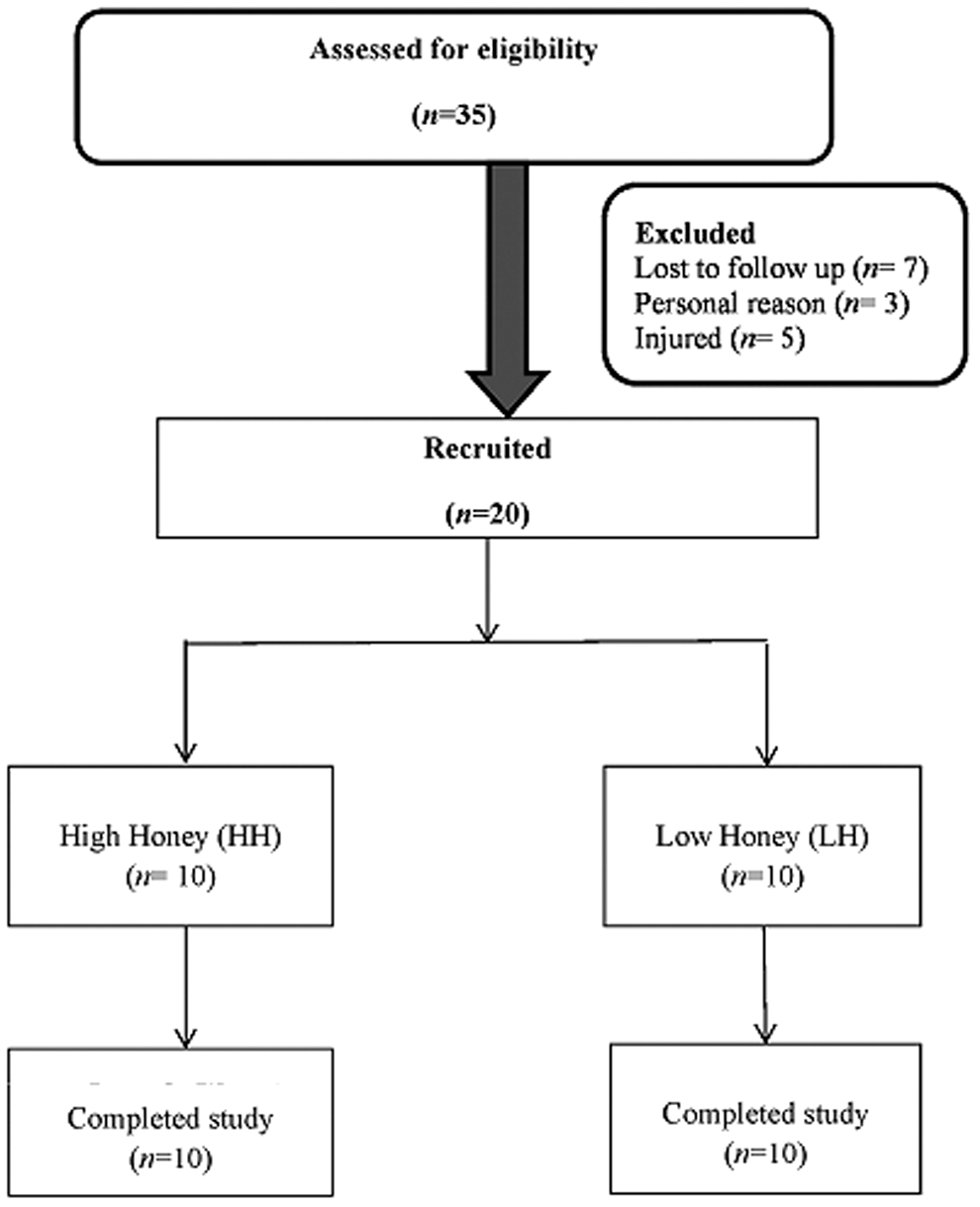
CONSORT participant flowchart.
Experiment trial
Participants arrived at the Sports Nutrition Laboratory after a 12-h overnight fast, at approximately 8:30
Honey
TH (Koompassia excelsa) from a single batch of honey was prepared by the Federal Agriculture Marketing Authority, Malaysia. The pure honey used in this study was extracted from the original source without any additional processing and treatment before administration. The TH sample was sent to Unipeq Laboratory, Universiti Kebangsaan Malaysia, for analysis of total phenolic content, antioxidant activities, ascorbic acid, and protein content.
Analysis of phenolic content and antioxidant activities in plasma
Total phenolic content
TPC was measured using Folin–Ciocalteu assay, a modified method of Cao et al. 24 Plasma (50 μL) was mixed with 25 μL of 1N Folin–Ciocalteu reagent. The mixture was incubated at room temperature (27°C) for 5 min, following which 100 μL of saturated sodium carbonate solution and 75 μL of distilled water were added. The reaction was incubated for 2 h after which the absorbance was read at 760 nm using a multiplex ELISA system (Bioplex 200; Bio-Rad). Gallic acid (0–400 μg/mL) was used to construct the standard curve. TPC of plasma samples was expressed as μg of gallic acid equivalents per mL of plasma.
Ferric reducing antioxidant power
FRAP was analyzed using the method of Benzie and Strain. 25 Three reagents were initially prepared: 300 mM acetate buffer, 10 mM 2,4,6-tripyridyl-s-triazine (TPTZ) in 40 mM HCl, and 20 mM FeCl3. A working FRAP reagent was later prepared by mixing 10 mL acetate buffer, 1 mL TPTZ solution, and 1 mL FeCl3 solution. For assaying, 300 μL of freshly prepared FRAP reagent was mixed with 5 μL of sample and incubated at 37°C for 30 min. The absorbance reading was taken at 593 nm. Iron sulfate (0–1,000 μM) was used as standard and analyzed as above. Results were expressed as μM of ferrous ion (Fe2+).
Malondialdehyde
To assess lipid peroxidation in the plasma, MDA, an end product of lipid peroxidation, was measured by the thiobarbituric acid-reactive substance (TBARS) assay. 26 Reagent for this assay comprised thiobarbituric acid (0.37%), trichloroacetic acid (15%), and hydrochloric acid (0.25 N) in a ratio of 1:1:1. For the assay, 100 μL of TBARSs was mixed with 50 μL of plasma and the mixture was vortexed for 1–2 min. The mixture was then heated at 90°C for 20 min before addition of 150 μL of butanol. The mixture was centrifuged and 100 μL of the supernatant was read using a microplate reader at 532 nm. A standard calibration curve was prepared from 1,1,3,3-tetraethoxypropane (0–0.02 μmol/mL), a commercial form of MDA. Results were expressed as μmol MDA equivalents per liter of plasma.
Reactive oxygen species
ROS was measured using a modified method of Kong et al. 27 Five microliters of plasma was mixed with 100 μL of 20 μM 2,7-dichlorofluorescein diacetate in a black 96-well plate. The mixtures were shaken on a shaker for 1 min and incubated for 30 min in a water bath (37°C). Fluorescence reading was taken with the excitation and emission wavelengths set at 485 and 530 nm, respectively, using multiplex ELISA system (Bioplex 200; Bio-Rad). All the results were expressed as relative fluorescence unit.
Statistical analyses
Data are expressed as mean ± standard error of the mean unless otherwise stated. The distribution of data normality was assessed using the Shapiro–Wilk test before statistical analysis. The area under the curve (AUC) for TPC, FRAP, MDA, and ROS was calculated using the trapezoidal formula and differences between HH and LH were compared using independent t-test. One-way analysis of variance (ANOVA) was performed on TPC, FRAP, MDA, and ROS at 0 to 3 h to determine within-time differences using Tukey's post hoc test for both groups. All statistical analyses were performed using the Statistical Package for Social Sciences (SPSS), Version 22.0 (SPSS, Inc., Chicago, IL). Statistical significance was set at p < 0.05.
Results
Participants
All of the participants in the LH (n = 10) and HH (n = 10) groups completed the experiment. The physical characteristics of the participants and details of honey consumption in both groups are presented in Table 1.
Data are expressed as mean (SD).
BW, body weight; HH, high honey; LH, low honey; SD, standard deviation.
Honey content
The phenolic content, antioxidant activities, ascorbic acid, and protein content in the TH group are shown in Table 2. The presence of phenolic compounds and ascorbic acid in honey could contribute to the observed antioxidant activities. The variability in protein content may be dependent on the floral preference of the honeybee, from which protein and colloids are derived, and the presence of enzymes, which are from the honeybees themselves. 28
Data are expressed as mean (SD).
DPPH, 2,2-diphenyl-1-picrylhydrazyl; FRAP, ferric reducing antioxidant power; GAE, gallic acid equivalents; SD, standard deviation; TPC, total phenolic content.
Area under the curve
The AUCs for TPC, FRAP, MDA, and ROS over 3 h after consumption of the LH and HH supplements are presented in Table 3. The AUC for postprandial MDA was significantly (p < 0.05) lower in the LH group compared with the HH group. No significant difference was observed between both groups for TPC, FRAP, and ROS.
Data are expressed as mean ± SEM. Values are significantly different at p < 0.05 using independent t-test.
MDA, malondialdehyde; ROS, reactive oxygen species; SEM, standard error of the mean.
Postprandial plasma TPC, FRAP, MDA, and ROS concentrations at 0 until 3 h following TH consumption
TPC and FRAP concentrations at baseline and 0.5, 1, 2, and 3 h following TH consumption are presented in Table 4. No significant differences were observed within time points for LH and HH groups for both biomarkers. Plasma TPC concentrations reached maximum increment of 15.8% at 2 h in the LH group and 24.5% at 1 h in the HH group from baseline (Fig. 2a and Table 4). TPC concentrations returned toward baseline at 3 h post-TH ingestion in both LH and HH groups. Meanwhile, maximum plasma FRAP activity was seen 1 h post-TH consumption in both groups, relative to baseline (Table 4). These represented an increment of 13.8% in the LH group and 15.1% in the HH group at 1 h from baseline; FRAP activity declined toward baseline by the third hour in both groups (Fig. 2b).
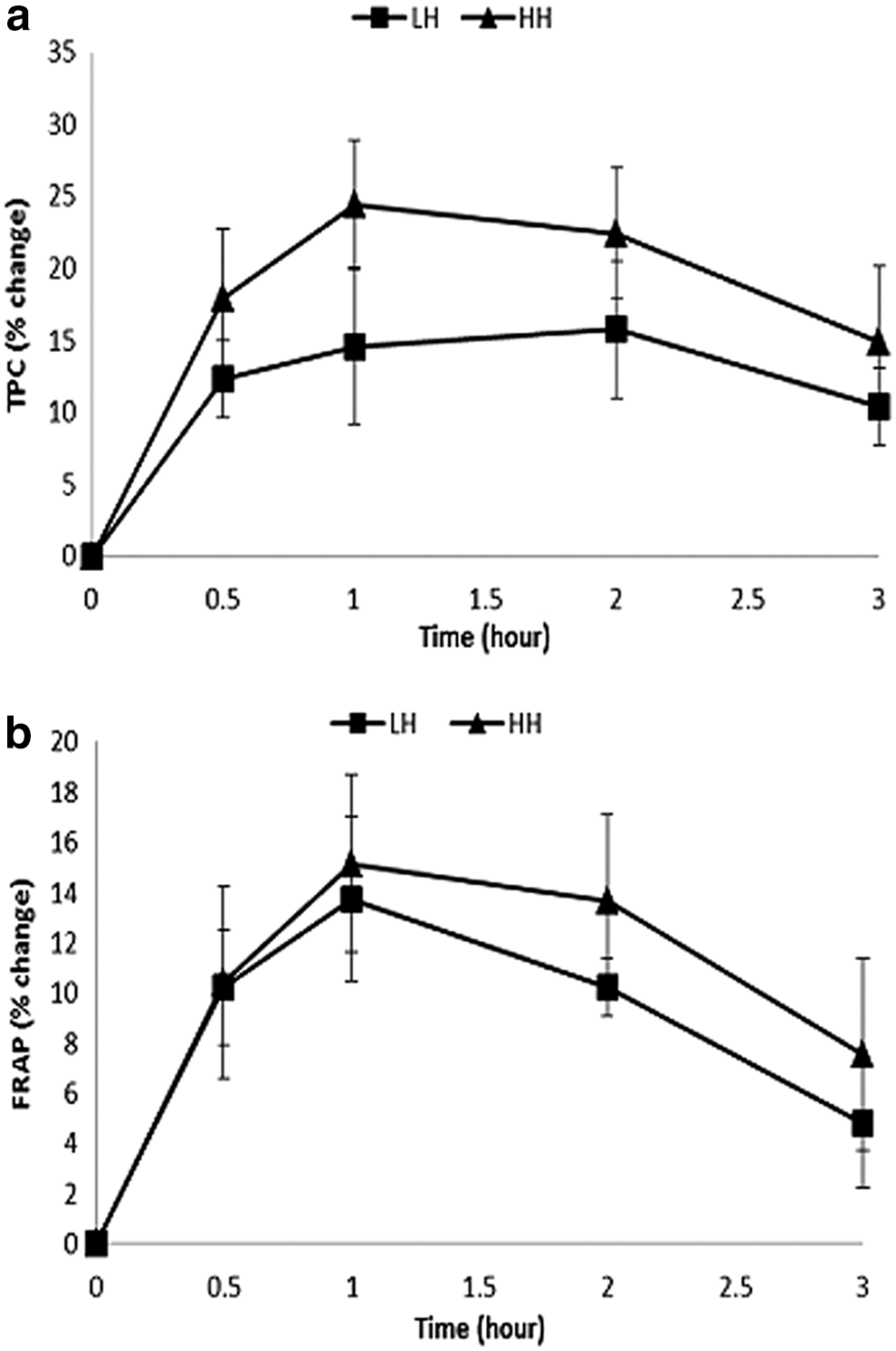
The percentage changes of plasma TPC
Data are expressed as mean ± SEM. Values with different letters are significantly different at p < 0.05 using one-way ANOVA test.
p < 0.05 significantly different from baseline in the HH group.
p < 0.05 significantly different from 0.5 h in the HH group.
p < 0.05 significantly different from 1 h in the HH group.
p < 0.05 significantly different from 2 h in the HH group.
MDA concentration in the HH group showed a significant maximum reduction of 31.2% at the 2-h time point compared with baseline (Fig. 3a and Table 4). The concentration subsequently increased from the 2-h to the 3-h time point. The LH group showed a similar trend as the HH group, but no significant difference was found within this group. In the analysis of ROS, the HH group showed 13.6% reduction from baseline at the 0.5-h time point (Fig. 3b), followed by a significant increase from 0.5- to 3-h time points. No significant changes were observed in the LH group throughout the 3-h observation period.
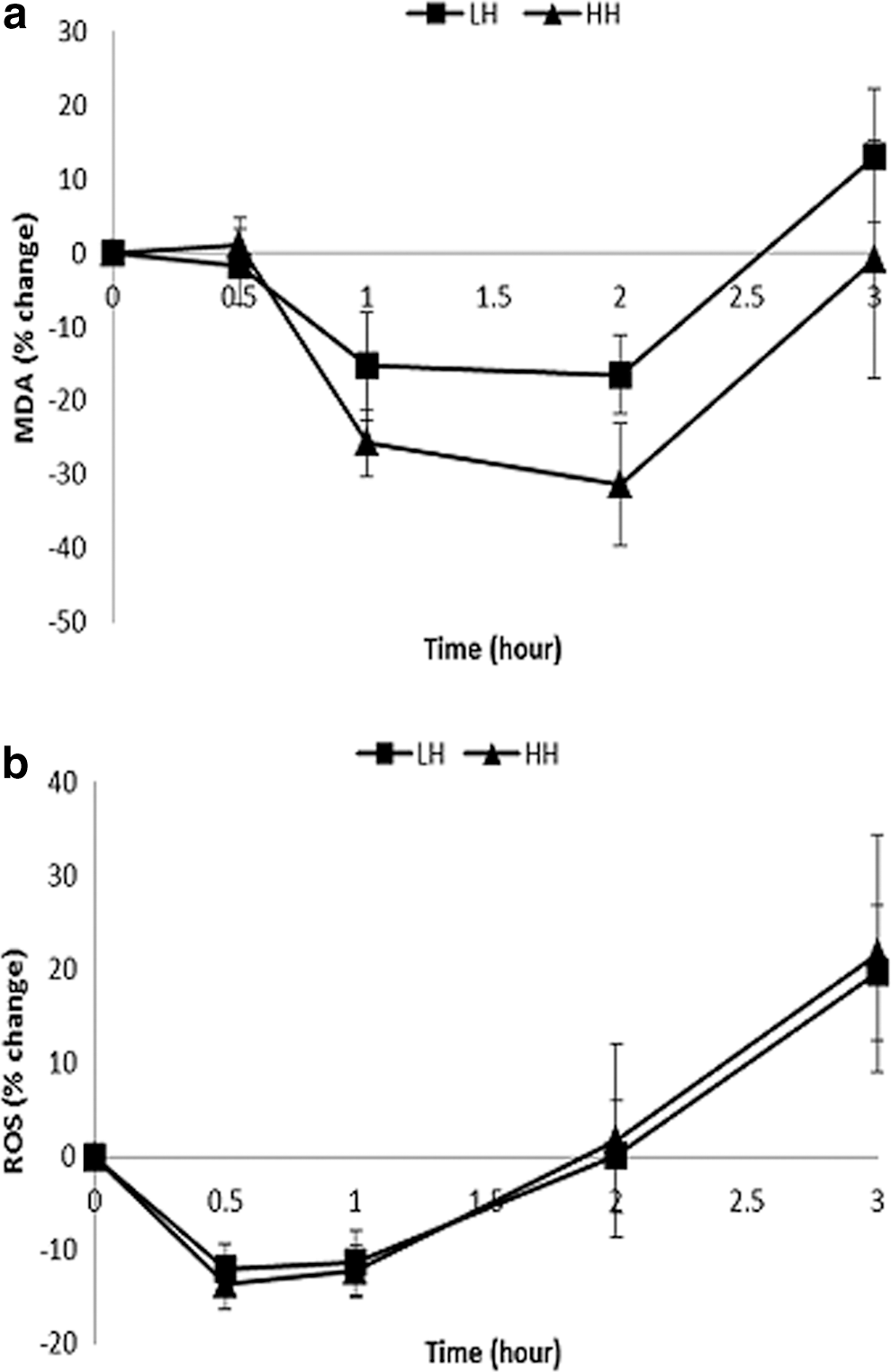
The percentage changes of plasma MDA
Discussion
Results from this study indicate that consumption of high (1.5 g/kg BW) and low (0.75 g/kg BW) doses of TH enhances phenolic content antioxidant capacity (TPC and FRAP) and reduces oxidative stress (MDA and ROS). With regard to MDA and ROS levels, reduction of both parameters was observed until the 2-h time point for MDA and 1-h time point for ROS. As no significant difference was seen between the LH and HH groups, this implies that both dosages of TH gave similar protection against oxidative stress through reducing MDA and ROS levels.
Although not significant, the increase in antioxidant activities following consumption of the supplements indicated protective effects against ROS. This is in agreement with the reduced MDA and ROS levels, which indicated reduced levels of oxidative stress. Honey contains a wide range of components, of which the phenolic acids and flavonoids play a significant role in its antioxidant capacity. 29 It is important to note that the phenolic content of TH is the highest compared with other types of Malaysian honeys, with the value similar to manuka honey. 14 Kishore et al. 30 also reported that TH had the highest TPC, followed by gelam, Indian forest, and pineapple honey.
A greater increase in antioxidant activities in the LH and HH groups was seen in the first hour after honey consumption. This is similar to other studies reporting increased antioxidant activities within the first hour and up to 90 min following honey consumption. 31 The authors speculated that honey could react with free radicals in the blood as quickly as 30 min after TH ingestion and could also act as a protective agent for up to 2 h. In general, TPC significantly increased by ∼24% and FRAP by 15% after 1 to 2 h of consumption of TH. The higher TPC concentration measured in blood plasma could be due to quick absorption of polyphenols in honey through the gut barrier by passive diffusion. 32 A pharmacokinetic study reported that absorption of honey nutrients was rapid compared with other antioxidant-rich foods due to the high quercetin content in honey. 33 This implies that antioxidants in TH were able to inhibit ROS and MDA production and thus delay or prevent oxidative damage in the cells.
Consumption of TH only showed a reduction in MDA and ROS levels within 2 and 1 h postconsumption, respectively. This reduction corresponded with increased concentration of TPC and antioxidant activities at these time points. This study demonstrates the potential protective effect of bioactive compounds in TH in reducing oxidative damage. Oxidative stress can occur if there is excess production of free radicals, more than the ability of antioxidants to neutralize them. This includes damage to cellular components, including lipids. Since lipids in the cell membrane are prone to oxidation, the effects of TH in protecting against lipid peroxidation were also investigated. Lipids, especially polyunsaturated fatty acids at the membrane, are susceptible to oxidative damage by ROS, forming lipid hydroperoxides and subsequently MDA. 34 Phenolic acids contained in TH could significantly reduce (p < 0.05) MDA levels in LH and HH groups, indicating the ability of TH to protect cells against free radical-induced lipid peroxidation. In addition, TH was reported to reduce the levels of glutathione peroxidase, which was the indicator for reduction of oxidative stress levels. 17 Glutathione peroxidase functions to remove H2O2 from cells. 35 Results from this analysis showed that low dosage of TH was adequate to prevent lipid peroxidation. Phenolic acids that were detected in TH are strong scavengers of hydroxyl radicals. 36
The phenolic content and antioxidant activities showed a decreasing trend 2 h postconsumption of the LH and HH supplements, indicating that phenolics and antioxidant compounds are either excreted or further metabolized. McKay and Blumberg 37 reported that plasma antioxidant activities often reached maximum levels within 1 to 2 h after ingestion of antioxidant-rich food. The reduction in phenolic content and antioxidant activities could potentially explain the increasing levels of MDA and ROS observed in this study.
As there were mostly no significant differences in phenolic content, antioxidant activities, and parameters of oxidative stress in the two dosages of honey, the authors concluded that the low dosage is sufficient to provide protection to female athletes. Additionally, the low dose is more suitable for long-term consumption, taking into account possible side-effects of toxicity, sugar content, and allergic effects. 38 Daily intake of honey is recommended to ensure the sustainable effects of honey as an antioxidant agent. However, this is an acute study that limits the activity of antioxidants until 2 h postconsumption of honey. Therefore, longer term trials, with repeated consumption of honey, may result in accumulation of antioxidant components, which may in turn result in sufficiently active phenolic concentrations to influence the blood antioxidant status. In addition, the recruitment of female athletes' population may also limit generalization of the findings in this study. Future investigations comparing honey and other high-antioxidant foods, involving other population groups and with a bigger sample size and the inclusion of a placebo group, may yield further insight into the relative efficiency of antioxidant protection from various antioxidant-rich foods.
Conclusions
In this study, consumption of TH at doses of 0.75 and 1.5 g/kg BW was protective against lipid peroxidation and oxidative stress. Although there were no significant changes in phenolic content and antioxidant activity, the time–response curves indicated a possible trend of protective effects. Both doses of honey showed similar effects in providing protection against oxidative stress in the female athletes. Thus, low dose is recommended for future intervention studies. This study highlights the relevance of TH as a healthy food supplement and a potential source of antioxidants for reducing oxidative stress in female athletes.
Footnotes
Acknowledgments
The authors would also like to express their gratitude to the staff of the Department of Molecular Medicine, Faculty of Medicine, University of Malaya, for their technical support. This study was supported by a grant from Postgraduate Research Fund, University of Malaya (project no. PG128-2014B).
Author Disclosure Statement
No competing financial interests exist.