




Abstract
Aim:
Baduanjin, a Chinese traditional Qigong exercise that focuses on a mind–body integration, is considered to be an effective exercise in promoting health. Thus, we systematically and critically evaluated the emerging literature relating to the effects of Baduanjin on health outcomes.
Methods:
We used seven English-language electronic databases for the literature search. At least one health-related parameter was reported in retrievable full-text Baduanjin intervention studies.
Results:
A total of 22 eligible studies were included. The inter-rater reliability between two review authors was 94.4% for selecting eligible studies. The results of individual studies support the notion that Baduanjin may be effective as an adjunctive rehabilitation method for improving cognitive functions in addition to psychological and physiological parameters among different age groups and various clinical populations (e.g., Parkinson's disease, chronic neck pain, chronic fatigue syndrome-like illness, psychological illness).
Conclusion:
Before we draw a definitive conclusion relating to Baduanjin for health benefits, more methodologically rigorous studies with a long-term follow-up assessment should be further conducted to examine the effects of Baduanjin on health-related parameters and disease-specific measures in different health conditions. This review lends insight for future studies on Baduanjin and its potential application in preventive medicine and rehabilitation science.
Introduction
B
The popularity of Baduanjin has exponentially grown throughout China and has propagated to other countries (e.g., North America, Germany, France, and Korea) since Chinese Health-Qigong Association (CHQA) was established in 2000 to promote Health-qigong exercises. 9 The rapidly increasing number of practitioners in Baduanjin around the world has attracted considerable attention from the research community to investigate effects of Baduanjin on a variety of health-related outcomes in both healthy and clinical populations. For instance, previous studies investigated the effects of Baduanjin on physical, psychological, and physiological parameters in healthy college students and middle-aged female adults, 10 –13 as well as older adults. 14 –16 Researchers have shown interest in examining whether Baduanjin was effective in alleviating disease-specific symptoms in patients with neurological disorders, 6,17 rheumatic diseases, 18 –20 cardiovascular and cardiopulmonary diseases, 5,21 and fatigue syndromes. 22 –24 While individual studies have reported on these health-related outcomes across different populations, there has not been a comprehensive review examining its potential impact of Baduanjin for health, to our knowledge. Therefore, the purpose of this first review study was to systematically evaluate existing English language studies and better understand current trends in Baduanjin for health benefits, which may provide insight for investigators and future research.
Methods
Data sources
Seven well-respected electronic databases (PubMed, Cochrane Library, Google Scholar, Web of Science, EMBASE, Science Citation Index, and ELSEVIER) were used for the literature search. To maximize the literature search, a review author (L.Z.) used the following keywords: “Baduanjin,” “Eight-section brocades,” “traditional Chinese health-Qigong,” “traditional Chinese health-promoting exercise,” and “simple Chinese health Qigong.” Following electronic search completion, researchers performed manual searches through reference lists of systematic reviews and their original studies.
Study selection
Studies were included in this review if they met the following criteria: (1) a peer-reviewed study or a doctoral dissertation (because a doctoral dissertation typically undergoes a rigorous peer-review process through the supervision of three to five committee members) published in English; (2) retrievable full-text articles; (3) Baduanjin is considered the main exercise intervention; (4) at least one health-related parameter was reported in the peer-reviewed study such as physical fitness (e.g., balance, flexibility, muscular strength, muscular endurance, aerobic ability, or mobility), psychological domain (e.g., pain, stiffness, fatigue, depression, anxiety, or self-efficacy), physiological domain (e.g., blood pressure, bone mineral density [BMD], pulmonary function), cognitive function, or quality of life (QOL). To gain a comprehensive understanding regarding the effectiveness of Baduanjin in both healthy and clinical populations, the study designs could be a randomized controlled trial (RCT), controlled trial, uncontrolled trial, or cross-sectional/observational study. The year range of publications between 1982 (first article introducing Baduanjin) and June 2017 was considered. Studies that did not meet the abovementioned criteria were excluded (e.g., conference proceeding, magazine articles, and review articles). Two review authors (L.Z. and C.W.) independently selected eligible studies according to the predetermined eligibility criteria. When there were disagreements between the two review authors, a third author also reviewed the study and facilitated the decision making by voting (Fig. 1 displaying the process of literature search).
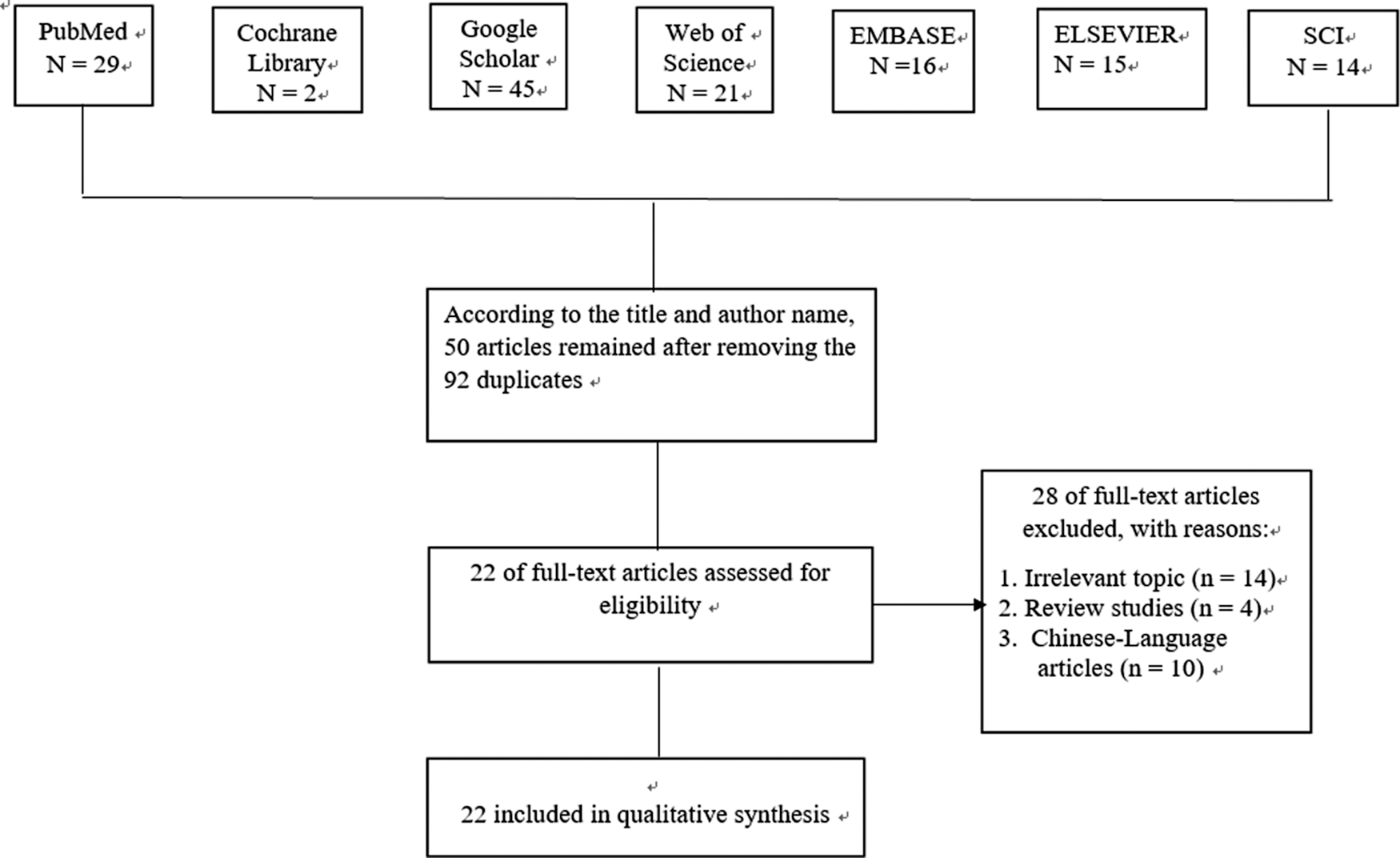
Flowchart displaying the process of literature search.
Results
The earliest English language study regarding the influence of Baduanjin for health benefits was published in 2006, 12 followed by a study published in 2008, 13 and a doctoral dissertation published in 201021 and 2012. 14 Most recent studies were published between 2014 and 2017. 2,6,8,10,13,16 –20,22 –29 Based on the years of publication of the literature, the research community became attentive to Baduanjin within the last 10 years. This recent attention could be explained by the increasing publicity of Baduanjin following the establishment of the CHQA in 2000.
A total of 22 studies were found to meet the inclusion criteria. 2,6,8,10,12 –29 It is worth noting that a doctoral dissertation examining the effects of Baduanjin on physical and psychosocial status in individuals with chronic obstructive pulmonary disease (COPD) was also included in this review. 21 The interrater reliability between the two review authors was 94.4% for selecting eligible studies. The studies included in this review involve three different experimental designs: (1) 14 RCTs 2,8,10,12,14,16,17,19 –25,29 ; (2) 3 nonrandomized controlled trails (NRCTs) 15,22,28 ; and (3) 5 pretest and posttest studies (PPS). 6,13,18,26,27 Study participants in this review are categorized as either healthy or clinical populations. More specifically, the healthy populations were college students, 2,10 older adults, 14,16,29 and middle-aged men 25 and women. 12,13 The clinical populations were people with neuropsychological disorders (PD, older adults at risk for ischemic stroke, and people with schizophrenia, major depressive disorder, or bipolar disorder), 6,8,17,26 chronic fatigue syndrome (CFS)-like illnesses, 23,24 fatigue-predominant subhealth (FPSH), 22 osteoarthritis (OA), 18,19 chronic neck pain, 20 premenstrual syndrome symptoms (PMS), 27 drug users, 28 and COPD. 21 The health-related parameters (cognitive function, physical, psychological, and physiological parameters) are reported in detail under Current Trend in Baduanjin for Healthy Populations section. Type of special population (neuropsychological diseases, CFS-like illness, chronic rheumatic and musculoskeletal diseases, PMS and heroin users, and COPD) are reported in detail under Current Trends in Baduanjin for Clinical Populations section. More specifically, characteristics of eligible studies are presented in Table 1.
6-MWT, 6-minute Walk Test; ABC, Activity-Specific Balance Confidence Scale; BBS, Berg Balance Scale; BJ, Baduanjin; CFS, Chalder Fatigue Scale; CG, control group; CPSS, Chinese Perceived Stress Scale; ELISA, enzyme-linked immunosorbent assay; FT, Flanker Task; FSAS, Fatigue Self-Assessment Scale; GSES, General Self-efficacy Scale; HADS, Hospital Anxiety and Depression Scale; HGST, Hand Grip Strength Test; ISKEF, the Isokinetic Strength of the Knee Extensors and Flexors; MFES, Modified Falls Efficacy Scale; MFTE, the Monitored Functional Task Evaluation; MMSE, Mini-Mental State Examination; NIRS, Near-infrared Spectroscopy Technique; NPQ, Neck Pain Questionnaire; NR, not reported; NRCT, nonrandomized controlled trial; OLST, one-leg Standing Test; PD, Parkinson's disease; PDQL, Parkinson's Disease Quality-of-Life Scale; PDSS-2, Parkinson's Disease Sleep Scale; PFS-16, Parkinson Fatigue Scale; PMOS, Profile of Mood States; PPS, pretest and posttest study; PSQI, Pittsburgh Sleep Quality Index; RCT, randomized controlled trial; SCL-90, Symptom Checklist 90; SES, the Self-Esteem Scale; SF-36, the 36-Item Short Form Health Survey; SFGDS, the short form of the Geriatric Depression Score; SGT, Schulte Grid Test; SLJ, Standing Long Jump; SPMS, the Shortened Profile of Mood States; SRT, Sit-and-Reach Test; ST, the Step Test; TUG, Timed Up and Go Test; URDRS, Unified Parkinson's Disease Rating Scale; VAS, Visual Analogs Scale; WAIS-DSCT, the Wechsler Adult Intelligence Scale Digit Symbol-Coding Test; WHOQOL-BREF, the World Health Organization Quality of Life; WMSCR, the Wechsler Memory Scale-Chinese Revision; WOMAC, the Western Ontario and McMaster Universities Osteoarthritis Index.
Current trend in Baduanjin for healthy populations
Cognitive function
Three studies examined the effects of Baduanjin on cognitive function in different populations. Chen et al. 10 conducted an RCT in which 42 healthy college students were randomly assigned to either a Baduanjin group or a relaxation group (five 90-min training sessions weekly for 8 weeks in both groups). Outcomes included mood state and executive function, which were measured by the shortened Profile of Mood States and the Flanker task, respectively. Near-infrared spectroscopy technique was also used to explore the potential mechanism of how Baduanjin affects cognitive function. Results indicated that the short-term, intensive Baduanjin was more effective in improving mood state in comparison to the relaxation technique (led by an athletic trainer; starting with some rhythmic breaths with eyes closed, followed by relaxation at different musculoskeletal regions [face, head, shoulders, arms, legs, chest, back, and abdomen]), evidenced by a significantly reduced depressive mood in the Baduanjin group. In addition, only the Baduanjin group demonstrated a significant improvement in executive function, which could be explained by an increased volume of oxygenated hemoglobin in the left prefrontal cortex. 10 Similarly, an RCT by Tao et al. 16 investigated the effect of Baduanjin on functional connectivity of the cognitive control network in older adults. This study involved a 12-week intervention period for two experimental groups (five 60-min training sessions weekly for both Baduanjin and t'ai chi) and two control groups (unaltered daily lifestyle). Mental control reflecting cognitive control connection was measured using a subset of the Wechsler Memory Scale along with functional magnetic resonance imaging scans. Results indicated that Baduanjin was effective in improving mental control function evidenced by a reduction of the resting functional connectivity between the bilateral dorsolateral prefrontal cortex and the left putamen and insula. 16 An RCT by Tao et al. 29 investigated and compared the effects of 12 weeks of t'ai chi and Baduanjin exercise in modulating brain structure and memory function in older adults. Magnetic resonance imaging and memory function measurements were administered at baseline and week 12. Study findings indicated that both t'ai chi and Baduanjin have the potential for preventing memory deficits in older adults. 29
Physical, psychological, and physiological parameters
An RCT by Li et al. 2 included 222 healthy college students in which they were randomly assigned to either a Baduanjin group (five 60-min Baduanjin sessions weekly) or a control group (unaltered daily lifestyle). The purpose of the study was to determine whether a 12-week Baduanjin program was beneficial for physical and psychological health. Results indicated that, when compared with the control group, the Baduanjin group showed significant improvements in lower limb proprioception function, cardiorespiratory endurance, physical flexibility, leg power, and attention. 2 Similarly, an RCT by Li et al. 25 examined the beneficial effects of a 16-week Baduanjin program for 110 healthy adults (average age of 34.2). Results indicated that Baduanjin effectively improved physical flexibility and reduced subcutaneous adipose accumulation (e.g., body–mass index and skinfold thickness at lower corner scapula, triceps brachii, and abdomen). 25 An RCT by Chen et al. 14 indicated that a 12-week Baduanjin program (three 30-min sessions per week) effectively improved overall sleep quality, subjective sleep quality, sleep latency, sleep duration, sleep efficiency, and daytime dysfunction (p < 0.001), whereas the control group showed no significant changes between baseline and week 12.
Two studies examined the beneficial effects of Baduanjin for middle-aged women. An RCT by Chen et al. 12 examined the effect of Baduanjin on BMD. All eligible healthy middle-aged women were randomly allocated to either a Baduanjin group (n = 44; three Baduanjin sessions weekly for 14 weeks) or a control group (n = 43) who kept their unaltered lifestyle. Outcome measures (interleukin-6 [IL-6] and BMD) were assessed at baseline and week 14. Results indicated that when compared with the control group, the 14-week Baduanjin program effectively reduced IL-6 and slowed down BMD loss. 12 A PPS by Hsu et al. 13 examined the effects of Baduanjin on oxidative stress, antioxidant status, and QOL. Thirty-one middle-aged women were arranged to participate in three 20-min Baduanjin sessions weekly for 12 weeks. Outcome measures were assessed before and after the intervention protocol, including malondialdehyde for oxidative stress, superoxide dismutase for antioxidant status, and 36-Item Short Form-Health Survey (SF-36) health form for the QOL. It was found that Baduanjin effectively elevated the antioxidant enzymes, reduced oxidative stress, and enhanced QOL. 13
Current trends in Baduanjin for clinical populations
Neuropsychological and cardiovascular diseases
Two RCTs were conducted to determine whether Baduanjin was beneficial for older adults with PD. 8,22 The first RCT study by Xiao and Zhuang 8 included 100 patients (ranging 55–80 years of age) with mild-to-moderate PD. All PD patients were randomly assigned to either a Baduanjin group (four 45-min Baduanjin sessions weekly + daily 30-min walking for 6 months) or a control group (daily 30-min walking). Significant improvements in multiple outcome measures (sleep quality, functional mobility, and gait speed) were observed in the Baduanjin group, but not the control group. 8 The second RCT was conducted by Xiao et al. 17 to compare the effects of Baduanjin with physical therapy on fall prevention-related parameters in 98 PD patients (mean age of 67.8). Both groups received the same duration and frequency of training (four 60-min training sessions for 6 months). After the intervention period, the Baduanjin group had significant improvements in the Berg Balance Scale, Activity-specific Balance Confidence Scale, Timed Up and Go test, 6-minute walking test (6-MWT), PD Rating Scale, knee extension strength, and frequency of fall and fractures in comparison to conventional physical therapy. 17
A PPS by Zheng et al. 6 investigated the preventive effects of Baduanjin for 20 older individuals at risk for ischemic stroke. After the 12-week intervention period (five 40-min training sessions weekly), study participants consistently reported that Baduanjin was beneficial for enhancing psychosomatic well-being. 6 A PPS by Chen et al. 26 investigated the effects of an 8-week Baduanjin program on physical and psychosocial parameters in 11 people with schizophrenia, major depressive disorder, or bipolar disorder. They reported that Baduanjin was beneficial for improving one-leg balance performance, processing speed, and some subscales (e.g., physical role functioning, vitality, social role functioning, and mental health) of the SF-36 for assessment of QOL. 26
CFS-like illness
An NRCT 22 and two RCTs 23,24 investigated the therapeutic effects of Baduanjin for individuals with CFS-like illnesses and FPSH. A study by Liao et al. 22 included 131 individuals with FPSH in which they were assigned to either a Baduanjin group (64 participants attending two 30-min sessions weekly for 6 weeks) or a control group receiving no intervention. The Fatigue Self-Assessment Scale (FSAS) was used to evaluate their perception of fatigue at baseline, weeks 6, 12, and 18. Results indicated that the 6-week Baduanjin program effectively reduced fatigue-related factors (physical fatigue, mental fatigue, the consequence of fatigue, and response of fatigue to sleep and rest of the FSAS), and this trend continued until week 18. 22 Two other studies by Chan et al. investigated the effects of Baduanjin on disease-related symptoms 23 and adiponectin level when it was used for the treatment of depression. 24 Chan et al. 23 randomly assigned 150 individuals with CFS-like illness to either a Baduanjin group (sixteen 90-min training sessions over 9 consecutive weeks) or a waitlist. Outcome measures included Pittsburgh Sleep Quality Index, Chalder Fatigue Scale, and Hospital Anxiety and Depression Scale (HADS), which were performed at baseline, week 9, and 3 months later for a follow-up assessment. Results indicated that Baduanjin effectively alleviated disease-related symptoms (fatigue, anxiety, and depression) and improved sleep quality while sleep latency shortened. 23 Chan et al. 24 subsequently recruited 180 females with CFS-like illnesses to investigate the effect of Baduanjin on disease-related symptoms and plasma adiponectin levels measured by HADS and a human Adiponectin Enzyme-Linked Immunosorbent Assay Kit, respectively. Results indicated that the 9-week Baduanjin program (sixteen 90-min training sessions) effectively alleviated depression modulated by increased adiponectin level. 24
Chronic rheumatic and musculoskeletal diseases
Two studies examined the therapeutic benefits of Baduanjin for individuals with knee OA. 18,19 An RCT by An et al. 19 included 28 OA patients and randomized them into either a Baduanjin group (five 30-min training sessions weekly for 8 weeks) or a control group who received no treatment. Outcomes measured consisted of OA-related symptoms (knee pain, stiffness, physical disability, and general health), QOL, quadriceps strength, and aerobic ability measured by the Western Ontario and McMaster Universities Osteoarthritis Index (WOMAC), SF-36, the Isokinetic Strength of the Knee Extensors (ISKE), and the 6-MWT, respectively. Compared with the control group, the Baduanjin group showed significant improvements on some subscales (pain, stiffness, and physical function) of the WOMAC, Peak Torque of the ISKE, and aerobic ability. 19 An et al. subsequently conducted a PPS which examined the effect of a 1-year Baduanjin program using the same outcome measures. 18 They found that the 1-year Baduanjin program effectively alleviated OA-related symptoms (pain, stiffness, and physical function measured by WOMAC), improved multiple health-related parameters (aerobic ability measured by 6-MWT, peak torque for both knee extensor and knee flexor, QOL [body pain, general health, role emotional, and health transition measured by SF-36]), and reduced body–mass index. 18 An NRCT by Wang et al. 20 investigated how long-term Baduanjin affected symptoms in individuals with chronic neck pain. All eligible participants (mean age of 58.23) were assigned into either a Baduanjin group (36 participants who attended at least 30-min daily training sessions for 6 months) or a control group (36 participants who maintained an unaltered lifestyle). Pain and QOL were measured by two different assessment tools (a visual analog scale and Northwick Park Neck Pain) and SF-36, respectively. Results indicated that Baduanjin effectively alleviated neck pain and improved the QOL. 20
Premenstrual syndrome symptoms
Zhang et al. 27 conducted a PPS examining the effect of Baduanjin on PMS in women aged between 18 and 38. Fourteen females of reproductive age who met the inclusion criteria participated in a Baduanjin program for three menstrual cycles. Symptom severity was measured using the daily record of severity of problems (DRSP). Participants reported a significant reduction in total premenstrual DRSP scores after the three-cycle intervention period. More specifically, depression, anxiety, interest, and social activity were reported to have gradual improvement throughout the Baduanjin exercise program. 27
Heroin users
An NRCT by Wang et al. 28 examined the effect of Baduanjin on Tregs (T) cell (which plays an important role in maintaining peripheral immunological tolerance) in heroin users (Baduanjin = 30 and control group = 30) over 3 months. After the 3-month intervention, the Baduanjin program (five 60-min training sessions) was reported to have a positive effect on restoring T cell function in people with heroin addiction by reducing Tregs or suppressing cytokine TGF-β. 28
Chronic obstructive pulmonary disease
Ng 21 investigated the effects of Baduanjin on physical and psychosocial conditions in COPD patients. The safety and feasibility of Baduanjin intervention protocol was tested in a small number of COPD patients before the official research project started. Forty COPD patients in the intervention group underwent four 45-min instructor-led Baduanjin training sessions weekly for 6 months (home-based daily practice based on a booklet and a video CD was encouraged). Forty COPD patients in the control group received a breathing technique program (pursed-lip and coordinated breathing) with the same training duration and frequency. Outcome measures included functional capacities (6-MWT; the Monitored Functional Task Evaluation) and QOL (SF-36). Intention-to-treat analysis indicated that no significant differences for either functional capabilities or QOL were found from baseline to 6 months later. It is worth noting that better improvements in all functional capacity-related tests were found in the Baduanjin group, whereas these positive changes were not observed in the control group. COPD patients in the control group showed decreased QOL, whereas patients in the Baduanjin group showed improvements in all subscales of the SF-36. A subanalysis was performed on selected patients with COPD who practiced Baduanjin at least four times weekly as the “per-protocol” group. The “per-protocol” group demonstrated significantly greater improvement in all functional capacity-related measures compared with the control group. The study findings support the notion that Baduanjin is effective as an adjunctive rehabilitation method for improvement of clinical outcomes. 21
Discussion
A wide range of individuals can incorporate Baduanjin into their exercise regime as it is practiced at a low intensity, it is easily accessible, and incorporates elementary movements (e.g., people who have the practice limitations of time and space or people who are facing cognitive decline and have difficulty in learning complex movements). The results of individual studies in this review article indicate that Baduanjin appears to effectively improve health-related parameters in both healthy populations (e.g., college students, middle-aged women, and older adults) and various clinical populations (e.g., PD, chronic neck pain, CFS-like illness, psychological illness, COPD, and PMS). However, it is difficult to draw a definitive conclusion regarding the beneficial effects of Baduanjin based on the selected studies. There could be publication bias as studies with positive outcomes are more likely to be published. Some of the selected studies had potential flaws in their designs: they include lack of randomization, lack of comparable controls who received the same amount of attention, small sample size leading to false negative or unstable results, lack of blinded assessors and statisticians, unclear description for exercise protocol, and lack of monitoring of adherence to practicing at home. To avoid the abovementioned limitations, we provide the following recommendations for future Baduanjin studies.
Study locations
All studies on Baduanjin were conducted in China, including mainland China (e.g., Shanghai, Beijing, and Chengdu), Taiwan, Macau, and Hong Kong, which indicate that although Baduanjin exercise has been widely practiced, it is not as popular as t'ai chi exercise worldwide. It is worth noting that Baduanjin has been shown to be as effective as t'ai chi when considering prevention of cognitive function decline in older adults. 16 It is also important to note that, compared with the complex movements of t'ai chi, Baduanjin can be practiced with less physical and cognitive effort. It appears that the research community is taking the lead to introduce Baduanjin to the world so that more people are aware of its beneficial effects and are motivated to participate in this type of exercise for health improvements.
Study participants
Prior sample size estimation with consideration of dropout rate was not reported in most of the studies selected in this review. 6,8,10,12 –14,16 –22,27 –29 This could impact the ability to detect the statistical differences on both healthy and clinical populations. 30 It is important for future studies to include power calculation to increase the chance of showing the health effects of Baduanjin with statistical significance. The process of sample size estimation and power calculation should be clearly described by investigators of future studies as well. The number of study participants in the studies ranged from 11 to 222, but only seven studies used power calculation to determine an adequate number of participants. 2,8,17,22 –25 Therefore, a relatively large number of participants need to be recruited based on power calculation for future studies to confirm the beneficial effect of Baduanjin, particularly for clinical populations. In addition, since Baduanjin movements emphasize symmetry and balance, it may be particularly beneficial to people with chronic musculoskeletal disease/pain caused by muscle imbalance.
Although participants in the selected studies satisfied the eligibility criteria before the beginning of the Baduanjin program, it is worth noting that researchers from two studies recruited diverse groups of patients (e.g., diabetes, hypertension, and heart disease), but did not clearly report the number of patients and their disease stages for each specific condition. 14,15 The interpretation of study results could be inaccurate due to the heterogeneity of the populations; it was not possible to generalize the study results to a specific clinical population. For instance, in an RCT, which included patients with hypertension (Baduanjin = 30 vs. control = 3), heart disease (Baduanjin = 2 vs. control = 25), low back pain (Baduanjin = 35 vs. control = 18), and diabetes (Baduanjin = 10 vs. control = 31), participants in the Baduanjin group demonstrated significant improvements on sleep quality and physical balance compared with the control group after participating in a Baduanjin intervention protocol (five 90-min Baduanjin training sessions weekly for 12 weeks). However, the study's results suggestive of beneficial effects from Baduanjin cannot be specifically generalized to patients with hypertension or with low back pain. In addition, the exercise intensity (duration and frequency) that is suitable for patients with hypertension may not be suitable for patients with heart disease because patients with heart disease may only be able to tolerate less strenuous exercises. Therefore, future studies that include patients with various conditions should report detailed information regarding the condition characteristics of the study participants.
Baduanjin intervention
It must be acknowledged that Baduanjin as a Traditional Chinese health-promoting exercise can be easily learned by most people of all ages or even people with neurological and psychiatric disorders (e.g., PD patients, schizophrenia, bipolar disorder, and older people at risk for ischemic stroke) since it only consists of eight simple movements. While Baduanjin was shown to be as effective as t'ai chi exercise in slowing down memory decline in healthy older adults, 16,29 it is not clear whether Baduanjin is as effective in preventing memory loss in people with cognitive function impairment. For instance, Alzheimer's disease (AD) is a chronic neurodegenerative disease that typically causes impaired memory. 31 It is estimated that nearly 30 million people worldwide are diagnosed with AD 32 and 1.9 million deaths were reported due to dementia in 2015. 33 Consequently, AD has become a major public health issue. A well-known RCT by Mortimer et al. 34 indicated that an 8-month t'ai chi intervention program has positive effects on augmenting brain volume and preventing memory loss in older Chinese adults. Thus, scientists concluded that t'ai chi, one of Chinese traditional health-promoting exercises, is highly efficacious in combating dementia illness such as AD. Compared with complex movements in t'ai chi, the eight standardized movements in Baduanjin should be relatively easy to learn by people with cognitive function impaired and by people with normal memory loss. Thus, the effects of Baduanjin for people who suffer from AD or cognitive function impairment should be examined by investigators in future studies.
Baduanjin was shown to have positive effects on reducing subcutaneous adipose accumulation (e.g., body–mass index and skinfold thickness at lower corner scapula, triceps brachii, and abdomen). 19,25 It may be attributed to the levels of physical activity in Baduanjin and its features of movements (e.g., flexion, bending, and rotation on a whole body). t'ai chi has been considered a low-to-moderate-intensity exercise in the literature. 35,36 Scientific evidence reporting on the levels of physical activity (e.g., cardiorespiratory response, heart rate, and energy expenditure) in Baduanjin is not yet determined. Future Baduanjin studies should incorporate heart rate monitoring throughout intervention sessions and measure energy expenditure at the end of each Baduanjin session. Interestingly, the 14-week Baduanjin program was shown to have protective effects on slowing down BMD loss, 12 which may be attributed to Movement 8 in Baduanjin (Bouncing on the Toes—a push upward from the toes and then a quick, forceful landing with the feet that generates force between the feet and ground) that emphasizes a high-impact, weight-bearing movement for stimulating bone growth. Because bone rebuilding cycle can typically take up to 24 weeks, 37 a 24-week or long-term Baduanjin program could be more effective in attenuating BMD loss and should be examined in future studies.
Outcome measures
Although current Baduanjin literature uses many standard outcome measures to evaluate the effect of Baduanjin on cognitive function, and physical and psychological parameters, there are still some outcome measures that target the characteristics of the movements in Baduanjin that need to be investigated. For example, movements in Baduanjin involve both upper and lower limbs and emphasizes symmetrical postures, thus proprioception, bimanual coordination, fine motor control, and upper limb flexibility might be appropriate outcome measures in future studies. In addition to strengthening physical body, Baduanjin practice involves regulating mind and breathing to cultivate an internal energy (i.e., a specific energy flow). As a person practices the movements coordinated with the regulation of the mind and breathing, whether the internal energy will have a specific effect on improving neurophysiological parameters (e.g., neurotrophic factors [e.g., cerebral blood flow, brain-derived neurotrophic factor, insulin-like growth factor 1, and nerve growth factor], sleep quality, blood pressure, heart rate, sensorimotor function, forced expiratory flows, vital capacity, respiratory function, alveolar ventilation, blood flow and tissue volumes, and glomerular filtration rate) is unknown. Future researchers may consider adding the abovementioned outcome measures to determine whether these perceptual motor abilities and cardiovascular function can be improved by practicing Baduanjin.
Randomization and blinding
From the wide spectrum of methods used in this review, the gold standard for intervention trials are RCTs. 38 Randomization and blinding in the RCTs were employed for minimizing selection and measurement bias. Although some of the studies in this review are RCTs, the randomization process was not reported in detail in most studies. Future studies examining the effect of Baduanjin should clearly and concisely report the randomization process. It must be acknowledged that blinding of participants and investigators is not feasible in a clinical trial on Baduanjin. Future studies should focus on minimizing measurement bias by utilizing a model in which statisticians and assessors are blinded to the purpose of the clinical trial and to subjects' group assignment.
Long-term effect and adverse events
Since follow-up assessments were rarely reported in the selected studies, the long-term effects of Baduanjin for healthy and clinical populations are unclear. Investigators of future studies should examine the effects of Baduanjin on health-related parameters by conducting RCTs with a long-term follow-up assessment. In the studies selected for this review, only a small number of the studies reported the safety of Baduanjin. 14,22 –24 Although Baduanjin is intuitively viewed as a safe exercise, adverse events still need to be clearly reported in future studies, particularly future studies examining the effects of Baduanjin in cardiovascular diseases (e.g., coronary artery disease, high blood pressure, cardiac arrest, congestive heart failure, and stroke), patients with asthma, multiple sclerosis, or COPD because these vulnerable populations have lower exercise tolerance compared with healthy populations.
Practical implications from the current evidence
Study findings in the existing literature indicated that Baduanjin may be beneficial for health in individuals with different health conditions; especially for people with chronic diseases (e.g., patients with PD, patients with chronic fatigue syndrome-like illness, older adults with cognition impairment). The positive effects of Baduanjin among these populations may be attributed to the nature of Baduanjin that emphasizes an integration of mind and body in practice. It is known that patients with PD and older adults who are experiencing cognitive function deficit may have great difficulty in learning movement sequences (e.g., t'ai chi is a suitable exercise modality for people with chronic diseases). 39 –41 When they practiced the eight simple movements in Baduanjin, these populations may have more confidence to make greater efforts during practice, leading to improved health-related parameters (e.g., physical balance, self-efficacy). Furthermore, an increased confidence will likely result in a greater enjoyment of the exercise. Relatedly, previous studies indicated that beneficial effects of exercise for cognition are proportional to how much joy the exercise brings. 42,43 When individuals are enjoying this exercise modality, their perception of musculoskeletal fatigue possibly disappears. In addition, these populations with chronic diseases are typically sensitive to high-intensity and -temperature exercise, 5 –8 Baduanjin may be a suitable exercise modality that could be applied for assisting health professionals to treat disease-related symptoms.
This review provides comprehensive information about Baduanjin practices, which led to the suggestion for special populations to incorporate this beneficial low-intensity exercise into a routine program. However, there are many limitations with comparison of the chosen studies, as they were completed on different populations and under varied circumstances. On the other hand, as previously explained, explicit criteria were followed when including research into this systematic review to help eliminate bias and prevent selection of studies with only significant results, which may have been indirect limitations to this review. Due to the variability of the parameters in the chosen studies, a main limitation is the generalizability to specific populations that may be inferred from the collection of results discussed. Additionally, the studies referenced in this review were all conducted in Asian countries; therefore, the suggestions for other populations to practice Baduanjin should only be made after further studies have been conducted.
Conclusions
The results of the individual studies in this review indicate that Baduanjin effectively improves health-related parameters in both healthy and clinical populations. However, there were significant limitations in the methodologies of many studies, which make it difficult to draw definitive conclusions. The qualities of Baduanjin studies can be greatly improved if researchers follow the above discussion on research methodology. In addition, more studies should concentrate on same outcome measures, specific populations, and training intensity and duration for systematic evaluation of the effects of Baduanjin. This can be done through a meta-analysis to provide stronger evidence on the health effects of Baduanjin practice.
Footnotes
Acknowledgment
This research project was supported by the Chinese National Social Science Foundation (15BTY088).
Authors' Contributions
L.Z. and C.W. contributed to the conception and design of the review. L.Z. and C.W. applied the search strategy. All authors applied the selection criteria. All authors completed assessment of risk of bias. All authors analyzed the data and interpreted data. L.Z. and C.W. wrote this article. A.Y., G.A.T., and S.T. critically edited the article. L.Z. is responsible for the overall project.
Author Disclosure Statement
The authors declare that they have no competing financial interests.
References
 ) exercise on knee osteoarthritis: A one-year study
Supplementary Material
Please find the following supplemental material available below.
For Open Access articles published under a Creative Commons License, all supplemental material carries the same license as the article it is associated with.
For non-Open Access articles published, all supplemental material carries a non-exclusive license, and permission requests for re-use of supplemental material or any part of supplemental material shall be sent directly to the copyright owner as specified in the copyright notice associated with the article.
