




Abstract

W
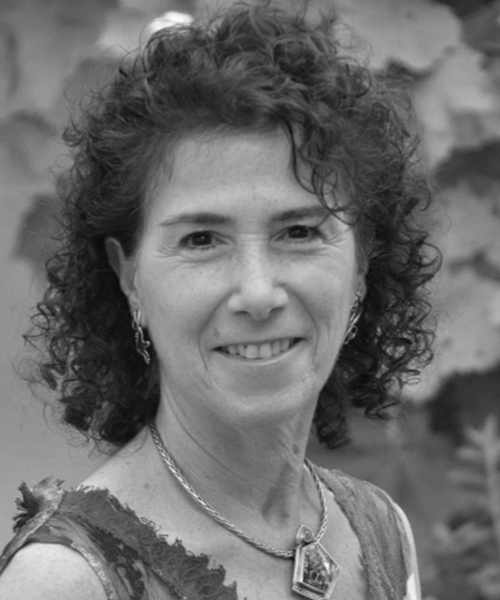
A Stanford-trained physiologist, with a PhD from Cornell and postdoctoral experience at Columbia University, Dr. Kronenberg was a pioneer in research into women's health and aging. As the first physiologist to describe hot flashes in women at menopause, she went on to establish and direct the NIH collaborating center at Columbia dedicated to the study of women's health and aging. The Richard and Hinda Rosenthal Center for Complementary and Alternative Medicine was established at Columbia University in 1993 to study women's health and complementary medicine and received a further $7.2 million research grant from NIH to expand the focus to include aging.
In 2007, Dr. Kronenberg moved to Stanford University, where she was a Fellow at the Clayman Institute for Gender Research. She continued her research there, including building her passion for and research interest in nutrition.
Fredi Kronenberg was a pioneer in many fields. Starting with her trailblazing work into thermoregulation in women going through menopause and the effects of complementary medicines in managing this, she worked with colleagues to establish the first peer-reviewed journal of research into complementary medicine. Mary Ann Liebert, whose publishing house has produced JACM for almost a quarter of a century, writes: “I first met Fredi when I visited her office at Columbia; the office was small and Fredi was petite, but she had huge determination to fully explore the benefits of alternative and complementary medicine. It took some convincing, but she agreed to be one of the founding editors of a new publication I was proposing: The Journal of Alternative and Complementary Medicine. It shortly became, and remains, world renowned for its authoritative content.”
Fredi also served on the editorial boards of Menopause, Journal of Tropical Medicinal Plants, EXPLORE: The Journal of Science and Healing, and the Journal of Women's Health.
In 1989, she cofounded the North American Menopause Society and subsequently received the society's award, given to “the person who demonstrates innovation in studies about, or services to women in menopause.”
Dr. Kronenberg was a founding member of the Academic Consortium for Integrative Medicine and Health and a founding member of the Board of Trustees of the American Botanical Council, a position she held until her passing. With Dr. Andrew Weil, MD, of the Arizona Center for Integrative Medicine, Fredi cofounded an annual CME-accredited nutrition course for physicians.
She was a research collaborator with The New York Botanical Garden and a board member of the Oxford University-based Global Initiative for Traditional Systems of Health. With research partnerships in China and India, Fredi was well known in Asia as well as in Europe, where she twice gave distinguished annual lectures at the American Hospital of Paris.
For all of her pioneering leadership in women's health, botanical medicine, and nutrition, it was Fredi's humanity that shone through most. A lover of nature, she often recalled her student experiences with bee keeping and her love of hiking and the environment. Her mother's practice of yoga and work as a sculptor well into her 90s gave Fredi an immediate sense that aging was just a construct and that “the elderly,” as a term that applies more to others than to oneself, should have no place in a positive vocabulary of human potential throughout the lifespan.
A keen sense of social justice, a concern for minorities and their cultures, rights and health needs, and a deep love of nature characterized Fredi's rich and warm humanity that turned colleagues into friends and friends into family.
Reflecting on America's changing political landscape, and drawing on her love of the political voice and music of Pete Seeger, Fredi wrote to me recently with two photos from her student days: “This was the week I was crewing on the Clearwater and Pete came on board one day to sing to the kids we brought on for the day to teach about cleaning up the Hudson River etc. I wish he had gotten a Nobel Peace prize. He did so much for peace around the world in his 90 some odd years. All with a banjo that had written on its head “This banjo surrounds hate and forces it to surrender.”
Fredi Kronenberg's work expressed a deep passion for life and values that uphold and enhance it. It is this that those who knew her will remember her by, keeping alive the flame of hope that always shone in Fredi and a shared vision for enriching humanity through nature and the light of science.