




Abstract
Objectives:
This study evaluated the change in the concerns, wellbeing, and lifestyle behaviors of informal caregivers of people with cancer attending Penny Brohn UK's Living Well Course (LWC), a self-management education intervention.
Design:
A pre–postcourse design collected self-reported quantitative and qualitative data from informal caregivers attending a LWC.
Setting/Location:
Penny Brohn UK is a United Kingdom-based charity (not-for-profit) providing specialist integrative, whole person support, free of charge, to people affected by cancer.
Subjects:
Informal caregivers taking part in a Penny Brohn UK LWC between June 2014 and May 2016 attending alongside the person with cancer.
Intervention:
The LWC is a structured 15 h, multimodal group self-management educational course, designed to help people affected by cancer learn tools and techniques to help build resilience. Trained facilitators deliver LWCs to around 12 people with various types and stages of cancer and their informal caregivers.
Outcome measures:
Measure Yourself Concern and Wellbeing (MYCaW) completed precourse and at 6 weeks postcourse; and bespoke 6-week follow-up Patient Reported Experience Measure.
Results:
Four hundred eighty informal caregivers attended a LWC June 2014 to May 2016. One hundred eighteen completed a 6-week follow-up MYCaW: MYCaW Concerns 1 and 2 showed statistically significant improvements (p < 0.0001), there was no significant improvement in wellbeing. Informal caregivers' most reported concerns relating to themselves were psychological and emotional issues (59%). The primary concern of the caregiver for the care recipient was related to the physical health of the person with cancer (40%). Eighty-seven percent of responding informal caregivers stated that the LWC enabled health self-management.
Conclusions:
The LWC was followed by an improvement in informal caregivers' concerns, and increased self-management of their own health needs. More studies, with larger sample size, are needed to explore if better self-management by informal caregivers may also lead to improvements in patients' health and wellbeing.
Introduction
T
The rising number of people living with and beyond cancer means that the number of informal caregivers of people with cancer is also rising. A 2011 survey estimated that there were at least 1 million United Kingdom informal cancer caregivers, 6 and this figure had risen to 1.4 million by 2016. 7 Four in five cancer caregivers report that their caring role affects them, most often in their emotional and mental wellbeing, social life, and relationships. 6 –8
A study of teenagers and young adults (TYA) with cancer and their informal caregivers found that while 61% of patients said that support for their informal caregivers would have been helpful, over half reported that their family members had not received any. 9 Almost 50% of the informal caregivers reported a “high/very-high impact of a TYA's diagnosis on their daily life,” and almost 80% “recorded adverse effects on their own physical wellbeing.” 9 Despite this, half of cancer carers say that they receive no support at all. 6,7 There are currently very few services available to help informal caregivers with the crucial role that they play. 4 The result is that the informal caregiver's own physical, social, and psychologic needs are often unmet, 6,7 potentially adversely impacting their quality of life and ability to care, and in turn, causing greater unmet need and distress for the person with cancer. 4
Research 10 –21 has increasingly looked at the nature of the impacts of a cancer diagnosis on the patient's supportive network. Studies have found high levels of anxiety and depression in family caregivers, which are equal to and sometimes even more than those in the patients they are supporting. 7,10 –13 This highlights the risk of informal caregivers lacking a support network of their own. Some of the needs of informal caregivers mirror those of the cancer patient themselves, with, for example, positive correlation between carer and patient mental health needs 20 and there is evidence that these needs are often unmet. 14 –19,22
A recent review 21 found that on average, between 5% and 47% of informal caregivers' needs were unmet. Debilitating informal caregiver symptoms include sleep disturbances. 23 Unmet informal caregiver needs include emotional and psychological, daily activities, relationships, information, and spirituality. 21 Macmillan stated that “early and adequate support” for caregivers can improve their own health and wellbeing outcomes and those of the person they are supporting. 4,24 Systematic reviews of gaps in current intervention provision 8 and intervention effectiveness 25,26 for informal caregivers have been carried out in recent years. However, there has been no investigation of the impact of multimodal group self-management educational courses, such as Penny Brohn UK's Living Well course (LWC), on informal caregivers. In this current study, the authors explore the effect of the LWC on carers' well-being and concerns in a United Kingdom setting.
Materials and Methods
Penny Brohn UK is the leading United Kingdom charity, specifically helping people to live well with cancer. Since its establishment in 1980 all its services have been available to informal caregivers of people with cancer as well as to those with a diagnosis themselves. All services are developed around the Bristol Whole Life Approach helping to build resilience in every aspect of a person's life, including mind, body, spirit, emotions, relationships, community, environment, and practical issues (Fig. 1). In the year 2017, it delivered over 12,000 client attendances.
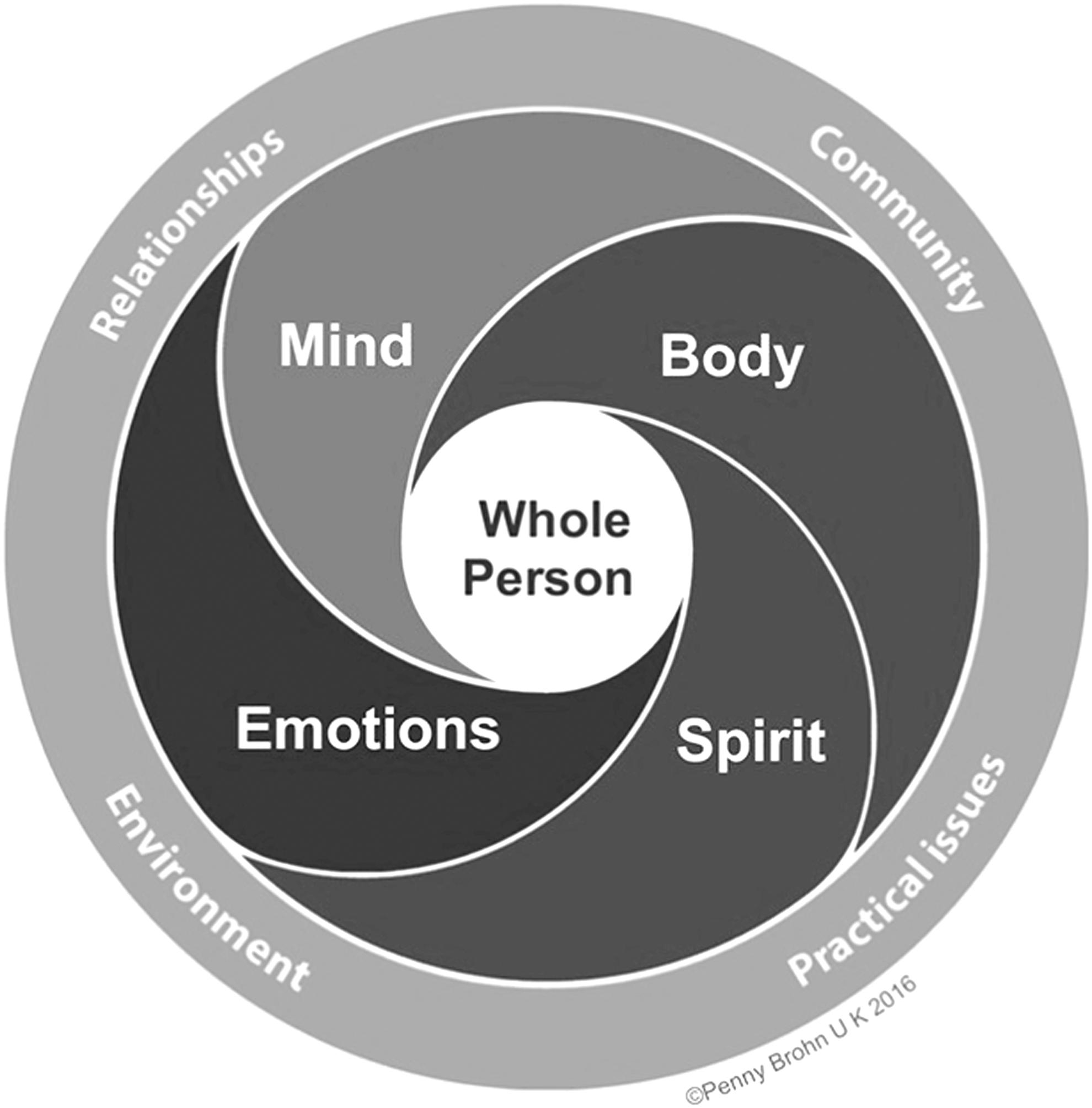
The Penny Brohn UK “Bristol Whole Life Approach Model© showing the holistic approach of the LWC at Penny Brohn UK. LWC, Living Well Course.
Penny Brohn UK's flagship Living Well with the Impact of Cancer course (“Living Well course”) was launched in 2010 in response to the United Kingdom National Cancer Survivorship Initiative Vision Report. 27 The LWC is a modular 15-h course run either over two 7.5-h residential days at the National Center, or two 7.5-h nonresidential days run at sites across the United Kingdom.
The course is run by accredited facilitators, trained by the Penny Brohn UK's Academy, and provides clients with a toolkit of techniques that can help address the eight domains within the Bristol Whole Life Approach model.
Course participants are shown simple steps they can take to build resilience in each of the modules delivered on the LWC, see Table 1.
Penny Brohn UK's LWC Modules
All of Penny Brohn UK's services are available free of charge. Approximately 25% of LWC attendees are informal caregivers who attend alongside the person with cancer they are supporting. LWC are designed to meet the needs of people with cancer and their informal caregivers, with universally relevant holistic content being delivered to both client types, and then specific sessions designed for informal caregivers away from their care recipient. Following extensive evaluation of the LWC for all clients combined, 28 and for people with cancer, 29 this study describes the specific impact of the LWC on informal caregivers only, looking at how this group's health and wellbeing can be supported by the LWC. Data were taken from informal caregivers of people with cancer who attended a LWC between June 2014 and May 2016. The LWC was delivered at 39 venues (across 35 towns) in the United Kingdom, with 69% attending a residential course and 31% attending a nonresidential course. Previous service evaluations have found no difference in perceived benefits of attending LWC in these different settings. 28,29
The LWC was evaluated using a noncontrolled pragmatic design. It adopted a mixed-methods approach, combining qualitative and quantitative data collected using paper-based questionnaires. The evaluation was observational, with no control group. A pre–post data collection method was used, gathering data at the time-points specified below. Quantitative data were analyzed using SPSS V21. Qualitative data were either thematically analyzed or processed via a qualitative coding framework specific to informal caregivers (described elsewhere.*). Thematic analysis was done by two researchers on open-ended questions and grouping them into themes, then comparing results to reach a consensus.
Upon booking onto a course, participants gave consent to allow their data to be used for research and evaluation purposes at Penny Brohn UK. The Internal Service Governance Committee at Penny Brohn UK acted as an ethics Institutional Review Board, and agreed to the study being conducted.
The following outcome measures were used to evaluate the LWC for informal caregivers:
Measure Yourself Concern and Wellbeing (MYCaW) is a Patient Centered Outcome Measure designed specifically for the evaluation of cancer support services and validated against an internationally used measure of health-related quality of life. 30 It was developed in the United Kingdom and is used by integrative cancer centers and cancer support centers in the United States, Canada, and Israel. 31 –33 It measures the impact of cancer support services on the severity of people's reported main two cancer-related concerns (issues people feel they need most supportive help with, see footnote*) and also people's perception of wellbeing. Concerns and wellbeing are rated on a scale of 1 to 6, with 1 being the best and 6 being the worst. MYCaW was administered at two time-points; before the course and 6 weeks after the course.
A bespoke Patient Reported Experience Measure (PREM) was administered 6 weeks after the LWC to collect in-depth information on clients' experience of the course and any resulting behavioral changes. Qualitative data were collected, and thematic analysis based on previously derived topics
28
was undertaken on the following: Diet Exercise Relationships Use of self-help techniques Lifestyle changes Unexpected benefits of the course Ability to self-manage Additional open-ended questions for informal caregivers
To fully understand the impact of the LWC for informal caregivers, two additional open-ended questions were asked: “Are there any particular aspects of the Living Well course that have helped you cope with supporting a person with cancer?” “Is there anything you would say to a supporter who is thinking of coming on the Living Well course but isn't sure that it is right for them?”
Results
Demographics
Between June 2014 and May 2016, 480 unique informal caregivers attended a LWC. Informal caregivers were mostly female (58%), white British (83%), with a mean age of 55 years (range 18–85). Three percent had cancer themselves, 3% had a long-term condition such as diabetes or chronic obstructive pulmenary disease (COPD), and only one percent considered themselves disabled. †
Measure yourself concern and wellbeing
All clients on the LWC fill in a precourse MYCaW unless they have to leave the course early, and 118 returned a postcourse MYCaW 6 weeks later (giving a response rate of 25% for the pre–postpairs).
Qualitative data derived from the coding framework (see footnote *) specific to concerns of supporters are in two categories, (A) about their own needs and (B) about the needs of the care recipient. Seventy percent of all concerns (n = 249) were coded as A, and 30% of all concerns were coded as B.
Top ranking concerns (combined 1 and 2) about A (n = 174) carers' own needs were psychological and emotional concerns (59%, n = 102), concerns about providing support (20%, n = 35), and concerns about their general wellbeing (10%, n = 18). Within the psychological and emotional concerns category, emotional problems and concerns about the future featured most highly (32% and 17%, respectively).
Concerns (combined 1 and 2) about B (n = 75), the needs of the care recipient were concerns about the physical health of the person with cancer (40%, n = 30), the relationship between them and the person with cancer (17%, n = 13), and concerns about end of life (16%, n = 12). Within the physical health of the person with cancer category, concerns related to other physical symptoms related to cancer (beyond the impact of conventional treatment) featured most highly (60%).
Informal caregivers rated their concerns fairly severely, with mean ratings of 4.6/6 (SD = 1.3) and 4.2/6 (SD = 1.2) for Concern 1 and Concern 2, respectively (with 6 being the worst). Wellbeing ratings were less severe with a mean rating of 2.6/6 (SD = 1.3). Six weeks after the LWC, concern ratings had improved, with mean ratings of 3.5/6 (SD = 1.4) and 3.2/6 (SD = 1.4) for Concern 1 and Concern 2, respectively. These improvements were statistically significant (p < 0.0001 for both). Wellbeing remained stable at 2.6/6 (SD = 1.3). See Figure 2 for full MYCaW data.

Informal Care Givers' MYCaW mean scores (with standard deviation) for Informal Caregivers' Concerns 1 and 2 and Wellbeing. MYCaW scores collected before and 6 weeks after the LWC. LWC, Living Well Course; MYCaW, Measure Yourself Concern and Wellbeing.
Patient reported experience measure
Six-week follow-up PREM data were received from 66 informal caregivers (14% response rate).
Eighty-seven percent of informal caregivers reported that the course helped them to self-manage their own health more effectively. When asked how the course had helped them to self-manage, three key themes emerged via thematic analysis: Improved diet Using self-help techniques/managing stress Importance of looking after self
Reflecting on lifestyle changes made as a result of the course, 83% of informal caregivers reported that their diet had improved, 63% said the course had improved their level of exercise, 73% said the course had improved their relationships, and 85% said that the course had improved their use of self-help techniques.
For lifestyle changes overall, 64% reported that they had made “a few” positive lifestyle changes, 20% said they had made “lots” of positive lifestyle changes. Just 6% said they had not made any positive lifestyle changes, 7% said they were not sure how many changes they had made, and the remaining 3% said they needed more support from Penny Brohn UK to make lifestyle changes.
Informal caregivers were also asked if they had experienced any unexpected benefits of attending the course; by far, the most common themes were meeting others and making new friends.
The following key themes emerged via thematic analysis from the responses received from a specific question about how the LWC helped them to cope with supporting a person with cancer: Meeting other informal caregivers Understanding how to support effectively Having a better understanding of what the person with cancer is going through
The informal caregivers were also asked if there was any advice they would give to other informal caregivers who were thinking of attending the LWC. The vast majority (97%) of the respondents were encouraging other informal caregivers to go. Two people responded negatively; one felt that it could be upsetting listening to peoples' stories, and one felt that there should be a separate course for informal caregivers. See Table 2 for examples of informal caregiver's quotes.
Discussion
Penny Brohn UK's services are unique in that they are as much for the informal caregiver as the person with cancer. Overall, the data collected in this evaluation suggest that the LWC can improve the concerns and lifestyles of informal caregivers and support them to self-manage their own needs and concerns. This may have a knock-on effect, improving the health and wellbeing of the person with cancer as (1) they are receiving more effective support and (2) they may be less worried about the impact of cancer on their loved ones, if they know that they have also received support.
Previous evaluation has found that friends and family not understanding why the person with cancer wants to make changes is one of the challenges that people face when trying to implement lifestyle changes. 29 The shared experience of attending together means that the person with cancer and their informal caregiver can leave the course with the same knowledge and resilience-building skills and a mutual understanding of how to move forwards as a dyad.
It is interesting to note that when concerns were broken down into concerns for themselves (A) and concerns for the care recipient (B) 70% of concerns were coded as A. Of these concerns for themselves, the top-ranked concern was related to their own psychological and emotional needs. This reiterates the need for the services provided in the LWC for both the caregiver and the individual with cancer.
Improved lifestyle behaviors and better self-management of health by informal caregivers may also have a potential effect of preventing disease in this group. Research is increasingly demonstrating the protective effect of a healthy lifestyle (diet and physical activity) on a range of chronic diseases, including cancer, 34 diabetes, 35 heart disease, 36 and stroke. 37 It is possible that diseases such as these could be prevented through the provision of lifestyle advice to people who are currently in a supporting role and, while not ill themselves, may be experiencing a “teachable moment” where they are more open and motivated to make positive changes than they would normally be. The fact that 83% and 63% of informal caregivers, respectively, said that the LWC had helped improve their diet and exercise, suggests a potentially important preventative aspect to the course.
In contrast to improvements in wellbeing seen on the MYCaW scale in cancer patients following LWC, 29 the improvement in concerns noted by informal caregivers was not mirrored by a change in wellbeing scores. Wellbeing was already scored quite high in the informal caregiver population, and it may therefore have been harder to produce further improvements even when concerns were addressed. Informal caregivers may be reluctant to rate their overall wellbeing as low when they are in a group with, and compare themselves to, people with cancer.
This research has some limitations. Attendance at LWCs was nonrandomized, and there was no control group or follow-up beyond 6 weeks. Only 25% of Penny Brohn UK's clients are informal caregivers (although all clients are invited to bring an informal caregiver with them to courses). The response rate to the 6-week follow-up evaluation forms at Penny Brohn UK for people with cancer is typically around 30%–40%; in the informal caregiver group, this response rate was even lower (14%–25%). This means that for some outcomes, the amount of data available to analyze was relatively small, limiting the generalizability of the findings as the high rate of nonresponders indicates selection bias. Low response rates may be due to postal questionnaires coming at a difficult time for caregivers. Response rates could be improved by reducing the length of the questionnaire or providing incentives such as a prize draw with small money prize (gift voucher).
In addition, lifestyle changes are self-reported; it is not known to what extent these respondents actually changed their behavior. It is possible that people are overly optimistic when responding to the questionnaires. Finally, it is not possible to know the outcomes for those informal caregivers who chose not to respond to the follow-up questionnaires. However, “non-responders” data collected as part of a previous evaluation 29 found that the main reasons for not responding were not to do with the course; they were mostly due to forgetting to fill in the questionnaires, losing the questionnaires, or being too busy.
It would also be of interest to follow-up informal caregivers longer term, to examine whether their reported lifestyle changes are maintained, and how these influence and are affected by the cancer journeys of those they are supporting. Future studies could also examine patients' evaluation of the impact of an informal caregiver-oriented intervention on both carers' and patients' concerns and well-being.
Conclusion
This study has documented a statistically significant improvement in concerns, and indications of perceived positive behavioral change in cancer informal caregivers following a self-management education course. The possibility of capitalizing on a “teachable window of opportunity” where informal caregivers may be more motivated to make positive lifestyle changes because of their experiences of cancer in a loved-one is worthy of further research. Ideally further research should be undertaken with a higher response rate, a greater sample size and a control group to confirm the causal nature of the improvements. A longer term follow-up with health economic evaluation could look at whether these improvements translate into cost-effective primary prevention of lifestyle-related illnesses in the informal cancer caregiver population. This work was carried out in the United Kingdom and the authors call for other international replication of similar investigations.
Footnotes
Acknowledgments
The authors thank the staff at Penny Brohn UK, including Wendy Freeman and Rebecca Samuel, all data input volunteers, clients, and Living Well facilitators at Penny Brohn UK.
Author Disclosure Statement
No competing financial interests exist.