




Abstract
Objectives:
Most yoga practitioners believe that headstand (Sirshasana) results in increased cerebral perfusion. This, however, is not consistent with autoregulation of the cerebral blood flow. The intent of this study was to demonstrate the effect of Sirshasana on the blood flow to the brain through ultrasound examination of the internal carotid artery (ICA).
Design, location, and subjects:
The ICA blood flow was measured with pulsed Doppler in 20 men and women aged 10 to 59 years (median 43) while performing the headstand (Sirshasana). Seventeen subjects were studied in 2018 in Spain at the altitude of 2,000 m, whereas the other three females were studied at sea level.
Results:
Although the diameter of the artery under examination during the headstand remained almost unchanged, the decrease in peak flow velocities in systole and diastole caused a significant decrease in arterial blood flow to the brain, followed by return to baseline values immediately after the antiorthostatic postural effect, likely due to the expected consequences of the cerebral blood flow autoregulation of the cerebral blood supply as well as the intracranial pressure.
Conclusions:
Contrary to popular belief, Sirshasana does not increase blood flow to the brain through the ICA, but results in predictable reduction in cerebral blood delivery in compliance with known mechanisms of autoregulation of cerebral blood flow. Moreover, increased ICA blood flow while performing the headstand is likely to be a contraindication to this exercise.
Background
According to the California Foundation “Yoga and Health” (Yoga Health Foundation), about 20 million people practice yoga in the United States alone, and >250 million do so worldwide. 1 And it seems that the vast majority of them, as well as those who teach them, believe that “Regular practice of Sirshasana makes healthy pure blood flow through the brain cells …It insures a proper blood supply to the pituitary and pineal glands in the brain.” 2 Yoga practitioners assume that Sirshasana should logically increase cerebral blood flow. This assumption, however, ignores cerebral blood flow autoregulation, 3 which maintains same perfusion during acute severe postural changes presumably to maintain the same intracranial pressure. 4
It is important to consider that yoga headstand (Sirshasana) is different from the passive head-down tilt just as getting up from a prone position cannot be equated to a head-up tilt on the turntable. The differences are mostly due to muscular contraction of lower extremity and abdominal muscles. Great muscular efforts are necessary to assume Sirshasana position, and may result in different cerebral profusion as opposed to passive tilt. 5
Whether this muscular activity can affect cerebral blood flow during Sirshasana (antiorthostasis) was one of the objectives of this study.
Materials and Methods
Subjects
A total of 20 subjects of ages 10 to 59 years able to assume yoga headstand were examined, either by themselves or with minimal help (Fig. 1). Subjects included 5 men and 15 women (see detailed description of the group in Table 1). Seventeen subjects were studied at the 2,000 m altitude, whereas the other three were studied at sea level. Since data appeared concordant for both altitude and sea-level subjects, and there was no expectation of altitude affecting cerebral blood flow, data were combined. 6 All the participants were able to assume headstand independently; however, for safety reasons the feet were held as depicted in Figures 1 and 3.
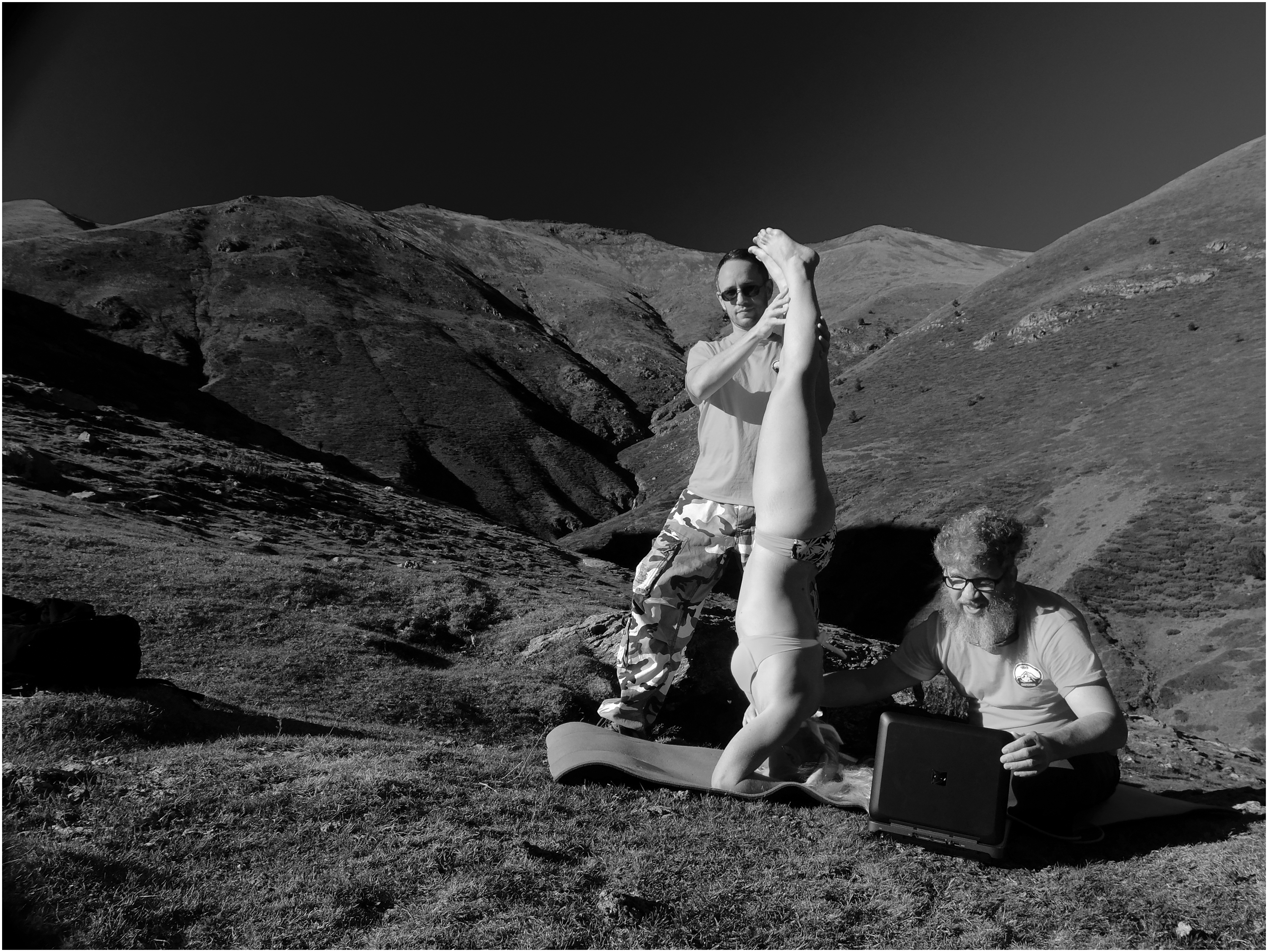
Ultrasound examination while performing Sirshasana (headstand) at an altitude of 2,000 m.
Descriptive Characteristics of the Test Group
BMI, body mass index.
The study was cleared by the Saint Petersburg State University Institutional Review Board. All the participants signed the informed consent form and willingly participated in the study without financial reimbursement.
Protocol
Two-dimensional (2D) and Doppler ultrasound were performed using a Sonosite Edge II (Fujifilm Sonosite Ltd., Bedford, United Kingdom) system equipped with a L25 linear array probe able to image between 13 and 6 MHz. Data were collected between 8 and 12 am, in a quiet room with temperature 22°C–24°C. All the subjects had time to familiarize themselves with the room and equipment before the study. Since most of the blood enters into the brain through the anterior system, 7,8 blood flow through the common carotid artery was only studied. According to most authorities internal carotid artery (ICA), blood flow exceeds that of the vertebrobasilar artery, by no less than fivefold. 9,10
In supine position, the diameter of ICA was measured in 2D mode, from intima to intima, and pulse wave Doppler was applied at an angle <60° to assess peak flow in systole and diastole (Fig. 2).
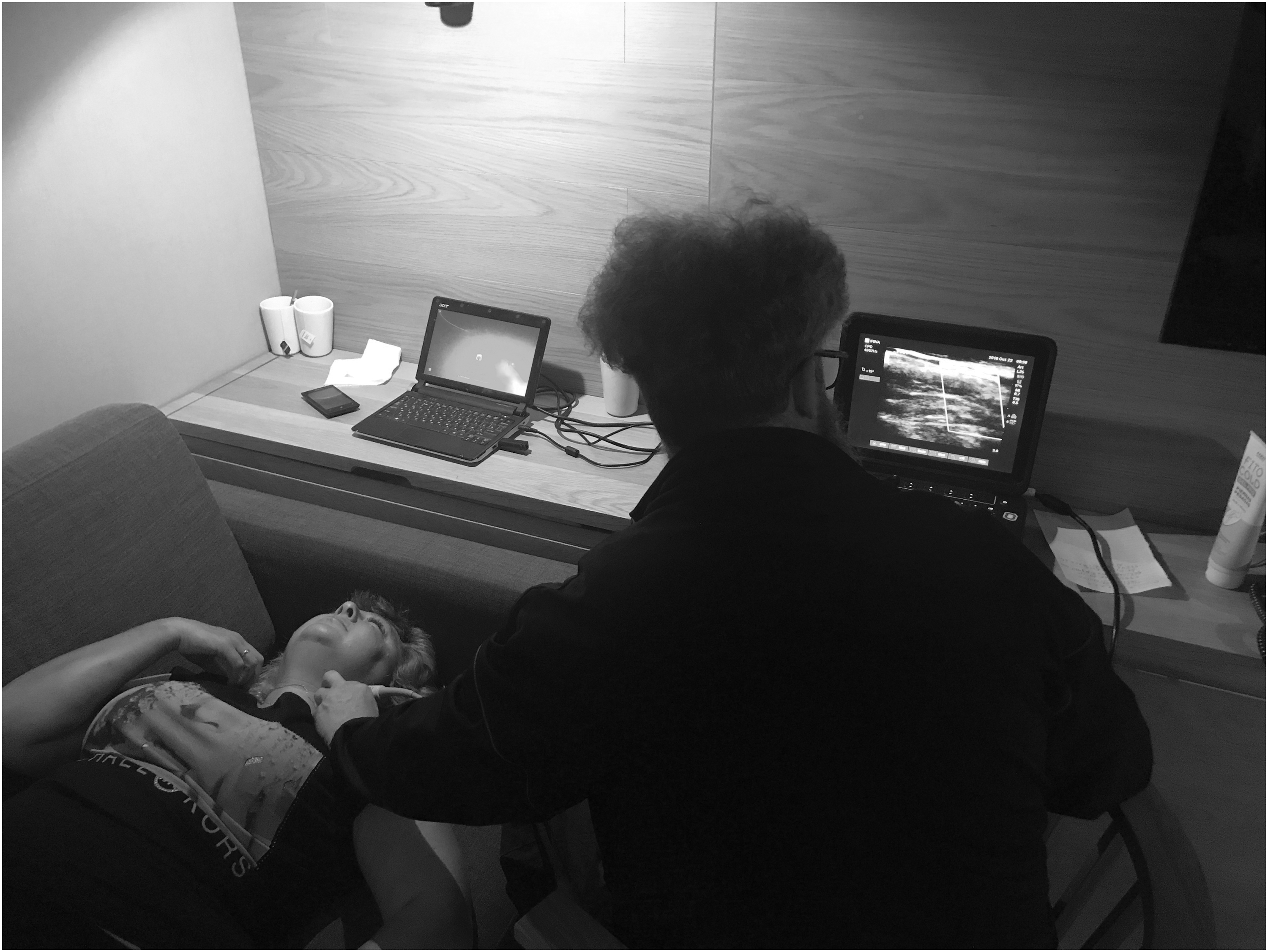
Ultrasound examination of the left internal carotid artery in the supine position. Permission to utilize photo has been obtained from subject.
These data allowed calculation of blood flow in milliliter per minute. Similar parameters were obtained during the headstand (Fig. 3) and then again after reassuming supine position (Fig. 2).
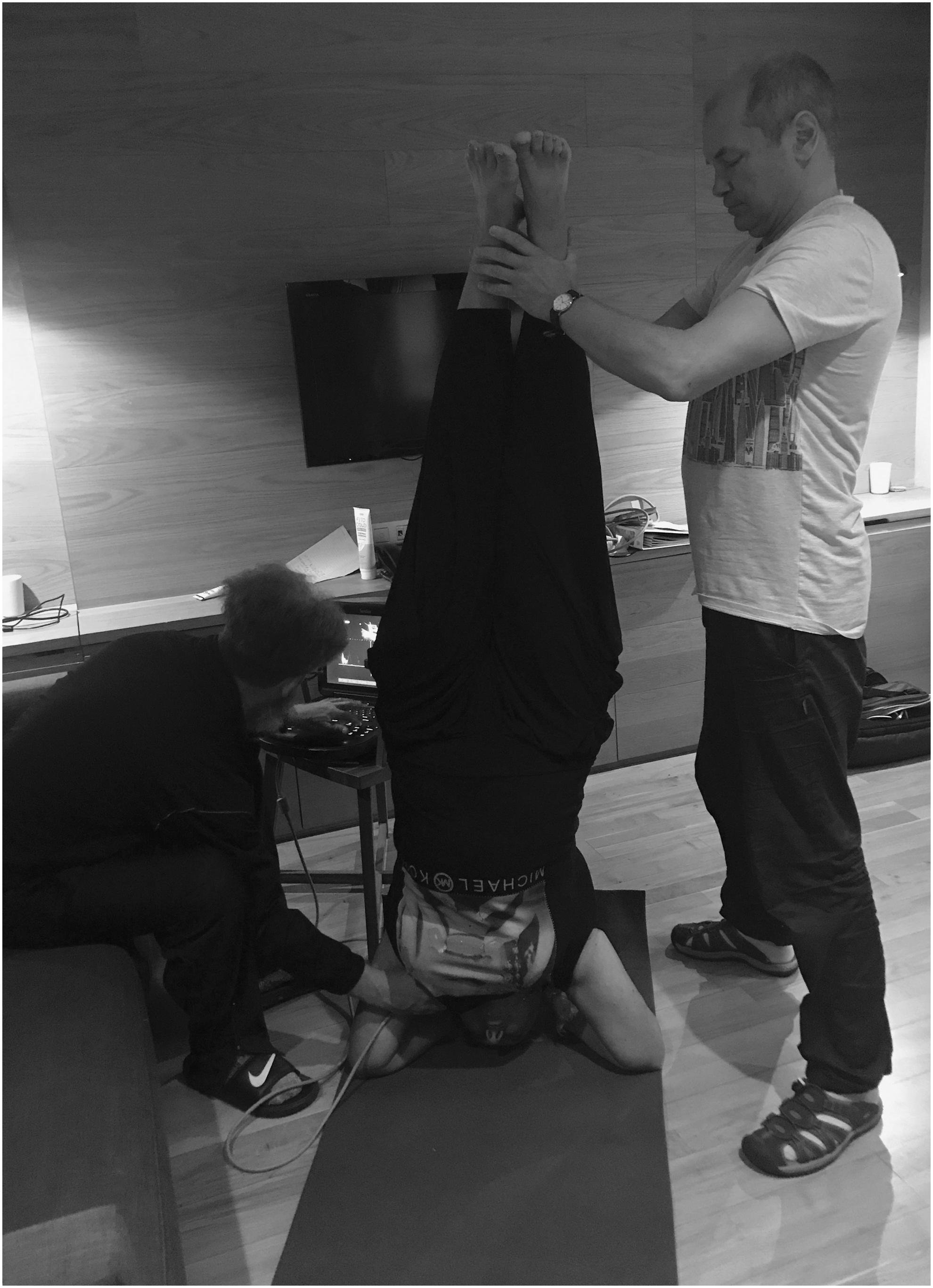
Ultrasound examination of the left internal carotid artery during Sirshasana (headstand).
A typical ultrasound screen used for calculations is shown in Figure 4.
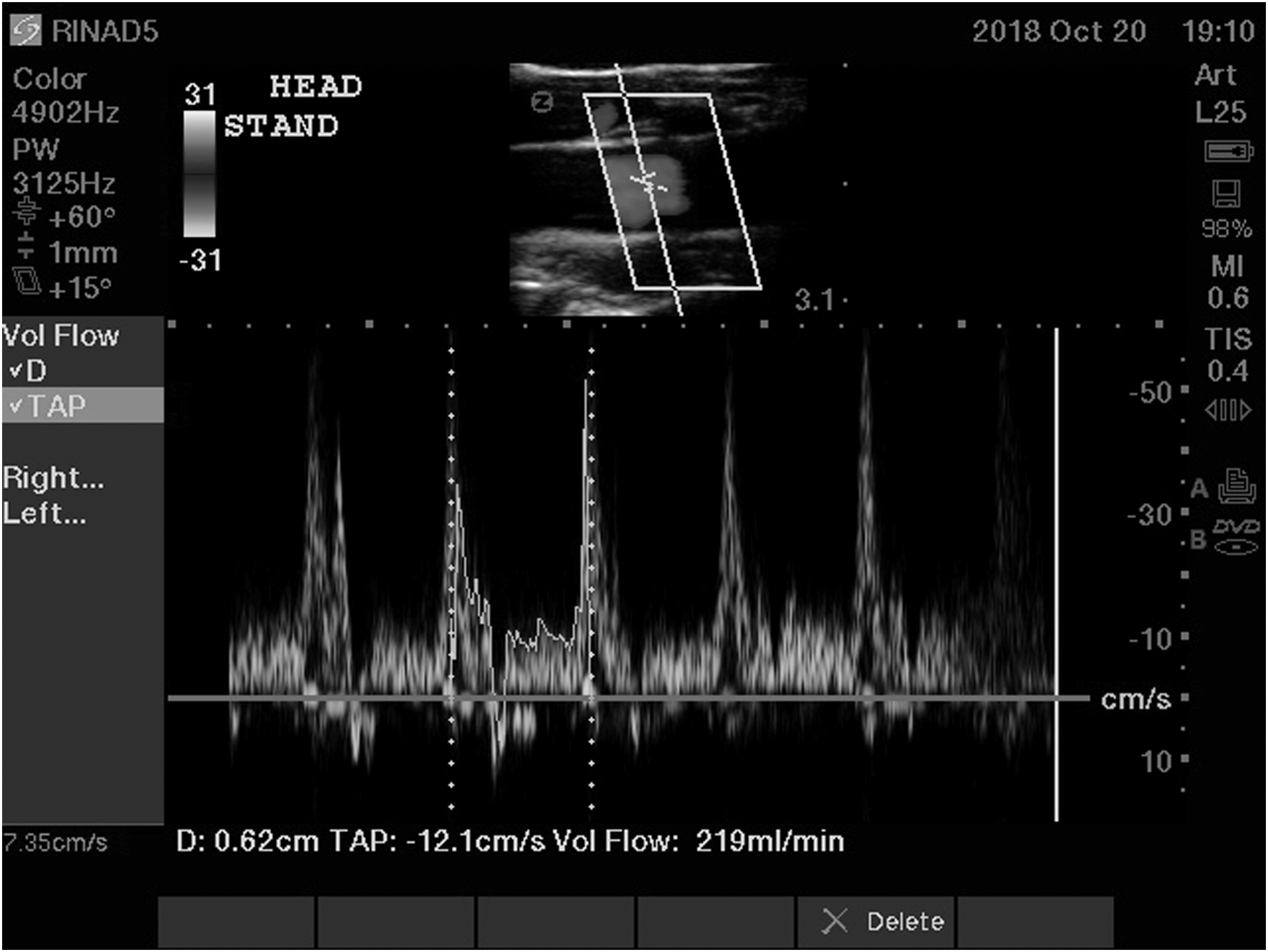
A typical sample of ultrasound imaging of blood flow in the LICA of the subject MR. (53 years) in the headstand position. In the upper part of the picture there is a visualization of the blood flow in the artery under examination with a Doppler gate fixation in the middle of the vessel. Visualization of blood flow in the coordinates of speed and real time is presented in the middle of the figure. Numerical results are printed on the bottom line. The calculation of the volumetric blood flow was performed between the nearest systolic peaks (two vertical dashed lines). LICA, left internal carotid artery.
Statistical processing of the results was carried out using Wilcoxon signed ranks test for related samples using the Origin 8.6 (c) program.
Results and Discussion
Table 2 summarizes the results of evaluations of the studied characteristics, from those with ultrasonographic visualizations of the blood flow in the left ICA before, during, and after Sirshasana. Separately, Table 3 presents data for the participants who were unable to keep the position or were uncomfortable doing it.
The Results of Ultrasonographic Assessments of the Studied Characteristics of Blood Flow in the Left Internal Carotid Artery, Presented in the Form of a Median and Interquartile Range
p Is the exact value of the probability of a one-kind error calculated using the Wilcoxon signed ranks test; ***the error probability is <0.001; **the error probability is <0.01; *the error probability is <0.05; NS—no significant changes. Gray highlights significant changes.
LICA, left internal carotid artery.
Changes in the Volume of Blood Flowing Through the Internal Carotid Artery in Three People (One Man and Two Women) with Subjective Difficulties with Maintaining the Headstand
From Table 2, it follows that, despite the fact that the diameter of the artery under examination remained practically unchanged during the headstand, the decrease in peak velocities in systole and diastole caused a significant decrease in arterial blood flow to the brain, followed by a return to baseline values immediately after the postural exposure that coincides with the expected consequences of cerebral autoregulation, which does not allow significant orthostatic changes in cerebral blood flow or pressure 11 during different forms of physical activity 12 –14 including the static activities. 15 In addition, cerebral autoregulation is preserved during orthostatic effects 16 and throughout the day. 17 The present results confirm studies of alterations of cerebral blood flow during 5 min passive head-down tilt 18 as well as longer head-down position. 19 And despite the fact that the head-down angle in these studies did not exceed 10°–30° from the horizontal, changes in the blood flow to the brain coincided with the present observations of the volumetric blood flow through the ICA during the active head-down 90° angle from the horizontal (Sirshasana). Therefore, additional muscle tension did not affect the postural effects of antiorthostasis on cerebral blood flow. 20 For clarity, the last line of Table 2 with the present results of blood flow to the brain before, during, and after Sirshasana reproduced in Figure 5 like graphical interpretation in the form of box chart.
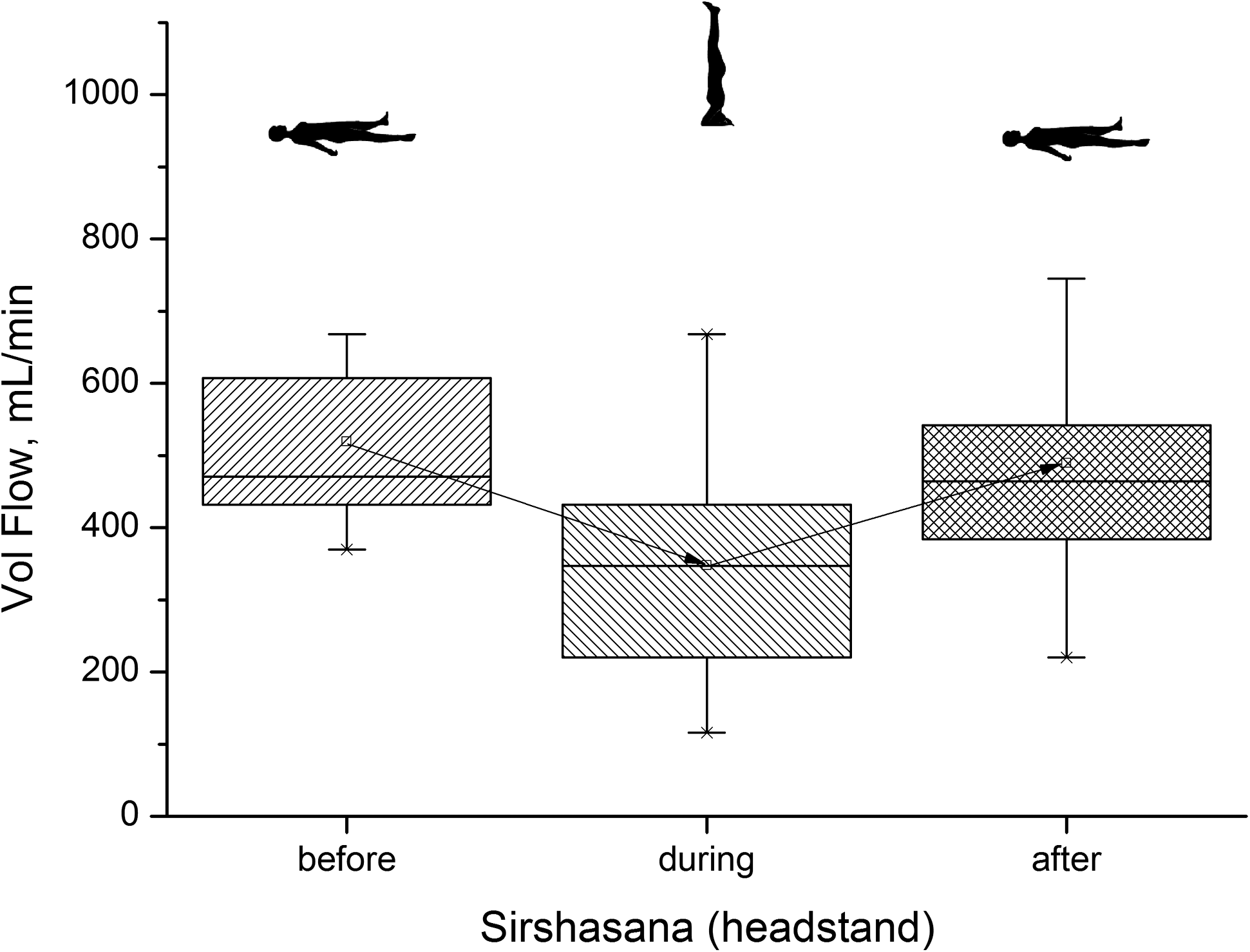
Graphic interpretation of the average blood volume flowing through the left internal carotid artery before, during, and after Sirshasana (headstand).
Separately,Table 3 presents sonographic findings in three subjects who during headstand subjectively experienced unpleasant feelings of fullness of the head, and increased intraocular pressure, which, by the way, is one of the known contraindications minutes to perform Sirshasana. 21 And indeed, their hemodynamic response to turning upside down was opposite to the main group, which follows from Table 3.
Cerebral blood flow through the ICA increased significantly in these subjects either while standing on the head or immediately after performing the stand on the head of Sirshasana. It is the authors' opinion that such increase in cerebral blood flow reflects failure of autoregulation and should be considered a contraindication to performing Sirshasana. Further studies, however, would be needed to support or disprove that notion.
Limitations
The effect of Sirshasana on systemic and intracardiac blood flow was not studied. This was addressed previously by Minvaleev et al. 22 Neither did the muscular skeletal risk of the reverse positions previously studied was considered. 1
Conclusions
The yogic posture of Sirshasana (headstand) does not increase blood flow to the brain in healthy people.
If in the antiorthostatic postures the blood flow to the brain through the ICA increases, then this person should not perform inverted poses.
Footnotes
Acknowledgment
The authors express deep gratitude to Irina Vladimirovna Arkhipova, General Director of the Faraon studio of historical films and the organizer and inspirer of international research expeditions as part of her author's project “In Search of Lost Knowledge” (c) aimed at supporting Russian science. The authors thank also all members of the expedition “Pyrenees 2018.”
Author Disclosure Statement
No competing financial interests exist.