




Abstract
Objectives:
Considering high prevalence of use of dietary supplements and their easy access on the internet, the aim of this research was to examine and assess the prevalence of the internet marketing of heart-protective supplements as the most popular supplements of today, and to investigate the quality and quantity of information that are available to consumers on the sale websites.
Design:
Three major search engines (Google, Yahoo, and Bing) and keywords “cardiovascular supportive supplements online buy” were used to identify websites that sell cardioprotective dietary supplements. Content of first 50 listed websites in each engine was evaluated for its compliance with regulatory acts while information about supplements' efficacy and safety was compared with the results of the latest scientific research.
Results:
Of a total of 150 listed websites, 89 selling supplements for the specific indication underwent further analysis. The most commonly registered cardioprotective dietary supplements on the internet were supplements based on omega-3 fatty acids (omega-3) (57 websites, 64.05%). Related to the websites selling omega-3 supplements, risk reduction claims were presented at 23 (40.35%), whereas structure or function claims were present at 50 (87.72%) analyzed websites, but followed with Food and Drug Administration disclaimer only on 68.00% of them. Information about adverse effects were rarely pointed out (1 website, 1.75%) unlike warnings, which were significantly more available to consumers (38, 66.67%).
Conclusions:
According to obtained results, most of the analyzed websites that sell omega-3 supplements did not contain all important medical information required by Dietary Supplement Health and Education Act. Since use of internet marketing is in expansion and since consumers have no access to relevant medical information about dietary supplements on the selling websites, there is a clear need for better quality control of websites and greater public awareness of these widely used products.
Introduction
The growing popularity of the internet has made World Wide Web a significant source of information, products, and services. 1 Information including those related to health have never been more accessible. As number of internet users constantly increases, marketing of products and services on the internet is becoming the most significant strategy for their promotion and sale. 1
Internet marketing presents a technique of promoting business or brand and its products and services over the internet using a range of marketing strategies based on the use of websites, social media, and indirect personal contact. 2 Through websites, consumers are given the opportunity to get information about product, analyze a product description, read customers reviews, and compare prices and offers of different products. 1 Website exists as a useful source of information and represents a great advertising platform. 1 On the contrary, social media is more promotional internet marketing tool. It is used for presentation of a product or service to the general public and usually contains links, pop-ups, and banner advertisements that lead the potential customers to the product website. 1 Personalized contact with existing customer through e-mail presents third great internet marketing tool aimed to inform customers about the special offers and the new available services. 1
Search engine optimization as a marketing tactic that affects the online visibility of the website; e-mail/marketing, newsletters, and e/books as ways of indirect communication between manufacturers and potential customers; paid and free internet advertisings as strategies for product promotion on the social media; and blog as a special kind of website are just some of many internet marketing techniques that are in use for online market of different products, including dietary supplements 3 (Table 1). The deep and precise fragmentation of the dietary supplement market stimulated by internet marketing has led to a significant increase in the sale, consumption, and use of dietary supplements.
Types of Internet Marketing Techniques Used for Online Dietary Supplement Marketing
Dietary supplements present the most used complementary health products nowadays. As they usually contain complementary nutrients, micronutrients, or substances that have not been confirmed as essential to life but are marketed as having beneficial biological effects, they are widely used to address symptoms or illnesses and to maintain or improve overall health. 4
The study, which was conducted using data from NHANES (National Health and Nutrition Examination Survey), developed to monitor the use of dietary supplements in the population at age 1 year and older emphasized that nonvitamin and nonmineral dietary supplementation was the most commonly used complementary health approach in the United States in 2002, 2007, and 2012, and that supplements based on omega-3 fatty acids (omega-3) as cardiovascular protective supplements were the most taken dietary products in 2012. In addition, the study demonstrated increased use of fish oil and omega-3 supplements of almost sevenfold, with 1.9% of adults reporting use in 1999–2000 and 13% in 2011–2012. 5,6
According to
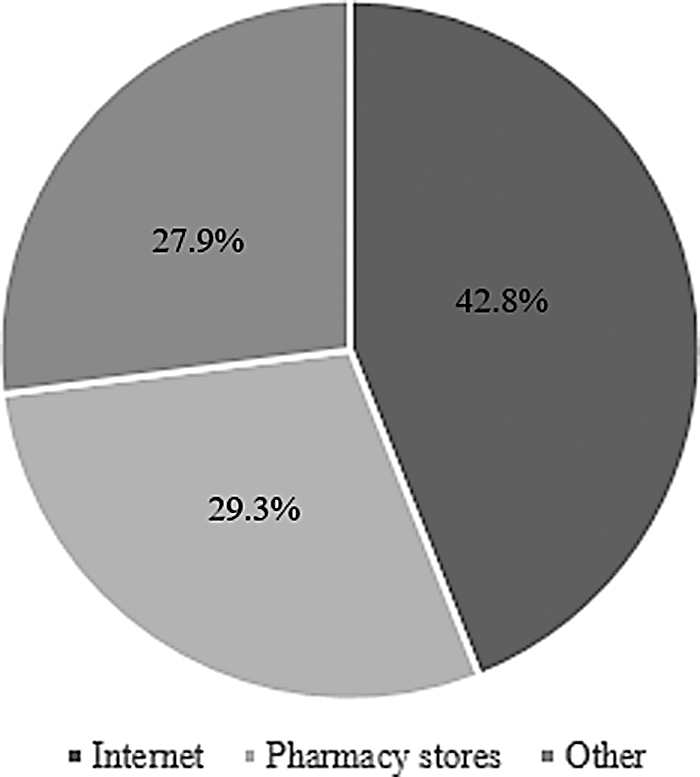
Distribution of the number of respondents according to the way of buying dietary supplements. 7
Among the most prominent promoting tools used in the marketing of dietary supplements are claims. The claims are generally used both on the supplement labels and on the sale websites. Dietary Supplement Health and Education Act (DSHEA) and other recent regulations strictly defined types of labeling claims: nutrient content claims, structure/function claims, and health claims. The manufacturer, Food and Drug Administration (FDA) and Federal Trade Commission have an accountability for assuring the validity of such claims. 8,9
Nutrient content claims characterize the level of a nutrient in a dietary supplement and they must be reviewed and authorized by the FDA before marketing. 8
Claims that are related to the impact of the dietary supplement to growth, development, structure, and functions of the body or psychological and behavioral functions are categorized as structure/function claims. Structure/function claims do not need FDA preapproval. 10 Although these claims can be made by a manufacturer or a site owner without submission of substantiating data, 11 the manufacturer must have substantiation that the claim is truthful and not misleading 10 (Table 2). Dietary supplements that bear claims, which were not evaluated and approved by the FDA must also contain a clear and complete FDA disclaimer on the labels. The disclaimer communicates that the claim is not approved by the FDA and that the dietary supplement product is not intended to “diagnose, treat, cure or prevent any disease.” 8
Types of Dietary Supplement Claims Defined by Food and Drug Administration Stated at Analyzed Websites
FDA, Food and Drug Administration.
Furthermore, claims that are related to reduction of a risk factor in the development of a disease or a health-related condition are categorized as health claims (Table 2). The overall term “Health claim” encompasses two types of claims allowed by the FDA, “authorized” and “qualified” health claims. Both types of health claims must be reviewed and approved by the FDA. 8,12 Authorized health claims meet significant scientific agreement (SSA) standard because they are supported by the scientific evidence from well-designed studies. The SSA standard provides a high level of reliance on the validity of the relationship between substance and disease or condition. 13 On the contrary, although qualified health claims do not meet the SSA standard, they must be supported by credible scientific evidence. FDA issues a Letter of Enforcement Discretion and a specific claim language to accurately communicate the level of scientific evidence supporting the claim. 8,14
Most of the information on the internet is valuable; however, the internet also allows rapid and widespread distribution of false and misleading information. In light of the potential benefits and harms of internet marketing of dietary supplements, there is an urgent need to understand the types of internet marketing and claims that patients may encounter online. Considering high prevalence of use of dietary supplements and their easy access on the internet, the aim of this research was to examine and assess the prevalence of the internet marketing of heart-protective supplements as the most popular supplements of today and to investigate the quality and quantity of information that is available to consumers on the sale websites.
Materials and Methods
Internet search was carried out in three most commonly used search engines (Google, Yahoo, and Bing) separately using combination of the words “cardiovascular supportive supplements online buy.”
The content of first 50 listed websites in the search results was analyzed. Websites were included if they (1) sell supplements for the specific indication, and (2) were in English. Of a total of 150 identified websites, 23 did not sell supplements, 8 could not be reached, 4 did not sell supplements for the specific indication (heart support), whereas 115 were identified as selling sites, suited our inclusion criteria, and were further considered (Fig. 2). Websites that were mentioned more than one time in one search engine were only considered once. After removal of 26 repeated websites, the content of the remaining 89 websites underwent further analysis (Fig. 2).
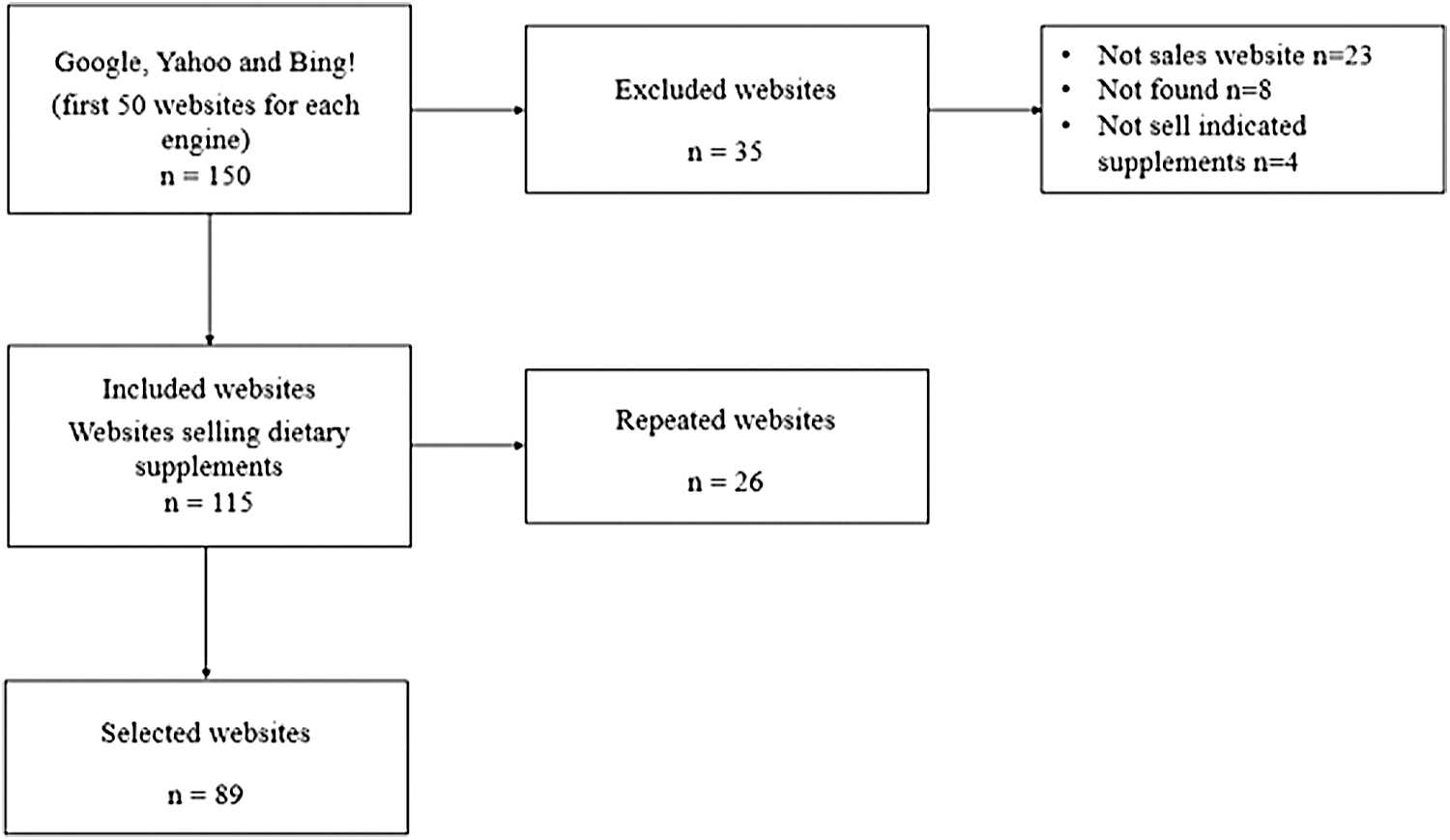
Diagram selection of websites selling cardioprotective dietary supplements.
Informative content of dietary supplements has been analyzed only for the first selected supplement on the website. Information extracted from the included websites was evaluated for its compliance with regulatory acts provided by Food and Drug Administration (FDA) and DSHEA and compared with the information stated in the newest research articles. Research articles were searched in the following databases: PubMed (U.S. National Library of Medicine, Bethesda, MD), Web of Science (Clarivate Analytics, Philadelphia, PA), and Scopus (Elsevier B.V., Amsterdam, The Netherlands). This was accompanied by a hand search of the reference lists of all selected articles for any relevant studies not included in main database search.
Search was carried out in November 2018.
Results
Of a total of 150 identified websites, only 89 of 115 websites named as selling sites were considered as valid and underwent further analysis.
Under section cardiovascular supportive supplements, 57 of the analyzed websites offered dietary supplements based on omega-3, whereas 32 offered dietary supplements based on other active substances. It is noted that 14 of 32 websites that offered supplements based on other active ingredients, had omega-3 supplements in wide supply as well. Of a total of 26 repeated websites, 22 websites (84.61%) offered omega-3 supplements, whereas 4 of them (15.39%) offered dietary supplements based on other active ingredients. As omega-3 supplements are the most prominent supplements indicated for heart support on the internet, promotional content of 57 websites that offered these supplements as the first choice was deeply analyzed.
According to analysis, 53 of 57 (92.98%) websites offered more than one omega-3 supplement indicated for heart support, whereas only 4 (7.17%) of them offered just one specific omega-3 supplement. Internet available omega-3 supplements differed according to form, the dose of omega-3, taste, and size of packing.
Ingredient list was provided by 48 (84.21%) of the 57 analyzed websites, for 5 websites (8.77%) this list was not available, 3 websites (5.26%) did not provide clear content of the supplement, and 1 (1.75%) of the websites provided just content of omega-3. Products contained omega-3 predominantly from fish oils (71.92%). Five (8.77%) supplements contained omega-3 from krill oil and another 5 (8.77%) from flaxseed oil, 2 (3.50%) contained omega-3 from more than one oil, whereas 1 (1.75%) derived from unknown source (Table 3). It is worth noting that no further information regarding ingredients' quality was available to consumers. Anyhow, providing quality information labels is not legally required for dietary supplements since they meet less stringent regulations than drugs do. However, ingredient quality data are of a great importance since specified quality is fundamental to reproducible safety and efficacy. Moreover, FDA has incorporated by reference into regulation the fact that the U.S. Pharmacopeia (USP) is an official compendium for dietary supplement quality standards and specifications. The currently valid edition (USP 41) provides quality standards monographs for fish oil containing omega-3 acids, krill oil, omega-3 acid triglycerides, omega-3 acid ethyl esters, Crypthecodinium cohnii oil, Schizochytrium oil, cod liver oil, borage seed oil, evening primrose oil, flax seed oil, and conjugated linoleic acids–free fatty acids. 15,16
Presence of the Product Information on the Analyzed Websites
FDA, Food and Drug Administration; omega-3, omega-3 fatty acids.
Not all analyzed websites clearly pointed out the exact amount of omega-3 in one recommended daily dose of the supplement. The doses of omega-3 varied among products (Table 3). The lowest recorded dose of omega-3 was 75 mg of eicosapentaenoic acid (EPA) and 45 mg of docosahexaenoic acid (DHA) (total 120 mg) and the highest was 1400 mg of EPA and 480 mg of DHA (total 1880 mg) per dose. The most common recorded dose was 180 mg of EPA and 120 mg of DHA, which is under the recommended daily intake of omega-3 fatty acids. 17
Since it was noted that the vast majority of dietary supplements contained structure/function and health claims on their labels, the authors supposed that those types of claims would attract much more attention of an average consumer than nutrient content claims. Consequently, it was assumed that consumers rather base their decisions in selecting cardioprotective dietary supplements on the more prominent health claims than on nutrient content claims. Hence, nutrient content claims were not analyzed in this article.
With respect to structure/function relationship claims, it was found that 50 (87.72%) analyzed websites described how omega-3 benefit human health and affect organism, all related to the support of heart health.
Regarding health claims, it is important to note that no authorized health claim connecting omega-3 with reduction of a risk factor in the development of a disease or a health-related condition has been authorized by FDA until now. Health claims were present at 23 (40.35%) of the analyzed websites, whereas 34 (59.65%) of them did not express the relation between omega-3 and health, or expressed unclear relations. Eleven (47.82%) health claims underlined that omega-3 may reduce the risk of coronary diseases, presenting qualified health claim. Besides these claims, a great majority emphasized that use of omega-3 products supports skeletal health, eye function, and brain development. In 16% (9) of analyzed websites was stated that omega-3 are essential for the maintenance of normal skin. Almost 4% (2) of included websites promoted omega-3 as cancer development preventive products. In addition, one of the analyzed websites offered supplement strictly indicated for pregnancy with expressed benefits for unborn, whereas another of the analyzed websites offered supplement designed for children without expressing beneficial effects.
Moreover, omega-3 were promoted as products for digestion, cell division and growth, muscle activity, pain relief, diabetes, and weight loss, although there is no evidence of efficacy for this indication.
Thirty-four of analyzed websites contained the FDA disclaimer “This statement has not been evaluated by the FDA. This product is not intended to diagnose, treat, cure or prevent any disease.” FDA disclaimer was pointed out on the product picture and/or in the text below the product picture (Table 3).
Adverse effects were rarely pointed out on the websites: 1 (1.75%) website of 57 mentioned adverse effects of omega-3 supplements intake. On the contrary, 12 (21.05%) of the analyzed websites mentioned possible interactions of omega-3 supplements with food or medications (Table 3). Of total number of analyzed websites, 38 (66.67%) suggested contacting a physician about taking these products and/or in the case of pregnancy, breastfeeding or suspected medical problems. Moreover, 10 of 57 websites (17.54%) did not contain any warnings of use; 8 (14.03) did not contain complete warnings and 10 (17.54%) of them warned consumers about possible allergic reactions (Table 3). One (1.75%) of the 57 analyzed websites stated that supplements based on omega-3 are safe for use in adults.
Discussion
Unexpected wide internet expansion and rapid development of internet marketing undoubtedly provided easy access to dietary supplements that resulted in increased use of these products. Dietary supplements are mostly promoted through websites and blogs. Often, websites have their own blog, paid or free advertising on the social media, and opportunity for subscribing that allows indirect contact between manufacturer and customer. Moreover, it is noticed that few websites had mobile applications that present a next new era of personalized digital marketing. Dietary supplement internet marketing websites are under The Federal Food Drug and Cosmetic Act definition of the term “dietary supplement labeling” and therefore needs to be in accordance with FDA laws. 18 However, on a dietary supplement websites or social media, consumers are allowed to make health statements and express their opinion about product as it does not behold to FDA rule. 19 Therefore, a public health concern that appearance of misleading information on the websites could lead to improper prevention and management of diseases is present and wide expended among physicians. 20
This research was conducted to estimate the presence of cardioprotective dietary supplements sale on the internet, and the quality and quantity of their internet marketing, with special focus on the type of information provided by the website and their accordance with the National Institutes of Health—Office of Dietary Supplements and FDA indications.
According to the data of the World Health Organization, cardiovascular diseases are the leading cause of death worldwide with ∼17.9 million deaths recorded in 2016. 21 Besides medicine and surgery, nutritional intervention has been used as an effective strategy for the primary and secondary prevention of cardiovascular diseases. 22 Dietary supplements reported for use to reduce the risk of cardiovascular events and improve heart health are based on fibers, vitamin E, CoQ, and omega-3. 22 Dietary supplements that were available on the analyzed selling websites were predominantly based on omega-3 and fish oils (65.57%). These results are in accordance with the results from other studies and surveys in which omega-3 supplements were one of the most used dietary supplements among adolescents and adults. 5,7,23 The high prevalence and use of omega-3 supplements can be easily explained by their clinically proven efficacy.
DSHEA is an act that coordinates the regulation of dietary supplements including labeling of the products. According to DSHEA, the supplement facts panel must contain information about serving size, percent dietary daily value, and a list of active and inactive ingredients and their strengths, either individually or as a proprietary blend. 24 This study found that 84.21% of analyzed websites contained ingredient list either on the product picture or informative text below the product (Table 3). On the contrary, it was noted that 17.54% of the websites did not provide information about the exact dose of omega-3 in supplements, whereas information about the dose of inactive ingredients was completely unavailable.
With respect to claims, it was found that 40.35% of analyzed websites contained health claims, whereas 87.72% of them emphasized structure/function claims. Health claims which emphasized that omega-3 have cardioprotective effect are clinically approved and in accordance with scientific evidence. 22,25 FDA stated positions in response to certain “qualified health claim” petitions regarding consumption of EPA and DHA omega-3 fatty acids and a reduced risk of coronary heart disease. “Based on FDA's consideration of the scientific evidence and other information submitted with your petition, and other pertinent scientific evidence and information, FDA concludes that there is sufficient evidence for a qualified health claim, provided that the qualified claim is appropriately worded so as to not mislead consumers. Thus, FDA will consider exercising enforcement discretion for the following qualified health claim: Supportive but not conclusive research shows that consumption of EPA and DHA omega-3 fatty acids may reduce the risk of coronary heart disease. One serving of [Name of the food] provides [] gram of EPA and DHA omega-3 fatty acids. [See nutrition information for total fat, saturated fat, and cholesterol content.]” 26,27
In accordance with scientific research were also health claims that underlined that omega-3 support brain function and mental health, eye function, skin health, and have the immunoprotective effect. 28 –31 Nevertheless these statements were proved in clinical studies, but according to FDA they are not conclusive. The statement that omega-3 reduce the risk of cancer can be considered as misgiven. According to clinical studies omega-3 can mitigate weight loss, improve blood test data in patients with cancer, reduce the incidence of chemotherapy-related adverse events, and improve therapeutic outcomes of chemotherapy, but cannot prevent cancer development. 32 Finally, analyzed websites also contained health claims that are not scientifically proven (Table 4). Considering all this, results of our study showed that websites can contain unrelated medical information that can lead to inappropriate and oversized use of dietary supplements. Once more, it has demonstrated lack in the regulation of dietary supplement internet marketing and emphasized the need for regulation that would make internet sale of dietary supplement proximately efficient as their sale in drug stores.
Accordance of the Health Statements Stated on the Analyzed Websites with National Institutes of Health—Office of Dietary Supplements Indications and Scientific Data
National Institutes of Health, 17 The Dry Eye Assessment and Management Study Research Group, 28 Fayh et al., 29 Swanson et al., 30 Escote et al., 31 and Abe et al. 32
ADHD, attention deficit hyperactivity disorder; DHA, docosahexaenoic acid; EPA, eicosapentaenoic acid; omega-3, omega-3 fatty acids.
According to the results of our studies, only 68.00% of the websites presenting structure or function claims posted a clear FDA disclaimer (Table 3). Regarding the labeling regulation for display of disclaimer statements, it should be noted that FDA regulation 21CFR §101.93 spells out the requirements for structure/function claims. Other types of claim statements are not subject to the disclaimer statement regulation. 33,34 These results are in accordance with the fact that many site owners avoid publishing disclaimers on their sites because they can compromise the percentage of dietary supplements purchase. However, without disclaimer, consumer cannot make a relevant opinion of the product that can lead to the misuse of the supplements.
In general, information about product safety, such as potential adverse events, contraindications, and interactions, were infrequently mentioned. Just one of all analyzed websites published information about adverse events and 12 about possible interactions (Table 3). All 12 websites underlined that intake of omega-3 supplements can interact with thinning medications like warfarin and decrease their anticoagulation effect, whereas just 2 of them mentioned possible interaction with the antidiabetic drugs. As these interactions can lead to serious consequences and affect consumers' health, it is of great significance to mention them.
According to the survey 35 that was commissioned by the Council for Responsible Nutrition and conducted by Ipsos Public Affairs, nearly 9 in 10 (87%) adults in the United States had confidence in the safety, quality, and effectiveness of dietary supplements overall and 76% of them perceived the dietary supplement industry as trustworthy. This public opinion is not unexpected as postmarket reporting of adverse events by dietary supplement manufacturers is required only for serious adverse events. Therefore, voluntary reporting of adverse events associated with dietary supplements may substantially underestimate them. Geller et al. 36 estimated that dietary supplements were implicated in an average of 23,000 emergency department visits and 2000 hospitalizations annually. Considering all this, information regarding safety and instructions for appropriate use of dietary supplements should be clearly underlined, not only on the product label but also on the websites.
Conclusions
In general, most analyzed websites selling cardioprotective supplements did not contain all important medical information required by DSHEA for product labeling. Although most of the websites contained complete ingredient list and exact dose, there were websites that did not provide this information at all. In addition, FDA disclaimer was not found on all websites or selling products and some of the stated health claims were not in accordance with scientific evidence. At this point, consumers have no access to relevant medical information about dietary supplements that are necessary for making an informed decision about the product on the internet, which supports physicians concerns about inadequate prevention and management of diseases with dietary supplements.
Results of this study can help to target weak points in the internet marketing not only of omega-3 supplements, but also to develop strategies to overcome obstacles related to internet market, improve regulation of dietary supplements, and secure their safe use in the future.
Footnotes
Author Disclosure Statement
No competing financial interests exist.
Funding Information
This transnational project is part of the ERA-Net SUSFOOD2 with funding provided by national/regional sources and co-funding by the European Union's Horizon 2020 research and innovation program.