




Abstract
Objective:
To quantify differences in patient expectations of healthscape (e.g., interior environment) across Western medicine (WM) and Traditional Chinese Medicine (TCM) paradigms.
Data sources/study setting:
Primary survey data comprise 469 Taiwanese consumers. National insurance coverage of both TCM and WM is an ideal setting to test for differences in healthscape expectations.
Study design:
Respondents report their recent experience as either exclusive users of TCM, exclusive WM, neither, or dual usage (both TCM and WM), and are randomly assigned to one of two surveys (identical except one refers to WM contexts, the other TCM) to rate the importance of 28 healthscape factors derived from previous studies.
Data collection/extraction methods:
Multivariate analysis of variance is used to test the research hypotheses.
Principal findings:
Dual users accept some differences across paradigms. In contrast, exclusive WM users apply their existing WM expectations to TCM contexts, raising the possibility of dissatisfaction and low adoption.
Conclusions:
A person's experience with TCM is related to acceptance of healthscape differences. Medical service providers of TCM, and by extension complementary and alternative medicine, should devise strategies to ease initial visitation by exclusive WM users. Healthscape designs need not be modeled closely on a WM standard, as dual users accept differences.
In place of a plaque on the door, a golden human statue beckoned me into the clinic waiting area where a nurse supplied a paper cup of mild tea while meditative music and soothing aromas wafted through the air. This was not what I expected to find in a hospital.
Introduction
H
The term healthscape is derived from the service marketing literature traditionally labeled servicescape, which is concerned with the customer/service provider interface. 4 While many retail and online customer servicescape experiences are well documented, the specific context of medical services has only recently received attention. 5 Even less is known about differences in consumer healthscape expectations across medical paradigms. For example, when visiting a massage therapist, do consumers expect to see an office and receptionist that resemble the mainstream WM setting?
Consumer research clearly shows gaps between service quality expectations and service quality perceptions that lead to service failure and dissatisfaction. In the context of this study, the effects, if any, of previous experience with one or both medical paradigms on expectations of a healthscape were also explored. Understanding consumer healthscape expectations across different medical paradigms is important to medical service administrators because simply duplicating the Western medical healthscape, in a TCM context, might be expensive and have little impact. 6 On the contrary, some consumers may hesitate seeking medical services from a provider with a healthscape that is unfamiliar or appears quite different from expectations based on WM experiences. 7
Taiwan (Republic of China) presents a rich context to examine these questions as its mandatory NHI scheme relies on WM and includes TCM—a historically mainstream medical system that is growing in popularity globally. The Taiwan NHI covers powdered Chinese herbal preparations, acupuncture, moxibustion, and manipulative therapy. People seeking outpatient medical treatment regularly include clinics from both paradigms in their choice set (Fig. 1). Over 82% of Taiwan TCM patients seek their treatment at clinics with the remainder going to hospitals with TCM service. 8 In other markets, such as North America and Europe, Taiwan's experience is helpful in understanding how to design and integrate CAM in general and TCM specifically, so that customers feel comfortable and satisfied with the healthscape—increasing satisfaction, building consumer loyalty, and improving patient compliance.
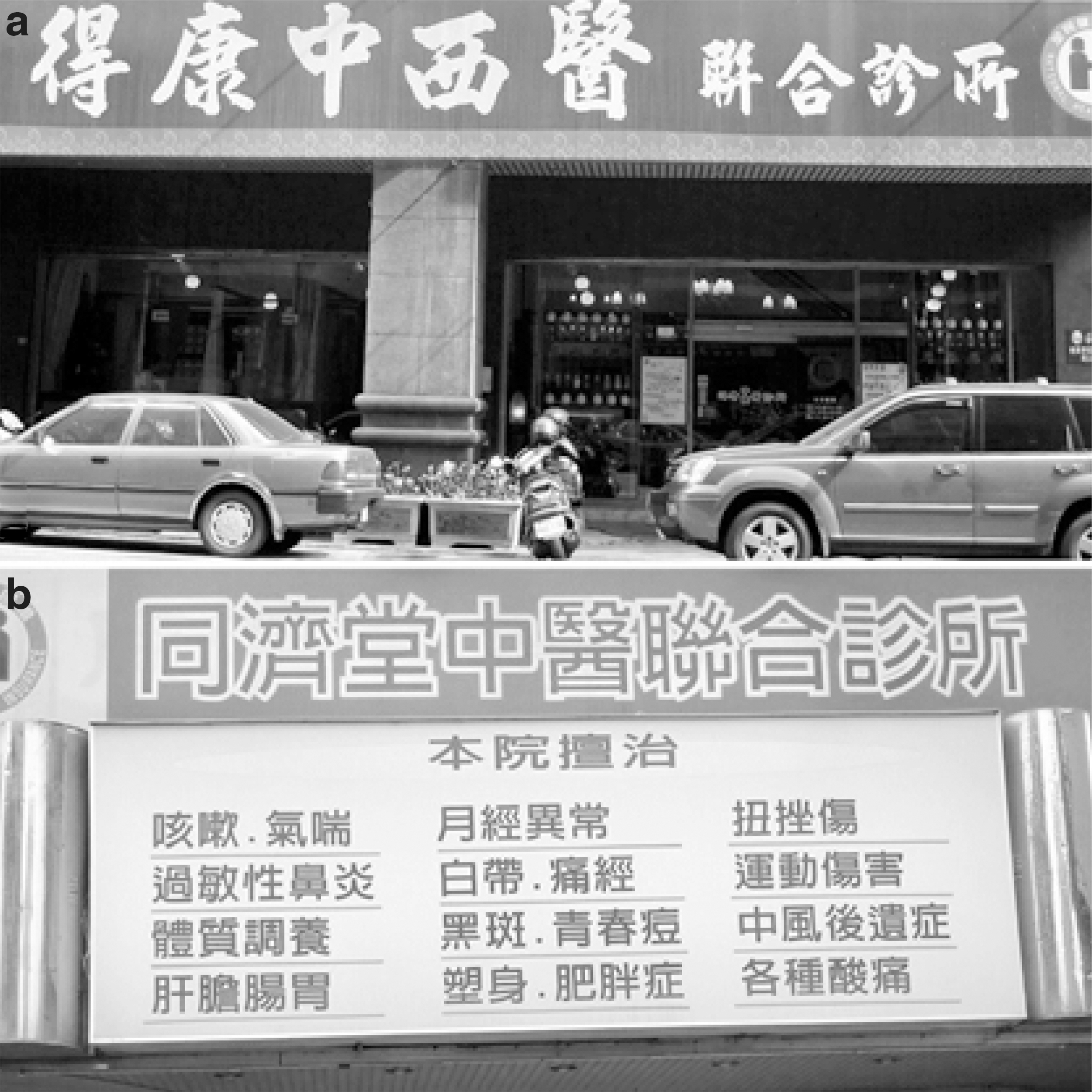
Common medical clinic storefronts in Taiwan:
In this study, a sample of Taiwanese consumers was randomly divided between TCM and WM frames to measure their healthscape expectations. It was empirically determined if there are any differences between expectations of WM and TCM paradigms while also examining how recent experience with a paradigm affects expectations.
Background and Hypotheses Development
TCM, WM, and the NHI program in Taiwan
In Taiwan, TCM and WM are formally regulated through government and professional licensing organizations. Both are integrated into the NHI scheme supplying mandatory medical insurance for all residents, financed through a payroll tax (1.91% as of 2019). This insurance program has very broad coverage for primary medical and dental care with modest copayments (∼US$5 per visit to a physician). The NHI was initiated in 1995 for WM treatments, and then a number of TCM treatments were added in 1996. Since then, the number of TCM treatments covered by NHI has expanded 9 several times but is only available for outpatients.
The history of TCM in Taiwan follows the Greater China region in general, with TCM the only option for patients before the establishment of WM in the late 19th century. 9 Practitioners of TCM historically tended to be self-taught or informally trained through apprenticeships. Government regulation of TCM began in the 1960s, a common trend across Taiwan, Hong Kong, Macau, and Singapore. 9 The 1990s witnessed a resurgence of TCM popularity, with many WM hospitals opening TCM units.
The growth of TCM in Taiwan over the last several decades has been accompanied by industry and practice formalization, government regulation, and rising consumer expectations. Service providers are attuned to the needs of contemporary consumers, supplying modern administrative services, medical treatments, and enjoyable healthscapes. This trend helps TCM clinics integrate into the NHI; for example, TCM clinics must implement digital clinic management 9 systems to connect with NHI patient records and billing systems (personal NHI chipped cards are used by patients across all medical services).
As of August 2018, 3,626 TCM clinics and 5 TCM hospitals contracted with the NHI operate in Taiwan.
10
This contrasts with 470 WM hospitals and 10,405 WM clinics.
10
Hospitals are either publicly or privately held, whereas clinics are mostly private. Over the past decade, WM clinics have grown 11.8%, while TCM clinics have experienced a growth rate of 30.8%.* In 2017, the most recent year with complete NHI statistics, 280.4 million outpatient cases were reported for WM and 38.4 million for TCM (12% of all NHI outpatient cases).
10,11
This is for a population of ∼23.6 million.
12
There are 19.67 WM doctors and 2.84 TCM doctors per 10,000 people in Taiwan.
13
Taiwan's TCM resurgence is part of a global trend, as the Republic of China Ministry of Health and Welfare state explained on their website
14
: There is growing demand from the public for health care and prevention. … advocating more natural therapies in recent years. Chinese medicine administration is becoming progressively important. We promote the quality of physicians and related services as well as the development of Chinese medicine health care facilities in tandem, so as to increase the quality of Chinese medicine health care.
Health care service design and factors comprising the healthscape
Taiwan's health care market is characterized by strong TCM/WM intra- and extraparadigm competition. Local health care service providers are following a global trend in health care service design to improve patient satisfaction and loyalty. The theoretical basis for service design, in the health care domain, originates from consumer marketing and service satisfaction research. 4,15 In the health care context, the aim of service design is to ensure that the healthscape 16 meets customer service expectations. 5
Research shows that healthscapes influence customer expectations and perceptions of the focal service 4 and perceived treatment outcomes. For example, clinic waiting room lighting influences patient perceptions of physician and medical quality. 17 Medical service providers dedicate considerable resources to medical service design and the creation of healthscapes that bolster the brand experience. 18 Institutions providing TCM services are no less involved in this competition (Fig. 2 shows interior TCM healthscape).
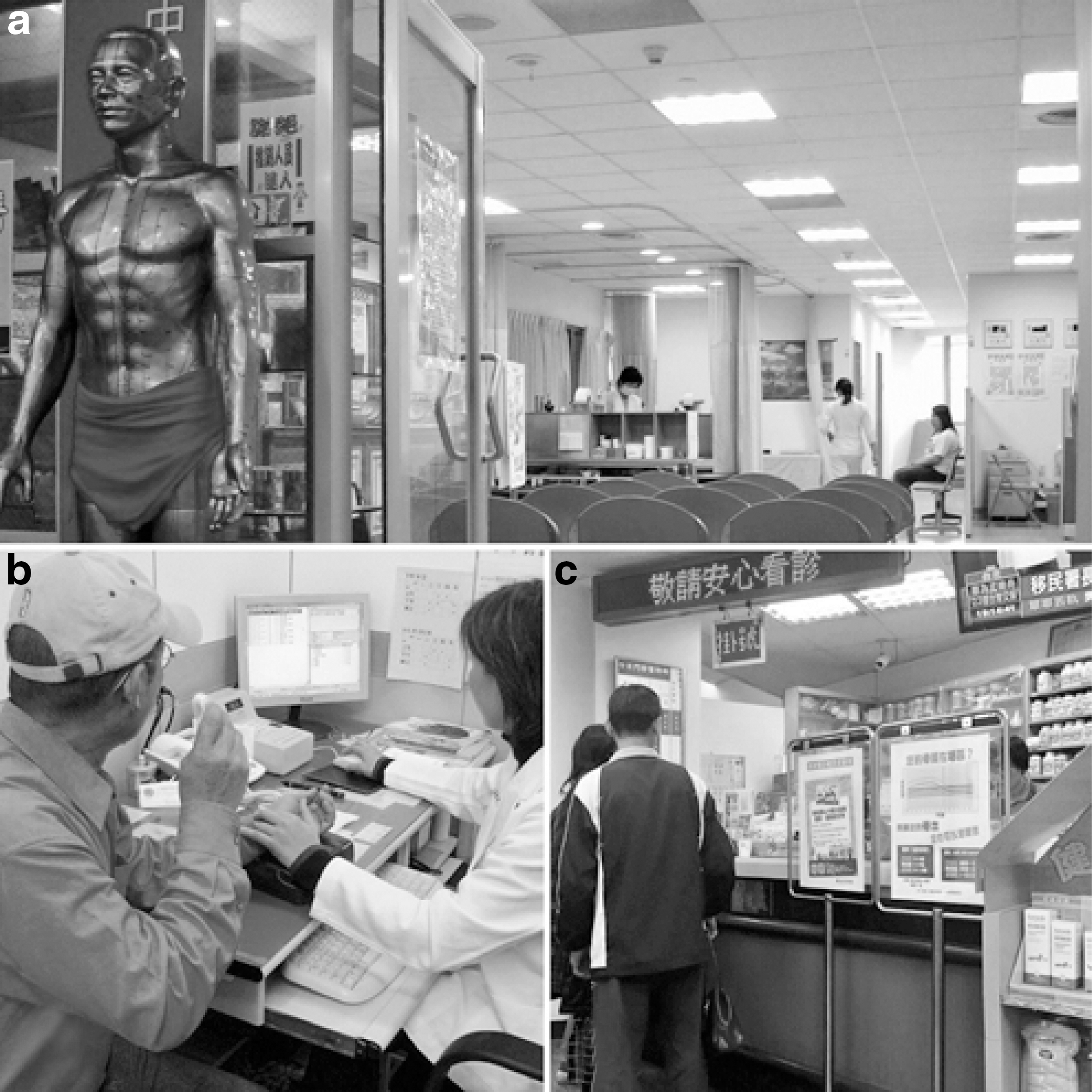
Interior healthscapes in Taiwan:
Healthscapes are composed of many tangible and intangible factors that are incidental to the treatment sought. Researchers have previously identified a variety of these factors, including the following: distance from home/convenience, doctor use of or recommendation of a hospital, number and availability of specialist doctors, amount of quality/specialty equipment, quality of facilities, familiarity with staff, previous experience interacting with staff, cost, clientele, hospital size, hospital religious affiliation, reputation, access to government-sponsored health insurance, health outcomes, reputation, waiting time, treatment time, and institutional characteristics. 19 –27
Some researchers combine service factors into macrodimensions. For example, Lee 5 defines two dimensions: ambient conditions (the physical environment) and serviceability (ease of use). Serviceability has the stronger effect on patients' perceptions of quality. Suess and Mody 28 define four service dimensions (atmospherics, service delivery, physical design, and wayfinding), all significantly increasing patient satisfaction and loyalty. Although the literature shows that healthscape service design strongly affects patient expectations, recent reviews draw attention to the need for additional healthscape research. 3,29
Furthermore, the factors that constitute healthscape appear to be consistent across cultures 19 and across health care providers and types—such as public versus private, and allopathic versus osteopathic. 20,30 Although the same factors comprise healthscapes in both TCM and WM paradigms, they are from completely different philosophical traditions, and it was predicted that consumers have different expectations of WM and TCM healthscapes. Thus, the first hypothesis is as follows:
H1: Consumer expectation of healthscape differs across medical paradigms (TCM vs. WM).
Effects of previous recent experience with TCM and/or WM
Consumers may have previous experience with one, both, or neither of these two medical paradigms. Recent experiences supply input to future expectations. Because patients perceive a congruence between a medical condition and treatment, they may exclusively select the single paradigm they are familiar with. Consumers may be unfamiliar with other options or even view them with medical skepticism, 31 so these options are avoided. Therefore, the authors of this study surmise users with recent experience in one paradigm will prefer and expect a different healthscape from the other paradigm. In other words, consumers who have experience with only one paradigm, for whatever reason, should have different expectations of different healthscapes. This supports the inference that experiences and differences in expectations are related. The following hypothesis was thus proposed:
H2: Differences in recent paradigm experience are related to different expectations of a healthscape paradigm.
Methodology
Sample and procedure
Taiwan is an ideal research frame to study consumer expectations of TCM and WM healthscapes as they coexist and are easily accessible (through the NHI system). To test the research hypotheses, responses from a sample of Taiwan consumers were collected using an online survey instrument adapted from SERVQUAL 32 and HEALTHQUAL 33 survey instruments. This approach follows researcher suggestions that medical care providers should use the guest service industry as a model to guide medical services. 34
Banner ads on a popular commercial web portal and a medical-related information portal are used to recruit the sample in Taiwan. Respondents are reimbursed with a gift certificate equivalent to ∼ US$3 after completing the survey. At the beginning of the survey, respondents report their recent use of TCM and/or WM, or neither within the past year. The survey instrument next randomly assigns each respondent to one of two survey frames (TCM or WM), which are identical in every way except that the TCM frame asks about TCM and the WM frame asks about WM. Responses are collected over a 2-week period.
After eliminating incomplete responses, corrupted data, and repeated entries, the final sample includes 469 unique respondents, with a mean age of 29 years (standard deviation = 7.55) and 70% female (Table 1). This gender skew might be due to the placement of one of the advertisements on a medical website. Women are more motivated to search for online health-related information 35 and tend to be more engaged in health-related searches compared with men. 36 In addition, the sample frame fits well with NHI data of TCM visits made by ∼70% females. 8 Most of the sample (64.8%) are college graduates performing office-related work. Nearly equal numbers of respondents completed the TCM and WM survey instrument frames (233 and 236, respectively).
Means and Univariate F Values (Sum of Squares) for Hospital Choice Factors
Nonusers and TCM only user results are not reported due to small sample size. Healthscape factors not included here did not exhibit any statistical significance. Standard deviations are in parentheses below means. Degrees of freedom are in parentheses below F tests. Sample sizes are in parentheses below the left column.
p < 0.05; ** p < 0.01; *** p < 0.001.
CH, clinic hours; CHR, clinic/hospital reputation; CP, care of patients; DRC, doctor recommendation; DRP, doctor reputation; DS, doctor specialty; DSQ, doctor service quality; FUC, follow-up care; IH, interior healthscape; MSS, medical staff specialty; MSSQ, medical staff service quality; PBN, past bad news; PE, past experience; PWT, pharmacy waiting time; Resv, reservation; RP, respect privacy; RSQ, receptionist service quality; SE, specialized equipment; TCM, Traditional Chinese Medicine; TP, traffic/parking; TT, treatment time; WR, web reservation; WT, waiting time.
Manipulation and variables
Independent variables include recent medical paradigm experience and the survey paradigm frame (TCM or WM). Respondents who report visiting either type of clinic one or more times within the last 12 months are classified as recent users. Those who report recent visits to both TCM and WM hospitals/clinics are classified as dual users. Recent exclusive users of TCM or WM hospitals/clinics are classified as TCM only and WM only, respectively. Subjects who report no medical treatment in the previous 12 months are classified as nonusers. Each respondent subjectively rates the importance of healthscape factors drawn from previous research—28 service factors. † Each factor is rated on 7-point Likert scales anchored at 1 (not important at all) and 7 (extremely important).
Data analysis
Multivariate analysis of variance (MANOVA) quantifies differences in paradigm frame (two levels) and recent treatment experience (four levels—WM, TCM, none, dual) across the dependent variables resulting in a 2 × 4 mixed design. Bartlett's test of Sphericity, 6952.70, p < 0.001, indicates that the data are appropriate for MANOVA.
Results
Most respondents are either dual users (49.7%) or exclusive WM users (40.5%). Very few respondents are exclusive TCM (3%) or nonusers (6.8%). This low level of exclusive TCM use is also evident in NHI data from Taiwan and South Korea, where exclusive TCM use rates are 1.4% and 1%, respectively. 1 Due to the small sample size of TCM only users and nonusers, results of WM and dual user groups were only reported.
Survey item reliability tests show good reliability of the survey instrument, with Cronbach's alpha = 0.94 and Guttman split-half = 0.87. MANOVA is employed to test differences in expectations of service factors across TCM and WM paradigms and experiences. Interaction effects between the medical paradigm and recent experiences are also tested. Descriptive statistics, MANOVA, and multiple-range test results are summarized in Table 1. Of the 28 healthscape variables, 6 show no statistical significance and are not reported in Table 1 but are included in all tests.
A multivariate test (Wilks' Lambda) failed to find an overall significant difference between medical paradigms (F 28, 469 = 1.27, p = 0.16, η = 0.08) or recent paradigm experience (F 28, 469 = 1.23, p = 0.08, η = 0.07), rejecting H1. However, univariate tests indicate statistically significant differences among respondents based on paradigm experience in 14 of the 28 healthscape variables (waiting time, traffic/parking, medical staff service quality, doctor service quality, medical staff specialty, doctor specialty, specialized equipment, care patients, respect privacy, doctor reputation, hospitals/clinics reputation, interior healthscape, past experience, and past bad news), partially supporting H2.
A multivariate test for interaction effect between survey paradigm frame and treatment experience shows a statistically significant interaction effect (F 28, 469 = 1.28, p < 0.05, η = 0.08). Univariate tests indicate significant interaction effects for the specific healthscape variables of reservation, traffic/parking, receptionist service quality, medical staff service quality, specialized equipment, doctor reputation, hospital/clinic reputation, interior healthscape, past experience, and past bad news (all ps < 0.05). This result also partially supports H2.
A detailed analysis of the interaction effect (see Table 2) shows that WM only users (190 respondents) rate their expectations of the two paradigm healthscapes differently on only two items (traffic/parking and past experience). The most common experience subsample is dual users, reporting higher expectations of WM for four items (reservations, medical staff service quality, clinic/hospital reputation, and interior healthscape).
Comparisons of Healthscape Variables by Question Frame
The table only exhibits dependent variables with statistically significant interaction effects at the p < 0.05 level. Superscripts indicate significant differences and their effect sizes (Cohen's d = 0.2 indicates small, Cohen's d = 0.5 indicates medium, and Cohen's d = 0.8 indicates large), where w = WM question frame, * p < 0.05. Standard deviations are in parentheses below means. Sample sizes are in parentheses below treatment experience and framing.
p < 0.05; ** p < 0.01; *** p < 0.001.
TCM, Traditional Chinese Medicine; WM, Western medicine.
Thus, expectations of healthscape depend less on the paradigm or experience but more on the combination of the paradigm and experience. These analytical findings are surprising, and the basis for several implications relevant to health care providers, discussed in the next section.
Discussion
In this study, differences in consumers' reported importance of service factors between WM and TCM paradigms were predicted in general (H1) as well as based on recent paradigm treatment experience (H2). Results do not fully confirm these predictions in a Taiwan sample frame where TCM has a long history and high adoption rate. Taiwan's unique and long-standing medical hybrid environment means nearly everyone is familiar with both TCM and WM settings. Although H1 and H2 are not fully supported, the average means for 27 of the 28 healthscape factors are higher for the WM frame compared with the TCM frame, suggesting that consumers have slightly higher overall expectations of WM healthscapes. Six healthscape variables are statistically significantly rated differently depending on the question paradigm frame. Importantly, for WM exclusive users, only two healthscape items are rated differently in importance between the paradigms (traffic/parking and past experience), while all others are not different. This means that WM exclusive users tend to hold the same level of expectations for TCM as they do for WM healthscapes. In contrast, with some experience in both contexts, dual users rate the importance of expectations higher in the WM frame for reservation systems, medical staff service, reputation, and interior healthscape design. When it comes to the interior healthscape of TCM facilities, exclusive WM users hold expectations formed by their WM experience. If exclusive WM users visit TCM clinics, with expectations set for the WM paradigm, service failures may be experienced even though dual users are satisfied.
Implications
These results have several valuable implications for medical service providers of TCM and providers wishing to offer integrated services. It appears that WM dominates patient choice, even in locations with long cultural histories, including TCM. 37 –41 Introducing patients with no cultural experience to TCM requires thoughtful planning, else a mismatch between expectations and experiences may occur. 6 One lesson would be to ape WM healthscapes, yet this ignores the current results of patients with TCM experience who have different expectations. Keeping in mind satisfaction is derived from experience minus expectations, one can look to existing service literature for understanding and guidance in TCM healthscape design.
Service satisfaction theoretical contributions
Consumer expectations and experiences can adjust to overcome service dissatisfaction, especially when trying an unknown or exotic service. Figure 3 is adopted from Stauss and Mang 42 and Warden et al. 43 who found such a phenomenon when consumers visit a different culture. It was asserted that visiting an unfamiliar medical paradigm is parallel and can be modeled similarly. Until the unknown healthscape can be experienced, an exclusive WM user would hold expectations that are not met upon consideration or first visit (Phase 1 in Fig. 3, with perceived service below the zone of tolerance). Normally, this would lead to dissatisfaction, but Phase 2 engages a cognitive attribution process as the consumer considers issues of stability, locus of causality, and controllability—as he/she considers the failure may not be attributable to the service provider's negligence. In the case of TCM, the core attribute consumers seek is relief of a medical issue, and they are willing to try something different as long as that core goal is met. 44,45 Introduction of TCM by a friend or trusted medical docent also helps in this attribution phase. Phase 3 depicts the customer's shift of expectations, downward, and/or quality perception, upward. Thus, although expectations were not met, the resulting service can be viewed as satisfactory, and the next visit will start with shifted expectations and experiences of some healthscape aspects, as evidenced by this study's dual users.

Healthscape design
Service providers of TCM who wish to attract WM users face the challenge of getting these customers to experience their first few TCM treatments. If barriers to a first visit to TCM can be lowered, customers who become dual users adjust to the differences unique to the TCM healthscape while experiencing the core service benefit of treatment effectiveness.
Installing TCM clinics, or pop-up clinics, within existing WM facilities is a tactic to increase initial use of TCM. Close association of WM with TCM may smooth adoption through recommendations and referrals. A similar strategy has been shown to increase adoption of non-Asian consumer use of acupuncture. 6 Health care providers can guide new customers through the TCM experience with TCM docents, leading new patients through their first experience, evolving such adopters into dual users.
Exclusive WM users are consistent when rating their expectations of healthscapes across the two medical paradigms. Dual users, in contrast, accept some differences across paradigms (appointment reservation system, staff service quality, reputation, and interior healthscape) with lower expectations for TCM. Thus, consumers can undergo a change in expectations after some TCM experience. With this information, integrated providers can better understand the challenge faced by new adopters of TCM, one of experience, and getting to the core benefit. In contrast, if simple surveys are used to ask exclusive WM users what they would prefer in a TCM setting, healthscape designers may design a delivery system that meets those expectations but is not maximized for TCM satisfaction. As the informant quoted at the start of this report told us, first impressions are unusual, unexpected, and unappreciated. Yet, after experiencing the TCM healthscape, and most importantly the medical results, that informant changed his expectations—shifting to the expectations common among dual users in this study. This progression is a common thread among informants who were interviewed.
Limitations and future research
Taiwan is a unique health care market, with a long tradition of TCM and majority use of WM, both included in a NHI system. A high population density means all citizens encounter daily marketing and store fronts of both WM and TCM service providers. This context is not the same in Western settings, such as rural areas of North America. Any attempts to generalize the findings need to take this into account. However, the degree of development of the TCM system in Taiwan can be a model of potential future development of CAM systems in other cultures and contexts, especially in locations with similar population densities and health insurance (private or public) coverage.
This study examined consumers' expectations of medical service factors in two different medical paradigms (TCM vs. WM). TCM is one of many different types of traditional medicines. Future studies should examine other traditional medicine types (widely referred to as CAM treatments) to determine the generalizability of findings.
It was found that exclusive users of TCM and non-users are very rare compared with dual users and WM only users. The small sample size for these two groups is a limitation that future research should re-test with larger samples. More conclusive results would enable a deeper understanding of the dynamics of previous experience on service expectations.
Future experiments should also explore the possibility implied in these findings that consumers have higher expectations of WM compared with TCM (and by association, other types of CAM). Research that uses more sensitive and refined experiments might be able to tease out some interesting and practical findings. Future studies should also examine the relationships and interactions of the actual treatment and service factors. This can provide a more detailed and sophisticated understanding of how consumers evaluate and choose different types of health care services.
Conclusion
Lacking TCM experience, exclusive WM users generally expect a TCM healthscape to resemble WM. Such expectations can lead to service failure experiences 6,7 even though the TCM clinic is satisfactory to frequent and satisfied TCM users. Dual users of TCM and WM generally accept some differences between the paradigms. Health care managers looking to offer a combination of treatment paradigms can adjust consumer expectations by incrementally introducing exclusive WM users to TCM healthscapes.
Footnotes
Author Disclosure Statement
No competing financial interests exist.
Funding Information
This research was supported by a grant from the Ministry of Science and Technology, Taiwan (MOST 107-2410-H-035-046).