Introduction
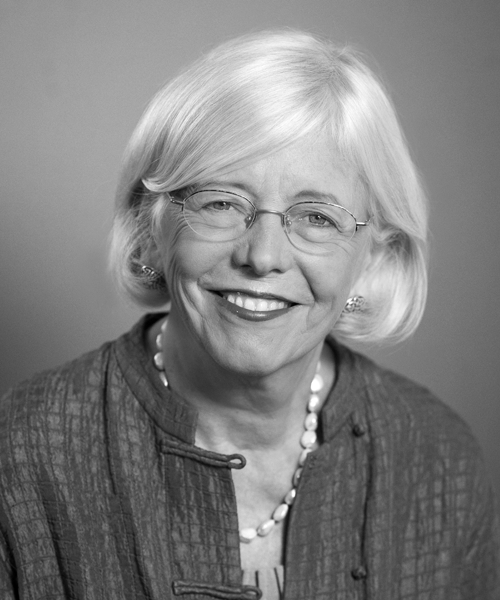
In January 2008, Josephine Briggs, MD, became the second director of what is now the National Center for Complementary and Integrative Health (NCCIH). A decade earlier, members of the U.S. Congress, led by former U.S. Senator Tom Harkin, had legislatively forced the National Institutes of Health (NIH) to up its exploration of the mounting public interest in alternatives to regular care. They created the National Center for Complementary and Alternative Medicine and gave it an agenda that was meant to support decision-makers in hospitals, insurance companies, and elsewhere who were actively exploring purchasing decisions, often on scarce evidence. In late 2009, Dr. Briggs had the opportunity to guide development of her first planning document for her era, the 2011–2015 period.
1
In that time, and in response to trending language and practice in the United States, Dr. Briggs led a renaming process, shifting the focus from “complementary and alternative medicine” to “complementary and integrative health.” While the name changed, the mandate remained the same. In the first week of June 2016, Dr. Briggs completed a year-long process involving stakeholder input and engagement with her National Advisory Council and rolled out the first strategic plan under the new name: the 2016 NCCIH Strategic Plan.
2
I have a long history of reporting NCCAM, now NCCIH, developments in the Briggs era, beginning when she first took the directorship. We met in her office 2 months later. Then, in 2009–2011, I worked as journalist and organizer to stoke stakeholder participation in the plan. I was particularly involved through what is now the Academic Collaborative for Integrative Health. In that process, an interprofessional group of us wrote at least four formal letters and engaged in multiple phone meetings.
3
We entered a particularly rich dialogue about what Congress meant when it spoke of researching “disciplines” in its repeated catch phrase of a charge to explore “modalities, systems and disciplines.” After all, the NCCIH budget, at roughly $125 million per year, represents the globe's single most significant pot of money directed toward researching the broad and motley assortment of products, therapies, practices, traditions, systems, and professions that fall under the alternative, complementary, and integrative umbrella.
When the new plan was announced, I contacted Dr. Briggs for an interview. A plan for a face-to-face interview hit scheduling snags, so I called her Bethesda, Maryland, office. Our conversation was recorded, transcribed, and approved by Dr. Briggs prior to publication. This is part 1 of our dialog, touching on such topics as the influence of the value-based medicine movement, patient-centeredness, prioritizing pain, whole practices, disciplines research, and more. Part 2 will run in the next journal issue and speak to the natural products agenda, researching health, the microbiome, interventions engaged in communities, and more. We urge you to take a look at the plan.
Let's begin with a general question. The context of this plan is a time in which we in the United States are well into the movement towards value-based care in medical delivery that followed on the heels of the Affordable Care Act. I wonder to what extent that movement in the medical delivery world has influenced your work here. Have things like the triple aim, the quadruple aim been in mind?
4,5
[Note: the “values” include enhancing patient and clinician experience, bettering population health, and lowering per capita cost.]
Dr. Briggs: Of course you are well aware that here at the NIH we are a research institution. We understand the really important changes that are occurring in the healthcare delivery system, but we understand them and experience them at a kind of arm's-length distance. We do consider that the changes in the healthcare system, the greater emphasis on patient-centered care, are part of the background in which the word “integration” has come to implementation. So I think that the changes that you mention are a part of the background of this new strategic plan. I have always considered that our job is to provide evidence that will guide not only patients, not only practitioners, but healthcare policy. On the other hand, I think it is really important to have clarity in our thinking. Although we are part of the federal government, we do not set health policy. We are part of the development of an evidence base for relevant policy; we are not involved directly in policy setting.
A follow-up: You have been directing the agency since 2008. You have seen the evolution of evidence—much of which you have been involved in helping create here. Are there places where, as you look upon delivery, whether as the patient Josie Briggs, or as a member of the public, where you believe now that regular medical delivery ought to be uptaking more of these therapies and practitioners than we typically are doing now?
Dr. Briggs: Absolutely. Absolutely. I hope that has been clear in the various ways we talk about the areas of our research. Increasingly we have tried to build a focus on some of the parts of the healthcare system that are not working well. Areas like symptom management, like the development of resilience. I know as a physician that I did not have a set of options to provide to patients for an increased role of self-care in pain management, for instance. So I have tried in the areas of our emphasis to really focus on those problems which seem to me to have big public health impact and where we have a growing body of evidence. Though still very incomplete, still very fragmentary, some of the approaches that come out of nonmainstream Western approaches are going to be really helpful to people. But I have to say that with a full acknowledgment that in most of these topic areas, we still do not view the evidence as having the clarity or impact that it needs to have.
Along this same line, I recently had a conversation with Dan Cherkin, who was on your advisory council. He's a new advisor with the journal. [Note: Dan Cherkin, PhD, is a back pain researcher and senior investigator with the Group Health Research Institute who was a former member of the National Advisory Council on Complementary and Integrative Health.] Dan believes that now with back pain, at least, we really need to be focusing on the translation of what we know into practice. He even suggested that we ought to have a moratorium on back research and just focus our resources and energy on changing practice. He thought that would be the most value to patients. I wonder if you have had conversations in the process of developing the strategic plan that looked at these translation issues.
Dr. Briggs: I actually think we still need evidence across the entire spectrum, from basic mechanism to the core translational to efficacy studies to real-world effectiveness to dissemination and implementation research. Dan's advice I would translate in those terms, saying we need a greater emphasis on dissemination and implementation research. I believe that we are moving in that direction. We are talking with the Veterans Administration and the Department of Defense about an initiative on pragmatic trials on better management of pain conditions, for example.
6
A lot of that will be in the effectiveness or dissemination and implementation research side of the spectrum. But you know, in understanding the basic research work on mind and body approaches—a good example is the growing evidence that meditation may actually change neural networks—that science also has enormous impact in changing understanding and openness to, say, trying these practices. I am not ready to say, “Oh, forget the mechanistic stuff. Let us just leap into the dissemination and implementation research.” I think work across the entire spectrum is important.
In putting the strategic plan together, were there places where you looked back on the 2011–2015 plan and let go of certain directions? I was struck that the word “disciplines” is not in this document, or at least visibly so. You may recall our dialogue on that topic when I was working with the Research Working Group of the Academic Collaborative for Integrative Health.
3
We were urging a connection with the congressional mandate and the idea of researching the impact of new disciplines, for instance when they are brought in by insurers or by hospitals. This ended up being significantly inlaid in the prior document. I am wondering about that language change.
Dr. Briggs: That is an interesting observation. I think it is right that we think more broadly than we did 5 years ago. We are thinking now that as we move to the practical studies, that those should not be highly discipline-specific. This is partly a general movement in all of our thinking to being more centered on patients or participants or the people and less just on the provider communities. I actually believe, as an example of this focus, that while the mind–body approaches are incredibly powerful potentially, they need to be ones that resonate to the individual. They need to be driven by choice, and one does need to think in the research of a much greater focus on the participant. An important way in which my own thinking as a kind of research overseer has evolved in the last 5 years is much more emphasis on how do we engage participants in the research process. This is really related to the question of how do we engage people to have a greater sense of being in charge of their care. So I think that it is sort of moving away from the expertise of us so-called experts and more to recognition that in the arenas that we are thinking about, like symptom management, like lifestyle choices, the patient is in charge. I remember [former NCCIH Advisory Council member] Janet Kahn [PhD, LMT] saying exactly that at the IOM [Institute of Medicine] Integrative Medicine Summit
7
7 years ago. I think it took me a couple of years to really internalize that message. In some funny way, it is self-evident. People's self-care choices and how they live, you know, the choice is not that of doctors and chiropractors. Nobody makes that choice for them. People have to make it for themselves. And we have to learn better as part of the whole enterprise how to empower people to take charge.
Let's switch gears. Tell us what you are most excited about in the new strategic plan.
Dr. Briggs: I certainly am feeling very strongly that the emphasis which was just evolving 5 years ago on pain management remains the right focus for our center. We live in an era, obviously, of a horrendous opioid abuse epidemic, but there is excessive reliance on psychopharmacology for all sorts of situations and parts of life. The variety of drugs that affect mental state all have their appropriate uses, but they are also being overused in a lot of settings. Benzodiazepines also. And so in building strategies that will help people take charge of symptoms and manage their care in a more active way, pain management is central. Symptom management is central.
Pain is certainly front end of the integration endeavor today in the US, even as it was for consumers 30 years ago when they started exploring care of massage therapists, acupuncturists, chiropractors, yoga teachers, and more. As I observe these and other integrative practitioners in the community, the physicians in particular tend to be involved with their patients in weaning processes with pain meds, as well as with other meds, while they are working to support the patients with other strategies. This gets into the issue of researching the way that the whole integrative practice works with its multimodalities. What research is happening in that arena and understanding that kind of a clinical approach?
Dr. Briggs: I do think that the complexity of these interventions is one area that we are beginning to have some ideas on what is the right research approach. When we started talking about researching systems of care many years ago, I remember [former deputy director] Jack Killen [MD], who was such a great partner to me, saying, “You know, there are no methods to study this.” As we have taken leadership of the [NIH Health Systems Research Collaboratory
8
], we have begun to see that there are methods that preserve the rigor of a randomized trial, but also get comparison groups that are rigorously defined and can bring some kinds of definitive answers to the effectiveness of much more complex interventions. Now I do not think we have quite figured out what the right experiment is to explore all the components of some of these approaches. For instance, we had at our last council meeting a discussion of pragmatic trials for pain management. One of the investigators pointed out that even if you think a pragmatic trial is the right approach, if all the practitioners have highly idiosyncratic ways of doing the intervention, you may not get a definitive answer. So one of the things that I think comes out of research on these approaches, and one of the kind of ancillary benefits [of a pragmatic trial], is that in order to do studies, you do need a protocol. You do need a way to describe how you are going to approach given types of problems. We see this evolving right now in yoga for pain management. I think that yoga practices, as was done in trials by Karen Sherman [PhD] and other places, are showing real promise. But if we tried to do a pragmatic trial right now, we would have 50 different forms of yoga, and we might not have a definitive answer. And so one of the things that comes out of the research process is [the need for] some degree of standardization. By the way, exactly the same problems exist in psychotherapy. You know, skilled psychotherapists have very flexible ways to adapt their approaches to the subject in front of them. Yet gradually in cognitive-behavioral therapy, for example, there has been some development of protocolized approaches. That has allowed the kind of research that has clearly shown benefit.
I have often wondered whether, while in part we need to be looking at some degree of standardization, that we in the research community also need to perhaps come to accept a certain degree of ambiguity as perhaps more necessary in advancing some of our understanding [of whole systems].
Dr. Briggs: That is right. You know, we will always have systems where certain practitioners have skill sets that are important to their patients. The research process and the standardizing for the purpose of getting rigorous answers does not have to mean that one is mandating standardization across all forms of practice. We have had a lot of internal discussions here in our center as to what is the right timing to push for more standardization. One of the things the NIH often does is develop common data elements to describe interventions for research purposes. That implies that the field is ready to live with a certain degree of standardization for the description of these methods in the setting of papers. But sometimes standardization can occur too early if a field is not really ready for that. I think it is also important to distinguish standardization in practice and standardization for the purpose of getting research answers.
I am wondering how you see the value of BraveNet or other practice-based research networks. I know that the Collaboratory has got you connected to HMOs [health maintenance organizations] across the country, the set of Kaiser centers and all of their ability to manage data. But I wonder what you think about this practice-based research network for integrative medicine centers?
Dr. Briggs: Well, it is a very good question. I think that as we learn to capture more and more information from real clinical practice for research purposes, we have to acknowledge that those systems initially are not going to effectively capture the work of many integrative practitioners. So that is a problem. It is also true that there may be some role for registries that try to fill this gap. I do not know that for sure, but I think it is definitely worth more discussion. At the same time, I worry about capturing information from a nonrepresentative subgroup of the population [such as typically visits practitioners in BraveNet's integrative centers]. As the steward of the public dollar, we have to worry about making sure that research resources we support capture information that reflects the socioeconomic and other kinds of diversity of the country. Unfortunately, that is not necessarily well captured in some of the existing integrative centers. I do have some optimism, since the Veterans Administration has a strong mandate [to explore integrative approaches] and there are people with real enthusiasm in senior parts of the VA leadership for these approaches, that some of the kind of longitudinal real-world information that one would like to capture may gradually be available as we build the tools to do that in the veteran population.
I happened to get a query about an article from a researcher in the VA yesterday. They were talking about this question [on implementation] I brought up earlier, in the context of that mandate [to provide integrative services]. They have been doing a series of studies looking at the challenges in getting the VA system to actually include and implement. They have been finding real challenges [in getting the services offered].
Dr. Briggs: It definitely is true. I think there is a fair amount of geographic variability in the extent of uptake of these approaches in VA facilities, and I think it would be an interesting issue to explore more.
Next issue: Dr. Briggs on the natural products agenda, integrative health, the microbiome, intervention in communities, and more. ■