




Abstract
Three immunomodulating herbs are used as examples of the complex interaction of herbs and T helper lymphocyte subsets: Astragalus penduliflorus (often called A. membranaceus, astragalus, or húang qí), Glycyrrhiza glabra (licorice) and Glycyrrhiza uralensis (gān cǎo, Asian licorice), and Panax ginseng (Asian ginseng). Though a surface review of studies might suggest all of these are simple Th1 inducers and should thus aggravate Th1-dominant diseases, the clinical and preclinical evidence in fact show they are helpful in these and Th2-dominant conditions. This relates to the fact that they also affect Th17 and T regulatory subsets, as well as having many other actions (e.g., modulating inflammation) that are also beneficial. Immunomodulating herbs appear to be helpful in both Th1- and Th2-dominant conditions as a result, which fits with their traditional use. Claims to the contrary simply do not fit the available evidence.
Introduction
In 1986, a theory in immunology that there were two types of immune responses (cellular and humoral) controlled by different CD4+ T helper (Th) cells was given a solid basis when a group of scientists published the first paper on Th1 and Th2 subsets. 1 Within a few years, there was a growing body of literature showing that Th1 cells, primarily through secretion of the cytokines interferon (IFN)-γ, interleukin (IL)-2, and tumor necrosis factor beta, regulated cell-mediated immunity, while Th2 cells regulated humoral immunity through secretion of the cytokines IL-4, IL-5, and IL-13. It was eventually shown that patients with various diseases and states could exhibit Th1 dominance and others Th2 dominance (see Table 1). However, this model turns out to be overly simplistic, as there are more than two lineages of Th cells (see Table 2) and many other confounding factors, including evidence of balanced Th1/Th2 populations in patients with conditions in which one was supposedly dominant. 2 This also led to the rise of the hygiene hypothesis, particularly as formulated by the British epidemiologist David Strachan in 1989, who posited that various environmental factors (e.g., household size, degree of cleanliness) influences Th differentiation and thus affects development of disease. 3 This paper will focus on how herbs affect various Th lineages and the implications of this for human health and the hygiene hypothesis.
IL, interleukin; TGF, transforming growth factor; IFN, interferon.
Much research has investigated the effects of various herbs on Th differentiation and cell lineages, as will be discussed below for some of the best studied. However, much more work remains to be done. It is crucial to emphasize that there is no simplistic model of herbs that are only Th1 or Th2 stimulators or suppressors, and that almost every herb studied to date has been modulating on these and other Th lineages that are also crucial to many human diseases. It is particularly fruitless to apply single animal or in vitro studies to the highly complex situations that occur in humans, as research that has gone from simpler models to people in this area have not borne out the simplistic conclusions one might otherwise draw.
Astragalus penduliflorus ssp. mongholicus (huáng qí, astragalus)
Astragalus is one of the most classic of immunomodulating herbs. Still frequently referred to as A. membranaceus or A. mongholicus, both of these names have been questioned and persuasive arguments made for the new nomenclature, which is actually the oldest, as Lamarck first named the species A. penduliflorus in 1779, well before any other claimants. 4 A. propinquus is a closely related and interchangeable medicinal species. 5 Like all the herbs discussed herein that have been studied at least somewhat extensively, its effects on Th subsets is complex and dependent on the status of the host.
In patients with allergic diseases who are Th2 predominant, various astragalus preparations and constituents appear to downregulate Th2 and promote Th1, bringing greater balance to the immune system. In a group of 90 Chinese children with asthma, astragalus combined with corticosteroids was significantly more effective than either treatment alone at reducing symptoms and improving the peak flow rate. 6 There was a significant decrease in IL-4 (Th2 cytokine) with an increase in IFN-γ (Th1 cytokine) in all three groups compared with baseline, while the combination group was more likely than the steroid-only group to achieve a significant clinical improvement. Another study of 15 Chinese children with asthma compared them to 15 healthy children and found the asthmatic children were Th2 dominant. 7 Treatment with astragalus shifted this back toward a better balance of Th1 and Th2 based on several markers, including cytokines, chemokine receptor make-up on target immune cells, and major transcription factors present. Another study showed that astragalus could stimulate greater Th1 activity in Chinese children with recurrent tonsillitis who were Th2 dominant at baseline. 8 Th1 activity was increased while Th2 activity decreased in Chinese lung cancer patients treated with astragalus. 9 Finally, a study of 106 Chinese adults with herpetic keratitis and Th2 dominance showed that astragalus could also rebalance the immune response with greater Th1 activity and less Th2. 10 Patients had clinical improvement in their symptoms correlated with these changes. These studies suggest simply that astragalus is a Th1 stimulator and might therefore be contraindicated in Th1 predominant diseases such as most autoimmune conditions.
Systemic lupus erythematosus (SLE) is a disease in which there is no clear Th1 or Th2 predominance in most patients, but instead is heavily skewed toward Th17. 11,12 A pure Th1 inducer, if that is what astragalus were, would seem to be either harmful or at best useless in patients with such a disease. In one randomized trial, 80 Chinese patients with SLE were treated either with immunosuppressive drugs alone or combined with an astragalus extract injectable. 13 The combination showed enhanced apoptosis of abnormal T lymphocytes (though the subsets involved were not characterized), associated with improvement in symptoms. Another trial in 60 Chinese patients with active SLE treated all of them with prednisone, methotrexate, and chloroquine, but randomly assigned half the group additionally to receive an oral herbal formula that featured astragalus, known as Lang Chuang Fu Zheng Jie Du capsule. 14 Total disease activity was significantly reduced in the combination group compared with the drugs-only group, and there were significantly fewer infections in the combination group than there were in the controls.
Even more compelling is the use of astragalus in patients with lupus nephritis, a clearly Th1-dominant complication of SLE (at least the diffuse variety). 15 Here, without a doubt, a simple Th1 inducer would surely worsen the disease. Yet, in a randomized trial, 43 Chinese patients with lupus nephritis were all treated with cyclophosphamide IV, but half were additionally given an astragalus injection daily for 12 days each month for three months. 16 Far from worsening, the astragalus + cyclophosphamide group had a significantly greater reduction in overall clinical symptoms, fewer infections, and urine protein with significantly greater serum albumin and red blood cells than in the control group. Another Th1-dominant disease, myasthenia gravis, should also be worsened by astragalus if it is a simple Th1 inducer. Yet, astragalus saponin extract clearly reduced levels of anti-nicotinic acetylcholine receptor antibody production by immune cells taken from the blood of patients with myasthenia gravis. 17 In a clinical trial of 60 Chinese myasthenia gravis patients, a formula featuring astragalus was compared to prednisone for three months. 18 The two were equally effective at controlling symptoms and affecting a range of immune parameters, though specific Th subsets were not assessed in this trial.
While none of these trials assessed this effect directly, it is likely that astragalus was helpful because, in part, it is also a significant Th17 suppressor, including in the kidneys. 19 –21 Even this may be too simplistic a model though, as the terrain matters. For instance, in a mouse model of sepsis due to multiple microbes, astragalus polysaccharides lowered excessive Th2 and regulatory T cell (Treg) activity, but actually increased protective (in this setting) Th17 activity. 22 There are also actions unrelated to Th subsets to consider in why astragalus is helpful in Th1-dominant diseases, such as the inflammation modulating effects of astragalus. 23,24
Yet another model of a Th1-dominant disease that astragalus may help is multiple sclerosis (MS). Two clinical studies have investigated the effects of astragalus on MS. In an initial case series, 35 Chinese MS patients were divided up based on their traditional Chinese medical patterns and treated with appropriate herbs. 25 About half the patients took herbal formulas that included astragalus. Three (8%) patients dropped out of treatment within 10 days. Of the remaining 33, two (6%) were cured, 15 (43%) were much improved, and 15 (43%) were modestly improved. Of the 11 patients who previously used corticosteroids without benefit, seven (64%) markedly improved, three (27%) modestly improved, and one did not improve with herbal treatment. In a follow-up study, 60 Chinese patients were treated with either a herbal formula (Ping Fu Tang) that featured astragalus as its lead herb or no herbal treatment for an average of six years. 26 The relapse rate was dramatically lower in the Ping Fu Tang group compared with controls. There were two mild exacerbations after viral respiratory infections in two patients on the Chinese herbal formula and no other during follow-up. Again, this does not support the idea that astragalus is a Th1 inducer or else it would surely have worsened these patients. Studies in a rodent model of MS have shown that various astragalus constituents suppress Th17 responses while increasing Treg and Th1 cells, all of which correlated to improvement in the animals' health. 27,28
To summarize, astragalus is a well-researched herb that has been shown in human studies in multiple conditions to have mixed beneficial effects on Th subsets associated with clinical improvement. This includes patients with such Th1-dominant diseases as MS and lupus nephritis, mixed Th1/Th2 diseases such as SLE, and Th2-dominant diseases such as asthma. Though it appears at first glance that astragalus is simply a Th1 inducer and thus a Th2 reducer, a more nuanced read of the literature quickly reveals it is also a Th17 suppressor and Treg modulator. This coupled with its many other actions, particularly in regulating inflammation, have rightly earned it the moniker immunomodulator.
Glycyrrhiza glabra (licorice) and Glycyrrhiza uralensis (gān cǎo)
Licorice, both the European and Asian species, is another immunomodulating herb whose effects on Th subsets have been investigated and paint a complex picture of activity. Many preclinical studies seem to show, as with astragalus, that licorice root and its constituents (particularly the triterpenoid saponin glycyrrhizin) are Th1 inducers and Th2 suppressors. 29 –31 Indeed, in a preliminary clinical trial, a herbal formula featuring Asian licorice was safe in 20 American patients with the Th2-dominant disease asthma. 32 Efficacy was not assessed in this Phase I trial. A topical preparation featuring the licorice flavonoid licochalcone A was as effective as 1% hydrocortisone cream in a randomized trial of 20 German patients with atopic dermatitis, another Th2-dominant disease. 33 A 2% licorice gel was more effective than vehicle in a double-blind, randomized trial in treating atopic dermatitis symptoms in a cohort of 60 Iranian patients. 34
Once again, though, licorice and glycyrrhizin also show efficacy in humans with Th1-dominant diseases. Autoimmune hepatitis is one such very serious condition. A group of 31 Japanese patients with autoimmune hepatitis were randomized to receive either intravenous (i.v.) glycyrrhizin or i.v. glycyrrhizin combined with corticosteroids. 35 Serum ALT levels fell equally quickly in both groups, while total recovery was significantly more common in the glycyrrhizin-only group. Further verification is needed, but this supposed Th1 inducer was helpful in this Th1 disease.
Other examples of the benefits of licorice in Th1-dominant diseases abound in the literature. Numerous studies confirm that glycyrrhizin is safe and effective in patients with psoriasis. 36 One patient with a combination of erythrodermic psoriasis and bullous pemphigoid (both Th1-dominant conditions) improved with a combination of methotrexate and glycyrrhizin. 37 Vitiligo, yet another Th1-dominant condition, improved significantly in patients taking oral glycyrrhizin 20–40 mg three times a day (t.i.d.) combined with UV-B therapy than it did with UV-B or glycyrrhizin alone in one randomized trial of 144 Chinese patients. 38
One of the explanations for why licorice and its components are helpful in Th1-dominant diseases, despite it being a Th1 promoter, comes from a randomized clinical trial of 100 Chinese psoriasis patients treated with either the second-generation retinoid drug acitretin or the drug + glycyrrhizin 75 mg t.i.d. 39 It was shown that these patients were also Th17 dominant, and that the acitretin + glycyrrhizin was significantly more effective at lowering Th17 cytokine levels, as well as inducing clinical remission, than acitretin alone was. It may also be because glycyrrhizin inhibits infiltration of a range of Th subsets into inflamed tissues, notably the liver. 40 As with astragalus, other properties of licorice, including inflammation modulation and induction of Treg, are also likely to explain its ability to help Th1- and Th2-dominant diseases. 41,42
Panax ginseng (Asian ginseng)
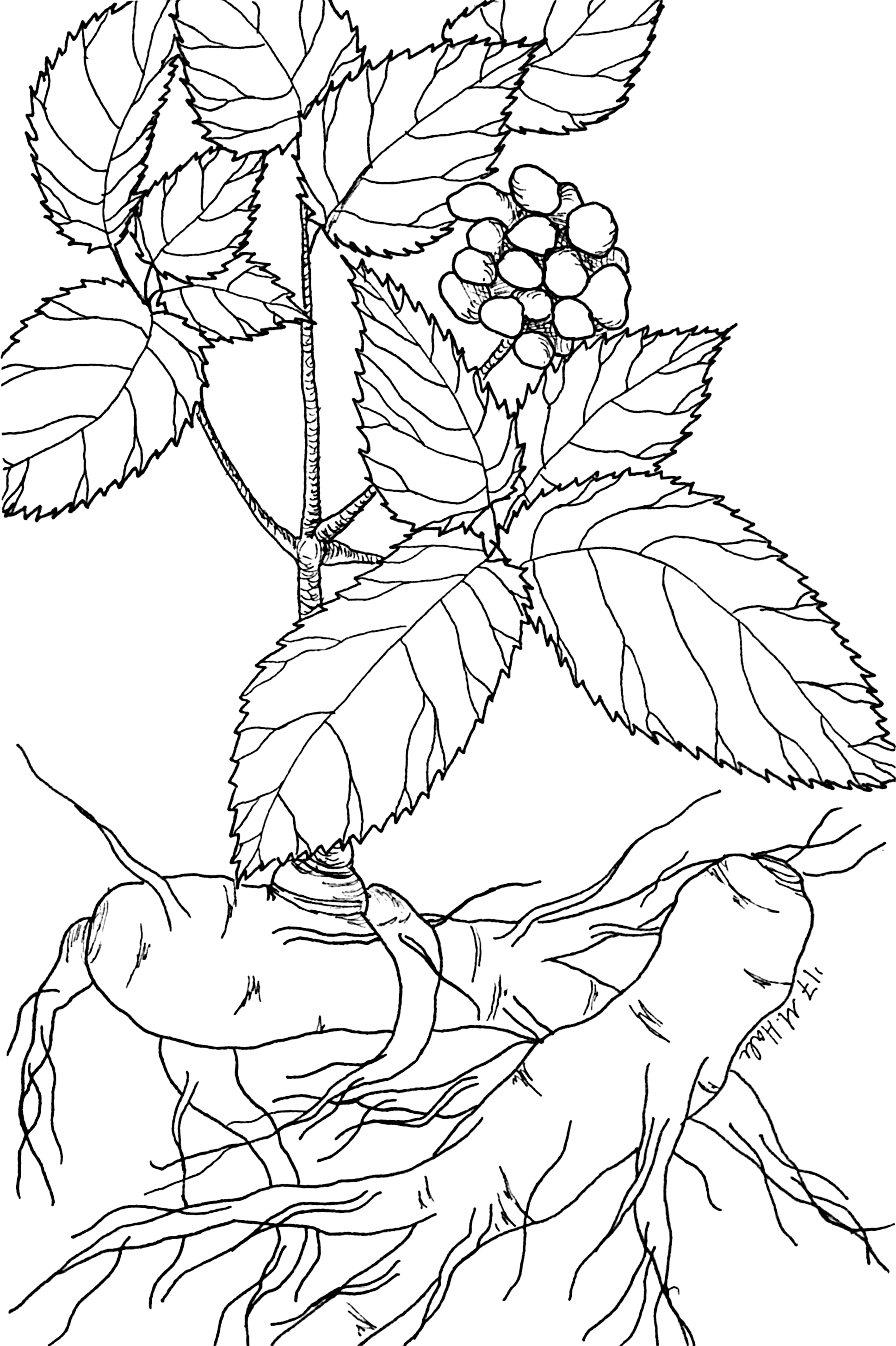
The third and final example of immunomodulating plants with complex relationships to Th subsets is Panax ginseng (Asian ginseng; Fig. 1), arguably one of the most revered herbs in Chinese medicine. The story is extremely similar to that seen with astragalus and licorice. Various lines of evidence suggest ginseng is simply a Th1 inducer. For example, one clinical trial involving intrapulmonary injection of ginseng polysaccharides in Chinese lung cancer patients found a clear increase in Th1 and a decrease in Th2 cytokines systemically. 43 Oral administration of an Asian ginseng extract to male mice for five days provoked an increase in Th1 cytokines. 44 In vitro, Asian ginseng extract promoted IL-12 production, which potently induces Th1 differentiation. 45 This IL-12 induction also occurred using metabolites of ginseng saponins after digestion. 46
Therefore, not surprisingly, Asian ginseng has shown benefit in patients with Th2-dominant diseases such as atopic dermatitis. 47 A trial of fermented red Asian ginseng in 59 Korean patients with allergic rhinitis showed it was superior to placebo over four weeks for improving symptoms. 48 Though no human trials were identified, multiple animal studies support that Asian ginseng is also useful for remediating asthma. 49,50
Studies in Th1-dominant diseases also show Asian ginseng is safe and effective. In one double-blind trial involving 60 Iranian women with MS, Asian ginseng extract 250 mg twice a day was significantly better than placebo was at relieving fatigue. 51 These results were not confirmed in a study of 56 American patients with MS using an extract of Panax quinquefolius (American ginseng), but there were no adverse effects or worsening of MS. 52 Clinical trials have shown oral Asian ginseng extracts helpful for patients with the Th1-dominant autoimmune condition alopecia areata. 53 There is a case study of red Asian ginseng reversing acute graft-versus-host disease after liver transplantation, a condition that is strongly associated with Th1 dominance. 54 It also helped mice with type I diabetes, another Th1-dominant disease. 55
There is very intriguing evidence that Asian ginseng extracts combined with various vaccines (rabies, foot and mouth disease, influenza) enhances both Th1 and Th2 responses to them. 56 –58 An ethanol extract of Asian ginseng root reversed Th1 suppression due to irradiation of mice, but also improved Th2 function. 59 An in vitro study found that ginsenoside Rg1 could induce Th1 cytokines in cells in a Th2-dominant state, while the reverse was true with cells in a Th1-dominant state, clearly suggesting this is an immunomodulator and not a unidirectional stimulator of a single lineage. 60
Once again, other actions of Asian ginseng help explain its ability to help a range of conditions (be they Th1 or Th2 dominant), including the ability to block infiltration of Treg into inflamed tissues. 61 It appears to suppress Th17 activity while inducing Treg activity. 62 –64 It is also inflammation modulating, among many other actions that could help these conditions. 65
Conclusion
The three immunomodulating herbs presented here, after much research, have complex effects on Th subsets. Though at first they all can appear as Th1 stimulating and Th2 inhibiting, further research shows this is too simplistic a model that does not fit with the real-world effects of these herbs. Combinations of actions including inhibiting Th17 and modulating Tregs, modulation of inflammatory pathways unrelated to Th subsets, and many others result in a net benefit for patients with Th1- and Th2-dominant diseases. More clinical trials are welcomed to confirm those seen in many others already published, but there is no reason currently for at least these three herbs, and probably most other immunomodulators, to be avoided in patients with immunopathologies of all types. ■