




Abstract
The many herbal options for patients with anxiety are discussed, focusing initially on Piper methysticum (kava) as one of the most well-researched options in this setting. The unstudied, but clinically as effective (and much more palatable), Pedicularis spp. (lousewort) are also discussed. Other nervine herbs including Lavandula angustifolia (true lavender), L. latifolia (spike or Portuguese lavender), Lavandula x intermedia (lavandin, Dutch lavender), L. stoechas (Spanish lavender), Matricaria chamomilla (chamomile), and Passiflora incarnata (passionflower) are reviewed (and a table of other nervines is provided). Three formulas, including mixtures of nervines, Ze 185, Euphytose, and Yì Qì Yǎng Xīn (Replenish Qi and Nourish the Heart), are discussed. Miscellaneous anxiolytics such as Crocus sativus (saffron), L-theanine from Camellia sinensis (green tea), and the three calming adaptogens Rhodiola rosea (roseroot), Centella asiatica (gotu kola), and Withania somnifera (ashwagandha) are then detailed. Herbal anxiolytics offer great promise to relieve anxiety safely.
Introduction
Anxiety is a common response to stressful events. In the short term, it is completely normal, but problems crop up when stressors don't go away (as is common in modern industrial and postindustrial societies) or in people who have anxiety disorders. While conventional medications exist to counteract anxiety, they all have problems, including the troubling reality of benzodiazepine addiction that has been and continues to be little discussed. Herbal medicines that offer real alternatives for treating and preventing anxiety are considered here, and their potential use for benzodiazepine addiction are also discussed.
It should be noted that most, though not all, of the studies cited in this paper relied upon the Hamilton Anxiety Rating Scale to assess whether the agents studied helped anxious patients. Often abbreviated the Ham-A, this scale has specifically been shown to work poorly in studies of anxiolytic drugs, in part because it cannot distinguish improvements in depression from those in anxiety and because the adverse effects of the drugs specifically worsen the somatic subsection of the questionnaire. 1 The latter issue should be less of a problem with most herbal medicines, given their much less significant adverse effects compared to drugs, but these questions have not really been studied related to herbs. The Diagnostic and Statistical Manual of Mental Disorder III and the two newer versions since (the book generally recognized as the standard in psychiatry for diagnosis of mental health problems) have definitions of generalized anxiety disorder that do not agree with one another and also conflict with the Ham-A—another significant problem. 2 Other questionnaires used to assess anxiety in other studies may suffer other problems. These concerns should be kept in mind when considering the efficacy of any treatment for anxiety.
Kava, the Much-Maligned King of Anxiolytics
Piper methysticum (kava) is a shrub in the Piperaceae family, and probably the best-studied natural anxiolytic. Its origin is unclear, but it is widespread throughout the Pacific Islands, having been carried by the Polynesians as they migrated. The root is the part used. It was and is a very important plant throughout Polynesia, playing a prominent role in ceremony and medicine. 3
Meta-analysis of clinical trials repeatedly confirms that kava is superior to placebo at relieving anxiety, with minimal adverse effects. 4 It is as effective and safer than multiple pharmaceuticals used to treat anxiety, as reviewed in Table 1. A meta-analysis of 10 human trials confirms that kava extracts have no negative effect on cognitive function in humans, unlike many other anxiolytic drugs. 5 Even studies in very heavy, chronic (>15 years) users of kava as a beverage found no evidence of cognitive impairment. 6
Boerner RJ, Sommer H, Berger W, et al. Kava-kava extract LI 150 is as effective as opipramol and buspirone in generalised anxiety disorder—an 8-week randomized, double-blind multi-centre clinical trial in 129 out-patients. Phytomedicine 2003;10:38–49; bSarris J, Laporte E, Scholey A, et al. Does a medicinal dose of kava impair driving? A randomized, placebo-controlled, double-blind study. Traffic Inj Prev 2013;14:13–17; cMünte TF, Heinze JH, Matzke M, Steitz J. Effects of oxazepam and an extract of kava roots (Piper methysticum) on event-related potentials in a word recognition task. Pharmacoelectroencephalography 1993;27:46–53; dHeinze HJ, Münthe TF, Steitz J, Matzke M. Pharmacopsychological effects of oxazepam and kava-extract in a visual search paradigm assessed with event-related potentials. Pharmacopsychiatry 1994;27:224–230; eSarris J, Scholey A, Schweitzer I, et al. The acute effects of kava and oxazepam on anxiety, mood, neurocognition; and genetic correlates: A randomized, placebo-controlled, double-blind study. Hum Psychopharmacol 2012;27:262–269; fLinderberg VD, Pitule-Schödel H. D,L-kavain in comparison with oxazepam in anxiety states. Fortschr Med 1990;108:49–54 [in German]; gGessner B, Cnota P, Steinbach T. Extract of the kava-kava rhizome in comparison with diazepam and placebo. Z Phytother 1994;15:30–37 [in German].
The biomolecular mechanisms of action of kava, and particularly its kavalactone (also known as kavapyrone) compounds including (+)-kavain, (+)-yangonin, (+)-desmethoxyyangonin, (+)-methysticin, and (+)-dihydromethysticin, have been investigated in numerous studies. Kava's relationship with γ-aminobutyric acid type A (GABAA) channels has been most extensively studied, resulting in a complex and nuanced picture. GABA is the main inhibitory neurotransmitter in humans, and its anxiolytic effects are mediated to a substantial degree by GABAA receptors. Kava does not act at the same site on the GABAA channel or in the same ways as benzodiazepines, ethanol, barbiturates, or general anesthetics. 7 Several in vitro analyses suggest that kavalactones increase GABAA receptor density and increase binding of GABA to its own binding site, rather than affecting GABAA receptors directly. 8,9 These affects are particularly prominent in the amygdala.
Concern about kava possibly causing liver damage exploded in the 1990s, though there were reports of chronic traditional kava beverage consumption raising serum aminotransferase levels prior to this. 4,10 These studies found these elevations to be minimal, and no reports have found that clinical disease subsequently developed, such as hepatitis, cirrhosis, or liver failure. 11,12 Several cases of hepatitis and liver failure, some fatal, began to be reported in the 1990s, but as with most case studies, the ability to establish a causal relationship was difficult in most. 13 Many patients involved in these cases were actively abusing alcohol, had prior liver disease including hepatitis C, or were taking other potentially hepatotoxic drugs or substances, thus confusing the picture. Despite the shaky evidence, many countries banned kava. Based on an analysis of 93 case studies of supposed kava hepatotoxicity reported through 2006, the World Health Organization concluded only eight were “probably” due to kava. 14 Ultimately, these bans have been lifted in most places, as evidence became overwhelming that kava is not inherently hepatotoxic, that the cases represented idiosyncratic harm at most, and that any adverse liver-related outcome was extremely rare. 15,16 Kava may not be intrinsically hepatotoxic but, out of an abundance of caution, should be avoided in combination with known hepatotoxins (e.g., excessive alcohol, acetaminophen, metronidazole) or in patients with severe liver disease until more information is available.
Kava has many other clinical uses, although none are as well attested as its indication for anxiety. One trial found that it offset rebound anxiety for patients who were withdrawing from benzodiazepines. 17 Insomnia, including when stress- or anxiety-related, has been shown to be improved by kava. 18 –20 Reduction in cravings for a wide range of drugs of abuse and alcohol was demonstrated in a preliminary clinical trial. 21 Traditionally, it was regarded as specific for chronic pelvic pain; while this has not been assessed in clinical trials, it has proven helpful for this indication in the author's clinical experience. 22 It can also help relieve phobias empirically.
Kava has a very strong taste that most find disagreeable; it also causes a numbing of the mouth. Therefore, it is almost always used in capsules or as a tincture as opposed to a tea, though it is most traditionally used as a tea for medicinal purposes. The usual dose of a crude kava extract in capsules is 400–800 mg two to three times a day; the last dose is generally given at bedtime. For extracts standardized to kavalactone content, 70 mg three times daily of kavalactones is a typical dose (or 210 mg all at once at bedtime for insomnia). The dose of a tincture (generally 1:2 to 1:3 weight:volume ratio, 60% ethanol) is 1–2 mL two to three times a day, often mixed in a little water.
Pedicularis bracteosa (bracted lousewort) in the Orobanchaceae family is a potential alternative to kava that grows in the mountains in western North America. Since it is so much more local than the Pacific Islands, it is potentially much more ecologically sustainable for people living in North America. It has a much better taste than kava, and its actions are otherwise clinically very similar or even more potent. This is entirely based on clinical experience; there are no studies of the mechanism or clinical efficacy of bracted lousewort. P. racemosa (sickletop lousewort), P. groenlandica (elephant head), and P. contorta (coiled lousewort) have also all been tried clinically and found effective. All of these species are hemiparasitic and so cannot be harvested within a few feet of any poisonous plants, lest they contain toxic constituents from them (and they commonly grow near Veratrum viride or false hellebore, Arnica spp., and Senecio spp., all of which can be quite poisonous). Ideally, it is harvested near Valeriana sitchensis (Sitka valerian), amplifying the therapeutic qualities of louseworts, as observed clinically. The usual dose of tincture, the only form these herbs are available in at present (1:2 to 1:3 weight:volume, 30% ethanol) is 1–3 mL three times a day.
A Plethora of Nervines
A category of herbs known as nervines are among the most important traditional treatments for anxiety, previously discussed in this journal in more depth. 23 These herbs have in common a tendency to be calming of the nervous system and smooth-muscle spasmolytics, and thus are also helpful for insomnia, hypertension associated with increased vascular tone, seizure disorders (though usually they are not potent enough to be sufficient for their treatment), and neuropathic pain. Here, the focus will be on their anxiolytic properties.
Many nervines are in the Lamiaceae family, and some of the best studied of this class, are Lavandula angustifolia (true lavender), L. latifolia (spike or Portuguese lavender), the hybrid of L. angustifolia and L. latifolia known as Lavandula x intermedia (lavandin, Dutch lavender), and L. stoechas (Spanish lavender). Treating these herbs as though they were all the same medicine is the height of folly, however, as they are clearly different between species and also form what are known as chemotypes within the same species. Chemotypes can easily interbreed but, based on a complex interplay of genetic and environmental elements, will produce very different terpenoid mixes and thus make very different volatile oils (whether extracted by steam distillation or supercritical carbon dioxide), which can then have very different clinical actions.
True lavender is generally required to contain 25–45% linalyl acetate, 25–38% linalool, and 3–30% lavandulyl acetate to be labeled as such. Spike lavender has <25% linalyl acetate and instead predominantly camphor and 1,8-cineole. Lavandin is generally intermediate between these two. Spanish lavender contains a very high content of camphor (15–30%) and fenchone (12–28%). That being said, for example, a true lavender grown in eastern Algeria was shown to contain primarily 1,8-cineole (29.4%) and camphor (24.6%), though it is possible this is because they had an undetected hybrid growing and not actual L. angustifolia. 24 The failure of most research on members of the Lamiaceae family, most or all of which have chemotypes, either to assess or document the chemotype used greatly hampers generalizability of studies and reveals a flaw with people ignorant of the details of medicinal plants attempting to carry out research on them.
A proprietary preparation known as Silexan is the most studied form of lavender. It is a true lavender product containing steam-distilled volatile oil standardized to 20–45% linalool and 25–46% linalyl acetate, with a usual dose of 80–160 mg once daily. A meta-analysis of three randomized, double-blind trials found that Silexan was superior to placebo at reducing anxiety and improving sleep without morning sleepiness or other sedative adverse effects. 25 There is evidence from a head-to-head trial that Silexan is just as or more effective than paroxetine, with significantly fewer adverse effects in patients with generalized anxiety disorer. 26 In another head-to-head trial, it was just as effective as and safer than lorazepam for reducing anxiety. 27 Lavender has shown no cytochrome P450-related interactions in humans and is generally very safe. A report of reversible gynecomastia in three boys exposed to uncharacterized lavender and Melaleuca alternifolia (tea tree) oil body-care products are not credible; no other reports of such effects have appeared before or since this report. 28 This extremely safe nervine should be considered for patients with mild to moderate anxiety.
Another common nervine of European origin that has been shown repeatedly to be anxiolytic is Matricaria chamomilla (chamomile) of the Asteraceae family. The capitulum (which is actually a cluster of many flowers) is the part used as medicine. The first double-blind trial of this herb involved 57 subjects with generalized anxiety disorder who were randomized to either a chamomile extract standardized to 1.2% apigenin (an anxiolytic flavonoid) 500 mg t.i.d. or placebo for eight weeks. 29 There was a modest but significant improvement in anxiety with chamomile extract compared to placebo, with no difference in adverse effects between the treatments. A later analysis of data from this trial also concluded that chamomile extract had significant antidepressant activity compared to placebo. 30 A larger open trial confirmed that this extract had anxiolytic effects in 179 patients. 31 A subset of these patients (n = 93) agreed to continue in a double-blind, randomized, placebo controlled trial lasting 26 weeks. 32 While chamomile was not superior to placebo for preventing anxiety relapse, patients in the chamomile group had consistently and significantly lower anxiety scores compared to placebo. Again, there were low rates in adverse effects with chamomile, with no significant difference compared to placebo. This extremely safe nervine should also be considered for patients with mild to moderate anxiety.
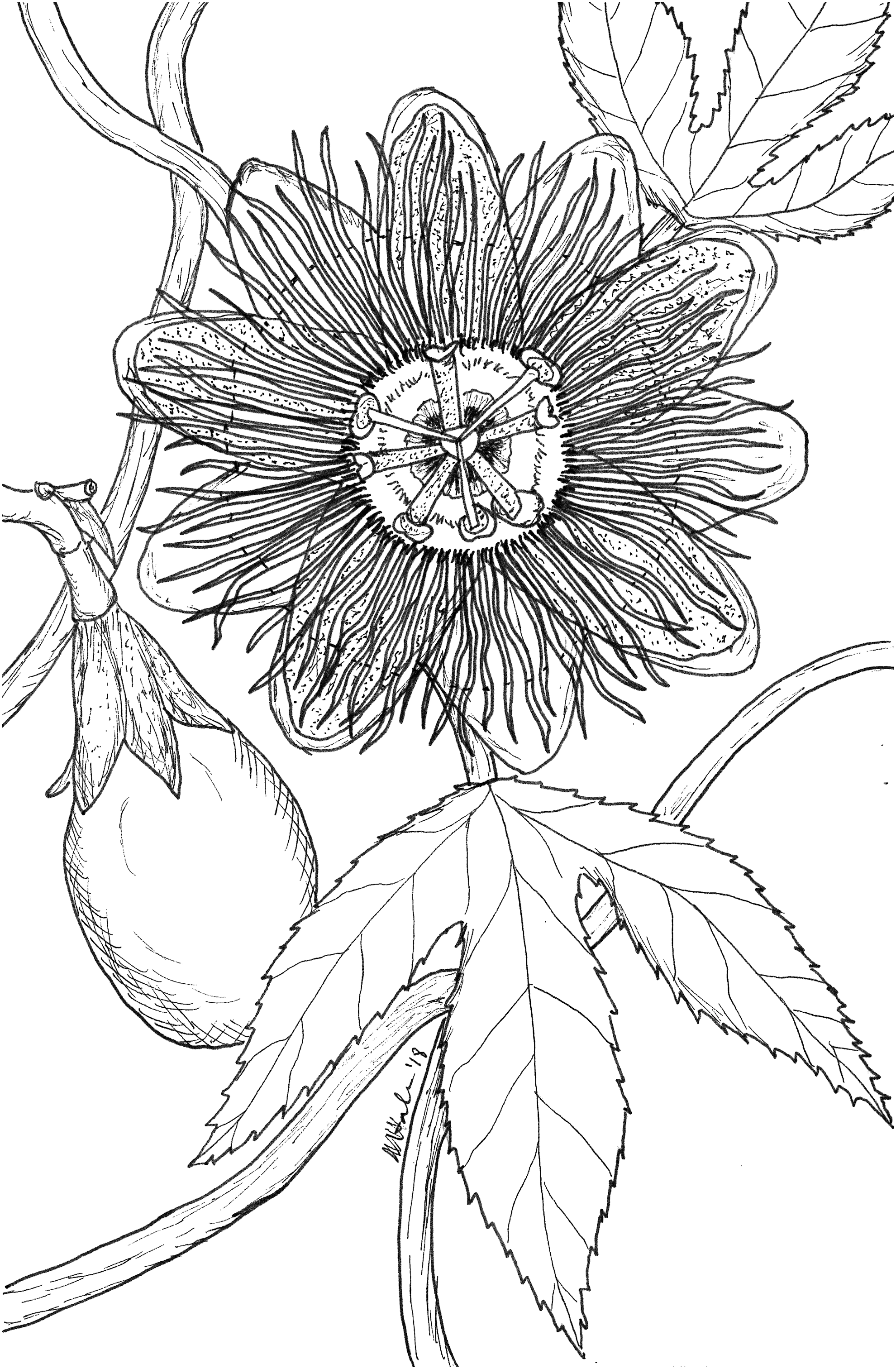
Passiflora incarnata (passionflower) is a vine native to the southeastern United States and is a member of the Passifloraceae family (Fig. 1). No other members of this genus appear to be medicinal, though their fruits are delicious. The leaves of passionflower are used as a nervine in traditional herbalism. One double-blind trial compared a tincture of passionflower to oxazepam tablets in 36 anxious adults, each group receiving a placebo as well (either liquid or tablet as appropriate). 33 Though oxazepam had a more rapid onset of action, the two medications were equally effective at reducing anxiety. Passionflower caused significantly fewer adverse effects, in contrast to a deterioration in job performance seen in the oxazepam group. This is very commonly seen with benzodiazepines, as they prevent deep sleep and thus cause daytime sleepiness. This problem is almost never encountered with nervines, as they actually enhance sleep quality, as has been confirmed for passionflower. 34
Numerous trials have looked at passionflower as an alternative to benzodiazepines to quell anxiety prior to dental or surgical procedures. In one double-blind trial, a passionflower extract in a single dose of 500 mg 90 minutes before surgery significantly reduced anxiety compared to placebo in 60 adults. 35 A similar double-blind trial found that 700 mg of an aqueous extract of passionflower 30 minutes before administration of spinal anesthesia was superior to placebo at alleviating anxiety. 36 In a similar double-blind trial of patients going into surgery, passionflower crude leaf powder 1 g and melatonin 6 mg were compared. 37 Both medications significantly reduced anxiety compared to baseline, while neither reduced pain. Melatonin caused significantly more sedation than passionflower, while passionflower caused significantly more cognitive dysfunction than melatonin after surgery. A single-blind trial randomized 63 adults undergoing periodontal treatment to either a liquid extract of passionflower 20 drops the night before and morning after treatment, placebo, or no treatment. 38 Anxiety was significantly lower in the passionflower group compared to both control groups. A double-blind trial in 40 adults undergoing wisdom-tooth extraction randomized them to take either an uncharacterized passionflower capsule 260 mg or midazolam 15 mg 30 minutes before surgery. 39 Anxiety reduction was the same between the groups, while only those in the midazolam group reported not remembering the procedure.
It is recommended that passionflower tincture or glycerite be used at a dose of 3–5 mL three times per day regularly, starting as soon as possible before an anxiety-producing event or ongoing for chronic anxiety. Usually the last dose is given at bedtime. If used in capsules, a dose of 1–2 g three times daily is recommended of crude leaf (unextracted). Passionflower is extremely safe with no known drug interactions.
Table 2 lists a number of other nervine herbs that could be useful for anxiety. A detailed discussion of all these herbs is beyond the scope of this article, and readers should reference our prior work for more information.
Glycerite is also effective for all the plants listed, in the author's experience, except Eschscholzia californica.
See also main text for discussion of clinical trials of other combination herbal formulas that include this herb.
Hanus M, Lafon J, Mathieu M. Double-blind, randomised, placebo-controlled study to evaluate the efficacy and safety of a fixed combination containing two plant extracts (Crataegus oxyacantha and Eschscholzia californica) and magnesium in mild-to-moderate anxiety disorders. Curr Med Res Opin 2004;20:63–71; dCases J, Ibarra A, Feuillere N, et al. Pilot trial of Melissa officinalis L leaf extract in the treatment of volunteers suffering from mild-to-moderate anxiety disorders and sleep disturbances. Med J Nutrition Metab 2011;4:211–218; eKennedy DO, Little W, Haskell CF, Scholey AB. Anxiolytic effects of a combination of Melissa officinalis and Valeriana officinalis during laboratory induced stress. Phytother Res 2006;20:96–102; fOvanesov KB, Ovanesova IM, Arushanian EB. Effects of melatonin and motherwort tincture on the emotional state and visual functions in anxious subjects. Eksp Klin Farmakol 2006;69:17–19 [in Russian]; gWolfson P, Hoffmann DL. An investigation into the efficacy of Scutellaria lateriflora in healthy volunteers. Altern Ther Health Med 2003;9:74–78; hBitran S, Farabaugh AH, Ameral VE, et al. Do early changes in the HAM-D-17 anxiety/somatization factor items affect the treatment outcome among depressed outpatients? Comparison of two controlled trials of St John's wort (Hypericum perforatum) versus a SSRI. Int Clin Psychopharmacol 2011;26:206–212; iAndreatini R, Sartori VA, Seabra MLV, Leite JR. Effect of valepotriates (valerian extract) in generalized anxiety disorder: A randomized placebo-controlled pilot study. Phytother Res. 2002;16:650–654; jMcCaffrey R, Thomas DJ, Kinzelman AO. The effects of lavender and rosemary essential oils on test-taking anxiety among graduate nursing students. Holist Nurs Pract 2009;23:88–93.
Nervine Formulas
Very often in practice, multiple anxiolytics are combined in a formula to individualize treatment to patients and to leverage potential synergy between distinct mechanisms of action in different herbs. At least one Chinese and two Western herbal formulas have been studied for patients with anxiety and will be reviewed here to show the potential of this approach. However, it is worth pointing out that none of these individualized formulas have been studied and that there are negative studies on herbal formulas given to groups of anxious patients. 40
One proprietary Swiss formula known as Ze 185 containing Petasites hybridus (butterbur) root 90 mg (with all pyrrolidizine alkaloids chemically removed), Valeriana officinalis (valerian) root 90 mg, passionflower leaf 90 mg, and Melissa officinalis (lemonbalm) leaf 60 mg per capsule has been studied in patients with anxiety syndromes. One double-blind randomized trial compared this formula (at a dose of one tablet t.i.d.) to one without the butterbur (same amounts and dose, just without this herb) and placebo in patients with somatoform disorders. 41 The full formula and the one without butterbur were significantly superior to placebo at relieving anxiety and depression. The full formula was also significantly better than the formula without butterbur at improving these parameters. There were minimal adverse effects, and none were serious. A more recent double-blind trial in healthy adults found that the full Ze 185 formula could reduce anxiety reactions to laboratory-induced acute stress. 42
Another proprietary formula known as Euphytose contains valerian extract 50 mg, passionflower extract 40 mg, Crataegus spp. (hawthorn) extract 10 mg, and Ballota nigra (white horehound) extract 10 mg per tablet. An older study investigated a prior formulation that also contained the mild stimulants Cola nitida (kola nut) and Paullinia cupana (guaraná), which really do not make sense to include in a formula with such mild nervines (they might be needed if more intense sedative herbs were being used). In this trial, 182 patients with anxiety and adjustment disorder were randomized to Euphytose with stimulants or placebo in a double-blind manner. 43 After seven days of treatment with two tablets t.i.d., Euphytose with stimulants started to lower anxiety significantly compared to placebo, a benefit that was maintained to the end of the 28-day study.
The Chinese herbal formula Yì Qì Yìng Xīn (Replenish Qi and Nourish the Heart; see Table 3 for ingredients) has been investigated as a treatment for anxiety. In a randomized trial (blinding not described), 202 patients with generalized anxiety disorder took either Replenish Qi and Nourish the Heart powder 10 g b.i.d. or paroxetine 20–60 mg daily for six months; all subjects underwent cognitive–behavioral therapy. 44 Both groups had a significant reduction in anxiety compared to baseline; there was no difference between them in efficacy. Anxiety recurred significantly more often in the paroxetine group than in the herbal formula group after medication discontinuation. Adverse effects were rare and minor in both groups.
Miscellaneous Anxiolytics
Crocus sativus (saffron) in the Iridaceae family has very long styles (and prominent stigmas at their tips), which are part of the female reproductive system in plants. These structures are used commonly as the spice saffron. It is often said to be the most expensive in the world, as obtaining the structures is difficult because harvest requires much human labor. A great deal of research has been done on the effects of saffron extracts on mood disorders, including anxiety.
In one double-blind trial of 66 adults with major depressive disorder and anxious distress, subjects were randomized to 30 mg saffron extract or citalopram 40 mg daily for six weeks. 45 Both treatments significantly reduced anxiety and depression compared to baseline, with no significant difference between them. Both were associated with low rates of mild adverse effects. A double-blind trial in 60 anxious, depressed adults found that 50 mg b.i.d. of saffron extract was significantly more effective than placebo at improving both anxiety and depression. 46 A third double-blind trial in 128 healthy adults with low mood, stress, and anxiety but not meeting the formal definition of depression randomized them to take saffron extract at a dose of 22 or 28 mg per day or placebo for four weeks. 47 Stress and anxiety symptoms were significantly better in the 28 mg dose group compared to placebo; the 22 mg dose group did not see different results from the placebo group. All of this supports saffron extracts as very safe ways to address anxiety, though the exact best extract or dose remains elusive.
Camellia sinensis (green tea) leaf and particularly its alkaloid L-theanine (which is the opposite of caffeine, being a relaxant) have also been studied as treatments for anxiety. 48 In one double-blind trial involving 60 adults with schizophrenia or schizoaffective disorder on ongoing antipsychotic medications, subjects were randomized to add either L-theanine 400 mg or placebo daily for eight weeks. 49 Anxiety symptoms were significantly decreased in the L-theanine group compared to placebo, as were hallucinations/delusions and general psychotic symptoms. There were few adverse effects, and they were all mild, with no significant difference between groups. A similar trial using the green tea flavonoid epigallocatechin gallate further suggests that it is L-theanine or something else in green tea that is crucial to reducing anxiety. 50 Neither L-theanine 200 mg nor alprazolam 1 mg were effective anxiolytics in a small sample of healthy adults subjected to an artificial form of anticipatory anxiety. 51 One open trial in 20 patients with major depressive disorder found 250 mg of L-theanine daily helped reduce depression and anxiety, improve sleep, and improve cognitive function. 52
Rhodiola rosea (roseroot, Crassulaceae family) is a circumboreal adaptogen herb with relaxing properties. This is fairly unusual for an adaptogen, as most such herbs tend to be at least mildly stimulating. An open trial in 10 adults with generalized anxiety disorder found that 340 mg of roseroot extract daily for 10 weeks significantly reduced anxiety compared to baseline. 53 Adverse effects were mild and limited. A small randomized trial compared 200 mg b.i.d. of a different roseroot extract to placebo for 14 days in eight mildly anxious adults and also found it significantly reduced anxiety. 54 Clearly, a double-blind, randomized trial is warranted for roseroot in anxiety. Until then, it can be safely used, particularly in patients under chronic stress. A typical dose of tincture would be 1–3 mL t.i.d.
The two other major, historically relaxing adaptogen herbs, Centella asiatica (gotu kola) in the Apiaceae family and Withania somnifera (ashwagandha) in the Solanaceae family, have also been shown to be anxiolytic in preliminary clinical trials. 55 –57 Both are extremely safe, including with long-term use (and often they can take weeks or months to show truly how effective they can be). Gotu kola is much more effective fresh, which means that for most people in temperate climates (since it is a tropical plant), the best way to take it is as a fresh-plant tincture or glycerite at a dose of 3–5 mL t.i.d. It tastes quite pleasant. Ashwagandha does fine with drying and can be taken in capsules at doses of 1 g b.i.d. or in tincture at doses of 1–2 mL t.i.d. It has a strong taste many will find disagreeable.
Conclusion
Clearly, there are many herbs with great potential to help patients with anxiety. Generally, it is recommended that one or two nervines, one of which is either kava or lousewort, be mixed with a calming adaptogen and one miscellaneous anxiolytic in a formula to optimize patient benefits. However, some patients prefer a single herb, in which case options are bountiful. Overall, effects tend to be best when patients use these products for several months, though they can start to be noticeably effective within two weeks (certainly in the case of kava and lousewort). Further research is needed and warranted on these fascinating and apparently safe therapeutic options for anxious patients.▪