




Abstract
Persistent digestive conditions such as chronic constipation can be associated with diet, and dietary modification has been shown to alleviate the problem. An elimination diet removes potentially triggering foods from the diet, and can be implemented to help identify foods that exacerbate symptoms. A 51-year-old female presented with reported severe, chronic constipation since approximately seven years of age, and a wide variety of other symptoms. Implementation of an elimination diet for 21 days resulted in relief of symptoms, including constipation. In addition to physical health improvements, positive changes in mental, emotional, and spiritual health were also observed.
Introduction
Chronic Constipation
Chronic constipation is a common functional gastrointestinal disorder. 1,2 Global prevalence of chronic constipation is estimated to be 2–20%. 1,3,4 The definition of chronic constipation according to Rome IV criteria is difficult, infrequent, or incomplete defecation. 1,5 Symptoms of chronic constipation are continuous, and can adversely affect an individual's physical and mental health and quality of life. 1
Diet
An elimination diet removes foods that are commonly eaten for a period of time, and then reintroduces them into the diet, one by one, in a controlled manner, to determine if they are causing symptoms. Many chronic symptoms can improve or resolve with an elimination diet because the process allows the body to heal by reducing the burden on the immune system. 6
Diet and lifestyle recommendations for chronic constipation often involve increasing levels of physical activity, as well as an increase in dietary intake of fiber and water. Data regarding use of an elimination diet to resolve constipation are limited. However, a fermentable oligosaccharide, disaccharide, monosaccharide and polyol (FODMAP) restricted diet has shown efficacy for chronic constipation and for constipation predominant irritable bowel syndrome (IBS-C). One mechanism for this effect is that FODMAPs, a group of fermentable carbohydrates, can be malabsorbed. When this occurs, fermentation of them by colonic bacteria can result in symptoms such as chronic constipation. Therefore, restricting them from the diet can provide relief. 7
An elimination diet can also promote body awareness to food, and the individual can become more conscious of the needs of the body, as well as emotional (and other) needs. 6
Methods
GA was part of a larger social media group that engaged with each other while following The Institute for Functional Medicine's Elimination Diet and Detox Food Plan, leveraged by the CNS Online Clinical Experience (CNS ONE) program, spearheaded by Deanna Minich, PhD. Program participants were female, between the ages of 35 and 65 years old, and on no prescription medication. They were solicited through social media and screened upon demonstrating interest in participation. Clients completed three weeks of the elimination diet, followed by a two-week reintroduction phase.
After the three-week elimination diet and two-week reintroduction period, the IFM Detox Food Plan was implemented for four weeks. Food and nutrients play an important role in all phases of detoxification. Like the Elimination Diet, the Detox Food Plan reduces common food triggers. However, the Detox Plan focuses on long-term nutritional support for the gut and liver, two of the major body systems involved in detoxification. The Detox Food Plan can assist in lowering the burden on the immune system and providing adequate nourishment. 8
Case Presentation
Presenting Concerns
GA is a 51-year-old (born in 1966) female smoker, not on any prescription medication. Her primary complaint was severe, chronic constipation, and her primary goal was to improve her personal health and get into a healthy routine.
Chief Complaints
The client's first reported problems with constipation began at the age of seven (in 1973), and she reported not having a bowel movement for up to 15 days at a time during her teen years. In her 20s, she discovered that using flax seeds and water and fasting for two to three days at a time could help her move her bowels more regularly. In 1996, at the age of 30, GA discovered coffee enemas. The combination of flax seeds and water daily plus fasting and coffee enema use when flax seeds and water were not sufficient allowed her to manage her constipation. However, bowel movements remained a challenge. GA reported severe, chronic constipation was exacerbated by the consumption of carbohydrates such as white rice, white bread, and sugar.
GA struggled with an additional wide variety of symptoms. At intake, these symptoms included bloating, flatulence, and belching after meals. Hemorrhoids, strong stool odor, low libido, problems with focus, and brain fog were reported. GA noted past history of vaginal infections and yeast infections with vaginal odor, and itching anus and genitals within the previous six months at intake. Fatigue, mood swings, and cramps were reported. Ringing in the ears, headache, vision problems, joint pain, temporomandibular disorder, bad breath, bleeding gums and bad teeth, a white-coated tongue, bad odor in her nose, nasal stuffiness, strong body odor, toenail fungus, calluses, and excessive sweating were reported by the client as well.
Client History
GA reported sleeping approximately six hours per night, with no problems falling asleep and no problems with insomnia. She did not use sleep aids. She did report not feeling rested upon waking on some days. GA engaged in a variety of physical activities six days per week for approximately 60–90 minutes per session, including brisk walking, using weights, swimming, and yoga. She also reported stress from work, financial concerns, and her health.
A typical day's diet at baseline included fruit juice, kefir with nuts, seeds, and berries, and herbal tea for breakfast; sandwiches, cheese boards, and potato chips for lunch; meat or fish, vegetables, pasta or rice, and legumes for dinner; and snacks of potato chips between meals. Beverage intake included water, herbal teas, and beer and wine (one to three times per week). GA reported reactions to milk but not to cheese or butter, as well as cravings for potato chips and sandwiches.
Assessment of environmental exposures revealed GA worked in hotel cellars for wine tastings as a sommelier. She had exposure to solvents, rugs, carpets, damp environments, varnish, polish, and wax due to her job, and also because a hobby was restoring old furniture. She wears gloves, masks, and protective equipment.
Timeline
The Medical Symptoms Questionnaire 9 (MSQ; Fig. 1) was used weekly to assess the client's symptoms throughout the program (Table 1), July 15–September 15, 2017. A total of 10 sessions were held with the client, including an initial consult and a weekly session for each of the nine weeks of the program. MSQ scores for GA were 34 at the beginning of the program and 1 by the end of the program. The MSQ allows for scoring of symptoms that fall under categories of systems in the body. Reported severe, chronic constipation, and other presenting symptoms, except for excessive sweating, resolved with the implementation of the elimination diet. The client also experienced significant changes in her mental, emotional, and spiritual health, as well as in her relationships. Case progress notes are outlined in Table 2.


Medical Symptoms Questionnaire Scores Baseline Through Week 9
Case Progress Notes
Adjunct Interventions
Supplemental measures were recommended to the client to augment dietary interventions. The observed and significant resolution of the client's constipation and other symptoms, however, was achieved via dietary means evidenced by the timeline of key events.
Use of flax seeds and one cup of water daily was reported at intake, and continued use was recommended.
Use of spirulina powder and chlorella powder, 2 teaspoons per day each since 2009 for vitamin C, and one capsule of milk thistle per day since 2016 was reported at intake, and continued use was recommended.
Elimination Diet began on July 13, 2017.
On July 20, 2017, less joint pain and water retention, improved eye and nose symptoms, and cravings for carbohydrates were reported.
GA reported her symptoms worsened between July 20 and 23, 2017, and she experienced headache, excessive mucus formation, severe constipation, and mood changes, even though bloating had decreased and energy levels had improved.
On July 23, 2017, GA temporarily increased her intake of flax seeds and water in an attempt to “flush out” her worsened symptoms.
On July 24, 2017, GA had five bowel movements, and she reported her head felt clear, bloating was gone, her energy levels improved. She was spitting out mucus, urinated a lot, and noted she felt like her body was releasing toxins.
On July 25, 2017, her menses returned after an absence of 15 months.
By August 3, 2017, GA continued to experience two bowel movements per day thereafter, and her wide range of symptoms continued to improve throughout the program.
Use of a bacterial strain probiotic containing Bifidobacterium lactis, one capsule per day, began August 3, 2017, and was recommended because probiotics may support whole gut transit time, stool frequency, and stool consistency in cases of functional constipation. 10
On August 20, 2017, the Detox Food Plan began.
At program completion, on September 15, 2017, the only remaining symptom GA experienced was excessive sweating.
Nutrient Analysis
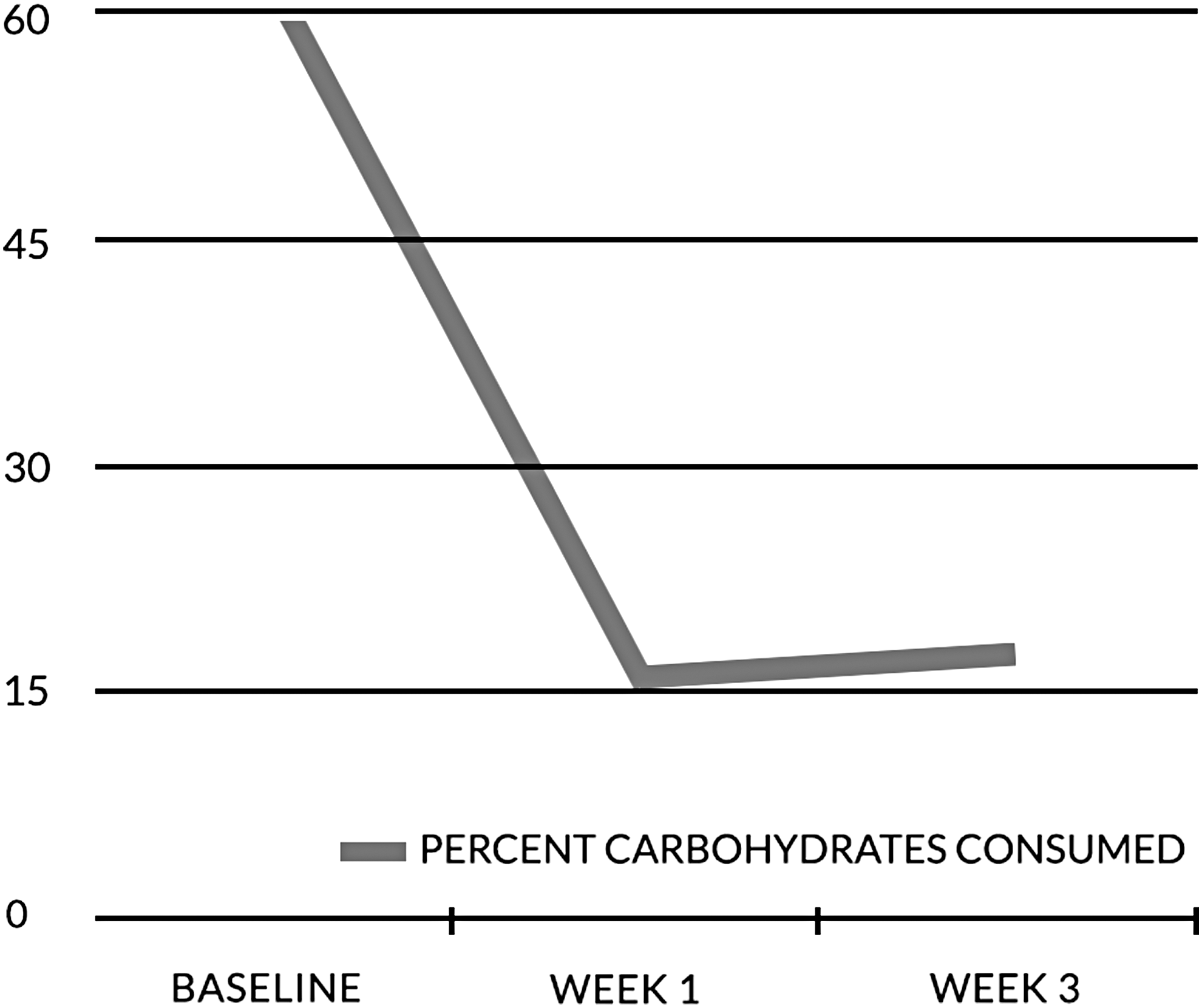
Nutrient analysis for the Elimination Diet was conducted via collection of three-day food and nutrition journals at baseline, week 1, and week 3 using Cronometer for analysis. The most striking observation that correlates with this case was that the percent of her diet from carbohydrates decreased by 44% between baseline and week 1, and increased by only 1% in week 3. Percent of energy from carbohydrates was 60% at baseline, 16% at week 1, and 17% at week 3. These dietary changes correlate with the timing of resolution of the client's reported severe, chronic constipation. Graphical representation of the percent of carbohydrates consumed at baseline, week 1, and week 3 can be found in Figure 2.
Summary
The action plan was to address GA's symptoms with an Elimination Diet. This case suggests that an Elimination Diet may provide relief for reported severe, chronic constipation and lead to improvements in other symptoms, including bloating, flatulence, and belching after meals, strong stool odor, low libido, problems with focus, brain fog, itching anus and genitals, fatigue, mood swings, cramps, ringing in the ears, headache, vision problems, joint pain, bad breath, bad odor in the nose, nasal stuffiness, and strong body odor in a 51-year-old woman. GA went from experiencing reported severe, chronic constipation and a wide variety of other symptoms, and a total MSQ score of 34 at baseline, to being able to move her bowels on average twice per day each day, and a total MSQ score of 1 at the end of the program. The MSQ score improvement from baseline through week 9 can be found in Table 1.
We saw other significant changes in the client's life as well. By August 10, 2017, a week after GA noted ongoing, regular bowel movements, she discussed her relationship with her partner, noting it was a source of stress for her, and she opened discussions with him for resolution. She noted feeling more connected to her roots on a physical level (her birth place of origin) as well as from a spiritual standpoint. On August 31, 2017, GA reported she had intercourse with her partner after five months of abstinence. Her libido had returned. On September 8, 2017, GA noted her partner had expressed interested in making diet and lifestyle changes for himself now that he had seen possible benefit first hand. At our last session on September 14, 2017, GA noted a newfound confidence and a sense of calm in her life as she navigated situations at work and at home that would have previously caused her anxiety and stress. She noted that because she continued to have regular bowel movements daily, her head was clear and she was able to think level headedly, something she was not able to do nine weeks prior when the program began. Because their previous connections were centered around cigarette smoking (GA was working on quitting), drinking alcohol, and eating, GA and her partner were focused on creating new ways to connect and developing healthy habits they could share.
The client provided the following quote:
Through this program, we have been able to identify not just what foods triggered the symptoms I was having for more than 40 years, but also what was behind them. Ms. Brand guided my path toward better health practices, and understood from the very beginning that something was not right. She has been my mentor, and health coach, and held my hand in down moments, celebrations, and laughs. She showed me that a healthy lifestyle is about more than just eating the right foods, and that everything is connected. I can't thank her enough!!!
Footnotes
Author Disclosure Statement
No competing financial interests exist.