




Abstract
Abstract
Background:
Complications from acupuncture are quite rare.
Case:
This report describes the case of an adult female who left an acupuncture treatment visit with a doctor as a result of unbearable pain. Six years later, on routine X-rays for dental examination, five embedded remnants of acupuncture needles were observed.
Results:
The patient was completely asymptomatic from the embedded needles, and did not know they were there. She did not respond to requests for further follow-up.
Conclusions:
Despite the retention of the needles for at least 6 years, there were no symptoms or clinical signs in this patient.
Introduction
Acupuncture is a therapy in which one or more fine needles are inserted into certain areas of the skin of the body. These may be further stimulated by applying heat or electricity to them or moving them manually. 1 They are usually removed after treatment, but there are therapies for which the needles are broken off after insertion and left to remain in place permanently.3,4
Known complications from acupuncture treatment, even though quite rare, can include broken needles, bleeding, pain, syncope, hematoma, infection, pneumothorax, and injury to vital structures such as the eye or brain.5–16
Bell's palsy or idiopathic facial palsy is an acute facial paralysis that results from inflammation of the facial nerve. Although a number of studies published in China have suggested that acupuncture is beneficial for patients with facial palsy, a Cochrane systematic review was unable to come to any conclusions because of the inadequate quality of the trials available. 17
Case
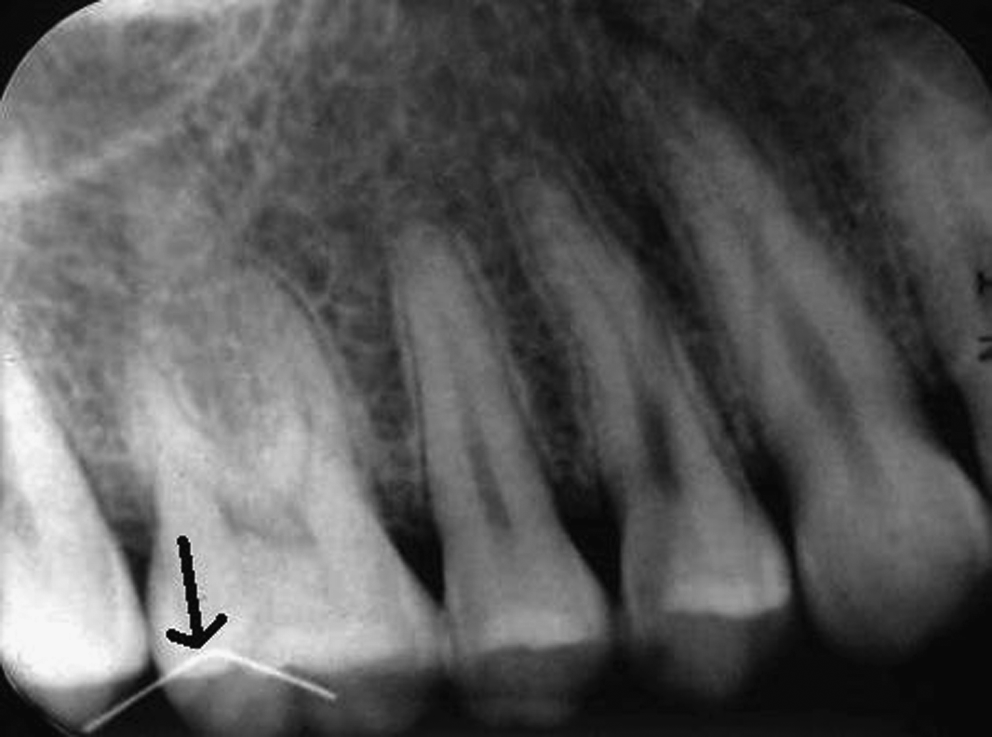
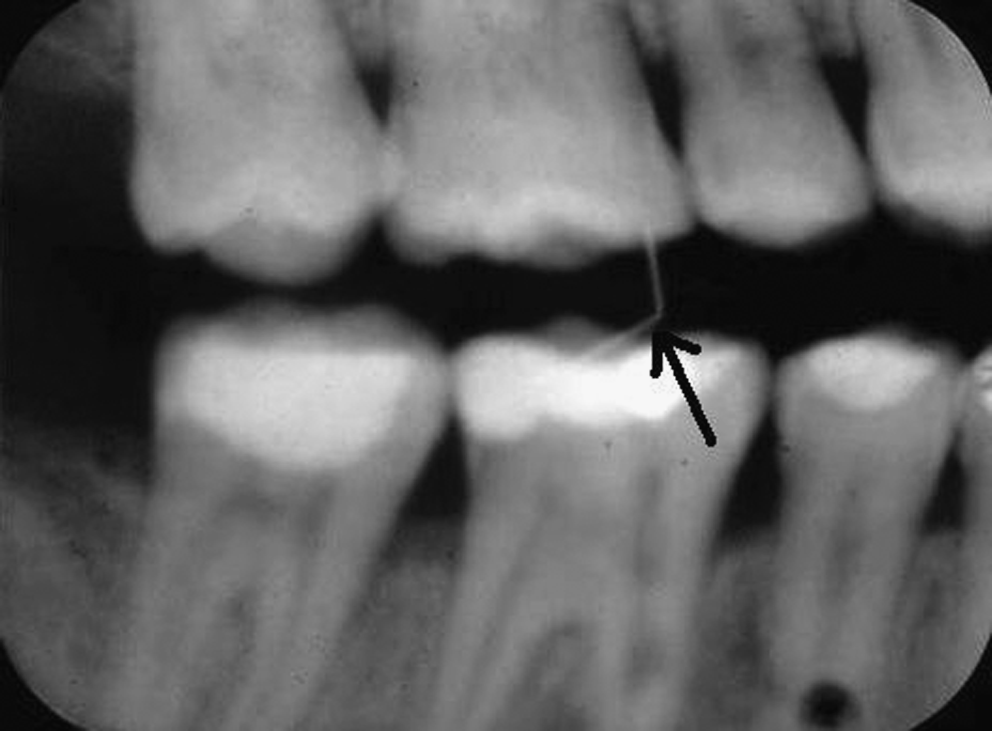
A 29-year-old, female Mexican citizen living in New York presented to the New York University College of Dentistry student clinic for a routine dental examination. Given that she had complaints of tooth pain, she was given palliative treatment and rescheduled for a comprehensive dental evaluation and radiographs. She returned a week later without pain to continue her examination. Full-mouth bitewing and periapical radiographs were then taken (Figs. 1–10).

Upper right molar periapical X-ray—first view.
Upper right molar periapical X-ray—second view.
Right molar bitewing X-ray—first view.

Upper left molar periapical X-ray—second view.
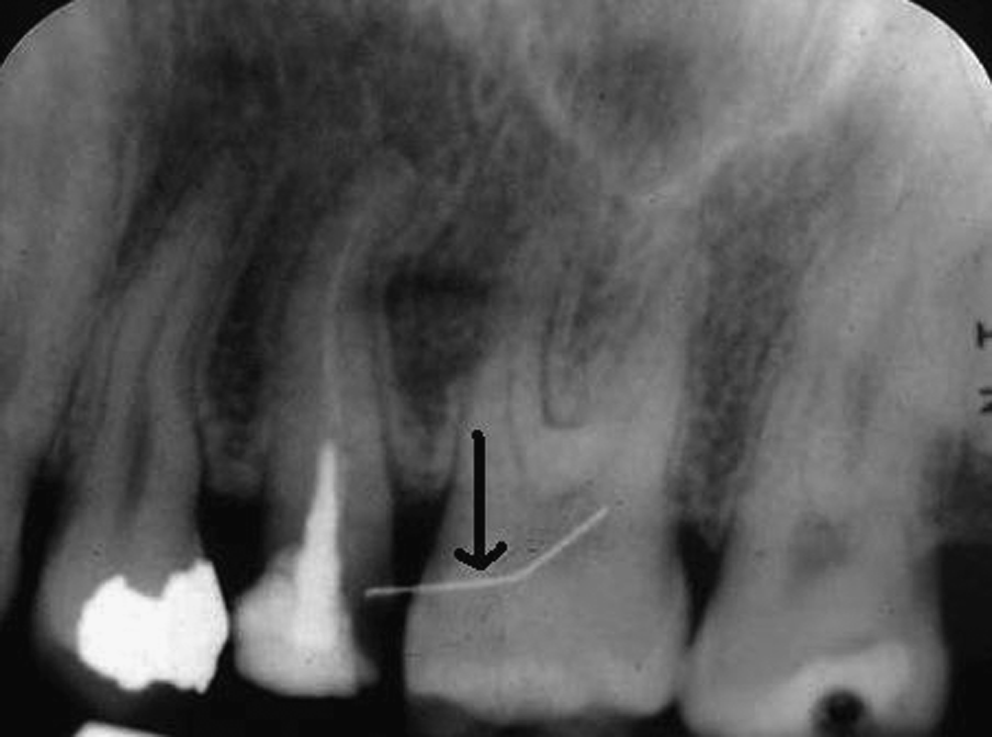
Upper left molar periapical X-ray—first view.
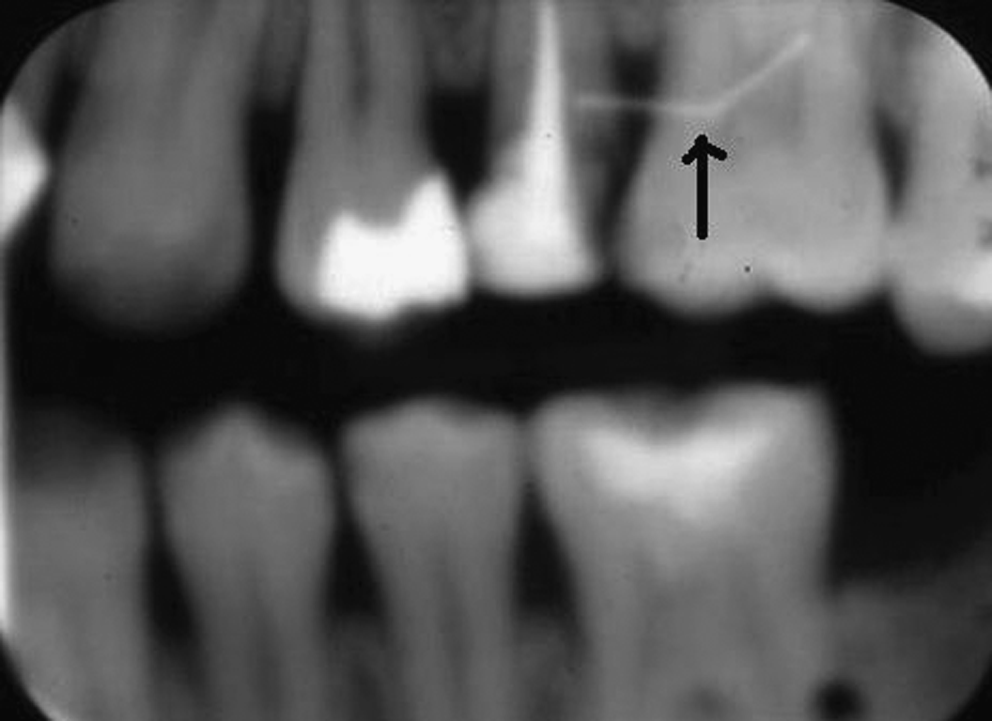
Left molar bitewing X-ray—first view.
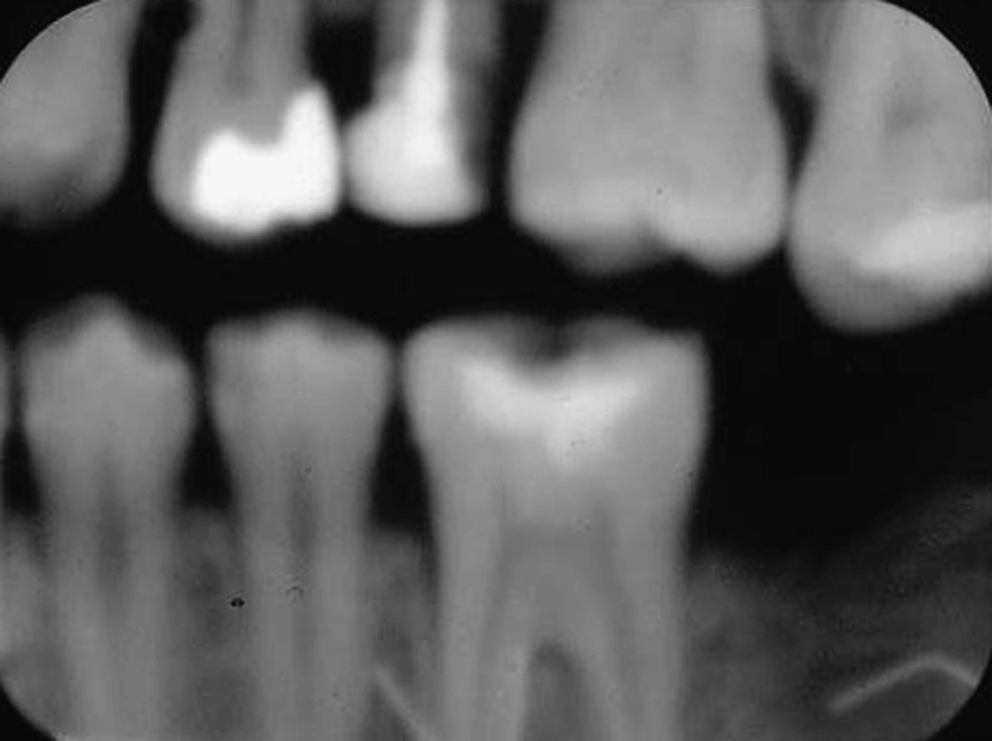
Left molar bitewing X-ray—second view.
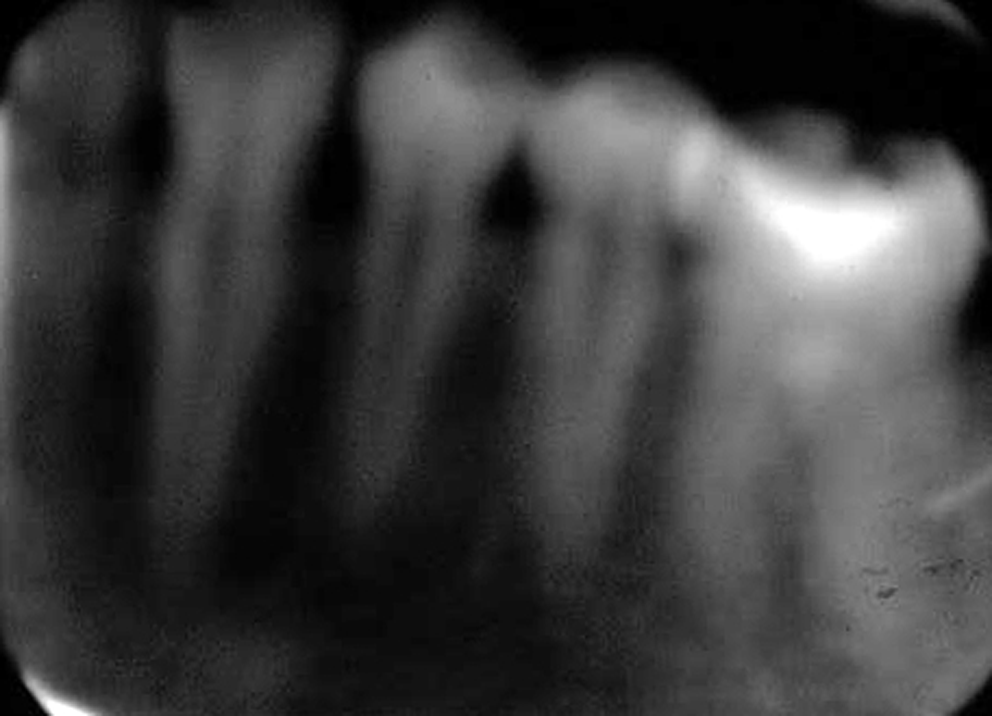
Lower left molar periapical X-ray—first view.
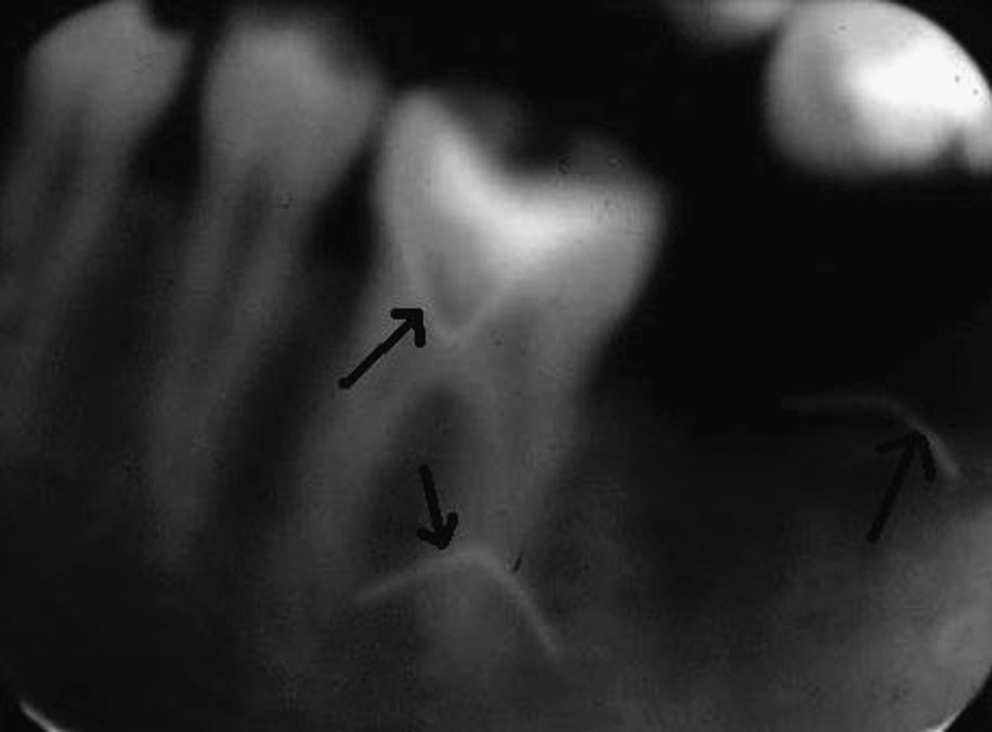
Lower left molar periapical X-ray—second view.
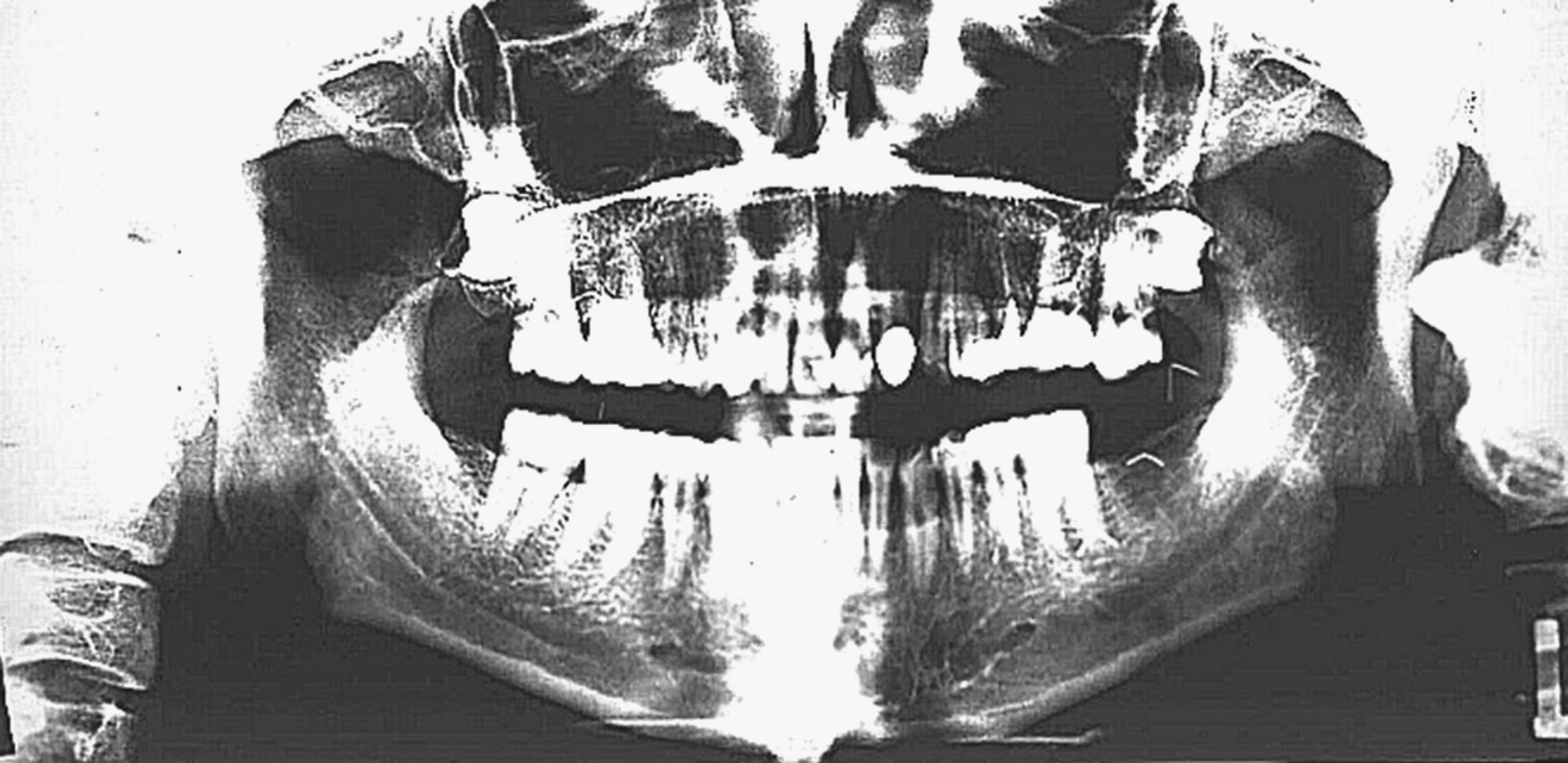
Panoramic X-ray.
Past Medical History
This patient stated that she was allergic to penicillin.
Six years previously, she had been injured in a work-related accident and was eventually diagnosed with right facial paralysis. Approximately 6 years ago, she went for one acupuncture treatment session for her facial paralysis and stated that the needles were so painful that she ran out of the clinic and never went back. She does not remember whether or not the needles were removed.
Examination
This patient had dental caries on multiple teeth, mild periodontitis, right temporomandibular joint pain on palpation, and some residual right facial paralysis. Full-mouth bitewing and periapical radiographs revealed multiple fine-line radiopacities in the right and left molar views. (Figs. 1–9)
A panoramic radiograph was taken that revealed impacted upper wisdom teeth, and missing teeth #s 17, 18, and 32. Five 6-mm to 9-mm fine wire-like radiopacities were seen in the areas of teeth #s 3, 14, 15, 18, and 19 (Fig. 10). All had an approximate right angle bend at about the midway point. The radiopacities on the radiographs were interpreted as consistent with parts of retained acupuncture needles.4,14–16
Results
While this patient had retained the acupuncture needles, she was asymptomatic.
Although multiple attempts were made to contact her for follow-up after her routine dental treatment, she did not respond.
Discussion
Traditional acupuncture points used for Bell's Palsy are ST 5 and ST 7 among others, which are located in the facial tissue, in the area of the upper and lower molars.17,18
Based upon this patient's history and radiographic findings, the multiple radiopacities found on the dental radiographs were interpreted as being consistent with parts of acupuncture needles being retained in the facial tissue in the areas of ST 5 and ST 7. (Figs. 1–10) It was not known how the needles were broken—whether by accident or on purpose. She had no complaints of any pain from the retained needles. Broken needles are a known complication of acupuncture however, and even though very rare, can have serious consequences.4–16
This patient was lost to follow-up after her routine dental treatment was completed. Multiple attempts to contact her for further history and imaging were unsuccessful.
Conclusions
The evidence presented in this report suggests that this is a case in which remnants of acupuncture needles have been retained in the tissue of the face for at least 6 years without the patient reporting any symptoms, and where no clinical signs were uncovered during the examination.
Footnotes
Disclosure Statement
No competing financial conflicts exist.