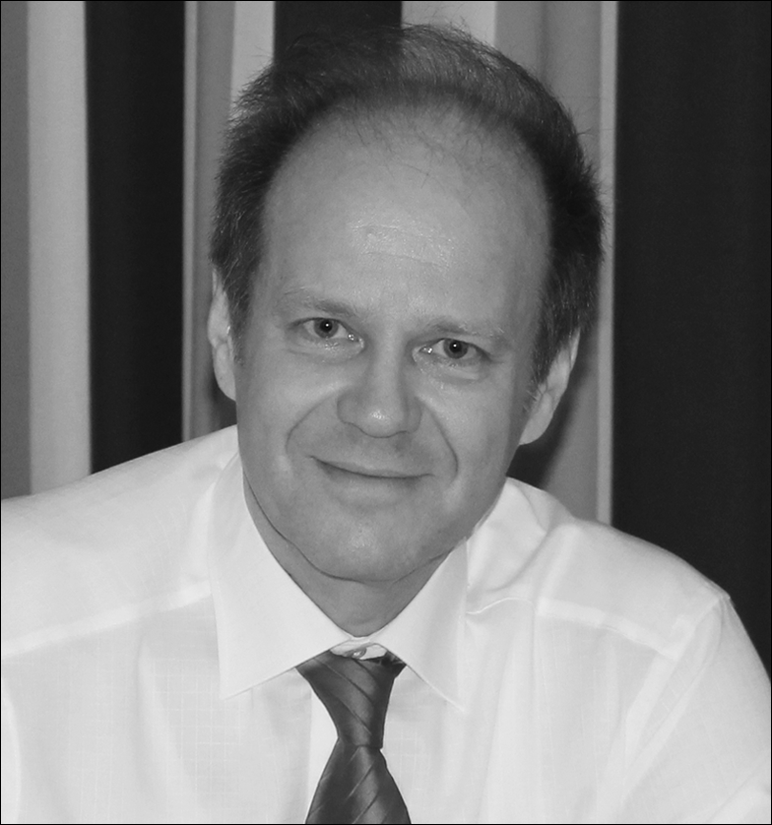
In the first of a series of interviews our editorial staff will be conducting with leaders in medical acupuncture, Consulting Editor Anne Hendren, Ph.D. interviewed Medical Acupuncture Associate Editor, Gerhard Litscher, MSc, PhD, MDsc, of Graz, Austria. Not only has Dr. Litscher been among the early and ongoing contributors of quality articles to Medical Acupuncture, he has also fostered growth in the field by establishing a laboratory in Austria that trains scientists and physicians from many countries to expand their knowledge of acupuncture, its mechanisms of action, and its potential as a curative tool in the physician and practitioner armamentarium. This interview profiles a researcher who has spurred growth of the technology and who is showcasing his laboratory and colleagues' work at a 1st World Congress of High-Tech Acupuncture and Integrative Medicine in Nanjing China in May 2014.
Medical Acupuncture:Was it your education that sparked your interest in acupuncture and high technology?
Dr. Litscher: Not exactly. My two doctoral dissertations, both from Universities of Graz—the first for technical sciences; the second for medical sciences—focused on the biophysiologic effects of neurosurgical intervention. My 1987 doctoral thesis for technical sciences was entitled “Multimodal Evoked Potentials in Coma and Brain Death Diagnosis and During Neurosurgical Interventions Under Normal and Hyperbaric Conditions”* focused on evoked potentials in the intensive care unit and the operating theater and had nothing to do with acupuncture.
However, my second dissertation for my doctorate of medical science expanded on this interest on neurosurgical intervention to include laser-needle stimulation at specific locations and was entitled “Neuromonitoring: Objectivation and Quantification of Cerebral and Peripheral Effects of Laser Needle Stimulation.”†
Medical Acupuncture:How did you become interested in the high technology part of medicine?
Dr. Litscher: I worked in an intensive care unit [ICU] for many years, performing measurements in comatose and brain-dead patients. These measurements were performed with high-technology instruments available in the ICU, which are used in patients with, for example, severe head injuries. The prognosis, “will the patient survive or not?” was the core question that these measurements were supposed to answer. For this question, we developed a multifunctional helmet, constructed to apply methods for detecting bioelectrical brain activity, measurements of oxygen metabolism in the brain, and sensors for measuring blood flow in the cerebral arteries.
Medical Acupuncture:How did you become interested in acupuncture?
Dr. Litscher: In 1997, I was working on a patient using our helmet/measuring device. An anesthetist approached me in the ICU, asking me whether I would be interested in performing a measurement during acupuncture. Given that our equipment was able to detect even small changes very sensitively, he said it might be interesting to see what happened during acupuncture. At first, I refused, saying I was a serious scientist and did not want to have anything to do with acupuncture. Two weeks passed, and the anesthetist, who was also a pain therapist, came to me again. I agreed under the condition that we would only do very few measurements. We performed these measurements on healthy volunteers (doctors from our clinic) with the results showing on my monitors. Our equipment revealed measureable changes. This surprised me and aroused my curiosity. Since that time, I have been the investigator asking for more patients to analyze and monitor using our high-technology equipment during acupuncture procedures.
Medical Acupuncture:Why did you decide to develop a laboratory that would combine both high technology and acupuncture?
Dr. Litscher: From the time of the events I just mentioned, we have been writing one research application after the other, thus, keeping our small team “alive.” In the meantime, many PhD students and research assistants and professors from China come to our laboratory in Graz to perform joint investigations on high-tech acupuncture. In 2005, I went to China for the first time to participate at a conference. I am now also a visiting professor at seven universities in China, and I went to China four times to lecture in 2013. Our Chinese collaborations are listed in detail in a recent issue of Medical Acupuncture.‡
Medical Acupuncture:How do you define high tech acupuncture?
Dr. Litscher: We originally had created the term “computer-controlled acupuncture” in Graz in 1997, when Zang-Hee Cho [MS, PhD], from Korea, was the keynote speaker at a conference that was the precursor to this international congress. Dr. Cho was one of the first to investigate acupuncture with functional magnetic resonance imaging. At that time, our laboratory was analyzing the use of acupuncture with other high-technology methods, such as ultrasound, laser Doppler flowmetry, and laser Doppler imaging. The term computer-controlled acupuncture does not mean that an acupuncturist is no longer needed; rather, it means that acupuncture stimulation can be controlled by a computer (laser acupuncture or EA) and that the physiologic effects of acupuncture can be measured by modern technical equipment simultaneously with the procedure. As the term computer-controlled acupuncture is misleading—implying that only computers and not acupuncture practitioners are involved—we created the term “high-tech acupuncture” in 1998 as a trademark. In our opinion, high-tech acupuncture is easy to understand and self-explanatory. It includes the combination of practitioners skilled in acupuncture who are also using high-technology methods for stimulation and/or recording and analyzing acupuncture's effects.
Medical Acupuncture:How is your high tech acupuncture symposium going to be different from traditional acupuncture meetings at which interesting articles are presented?
Dr. Litscher: The lectures at the 1st World Congress of High-Tech Acupuncture and Integrative Medicine will cover research and practice on evidence-based complementary medicine, modernization of traditional acupuncture, EA, laser acupuncture, pharmacopuncture, teleacupuncture, and integrative laser medicine. Poster presentations will complement the lectures. A typical acupuncture conference would have forums or short articles, together with posters, on some of these topics, but our Congress will focus on the use of cutting-edge medical technology with the ancient medical technique of acupuncture.
The focus of the Congress will be to analyze and clarify the balance between high-technology medicine and traditional approaches. Modern technology from the ICU and high-technology Western and Eastern hospitals have facilitated coordination between traditional Eastern medicine and modern Western medicine. Our Congress will examine if this has been well-accomplished. Articles at this Congress will also highlight advances in lasers and telecommunications as they relate to the practice of acupuncture. In addition, the Congress will focus on a number of growth areas in acupuncture and telecommunications, namely, the combination of pharmaceuticals—both Chinese and Western—which are combined with ancient and novel needling technologies. Investigators at the Congress will discuss how administration of different lasers and pharmaceuticals into areas or regions associated with traditional acupoints affects both ancient needling outcomes and drug effectiveness.
Medical Acupuncture:Why is the Congress being held in China versus elsewhere?
Dr. Litscher: Our scientific team, based in Graz, Austria, has been investigating Chinese medicine for several decades. The city of Graz in Austria has been a center of Traditional Chinese Medicine [TCM] research in Europe since 2007. Our research team is interested in evidence-based scientific research on novel technologies. To date, some aspects of TCM have not been given much attention so far, for example the objectivation of new acupuncture techniques, such as painless laser acupuncture and EA. Our laboratory also scrutinizes effects of acupuncture in combination with other surgical and pharmaceutical techniques. Our team has implemented several research projects in cooperation with Chinese researchers based in China on the topic “Methodology and Mechanism: Study of Application of Acupuncture.” Because acupuncture and its accompanying Chinese medical techniques for treatment of disease evolved in China more than 4000 years ago and Western medical technology is increasingly available there in China, it seemed an appropriate choice for the first world Congress on this combination of ancient and modern medicine. Insofar as the use of Chinese medicine and acupuncture technologies for treatment of disease is spreading globally, it may be appropriate to have this world congress in other countries at some future date.
Medical Acupuncture:Why should practitioners or researchers attend the congress in Nanjing?
Dr. Litscher: Participants will get the latest information on the topic. They will meet top leaders from China, Europe, the United States, and many other countries. Attendees will be able to discuss their results at the Congress, perhaps initiate new intercontinental investigations, gain new friends, and renew old acquaintances. Furthermore, attendees will enjoy a beautiful and less well-known part of China.
Medical Acupuncture:Finally, Dr. Litscher, is there anything else we should know about you or about the Congress that will enlighten the Medical Acupuncture readership regarding what you are trying to accomplish in this event?
Dr. Litscher: I would like to acknowledge two invaluable colleagues—Professor Lu Wang [MD] and Ms. Ingrid Gaischek [MSc]—for their long-lasting close collaboration. Without their help, none of these research activities would have been possible. In the last years, Magna Chairman and founder Frank Stronach has generously supported our research activities. Thank you Frank for your support.
Footnotes
*
Litscher G. Multimodal evoked potentials in coma and brain death diagnosis and during neurosurgical interventions under normal and hyperbaric conditions [dissertation]. Graz, Austria: Graz University of Technology; 1987.
†
Litscher G. Neuromonitoring: Objectivation and quantification of cerebral and peripheral effects of laser needle stimulation [dissertation]. Graz, Austria: University of Graz; 2003.
‡
Litscher G. Transcontinental high-tech teleacupuncture studies and integrative laser medicine. Med Acupunct. 2013;25(2):114–119.