




Abstract
Abstract
Sleep disorders of all kinds are extremely frequent, in particular, insomnia, which affects 30%–40% of the population. Inadequate treatment of insomnia can easily transform an occasional poor sleeper into a patient with chronic insomnia, who, quite often, will become dependent on the regular use of medication. Obviously, the long-term health hazards of pharmaceuticals for treating sleep disorders are greatly ignored, as most have been on the market for only a few years. It is, therefore, urgent to propose an integrative and holistic approach to sleep-related problems.
Although acupuncture has proven its efficiency for treating insomnia, unfortunately, most clinicians revert to standard “recipe-type” point combinations rather than designing personalized treatments for their patients.
In Classical Chinese Medicine (CCM), the inner synchronizers that help patients to adapt to outer changes are the Eight Extraordinary Channels. A comprehensive approach based on the diagnosis of these channels can be an excellent option for developing individualized acupuncture treatments for patients. Western neurohumoral theories and discoveries about sleep are detailed and compared with classical Chinese concepts to deepen the understanding of the energetic aspects of sleep. Finally, a more effective acupuncture treatment approach is proposed. A proper diagnosis of insomnia based on CCM principles increases the efficiency, and reduces the number and duration, of acupuncture treatments.
Introduction
S
The sleep–wake cycle is the most important circadian rhythm in human beings and is an excellent indicator of the body's internal equilibrium and health. Proper sleep is indispensable to health, and analyzing sleep from a Chinese medical perspective, provides a fairly good idea of the internal balance of the Five Substances and the Zang-fu organs.
Sleep is defined as a natural and regularly recurring condition of rest for the body and the mind that has been observed both in humans and in animals. During sleep, the consciousness is altered, and there is a partial inhibition of sensory activity and nearly of the all voluntary muscles. Sleep is common to all mammals and birds, and is also seen in many reptiles, amphibians, and fish. In humans—and the majority of other animals that have been studied (such as some species of fish, birds, ants, and fruit flies)—regular sleep is essential for survival.
In Chinese medicine sleep and night-time rest are part of the Yin phase and are maintained in a rhythmic balance with the Yang daytime activity. In CCM sleep is also defined as the relaxation of the muscle tone and the mind as reflected in the Chinese term of An Mian, meaning Peaceful Sleep. The cessation of all mental activity is represented by the concept of Calming of the Mind–Spirit Shen, which is also referred to as “Shen retiring inward into the Blood at night.” The relaxation of the muscle tone is explained by the inner movement of “Defensive Energy Weiqi,” which is under the control of the Liver.
In most species—mammals and birds in particular—sleep is divided into two broad types (or stages): Rapid eye movement (REM) and non–rapid eye movement (NREM or non-REM) sleep. Each type of sleep has a distinct set of physiologic, neurologic, and psychologic features.
In humans, sleep cycles average from 90 to 110 minutes and are comprise of four stages, with each stage possibly having a distinct physiologic function. Sleeping pills, alcohol, or drugs, may suppress certain stages of sleep, resulting in sleep that does not fulfill its physiologic functions. Hence, the person wakes up still feeling tired after apparently sufficient sleep.
The American Academy of Sleep Medicine (AASM)
1
has classified the sleep stages as identified by polysomnography:
• Stage N1—drowsiness or somnolence • Stage N2—superficial sleep with a decrease of muscular activity representing 45%–55% of total sleep time • Stage N3 (deep or slow-wave sleep)—deep sleep, as evaluated by the delta activity; parasomnia, such as sleepwalking, sleep-talking, night terrors, or bedwetting may occur during the N3 stage. • REM sleep, also known as paradoxical sleep or dreaming—accounting for 20%–25% of total sleep time in human adults and being the last part of a sleep cycle of 90–110 minutes; REM sleep increases in duration throughout the night or sleeping period.
It is important to emphasize that, for sleep to be effective, two of the above stages are absolutely indispensible, the N3 stage and the REM sleep. After a period of sleep deprivation, the durations of N3 and REM sleep increase substantially to compensate for the missing sleep times. Therefore, the diagnosis of insomnia is based not on the length of sleep, but on the state of the person upon waking, if the patient feels rested or not.
The circadian rhythm (the sleep–wake cycle) regulates most biologic functions, including sleep, and maintains inner homeostasis. This rhythm is subject to two synchronizers, internal (individual) and external (day-and-night rhythm). The primary circadian clock in mammals is localized in the suprachiasmatic nucleus (in the hypothalamus), receiving information about light from the retina. The pineal gland secretes melatonin. The nightly peak of melatonin enhances sleep. Interestingly, the major acupuncture points indicated in insomnia, such as BL 1, Yintang, DM 20, and Sishencong, seem to correspond anatomically to the pituitary and pineal glands. Body temperature also has a similar alternating rhythm. The inhibiting role of adenosine, also seems to play an important role in coordinating the inner synchronizer, the circadian clock.
There seems to be an interaction between sleep and body-temperature rhythms. Falling asleep corresponds to a lowering of the body temperature, and deep sleep occurs during the lowest temperature dip, whereas waking occurs during the ascending phase of the curve (Fig. 1).
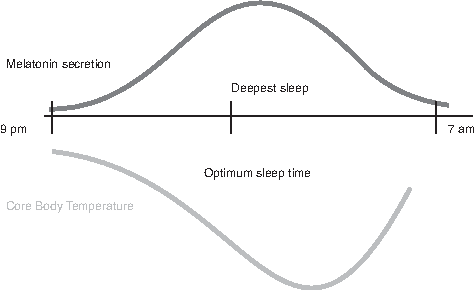
Optimum sleep time. Deep sleep occurs when melatonin levels are at the highest peak and the core body temperature is at its lowest level (2–4
In normal conditions, the external synchronizer, day–night rhythm, seems to play a predominant role.
In CCM theories, the inner harmony and balance is maintained by the Eight Extraordinary Vessels. Interestingly, the earliest Chinese medical discussions about sleep have related the sleeping phenomena to the movements of Weiqi/defensive energy, orchestrated by the Yin and Yang Qiaomai/heel “stepping” Extraordinary vessels. In fact, Weiqi, which is responsible during the day for maintaining muscle tone as well as surface integrity and temperature, retires inside during the night allowing the muscles to relax, also explaining the drop in body temperature. These two channels meet at the point BL 1/Jingming, which is physically located in the proximity of the suprachiasmatic nucleus.
The Ideal Amount of Sleep
It is not so much the length of sleep, but rather the quality of sleep that is important—this defines sleep efficiency. The optimal amount of sleep is only meaningful if it is related to the person's circadian rhythm. Sleep timing is crucial and, if a person's major sleep episode occurs at the wrong time of the day, the person's sleep will be relatively inefficient and inadequate. The best time to be asleep is at least 6 hours before the lowest body temperature period (Fig. 1). 2
Ideally the best time to sleep is when the two circadian markers, maximum melatonin concentration and minimum core body temperature, occur after the middle of the sleep episode and before awakening. 3
This point is very crucial for understanding one of the negative impacts of the modern lifestyle on sleep. Melatonin levels start increasing with the waning of the day and diminishing of the light. At a certain point, this increase of melatonin levels causes drowsiness and the need for sleep. The deepest and most restorative levels of sleep coincide with the highest levels of melatonin and the lowest point of core body temperature. Exposure to bright (artificial) light sources—in particular, television or computer screens—shortly before going to bed, results in a delayed increase in melatonin. This, in turn, causes difficulties with falling asleep or superficial sleep and waking in the middle of the night. Deep sleep would only be achieved toward the end of the night, usually shortly before the subject has to get up. This wrong sleep hygiene, combined with frequently overheated bedrooms, has nefarious effects on sleep in our more advanced and industrialized societies, explaining the ever-increasing need for chemical sleeping aids.
The need for sleep varies with age and physical condition. A newborn baby sleeps up to 18 hours, half of which is REM sleep. This ratio progressively declines so that, by age 5, the child sleeps ∼12 hours per day with only ∼2 hours of REM sleep (Table 1). 4
REM or Paradoxical Sleep/Dreaming
The most fascinating—and yet the least understood—part of sleep is undoubtedly the paradoxical sleep stage or dreaming. Dreams occur mostly in REM sleep and seem to be related to the pons, part of the brainstem, relaying sensory information between the cerebellum and cerebrum, which also control arousal and regulate breathing.5,6 During REM sleep, certain neurotransmitters are usually completely suppressed, thus resulting in inhibition of motor neurons, a condition known as REM atonia, which prevents dreams from resulting in dangerous movements of the body.
There are many current scientific theories that researchers are suggesting, attempting to explain the mechanism and the functions of dreaming. These theories can be roughly grouped into two broad categories: (1) a purely neurologic process and (2) a rather psychologic base for dreaming.
Positron emission tomography (PET) studies have show two areas of the brain that are highly activated during REM sleep: the limbic (emotional behavior) and paralimbic systems. 6
The resulting brain functions create a reality constructed from personal associations of events, emotions, symbols, and metaphors, in which there is no distinction between the Self and the Other. The dream imagery and space, as well as the sequence of events, do not have to follow any logical pattern. However, the physical—especially the emotional—perceptions are quite real, resulting in biologic responses in the body, which would have resulted in intense physical movements, had the body not been a total temporary paralytic state.
In the mid 1980s, physiology researcher, Pert, discovered the chemical interrelations among the mind, behavior, and the neuroendocrine and immune systems, in the form of neuropeptides. 7 Proponents of the science of psychoneuroimmunology explain that this mind–body relationship is primarily an emotion–body communication. In other words, human physiology is connected to human emotions. Pert believes that “dreams are direct messages from our body–mind, giving us valuable information about what is going on physiologically as well as emotionally.”
The neurohumoral explanation of dreams is one of many other hypotheses that have been proposed about the function of dreaming. The most relevant theories are from the psychoanalytic schools. As reflected in The Interpretation of Dreams by Freud, 8 dreams are considered to be symbolic expressions of frustrated desires that had been relegated to the unconscious mind. In Freudian and Jungien psychoanalysis, an important place has been delegated to the interpretation of dreams.8,9
Human beings dream ∼2 hours each night, which represents, during a normal lifespan, a total of ∼6 years of dreaming time.
Studies show that various species of mammals and birds experience REM during sleep, and experience the same series of sleeping states as humans. 10
Most dreams last from 5 to 20 minutes. REM sleep episodes lengthen progressively throughout the night, with the first episode being shortest, and the following episodes increasing to 15–20 minutes at the end of the night. Dreams are remembered when a person awakens prior to the end of the REM period. The ability to recall appears to be related to the vividness of the dream imagery, colors, and emotions.
According to CCM, two organs play a central role in sleep. The role of the Heart/Xin is to help the mind–consciousness/Shen to retire into the Blood enabling cessation of mental activity. In addition, the Liver/Gan is in charge of managing withdrawal of Weiqi and the Ethereal soul/Hun. The latter is responsible, among many other things, for imagination. The Chinese explain dreaming as the periodic escaping of the Hun and its “wandering.” In pathologic disturbances, the Ethereal Soul/Hun may wander excessively to cause dream-disturbed sleep or even nightmares. Two phenomena occur during dreaming, both strongly supporting the participation of the Chinese concept of the Liver in this process. First, REM, denotes intense visual activity—a kind of inner vision—through which the Liver releases its Internal Wind. Second, the flow of Blood goes toward the outer genitalia, which happens to be the territory of the Liver channel. See Table 2.
REM, rapid eye movement.
Sleep Disorders
An earlier edition of the International Classification of Sleep Disorders, documented 88 official sleep disorders. 1 Sleep disorders were broadly classified as dyssomnia, parasomnia, and secondary sleep disorders.
Dyssomnia is a broad classification of sleeping disorders that includes primary insomnia and excessive sleepiness. These disorders are characterized by a disturbance in the amount, quality, or timing of sleep. There are >30 kinds of dyssomnia subdivided into intrinsic, extrinsic, and disturbances of the circadian rhythm.
Parasomnia is a category of sleep disorders that involves partial arousals with abnormal and unnatural movements, behaviors, emotions, perceptions, and dreams occurring while a person is falling asleep or between sleep stages, or when a person is aroused from sleep. These disorders include night-terrors, sleepwalking, sleep-talking, bruxism, nocturia, and more.
Insomnia is the most common sleep disorder, affecting 30%–40% of the general adult population and ∼15%–25% of children. The types of insomnia include:
• Primary insomnia—not caused by any other physical, psychiatric, or environmental condition • Secondary insomnia—caused by other intrinsic or extrinsic conditions, medications, or substance intakes • Acute insomnia—short-term, lasting up to a few weeks • Chronic insomnia, including periodic insomnia—insomnia for at least 3 nights per week for >1 month.
Important factors that cause insomnia are wrong sleep hygiene, such as irregular sleeping habits; intake of stimulating foods, drinks, and drugs; engaging in stimulating activities before sleep; and an uncomfortable sleeping environment. Recently, the negative influence of strong light sources, especially television and computer-screens, on the delayed production of melatonin, has been demonstrated. Other factors include:
• Use of stimulants and depressants • Caffeine (an antagonist of adenosine receptors that slows the action of the hormones in the brain that cause somnolence; caffeine sensitivity is individual, but its stimulating effects may last up to 12 hours; it may cause a rapid reduction in alertness as it wears off) • Energy drinks (function very much like caffeine; some individuals may even experience sleep disruption when taking some vitamins, such as vitamin C or even mint tea) • Drugs containing amphetamines • Cocaine • Alcohol (initially causes sleepiness and is therefore commonly used to enhance sleep, but, as alcohol has a rebound effect later in the night, this substance will disrupt the sleep strongly) • Other depressants, such as barbiturates, that act similarly like alcohol.
From a CCM perspective, during the waking stage, the Liver manages the circulation of Weiqi on the surface, and through the Jingjin/sinew channels, the muscular activity. The Liver plays an important role initiating sleep by mobilizing Weiqi inward, which results in relaxation of the muscular tonus as well as helping the mind to relax. This movement causes a sensory relaxation starting with the eyes (BL 1), going to the nose (LI 20), and then to the ears (GB 2), then to the throat area (ST 12), then to the chest, and then to the diaphragm, before passing to the Fu/Bowels. Any difficulty in the passage of Weiqi through these areas will manifest with various types of parasomnia, varying from Zao/restlessness, snoring, sleep apnea, tinnitus, bruxism, restless-legs syndrome, and night-time food cravings, to mention just a few.
The Weiqi then circulates in Zang/Organs, attempting to release any retained Xieqi/pathogenic factors. Both ancient texts, Suwen and Lingshu, have already indicated the significance of dream content in relation to Xieqi in a particular organ. Of course, pathogenic factors are not only external; as CCM explains, excessive or unexpressed emotions also generate internal pathogenic factors that need to be released through the work of the Hun in dreaming. Here, ancient Chinese medicine is fully in accordance with the modern psychoanalytic schools of thought.
The importance of dreaming, the different kinds of dreams, and their interpretations are explored in Acupuncture for Insomnia; Sleep and Dreams in Chinese Medicine. 11
Consequences of Inadequate Sleep
The American National Sleep Foundation recommends 7–9 hours of sleep for an adult as an optimum. Sufficient sleep promotes alertness, memory, problem solving, and overall health, as well as reducing the risk of accidents. 4
Cognitive performance declines with ≤6 hours of sleep. 12 However, several studies have shown that not only short sleepers (<5½ hours) have an increased mortality risk by 30%, but also the same phenomenon was observed for long sleepers (>9½ hours).10,12,13
Short sleep has also been shown to be a risk factor for weight gain, hypertension, and type 2 diabetes, sometimes leading to mortality; but, in contrast, no potential mechanisms no associated mechanisms between long sleep and increased mortality have been determined yet. Some other studies have observed the increased incidence of cardiovascular accidents in patients with sleep difficulties, particularly those with obstructive sleep apnea. Some cardiologists even advise the patients with cardiac problems to have their sleep evaluated in a sleep laboratory, in an attempt to reduce an important risk factor, which is inadequate sleep.14,15
Sleep quality also has an influence on chronic pain. 16 Furthermore, sleep difficulties are closely associated with psychiatric disorders, such as depression, alcoholism, and bipolar disorder. Up to 90% of patients with depression are found to have sleep difficulties.
Insomnia in Chinese Medicine
In a state of health, Yang-qi, expanding during the day, remains in perfect balance and in harmony with Yin-qi, which increases at night (Fig. 2).
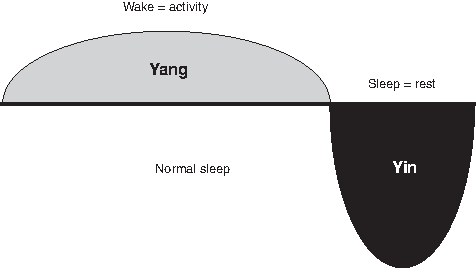
In a state of normalcy, the length (time) and the depth (space), of sleep is adapted to the length and intensity of daytime activity.
The length and depth of sleep are perfectly adapted to the length and intensity of daytime activity by specific internal factors, namely the Extraordinary vessels (Fig. 3).
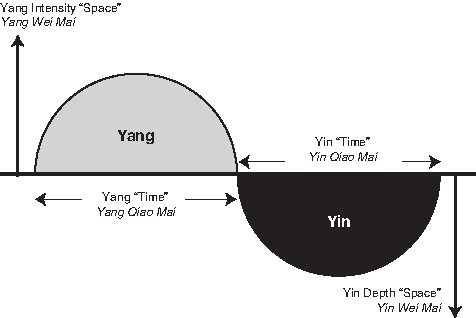
Yin and Yang are maintained in a dynamic state of equilibrium by Yin and Yang Qiao and Yin and Yang Wei Mai.
This balance could be viewed as being dependent on two parameters: (1) time and (2) space. In relation to sleep, “space” may be seen as depth or intensity of sleep.
Internal “synchronizers,” primarily the Extraordinary vessels, control these parameters, which define human basic and inherent rhythms. Four of these vessels are not only intimately connected to the internal systems and the Zang-fu, but are also permanently attuned to external variations, such as day and night and various climates (Fig. 3).
In the absence of disharmony of these synchronizers and other Zang-fu pathology, the body adapts perfectly to external variations and demands, while keeping its individual characteristics. This capacity to adapt to change defines the individual's state of health.
Insomnia is a Yang condition, most often the result of a disturbance of Yin. This Yin dysfunction may be caused by a reduced depth or length of Yin. Reduced depth of Yin is observed in cases of superficial or dream-disturbed sleep (Fig. 4). However, a shortened sleep time may be the consequence of difficulties with falling asleep or sleeping too early or waking frequently (Fig. 5). The type of insomnia, therefore, is determined by the fact that it concerns the length or the depth of sleep, or both.
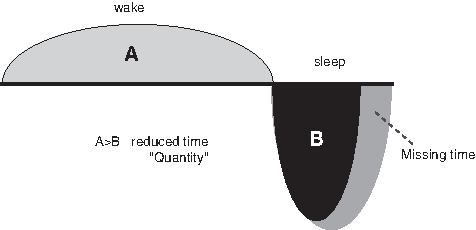
Insomnia caused by reduced sleeping time.
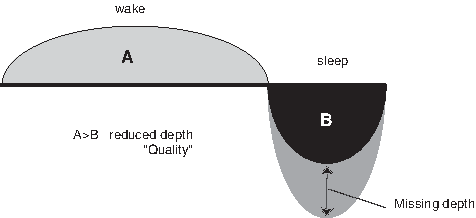
Insomnia caused by poor sleep quality (superficial sleep).
Sleep and the Extraordinary Channels
All Yin and Yang phenomena reflect on the Eight Extraordinary channels/Qi Jing Ba Mai. These channels, acting as reservoirs, maintain the body's internal balance and harmony as well as adapting the inner milieu, the microcosm, to the outer variations, the macrocosm. The Extraordinary vessels are considered the links between the Pre-Heaven and the Post-Heaven Qi.
The four fundamental channels, Chong Mai, Du Mai, Ren Mai, and Dai Mai, are directly connected with the Source, Dongqi (the moving Qi between the Kidneys). These channels participate in the first cellular divisions. Chong Mai, Du Mai, and Ren Mai are referred to as the “First ancestry” and are considered collectively as the Source of Creation. They all derive their energy from the Kidneys and circulate the Jing Qi/Essence throughout the body.
The other four Extraordinary channels, deriving from the Kidney and Bladder channels, participate mainly in modulating (regulating) the Hereditary Qi. The Yin and Yang Wei Mai/Binding channels regulate variations in the Yin and Yang spaces. The Yin and Yang Qiao Mai/Stepping or heel (motility) channels regulate variations in Yin and Yang rhythms (times).
The Kidneys, through the Chong Mai and Ren Mai, program and regulate the cycles of life (e.g., puberty, menopause), and, through the Yin and Yang Wei Mai and Yin and Yang Qiao Mai, the rhythmic changes (e.g., sleep–wake, menstrual cycle, pregnancy cycle) and psychospiritual transformations.
The Eight Extra Vessels consolidate and regulate the quantity of energy in the main channels either by absorbing the Excess of Yang (external Heat, or Liver Yang rising) or the Excess of Yin (Dampness and Phlegm), or by transferring energy to a Deficient channel, or by redistributing Qi between areas of the body.
On the one hand, the role of the Eight Extra channels in the regulation of sleep cycles, as well as the impact their disturbance may have on sleep patterns is clear. On the other hand the direct connection between these channels and the central nervous system activity seems to be quite probable.
At all times Yang-activity has to be balanced with Yin-rest.
Sleep Organization and the Extraordinary Channels
The Yin and Yang Qiao Mai have traditionally been implicated in sleep pathology, more specifically for symptoms related to day and night.
Yin Qiao Mai symptoms include:
• Shi/repletion—Hypersomnia; headaches; epilepsy (worse in the day); medial leg pain or general spasms; lombalgia (irradiating the genitals or to the chest and neck); difficulty with swallowing; redness of the inner corner of the eye; and chronic eye diseases • Xu/vacuity: Insomnia; headaches; pain (worst at night); convulsions; weakness or paralysis of legs; blurred vision; difficulty with opening the eyes; anuria; spermatorrhea; impotence; sterility; and menstrual problems.
Yang Qiao Mai symptoms include:
• Shi/repletion—Insomnia; headaches (worst at night); lumbar pain, one-sided pain or weakness; pain and tightness (not localized, worst at night); lateral leg and hip pain and spasticity; internal or external Wind (e.g., convulsions, tinnitus, epilepsy, Parkinson's disease); nose bleeding; red and painful eyes; and exophtalmia • Xu/vacuity—Lassitude during the daytime, lack of strength, unilateral paralysis of one leg; hemiplegia; apathy; and tearing of the eye.
The Yin and Yang Wei Mai, are involved with regulation of Weiqi and its movements between the surface and the depth; hence the Yin and Yang Wei Mai play an important role in the muscular and mental relaxation necessary for sleep to occur.
Yang Wei Mai symptoms include:
• Shi/repletion—Alternating fever and chills; sensitivity to change of weather; insomnia with easy waking; chest oppression; changing moods pains and spasms; lombalgia; skin hyperesthesia; arthralgia (of hand or heel); parotiditis; diarrhea; headache with heat or storm; red or tearing eyes (with wind); otitis; deafness, tinnitus; acute sinusitis; facial neuralgia; eczema of the neck or ears • Xu/vacuity—Coldness; loss of strength with weather change (e.g., snow, rain); weakness or stiffness of limbs.
Yin Wei Mai symptoms include:
• Shi/repletion—Tightness or pains in the chest (Taiyin: sting, Jueyin: sharp, Shaoyin: stabbing); pain along the lower border of the rib cage; pain and spasms in the legs; very cold limbs; energy shooting up; intense headaches (vertex or occipital); hypertension; intestinal flatulence; lumbar aching (after emotional shock); palpitations; fear; panic attacks; phobias; agitation; nervous tics; nervous eating • Xu/ vacuity—Vacuity of Heart and Lung, hypotension; ptosis; depression; tears; oversensitivity; insomnia resulting from fear.
A number of recent studies have shown that, in normal conditions, the internal organization of sleep enables a reduction in the length of sleep by an increase in its depth with no somatic consequences.17,18
Yin and Yang are constantly maintained in a dynamic state of balance by the regulating function of the Yin and Yang Wei (Linking) and the Yin and Yang Qiao (Motility) vessels (Fig. 3). A disturbance of Yin (e.g., Yin-vacuity/Deficiency) would suggest either a weakness of the Yin Wei (Yin Linking) vessel or the Yin Qiao (Yin Motility) vessel, or an Excess of its opposite Yang Wei (Yang Linking) or Yang Qiao (Yang Motility) vessels. Thus, in an assessment of sleep disorder, consideration of the complementary Yang vessels is also important.
It may be presumed that, “time” is organized by the Yin Qiao (Yin Motility) and the Yang Qiao (Yang Motility) vessels, and that “space” is regulated by the Yin Wei (Yin Linking) and Yang Wei (Yang Linking) vessels.
Therefore, the assumption can be made that sleep, being a Yin phenomenon, is synchronized in its temporal structure by the Yin Qiao (Yin Motility) vessel and in its depth and intensity, by Yin Wei (Yin Linking) vessels. These two regulators are naturally in equilibrium with the other two synchronizers the Yang Qiao (Yang Motility) and Yang Wei (Yang Linking) vessels, which relate to a state of wakefulness and activity, thus balancing sleep with activity. As a result, the more intense or prolonged the activity, the deeper the sleep will be.
Furthermore, as both Yin Qiao and Yin Wei channels regulate the three aspects of Yin chronologically and qualitatively, dividing the sleep period into three segments and assessing the disturbed segment will result in a finer diagnosis of the disturbed channels or organs.11,19
Chronologically, the three segments of the night are regulated by the Yin Qiao vessel and will correspond first to Shaoyin (Heart and Kidney), next to Taiyin (Spleen and Lung), and last to Jueyin (Liver and Pericardium). See Figure 6.
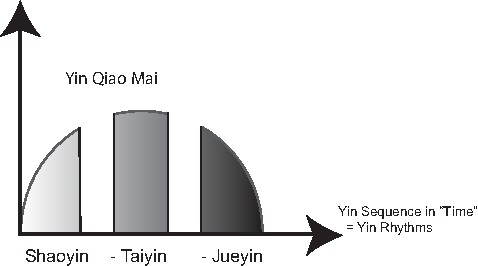
Yin Qiao Mai and the three Yin sequences in time: Shaoyin —>Taiyin —>Jueyin.
Spatially, the Yinwei Mai regulates the three segments of the night corresponding, respectively, to the Taiyin, Jueyin, and Shaoyin (Fig. 7).11,19
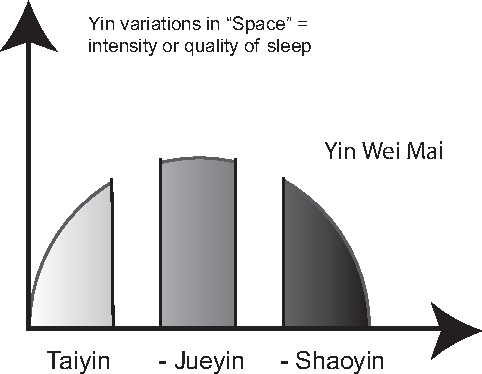
Yin Wei Mai and the three Yin sequences in space. Initial phase: Taiyin —>Mid-phase: Jueyin —>End phase: Shaoyin.
There is a fundamental difference between disturbances caused by Yinwei and Yinqiao that becomes very helpful in diagnosis. When the Yinqiao is affected, there is a disrupted timing of sleep. The person is wide awake as though the sleep time was over. This situation might involve the initial, middle, or end of the night segments. Contrariwise, when the Yinwei is causing the disturbance, sleep is either superficial, or the person feels sleepy, but cannot fall asleep because of restlessness or other types of manifestations; and the mind is unclear, maybe even cluttered with disorganized thoughts, again, causing difficulties with falling asleep or awakening in the middle of the night or in the terminal segment of the night.
The most pertinent fact about these four Extraordinary channels, which seem to regulate time and space, in other words basic human rhythms and cycles, is that tradition has indicated Xi-cleft points for them. A Xi-cleft point's function is to unobstruct or to unblock, indicating that these channels can become obstructed in a manner similar to that of the primary channels. Furthermore, the sensitivity of these Xi-cleft points, when palpated, would be excellent indicators of the disturbances of these channel systems. The points include:
• KI 8 Jiaoxin on the Yin Qiao (Yin Motility) vessel • BL 59 Fuyang on the Yang Qiao (Yang Motility) vessel • KI 9 Zhubin on the Yin Wei (Yin Linking) vessel • GB 35 Yangjiao on the Yang Wei (Yang Linking) vessel.
For example a patient having difficulties with falling asleep, without restlessness and with a clear mind, would benefit from regulation of Yinqiao vessel, especially if KI 8 proves to be reactive to palpation. Furthermore, the initial segment in time corresponding to Shaoyin indicates a possible disharmony pattern of the Heart or Kidney.
However, if the difficulty with falling asleep is caused by somatic manifestations, restlessness, agitation, etc., the Yinwei is selected, as confirmed by the sensitivity of KI 9. The channels and systems to explore would then be the Taiyin (Spleen and Lung).
Other manifestations may disturb the quality of sleep, such as restless legs, hot flashes, thirst or hunger, or disturbing dreams, all of which would signify a disturbance of Yinwei Mai.
In severe and chronic insomnia, both regulators could be affected. For example, in a menopausal syndrome caused by a depletion of Kidney-Yin (Shaoyin), there could be a disturbance of Yinqiao with difficulty with falling asleep (Shaoyin), as well as a disturbance of Yinwei with poor sleep at the end segment of the night (Shaoyin), with hot flashes and night sweating.
Treatment of Insomnia
Acupuncture has proven its efficacy for treating insomnia.20–46
Current Traditional Chinese Medicine (TCM) textbooks tend to analyze sleep based on Five-Substance or Zang-fu disharmony patterns. In the current author's personal experience, patients with chronic insomnia often present with several disharmony patterns that require correction, as well requiring as well as attendence to the underlying psychoemotional issues or Shen disturbance that is almost always present. Conversly, in recent sleep disturbances, there is often an absence of a Zang-fu pattern, which results in the standard application of a few “cure-all” points, such as HE 7 Shenmen; SP 6 Sanyinjiao; or Extra points Anmian, Sishencong, and Yintang. In both chronic and acute insomnia the Extraordinary vessels could be of a great help. Analysis of quality and timing of the sleep patterns, and palpation of the four Xi-cleft points, enables a more personalized and effective treatment strategy.
For example, to treat a patient with initial-phase insomnia who needs to read for an hour before falling asleep (which indicates that the mind is clear), denotes a Yinqiaomai problem confirmed by the reactivity of KI 8 (for Yinqiaomai) or BL 59 (for Yangqiaomai). As the initial phase is affected, points are chosen from the Shaoyin channels. The treatment could include: KI 6 (Key of Yinqiaomai) and other Shaoyin points (KI 7; HE 6; KI 26, etc).
A patient waking in the middle of the night with hot flashes and chest oppression would indicate a disturbance of Yinweimai in its middle segment (the Jueyin channel). The treatment would consist of PE 6 (Key of Yinweimai) and other Jueyin channel points (LR 3 or LR 8, PE 6 or PE 5, etc).
When sleep is disturbed by nightmares and dreams with a recurrent pattern, the dream content could be analyzed further according to the correspondence system and the appropriate Zang/organ be treated by using the Luo/Connecting channels or the relevant back Zhi/Will points to help the patient release the emotion and process the psychologic issue.11,19
Discussion
In most of the TCM centers that the current author has visited in Europe and China alike, insomnia is treated with standard points, usually in a course of 10 almost-daily sessions. If the insomnia persists, the treatment protocol is simply repeated. Quite often, only clinicians who prescribe herbs perform diagnostic evaluations and pattern identifications, and, even then, only treat the Blood or Yin or the Zang-fu patterns. In the current author's experience of treating insomnia for>30 years in the West, most patients have chronic insomnia and just treating one pattern is often insufficient. Furthermore, no patient has the leisure of seeking treatments on a daily basis over a period of weeks or months. In general, the current author believes strongly that acupuncture treatment strategies have to change and to adapt to the Western world and populations. The better understanding of a patient's overall condition can lead to a more-personalized treatment protocol and to faster results. Sleep, in particular, is an excellent mirror of the Yin–Yang balance and of the interplay of the internal regulators; hence, it should be analyzed systematically, even if sleep is unrelated to the chief complaint of the patient. By regulating the Extraordinary channels, we address not only the Five Substances and the organ functions, but the psychology of the person as well. Regulation of the Extraordinary channels requires fewer treatments, usually once per week, and, later, 1 or 2 treatments per month. In addition, appropriate acupuncture or herbal treatments may address the substance disharmonies and could be given in parallel with the acupuncture treatments.
Conclusions
When exploring the various modern theories concerning sleep, the sleep stages and the circadian cycle,41–45 the relation of sleep to the immune system, 46 the importance and role of dreams,47–52 and the observed health consequences of sleep or dream deprivation,53–56 one can only be amazed by the extraordinary similarity with the Chinese 2500 year-old medical concepts, especially those concerning sleep phenomena and dreaming.10,29,57–60*
It is particularly important to emphasize that CCM—as opposed to TCM—offers a much deeper understanding of sleep and, therefore, can propose more-appropriate therapeutic modalities for addressing patient's sleep-related problems.
Footnotes
Disclosure Statement
The author has no commercial association that might create a conflict of interest in connection with this article.