




Abstract
Abstract
Medical Acupuncture
is officially retracting the article entitled “Effects of Acupuncture on 1-Chloro-2,4-Dinitrochlorobenzene-Induced Allergic Contact Dermatitis in Mice” by Zhang, et al. [Med Acupunct. 2016;28(6):339–348; DOI: 10.1089/acu.2016.1172].
After publication of the article, the authors contacted the Editor requesting its withdrawal due to incorrect data found in Figures 6 and 7.
Medical Acupuncture
is committed to the highest standards of peer review and to the integrity of scientific publishing and the community it serves and, therefore, officially retracts this article from the literature.
Introduction
A
Corticosteroids, such as mometasone, have been the mainstay of therapy for dermatalogic inflammatory diseases. These agents' temporary effective anti-inflammatory effects are often accompanied with numerous adverse effects including skin atrophy, characterized by a profound loss in skin thickness and elasticity combined with decreased barrier function.3,4 Acupuncture is an ancient medical technique of China that can be traced back at least 2500 years. 5 It is now widely used as a complementary and alternative medicine in many countries. Acupuncture is becoming a popular way to modulate diverse immune disorders because it can be used long-term with almost no side-effects. 6 In several studies, acupuncture has been widely used to treat pain, wounds, and various skin diseases, such as inflammation.7,8 However, acupuncture's mechanism of action remains poorly understood.
NF-κB is a transcription factor that binds to promoters of many pro-inflammatory mediators and is considered to be a crucial regulator of inflammatory responses.9,10 NF-κB dimers are kept inactive in the cytoplasm through association with IκB proteins, thus stimulating activation of the IκB kinase complex, leading to phosphorylation, ubiquitination, and degradation of IκB proteins. Released NF-κB dimers translocate to the nucleus, binding specific DNA sequences and promoting transcription of target genes, whereas some proinflammatory cytokines drive activation of NF-κB in turn.11–14
Epidermal growth factor (EGF) has biologically active polypeptides comprised of 53 different amino acids that are involved in cell growth, differentiation, proliferation, metabolism, and skin regeneration.15,16 EGF has been linked to ACD therapy, NF-κB signaling, and phosphorylation of tyrosine residues of occludin, which is required for its assembly into tight junctions.
Recent studies have demonstrated that, as an integral part, NF-κB, EGF, and occludin are required for skin-barrier balance. 17 In this study, therapeutic effects of acupuncture and mometasone were analyzed. This research revealed an advantage of acupuncture for skin-barrier protection and faster skin regeneration, using a 1-chloro-2,4-dinitrobenzene (DNCB)–induced mice model. This research also showed that acupuncture, combined with mometasone, could serve as the best effective therapy for ACD.
Materials and Methods
Animals and Treatment
Adult female BALB/c mice were purchased from the animal center of Guangzhou University of Chinese Medicine. Both animal care and the study protocol were conducted according to the guidelines of the Committee on Care and Use of Laboratory Animals of the animal center of Guangzhou University of Chinese Medicine. The mice were maintained for 7 days in pathogen-free conditions before the start of the experiment. Mice were kept at a constant temperature (23°C) and humidity (55%), with a 12-hour light/dark cycle, and they were provided with a laboratory diet and water ad libitum.
After this 10-day adaptation period, the mice were randomly divided into 6 groups (each, n = 10). The control group was comprised of mice without any stimulus and who were painted with phosphate buffer solution (PBS, pH7.4). The DNCB group was comprised of mice sensitized with DNCB and painted with PBS. The N-MP group was comprised of mice sensitized with DNCB and given acupuncture at non-meridian points. The MP group was comprised of mice sensitized with DNCB and given acupuncture at meridian points (BL 17 [geshu], BL 20 [pishu], and ST 36 [zusanli]) for 10 minutes every other day (Fig. 1). The MM group was comprised of mice sensitized with DNCB and painted with mometasone at once after acupuncture every other day. The MO group was comprised of mice sensitized with DNCB and painted with mometasone on each dorsal skin every other day.

Body acupoints for acupuncture. Mice were treated at meridian points (geshu, pishu, and zusanli) for 10 minutes every other day.
For induction of ACD, 18 the surfaces of the dorsal skins of the mice were shaved with an electric razor (Nichiban, Japan). After shaving, 20 μL of 1% DNCB (Sigma Aldrich, St Louis, MO), dissolved in an acetone/olive oil solution (acetone:olive oil = 1:3), was painted on each shaved dorsal skin once per day for 1 week (days 0–7), and followed by a period of 0.5% DNCB applied repeatedly to the dorsal skin every other day for 3 weeks (days 7–28; Fig. 2). In the second challenge, the MP, MM, and MO groups were treated with acupuncture or mometasone 3 hours prior to the application of 0.5% DNCB (days 7–28). Samples were collected and then fixed with 10% neutral buffered formalin solution or frozen in liquid nitrogen for histopathologic testing, serum analysis, and expression pattern analysis on day 28 of the experiment.

Study design for mice treatment. 1% 1-chloro-2,4-dinitrobenzene (DNCB) was painted on each shaved dorsal skin of mice once per day (d) for 1 week (days 0–7), and followed by a period of 0.5% DNCB applied repeatedly to the dorsal skin every other day for 3 weeks (days 7–28). In the second challenge, the MP, MM, and MO groups were treated with acupuncture or mometasone 3 hours prior to the application of 0.5% DNCB (days 7–28). MP group: mice sensitized with DNCB and treated at meridian points. MO group: mice sensitized with DNCB and painted with mometasone. MM group: mice sensitized with DNCB and painted with mometasone at once after acupuncture every other day.
Measurement of Scratch Times and Clinical Score
Scratch times
Behaviors of mice were monitored according to observation methodology of Karsak et al. 19 The frequency of scratching occurring on facial or dorsal skins was counted with a 30-minute visual observation on the 1st, the 14th, and the 28th day after DNCB application.
Clinical score
All mice were photographed to show the clinical symptoms on the 1st, the 14th, and the 28th day after DNCB application. Clinical symptoms of each mouse were evaluated as previously described. 11 Briefly, erythema, edema, excoriation, and dryness on the dorsal surface were scored as 0 (not visible), 1 (mild), 2 (moderate), and 3 (severe). Scoring was performed by 3 independent observers.
Histologic Study
The fixed dorsal tissues were embedded in paraffin blocks, tissue sections (4–6 μm) were mounted on slides, deparaffinized with xylene, rehydrated through graded alcohols, and stained with hematoxylin and eosin. Finally, the specimens were viewed with a Nikon Eclipse E600FN microscope (Nikon Instruments Inc., Melville, NY) at a fixed magnification of 200 × .
Measurement of IgE levels in Serum
Serum IgE levels were analyzed with a mouse IgG enzyme-linked immunosorbent assay kit (Bethyl Laboratories, Montgomery, TX) according to the manufacturer's protocol. Antigen-specific IgE levels were indicated by optical density (OD) value. Mean absorbance of antigen coated well minus mean absorbance of non-coated well was used as the OD value of the mite-specific IgE levels.
Detection of mRNA Expression by Reverse Transcription Polymerase Chain Reaction
To determine gene expression in the dorsal skin, reverse transcription polymerase chain reaction (RT-PCR) was performed. Total RNA was extracted from dorsal skin, using an RNA Extraction Kit (Invitrogen,
Primers were designed using Primer Express version 2.0 software. Primer specificity was confirmed using Primer-BLAST web software (National Centre for Biotechnology Information). PCR, polymerase chain reaction; IL, interleukin; TNF, tumor necrosis factor; EGF, epidermal growth factor; GAPDH, glyceraldehyde-3-phosphate dehydrogenase.
Detection of Protein Expression by Western Blot Analysis
Western blotting was performed to study protein expression. Total protein was separated from each sample by electrophoresis on a 12% SDS-PAGE polyacrylamide gel and electrophoretically transferred onto polyvinylidene fluoride membranes (Bio-Rad Laboratories, Berkeley, CA). The immunoblot was incubated overnight in a blocking solution (5% skim milk) at 4°C, followed by incubation with a primary antibody. Then the membranes were washed two times using 1 × PBS and incubated with horseradish peroxidase–conjugated secondary antibodies (Santa Cruz Biotechnology, CA) for 1–2 hours. The proteins were then visualized using an enhanced chemiluminescence detection reagent (Amersham Pharmacia, Piscataway, NJ). The relative band density was determined using a computerized densitometry system and normalized to the β-actin signal from a blot developed under similar conditions.
Statistical Analysis
The data are presented in this article as the mean ± standard deviation. They were analyzed using the Statistical Package for the Social Sciences (SPSS) 17.0 statistical software (SPSS Inc., Chicago, IL). The statistical significance of differences between groups was analyzed with a Student's t-test or a one-way analysis of variance. Significance was only indicated when appropriate.
Results
Effects of Acupuncture on Symptoms of Experimental ACD
First, it was determined if acupuncture treatment affected symptoms of experimental ACD. Results showed that the ACD symptoms of the MM, MP, and MO groups were significantly alleviated, compared with the DNCB and N-MP groups (Fig. 3A) including scratching frequency (Fig. 3B) and clinical scores (Table 2). In addition, the scratching frequency of the MM group was statistically significantly lower than that of the MO group. Interestingly, the MO and MM groups, whose treatment contained mometasone, had hyperpigmented patches and hardly any fur covering. In the MM group, acupuncture treatment could not ease the ACD symptoms although there was a little improvement.
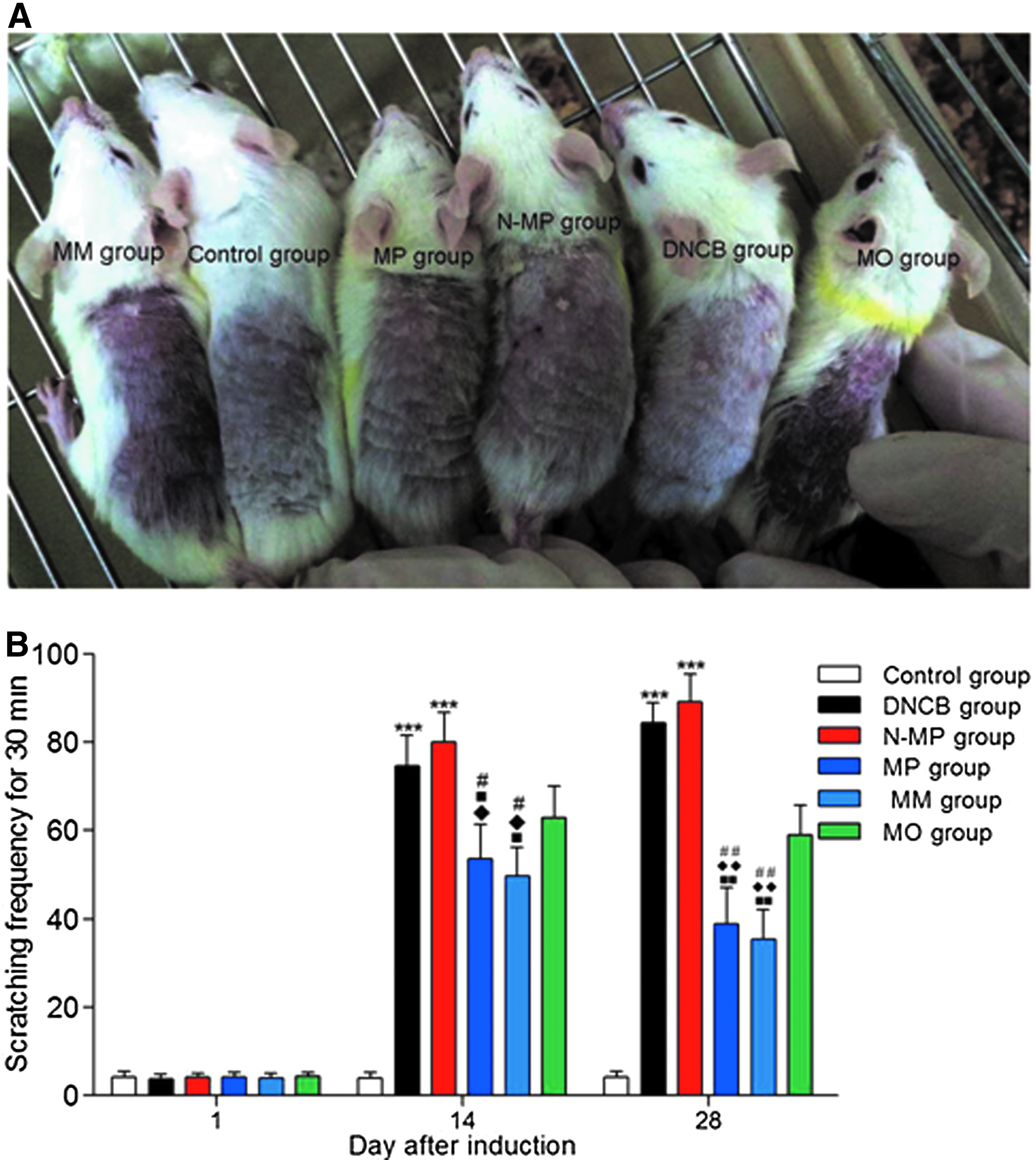
Effects of acupuncture on the symptoms of experimental allergic contact dermatitis.
Note: Symbols used in this table match those used in several figures.
Clinical scores of all the mice were recorded on the 1st day, the 14th day, and the 28th day after DNCB application. Scoring was performed by 3 independent observers. * P < 0.05 versus control group; ■ P < 0.05 versus DNCB group; ♦ P < 0.05 versus N-MP group; # P < 0.05 versus MO group.
DCNB, 1-chloro-2,4-dinitrobenzene; N-MP, non-meridian points; MP, meridian points; MM, mometasone (immediately after acupuncture every other day); MO, mometasone (every other day).
Effects of Acupuncture on Histopathologic Changes
To explore the visual evaluation of ACD symptoms further, histologic analysis on the dorsal skins was performed by microscope. The epidermis and dermis in the DNCB and N-MP groups showed strong edema and hyperplasia, as well as a massive infiltration of inflammatory cells (Fig. 4). The MO and MM groups had significantly reduced numbers of infiltrated immune cells and thickness of the epidermis compared with the DNCB and N-MP groups.
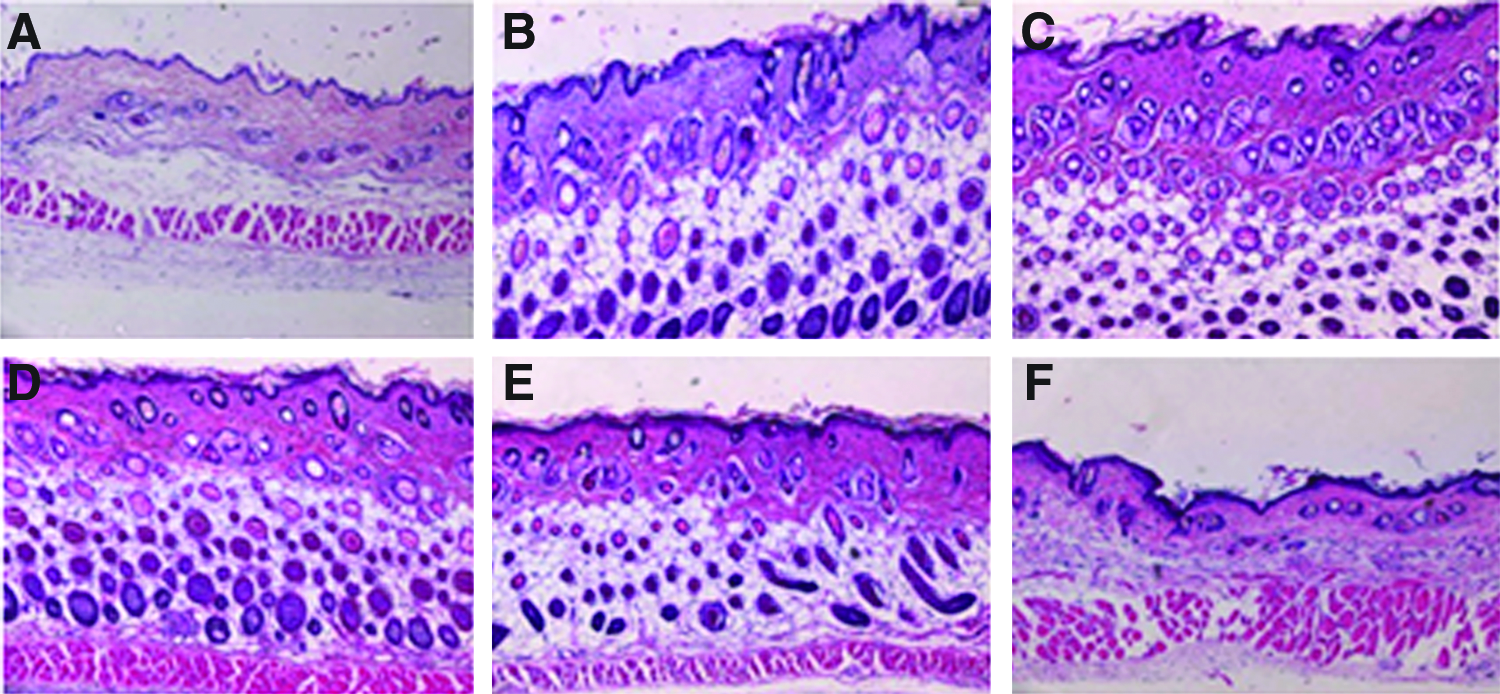
Effects of acupuncture on histopathologic changes by hematoxylin and eosin staining of epidermal and dermal hyperplasia.
Effects of Acupuncture on Serum IgE levels
To further determine if suppression of ACD progression was associated with serum IgE levels, total serum IgE levels were measured. Compared to the control group, IgE levels were increased significantly in the DNCB and N-MP groups (Fig. 5). Furthermore, IgE levels of all the treatment groups were significantly decreased, compared with the DNCB and N-MP groups. In addition, IgE levels of the MM group were lower, compared to the MO group.
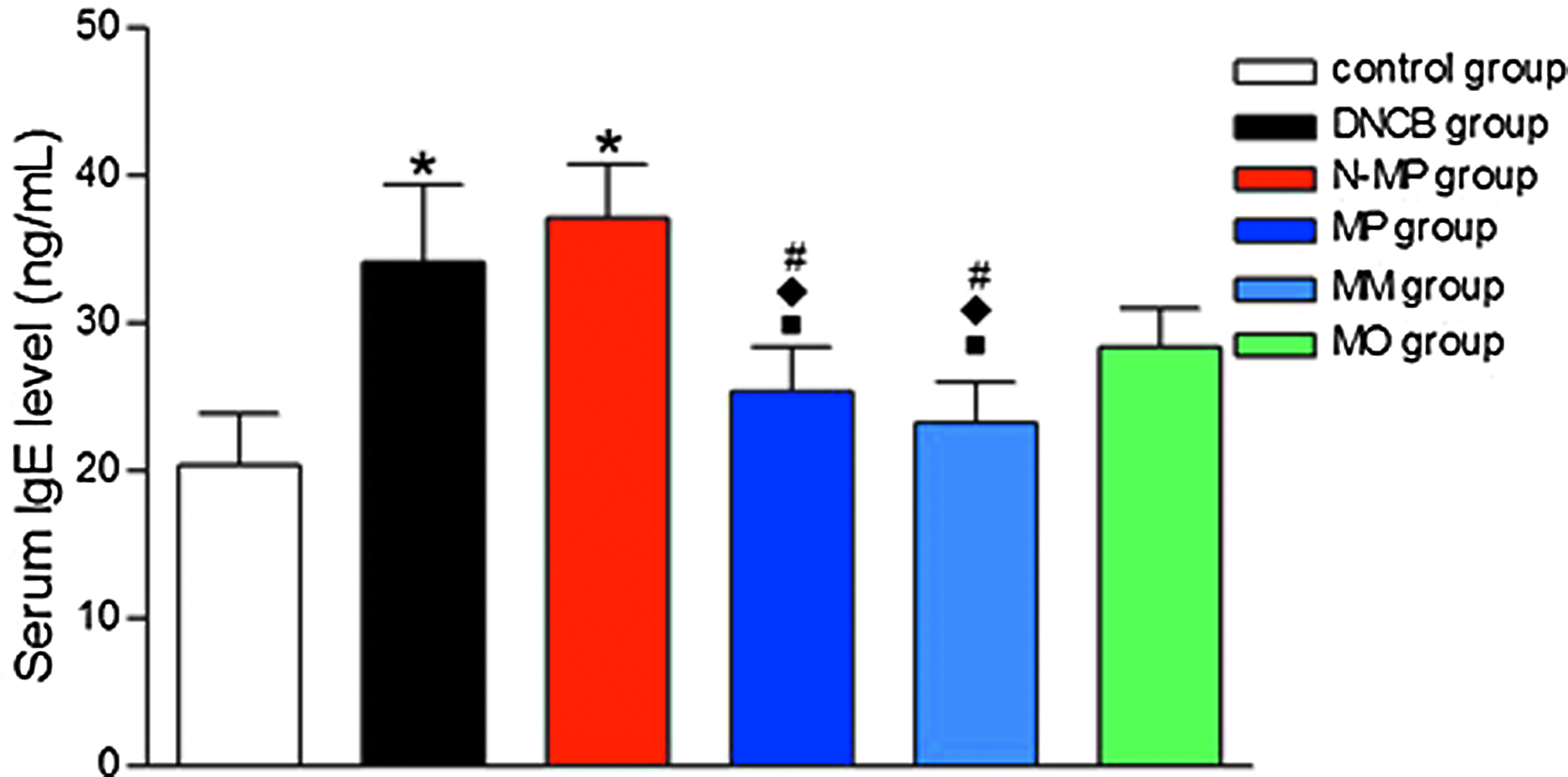
Effects of acupuncture on serum immunoglobulin (Ig)E levels. Data are the mean ± standard error of the mean (n = 3). Each bar represents the mean of three independent experiments carried out in triplicate. DNCB [1-chloro-2,4-dinitrobenzene] group: mice sensitized with DNCB. N-MP group: mice sensitized with DNCB and treated at non-meridian points. MP group: mice sensitized with DNCB and treated at meridian points. MM group: mice sensitized with DNCB and painted with mometasone at once after acupuncture every other day. MO group: mice sensitized with DNCB and painted with mometasone. * P < 0.05 versus control group; ■ P < 0.05 versus DNCB group; ♦ P < 0.05 versus N-MP group; # P < 0.05 versus MO group. Color images available online at www.liebertpub.com/acu
Effects of Acupuncture on Cytokine Expression Levels
Furthermore, the current authors wondered if proinflammatory cytokines were involved in suppression of ACD progression. Pathogenic cytokine expression levels were detected using an RT-PCR method. The data indicated that expression of interleukin (IL)-4, IL-6, tumor necrosis factor (TNF)α and IL-1β mRNA were induced by DNCB treatment (Fig. 6). IL-4, TNF-α, and IL-1β mRNA expression were downregulated in the dorsal skin of the MP, MM and MO–treated mice. In addition, the above cytokine mRNA in the MM group was significantly lower than that of the MO group.

Effects of acupuncture on cytokine expression levels. Data are the mean ± standard error of the mean (n = 3), Each bar represents the mean of three independent experiments carried out in triplicate. DNCB [1-chloro-2,4-dinitrobenzene] group: mice sensitized with DNCB. N-MP group: mice sensitized with DNCB and treated at non-meridian points. MP group: mice sensitized with DNCB and treated at meridian points. MM group: mice sensitized with DNCB and painted with mometasone at once after acupuncture every other day. MO group: mice sensitized with DNCB and painted with mometasone.* P < 0.05 versus control group; ■ P < 0.05 versus DNCB group; ♦ P < 0.05versus N-MP group; # P < 0.05 versus MO group. IL, interleukin; TNF, tumor necrosis factor. Color images available online at www.liebertpub.com/acu
Effects of Acupuncture on the I
κ
B
α
/NF-
κ
B Pathway
To elucidate the underlying mechanism of the inhibitory effect of different treatments on inflammatory reactions further, Western blot analysis was performed. The data revealed that, compared to the control group, all the treated groups showed suppression roles in the activation of NF-KB signaling (Fig. 7). However, the expression of NF-κB p65 and phosphorylation of IκB-α were weaker in the MP, MM, and MO groups than in the DNCB and N-MP groups. In addition, the MM group showed greater anti-inflammatory efficacy than the MO group. These data indicate that acupuncture plays an important role in the regulation of immune and inflammatory responses through inhibiting the NF-κB signaling pathway.

Effects of acupuncture on the IκBα/NF-κB pathway.
Effects of Acupuncture on the EGF and Occludin Expression
To investigate the anti-inflammatory mechanism of acupuncture treatment in ACD-like disorders, the effects of acupuncture on regulation of EGF and occludin expression were examined by RT-PCR and Western blotting. The DNCB group could induce occludin expression (Fig. 8) and reduced EGF expression (Fig. 9) compared with the control group. On the contrary, acupuncture and mometasone enhanced EGF expression and decreased occludin expression, compared with the DNCB group. Of the three treatment groups, the MM group was the most effective for improving expression of EGF (Fig. 9) as well as inhibiting occludin.

Effects of acupuncture on occludin expression.
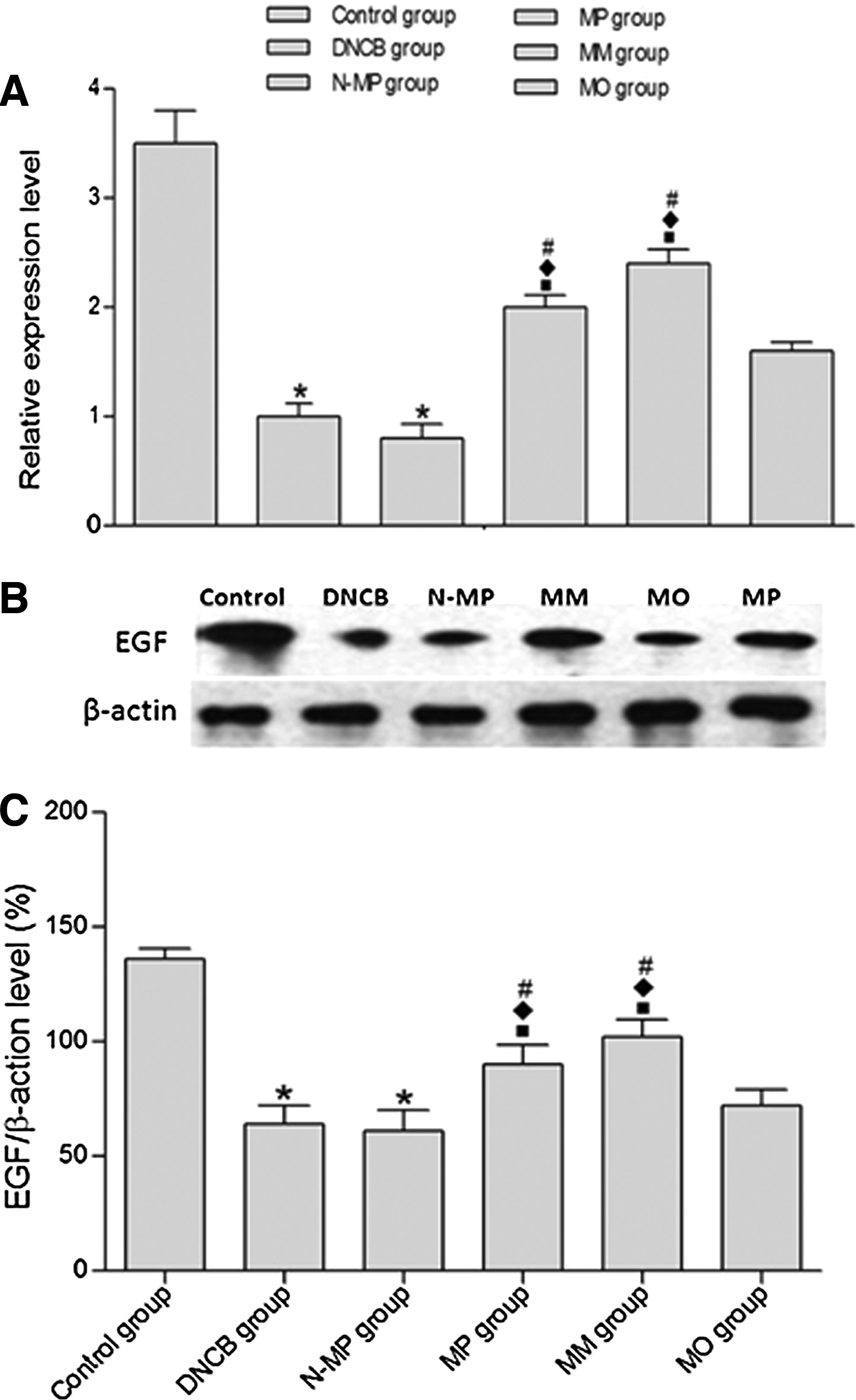
Effects of acupuncture on epidermal growth factor (EGF) expression.
Discussion
The skin is one of the most important and largest mammalian organs. It serves as a barrier that protects mammals from a wide variety of microbial, physical, and chemical insults. It is also considered as a major factor in the innate host defense system. ACD is an inflammatory, chronically relapsing and intensely pruritic skin disease that is caused by complex pathogenic factors, including skin-barrier dysfunction, bacterial infection, immune dysregulation, genetic susceptibility, and environmental triggers.
IgE and cytokine expression have been known to cause both acute- and chronic-phase skin inflammations that are often associated with ACD. 20 Although a generalized Th2-deviated immune response is closely linked to ACD, the skin disease itself is a biphasic inflammation with an initial Th2 phase, while chronic lesions harbor Th0/Th1 cells. 21 Patients with ACD always have higher IgE levels and tend to secrete more IL-4 spontaneously. Previous studies have suggested that IL-4 and IL-13 impair expression and function of hBD2 and hBD3 in human epidermal keratinocytes, which might account for the increased susceptibility to skin infections seen in patients with ACD. 22 Likewise, in specimens with epidermal atrophy, intense IL-6 expression was detected. However, plasma was not elevated from patients with localized or systemic scleroderma, which suggests that IL-6 may be related to the pathophysiology of dermatologic diseases characterized by epidermal atrophy. 23
NF-kB is a heterodimeric transcription factor of the Rel family that usually resides in the cytosol in an inactive form bound to the endogenous inhibitor of NF-kB (IkB) family proteins. IkB kinase phosphorylate serine resides at the NH2-terminus of IkB during various inflammatory responses. The phosphorylated IkB is immediately ubiquitinated and degraded in the 26S proteasome, leading to release of NF-kB and its translocation to the nucleus. The association of this released NF-kB with its specific DNA-binding sequences drives target genes and leads to cytokine production and cell proliferation. Growing evidence has demonstrated the role of NF-kB signaling in the immunologic disturbance that was observed in ACD. Martin et al. reported that topical application with a new NF-kB Inhibitor improves ACD in NC/NgaTnd Mice. 24 De Vry et al. explored the possibility of using a topical NF-kB decoy as a novel therapeutic alternative for targeting Th1/Th2-driven skin inflammation in experimental ACD. 25
As an essential part of skin-regeneration growth factor, EGF supports cell renewal by aiding synthesis of proteins, and increasing circulation, metabolism, mitosis, cell growth, differentiation, and blood-vessel formation. 26 It has been reported that chronic skin damage induced by DNCB as well as the frequent scratching that was induced in mice indicated a downregulation expression of EGF and its mRNA in the mice. 15 Downregulation of EGF and a mis-localization of the EGF receptor in the cytoplasm of keratinocytes probably contribute to inhibition of epithelialization in chronic skin damage. Conversely, it appears to be different in acute skin damage. Kim's study showed that the healing process for ACD was satisfactory in the proton pump inhibitor (PPI) group in which a severe EGF immunohistochemical reaction was observed. 27 Moreover, a previous nonclinical study concluded that the EGF vaccination in mice decreased the normal croton-oil–induced inflammation response without apparent impairment in tissue healing. 28 EGF-dependent signaling pathways that facilitate cell growth and reepithelization via binding to the EGF receptor are localized through the entire epidermis. 29
Tight junctions (TJs) form a selective barrier against the diffusion of toxins, allergens, and pathogens from the external environment. As an important component of TJs, occludin plays an important role in the regulation of epithelial TJs. 30 Tyrosine phosphorylation of occludin on specific residues results in loss of its interaction with ZO-1 and therefore disassembly of TJs. 31 Furthermore, a recent in vitro study showed that Tyr phosphorylation of the C-terminal region of occludin reduces its ability to interact with ZO-1.32,33 Hydrogen peroxide–induced barrier dysfunction was attenuated by pretreatment of cell monolayers with EGF. 34 Protein kinase C–mediated protection of TJs by EGF was also demonstrated in Mz-Ch1 cell monolayers, which comprise a human cholangiocyte cell line. 35
In this study, the aim was to investigate the roles of IgE, cytokine, NF-κB, EGF, and occludin in ACD, using a DNCB-induced model in mice. The results showed that, compared with the control group, serum IgE level and cytokine expression increased significantly in the DNCB group. In addition, the IκBα/NF-κB pathway was inhibited in the DNCB-induced group, including higher expression of NF-κB-p65 and phosphorylation of IκBα proteins than in the control group. Furthermore, increased occludin expression was also detected in the DNCB-induced model through Western blotting analysis. The current data indicated that the dysregulated proteins might play a central role in the progression and maintenance of ACD. Therefore, therapies focusing on changing expression of the above proteins might be beneficial for patients with ACD.
As the first-line therapy for ACD, the beneficial therapeutic effects of topical corticosteroids (e.g., mometasone) are often accompanied by numerous adverse effects including skin atrophy, characterized by a profound loss in skin thickness and elasticity combined with decreased barrier function. Acupuncture is an ancient medical technique of China that can be traced back at least 2500 years. It is now widely used as a complementary and alternative medicine in many countries.36,37 The therapeutic efficacy of acupuncture—with hardly any adverse effects—for treating ACD has been proven in many studies especially with respect to reducing experimentally induced itching, allergen-induced basophil activation, and eczema in ACD.
Although acupuncture treatment has been increasingly used for ACD, with several clinical studies demonstrating the effectiveness of acupuncture, 38 preclinical studies—especially in vivo studies—investigating the mechanism of acupuncture for treating ACD are lacking.
In this study, therapeutic effects of acupuncture and mometasone were compared, using a DNCB-induced mice model. First, the ACD symptoms of the MM and MP groups were alleviated significantly, compared with the DNCB and MO groups; these symptoms included scratching frequency and clinical scores. Second, the MM and MO groups had significantly reduced numbers of infiltrated immune cells and thickness of epidermis, compared with the DNCB and MP groups. Third, serum IgE levels of the MM and MO groups were significantly decreased, compared with the DNCB and MO groups. These results indicate that acupuncture treatment could markedly reduce symptoms induced by DNCB and is a relatively effective method for curing ACD.
Then, an analysis was conducted to determine the effects of acupuncture on cytokine, NF-κB, EGF and occludin expression that were key factors for the progression for ACD. Western blot analysis revealed that cytokine, NF-κB-p65, and phosphorylation of IκBα expression were significantly increased in the MM and MP groups, compared with the DNCB and MO groups. In addition, occludin expression was also increased in the MM and MP groups. However, the MM and MP groups had EGF expression, compared with the DNCB and MO groups. These results demonstrated that acupuncture was an effective therapy for ACD.
Conclusions
These experimental results suggest that acupuncture treatment had anti-inflammatory effects that were produced by inhibiting proinflammatory activities. Acupuncture maybe also accelerated skin regeneration and skin-barrier protection though promoting EGF secretion and inhibiting Tyr phosphorylation of occludin. Long-term use of topical corticosteroids for skin inflammation poses risks of systemic and local side-effects. Therefore, the current study's results suggest that acupuncture combined with mometasone might be a better choice for ACD treatment, at least in mice. However, cautious and deeper research is indispensable to assess the effect of acupuncture on ACD treatment in human beings.
Footnotes
Acknowledgments
The authors would like to thank the staff of Scientific Research Department of Guangzhou University of Chinese Medicine for technical support.
Funding
This research was supported by the high-level personnel training project of Pingdingshan University, funded by the Pingdingshan University (NO. PXY-BSQD 2015009).
Author Disclosure Statement
The authors declare that there are no potential conflicts of interests with respect to the authorship and publication of this article.