




Abstract
Background:
The COVID-19 pandemic led to emotional and behavioral challenges for hospitalized pediatric patients, their families, and staff. Visitor restrictions, closure of patient lounges and playrooms, masking requirements, and enhanced isolation rules resulted in limited access to typical sources of psychosocial support during this traumatic event. Complementary and integrative health therapies such as acupuncture and related therapies are well suited to provide the humanitarian support patients and families need during times of crisis.
Objective:
The Multidisciplinary Support Network (i.e., Network) was formed to redesign the delivery of acupuncture and other integrative therapies alongside psychosocial support for hospitalized children, their families, and staff.
Intervention:
Network members represented a broad range of previously siloed disciplines including integrative therapies, art therapy, child life, nursing, pastoral care, adolescent medicine, pediatric hospital medicine, psychology, and child and adolescent psychiatry. The Network aimed to identify gaps in service and create resources to support children and families during this challenging time.
Results:
The Network compiled existing complementary and integrative services, provided training on integrative therapies to staff, pediatric trainees, and faculty, developed the Comfort Box containing items to provide symptom relief including pain, anxiety and difficulty sleeping, as well as closed-circuit programming, a pediatric companionship program connecting medical student volunteer companions with pediatric patients, and a well-being workbook.
Conclusion:
Collaborative teamwork across disciplines using integrative therapies was key to humanitarian efforts to support hospitalized children and their families during this crisis.
INTRODUCTION
The COVID-19
Evidence-based complementary and integrative therapies including acupuncture and acupressure are well suited to addressing anxiety, isolation, and other symptoms that were common during the initial stages of the pandemic.7–14 However, multidisciplinary team members worked in parallel in a system that was not optimized to deliver integrative therapies. 15 Inpatient medical and nursing teams did not consistently know which integrative therapies and resources were available or how to access them. Similarly, patients and families did not have a unified system to learn about integrative therapies that were available during hospitalizations. There was no standard process to ensure all patients were consistently offered or received integrative therapies.
In response to the growing need for integrative therapies during this crisis, the Multidisciplinary Support Network (i.e., Network) was formed to redesign the delivery of integrative therapies and provide training and resources augmenting conventional medical treatment for hospitalized children and their families. This article describes how the Network was formed and the services and resources provided in a humanitarian service effort to alleviate distress to children and their families during the COVID-19 pandemic.
NETWORK FORMATION
The Network was formed in April 2020, one month into the declared state of emergency in the United States. During this time, the university-affiliated 202-bed tertiary care children's hospital in New York City cared for many pediatric patients who were diverted from other hospitals in the tristate area.
The Network included pre-existing staff with integrative medicine skills who came together during the pandemic to address issues that arose as a result of this humanitarian crisis. The Network was composed of representatives from a broad range of disciplines including integrative therapies (i.e., acupuncturists, massage therapists), art therapy, child life, nursing, pastoral care, adolescent medicine, pediatric hospital medicine, psychology, and child and adolescent psychiatry. Network members had roles at the hospital before formation of the Network and no new staff were recruited or hired expressly for the Network. During the pandemic, the art therapist, a licensed and board-certified mental health clinician, who is also trained in emotional freedom technique (EFT) tapping, expanded her scope of practice by conducting therapeutic art and wellness groups, and tapping groups with hospital staff.
Network members included team members with both clinical and administrative duties, including an inpatient unit medical director and nursing leader familiar with broader hospital operations as well as nurses, pediatric residents, and multidisciplinary therapists with insight into day-to-day patient interactions. The composition of the group ensured everyone was up to date on rapidly evolving hospital practices.
The objectives of the Network were to (1) identify integrative services and resources and create novel resources to support patients, families, and staff during the hospitalization and (2) centralize and facilitate access to these integrative services and resources. Before formation of the Network, staff did not have any structure or support to promote and standardize communication among integrative medicine providers and between providers and patients and their families. Once the Network was in place, representatives from the Network shared with their respective group members how to access services and resources and also provided feedback from their members in return. Network members met for 1 hour once a week through a videoconferencing platform (Zoom).
The Network routinely sought feedback from the hospital's Family Advisory Council (FAC) and Council of Helping Advisory Teens (CHAT), groups of parents and adolescent patients, respectively, who collaborate and partner with hospital staff to improve the inpatient experience. While the Network initially aimed to provide these services and resources to patients and families, the Network recognized that support for staff was also needed to enable staff to support patients. Therefore, some of the services and resources were offered to staff in addition to patients and families.
There were no additional costs to patients and their families or to staff for services and resources provided by the Network. Before the existence of the Network, services provided by physicians, nurses, art therapist, acupuncturists, and other hospital staff were paid for by donor funding, the hospital, or by the patient's insurance in the context of a billable service. The Network enhanced awareness and use of these individual services without changing pre-existing cost and payment structures.
RESOURCES PROVIDED
Integrative therapies services and resources offered through this Network included:
Integrative therapies support services for staff ○ Utilizing a train-the-trainer model, the art therapist and acupuncturist provided acupressure, aromatherapy, therapeutic and psychoeducational art groups, and emotional freedom technique (EFT) tapping sessions in person and virtually to staff. EFT tapping is an evidence-based practice characterized by using finger tips to tap on and stimulate acupoints.
16
Sessions focused on brief self-care practices. ○ Weekly emails called the Healthy Monday Refresh were disseminated and topics chosen from the Monday campaigns' portfolio focused on stress reduction using mind–body approaches, movement, and nutrition. ○ The licensed art therapist conducted weekly EFT tapping sessions, called “Tapping Tuesdays,” for pediatric emergency department staff. Staff members reported reductions in symptoms such as feelings of isolation, physical and emotional pain, and stress after the EFT tapping session compared with those before the session.
17
Educational curriculum for pediatric trainees and faculty ○ The Network developed an educational curriculum for pediatric residents, medical students, adolescent medicine fellows, and faculty, called Pediatric Residency Integrative Medicine Education. The curriculum was presented virtually and sessions were recorded. Evidence-based integrative therapies including acupressure, aromatherapy, EFT tapping, and mindfulness were introduced. Trainings included descriptions of how to access services for patients and their families during hospitalizations, and how to provide self-care strategies utilizing integrative therapies to manage symptoms such as pain, anxiety, nausea, and insomnia. This curriculum further fostered the integration of conventional medicine and integrative therapies and empowered the medical team to offer these integrative therapies to patients and their families. Comfort Box ○ The teen advisory group, CHAT, suggested the creation of the Comfort Box, a bedside kit with a collection of items to provide relief for symptoms commonly experienced during hospital stays (e.g., pain, nausea, anxiety, and sleep difficulties). Contents included self-acupressure instruction cards; QR codes with links to mindful breathing, EFT tapping, and self-hypnosis; aromatherapy; finger labyrinth cards; stress balls; mandala coloring book; and journal (See Fig. 1 Picture of Comfort Box contents). See Table 1 for a description of each item and some special considerations for item use. The acupressure cards included photographs with instructions on the acupoint locations, indications for use, precautions, and how to do acupressure for the following 5 acupoints: Yintang (M-HN-3), Hegu (LI-4), Yongquan (KI-1), Neiguan (PC-6), and Zusanli (ST-36). The Network, in collaboration with CHAT, obtained funding for the Comfort Boxes, developed its contents, and the art therapist provided the psychoeducation of the boxes to patients and families. Patients and their families kept their individual Comfort Boxes throughout their hospitalizations and took them home after discharge as they are intended for use both in the hospital and at home. In addition, an interview guide was created to assess patient and family satisfaction with and use of boxes. The interview data will be used to further refine the Comfort Box contents and dissemination. Closed-circuit programming ○ The art and music therapists spearheaded a weekly series of live interactive programs through the hospital's closed-circuit television system. The programs offer patients and families opportunities to engage in community-based integrative techniques. ○ Through the closed-circuit programming, the art therapist taught EFT tapping to patients and families. EFT tapping education was supported by a generous donation from Tapping Solutions, Inc., which allowed for free distribution of the book Gorilla Thumps and Bear Hugs to patients and staff.
18
Pediatric companionship program ○ This program was developed pre-pandemic to facilitate non-medical relationships between medical student volunteer companions and pediatric patients who could benefit from additional social support. Patients were typically seen 2 times a week in-person by their companion. During the pandemic, the program shifted to a virtual model where student volunteers connected with pediatric patients through a videoconferencing platform to provide social support through reading books, art activities, and virtual games. Well-being workbook ○ In an effort to ensure that patients, families, medical providers, and staff were aware of the available resources, a well-being workbook was created. The workbook described services offered and how to access the services. Examples included art and music therapy, pastoral care, acupuncture and other integrative therapies, child life, and psychiatry. Virtual resources for meditation, tapping, breathing exercises, coloring, acupressure, and general information on mental health and symptom management were added. To expedite the dissemination of the Network shared the workbook with medical providers and staff while exploring a web-based platform to share more broadly.
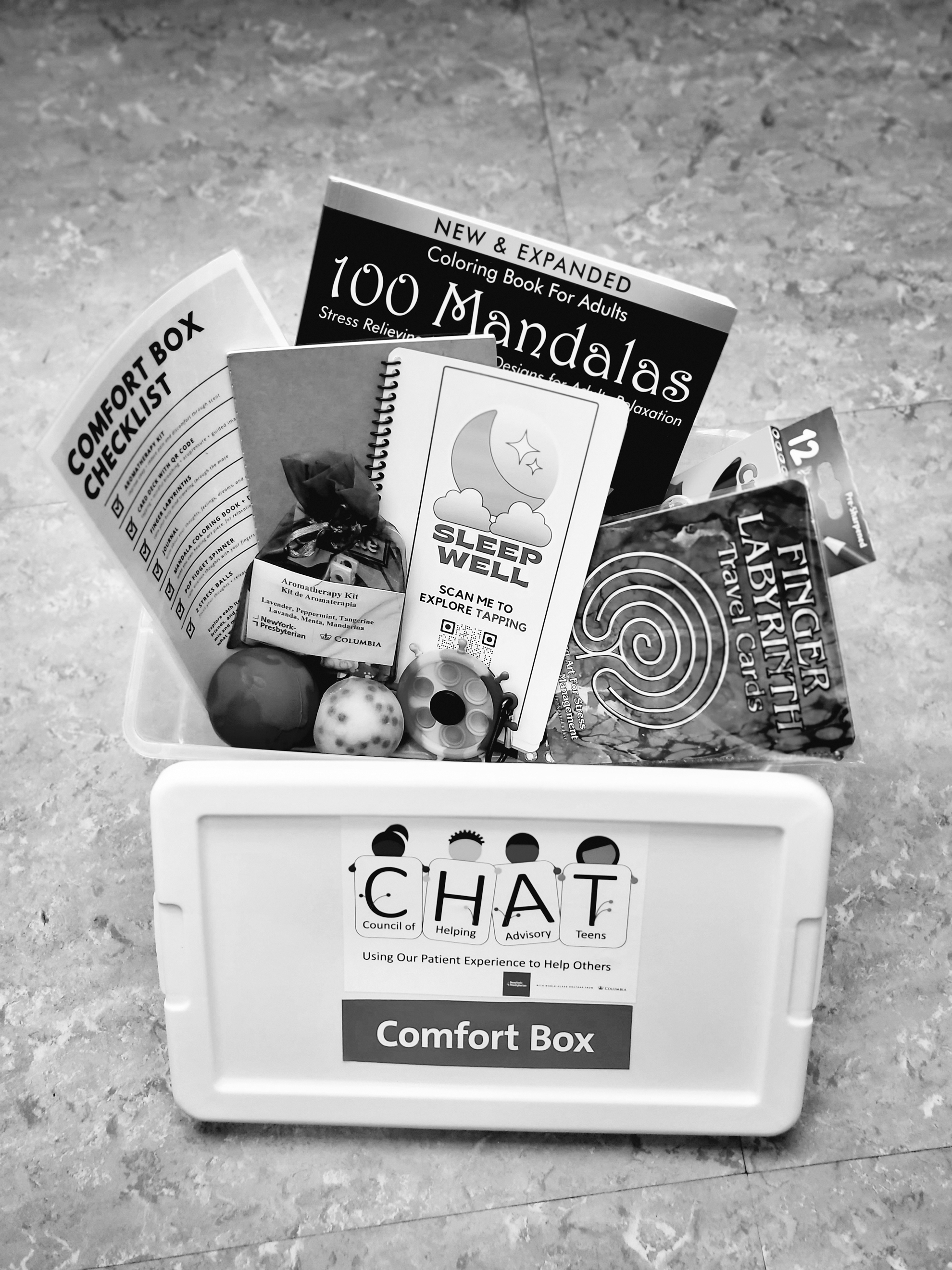
Picture of Comfort Box contents.
Comfort Box Items, Descriptions, and Uses
STRENGTHS AND LIMITATIONS
The Network increased awareness of health care professionals' roles within the system, thereby facilitating collaboration across disciplines and allowing members to capitalize on each other's expertise. This multidisciplinary approach empowered all members of a patient's care team to expand ways of engaging with families during hospitalizations to attend to patients' psychosocial well-being in addition to their physical needs.19,20 Integration of this group into medical education and routine clinical care elevates the role of acupuncture and other related complementary services and integrative therapies in treating patients by addressing previously identified gaps in education.21–23 Additionally, fostering a sense of community through networks like the authors' has been perceived to decrease feelings of isolation and burnout among patients, families, and staff during emotionally intense times during hospitalizations.24,25
Creating a concrete team and enhancing communication among previously siloed groups will support future multidisciplinary collaborations and enhance family-centered care in the long term. 26
A number of challenges were faced including the need to adapt to quickly changing regulations on inpatient units regarding visitor restrictions, physical distancing, and expectations for virtual versus in-person evaluations and treatments. Differential access to data sharing platforms made it difficult to effectively share information with each other and with patients and families. Next steps include obtaining and applying feedback from interviews of Comfort Box recipients more broadly to other resources and analyzing dissemination of resources provided by this Network.
CONCLUSIONS
The Network responded to challenges resulting from the COVID-19 pandemic by forming the Multidisciplinary Support Network to optimize delivery of acupuncture and other complementary and integrative therapies within a fragmented, overtaxed healthcare system. Through this humanitarian service effort, the Network aimed to improve the hospital experience for patients, families, and staff during the COVID-19 and our efforts are ongoing. The Network raised awareness of the importance of acupuncture and related complementary and integrative therapies by creating an integrative curriculum for pediatric trainees and faculty and distributing resources to patients, families, and staff.
Collaborative teamwork across disciplines using acupuncture and related integrative therapies was key to humanitarian efforts to support hospitalized children and their families.
Footnotes
ACKNOWLEDGMENTS
The authors thank Ann Megyas and Linda Golding from the Department of Pastoral Care & Education for their support and collaboration. The authors acknowledge the resilience and camaraderie of their patients and families and the multidisciplinary team members caring for them throughout this pandemic.
AUTHORs' CONTRIBUTIONS
J.L. drafted the initial article. S.M.B., M.B., D.L., D.M.S., M.G., R.P., S.S., and M.A.G. reviewed and revised the article. All authors approved the final article as submitted.
AUTHOR DISCLOSURE STATEMENT
No competing financial interests exist.
FUNDING INFORMATION
No funding was received for this article.