




Abstract
Background:
Sickle-cell diseases (SCD) are a group of hereditary disorders in which a specific mutation in the gene that encodes the hemoglobin ß chain leads to formation of an anomalous hemoglobin molecule (HbS) with high polymerization power. This leads to sickling of erythrocytes in situations of low oxygen tension, such as in microcirculation, resulting in peripheral microvasculature occlusion, chronic hemolysis, inflammation, and damage to several target organs. Malleolar ulcers are among the most-debilitating complications of the disease, as they are associated with significant pain, secondary infections, and social impact due to their aesthetic impairment. There are no completely satisfactory therapeutic options for this complication; local healing agents, antibiotics, and dressings are used, with high rates of recurrence and complications, such as osteomyelitis and even limb amputation.
Case:
This case study evaluated the effect of Traditional Chinese Medicine techniques on chronic malleolar ulcers in a 49-year-old male patient. Ten sessions of systemic acupuncture (combinations involving Source, Master, Energetic Action, and Extraordinary Vessels points), auriculotherapy, and dressing with magnets were conducted.
Results:
Although the primary outcome sought was not reached (decrease in ulcer diameters), this patient had great reduction of local pain, a decrease in limb edema, and important reduction of his inflammatory condition, reflected in his decreasing blood levels of C-reactive protein.
Conclusions:
These results show that acupuncture should be considered as an important auxiliary treatment for SCD complications.
INTRODUCTION
Sickle-Cell Diseases (SCD) are genetic disorders caused by anomalous hemoglobin (HbS) with a higher tendency to polymerize, leading to erythrocyte sickling and its consequences, mainly hemolysis and a greater tendency to occlude small vessels. Common manifestations are episodes of intense vaso-occlusive pain, as well as permanent and generalized ischemic end-organ damage. 1
One typical presentation is the occurrence of malleolar ulcers, often bilaterally, that are painful, and extremely difficult to heal; they have a damaging esthetic effect and, in many cases, progress to osteomyelitis and amputation. These factors contribute to a worse quality of life and high rates of depression and anxiety. 2
There are no effective treatments for this complication of SCD. New approaches have been tested, such as platelet gel or stem cells, with no major benefits.3,4 This report presents the effects of acupuncture on chronic ulcers in a patient followed at a specialized center in Brazil, which also has a clinic for complementary and integrative therapies. This report was approved by the institutional ethics committee (approval #: 5.927.359) on March 6, 2023, and the patient signed an informed consent allowing the use of personal information for this article.
CASE
A 49-year-old man was diagnosed with sickle-cell anemia (homozygous SS) that was complicated by severe hemolytic anemia, hepatic iron overload secondary to blood transfusions, and recurrent malleolar ulcers. In November 2021, he had 3 active lesions:
Left medial malleolus appeared 12 years before; healed for 1 year; now 6 cm x 5 cm Left lateral malleolus started 10 years ago; never closed; 9 cm x 6 cm Right lateral malleolus opened 4 years ago; closed in 2020; opened again 3 months before evaluation; currently 1 cm x 1.5cm.
All of these lesions were superficial with no exposure of deep tissues. Their visual appearance and evolution are shown in Figure 1. At this time point, the patient reported that he had frequent episodes of pain in the ulcers, especially when variations in the weather occurred, with the last episode occurring 1 week prior, requiring him to take 3 days of oral analgesia. He applies daily dressings with humectant ointments. A program of regular transfusions had been tried for 3 months without significant improvement. In addition to local pain, he experiences tiredness and dyspnea when performing more-vigorous activities.
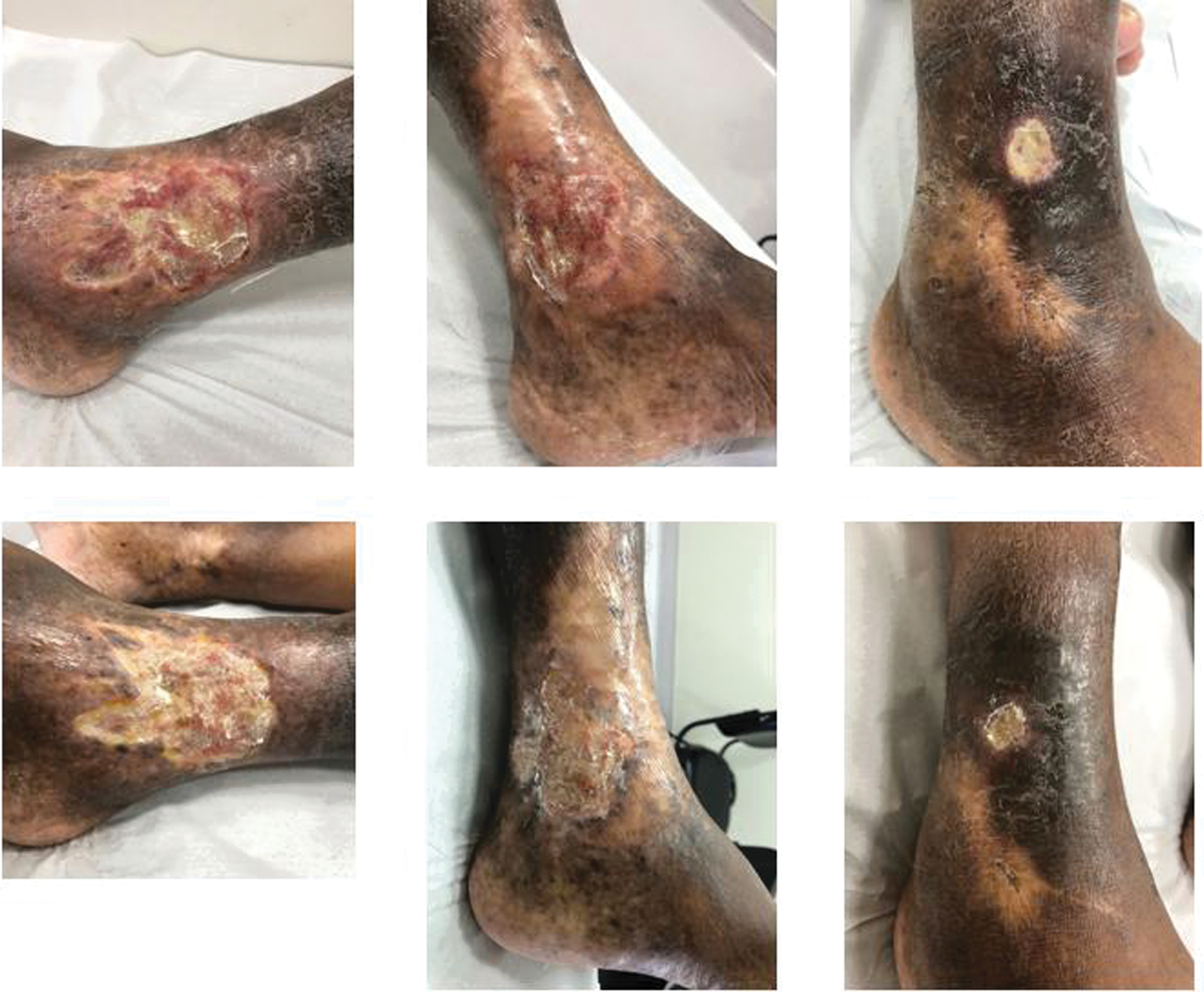
Photographic record of the malleolar ulcers as they appeared in the initial evaluation (top images) and after 8 treatment sessions (bottom images). Despite maintaining the stable size of all of the lesions (objective measurements reassessed in the fifth and tenth sessions) after treatment, less edge depth associated with less roughness of the skin and edema in the limbs was noted.
His pulse examination revealed a regular but weak rhythm in all palpated positions. Examination of the tongue showed that it was pale, with slightly bluish areas, red dots on the tip and sides, a central fissure, and a white coating.
Diagnosis according to the criteria in Traditional Chinese Medicine (TCM) was an internal condition of Deficiency (evidenced by his weakness, weak pulse, and pale tongue), Cold (shown by the white coating on his tongue), and Deficient Yin and Yang. Both the general picture of SCD, and the limb ulcers specifically, were evidence of Deficiency and Stagnation of Qi and Blood. In relation to the Zang Fu, Deficiency of the Spleen (Earth) and Kidneys (Water) Qi was evident.
Systemic acupuncture and auriculotherapy were performed on a weekly basis. The protocol applied in each session depended on the diagnostic principles of TCM. In general, this reflected the need to use points for Blood tonification and circulation, including Source and Master points and points with specific energetic functions, which were stimulated bilaterally (except when using Extraordinary Meridians). For this treatment, 0.25 x 40–mm gauge needles were used, with a retention time of 30 minutes per session. There was a need to change some of the points used due to their locations close to the lesions. Specific description of the protocols and observations of this patient's follow-up are shown in Table 1. The auriculotherapy protocol consisted of Shen Men, Kidney, Liver, Heart, Spleen, Subcortex and Ankles.
Specification of Acupoints Used in Each Treatment Session and Observations on Treatment Progression
Points in this table are listed in the order that they were placed, all bilaterally (except when using Extraordinary Meridians); note exception in the first treatment regarding KI-3.
Stiper pads are made of cotton with quartz and silicon-dioxide microcrystals and are adhered to the skin at selected acupoints for use in systemic acupuncture.
SP, Spleen; LR, Liver; ST, Stomach; LU, Lung; HT, Heart; KI, Kidney; CV, Conception Vessel.
The patient filled in a pain diary throughout treatment, and this enabled verification of his scarce and sporadic use of analgesics, which were only 6 doses of paracetamol or nonsteroidal anti-inflammatory drugs since the beginning of his treatment. This contrasted with his past reported use, which was ∼4–5 weekly doses.
Regarding the patient's laboratory evaluation, there were no significant changes in blood counts and hemolysis parameters. However, there was a significant drop in serum levels of c-reactive protein (cRP), an important marker of inflammatory activity (Fig. 2).

Evolution of laboratory parameters tested over the treatment time frame. Specific cRP reference values for evaluating inflammatory/infectious processes were: 10–50 mg/L indicates mild inflammation; 50–100 mg/L indicates more-severe inflammation; > 100 mg/L represents severe processes and typically indicates the presence of bacterial infection. cRP, c-reactive protein; HbF, fetal hemoglobin; UB, unconjugated bilirubin; LDH, lactate dehydrogenase; URAC, uric acid.
The evolution of his pain intensity, and levels of well-being and functionality, throughout the treatment are shown in Figure 3. Positive increments occurred in limitation, social interaction, pain, and feelings of vitality, and there was a positive change in the patient's global perceptions throughout the treatment.
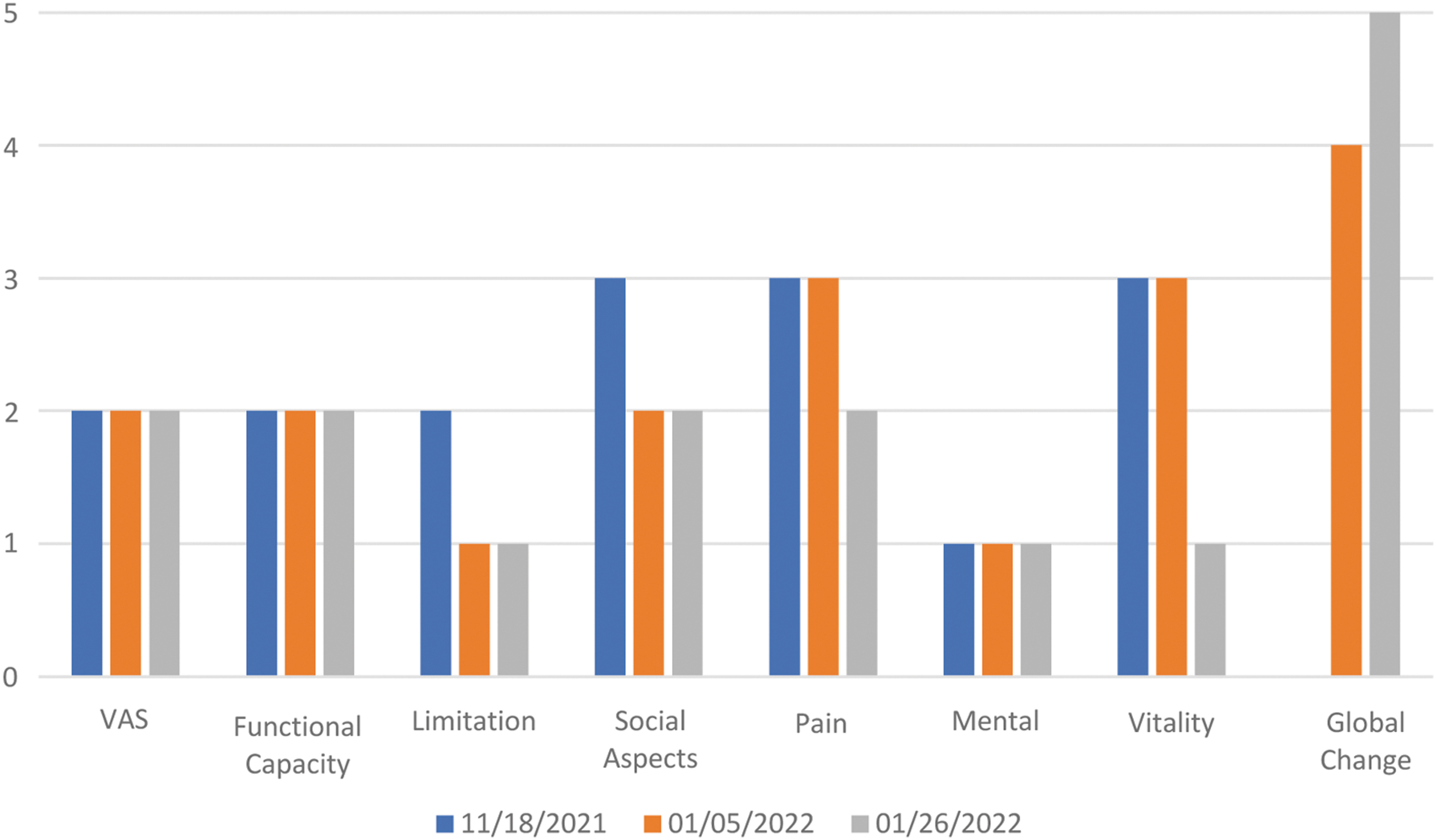
Data related to the serial assessment of: visual analog scale (VAS) for pain during consultation, Short Form–6 Dimension (SF-6D) questionnaire items, and Global Perception of Change Scale throughout treatment. Decreasing values in the SF-6D domains (Functional Capacity, Limitation, Social Aspects, Pain, Mental, and Vitality) indicate positive changes in the parameters. For the Perception of Global Change Scale, an increase in the score indicates an improvement in the condition, according to the patient's perception.
DISCUSSION
Patients with SCD, in general, present with asthenia and pain—whether in acute crises or chronically. In Western medicine, these symptoms are explained by hemolysis and vaso-occlusion in the peripheral microcirculation, both resulting from a structural problem with the formation of hemoglobin. For TCM, however, they arise from Blood Deficiency complicated further by its Blood Stagnation.5,6 These patients present with energy imbalances in specific organs: Kidneys (responsible for formation of Marrow, which collaborates in Blood production), Heart (governs Blood in the Vessels), Liver (controls Blood circulation), Spleen (a central element in purification and transport of nutrients to comprise the Blood), and Lungs (governs the Qi and controls the space between skin and muscles, which is particularly important when a patient has ulcers). In the specific case of malleolar ulcers, the picture of Blood Stagnation is expressed as local pain of great intensity.
It is extremely difficult to manage SCD-related limb ulcers. The idea of attempting acupuncture arose in the context of no yet proven effective therapies, with most patients living with the ulcers' repercussions for years. Thus, the combinations of points used reflected the need to tonify the function of the Kidneys and Spleen, aiming to induce better Blood production and circulation and, for that, toning the Yin and the Yang respectively. Given these considerations, treatment sessions included combinations of Source Points, Master Points, Energetic Action Points, and Extraordinary Vessels, in addition to Chinese auriculotherapy.
Although the primary outcome (size reduction of the ulcers) was not achieved, this patient reported decreased pain intensity and frequency (also evidenced by his less-frequent use of analgesics), as well as regression of the edema in both of his legs. He also mentioned having important feelings of greater motivation to perform daily activities and work. Another objective change noticed by the physician, was the alteration in the texture and plasticity of the skin, which was initially quite thick (to the point of preventing the application of needles in these more-distal regions of the limbs).
In addition, it was possible to explore the effects of acupuncture on blood biochemical parameters. Although the treatment did not lead to changes in blood counts and hemolysis, a significant reduction in cRP levels, an important marker of inflammatory activity, was noted. Before treatment, his cRP levels were consistent with severe inflammatory conditions (79 mg/L), but dropped by the end of the treatment, becoming consistent with mild inflammation (29 mg/dL), demonstrating a potential benefit of using the technique for this treatment for other SCD complications, which are, by definition, associated with chronic inflammation and its associated repercussions.
In fact, the decrease in the intensity of inflammation, associated with the decrease in pain and edema, can be considered evidence of the possibility of achieving greater benefits had the technique been used earlier. In the case of this patient, the ulcers were large and longstanding, with important structural alterations of the tissues. Perhaps the use of acupuncture for this type of complication could render better results if the practice was instituted prophylactically for patients at higher risk (such as those with previous histories of wounds), or at the early onset of lesions, before the occurrence of significant structural damages.
An interesting point to be discussed is the influence of weather changes on clinical manifestations, as reported by the patient, with worsening pain associated with colder days. In the case of SCD, there is clearly a higher incidence of crises on colder days or exposure to wind.7,8 This same association is often reported by patients affected by other inflammatory conditions; however, the complaint is generally not given much importance by Western physicians. It is important to point out that in Traditional Chinese Medicine the influence of external pathogenic factors, such as Cold and Wind, is highly emphasized as the genesis of disorders, and exposure to these factors is an important part of the medical evaluation and treatment.
Few studies have been published so far showing the benefits of acupuncture for controlling SCD symptoms,9,10 and this is the first description of a patient with malleolar ulcers treated with acupuncture with positive results. An important point of this case was the use of objective scales and questionnaires to assess the impact of treatment on different domains of the patient's life, as well as the demonstration of the effect on systemic inflammation, contributing to new evidence of the use of acupuncture for this type of complication.
CONCLUSIONS
Although not achieving resolution of the ulcers, acupuncture treatment led to significant impacts on pain, edema, and general disposition, in addition to decrements of his systemic inflammation. Therefore, acupuncture should be considered and integrated into the treatment of SCD complications. Acupuncture's use could be important for preventing wounds in patients at greater risk (such as those with previously healed ulcers) or as a preventive measure for addressing other complications, due to the important role in reducing the overall inflammatory picture characteristic of this group of diseases.
Footnotes
AUTHORs' CONTRIBUTIONS
All of the authors contributed to the design and execution of work on this case as well as writing and revising this article.
AUTHOR DISCLOSURE STATEMENT
No financial conflicts of interest exist.
FUNDING INFORMATION
No funding was supplied for work on this case report.