




Abstract
Background:
This study analyzed the research status, hotspots, and trends of acupuncture treatment for insomnia using bibliometrics and scientific knowledge mapping methods.
Methods:
We searched for records associated with studies focusing on acupuncture treatment for insomnia collected from the Web of Science Core Collection (WoSCC), from the establishment of the database to December 31, 2022, was retrieved. Visualization analysis was conducted using Excel 2021, CiteSpace 6.2.R5, and VOSviewer 1.6.19 software.
Results:
A total of 873 articles were obtained from the WoSCC database. The annual publications showed an overall upward trend, especially from 2018 to 2022, with a rapid increase in publications. Literature output was concentrated in China and the United States, accounting for 43.41% and 22.4% of the total research output, respectively. The highest-yield journal was Medicine and the most cited journal was Sleep. Guangzhou University of Chinese Medicine had the highest publication outputs (51 articles) and the strongest influence (0.18) among institutions. “Fibromyalgia” was the earliest and longest-lasting keyword. “Older adults” was the keyword with the highest burst intensity. The keywords “model,” “stroke,” “blind,” “clinical practice guideline,” “risk,” “symptoms,” “Shenmen (HT7),” and “Neiguan (PC6)” have been continuously trending, indicating that these keywords are current research hotspots and trends. In terms of acupoint selection, “HT7” and “PC6” acupoints are at the frontier of current research. In terms of disease types, poststroke insomnia treated with acupuncture has become a current research frontier. In terms of animal experiments, the mechanism of acupuncture treatment for insomnia through establishing rat models is at the forefront. Attention has been given to controlling bias risk in experiments, becoming a current hotspot and frontier.
Conclusion:
This study comprehensively investigated the current status, hotspots, and frontier trends of acupuncture for insomnia. Its research hotspots included acupuncture for poststroke insomnia, and research trends were the mechanism of acupuncture treatment for insomnia through establishing rat models.
INTRODUCTION
Insomnia refers to a sleep disorder that is primarily characterized by experiencing dissatisfaction with the duration or quality of sleep and facing difficulties in falling or staying asleep, which leads to early morning awakenings. 1 Not only does insomnia affect the nighttime sleep pattern but it also has adverse effects on the individual during the daytime. These effects include persistent fatigue, trouble concentrating or paying attention for extended periods, and disturbances in mood. 2 This means that individuals suffering from insomnia find it challenging to feel rested during the day, experience difficulties focusing on tasks, and often face negative changes in their emotional state. Insomnia, with its combination of nighttime and daytime symptoms, significantly impacts the overall well-being and functionality of individuals who struggle with this sleep disorder. Research shows that insomnia symptoms are prevalent among adults, with the proportion of adults suffering from insomnia reaching 30%. 3 It leads to a series of changes in cognitive function, immune function, and other aspects, affecting the physical and mental health, brain cognition, memory, creativity, and social activities of the general population. It also causes a series of physiological, psychological, and even behavioral changes.4,5 Patients with insomnia often experience difficulties in concentrating or have delayed thinking, leading to feelings of restlessness or sadness and unease. 6 This increases the risk of traffic accidents and adds burden to individuals, families, and society. Long-term insomnia is highly correlated with multiple system disorders,7,8 such as metabolic diseases, cardiovascular diseases, and neurodegenerative diseases, increasing the risk of depression, anxiety disorders, coronary heart disease, diabetes, and cancer.9–12
Currently, the main treatments for insomnia include pharmacological therapy and nonpharmacological therapy. Pharmacological therapy is widely used in clinical practice, including benzodiazepines and nonbenzodiazepines.13,14 These medications are mainly used to shorten the time it takes for patients to fall asleep and reduce the number of awakenings. 15 However, these drugs have long-term adverse effects such as withdrawal reactions and addiction, posing risks to patients. Nonpharmacological therapy, mainly cognitive behavioral therapy for insomnia, has been shown to improve sleep efficiency and sleep quality, and it is considered superior to Western medicine in the treatment of insomnia.16,17 It has been endorsed as a first-line treatment for insomnia by the American Medical Association. 18 However, it has limited clinical promotion due to its high cost, poor patient compliance, and shortage of trained psychologists, resulting in a narrow range of applications. 19 Therefore, it is important to find a more convenient and effective treatment method with fewer side effects to significantly improve the quality of sleep in patients with insomnia.
Acupuncture restores the body’s balance and optimizes its physiological function by gently inserting thin needles at specific acupuncture points throughout the body. 20 These acupoints, which are located along specific meridians or pathways, are believed to regulate the flow of vital energy, known as Qi, within the body. By targeting these acupoints, acupuncture influences various bodily systems, including the nervous, endocrine, immune, and circulatory systems. This stimulation helps to correct any imbalances or disruptions in the flow of Qi, thereby promoting the body’s innate healing abilities and restoring overall well-being. According to research, acupuncture has been shown to increase levels of serotonin and aminobutyric acid in the blood serum of patients, while simultaneously reducing glutamate levels.21,22 This effect on neurotransmitter regulation contributes to the improvement of patients’ sleep conditions. 23
CiteSpace is a powerful and extensively utilized visualization tool that was developed by Professor Chaomei Chen. It has the capability to generate co-occurrence network maps for various entities such as countries, institutions, authors, and keywords.24–26 The VOSviewer software was developed by Nees Jan van Eck and Ludo Waltman, and it is primarily focused on conducting clustering analysis in research fields. 27 In terms of its essential functionality, the VOSviewer software is primarily used for analyzing collaboration networks, co-citation networks, coupling networks, and topic co-occurrence networks in scientific literature, all of which belong to undirected networks. 28 By interpreting the information presented in the network map, researchers can efficiently and precisely comprehend the current research status, hotspots, and trends related to a particular subject in the field. This software provides a valuable tool for researchers to gain insights into the associations and patterns within the scientific community. 29
A related study by Pei et al. conducted in 2019 applied network analysis to examine the landscape of research on acupuncture for insomnia up to 2018. While our study shares a similar methodological approach, it extends the analysis period to encompass studies published between 2018 and 2022, thereby capturing the latest advancements and shifts in the field. Moreover, we utilized updated visualization tools such as CiteSpace and VOSviewer, which offer enhanced capabilities for identifying co-occurrence relationships and emerging trends. This broader temporal scope and advanced analysis enable our study to identify newly prominent research areas and evolving patterns in acupuncture interventions for insomnia, providing a fresh perspective beyond the findings of the previous study. 30
This study focuses on the application of advanced bibliometric tools such as CiteSpace and VOSviewer to the field of acupuncture for insomnia. These tools are instrumental in providing a systematic overview of the current research landscape, including the identification of research hotspots, key authors, and influential studies. By utilizing these visualization and mapping techniques, our study not only synthesizes existing literature but also highlights emerging trends and underexplored areas that could inform future research directions. This approach bridges a critical gap by offering a macroscopic view of the field, which is particularly valuable for researchers aiming to strategically position their work within the broader academic discourse on acupuncture and insomnia.
METHODS
Study Design
In this study, a retrospective analysis was conducted using the methods of bibliometrics and scientific knowledge graph. The Web of Science Core Collection (WoSCC) database was used for literature retrieval. CiteSpace (version 6.2.R5) and VOSviewer (version 1.6.19) software were applied for bibliometric analysis. The analysis included examining the number of publications, countries, institutions, authors, keywords, references, and their associations.
Data Acquisition and Retrieval Strategy
This study identified all literature regarding the acupuncture for insomnia in the WoSCC database from its inception up to December 31, 2022. We applied the search strategy as follows: TS = (“insomnia OR sleeplessness OR sleep initiation OR maintenance disorders OR disorders of initiating and maintaining sleep OR primary insomnia OR transient insomnia OR secondary insomnia OR insomnia disorder OR sleep initiation dysfunction OR quality of sleep OR sleep complaint OR sleep problem OR sleep disturbance OR sleep disorder” AND “acupuncture OR electroacupuncture OR needle OR warm acupuncture OR fire needle OR auricular needle OR ear needle OR skin needle OR dry needle OR scalp needle OR warm needle OR fire acupuncture OR auricular acupuncture OR skin acupuncture OR scalp acupuncture OR ear acupuncture OR body acupuncture OR acupuncture point”). All records were limited to the English and the document types of “Article” and “Review.”
Our literature retrieval included comprehensive searches of the WoSCC, covering publications from its inception to December 31, 2022. This strategy contrasts with the earlier work by Pei et al. which was limited to studies up to 2018. By expanding the timeframe, our analysis integrates the most recent research outputs, thereby offering an updated overview of the research status, hotspots, and trends in acupuncture for insomnia that are not covered in the prior analysis. 30 This inclusion of recent data is particularly critical for identifying current shifts in research focus and for mapping the progression of knowledge in the field.
Statistical Analysis
All available data were collected from the WoSCC and imported into Microsoft Excel 2021 for initial data processing. To conduct bibliometric analysis, the data were further processed using CiteSpace and VOSviewer. In CiteSpace, specific parameters were set to analyze the data effectively. The time slicing parameter was configured to cover the period from 1979 to 2022, allowing analysis of trends over this extended time frame. Each time slice represented a duration of 1 year, ensuring the granularity of the analysis. Additionally, the pruning parameter was applied using the pathfinder algorithm, which helps in identifying the co-occurrence and co-citation relationships among different elements in the dataset. The visualization knowledge maps generated by these software programs consist of nodes and links. In this context, each node represents a distinct element, which could be an author, a keyword, an institution, a country, etc. The connections between these nodes, represented by links, reflect the relationships of cooperation, co-occurrence, or co-citation among them. The size of a node in the map corresponds to the frequency of publications associated with that particular element. A larger node indicates a higher publication frequency, suggesting the element’s significance or prominence in the field. Similarly, the width of the link between nodes represents the strength of the cooperation, co-occurrence, or co-citation relationship. A wider link indicates a stronger connection between the associated elements. To provide temporal context, nodes and links are depicted with different colors corresponding to different years. This color scheme allows for a visual understanding of the temporal progression or shifts within the knowledge map. For example, a node or link marked with purple represents centrality in the network. Nodes with high centrality are considered turning points or pivotal points in the specific field under analysis, indicating their critical role and influence.31,32
RESULTS
Flowchart of Study Selection
We identified a total of 1303 associated records in the WoSCC database (Fig. 1). Of these, 873 eligible articles were included after removing ineligible studies, including non-English records (n = 36), proceeding paper (n = 34), meeting abstracts (n = 30), editorial materials (n = 14), letters (n = 13), corrections (n = 7), new items (n = 3), early accesses (n = 6), book chapters (n = 15), book (n = 1), and note (n = 1), as well as studies not involving acupuncture, insomnia, or associated records (n = 270).

Flow chart of literature selection.
Annual Publication Analysis
The overall records on acupuncture for insomnia exert a fluctuating growth trend (Fig. 2). Before 2001, the number of articles published on acupuncture treatment of insomnia was less than three studies annually. From 2002 to 2017, the number of articles increased slowly in a wave manner; from 2018 to 2022, the number of articles increased rapidly, about 62% of the total number of articles; and in 2022, the number of articles reached 161. With the rising incidence of insomnia, more and more researchers have begun to pay attention to the unique advantages of acupuncture in the treatment of insomnia (Fig. 2).
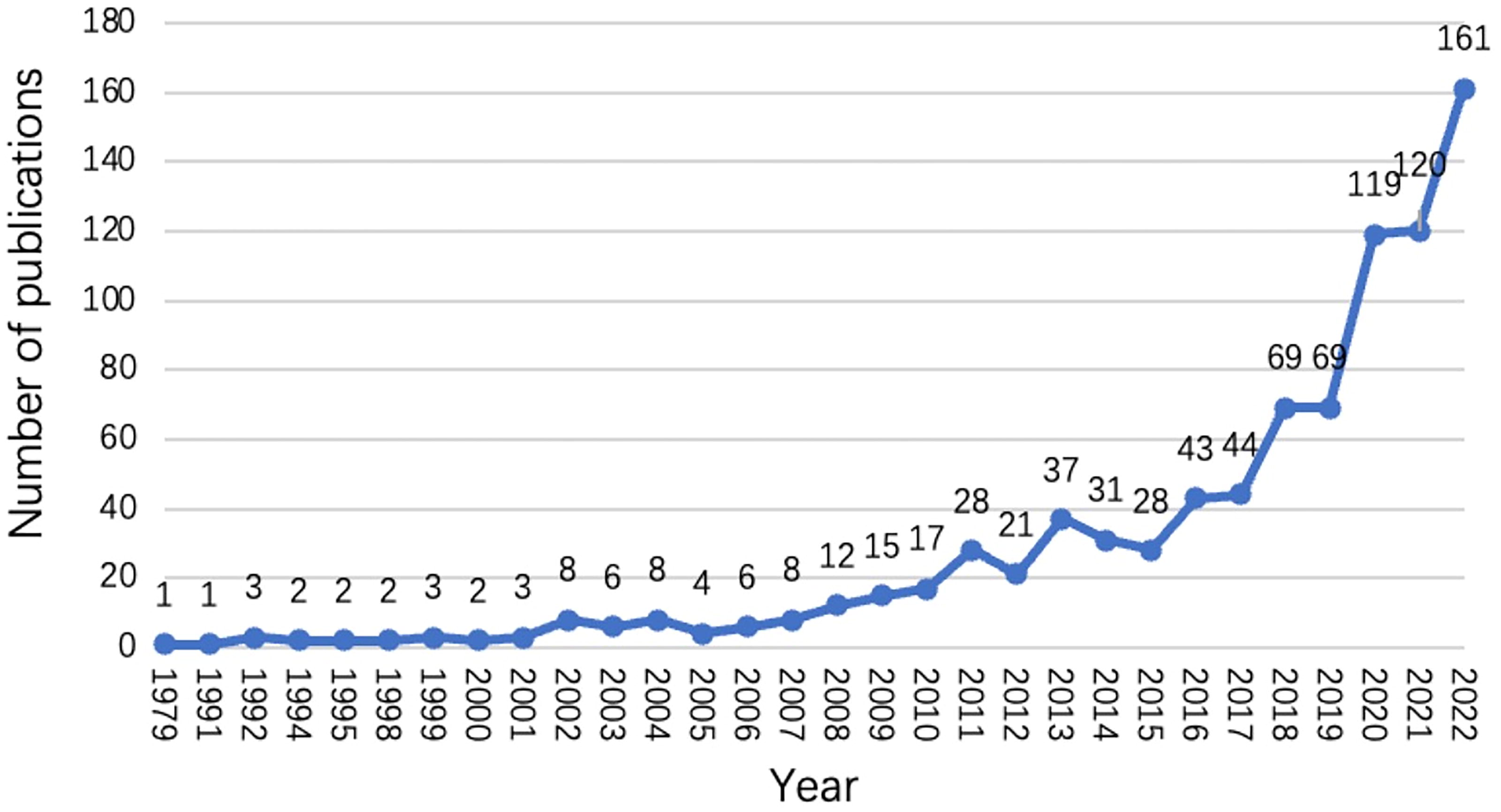
Number of annual publications.
Country Analysis
The data showed that 48 countries had contributed to research on acupuncture for insomnia, showing the global map of the countries (Fig. 3A). A cooperative network for collaborations by VOSviewer is shown in Figure 3B. A total of 232 collaborations were identified among these 49 countries. China, the United States, Canada, and Australia have the most connections, indicating that they cooperate more than other countries. It shows that many countries have paid attention to the study of acupuncture treatment of insomnia and set up close cooperation.
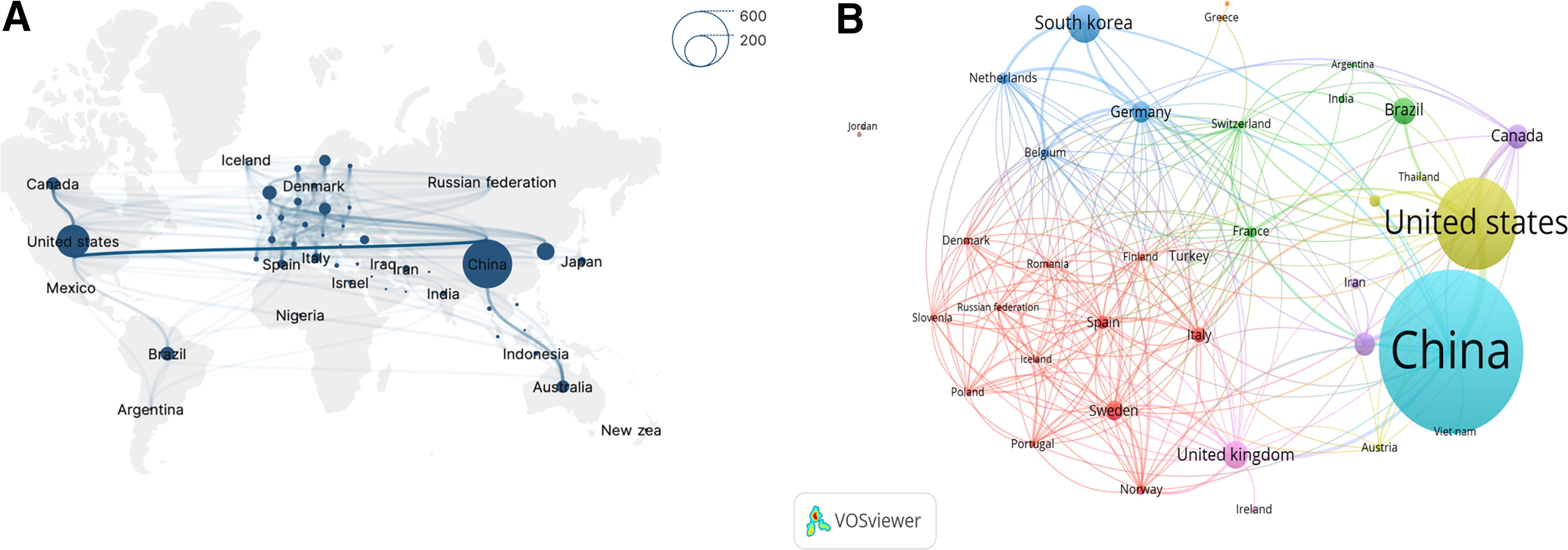
Global distribution
The top 10 countries with the highest levels of output and centrality are listed in Table 1. The most outputs published in the country is China (436 articles), accounting for 43.41%, may be due to acupuncture originated in China. The second largest number of articles were published in the United States (196 articles, accounting for 22.4%), indicating that acupuncture treatment of insomnia has been widely used in the United States. Of the top 10 countries, eight are developed nations, including the United States, South Korea, the United Kingdom, Canada, Australia, Germany, Sweden, and Italy which indicates that acupuncture treatment is particularly popular in developed countries. The highest centrality was Germany (0.15), and it is interesting that only 26 articles were published in Germany, but it is the most influential country, indicating that the quality of published literature in Germany is high. This was followed by the United States (0.14), China (0.11), and Switzerland (0.10). This shows that the four countries in the field of international recognition research results are higher, and their impact is great (Fig. 3; Table 1).
Top 10 Productive Countries and Institutions
Institution Analysis
There are 378 institutions and 756 collaborations in the WoSCC database, using CiteSpace software analysis yielded a co-occurrence map of the research institutions (Fig. 4; Table 1). The top 10 countries with the highest outputs are listed in Table 1. More than half of the top 10 institutions in both output and centrality came from China, indicating that Chinese institutions are the main body of research on acupuncture treatment of insomnia. Among them, Guangzhou University of Chinese Medicine has the most outputs (51 articles) and the strongest influence (0.18), indicating that Guangzhou University of Chinese Medicine is in the international leading position in the research of acupuncture treatment of insomnia. Then, followed by China Medical University (0.15), Beijing University of Chinese Medicine (0.14), and Harvard University (0.12), indicating that these institutions also have a strong influence.

Cooperative network of institutions.
Author and Co-Cited Author Analysis
The authors’ cooperative network was performed using VOSviewer and involved a total of 4193 authors and 201 collaborations (Fig. 5A). The top 10 productive authors are listed in Table 2. Mao J.J. and Yeung W.F. had the highest outputs with 20 publications, accounting for 2.29% of the total literature. The rest following authors with significant contributions were Chung K.F. (19 articles), Lao L.X. (18 articles), Zhang Z.J. (16 articles), Zhao F.Y. (14 articles), Garland S.L. (12 articles), Xu S.F. (12 articles), Yin X. (12 articles), and Fu Q.Q. (11 articles). Mao J.J. was the most productive author in this field and conducted clinical research on acupuncture for insomnia in cancer survivors at the Memorial Sloan Kettering Cancer Center. His study identified patient-perceived contributors to the response to acupuncture, such as co-morbid medical conditions, support for sleep hygiene practices, and temporary therapeutic relief. Addressing these factors may enhance the overall effectiveness of acupuncture for insomnia. 33 Meanwhile, Yeung Wingfai, another highly productive author, conducted research on acupuncture for insomnia at the The Hong Kong Polytechnic University. His study aimed to determine the efficacy and safety of acupuncture for insomnia. 34 Moving on to the co-citation analysis network of the authors, as depicted in Figure 5B, out of the 21,372 authors, 7 authors were cited more than 100 times.

Cooperative network of productive
Top 10 Productive and Co-Cited Authors
The top 10 co-cited authors are listed in Table 2. All of them were cited more than 88 times. Among them, Buysse D.J. was the most cited author with 270 citations, followed by Yeung W.F. (237 citations), Morin C.M. (173 citations), Macphersoi H. (130 citations), Chung K.F. (115 citations), Han J.S. (104 citations), Riemann D. (101 citations), Mao J.J. (96 citations), Cheuk D.K.L. (88 citations), and Garland S.N. (88 citations). Buysse D.J., a specialist in sleep disorders, focused on the diagnosis and treatment of insomnia. 35
Journal and Co-Cited Journal Analysis
The cooperative network of co-cited journals, as visualized by VOSviewer in Figure 6A, illustrates the interconnections between various journals in the field. It highlights the associations and collaborations among different publications based on the citations. Table 3 provides a comprehensive list of the top 10 journals with the highest outputs in terms of the number of articles published. Medicine stands out as the most productive journal with a remarkable contribution of 56 articles. It is closely followed by Evid-Based Compl Alt, which has contributed 53 articles. Trials and Acupunct Med have also made significant contributions with 33 and 27 articles, respectively. These findings emphasize the major role played by these journals in promoting research in the field of acupuncture and complementary medicine. Frontiers Psychiatry, with an impressive impact factor (IF) of 5.435, emerges as the most influential journal in the network. Its high IF reflects the substantial influence it holds in shaping the field. Notably, the majority of the periodicals in the cooperative network are focused on acupuncture and complementary medicine, indicating significant research interest in these areas. To further understand the co-citation patterns, this study highlights the top 10 journals with the most frequent co-citations, as presented in Table 3. Sleep emerges at the top with an impressive count of 961 citations, further solidifying its standing as a highly influential publication. Evid-Based Compl Alt follows closely with 782 citations, reflecting its significance as a frequently referenced source. J Altern Complem Med and Sleep Med also feature prominently with 627 and 588 citations, respectively. These journals, along with others like Sleep Med Rev, Acupunct Med, Cochrane Db Syst Rev, World J Clin Oncol, JAMA, and Zhongguo Zhen Jiu, play an integral role in the academic discourse of the field. Analyzing the centrality of the cited journals, it is observed that J Altern Complem Med and Cochrane Db Syst Rev have high centrality scores of 0.05 and 0.04, respectively. This indicates their significant influence and pivotal position within the network. Furthermore, JAMA is highlighted as the journal with the highest IF of 157.335, signifying its exceptional prominence in the field. The presence of journals like Medicine and Sleep, which exhibit both high outputs and frequent citations, underscores their notable role in advancing research and knowledge dissemination within the domain of acupuncture for insomnia. Researchers in this field can benefit greatly from targeting these influential journals for publication and reference purposes.

Cooperative network of co-cited journals
Top 10 Productive and Co-Cited Journals
IF, impact factor; N/A, not available; Q, quartile; Q1, first quartile; Q2, second quartile; Q3, third quartile; Q4, fourth quartile.
Research Hotspots and Trend Analysis
Keyword co-occurrence and clustering
A keyword co-occurrence network was constructed using CiteSpace software, as shown in Figure 6B. The analysis revealed the top 10 keywords in terms of frequency and centrality, which are presented in Table 4. Among these keywords, “acupuncture” had the highest frequency, appearing 245 times in the literature dataset. It also had the largest node size, indicating its significant presence in the co-occurrence network. In addition, “insomnia” and “sleep” were also frequently mentioned in the literature, appearing 178 and 167 times, respectively. Moreover, the centrality values for each keyword were calculated, reflecting their communication importance within the network. A higher centrality value suggests that researchers pay more attention to these keywords. In terms of centrality, “acupuncture” had the highest value of 0.3, indicating that it plays a central role in the knowledge network. Other keywords with relatively high centrality values included electroacupuncture (0.26), double-blind (0.25), and stimulation (0.25). Conversely, keywords such as acupressure (0.12) and breast (0.11) had comparatively lower centrality values. To validate the clustering result, the Q and S values were calculated, which were 0.7585 and 0.8983, respectively. These values suggest that the keyword clusters generated by CiteSpace are scientifically sound, reasonable, and statistically significant. In total, nine distinct clusters were identified, with key clusters focusing on anxiety and validation, which are central to current research themes. These clusters represent various research themes and topics related to acupuncture and its effects on different health conditions. Overall, this keyword analysis and clustering provide insights into the research trends and focal points in the field of acupuncture. The identified high-frequency and high-centrality keywords, along with the clustered themes, can serve as a valuable resource for researchers, practitioners, and policymakers interested in acupuncture and its diverse applications.
Top 10 Keywords with Centrality and Frequency
The timeline viewer of acupuncture for insomnia is drawn based on CiteSpace software (Fig. 7), which visually presents the phased hotspots of this issue from the time dimension. Before 1990, the research on acupuncture for insomnia had a low research intensity. From 1991 to 2001, based on the analysis of high centrality keywords, the research during this period focused mainly on acupuncture and electroacupuncture (EA) for treating insomnia, with double-blind experiments being commonly used. The high-frequency keywords included acupuncture, sleep, randomized controlled trial, pain, and electroacupuncture. Between 2002 and 2012, research highlighted the combined use of acupuncture and acupressure, showing improvements in sleep quality and broad applicability in managing insomnia associated with anxiety and pain.36,37 High-frequency keywords during this period included insomnia, quality of life complementary, prevalence, and depression. From 2013 to 2022, based on the analysis of high centrality keywords, the research focused on studying the impact of acupuncture on neurons. Hao e conducted an animal experiment and found that (EA at Bai hui (GV20) and Da zhui (GV14) attenuates cognitive impairment and modulates synaptic plasticity in hippocampal neurons via miR-132 in a sleep-deprived rat model. 38 This study proved that acupuncture is effective in improving cognitive impairment caused by sleep deprivation. 38 Additionally, symptoms of insomnia are highly prevalent in the elderly, 39 which has led to increased attention on acupuncture treatment for insomnia in the elderly. The high-frequency keywords during this period included index, risk, adults, disturbance, and scale (Table 5).
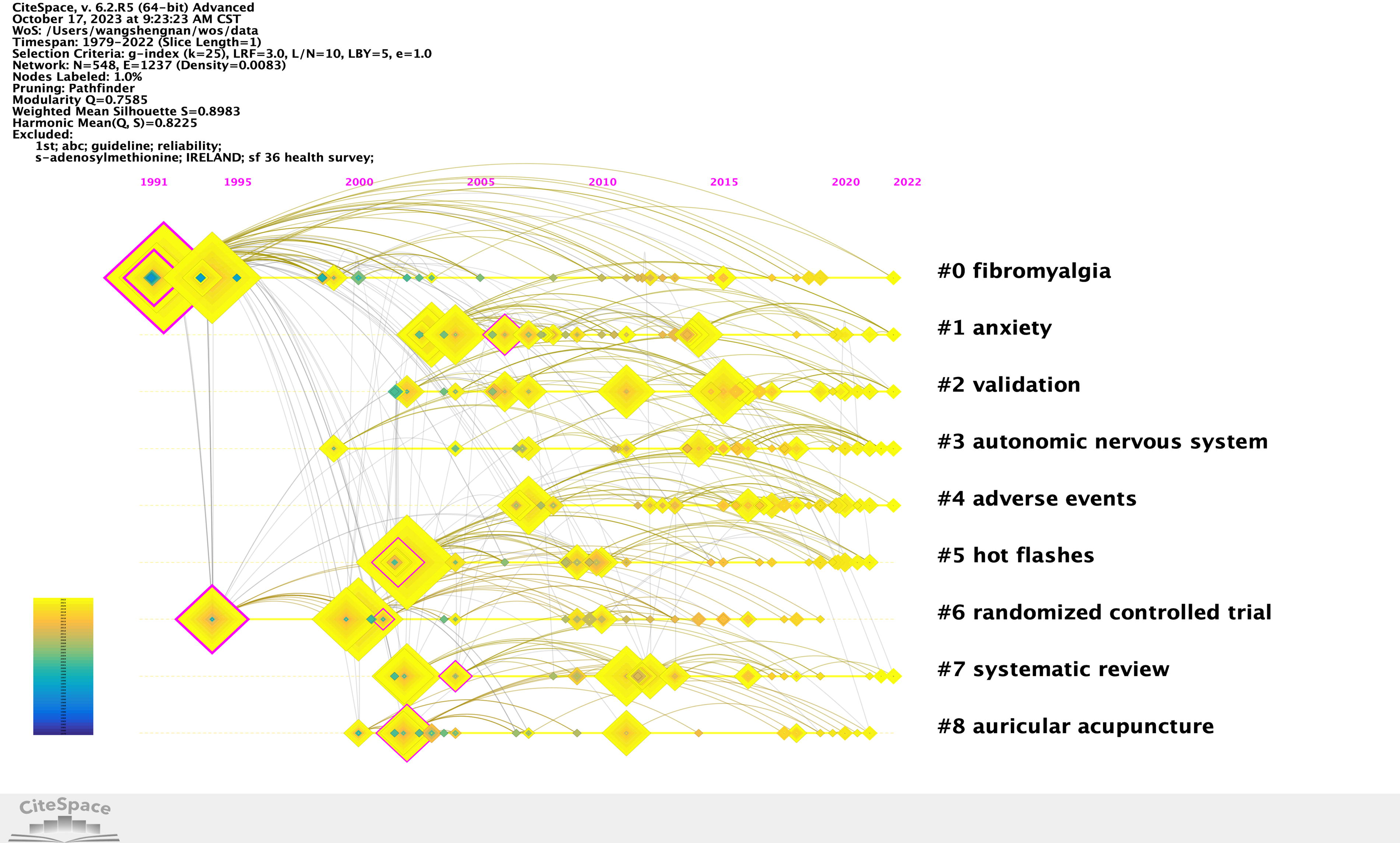
Timeline viewer of keywords cluster.
Keyword Time Distribution from 1991 to 2022
Co-cited reference
The top 10 most cited references on acupuncture treatment for primary insomnia are listed in Table 6. The most cited reference, with a total of 66 citations, is the study titled “Efficacy and safety of acupuncture treatment on primary insomnia: a randomized controlled trial” published by Yin X, et al. in the journal Sleep Medicine. The objective of this study was to assess the effectiveness and safety of acupuncture for primary insomnia. The results showed that acupuncture improved sleep efficiency, increased total sleep time, reduced insomnia severity, and alleviated depressive or anxious moods in patients with insomnia. Importantly, no severe adverse effects were reported during the trial, 20 providing evidence for the efficacy and safety of acupuncture in the treatment of insomnia. The second most cited reference, with 34 citations, is a systematic review titled “A systematic review of acupuncture for sleep quality in people with insomnia.” The author conducted a comprehensive review and meta-analysis to evaluate the effects of acupuncture on insomnia. The results showed statistically significant improvements in sleep quality with acupuncture compared with sham/placebo acupuncture and pharmacotherapy. 40 The third most cited reference, titled “Acupuncture Improves Peri-menopausal Insomnia: A Randomized Controlled Trial,” examined the effects of acupuncture on peri-menopausal insomnia. The study demonstrated that acupuncture can lead to clinically relevant improvements in the short-term treatment of peri-menopausal insomnia, both subjectively and objectively. This finding highlights the therapeutic potential of acupuncture in the management of peri-menopausal insomnia. 41 The fourth and fifth most cited references are “European guideline for the diagnosis and treatment of insomnia” 42 and “Management of Chronic Insomnia Disorder in Adults: A Clinical Practice Guideline from the American College of Physicians.” 43 These guidelines provide authoritative recommendations for the diagnosis and management of insomnia, serving as valuable resources for healthcare professionals. Moving on to Table 7, the most central reference in terms of its influence in the field of acupuncture treatment for insomnia is the “Diagnostic and Statistical Manual of Mental Disorders.” 44 This reference plays a key role in the classification and diagnosis of mental disorders, including insomnia. It provides standardized criteria and terminology for clinicians and researchers. The next most references with high centrality are “Cross-cultural and comparative epidemiology of insomnia: the Diagnostic and Statistical Manual (DSM), International Classification of Diseases (ICD) and International Classification of Sleep Disorders (ICSD),” “A Randomized Clinical Trial of Acupuncture Compared with Sham Acupuncture in Fibromyalgia,” “Acupuncture for Depression: A Randomized Controlled Trial,” and “Acupuncture treatment for pain: systematic review of randomized clinical trials with acupuncture, placebo acupuncture, and no acupuncture groups.” These references contribute to the theoretical foundation of acupuncture treatment for insomnia by discussing various aspects such as epidemiology, clinical trials, and treatment of related conditions.
Top 10 Frequently Co-Cited References
IF, impact factor.
Top 10 Co-Cited References of High Centrality
IF, impact factor.
Research Trend
The results of the research trend were carried out through keyword citation bursts using the CiteSpace software, as shown in Figure 8. The main set in the process was the Minimum Duration (1 year) and γ (0.1). In the graph, begin and end indicate the start and end times of the burst, respectively, and red indicates the timespan of the burst. This analysis helped identify the keywords that were cited frequently over a period of time. One of the earliest and longest-lasting burst keywords was “fibromyalgia.” This keyword has been cited consistently throughout the research trend. On the other hand, “older adults” had the highest burst intensity, indicating a significant turning point in the field. The emergence of “older adults” as a burst keyword highlights the importance of studying sleep in this population. With the rapid increase in the aging population worldwide, understanding sleep in older adults has become highly exploratory and of great significance for human health factors, such as more people living alone, aging, and declining health have contributed to the increasing incidence of sleep disorders in older adults. 45 The burst analysis also revealed several keywords that have remained hot topics and trends in the field, including “model,” “stroke,” “blind,” “clinical practice guideline,” “risk,” “symptoms,” “HT7,” and “PC6.” These keywords signify the current research focus and trends. In terms of acupoint selection, “HT7” and “PC6” are at the forefront of current research. Modern studies have shown that stimulating the PC6 can reduce brain excitability and treat insomnia. 46 A significant focus has been on poststroke insomnia, where acupuncture’s effectiveness in reducing sympathetic hyperactivities has been highlighted in recent studies. 47 In terms of disease type, poststroke insomnia has emerged as a major research frontier. Acupuncture has been shown to modulate neurotransmitters, regulate immune responses, and balance the autonomic nervous system, providing multifaceted benefits for poststroke insomnia.

Top 25 keywords with the strongest citation bursts.
Postoperative insomnia is a significant and often overlooked complication in patients recovering from major surgeries. The condition is frequently aggravated by the hospital environment, where continuous therapeutic interventions, tests, and examinations disrupt normal sleep patterns. Current literature and keyword analyses have not adequately captured this issue, despite its prevalence. For instance, Chase et al. (2013) documented a case in which a patient with severe postoperative insomnia showed immediate and substantial improvement following acupuncture treatment. This case underscores the potential of acupuncture in addressing postoperative insomnia and highlights the need for further investigation into this specific condition within the broader context of insomnia research. 48
It eliminates the risk factors that contribute to sleep disorders and regulates the balance of the autonomic nervous system. 49 Animal experiments, often using rat models, are frequently used to study the mechanisms of acupuncture in treating insomnia. Xie et al. developed an insomnia model in rats using environmental stressors, demonstrating that EA improved sleep through modulation of the hypothalamus-pituitary-adrenal (HPA) axis and highlighted the importance of rigorous bias control.50,51
DISCUSSION
Based on the research conducted using CiteSpace and VOSviewer, the analysis of research articles on the application of acupuncture for insomnia from the WoSCC self-built database up to December 2022 revealed several key findings regarding the research status, hotspots, and trends in this field.
Research Status of Acupuncture for Insomnia
The number of publications in this field showed an increasing trend over time. China was found to be the highest producer of research articles, accounting for 43.41% of the total literature. The countries with high research output were the United States, South Korea, and the United Kingdom, indicating a wide network of collaborative partnerships among nations. Germany, the United States, and China were identified as the most influential countries in the field. Among the institutions, Guangzhou University of Chinese Medicine had the highest research output (51 articles) and the strongest impact (0.18), indicating its leading position in acupuncture treatment for insomnia globally. Other influential institutions included China Medical University (0.15), Beijing University of Chinese Medicine (0.14), and Harvard University (0.12), highlighting their significant contributions to this field’s progress. From the authors’ perspective, there was evidence of a strong cooperative relationship among authors in this field, with a focus on high-yield authors. Notably, Mao J.J. and Yeung W.F. had the highest number of publications, accounting for 2.29% of the total literature. In terms of journals, Medicine emerged as the most productive journal with 56 articles and an IF of 1.6 in 2022. The journal Sleep received the highest number of citations, while JAMA had the highest IF (157.335). J Altern Complem Med had the highest centrality (0.05). The presence of journals like Medicine and Sleep, with high outputs and frequent citations, significantly contributes to the development of the field. Overall, this analysis of the research articles on acupuncture for insomnia revealed the increasing research output in the field, with China leading in terms of production. It also highlighted the influential role of Guangzhou University of Chinese Medicine and other renowned institutions, as well as the cooperative relationships among authors. The prominent journals in this field, with their high citation rates and IFs, are instrumental in advancing the field’s knowledge and understanding.
Hotspots and Research Status on Acupuncture for Insomnia
According to the keyword burst analysis, the research fields of acupuncture for insomnia primarily focus on the use of acupuncture, EA, randomized controlled trials, and complementary approaches for the management of insomnia. Additionally, the keywords also highlight the importance of studying the quality of life, prevalence, pain, sleep, and anxiety in relation to acupuncture for insomnia. In terms of centrality, acupuncture and EA are the most prominent keywords, indicating their significant role in the research on acupuncture for insomnia. Other important keywords that appear in relation to acupuncture for insomnia include double-blind, stimulation, analgesia, disorder, anxiety, brain, acupressure, and breast. Based on clustering analysis, the keywords can be divided into nine distinct clusters. Cluster #0 is related to fibromyalgia, Cluster #1 to anxiety, Cluster #2 to validation, Cluster #3 to the autonomic nervous system, Cluster #4 to adverse events, Cluster #5 to hot flashes, Cluster #6 to randomized controlled trials, Cluster #7 to systematic reviews, and Cluster #8 to auricular acupuncture. From the clustering analysis, it can be inferred that acupuncture is mainly used for treating insomnia that is associated with fibromyalgia, anxiety, and hot flashes. Fibromyalgia is a common chronic condition characterized by widespread pain and tender points. It is often accompanied by co-morbid conditions such as insomnia. 52 Acupuncture has been found to be helpful in improving sleep quality and alleviating anxiety and depression in patients with chronic insomnia. 53 Hot flashes, which are described as intense heat sensations accompanied by flushing and sweating, are considered as a traditional Chinese medicine syndrome. Both hot flashes and insomnia can be categorized as a deficiency of yin. Acupuncture can help regulate the balance of Yin and Yang in the body and address symptoms such as spontaneous sweating, night sweats, upper body heat sensations, and restless sleep. 54 Auricular acupuncture, which targets specific points on the ear, has been found to be effective in treating primary insomnia. The rich innervation of the ear, particularly the afferent projections from the auricular branch of the vagus nerve to the solitary tract nucleus, provides the anatomical basis for the neuroregulation of auricular acupuncture. 55 A systematic review and meta-analysis conducted by Lan et al. demonstrated a positive effect of auricular acupuncture on primary insomnia. 56 Overall, the research on acupuncture for insomnia suggests that it is a promising approach for improving sleep quality, managing co-morbid conditions, and reducing dependence on medication with potential adverse effects.
From the point of view of co-citation, the articles that have high citations and high centrality are considered to be published in highly reputable international publications that hold significant academic reference value and possess a considerable level of influence within the field. One notable article that falls into this category is titled “Efficacy and safety of acupuncture treatment on primary insomnia: a randomized controlled trial,” which has been cited a total of 66 times. This article was authored by Yin, X et al. and published in the journal Sleep Med. Another highly cited article, with a total of 34 citations, is titled “A systematic review of acupuncture for sleep quality in people with insomnia.” Furthermore, there are several other significant publications that contribute to the theoretical foundation of acupuncture treatment for insomnia. These include “Acupuncture Improves Peri-menopausal Insomnia: a Randomized Controlled Trial,” “European Guideline for the diagnosis and treatment of Insomnia,” and “Management of Chronic Insomnia Disorder in Adults: a Clinical Practice Guideline from the n College of Physicians.” These articles have all played a crucial role in shaping the research on acupuncture treatment for insomnia. Switching gears to the most central article, “Diagnostic and Statistical Manual of Mental Disorders” holds this distinction. It serves as a cornerstone reference within the field and serves as a point of reference for many subsequent publications. Other articles such as “Cross-cultural and comparative epidemiology of insomnia: The Diagnostic and Statistical Manual (DSM-RRB International of Classificationtion Diseasesas ICD-RRB-ICD) and International Classification of Sleep DisICSDrs (ICSD),” “A Randomized Clinical Trial of Acupuncture Compared with Sham Acupuncture in Fibromyalgia,” “Acupuncture for Depression: a Randomized Controlled Trial,” and “Acupuncture treatment for pain: systematic review of Randomized Clinical trials with Acupuncture, placebo Acupuncture, and no Acupuncture groups” also contribute significantly to the understanding of acupuncture’s role in treating insomnia. Moving on to the keyword burst analysis, it is interesting to note that “Fibromyalgia” emerges as the earliest and longest-lasting keyword, indicating a sustained interest in studying the relationship between acupuncture and fibromyalgia. On the other hand, “Older adults” stands out as the keyword with the highest burst intensity, suggesting that there is a recent surge in research focusing on the use of acupuncture for insomnia in this specific population. Additionally, the emergence and continued presence of keywords such as model, stroke, blind, clinical practice guideline, risk, symptoms, HT7, and PC6 suggest that these topics are currently trending and considered hotspots of research in the field of acupuncture for insomnia treatment.
Advantages
Our study builds on the foundational work of the 2019 analysis 30 by extending the period of data collection and incorporating publications from 2018 to 2022. This expanded timeframe has allowed us to capture recent research developments, including the identification of emerging keywords such as “post-stroke insomnia” and acupoints such as “HT7” and “PC6” that have gained prominence in recent years. Furthermore, the application of advanced bibliometric software in our study has facilitated a more nuanced understanding of research interconnections and central themes, providing insights into how the field has evolved since the earlier study. These updates are crucial for researchers and practitioners aiming to stay abreast of the latest directions in acupuncture research for insomnia.
Limitations
This study has several limitations. First, the literature utilized in this study was limited to the WoSCC database, which means that any relevant articles not indexed in this database were not considered. Second, the exclusion of non-English publications from the database due to the limitations of CiteSpace software may have led to the omission of important studies conducted in other languages. Third, in cases where original studies were not available, we relied on manual reporting, which introduces the possibility of missing potential studies. Fourth, the classification of clusters may not be as precise as desired due to limitations in the software used for analysis. Fifth, since qualitative analysis is inherently subjective to the researcher, different researchers with distinct observation perspectives may reach different conclusions when interpreting the findings of this study.
CONCLUSION
The present study conducted a comprehensive investigation into the current status, hotspots, and frontier trends of acupuncture treatment for insomnia from the establishment of the WoSCC database until 2022. The findings of this study highlight the tremendous potential for the development of research on acupuncture treatment for insomnia. Research hotspots included acupuncture for poststroke insomnia. Research trends include the mechanism of acupuncture treatment for insomnia through establishing rat models. In addition, controlling bias risk in experiments is also a current hotspot and frontier.
The application of bibliometric and scientific knowledge mapping in this study offers a comprehensive framework for understanding the development and direction of research on acupuncture for insomnia. These tools provide a visual and data-driven representation of the research landscape, enabling the identification of significant patterns, such as the increasing focus on specific acupoints like HT7 and PC6. This approach not only maps the current state of research but also guides future investigations by highlighting areas of high interest and potential gaps. By situating individual studies within the broader context of the field, researchers can better align their work with prevailing trends and emerging priorities, thereby enhancing the impact and relevance of their contributions.
Footnotes
AUTHORS’ CONTRIBUTIONS
Concept and design: S.-N.W., J.-H.Y., X.-L.L., and Q.-H.Z. Data curation: S.-N.W., J.-H.Y., X.-L.L., and Q.-H.Z. Formal analysis: S.-N.W. and X.-C.S. Funding acquisition: J.-H.Y. and X.-L.L. Investigation: J.-H.Y., X.-L.L., and Q.-H.Z. Methodology: A.L. and S.-N.W. Project administration: J.-H.Y., X.-L.L., and Q.-H.Z. Resources: S.-N.W., H.C., G.-H.Y., A.L., X.-C.S., N.L., C.L., and J.-Y.J. Software: S.-N.W. and X.-C.S. Supervision: J.-H.Y., X.-L.L., and Q.-H.Z. Validation: All authors. Visualization: All authors.
DATA AVAILABILITY STATEMENT
This study did not collect or analyze any personal or individual data from participants. Consequently, there was a lack of available data to conduct or include in this study.
AUTHOR DISCLOSURE STATEMENT
J.H.Y. is employed by Shenzhen Frontiers in Chinese Medicine Research Co., Ltd., and A.L. is employed by Servier (Beijing) Pharmaceutical Research & Development CO. Ltd. The remaining authors declare that the research was conducted in the absence of any commercial or financial relationships that could be construed as a potential conflict of interest.
FUNDING INFORMATION
This study was supported by the Scientific Research Projects of Medical and Health Institutions of Longhua District, Shenzhen (