




Abstract
Background:
In the United States, acupuncture education is divided into two primary pathways: medical acupuncture for licensed physicians and traditional acupuncture rooted in Traditional Chinese Medicine (TCM) for nonphysician practitioners. These pathways reflect the distinct educational needs and historical development of acupuncture in the United States.
Objective:
To compare medical and traditional acupuncture educational systems, highlighting their strengths, weaknesses, and the potential for integration to enhance patient care.
Methods:
This narrative review utilized comprehensive literature searches, analyzing peer-reviewed articles, institutional reports, and accreditation documents. The study focused on programs approved by the American Academy of Medical Acupuncture and accredited by the Accreditation Commission for Acupuncture and Herbal Medicine.
Results:
Medical acupuncture programs are shorter and emphasize evidence-based practice, allowing physicians to integrate acupuncture into conventional medical treatment. These programs focus on Western medical terminology and concepts but may lack depth in TCM principles. Traditional acupuncture programs offer extensive training in TCM principles and practices, including herbal medicine, with comprehensive clinical training but may lack emphasis on modern medical science and research-based evidence. There is a significant workforce disparity between licensed traditional acupuncturists and the much smaller number of medical acupuncturists in practice.
Conclusions:
Integrating both educational pathways can enhance patient care through comprehensive treatment approaches. Successful integration examples demonstrate improved patient outcomes. Future efforts should focus on developing joint training programs, promoting research collaboration, and increasing hospital-based internships to foster interdisciplinary learning and practice.
INTRODUCTION
The growing acceptance and utilization of acupuncture in U.S. health care has led to two distinct educational pathways: physician acupuncture education and nonphysician acupuncture education.1–6 These parallel systems reflect the unique historical development of acupuncture in the United States and present both opportunities and challenges for the future growth of the field. However, so far, few studies in the literature have discussed and compared these two parallel education systems under the theme of integrative medicine. It is critical to compare these educational models not to establish superiority but to clarify the strengths and weaknesses of each approach, thereby fostering mutual appreciation and complementarity among graduates and optimizing training efforts toward better patient outcomes and safer practice. Furthermore, as acupuncture becomes more integrated into mainstream health care and individual acupuncturists increasingly develop subspecialties, the composition of the workforce trained by these distinct educational pathways will greatly affect interprofessional collaboration, scope of practice, and quality of care. By analyzing and comparing physician versus nonphysician education in acupuncture, we can deal more clearly with the difficulties and opportunities ahead for acupuncture as an integrated component of U.S. health care. This narrative review aims to compare acupuncture training programs in the United States, focusing on programs approved by the American Academy of Medical Acupuncture (AAMA) and those accredited by the Accreditation Commission for Acupuncture and Herbal Medicine (ACAHM).1,7 A comprehensive literature search was conducted using electronic databases, mainly PubMed. Both peer-reviewed articles and gray literature, such as institutional reports, accreditation documents, and relevant websites, were reviewed and analyzed. The results of this analysis will be used as instrumental tools to form policies, guidelines, and educational strategies that ultimately benefit practitioners, patients, and the system at large.
WHAT ARE MEDICAL ACUPUNCTURE AND TRADITIONAL ACUPUNCTURE?
Medical acupuncture is a specialized practice in which licensed physicians, already trained in conventional Western medicine, integrate acupuncture into their existing medical practices.2,8 It emphasizes evidence-based methods and serves as a complement to traditional treatments. Physicians receive additional training through programs, such as those approved by the AAMA.1,9–12
Traditional acupuncture, rooted in Traditional Chinese Medicine (TCM), 13 a major component of East Asia Medicine, 14 involves a comprehensive understanding and extensive training of TCM philosophies, acupuncture points, meridian pathways, and the use of herbal medicine. Programs accredited by the Accreditation Commission for ACAHM are intensive, often spanning several years and thousands of study hours. 7 Certification typically involves passing exams from the National Certification Commission for Acupuncture and Oriental Medicine (NCCAOM).9,10,15–17
These distinct but complementary approaches to acupuncture highlight the diversity within the field and underscore the potential for integrative health care practices that draw on the strengths of Western medical science and traditional Eastern healing arts.
OVERVIEW OF EDUCATION SYSTEMS OF ACUPUNCTURE IN THE UNITED STATES
Educational Pathways for Medical Acupuncture
Medical acupuncture programs in the United States are designed specifically for licensed physicians (MDs and DOs) who wish to integrate acupuncture into their medical practice. 1 Table 1 presents AAMA-approved medical acupuncture training programs in the United States, summarizing program characteristics including didactic and clinical training hours (Table 1).
Overview of American Academy of Medical Acupuncture-Approved Medical Acupuncture Programs in the United States, Detailing Program Characteristics, Didactic Hours, and Clinical Training Requirements
NYC: New York City.
UCLA: The University of California Los Angeles.
These programs provide physicians with the necessary training to incorporate acupuncture into their practice, focusing on both the theoretical and practical aspects of acupuncture within a medical context.3,18
The curriculum for medical acupuncture programs typically covers the following areas: TCM theory and philosophy, location and functions of acupuncture points, diagnosis and treatment planning in TCM, needling techniques and safety, integration of acupuncture with Western medicine, and clinical applications for various medical conditions (Table 1).
Didactic hours: The minimum didactic training requirement for medical acupuncture programs is typically 200 h. However, many programs offer more comprehensive training, some providing up to 300 h of didactic instruction. Clinical practice hours: Clinical training requirements vary between programs but generally range from 100 to 150 h. This hands-on experience allows physicians to apply their knowledge under supervision and develop practical skills in acupuncture treatment.
The licensing and certification process for medical acupuncturists in the United States involves several steps:
Graduation from a recognized training program is the first step toward certification.
Certification requirements include:
Graduation from an accredited allopathic or osteopathic medical school in the United States or Canada. Hold a current, valid, and unrestricted license to practice medicine. Completion of at least 300 h of acupuncture education, including 100 h of clinical training. Passing the ABMA written exam.
State licensure requirements vary. Many states recognize ABMA certification but may not require it to practice. Many states allow physicians to practice acupuncture under their existing medical licenses.
19
Other requirements might involve completing a specific number of clinical hours, securing malpractice insurance, and passing a state-specific examination.
19
The ABMA requires recertification every 10 years, which involves documenting ongoing acupuncture practice and continuing education.
It is important to note that the requirements can vary by state, and physicians should consult their state medical board for specific regulations regarding the practice of medical acupuncture. 19
In conclusion, medical acupuncture education for physicians in the United States offers a structured path to integrate acupuncture into conventional medical practice. With comprehensive training programs and a clear certification process, physicians can acquire the necessary skills and credentials to incorporate this ancient healing art into their modern medical toolkit.
Educational Pathways for Traditional Acupuncture
Traditional acupuncture programs in the United States are designed for nonphysician practitioners and offer comprehensive education in acupuncture and TCM. These programs are typically offered at the master’s or doctoral level and are accredited by ACAHM (Table 2) presents representative traditional acupuncture schools in the United States. Schools were selected based on accreditation status and geographic distribution. Overall, there are 49 ACAHM-accredited and preaccredited programs in the United States as of 2024 (Table 2).
Representative Traditional Acupuncture Schools in the United States, Selected by Accreditation Status and Geographic Distribution (49 Programs as of 2024)
Length of Study
Traditional acupuncture programs in the United States typically require students to complete a master’s or doctoral program lasting between 3 and 4 years. ACAHM has approved 49 accredited and preaccredited programs and institutions as of 2024. 7 These programs are intensive and comprehensive, often exceeding 2500 h of combined classroom and clinical training. 20 Table 3 presents ACAHM-approved degree programs at traditional acupuncture schools, detailing program duration and clinical training components (Table 3).
ACAHM-Approved Degree Programs at Traditional Acupuncture Schools, Summarizing Program Duration and Clinical Training Components
ACAHM, Accreditation Commission for Acupuncture and Herbal Medicine; NCCAOM, National Certification Commission for Acupuncture and Oriental Medicine.
Types of Courses
The curriculum in traditional acupuncture programs is designed to provide a deep understanding of the principles and practices of TCM. Core courses typically include TCM principles and philosophy, acupuncture techniques, herbal medicine, and extensive clinical practice.
Certification Requirements
To practice as a licensed acupuncturist in the United States, graduates must meet certification and licensure requirements set by various accrediting and regulatory bodies.
The combination of a comprehensive educational curriculum, extensive clinical training, and rigorous certification processes ensures that traditional acupuncturists are well prepared to provide high-quality care rooted in the principles of TCM.
STRENGTHS AND WEAKNESSES
Strengths of Medical Acupuncture Education
Integration with conventional medical training and familiarity with Western medical terminology
One of the main strengths of medical acupuncture education is its integration with conventional medical training and familiarity with Western medical terminology. Physicians trained in medical acupuncture can seamlessly incorporate acupuncture into their broader medical practice and facilitate effective communication with other health care professionals, enhancing holistic patient care. This integration also allows for a comprehensive approach to patient treatment that addresses not only symptoms but also underlying conditions.21,22
Focus on evidence-based practice
Medical acupuncture programs emphasize evidence-based practice, ensuring that treatments are scientifically validated.23,24 This focus aligns acupuncture with the rigorous standards of Western medicine, promoting the use of acupuncture techniques that have been proven to be effective through clinical trials and research. This evidence-based approach improves the credibility and acceptance of acupuncture within the medical community, encouraging more physicians to consider it as a viable treatment option.
Weaknesses of medical acupuncture education
While medical acupuncture programs provide valuable training, they often offer a shorter duration compared to traditional acupuncture programs. Yeh found that half of physicians after training in an acupuncture program did not enter actual practice. 25 Kalauokalani found that physician acupuncturists often have a diverse training background and use a blend of acupuncture styles in practice. 26 Major barriers that prevent physicians from getting into an acupuncture practice include time constraints, inconsistent insurance reimbursement, lack of confidence, and insufficient institutional support, all of which hinder its integration into clinical care.25,27 There are huge differences in the available workforce of practicing acupuncturists between physician acupuncturists and traditional acupuncturists. Based upon the data from AAMA, ABMA, and Helms Medical Institute websites,1,8,28–30 the estimated total number of medical acupuncturists—comprising both ABMA-certified and non-ABMA-certified practitioners—is significantly smaller than the number of NCCAOM-certified and non-NCCAOM-certified traditional acupuncturists in the United States, limiting the impact of medical acupuncturists in the U.S. health care system15,31 (Fig. 1).
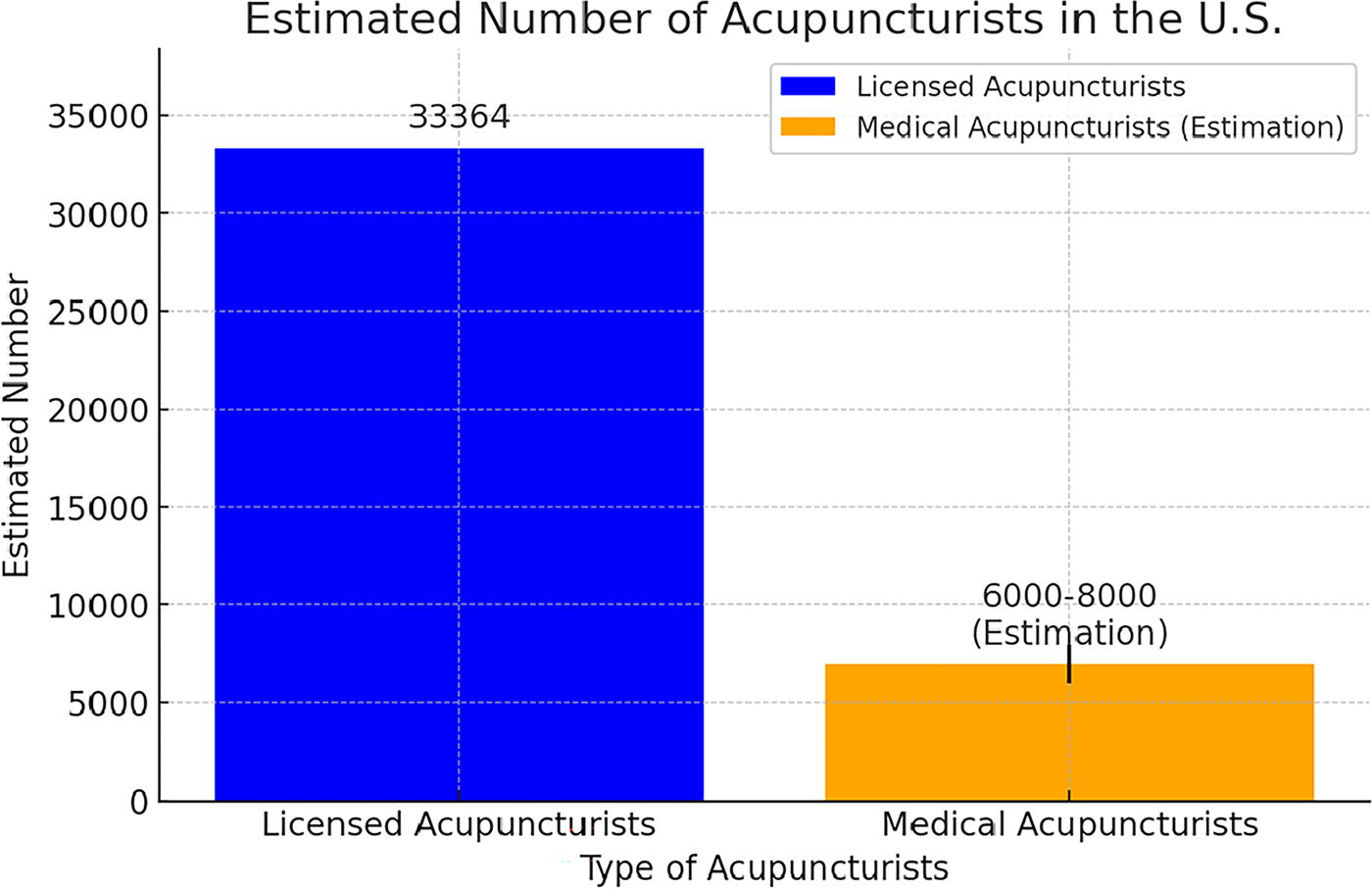
Comparisons of the number of acupuncturists in the United States. The number of licensed acupuncturists includes the National Certification Commission for Acupuncture and Oriental Medicine (NCCAOM) certified and noncertified practitioners. The estimated number of medical acupuncturists includes the American Board of Medical Acupuncture (ABMA) certified and noncertified practitioners. Date sources: Fan et al. 31 ; websites of ABMA, the American Academy of Medical Acupuncture (AAMA), and Helms Medical Institute (HMI).
This abbreviated training can also result in a superficial understanding of the TCM principles. For example, medical acupuncture programs might not provide extensive training in the use of Chinese herbal medicine, a critical component of TCM that complements acupuncture treatments.32,33 Furthermore, traditional diagnostic techniques such as tongue and pulse diagnosis may receive less emphasis in medical acupuncture curricula.34,35 Consequently, physicians trained in medical acupuncture may not fully appreciate the holistic approach of TCM, potentially limiting the effectiveness of their acupuncture treatments in addressing the root causes of health problems.
In addition, physician acupuncturists often limit their acupuncture practice to their own medical specialty, resulting in a narrower range of treated patient populations. This can lead to less diverse clinical experience with acupuncture compared to nonphysician practitioners.
Strengths of Traditional Acupuncture Education
Comprehensive training in TCM principles
One of the significant strengths of traditional acupuncture education is its comprehensive training in TCM principles. Programs provide a deep understanding of holistic health, covering theories such as yin-yang balance and the five elements. This foundation allows practitioners to diagnose and treat patients based on a holistic view of the body, mind, and spirit, which is central to TCM philosophy.36,37
Extensive clinical practice
Traditional acupuncture education places a strong emphasis on extensive clinical practice. Students often complete hundreds of hours of supervised clinical training, which provides significant hands-on experience. This practical training is critical to developing the skills needed to diagnose and treat patients effectively using acupuncture and other TCM modalities. Clinical practice in these programs typically starts early and continues throughout the education period, ensuring that graduates are well prepared for real-world practice. Dong reported that long-term trained acupuncturists showed a larger volume of gray matter in areas of the brain related to touch sensation, fine motor control, and emotion regulation compared to nonacupuncturists, indicating structural changes being correlated with the duration of their acupuncture practice. 38
Holistic approaches
The holistic approach to traditional acupuncture education is another strength. TCM emphasizes treating the root causes of ailments rather than just the symptoms. This approach involves a detailed understanding of the patient’s overall health, lifestyle, and environment. By focusing on the root causes, practitioners aim to restore balance and promote long-term health and wellness. This holistic perspective is a key advantage that offers patients a more integrated and comprehensive form of health care.36,39
Weaknesses of Traditional Acupuncture Education
Gaps in understanding modern medical science
One of the weaknesses of traditional acupuncture education is the gaps in understanding modern medical science. Traditional programs often focus heavily on TCM principles and may not provide extensive training in contemporary medical research and Western biomedical sciences such as physiology, pathology, pharmacology, and diagnosis. Li found that the accreditation manual of the Accreditation Commission for Acupuncture and Oriental Medicine, the predecessor of ACAHM, the entry-level acupuncture programs mandate that over 70% of the curriculum should concentrate on Chinese medicine, while only 20% or more should be dedicated to Western medical subjects. 40 This can limit practitioners’ ability to fully integrate their practice with modern medical approaches and understand the latest scientific developments in health care. Enhancing training in these areas could improve interprofessional communication and better prepare practitioners for managing complex health conditions.
Less emphasis on research-based evidence
Traditional acupuncture programs may also place less emphasis on research-based evidence compared to medical acupuncture programs. While TCM has been practiced for thousands of years, many of its techniques and principles lack extensive scientific validation through modern clinical trials. However, Anderson reported that acupuncture students often receive limited training in research methodologies, leading to a lack of confidence and interest in pursuing research-related activities.41,42 This reliance on traditional knowledge rather than evidence-based practice can be a disadvantage, particularly in health care environments that prioritize scientifically proven treatments. 39
These limitations highlight the need for ongoing education and collaboration between traditional acupuncture practitioners and those trained in Western medical approaches. Integrating the strengths of both systems can enhance patient care and improve health outcomes.
Influence of training systems on acupuncture practice
As discussed earlier, the training systems for traditional and medical acupuncture reflect their distinct philosophical and educational foundations, shaping their respective approaches to clinical practice. Traditional acupuncture, grounded in TCM principles, emphasizes holistic treatment, addressing systemic imbalances and incorporating adjunct therapies like herbal medicine and lifestyle changes. In contrast, medical acupuncture focuses on specific conditions, often integrating needling techniques into conventional Western medical care with an emphasis on evidence-based practices.
These differences result in varied diagnostic methods, treatment goals, and patient interactions. Traditional acupuncturists often provide highly individualized care aimed at restoring overall balance, while medical acupuncturists tend to target defined conditions, such as pain, using streamlined and standardized approaches. This divergence can limit the scope of care in one system and reduce the depth of understanding in the other.
The need for integration is clear. A combined training model that incorporates the holistic and preventive strengths of traditional acupuncture with the research-driven precision of medical acupuncture could bridge these gaps. For example, interdisciplinary collaboration can be fostered through cotraining workshops, joint clinical rotations in hospital settings, and collaborative research initiatives that bridge Western and TCM diagnostic approaches. A joint practice model integrating medical and traditional acupuncturists offers another approach to collaboration. Such integration would enable practitioners to offer comprehensive care that is both patient-centered and scientifically validated, enhancing outcomes and expanding the potential of acupuncture within modern health care systems.
Integration of educational systems: Combined knowledge enhancing patient care
Recognizing the limitations of traditional acupuncture education, efforts have been made to integrate traditional acupuncture into the mainstream health care system. By combining the strengths of both approaches, practitioners can develop more comprehensive treatment plans that address a broader range of patient needs.
Hospital-based student internships at traditional acupuncture schools
There are numerous examples of integrating Eastern and Western clinical experience and training at traditional acupuncture schools. One notable example is the hospital-based internship programs offered by traditional acupuncture schools. These settings include general hospitals, cancer centers, family practices, and pain clinics. These programs allow students to work alongside Western medical professionals, applying their acupuncture skills in a hospital setting. 43 Such experiences not only enhance the students’ clinical skills but also demonstrate the practical benefits of integrating acupuncture with conventional medical treatments. Table 4 presents hospital-based internships offered by select traditional acupuncture schools, listing available clinical training opportunities in hospital settings (Table 4).
Hospital-Based Internships Offered by Traditional Acupuncture Schools, Listing Available Clinical Training Opportunities in Hospital Settings
UCSD: The University of California San Diego.
RIMAC: The Recreation, Intramural, and Athletic Complex.
NESA: The New England School of Acupuncture.
Training new generation of hospital-based acupuncturists
The emergence of hospital-based acupuncturists represents a transformative direction in acupuncture education and practice.44,45 By integrating medical and traditional acupuncture knowledge, educational programs aim to equip practitioners with the skills necessary to thrive in hospital environments. This approach enhances patient care by developing more comprehensive treatment plans that draw from the strengths of both medical and traditional approaches. A clinical manual treating inpatient cancer-related pain with acupuncture is a new example of the effort. 46 Hospital-based acupuncturists are becoming integral to multidisciplinary health care teams. Their role is to provide nonpharmacologic therapies for pain management and other conditions, reducing the reliance on opioids and enhancing overall patient care. These practitioners serve as a bridge between conventional and traditional medicine, utilizing a deep understanding of both systems to address complex health issues. This dual expertise enables them to contribute to integrated care models that prioritize holistic patient management. 46
Benefits of interdisciplinary collaboration
The benefits of interdisciplinary collaboration are significant. By working together, medical acupuncturists and traditional acupuncturists can offer more well-rounded and effective care. This collaboration can lead to improved patient outcomes, as practitioners can draw on a wider range of techniques and knowledge.47,48 This comprehensive care model ensures that all aspects of the patient’s health are addressed, leading to better overall outcomes. This collaboration is particularly beneficial in educational settings, where students can gain exposure to various medical philosophies and practices, preparing them to work in diverse and integrative health care environments.42,49
CONCLUSION
Summary of Key Points
The comparison between medical acupuncture and traditional acupuncture education in the United States reveals distinct pathways, strengths, and challenges. Medical acupuncture, integrated with conventional medical training, emphasizes evidence-based practices and Western medical terminology, while traditional acupuncture focuses on comprehensive TCM principles and extensive clinical practice. The workforce distribution shows a larger number of licensed acupuncturists compared to medical acupuncturists, reflecting the established presence of TCM. However, the integration of both educational systems can enhance patient care by combining their unique strengths.
Importance of Collaboration
Collaboration between medical and traditional acupuncture practitioners is crucial for improving patient outcomes. By integrating their knowledge and skills, practitioners can offer more comprehensive and holistic treatment plans. This interdisciplinary approach can address various health issues more effectively, combining the precise, evidence-based techniques of medical acupuncture with the holistic, root-cause-focused methods of traditional acupuncture. Such collaboration can lead to better health outcomes, improved patient satisfaction, and a more inclusive health care environment.
Future Directions
Future integration efforts should focus on enhancing mutual learning between the two educational systems. Developing joint training programs and collaborative research initiatives can bridge the gap between traditional and medical acupuncture. Increasing the availability of hospital-based internships and integrative clinics can provide valuable hands-on experience for students and practitioners to develop hospital-based acupuncturists. Additionally, promoting public and professional awareness about the benefits of combining these approaches can foster greater acceptance and utilization of integrated acupuncture therapies, ultimately advancing patient care and health outcomes.
By embracing these future directions, the field of acupuncture can evolve into a more cohesive and effective component of modern health care, benefiting both practitioners and patients.
AUTHORS’ CONTRIBUTIONS
W.L. conceptualized the manuscript, conducted the literature review, drafted and revised the article, and approved the final version for publication.
Footnotes
AUTHOR DISCLOSURE STATEMENT
The authors have no conflicts of interest to declare.
FUNDING INFORMATION
There are no funders to report for this submission.