




Abstract
Ion channels have provided a diverse set of therapeutic targets across all areas of the pharmaceutical industry. Many companies are pursuing this unique class of targets for areas of unmet medical need such as neuropathic and inflammatory pains. In the past, focused library screening sets had been designed for CNS and kinase targets. Our investigations were aimed at creating a similar dynamic screening set enriched for compounds targeting ion channels to aid screening efforts of this important class of targets. The key advantages of this approach for ion channel targets would be: (1) to identify tool compounds for novel targets and assist in assay validation, (2) to serve as a focused screen for non-384-well adaptable targets, and (3) to jump start a particular program, that is, catch-up to competition for validated, well-known targets.
Introduction
The focused library approach is a widely utilized technique in modern drug discovery for a variety of targets, including kinases, proteases, nuclear receptors, and G-protein-coupled receptors (GPCRs). 8,9 To implement the focused library design technique specifically for ion channels would be extremely beneficial when investigating new therapeutic indications where modulating membrane currents could provide a novel treatment. This approach has been utilized successfully by other companies such as Aventis providing higher hit rate lead sets. 10 Recently, ion channels have provided an additional set of diverse therapeutic targets not only in neuroscience but also in other areas such as cardiovascular diseases and inflammatory diseases. Our investigations were aimed at creating a dynamic screening set enriched for compounds targeting ion channels to aid screening efforts in this new generation of targets.
There are many advantages of this type of approach for ion channel targets. Since many ion channel modulators are commercially available and cross reactivity often occurs within several classes of channel, identification of potential tool compounds for novel targets and subsequent characterization could ultimately assist in assay validation. Using this strategy could provide a preliminary assessment of hit rate within a given area of chemical space with the caveat that this would possibly be a higher rate than with random compounds. These plates could also help validate an assay in the HTS screening environment as an initial pilot screen. In cases where non-384-well adaptable targets provide HTS challenges due to robotic handling and other issues, these plates would serve as a program's focused screen. Finally, these efforts could help jump start a particular program, that is, catch-up to competition for attractive, well-known targets. As with any chemical screen, one must keep in mind the possible issue of chemical diversity limitations that are mitigated by diversity of the starting points.
Materials and Methods
Substructure and Similarity Search Using Wyeth Corporate Compound Library
Using literature small-molecule ion channel modulator standards as core templates, many substructure and similarity searches were conducted to obtain a diverse set of compounds (∼12,000) from Wyeth's collection of ∼746,000 compounds. Standards were chosen from 12 different channel classes: Nav, HCN, KCNQ, Cav, Kv, KATP, KCa, hERG, P2X, TRP, ClC, and nAChR.
Aureus Pharma Knowledge-Based System 11
This system is composed of AurScope, 11,12 a database containing biological and chemical information relating therapeutic targets of interest (in our case ion channels). AurScope was searched using AurQuest, 11 an interface tool for querying AurScope. Using AurQest and AurScope, ligand sets for relevant ion channel targets were collected in a very short period of time.
Rapid Overlay of Chemical Structures Pharmacophore Search Using Aureus Database
Most ligand sets contained hundreds of compounds that are too large for pharmacophore generation, and as a result the lists had to be reduced. In order to do this, all ligand sets were sort-ordered by their diversity with respect to the largest molecular weight compound of each set. Diversity was calculated using typed graph triangles 13 within the Molecular Operating Environment (MOE) 14 environment. The top 20 diverse compounds from each sorted list were chosen for pharmacophore model construction. Pharmacophores were generated for each of the pruned lists of compounds using the Catalyst 15 HipHop 16 algorithm. Each list of molecules was fit to its associated pharmacophore in order to generate a set of bioactive conformations (see Table 1 for pharmacophore features). These bioactive conformations were then used to perform rapid overlay of chemical structures (ROCS) 17 -based virtual screens of a subset of our in-house corporate library, ∼553,000 compounds. The actual screens were launched in parallel on a Linux cluster and took ∼2 weeks to complete. Processing of the hit lists was done within the Microsoft Access database environment. Query tools within Access were used to merge the virtual screen hit lists together and at the same time remove duplicate hits. The 3,300 compounds from the corporate virtual screens were given to the ion channel-focused library team for plating. The whole procedure from beginning to end was completed in ∼2 months by 2 computational chemists. This level of efficiency would not have been possible without utilization of knowledge-based systems in combination with traditional computational chemistry tools. These 3,300 compounds were in addition to the list of just under 11,000 unique analogs already generated from SSS of ion channel standards to make a total focused screening set of ∼14,200 compounds for the ion channel plates (there were ∼1,100 duplicates in the 2 lists).
Examples of Pharmacophore Features of Selected Targets
Hyperpolarization-Activated Cation Nonselective 1 (HCNt) Channel Blocker MPSD FLIPR Assay
Screening for HCN1 channel blocker was performed using a membrane potential-sensitive dye (MPSD) and fluorometric imaging plate reader (FLIPR).
18,19
In brief, HEK-293 cells stably expressing HCN1 channel were plated in 96- or 384-well plates at an optimal density and grown in Dulbecco's modified Eagle's medium (DMEM; cat# 11995-065; Invitrogen, Carlsbad, CA) supplemented with 10% fetal bovine serum (FBS; cat# F-7300; Sigma, St. Louis, MO), MEM non-essential amino acid solution (NEAA) (cat# 11140-050; Invitrogen), penicillin-streptomycin (cat# 15140-163; Invitrogen) in a humidified 5% CO2/air incubator at 37°C for 24 h. FLIPR (Molecular Devices, Sunnyvale, CA) and Membrane Potential Assay Kit (MPAK; Product R-8034; Molecular Devices) were used for the HCN channel inhibitor assay. Component A of MPAK (thereafter MPSD) was dissolved in Hank's balanced salt saline (HBSS; cat# 14025; Invitrogen) (in mM): NaCl, 137.93; KCl, 5.33; KH2PO4, 0.44; NaHCO3, 4.17; Na2HPO4, 0.34; CaCl2, 1.26; MgCl2, 0.49; MgSO4, 0.41;
Acid-Sensitive Ion Channel 1a (ASIC1a) Channel Blocker Fluo-4 FLIPR Assay
Screening for ASIC1a blocker was performed using fluo-4, AM calcium-sensitive dye, and FLIPR. In brief, HEK-293 cells expressing ASIC1a channel were grown in 384-well plates at an optimal cell plating density using protocol similar to the above-described protocol for HCN1 channel assay. Cells were loaded with 2 μM fluo-4, AM (1 mM DMSO stock; cat# F14217; Invitrogen) in HBSS for 1 h at room temperature following the vendor-recommended protocol. Dye was washed out and cells were incubated with compounds for 15–20 min in 10 μL/well HBSS. ASIC1a was activated by on-FLIPR addition of 25 μL/well of HBSS supplemented with 20 mM MES-Na, pH 6.0 wt/HCl. Percent inhibition of the fluorescence response was measured by (1 − ([ΔF drug]/[ΔF control])) × 100, where ΔF drug (ΔF control) is the change of MPSD (fluo-4) fluorescence measured in the presence (absence) of the drug. The control for this screen was amiloride. 20
Results
Ion Channel Library Preparation Strategy
Stage 1—Substructure and Similarity Searching
The strategy employed to create this focused screening library started from a list of almost 200 small-molecule ion channel modulator standards that represent 12 channel classes of broad therapeutic interest (see Fig. 1A and Table 2 ). The 12 channel classes are: Nav, HCN, KCNQ, Cav, Kv, KATP, KCa, hERG, P2X, TRP, ClC, and nAChR. From substructure and similarity searches of the Wyeth corporate database of ∼746,000 compounds, a list of ∼12,000 was compiled. For a focused screening library to be effective, it was important to start with a set of compounds possessing lead-like properties. To reach this list of 12,000 compounds, common chemical filters such as Lipinski's Rule of five 21 as well as deprioritization of compounds based on the presence of nondrug like features such as electrophilic centers and chemically unstable moieties were applied for this purpose. Compounds that were previously identified as promiscuous ligands (ie, the frequent hitters) were also removed. Another important criterion was making sure at least 20 mg of sample was available as these were potential lead starting points for programs moving forward. Since some standards were derived from scaffolds that were not widely represented in the corporate database, over the last several years library enhancement initiatives such as focused arrays and external purchases were used to address these gaps in chemical space and ultimately enhance the overall corporate equity. In addition, virtual screening was used to add equity complementary to traditional substructure searching.
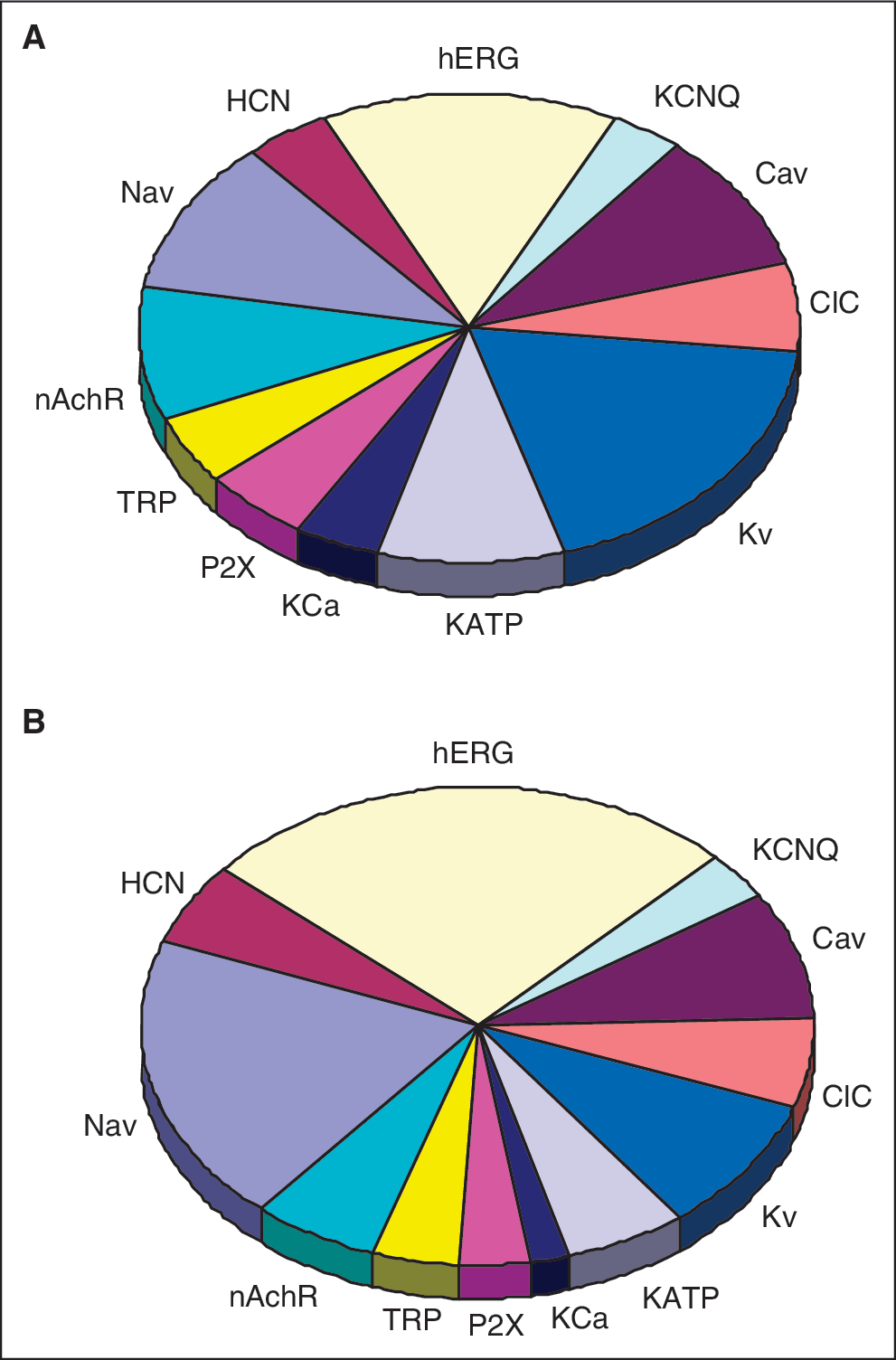
Composition of compounds in the ion channel library (ICL) related to their primary channel activity. (
Numerical Details of Ion Channel Library
Stage 2—Ion Channel Virtual Screening
The actual virtual screening of an internal corporate database or a commercial compound collection can take from several days up to a week depending on the number of compounds screened. However, it takes much more time to collect the set of known active ligands that are used to compute the pharmacophores for virtual screening. This is time-consuming because it involves not only perusing ones own internal library but also manually searching the journal and patent literature for known exemplars.
This bottleneck can effectively be removed if knowledge-based systems such as those produced by Aureus Pharmaceuticals 11 or GVK Biosciences 22 are utilized. These database systems contain highly curated, ligand, target, and bioactivity data for GPCRs, ion channels, and other systems of interest. They typically come with a user interface that gives the scientist extensive capabilities to retrieve and juxtapose relational information. The value of these applications is that they allow the scientist to quickly extract relevant compound data in order to derive computational models for virtual screening.
Using a combination of knowledge-based systems and pharmacophore tools, a scientist can effectively support multiple early-stage projects by providing virtual screening hit lists to complement or extend those generated by HTS. In our experience, this pharmacophore exercise (ROCS) was done to compliment substructure searches and provide additional equity to enhance our ion channel-focused library. From these efforts, an additional 3,300 structural distinct compounds were obtained and when added to the initial equity generated from standard substructure searching (∼12,000 compounds) increased the focused library to ∼15,300 compounds.
Stage 3—Library Completion
After removing duplicate compounds, a final set of ∼14,200 compounds was compiled comprising all of the channel classes, but with a somewhat differing ratio from the starting standards (Fig. 1B). An ongoing effort to make this screening library dynamic for future research endeavors is also being considered. The idea would be to re-evaluate the library every 6 months to add representatives of both newly synthesized analogs and new purchases via library enhancement as well as additional compounds from substructure searching of recently published equity. In addition, on a yearly basis, one could take a serious look at reformatting. The problem with reformatting is that you waste compound; however, if you don't reformat, you miss possible new hits and waste testing “outdated” concepts or structures. The overall library size is crucial; too big and it will not work outside of a HTS environment; too small and not enough hits.
Ion Channel Library Screen For ASIC1a And HCN1 Blockers
Ion channel library (ICL) was utilized in a pilot screen for ASIC1a channel blocker. The result of a single-point (30 μM) screen of 4,833 ICL molecules is shown in Figure 2A and 2B (the 4,833 compounds were a very early subset of the final 14,200 member library used to assess the validity of this focused library concept). The mean percent inhibition and standard deviation were calculated from all wells of 14 tested ICL plates, excluding control wells (5.4% ± 22.5%, n = 4,928). Percent inhibition of the ASIC1a signal in 41 wells (0.5% hit rate, see Table 3 ) deviated >67.5% from the mean. Thirty two out of 41 primary hits were subsequently sorted out as false positives, while 9 were confirmed as ASIC1a blockers (data not shown). False positives were identified in a confirmation screen. The screening of primary hits on ASIC1a activity was performed in triplicate at 30 μM (1:1,000 dilution of 30 mM DMSO stock freshly prepared from powders). The fluo-4 fluorescence signal due to ASIC1a activity was 10,535 ± 1,645 RFU (mean ± SD), and the confirmed hits produced >3 SD inhibition of mean fluorescence signal (47% inhibition). The confirmed primary ICL hits were followed with 8-point concentration-response analysis performed on 2 separate trials ( Fig. 2D ). Typical concentration-response curves for 3 representative compounds are shown in Figure 2C .
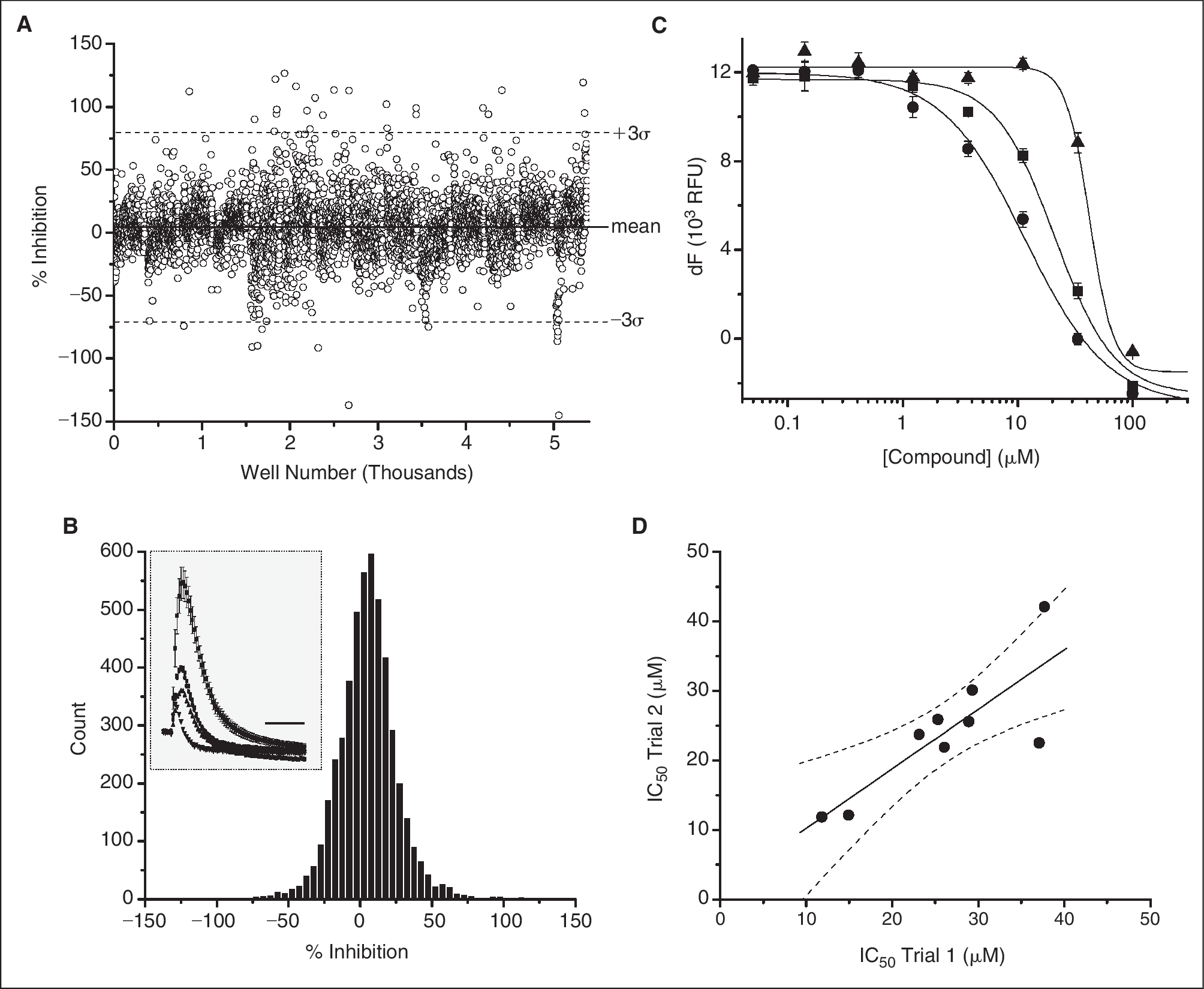
ASIC1a channel blocker ion channel library (ICL) screening. (
Comparison of Ion Channel Library vs. High-Throughput Screens for HCN1 and ASIC1a
The 4,833 total compounds for this ICL screen.
The 560,000 total compounds for this HTS screen.
Abbreviations: ICL, ion channel library; HTS, high-throughput screens.
The 4,833 ICL compounds were screened on HCN1 channel at 30 μM resulting in 89 confirmed HCN1 blockers (IC50 < 100 μM) and 1.8% hit rate (see Table 3 ). The HCN1 blocker hit rate, calculated within the respective segment of ICL (analyzed separately for the compounds within particular ion channel class), was not uniform and varied from 0% to 4.5%. The highest hit rate was observed for the hERG segment of ICL (4.5% HCN1 hit rate), followed by HCN (4.2%) and Kv (3.4%) segments; the lowest hit rate was for KCa (0%), KATP (0.2%), and TRP (0.6%) ICL segments ( Fig. 3A ). Subsequently, the primary HCN1 channel hits were followed with 8-point concentration-response analysis. The distribution of ICL IC50s on HCN1 and a typical concentration-response curve of HCN1 blocker are shown in Figure 3B and 3C, respectively. The hit rate for ASIC1a blocker was significantly lower than the overall hit rate for HCN1 channel blocker. Screening of 4,833 ICL compounds resulted in 9 ASIC1a confirmed hits (0.2% hit rate vs. 1.8% hit rate for HCN1 blocker). A similar hit rate distribution for this screen compared with the HCN1 was observed with the highest hit rates again being the Kv (1.5%) and hERG (0.4%) segments. The distribution of ICL IC50s on HCN1 and ASIC1a and a typical concentration-response curve of a blocker in both are shown in Figure 3B and 3C, respectively. When compared with a full HTS campaign, the hit rate of the ion channel screening plates was higher as would be expected from a focused library (see Table 3 ): (1) HCN1—1.8% (ICL) vs. 0.4% (HTS) and (2) ASIC1a—0.2% (ICL) vs. 0.08% (HTS). Future plans are to fully assess these hits using an electrophysiology platform to provide further validation of this approach; initial results using the IonWorks HT electrophysiology platform with the hits from the HCN screen have shown modest correlation. 19
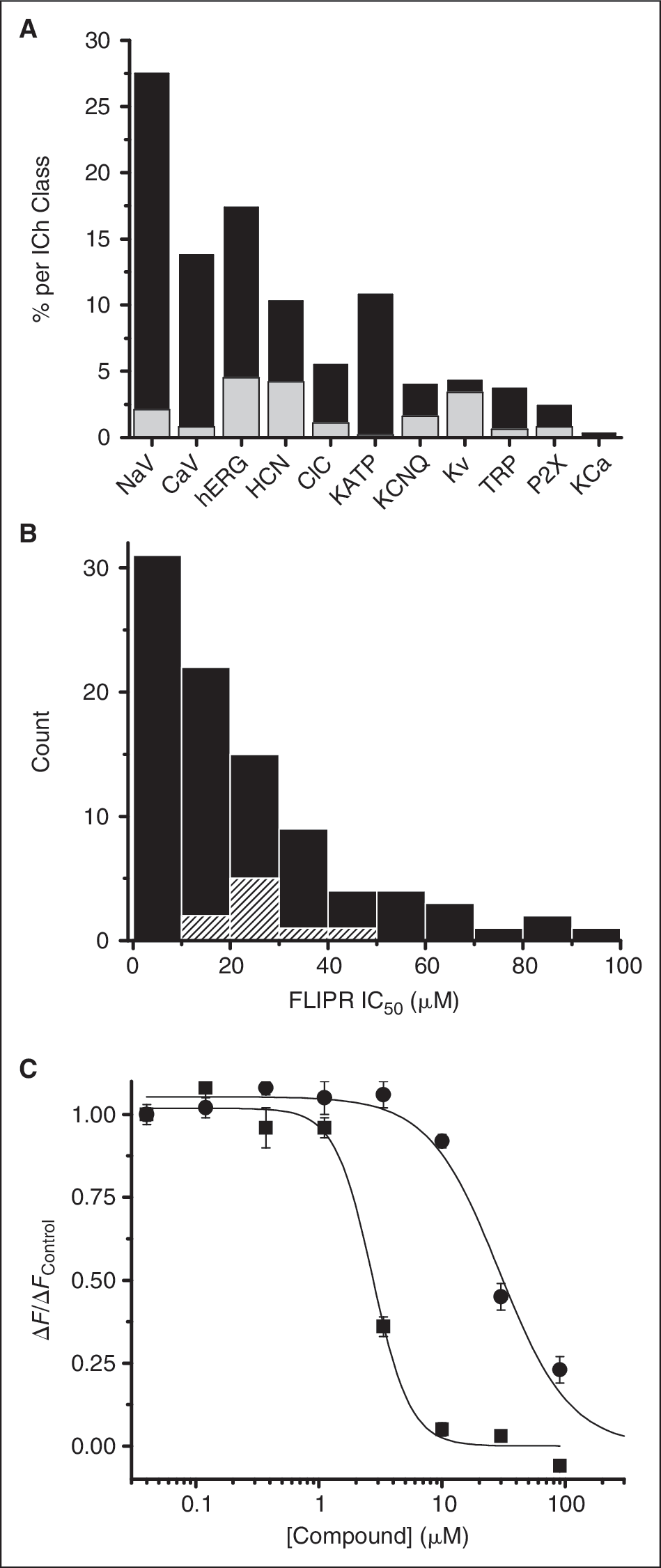
Summary of the ion channel library (ICL) screen on HCN1 and ASIC1a ion channels. (
Discussion
Presented in this study is an internally developed ion channel-focused compound library that enables the fast identification of modulators for ion channel proof of concept (POC) studies. Development of the library was facilitated by collection of known ion channel standards using the Aureus Pharma Knowledge-Based System. These standards were used as templates for substructure and pharmacophore-based searches of our internal compound library. Screening hit lists from the substructure searches and the pharmacophore-based screens are different yet enriched with ion channel compounds. This complementarity in hit lists maximizes coverage of chemical space active against ion channel targets of interest.
Creation of a set of screening plates enriched for compounds targeting ion channels was done with several purposes in mind. First, the identification of tool compounds for novel targets is quite valuable. Many newer or rarely exploited ion channels have few and rarely any selective agents available for investigating novel biology. Second, this approach can be used to “jump start” a drug discovery program, in order to catch-up to competition for attractive, well-known targets. Third, this approach can be used to pilot a possible HTS assay, validate a lab assay in a screening environment, and generate compounds useful as positive controls for a full HTS campaign. In the current study, utilizing the ICL demonstrated the feasibility of identifying hits for possible therapeutic agents against these targets (i.e., HCN1 and ASIC1a). Fourth, a determination of the hit rate within a given chemical space can be estimated, especially if a known space is being targeted or actively avoided. Lastly, this approach could serve as a focused screen for non-384-well adaptable targets.
Using this approach, it was apparent that a higher hit rate was achieved in parts of the library where the starting ion channel was related to the target. For instance, the HCN1 hit rate (1.8%) was much higher in the related voltage-gated K+ channel (hERG and Kv) related portions of the library than in the less related ligand-gated K+ (KCa, KATP) or ClC channels. Similarly, the ASIC1a hit rate (0.2%) was low across the library and similar to the hit rate found with random compounds (data not shown), which could be due to the low homology of ASIC1a channels with other families. However, a more likely reason is that no ASIC1a compounds were used as a basis for any of the substructure searches or ROCS searches used to find compounds to populate the plates. As a result, the chemistry space on the plates lacks ASIC1a-like compounds. The ligand structures are complementary to the protein-binding sites so one can infer that since there are few ASIC1a hits there is low homology between ASIC1a and other families. However, this is a secondary argument. Now looking back at the HCN case, substructure and ROCS searches were performed with HCN-type compounds; therefore, the chemistry space on the plates includes HCN-like compounds, and the hit rate is much higher.
One potential consequence of this approach could be that the hits would be expected to be less selective across channel families than would hits coming from a random library; however, this needs to be tested further. As a side note, more recently we have found that the confirmation rate for the HCN1 inhibitor screen (80%) was much higher than normally found out of a random library screen. We can speculate that this comes from several sources: (1) druglike properties built into the ion channel library; (2) focused area of chemical space; and (3) fewer false positives from the ICL screen. Furthermore, it is possible that if this is the only screen performed, the chemical diversity of the subsequent starting points might be less than expected for a much larger screen. This, of course, will be mitigated by the diversity of the starting points used for the library generation. Although in this study a high-throughput amenable fluorescent assay (FLIPR) was chosen for the 2 ICL screens (HCN1 and ASIC 1a), medium throughput platforms such as IonWorks Quattro could be utilized for the primary screening with this approach. This would provide an added advantage to select compound-starting points with properties normally only known in downstream electrophysiology assays, such as use dependence or other biophysical (kinetic) properties, which might offset some of the diversity loss disadvantage. Initial results using the IonWorks HT electrophysiology platform with the hits from the HCN screen are favorable, 19 and additional studies will be used in future hit assessment. In addition, compounds chosen in this manner should have more druglike properties and a higher propensity for use-dependent action, a mechanism often desirable for ion channel drug discovery.