




Abstract
The purpose of this study was to apply the quality by design (QbD) approach in the development of a microbial and pH-triggered colon-targeted budesonide tablet. A retrospective research strategy was used to select various polysaccharide-based natural gums such as tamarind gum, gellan gum, karaya gum, gum ghutti, and khaya gum, which were then evaluated for their effectiveness in microbial degradation and targeting the colon. Viscosity profiles were generated in the presence of a prebiotic culture medium prepared by using the Velgut capsule that mimicked the impact of 4% rat cecal content and helpful in screening of natural polymer. Based on the cumulative drug release data of preliminary batches, carboxymethyl (CM) tamarind gum was identified as a superior and an excellent polymer over the tamarind gum for formulation development. The presence of water as a bridging agent in wet granulation also played an important role in the retardation of drug release. Tablets were supercoated with the enteric polymer, Eudragit S100. The Box–Behnken design was utilized, where the selected independent variables were the proportion of CM tamarind gum, % water proportion, and % weight gain of Eudragit S 100 to optimize the formulation. The optimized design space was generated with the criteria that a drug release should be of less than 5% within the first 2 h, less than 10% within the first 5 h, and more than 70% within the first 8 h, to achieve colon targeting. The optimized batch F3 was found stable as per International Council for Harmonisation guidelines. The roentgenography study for optimized formulation demonstrated that it remained intact for 5 h and, at 7 h, was disseminated completely. CM tamarind gum is efficient for colon targeting, and its proportion in 100 mg along with an enteric coating of 6% led to the optimized formulation.
INTRODUCTION
In recent years, the pharmaceutical research community has devoted considerable attention to the development of targeted drug delivery systems. 1,2 One such promising approach is the use of natural polymers as carriers for drug delivery. 3
The targeted delivery of drugs to the colon is a highly desired objective in the field of drug delivery due to its numerous benefits in treating various gastrointestinal (GI) disorders such as ulcerative colitis (UC), Crohn's disease (CD), amebiasis, colonic cancer, and other colonic pathologies. 4
One of the prominent symptoms of UC is a frequent occurrence of blood and mucus in association with fecal matter, accompanied with lower abdominal cramping that reaches its maximum severity during the act of defecation. 5,6 CD, in contrast to UC, has the potential to impact numerous parts of the GI tract, covering from the oropharynx to the perianal area. 6,7
Budesonide is a corticosteroid with a considerable anti-inflammatory effect at the site of application but limited systemic activity due to significant hepatic degradation. 8,9 Because of this, conventional oral formulations are less effective than prednisolone, a common corticosteroid with considerable side effects. 10 So, in the present investigation, budesonide was intended to target the colon via a colon-specific approach.
Different approaches, including pH-dependent, 11,12 time-dependent, 12,13 pressure-dependent, 14 and microbial approaches, 15,16 have been investigated by researchers in the past to target the drug to the colonic region. Due to individual differences in pH and transit duration, a single approach was always questionable. In the present study, the drug is intended to target the colon using a combination of pH and microbial approaches.
The initial stage of this research involved a retrospective research strategy to identify polysaccharide-based natural gums with the potential for developing a microbial degradation-based colon-targeted drug delivery system. 17,18 Several natural gums were carefully selected and screened to evaluate their efficacy in facilitating colon-specific drug delivery, considering their susceptibility to degradation by colonic enzymes. To assess the sensitivity of the chosen natural polymers to colonic enzymes, their viscosity profiles were analyzed in the presence of a prebiotic culture medium. 19,20
This study explores the utilization of natural gums as a means to achieve colon-targeted drug delivery, using a microbial approach. The investigation involved the selection of five different natural gums such as tamarind gum, 21 gellan gum, 22 karaya gum, 23 gum ghatti, 24 and khaya gum 25 to assess their potential for targeting drugs specifically to the colonic region. Due to its unique properties and biocompatibility, tamarind gum, derived from the kernels of the tamarind tree (Tamarindus indica), has emerged as a potential candidate. 26,27
In recent decades, tamarind seed polysaccharide has emerged as a promising pharmaceutical excipient, finding use in a range of dosage forms, including suspensions, emulsions, tablets, gels, and ophthalmic treatments. Tamarind seed polysaccharide is also used as a matrix former in the formulation of matrix tablets and as controlled drug release carriers for a number of different pharmaceuticals. 28,29 In addition, it is used in the development of oral, 30 buccal, 31 colon, 32 nasal, 33 and ocular 34 drug delivery systems. Carboxymethyl (CM) tamarind gum refers to the carboxylic derivative of tamarind gum. 35 CM tamarind gum exhibits elevated viscosity and reduced degradability when exposed to water conditions. In addition, it has the ability to induce greater swelling in aqueous environments. 35
To mimic the enzymatic conditions found in the colon, a novel dissolution biorelevant medium was developed using a probiotic culture medium that was developed using a capsule, Velgut (Eris Life Science Ltd.). Its efficiency was assessed with the conventional use of 4% rat cecal content. 19,36,37
The quality by design (QbD) approach adds substantial value to drug delivery systems by ensuring quality, safety, and consistency while reducing risks and fostering innovation. It aligns well with the goals of pharmaceutical development and regulatory agencies, making it a valuable tool in creating advanced and reliable drug delivery systems. 38 The implementation of the QbD approach played a pivotal role in the creation of tablet-based drug delivery systems in this study. 39
The Box–Behnken design (BBD) is a valuable experimental design technique with specific applications in the field of targeted drug delivery. Its advantages include the ability to systematically investigate the effects of multiple variables on drug delivery performance, optimize the formulation parameters for enhanced therapeutic efficacy, reduce side effects, and improve patient compliance. By using BBD, researchers can efficiently explore the design space and identify optimal conditions for targeted drug delivery systems.
These systems were meticulously designed and formulated according to predefined selection criteria to achieve colon-targeted drug delivery. The desired drug release profile for the colon-targeted system was defined as the release of no more than 10% of the drug within the initial 5 h, with a minimum of 70% drug release within 8 h. The adoption of the QbD approach ensured that the formulated tablets met these specific requirements for effective colon-targeted drug delivery. 38,40,41
The findings of this study demonstrate the promising potential of the grafted form of tamarind gum, CM tamarind gum, in facilitating colon-targeted drug delivery. 21 Thus, this research makes a significant contribution to the field of drug delivery by offering insights into the creation of effective colon-targeted drug delivery systems.
MATERIALS AND METHODS
Materials
Budesonide (% age purity = 98%) was received as a free sample from the Zydus research centre, Ahmedabad. Tamarind gum (TEMCOL-30; sharda bio polymers), gellan gum (P8169; Sigma-Aldrich), karaya gum (G0503; Sigma-Aldrich), gum ghutti (G0378; Sigma-Aldrich), khaya gum, lactose, and PVP K 30 were purchased from Purvi Enterprise, Ahmedabad, Gujarat, India. CM tamarind gum (Grade-CMT-30) was purchased from Shivam Exim Pvt Ltd. (Ahmedabad, India). Eudragit S 100 was provided by Evonik, Mumbai, as a gift sample. Velgut capsule (Mfg: Eris Life Science Ltd., Batch No. -GVGC22011) was purchased from a local medical store in Ahmedabad, India.
Methods
Screening of natural gums
Various natural gums were tested for viscosity using a viscometric procedure. A 1% solution of each gum was prepared in phosphate buffer pH 6.8 and soaked overnight. The viscosity was measured using a Brookfield Viscometer (Spindle No. 63, Speed 12 RPM). Only gums with the desired viscosity were selected.
Preparation of 4% rat cecal content solution and probiotic culture medium
To prepare 4% rat cecal content, six 250–300 g Wistar rats were slaughtered. The Institutional Animal Ethics Committee, L. J. Institute of Pharmacy, LJ University, Ahmedabad, Gujarat, India (Proposal No. LJIP/IAEC/2022-23/02), granted approval for the use of rats in the proposed study. Each rat's cecal contents were collected after the abdomen was opened. The required amount of rat cecal content was transferred to 100 mL of phosphate buffer pH 6.8 with continuous CO2 aeration. 25,42
The prebiotic and probiotic capsule VELGUT (Eris Life Science Ltd.) was used for the preparation of the probiotic culture medium. VELGUT probiotics comprise 5 billion species such as Bifidobacterium longum, Bifidobacterium breve, Lactobacillus acidophilus, Bifidobacterium infantis, Lactobacillus casei, Lactobacillus rhamnosus, Streptococcus thermophilus, Lactobacillus plantarum, and Saccharomyces boulardi. 43
To activate the anaerobic bacteria in the probiotic capsule, fluid thioglycollate medium (FTM) was used. FTM (8.94 g) was mixed with 300 mL of deionized water, sterilized by autoclaving, and then inoculated with 325 mg of the probiotic contents from the capsule. The culture was incubated for 48 h at 35°C under anaerobic conditions. 37,43
Enzymatic susceptibility for natural gums
The viscosity of 1% natural polymers in phosphate buffer with probiotic culture medium was measured over time to assess enzymatic degradation. The viscosity reduction indicated enzymatic susceptibility. The specific viscosity-time profile of 1% natural gum in a 4% rat cecal content solution was compared with phosphate buffer solutions with probiotic culture medium. 20,44
Preliminary batches of tablets by direct compression method and wet granulation
For preliminary assessment, the measured amount of budesonide and all other excipients was passed via sieve number 60. PVP K 30 was utilized as a binder for both direct compression and wet granulation methods. The drug and excipients were thoroughly blended with talc and magnesium stearate for lubrication and to improve the flow properties of the powder mass. Using an 8/32″ flat punch, a weighed amount of powder mass was compressed using a rotating tablet compression machine (12 station D tooling; Model No- PR-TCM-007, Mfg.: Karnavati Engineering, Ahmedabad, India). A total of 50 tablets were compressed per batch, and the composition of the preliminary batches of tablets is reflected in Table 1. Table 2 displays the preliminary batches of tablets prepared with tamarind gum and CM tamarind gum (CM tamarind gum) using PVP K 30 as a binder in wet granulation, with water or isopropyl alcohol (IPA) as a bridging agent. 45
Composition of Tablets for Preliminary Formulation
TD batches prepared by direct compression; TW batches prepared by wet granulation (PVP K30 in IPA as binder).
IPA, isopropyl alcohol.
Tablets Prepared by PVP K 30 in Isopropyl alcohol and Water Using Tamarind Gum and Carboxymethyl Tamarind Gum
CM, carboxymethyl.
Coating of tablets
Initially, the required quantities of tablets and some extra tablets were deposited in the coating pan and rotated at a speed of 40 revolutions/min for 5 min. The tablets were then dedusted, and a specific quantity of tablets loaded for coating. The rotation speed of the coating pan (Model-CMTAC-1; Mfg: Cronimach Machinery, Ahmedabad) was then adjusted to 40 revolutions/min, and the temperature was set to 50°C. Using a peristaltic pump, the previously optimized discharge rate was adjusted to obtain the desired coating. The process of coating tablets continued until the desired weight gain percentage was achieved. 46
Designing the formulations by using Box–Behnken factorial design
Tablet dosage forms for colonic delivery were optimized using BBD (Design Expert 11.0), containing the three-factor, three-level model to define the main, interaction, and quadratic effects 41,42 of independent variables such as the amount of CM tamarind Gum, % water proportion, and % weight gain by Eudragit S100 on the selected responses (dependent variables), which were % drug release at 2 h, % drug release at 5 h, and % drug release at 8 h, as shown in Table 3, and batches designed by BBD.
Independent Variables and Dependent Variables of Box–Behnken Design
CDR, cumulative drug release.
Dissolution method
In vitro drug release of colon-specific budesonide tablets was conducted in a USP Type II (Paddle) Apparatus (VDA-8D [ARM] station unit; Veego Instruments Corporation, Mumbai, Maharashtra, India) at 50 rpm and 37°C ± 0.5°C. Initially, the test was done in 0.1 N HCl for 2 h. Then, the test was performed in phosphate buffer pH 7.4 for 3 h. The remaining study was carried out in a biorelevant medium with a pH of 6.8 and CO2 aeration, which was provided with the help of INSTA 95 g CO2 disposable Supply Set (Mfg: INSTA, Taiwanese brand) to provide an environment that is favorable for anaerobic bacteria. 19,47,48
Roentgenography study
The GI transit of specific formulations was assessed through in vivo experiments conducted on white New Zealand rabbits weighing between 1.5 and 2.5 kg. 49 The Institutional Animal Ethics Committee, L. J. Institute of Pharmacy, LJ University, Ahmedabad, Gujarat, India (Proposal No. LJIP/IAEC/2022-23/02), granted approval for the research. To prepare for the experiment, the rabbits were fasted overnight before the administration of tablets. The tablet was carefully positioned in the animal's larynx using forceps, and a volume of 10–15 mL of water was administered down the neck to aid its passage into the esophagus. 50 The same rabbit underwent repeated X-ray examinations at predetermined time intervals to monitor the movement of the formulations through the GI tract.
Stability study
In the present study, the optimal batch (F3) from the BBD was chosen for the stability study, which was conducted in accordance with International Council for Harmonisation (ICH) guidelines by keeping the sample at 40°C ± 2°C and 75% ± 5% relative humidity for 6 months in a stability chamber (Mfg.: Patel Instrument Pvt. Ltd.). 51 The high-density polyethylene bottle is the container closure system used in this study. The selected study intervals were the 1st, 3rd, and 6th months from the initial time. The optimized tablet-based formulation was examined for appearance (description), moisture content, drug content, % cumulative drug release (CDR) at the 5th hour, friability, and microbial limit test. 52
RESULT AND DISCUSSION
Enzymatic Susceptibility of Various Gums and Screening of Natural Gums by Viscometric Procedure
The potential of natural gums to extend drug release in the upper GI tract was assessed using viscosity profiles.
Figure 1 illustrates the viscosity of 1% solutions of different natural gums prepared in phosphate buffer with a pH of 6.8. Among the tested gums, karaya gum and tamarind gum exhibited statistically significant viscosity profiles that successfully achieved the desired lag time for drug release.
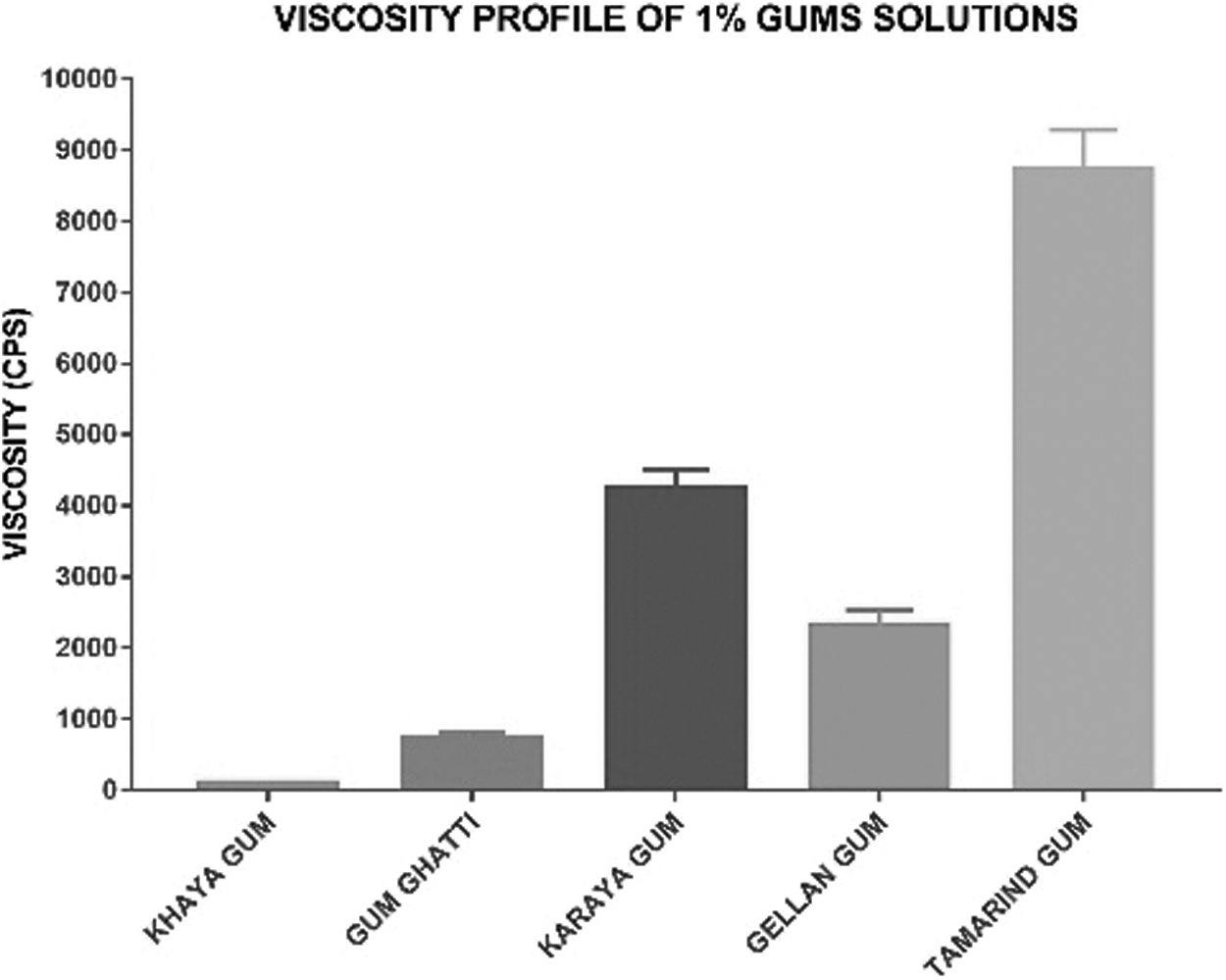
Viscosity profile of 1% different gum solutions.
An investigation was conducted to assess the impact of enzymes derived from rat cecal content and probiotic media on the viscosity of a natural gum sample. The results revealed that both enzyme systems possessed the ability to degrade the gum through randomized bond cleavage of the polysaccharide. Figure 2a and b visually represents the degrading effect of enzymes obtained from rat cecal content and probiotic medium on the natural gum samples. The findings indicated that tamarind gum, known for its high viscosity and substantial lag time, displayed greater susceptibility to enzymes produced by intestinal microflora compared with the other selected gums.
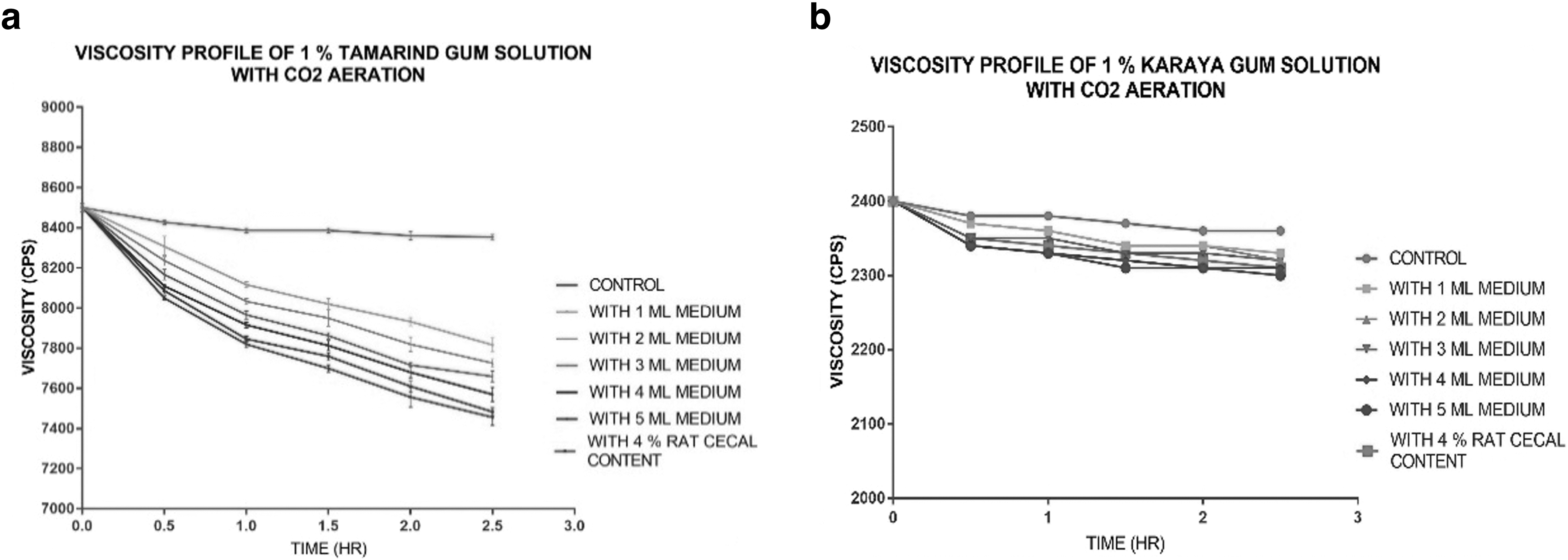
Viscosity profile of gums at different time intervals in the presence of probiotic culture medium and 4% rat cecal content.
Characteristics of Core Tablets
The tablets' average weight was 200 mg and they passed the weight variation test. The granules' hardness ranged from 4.1 to 4.6 kg/cm2, while their friability ranged from 0.08% to 0.80% (w/w). The range of % drug content for all preliminary and experimental batches was between 97.85% and 101.21%, with a maximum standard deviation of 1.23%.
In Vitro Release Studies
From the dissolution data obtained from preliminary batches as illustrated in Figure 3a, it was determined that wet granulation yields superior retardation compared with direct compression. However, the dissolution data of tablet formulations prepared using wet granulation were found to be unsatisfactory, with release rates exceeding the desired limit. The desired in vitro release pattern for colon targeting stipulates that no more than 10% of the drug should be released by the end of the small intestine (5 h), while more than 70% of the drug should be released within 8 h. Consequently, tamarind gum does not exhibit adequate retardation when tablets are prepared using PVP K 30 as a binder in IPA.
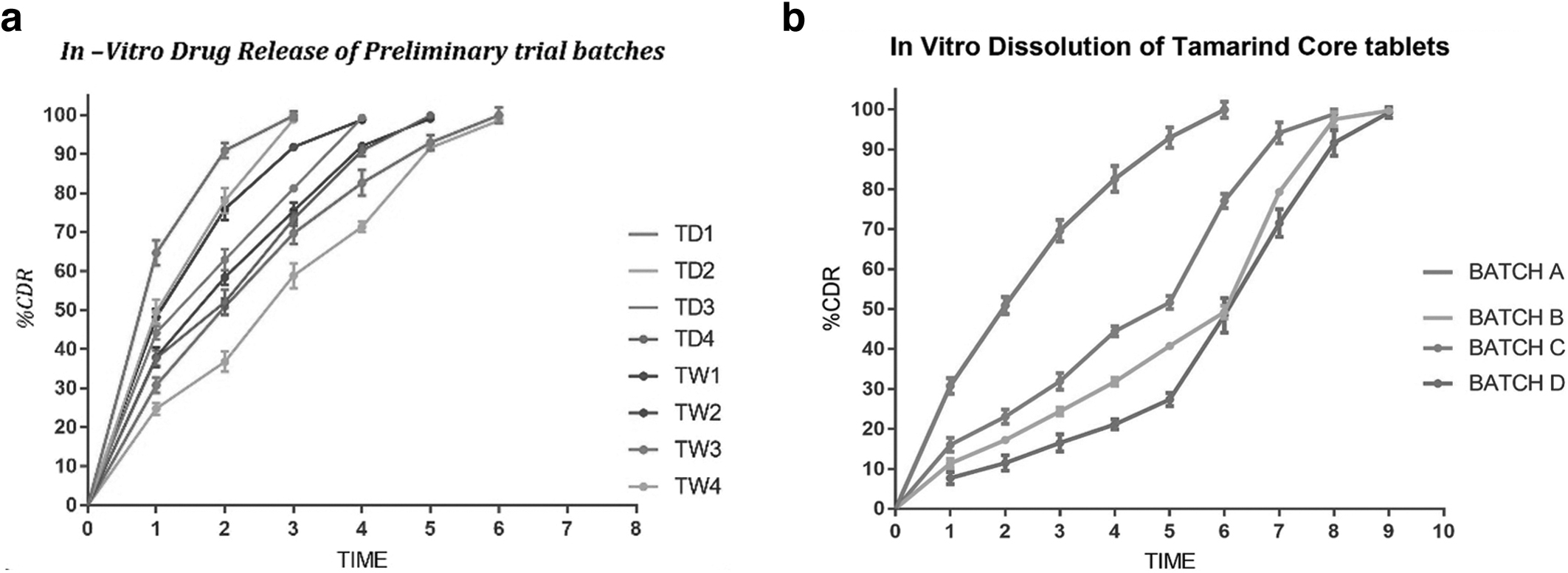
In vitro drug release of
Based on the viscosity profile of tamarind gum, it was concluded that tamarind gum should demonstrate superior retardation compared with other natural polymers that were used for screening purposes. Consequently, a decision was made to substitute a portion of IPA with water during the granulation process to examine its impact on the retardation of drug release from the tablets. Based on the dissolution data obtained from tablets formulated with PVP K 30 in both IPA and water, as illustrated in Figure 3b, it has been determined that the presence of water in the tablet dosage form plays a crucial role in delaying the release of the drug. Consequently, water, functioning as a binder, is considered an influential independent factor in optimizing the dosage form through experimental design.
Nevertheless, it has been observed that the expected drug release retardation with the combination of PVP K 30 and water is not adequately achieved when utilizing tamarind gum. Therefore, it has been deemed necessary to explore an alternative approach by using a modified form of tamarind gum known as carboxymethyl tamarind gum. This variant possesses a higher viscosity compared with regular tamarind gum and exhibits the ability to rapidly form a mucilaginous mass. This novel approach aims to minimize erosion and achieve the desired retardation of drug release.
To develop an optimized colon-targeted drug delivery system, it has been determined that a single microbial approach is insufficient. Consequently, a combination of approaches involving pH and microbial factors is required. To achieve this, it is imperative to coat the core tablet with a pH-dependent polymer. Eudragit S 100 has been selected as the pH-dependent polymer due to its superior pH threshold when compared with other available pH-dependent (enteric) polymers.
Statistical Assessment of Box–Behnken Experimental Design
The purpose of the three-factor, three-level experimental design was to analyze the impact and interaction of independent variables such as the amount of CM tamarind gum, the percentage of water proportion, and the percentage of weight gain by Eudragit S 100 coating on Y2, Y5, and Y8, as shown in Table 4. The table revealed that Y2, Y5, and Y8 had respective values ranging from 0.67% to 4.67%, 6.75% to 32.45%, and 62.87% to 100.02%.
Box–Behnken Experimental Design Matrix and Their Responses
According to the results of the analysis of variance shown in Table 5, the model F-value of 56.53, 46.73, and 18.44 indicates that the model was significant for Y2, Y5, and Y8, % CDR at 2, 5, and 8 h, respectively.
Analysis of Variance for Two Dependent Variables for Formulation Batches
% CV, % coefficients of variance .
Y2 (%CDR at 2 h) = +1.52 − 0.093X1 − 0.040X2 − 1.81X3 − 0.155X1X2 − 0.175X1X3 + 0.005X2X3 − 0.064X12 + 0.066X22 + 1.16X32.
Y5 (% CDR at 5 h) = 15.50333 − 3.99875X1 − 5.43375X2 − 7.1475X3 − 0.41X1X2 + 0.5225X1X3 + 2.1075X2X3 + 2.350833X12 + 1.615833 X22 + 0.373333X32.
Y8 (% CDR at 8 h) = +84.118 − 8.7175X1 − 7.285X2 − 7.4X3 − 1.71X1X2 − 5.545X1X3 − 2.73X2X3.
Based on the polynomial equation and 3D response curve (Fig. 4a) and contour plot (Fig. 4b), it was determined that % weight gain by coating of tablets with Eudragit S 100 modulated Y2 significantly. As coating level (X3) increases, drug release at 2 h (Y2) decreases dramatically, and tamarind gum amount (X1) has the same negative impact on Y2. All three independent variables have a substantial influence on the rate of drug release at 5 h. The drug formulations were subjected to a higher pH after 2 h. As a result, the coating would dissolve more gradually, and the release rate would also be controlled by core tablet components such as amount of CM tamarind gum and percentage of water proportion for wet granulation. According to the data, when the quantity of CM tamarind gum and the percentage of weight gain increased, the percentage of drug release decreased. In addition, it was determined that the percentage of drug released at 8 h (Y8) decreases as the amount of CM tamarind gum, proportion of water, and percentage of weight gain increase in the Eudragit S 100 coating.
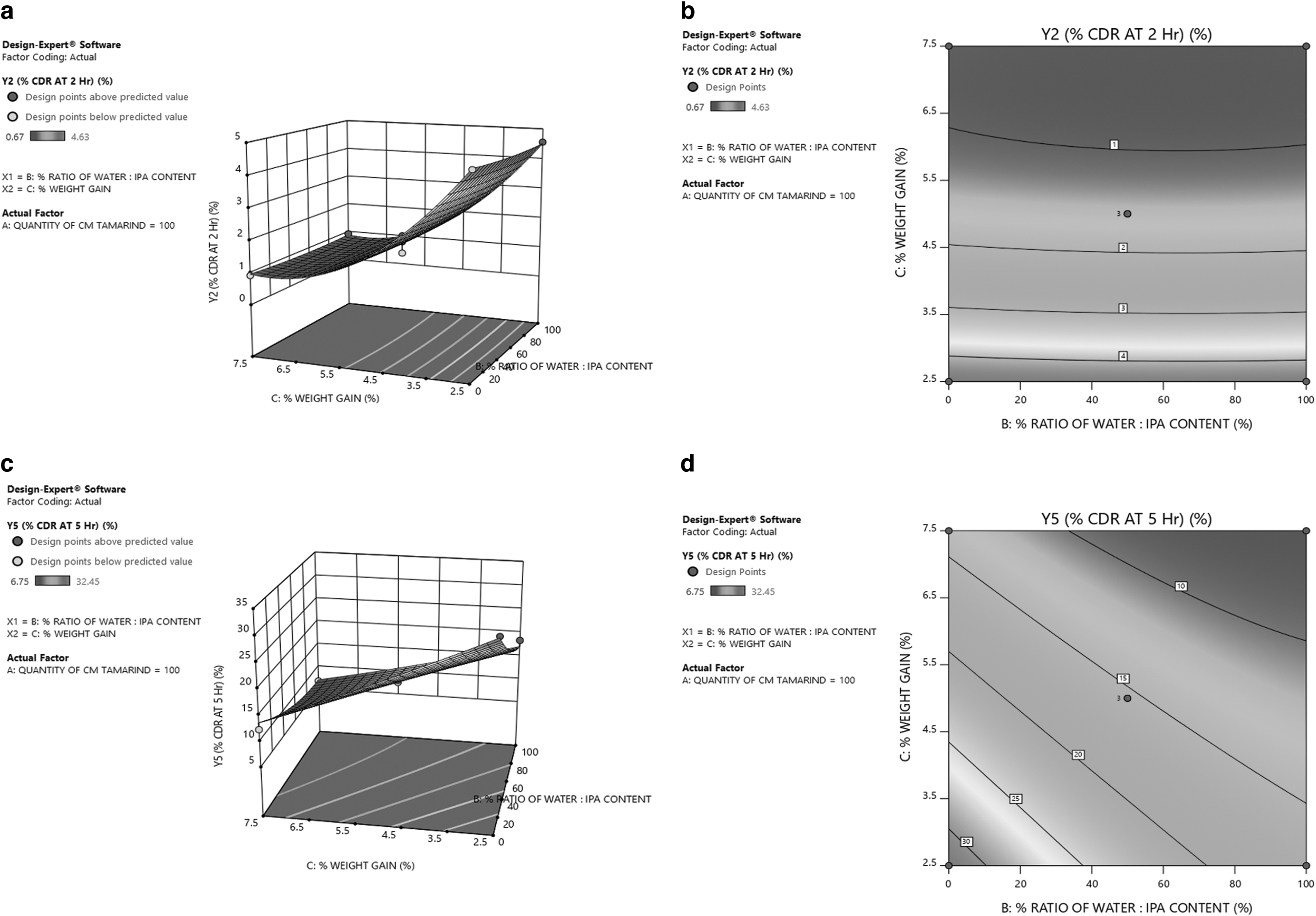
3D response graph and contour plot for % CDR at 2 h
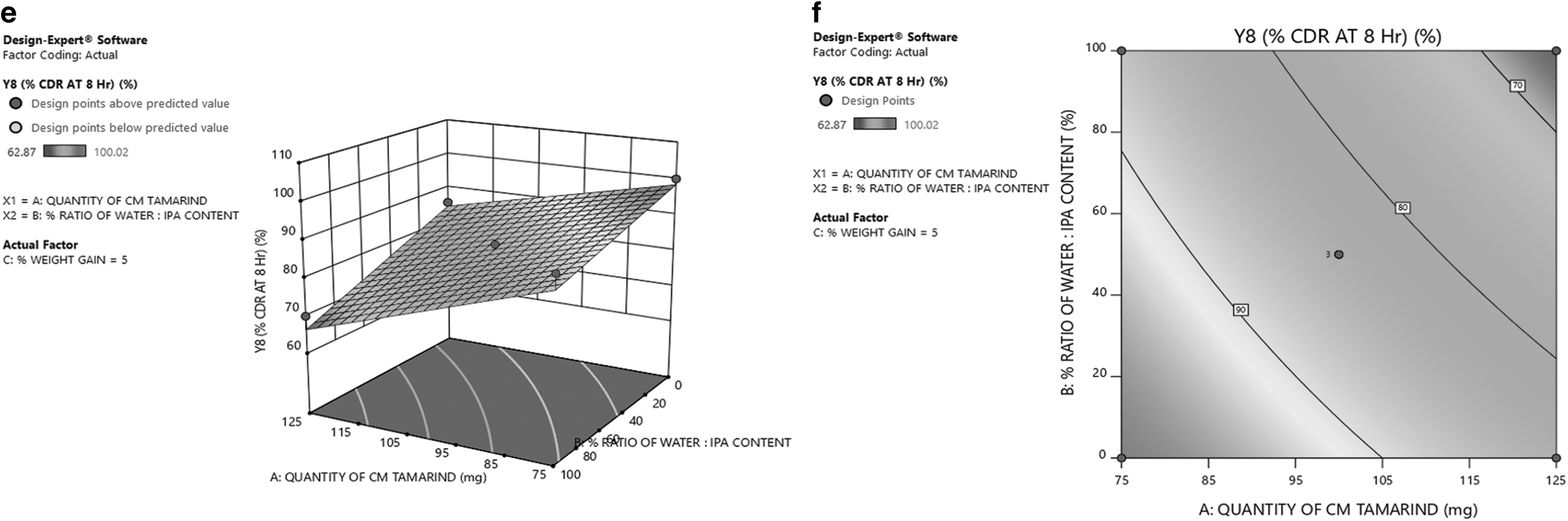
It indicates that tamarind gum, the proportion of water, and the percentage of weight gain had a negative effect on the drug's 8-h release.
In Vivo Study in Rabbit
Figure 5 displays the optimized colon-targeted formulation that was analyzed using X-ray imaging techniques to assess its behavior within the GI tract. The X-ray imaging results indicated that the formulation remained intact for a period of 5 h. However, beyond this time frame (at 7 h), a burst release phenomenon was observed, suggesting that the formulation's contents release within the colon. This finding suggests that the optimized colon-targeted formulation exhibited delayed and targeted release characteristics, allowing the formulation to maintain its integrity till it reaches the colon.
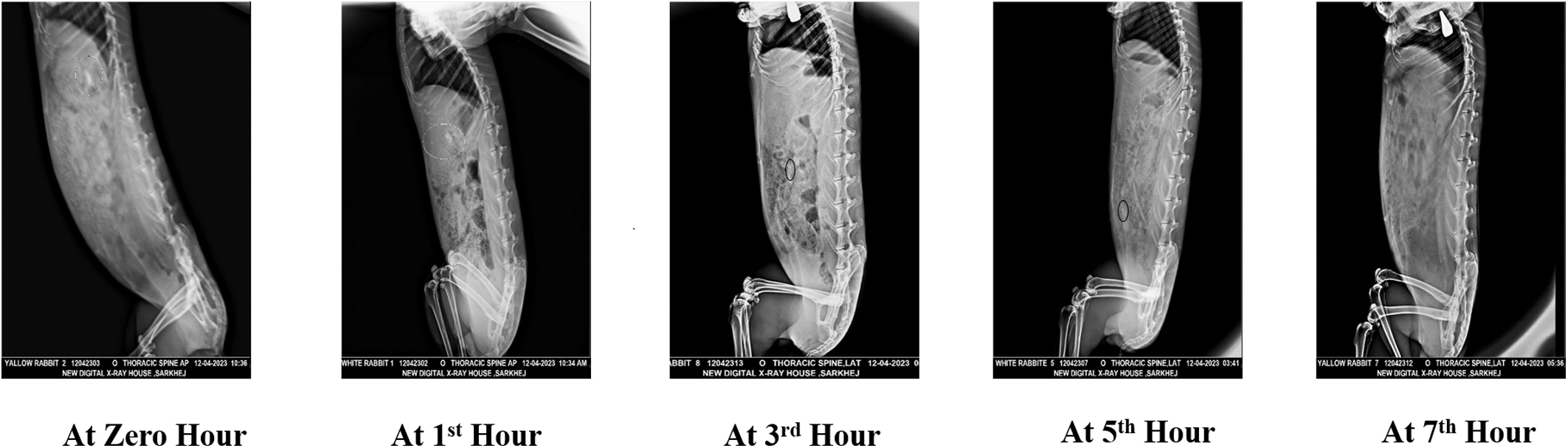
X-ray imaging of rabbit for tablet dosage form.
Stability Study
Stability study data for the optimized batch are shown in Table 6. As per the data, it was concluded that pellet dosage form was stable enough till 6 months under the accelerated conditions as per the ICH.
Stability Study of Optimized Batch (F3) Under Accelerated Conditions as per International Council for Harmonisation Guideline
CDR, cumulative drug release; NLT, not less than; NMT, not more than.
CONCLUSION
In conclusion, this research successfully developed a microbial and pH-triggered colon-targeted budesonide tablet using the QbD approach. By screening various polysaccharide-based natural gums, tamarind gum was identified as the most suitable candidate for formulation development, based on its excellent characteristics. The optimized formulation, achieved through the BBD, exhibited controlled drug release with less than 10% released in the initial 5 h and more than 70% released within the first 8 h. These findings demonstrate the potential of this novel drug delivery system for targeted treatment of colon-related ailments. The QbD approach used in this study offers a systematic and effective approach for the development of colon-targeted drug delivery systems.
FUTURE PROSPECTIVES AND BROADER IMPACT OF THE STUDY
The stated outcomes and methodologies of the study hold great promise for influencing the future of pharmaceutical research and colon-targeted drug delivery strategies. The concept of selection and screening methods to identify suitable polysaccharides as polymers opens up avenues for further exploration into naturally sourced materials. This offers the potential to discover innovative and improved compounds suitable for delivering the drugs, thereby expanding the options available to pharmaceutical developers. The incorporation of a prebiotic culture medium in the research carries promising implications that go beyond the immediate scope of the investigation. This approach establishes a strong scientific framework for researchers to assess and enhance drug delivery systems that can effectively adapt to various physiological conditions. The broader impact encompasses advancements achieved in dose reduction, improved drug availability at the desired site, reduction in systemic side effects, the utilization of natural polymers, and the enhanced patient compliance.
Footnotes
ACKNOWLEDGMENTS
The author, Jaymin Patel, is thankful to Dr. Shreeraj Shah for valuable guidance and to the L. J. Institute of Pharmacy, LJ University, Ahmedabad, for providing the research facilities, which is a part of Doctor of Philosophy (PhD) research work of Mr. Jaymin Patel, to be submitted to Gujarat Technological University, Ahmedabad.
AUTHORs' CONTRIBUTIONS
J.P. contributed to the article's conception/design and data analysis/interpretation. K.P. wrote/edited the article with major intellectual input. S.S. provided substantial support for the argument/analysis and finalized for publication.
DISCLOSURE STATEMENT
No competing financial interests exist.
FUNDING INFORMATION
No funding was received for this article.